
Fall HVAC Maintenance Checklist for Orange County Homes (2026)
Posted on August 11, 2026
Most Orange County homeowners think of fall as the season when the brutal summer heat finally breaks and the AC can take a breather. But here is what we have learned in over a decade of serving 5,000+ OC families: fall is actually the most critical maintenance window of the entire year for your HVAC system. Your air conditioner has been running nonstop for five or six months straight, pushing cool air into homes from late May through September. Starting in October, Santa Ana winds arrive and bring with them the driest air of the year, plus dust, ash, and wildfire particulates that clog filters faster than any other season. Meanwhile, you are about to flip your system into heating mode for the first time since spring. That transition, combined with Santa Ana season, is why we see more emergency HVAC calls in November and December than any other months.
Fall is the most important season for HVAC maintenance in Orange County because your system transitions from months of constant cooling to heating mode just as Santa Ana wind season begins, bringing dust, dry air, and wildfire particulates that can damage your equipment and reduce your efficiency. A professional tune-up before October costs between $150 and $250 and catches problems that emergency repairs in December cost five times as much to fix.
We are not just saying this because we sell maintenance. When you run an HVAC company for more than a decade and you staff a full-time crew (no subcontractors, ever), you notice patterns. October and November are when we are busiest because homeowners wait too long. We want to help you get ahead of that. This checklist covers everything you need to do this fall, what each task costs, and which ones you can handle yourself versus which ones require a licensed technician.
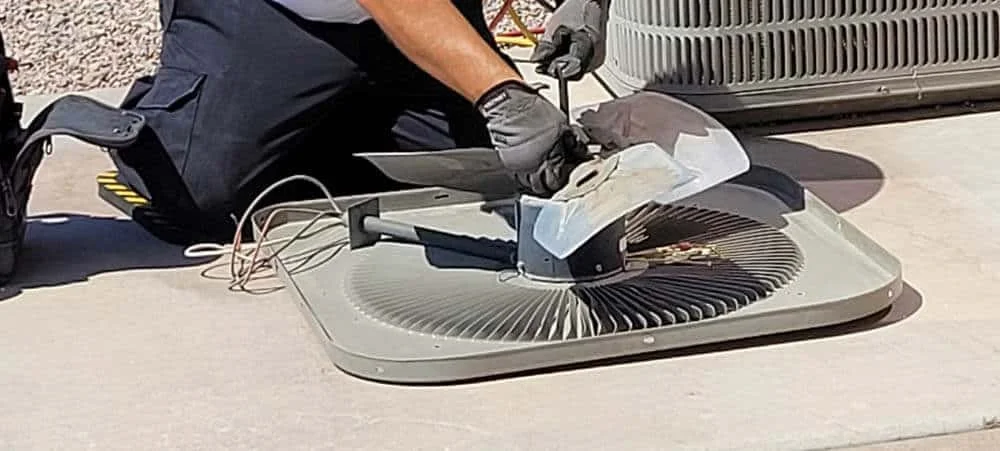
A worn condenser fan blade or failing motor bearing rarely announces itself before it fails. J Martin's fall inspection includes a full fan and blower motor check so small issues get caught before they become cold-night emergencies.
Quick Answer
Fall HVAC maintenance in Orange County should happen in September or early October, before Santa Ana winds and heating season arrive. A professional tune-up costs $150 to $250 and includes furnace inspection, filter replacement, thermostat calibration, and airflow verification. The right fall maintenance prevents mid-winter system failures when HVAC contractors are booked solid and emergency rates apply.
Why Fall HVAC Maintenance Matters More in Orange County Than You Think
Orange County has a climate that most homeowners in other parts of California do not have to worry about. Our summers are long, and our cooling seasons stretch from May through September, sometimes into October. That is five to six months of your air conditioner running hard, often in continuous mode during heat waves that push inland temperatures past 100 degrees. By the time September rolls around, the cooling coil is coated with dust and pollen, the outdoor unit has been exposed to months of UV and heat stress, and the refrigerant circulating through the system has been under constant pressure.
Then fall arrives. What most people celebrate as relief from the heat is actually a transition period that your HVAC system struggles with. The thermostat switches from cooling to heating. The furnace or heat pump, which has been dormant all summer, suddenly needs to fire up and produce heat. At the exact same time, Santa Ana winds begin. These winds are devastating for indoor air quality. They bring fine dust, wildfire ash, particulates, and extremely low humidity. The average Orange County home experiences 10 to 25 Santa Ana wind events per year, each lasting about three days, with peak season from October through November.
The combination of system transition and seasonal environmental stress creates the perfect conditions for HVAC failure. Your heating system is activated for the first time in months, possibly with issues that developed during the idle season. Your filters are under siege from Santa Ana particulates. Your thermostat needs recalibration. Your ducts, which collected dust over the summer, now circulate that dust into every room. This is why we get calls from homeowners in inland areas like Anaheim Hills and Mission Viejo saying their upstairs is freezing while the downstairs is warm. The airflow balance shifts when you switch from cooling to heating because the thermodynamics change, and fall is when that imbalance becomes obvious.
When Jack ran a fall tune-up at a 1985 Mission Viejo home last September, the homeowners thought they just needed a routine check before furnace season. The system had run fine all summer. But when Jack inspected the heat exchanger, he found a hairline crack along the left panel. A cracked heat exchanger can leak carbon monoxide into your living space. That crack never would have been caught if the homeowner had waited until December when the furnace kicked in full time. The repair cost $850, but the homeowner avoided a potential carbon monoxide exposure that could have been far worse. That is the kind of safety issue fall maintenance catches before it becomes dangerous.
The Fall HVAC Maintenance Timeline for Orange County
The best approach is not to cram all your fall maintenance into November when you are busy hosting Thanksgiving and HVAC companies are booked three weeks out. Instead, spread the tasks across September, October, and early November so each phase gets proper attention.
September is when you should handle the AC wind-down and early heating prep. This is the month to schedule a professional inspection if you have not had one yet this year. Your air conditioning has been running for four to five months straight. The condenser coil needs flushing, the refrigerant levels need checking, and the outdoor unit needs to be cleared of debris that accumulated over summer. If you have a heat pump that will operate in heating mode, September is when the technician should verify that the reversing valve is ready to switch. This is also the month to check your filter. If you have been running the AC constantly during heat waves, your filter is probably dirtier than you think. Replace it now, before October wind season begins.
October is heating system activation month. The furnace inspection, ignitor check, heat exchanger safety inspection, and thermostat calibration all happen in October. This is the month to have the professional run the full range of heating diagnostics. It is also the month to switch your thermostat setting from cooling to heating if it is still in AC mode. We recommend waiting until the outside temperature consistently drops below 60 degrees Fahrenheit before making the switch, which typically happens in mid to late October in most of Orange County. Coastal areas like Irvine and Newport Beach can wait until November. Inland areas like Chino Hills and Yorba Linda should make the switch by early October because nighttime temperatures drop faster at higher elevations.
October is the critical month for fall HVAC maintenance. Furnace inspections catch carbon monoxide risks from cracked heat exchangers, and this is not something to skip or delay.
November is the final check and holiday readiness phase. By early November, you should have completed the professional tune-up. Your filters are fresh. Your thermostat is set to heating mode. This is when you do the last-minute ductwork check, seal any gaps you find around windows and doors, and make sure your system is ready for the holiday season when your home might be warmer than usual with guests arriving. If you completed our spring AC prep checklist earlier this year, the fall transition will be smoother because your system was already in solid shape heading into summer.
What a Professional Fall HVAC Tune-Up Includes
When we show up for a fall HVAC tune-up, we are not just changing your filter and calling it a day. A professional inspection in Orange County needs to cover heating readiness, safety checks, and efficiency optimization. Here is what goes into the $150 to $250 range for a standard tune-up, or $175 to $350 for a comprehensive inspection.
The furnace inspection and cleaning covers the burner assembly, combustion chamber, and heat exchanger. We check the flame sensor and ignitor for carbon buildup. During the summer, the furnace sits idle, and dust accumulates on these components. When the ignitor fires up in October, sometimes it does not light cleanly because of that dust. We clean the ignitor and verify proper ignition. We also flush the condensate drain line so water does not back up during the heating season.
The heat exchanger safety check is non-negotiable. A heat exchanger transfers heat from the combustion process to the air your family breathes. A cracked heat exchanger leaks carbon monoxide into your home. We inspect for visible cracks, corrosion, and stress fractures. For a home that is 15 to 20+ years old, this inspection is absolutely essential. Heat exchanger replacement costs $600 to $1,200, and in many cases where the furnace itself is over 15 years old, replacing the entire furnace is the more cost-effective choice.
Thermostat calibration ensures that when you set the temperature to 68 degrees Fahrenheit, the heating kicks in at 68 degrees, not 65 or 72. A poorly calibrated thermostat wastes energy and causes temperature swings that make your home uncomfortable. We verify the accuracy of the temperature reading and the responsiveness of the heating and cooling triggers.
The electrical connection inspection covers all connections on the furnace control board, blower motor, and gas valve. Loose connections cause intermittent failures. We verify proper amperage and voltage on every component. If you have a heat pump that will be operating in heating mode, refrigerant charge is critical. Low refrigerant means the system works harder and wears out faster. We check the charge and top off if needed.
The fan and blower motor inspection verifies that the blower motor spins freely, checks bearing noise, and confirms proper airflow. A worn blower bearing can fail suddenly when the system transitions from cooling to heating because the motor reverses direction or changes speed. Finally, we run a carbon monoxide test at the furnace exhaust to confirm no CO is escaping, and we verify the draft hood is clear and combustion air intake is unobstructed.
All of this is why a professional tune-up is not something you can shortcut. A DIY filter replacement helps, but it does not catch a cracked heat exchanger or a drifting thermostat. If you want to understand what furnace maintenance costs in Orange County and what each service tier includes, we have a detailed breakdown available.
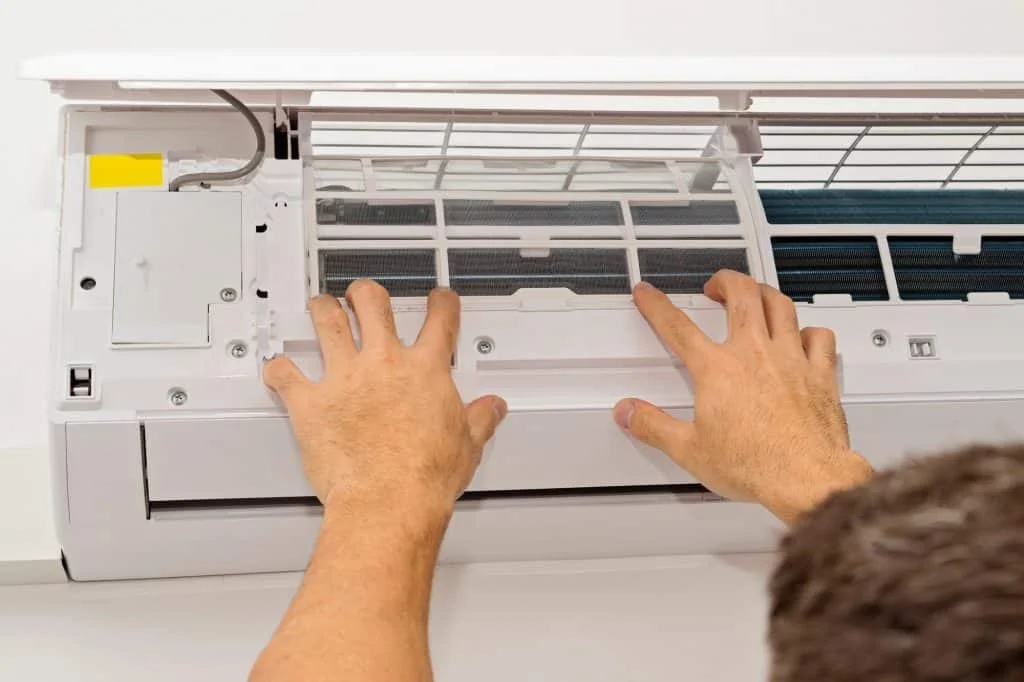
Filter replacement is the highest-impact DIY task an Orange County homeowner can do this fall. A clean filter reduces energy consumption by up to 15 percent and protects your blower motor from the strain that Santa Ana dust puts on a restricted system.
Fall HVAC Maintenance Tasks You Can Handle Yourself
That said, homeowners can handle several fall maintenance tasks without special tools or licensing. Doing these tasks yourself saves money and keeps you engaged with how your home's systems are performing.
Filter replacement is the easiest and most impactful task. Turn off your HVAC system, locate your return air intake (usually a wall or ceiling grille), and slide out the dirty filter. Note the size printed on the frame (typically 16x25x1 or 20x25x1) and the MERV rating (Minimum Efficiency Reporting Value, the industry standard for measuring filter effectiveness) you want. Standard residential filters are MERV 8, which captures common dust and pollen. If you have pets, allergies, or live in an area affected by wildfire smoke, upgrade to MERV 11 or MERV 12 for finer particle capture. Some homeowners with severe allergies use MERV 13, but this restricts airflow if your system was not designed for it. Talk to your HVAC technician about which rating is right for your specific equipment before upgrading. During Santa Ana wind season, change the filter monthly instead of every 60 to 90 days. A new filter costs $15 to $40, depending on size and rating. For a deeper look at how to decide between cleaning and replacing your filter, read our guide on when to replace your AC filter versus cleaning it.
Vent and register cleaning is another simple task that makes a real difference. Dust accumulates on the grilles and inside the short duct runs leading to each room. You can vacuum the grille face and wipe it clean with a damp cloth. If you have flexible ducts that you can reach from the attic or crawlspace, vacuum the interior carefully without puncturing the duct material. This improves airflow and reduces dust circulation throughout your home.
Changing your HVAC filter alone can reduce energy consumption by up to 15 percent. During Santa Ana wind season, replace your filter monthly instead of the standard every 60 to 90 days.
The thermostat mode switch is straightforward but timing matters. When the outdoor temperature consistently drops below 60 degrees Fahrenheit, switch your thermostat from cooling to heating mode. If you have a programmable or smart thermostat, you can set it to switch automatically based on temperature thresholds. If you have a manual thermostat, flip the switch from Cool to Off, wait a few minutes, then switch to Heat. Avoid flipping directly from Cool to Heat instantly, as that is when most system stress occurs. Set the temperature to 68 degrees Fahrenheit during the day for the best balance of comfort and energy efficiency.
For the outdoor unit, walk around your AC or heat pump condenser and remove any leaves, sticks, dirt, or debris that accumulated over summer. Keep a two to three foot clearance around the unit on all sides. Do not restrict the airflow on the sides or top. If your unit is near a tree that drops leaves in fall, you may need to clear it weekly through October and November.
Finally, do a seal check around exterior doors and window frames. Use a caulk gun to fill visible gaps. This does not stop Santa Ana wind infiltration entirely, but it reduces the amount of unfiltered outdoor air entering your home and improves heating efficiency by preventing conditioned air from leaking out. Focus on areas where you feel a draft on a breezy day.
How Much Does Fall HVAC Maintenance Cost in Orange County?
The cost of fall maintenance depends on whether you are paying a professional or doing tasks yourself, and whether you want a basic or comprehensive inspection. Here is what Orange County homeowners typically pay in 2026.
Estimated 2026 Fall HVAC Maintenance Costs in Orange County
| Service | Typical Cost Range | What's Included |
|---|---|---|
| Standard fall tune-up | $150 to $250 | Furnace/heating inspection, filter check, thermostat calibration, basic safety check |
| Comprehensive inspection | $175 to $350 | All standard items plus detailed heat exchanger inspection, full electrical check, refrigerant verification, blower motor evaluation |
| Filter replacement (DIY) | $15 to $40 | One replacement filter, homeowner installed |
| Duct cleaning | $300 to $500 | Professional cleaning of all accessible ductwork, typically 8 to 12 supply and return runs |
| Annual maintenance plan | $150 to $500 per year | Two annual tune-ups (spring and fall), priority scheduling, repair discounts |
Many of our customers invest in the True Maintenance Plan, which includes two annual tune-ups (one in spring and one in fall) plus priority scheduling and discounted repair rates. If you think you might need repairs this winter, the maintenance plan saves money immediately because the diagnostic fee is waived and parts are discounted. If your system stays healthy all winter, you have still captured the efficiency and safety benefits of regular professional maintenance. The plan typically costs $20 to $30 per month, or $240 to $360 per year. For families who want to understand how often you should service your HVAC system, the answer is twice a year: once in spring for cooling and once in fall for heating.
Santa Ana Winds and Your HVAC System
Santa Ana winds are a defining feature of Orange County's fall and early winter weather. They blow hot, incredibly dry air down from the high desert, through the mountain passes, and into the coastal basins. During a Santa Ana event, relative humidity can drop to single digits. The air is so dry that static electricity becomes a problem, skin cracks, and wooden furniture warps. For your HVAC system, Santa Ana winds mean extreme air quality challenges and unprecedented filter stress.
When Santa Ana winds blow, they push fine dust and ash particles into every gap and opening in your home. The outdoor air intake for your HVAC system becomes a dust collector. These particles overwhelm a standard MERV 8 filter in days rather than weeks. This is why we recommend upgrading to MERV 11 or MERV 12 during Santa Ana season if your system can handle the additional airflow restriction. The higher MERV rating catches smaller particles, including the fine particulate matter (PM2.5) that causes respiratory irritation. You will need to change the filter more often, possibly every two to three weeks instead of monthly, but the trade-off is significantly cleaner indoor air for your family.
If your area experienced wildfire activity and smoke is in the air during Santa Ana wind events, filter changes become even more critical. Some homeowners switch to MERV 13 during active fire season. The caveat is that MERV 13 filters are very restrictive. If your blower motor is not powerful enough to push air through that dense media, the system will strain and potentially overheat or freeze up. Before switching to MERV 13, confirm with your HVAC technician that your equipment can handle it without starving for airflow.
Angel, one of our senior technicians, has worked through multiple fire seasons inYorba Linda and Anaheim Hills. The pattern he sees every year is the same: October and November bring the first Santa Ana winds and the first wildfire smoke advisories. Filter consumption spikes. Indoor air quality complaints spike. Homeowners who waited until December to change their filter end up with a system that has been breathing dirty air for two months. Angel recommends checking your filter every week during active Santa Ana events and replacing it as soon as it looks grey or feels heavy. A $20 filter change is cheaper than the blower motor repair that results from running a clogged filter for too long.
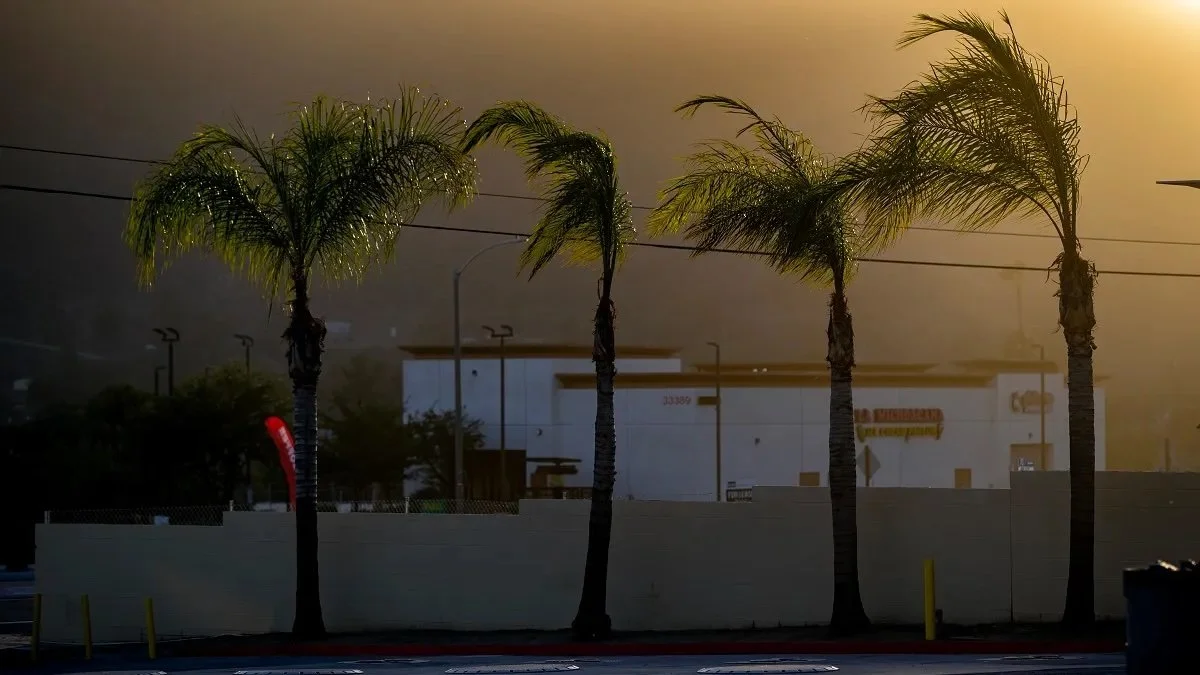
Santa Ana winds push fine dust, ash, and wildfire particulates into every opening in your home. J Martin recommends upgrading to a MERV 11 or MERV 12 filter before wind season arrives and checking it weekly during active events to protect your equipment and your family's air quality.
Common Fall HVAC Problems We See in Orange County
After more than a decade and thousands of service calls across Orange County, we recognize the seasonal patterns. Fall brings specific problems that summer and winter do not.
Furnace ignitor failure is the most common fall issue. The ignitor sits idle all summer. It is a ceramic component that heats up when voltage runs through it to light the gas burner. When you switch to heating mode for the first time, dust on the ignitor prevents it from reaching full temperature. The burner does not light, or it lights intermittently and shuts down. This is why a fall tune-up includes ignitor cleaning and verification. Replacing an ignitor after it fails costs $150 to $300 for the part and labor. Cleaning it during a routine tune-up before failure is included in the standard maintenance price.
Clogged filters causing blower overwork is another pattern we see repeatedly. Some homeowners run their AC heavily through September, then switch to heating in October without changing the filter. The filter is already restricted from three months of cooling season use. Add Santa Ana dust on top of that, and the blower motor is working 30 to 40 percent harder than normal. This accelerates wear on the motor bearings and shortens the motor's lifespan. A filter replacement costs $20 to $40. A blower motor replacement costs $400 to $800. The math is straightforward.
Thermostat mode switching problems affect homes with older mechanical thermostats that do not transition cleanly between cooling and heating. When you flip the lever from AC to Heat, the system hesitates, runs both cycles briefly, or does nothing at all. This is often a calibration issue or a dirty contact switch inside the thermostat. Modern digital and smart thermostats rarely have this problem, but if you have an older home in Orange County built in the 1970s or 1980s, be aware that the mode switch might require a pause. Give the system two to three minutes after switching before expecting it to respond.
Cracked heat exchangers are the most serious fall discovery. Summer heat stress combined with the thermal cycling of years of use can weaken the heat exchanger metal. During the fall inspection, small cracks appear that were not there in spring. We catch these during the safety check because we specifically look for them. If you skip fall maintenance and run the furnace through the winter without an inspection, the crack can grow. A small crack that could have been identified in October becomes a carbon monoxide hazard by January. Heat exchanger replacement costs $600 to $1,200, and for furnaces older than 15 years, full replacement is often the better investment.
If your system is already showing signs of trouble, such as your heater producing cool air instead of warm, check out our troubleshooting guide on why your heater is blowing cold air and what to do about it. But if you schedule a fall tune-up before late October, you are paying standard rates and getting ahead of problems. If you wait until December when the furnace is running around the clock and something breaks, you are looking at emergency pricing and a cold house while you wait for parts.
Call us at (714) 462-4686 to get your fall inspection on the calendar before the October rush.
How Fall Maintenance Saves You Money on Winter Energy Bills
The timing of fall maintenance also ties directly into your energy costs. Southern California Edison's rate structure means that October through May electricity rates are generally lower than the summer peak period of June through September. The average SCE residential rate is approximately 35 cents per kilowatt-hour as of 2026, though time-of-use plans can range from 24 to 74 cents per kilowatt-hour depending on the time of day and season. Heating season rates (October through May) tend to fall on the lower end of that range, but even at the lower rate, an inefficient furnace or heat pump wastes real money.
A clean HVAC filter alone can reduce energy consumption by up to 15 percent, saving a typical Orange County household $10 to $20 per month during heating season.
A furnace that is properly tuned, with a clean heat exchanger, a calibrated thermostat, and properly balanced airflow, operates at peak efficiency. Changing your filter is the single highest-impact DIY task, with potential energy savings of up to 15 percent. A tuned furnace running on a thermostat set to 68 degrees during the day and 65 degrees at night uses significantly less energy than a neglected system with a dirty filter, drifting thermostat, and restricted airflow. The efficiency difference between a maintained system and a neglected one can be $30 to $60 per month in heating costs during the coldest months.
Over the five-month heating season (November through March), that efficiency difference compounds. A $200 fall tune-up that saves you $40 per month in energy costs pays for itself in five months and returns savings every month after that. Add the avoided cost of a single emergency repair (typically $300 to $500 or more), and the return on investment is clear. For homeowners who have been wondering whether the expense of annual maintenance is justified, our article on the true cost of skipping HVAC maintenance lays out the math in detail.
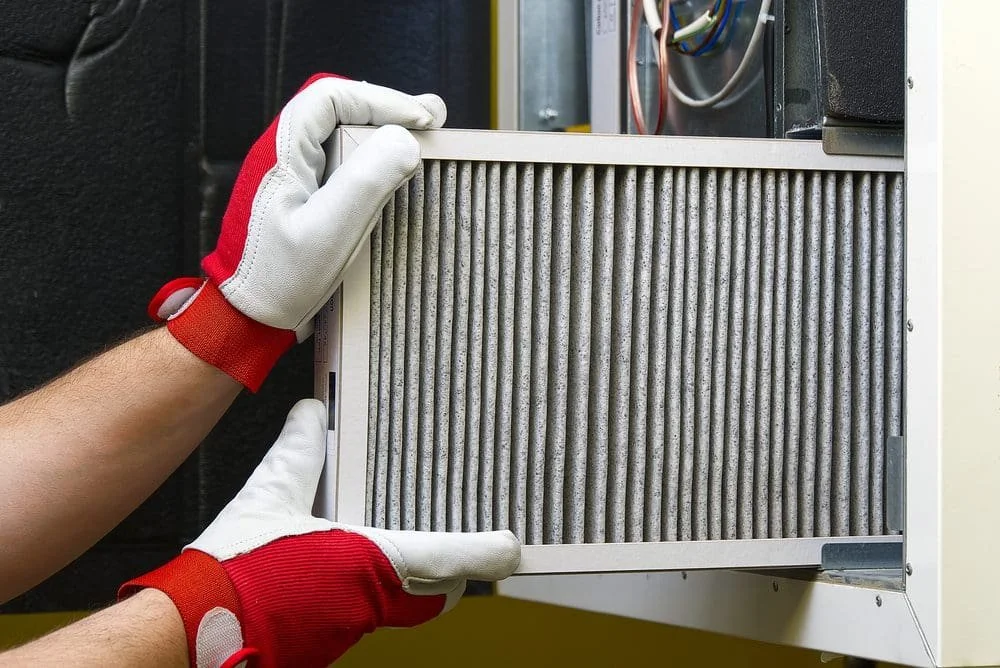
This is what three months of Orange County cooling season plus the first Santa Ana wind event does to a standard MERV 8 filter. If yours looks anything like this, your system is already working harder than it should. A $20 filter change now beats a blower motor repair in December.
Frequently Asked Questions
When should I schedule fall HVAC maintenance in Orange County?
The ideal window is late September through early October, before Santa Ana winds arrive and before heating season begins in earnest. By mid-October, most HVAC contractors in Orange County are busy with heating system emergencies and may not have availability for two to three weeks. Scheduling in September gives you faster appointment availability, lower urgency pricing, and peace of mind heading into the cooler months.
How much does a fall HVAC tune-up cost in Orange County?
A standard fall tune-up runs $150 to $250 in Orange County in 2026. A comprehensive inspection that includes detailed heat exchanger analysis, full electrical diagnostics, and refrigerant verification ranges from $175 to $350. The variation depends on the complexity of your system (furnace versus heat pump) and the depth of inspection your equipment requires based on its age.
Can I do fall HVAC maintenance myself or do I need a professional?
You can handle several tasks yourself: filter replacement, outdoor unit clearance, vent and register cleaning, thermostat mode switching, and sealing gaps around doors and windows. These DIY tasks save money and keep your system running between professional visits. However, the critical safety checks (heat exchanger inspection for cracks, ignitor cleaning, electrical verification, carbon monoxide testing) require professional training and specialized equipment. We recommend doing the DIY tasks yourself and hiring a licensed professional for the heating system inspection and safety verification.
How often should I change my HVAC filter during Santa Ana wind season?
During normal months, change your filter every 60 to 90 days. During Santa Ana wind season (typically October through November in Orange County), switch to monthly filter changes. If you are experiencing active wildfire smoke events, check your filter weekly and replace it as soon as it looks grey or feels heavy. A dirty filter reduces airflow, strains the blower motor, and increases energy consumption by up to 15 percent.
Should I get my ducts cleaned in the fall?
Duct cleaning is not required as part of routine fall maintenance, but it can be beneficial if you have never had your ducts cleaned or if you notice visible dust clouds when the system starts up after being idle. Professional duct cleaning costs $300 to $500 for a typical Orange County single-family home and removes accumulated dust that reduces air quality and blower efficiency. If your budget allows only one service this fall, prioritize the professional furnace tune-up over duct cleaning. The safety and functionality checks are more critical.
What happens if I skip fall HVAC maintenance?
Skipping fall maintenance increases your risk of mid-winter breakdowns when HVAC companies charge emergency rates and your home is cold while you wait for service. You also miss critical safety inspections, such as the heat exchanger check for cracks that could cause carbon monoxide leaks. Over a five-year period, homeowners who skip annual maintenance typically spend more on emergency repairs, premature equipment replacement, and wasted energy than they would have spent on regular tune-ups.
How do I switch my thermostat from cooling to heating mode?
Most thermostats have a physical switch or digital toggle labeled Cool, Heat, or Auto. Switch from Cool to Off first, wait two to three minutes, then switch to Heat. This pause allows the system to reset and prevents stress on the compressor and reversing valve. If you have a smart thermostat, you can set an automatic seasonal switch based on outdoor temperature thresholds. We recommend making the switch when nighttime temperatures consistently stay below 60 degrees Fahrenheit, which is typically mid to late October for most of Orange County.
Get Your Orange County Home Ready for Fall
Fall HVAC maintenance is one of those investments that pays for itself every year. It keeps your family safe from carbon monoxide risks, saves you money on energy bills, and prevents the mid-winter emergency that always seems to happen on the coldest night of the year when you have guests staying over.
J Martin Indoor Air Quality has served Orange County families since 2014, and our HVAC maintenance team handles hundreds of fall tune-ups every year. Licensed, bonded, and insured (CA Contractor License CL#998956), with a 4.97-star rating across thousands of reviews. When you call, you reach Kathryn or Alexis at our Anaheim office, not a national call center. When a technician arrives, it is one of our full-time crew members: Jesus, Jack, Angel, Irvin, Kevin, Tony, Christian, Rex, Carlos, Santiago, or Joel. No subcontractors. No surprises on the invoice.
Call us at (714) 462-4686 to schedule your fall tune-up before the October rush, or request a free consultation online.