
How Often Should You Service Your AC in Orange County? (2026 Guide)
Posted on July 30, 2026
You should service your AC at least once a year, and in Orange County's climate, scheduling that tune-up in early spring, before the first heat wave hits, gives your system the best chance of running reliably through summer. Homes with older equipment, pets, or heavy cooling demands should consider twice-yearly service, once in spring before cooling season and once in fall before heating season.
The reason is straightforward. Your air conditioner runs harder here than in most parts of the country. Orange County averages roughly 320 sunny days per year, and inland cities like Anaheim Hills, Yorba Linda, and Brea regularly see summer temperatures above 95 degrees, with heat waves pushing past 105. That kind of sustained load wears down components faster than a system running in a milder climate. Annual professional service catches small problems (a worn capacitor, a slow refrigerant leak, a clogged condensate drain) before they become expensive emergency repairs in the middle of July.
Our technician Jesus completed 47 spring tune-ups across Yorba Linda and Anaheim Hills last March alone. On roughly one in five of those visits, he found an issue that would have caused a breakdown within weeks: a failing capacitor, a cracked contactor, a condensate line so clogged it was days away from flooding the furnace cabinet. Those are $150 to $400 repairs that, caught early, prevent $800 to $2,500 emergency calls later. That pattern repeats every spring across our professional HVAC maintenance service calls throughout Orange County.
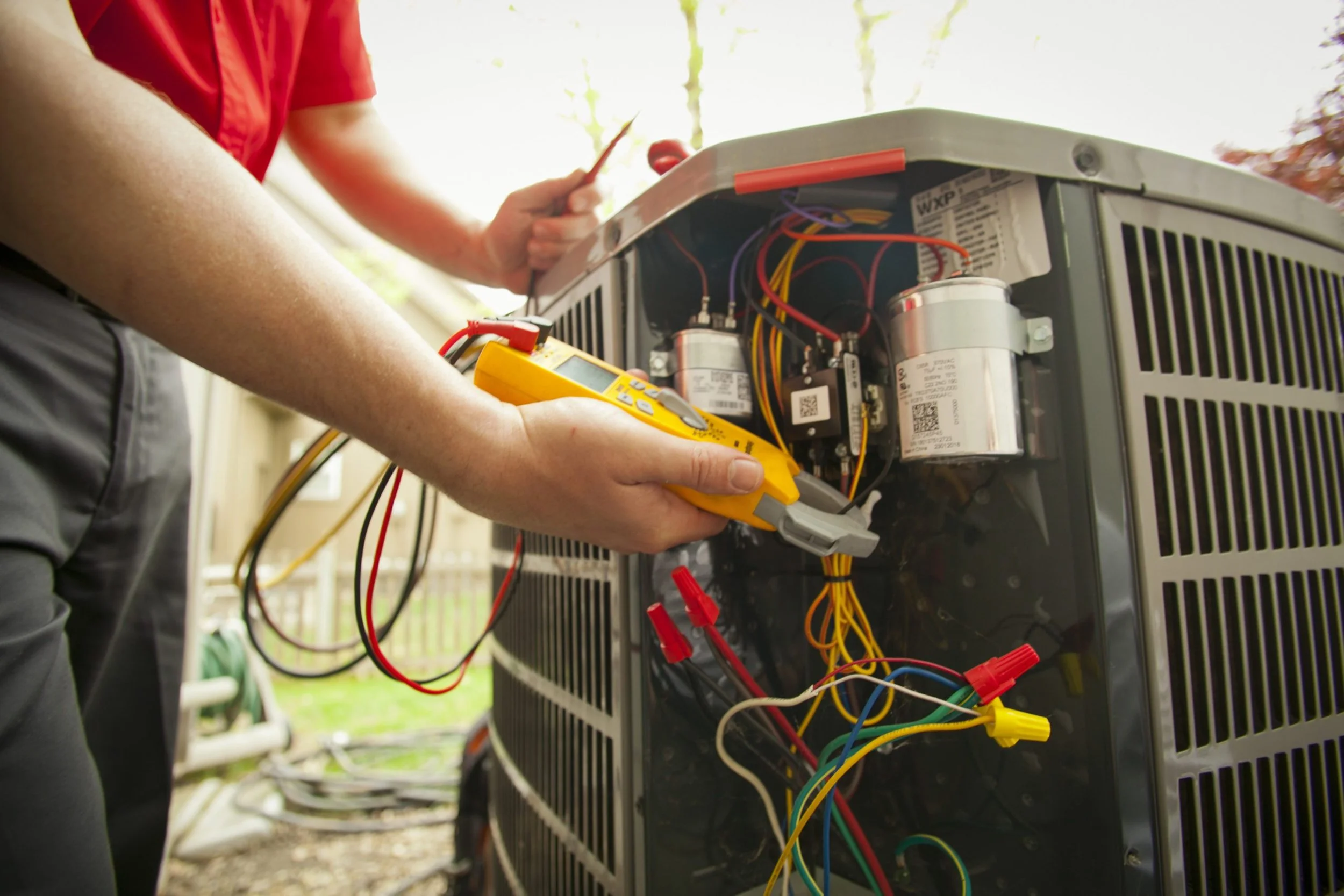
A capacitor testing 10 percent below rated value looks fine today and fails in August. J Martin technicians catch these issues during spring tune-ups across Yorba Linda and Anaheim Hills before they become $300 to $500 emergency calls. Schedule yours at (714) 462-4686.
Quick Answer
Most Orange County homeowners should service their AC once a year in early spring, before the cooling season begins. Homes with systems older than 10 years, pets, or locations in inland areas like Anaheim Hills and Yorba Linda should consider twice-yearly service. A standard tune-up costs $129 to $199 in Orange County in 2026, and the Department of Energy estimates that well-maintained systems use 15 to 20 percent less energy, which typically covers the cost of the service within one cooling season on Southern California Edison rates.
What "Servicing Your AC" Actually Means
When HVAC professionals talk about "servicing" your air conditioner, they mean a comprehensive inspection, cleaning, and testing visit that goes far beyond what a homeowner can do with a garden hose and a new filter. A professional AC tune-up typically takes 45 minutes to an hour and covers every major component in the system.
The technician starts with the outdoor condenser unit, checking refrigerant levels with manifold gauges, inspecting the compressor for unusual noise or vibration, cleaning the condenser coils, and verifying that the fan motor draws the correct amperage. Inside, they inspect the evaporator coil for ice buildup or dirt accumulation, test the blower motor and capacitor, check the condensate drain line for clogs, verify thermostat calibration, and measure airflow across the supply and return registers.
Electrical testing is a critical part of the visit that homeowners cannot replicate. The technician measures voltage and amperage at the contactor, capacitor, and compressor terminals. A capacitor that tests at 10 percent below its rated microfarads is still working today but will likely fail within weeks under heavy summer load. Catching that during a spring tune-up means a $150 to $250 scheduled repair instead of a $300 to $500 emergency call on a Saturday afternoon in August.
The distinction between homeowner maintenance and professional service matters. Changing your filter, clearing debris from the outdoor unit, and keeping your vents open are important tasks you should do regularly between professional visits. But diagnosing a slow refrigerant leak, measuring electrical draw, identifying a cracked heat exchanger, or recalibrating a TXV (thermostatic expansion valve, the component that meters refrigerant flow into your evaporator coil) requires training, tools, and a contractor license. Annual professional service and regular homeowner upkeep work together to keep your system running efficiently.
Why Once a Year Is the Minimum for Orange County Homes
The standard industry recommendation across the country is one AC service per year. In Orange County, that recommendation carries extra weight because of the local climate. Coastal cities like Newport Beach and Laguna Niguel enjoy average summer highs in the upper 70s to mid-80s, but inland communities like Anaheim Hills, Yorba Linda, and Brea regularly sit 10 to 15 degrees hotter on summer afternoons. When inland temperatures hit 100 degrees or higher during heat waves, your AC runs nearly continuously for hours at a stretch.
That sustained runtime creates stress that milder climates simply do not produce. The compressor cycles more frequently. The capacitor charges and discharges thousands of additional times per season. The condenser coils collect more dust and pollen because the fan runs longer. Refrigerant pressures climb higher, which puts more strain on copper fittings and brazed joints. Without annual service to catch these wear patterns early, a system that would last 18 to 20 years in a moderate climate may only last 12 to 15 years in inland Orange County.
An air conditioner in inland Orange County runs approximately 1,800 to 2,200 cooling hours per year, compared to 1,000 to 1,400 hours for the same system near the coast. That 40 to 60 percent difference in runtime is the single biggest factor in how quickly components wear out.
Orange County also has specific environmental factors that accelerate the need for maintenance. Santa Ana wind events blow fine dust and debris into condenser coils. Coastal moisture promotes corrosion on outdoor unit components, particularly in cities within a few miles of the ocean. Pollen from the region's year-round growing season clogs filters faster than in areas with a true winter dormancy. These conditions make annual professional cleaning and inspection more important here than in regions with fewer environmental stressors.
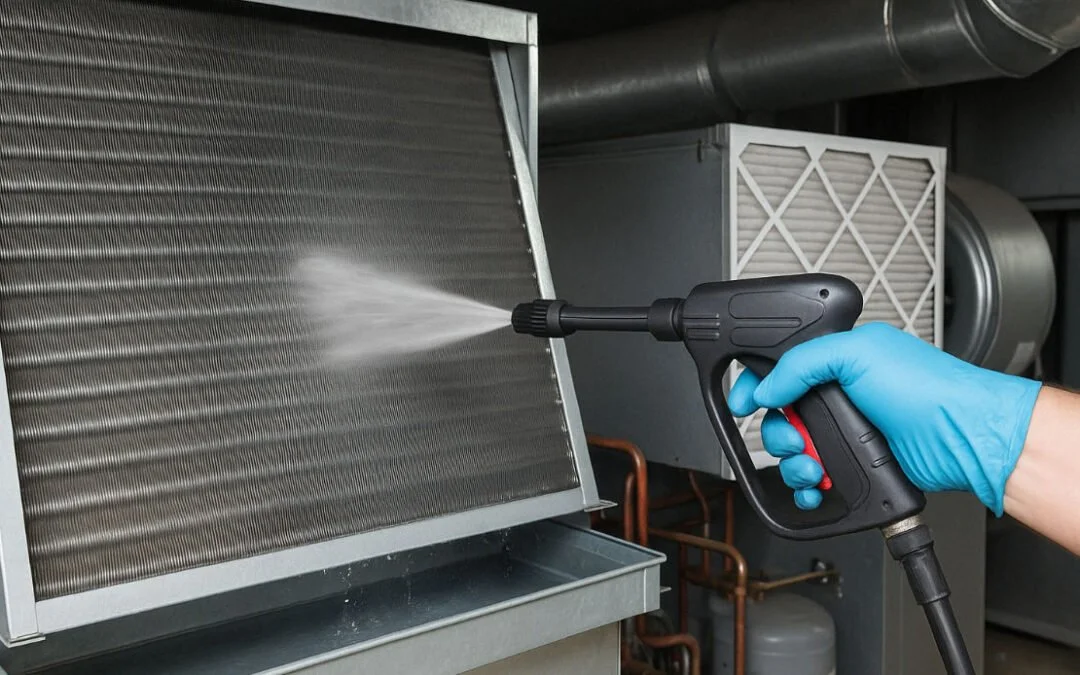
Professional HVAC coil cleaning by J Martin IAQ. Better airflow, lower energy bills, and a longer-lasting system. Call (714) 462-4686 to schedule service in Orange County.
When Twice-a-Year Service Makes More Sense
Once a year is the minimum. For some Orange County homes, twice-yearly service (spring and fall) is the smarter investment. The spring visit focuses on the cooling system before summer, and the fall visit addresses the heating side before winter, while also rechecking components that took a beating during the cooling season.
Homes with systems older than 10 years benefit most from biannual service. As equipment ages, capacitors weaken, electrical connections loosen, and refrigerant fittings develop micro-leaks that worsen over time. Catching these issues in both spring and fall significantly reduces the odds of a mid-season breakdown. The industry data supports this: air conditioning systems that receive regular professional maintenance typically last 15 to 20 years, while neglected systems often fail at 10 to 12 years. For a system that costs $8,000 to $18,000 to replace, adding 5 to 8 years of life through biannual maintenance is a strong return on a $250 to $400 annual investment.
Households with pets should also consider twice-yearly service. Dog and cat hair and dander circulate through the return air system, coating the evaporator coil and blower wheel with a layer of fine debris that reduces airflow and forces the system to work harder. We see this consistently in homes across Mission Viejo and Ladera Ranch, where many families have multiple pets. A spring coil cleaning makes a noticeable difference in cooling performance for these homes.
Inland location is the third factor. If your home is in Anaheim Hills, Yorba Linda, Brea, Placentia, or Villa Park, your system works significantly harder than a comparable system near the coast. The combination of higher temperatures, longer runtimes, and more dust exposure means components wear faster. Twice-yearly service for inland homes is not an upsell; it is a reflection of what the equipment actually endures.
What Happens When You Skip AC Maintenance
Skipping annual AC service does not save money. It shifts cost from a predictable, affordable tune-up to an unpredictable and expensive repair or replacement. The Department of Energy estimates that well-maintained HVAC systems use 15 to 20 percent less energy than systems that have not been serviced. On Southern California Edison's current residential rate of approximately 34.5 cents per kilowatt-hour (as of January 2026), that efficiency loss adds up fast.
A typical Orange County home spends $1,800 to $3,600 per year on electricity, with heating and cooling accounting for 40 to 50 percent of that total. A 15 to 20 percent efficiency loss on the HVAC portion alone can add $135 to $360 per year to your electric bill, more than the cost of the tune-up that would have prevented it.
The financial impact extends beyond energy bills. A dirty evaporator coil forces the compressor to run longer and at higher pressures, which shortens compressor life. A failing capacitor that is not caught during a tune-up will eventually cause the compressor to stall, and a locked-rotor event can damage the compressor windings permanently. A clogged condensate drain can send water into the furnace cabinet, corroding the heat exchanger and creating a potential carbon monoxide hazard when heating season arrives. Each of these cascading failures starts with something a $129 to $199 tune-up would have caught.
We see the consequences of deferred maintenance regularly. When Angel responded to an emergency call in Fullerton last July, the homeowner's AC had stopped cooling on a 104-degree day. The system had not been serviced in over three years. The capacitor had failed, the contactor was pitted, and the condenser coil was so caked with debris that the compressor was running at dangerously high head pressures. The repair bill came to $1,100. A spring tune-up would have caught all three issues for under $200 in parts and labor on top of the service call. The real cost of skipping maintenance is the difference between those two numbers, and that gap widens every year you defer. You can read more about the long-term financial impact in our guide to the true cost of skipping HVAC maintenance.
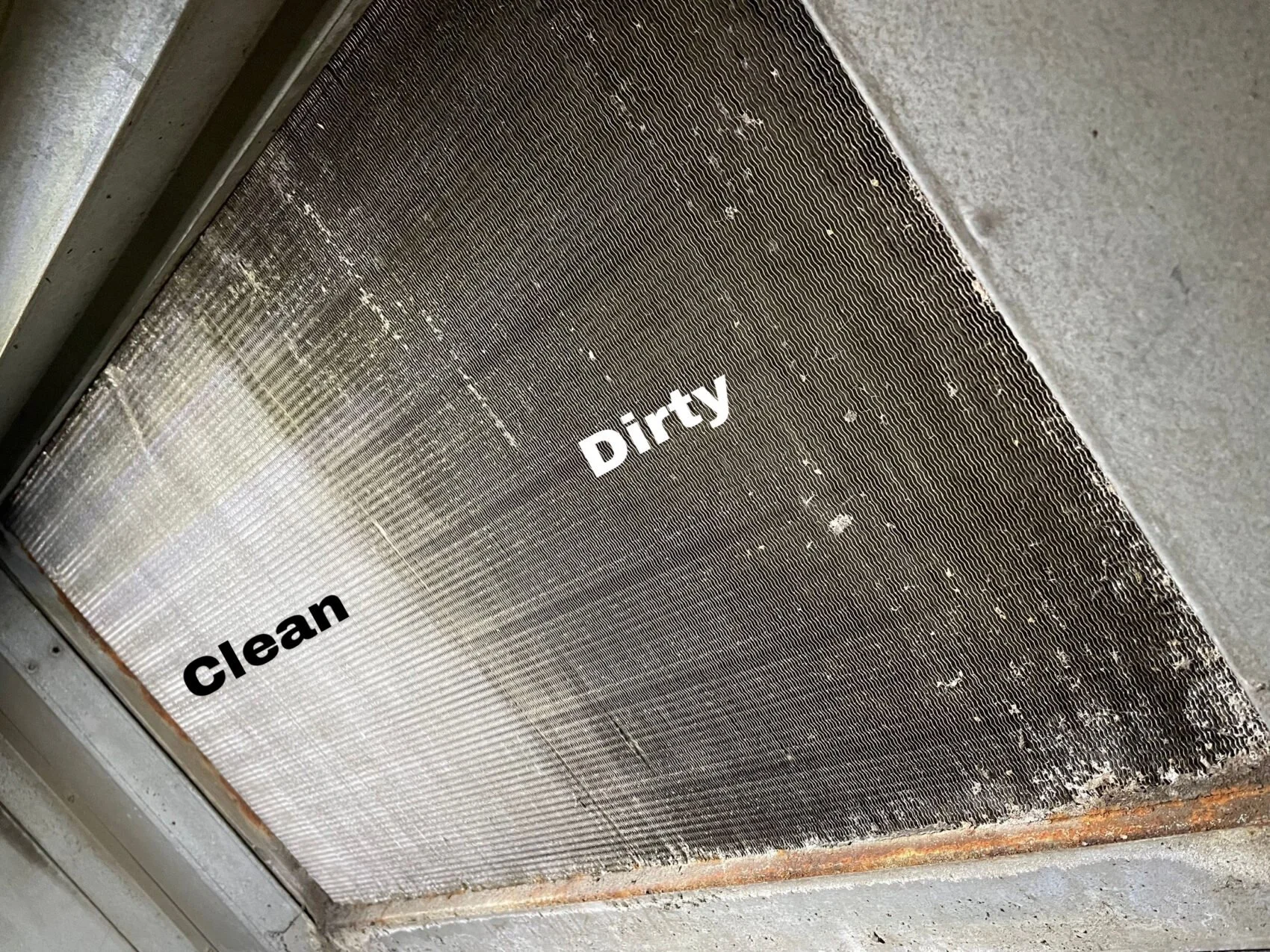
This is what a neglected HVAC coil looks like, and it could be inside your system right now. Dirty coils restrict airflow, force your system to work harder, and drive up your energy bill every month. Don't wait until it breaks down. Call J Martin IAQ at (714) 462-4686 to schedule a coil cleaning today.
The Best Time of Year to Schedule AC Service in Orange County
The best time to service your AC in Orange County is March or April, before the first sustained heat arrives. Scheduling in early spring accomplishes three things. First, your system is inspected and tuned before it faces its heaviest workload. Second, if the technician finds a problem that requires a part, there is time to order and install it before you actually need the AC. Third, HVAC contractors are less backlogged in March than in June, so you get more flexible scheduling and often shorter appointment windows.
Waiting until summer is the most common and most costly mistake. Once temperatures hit the 90s consistently (typically late May through October in inland OC), HVAC companies shift into emergency repair mode. Scheduling a routine tune-up in July or August means competing with homeowners whose systems have already failed. Wait times stretch from days to over a week, and some companies charge premium rates during peak season. By contrast, a March or April appointment is easy to schedule, often available within a few days, and priced at standard rates.
For homeowners who service their system twice a year, the second visit should land in October or November, before heating season. This fall visit covers the furnace or heat pump heating components: checking the heat exchanger for cracks, testing the igniter and flame sensor, verifying gas pressure, and cleaning the burner assembly. Orange County winters are mild compared to the rest of the country, but nighttime temperatures regularly drop into the 40s in inland areas from December through February, and a furnace failure during a cold snap is just as disruptive as an AC failure during a heat wave. For a month-by-month guide, see our HVAC maintenance calendar for Orange County homeowners.
How Much Does an AC Tune-Up Cost in Orange County in 2026?
A standard AC tune-up in Orange County runs $129 to $199 in 2026. A comprehensive tune-up that includes deeper diagnostics, coil cleaning, and electrical testing typically costs $199 to $299. Annual maintenance plans, which bundle one or two tune-ups with repair discounts and priority scheduling, range from $150 to $400 per year depending on what is included. These figures reflect pricing from established, licensed Orange County HVAC contractors. For a full breakdown of what drives the price, see our detailed guide on AC tune-up costs in Orange County.
2026 AC Service Costs in Orange County: One-Time vs. Maintenance Plan
| Service Type | Typical Cost (2026) | What's Included |
|---|---|---|
| Standard tune-up (one-time) | $129 to $199 | Basic inspection, filter check, refrigerant pressure test, thermostat calibration |
| Comprehensive tune-up (one-time) | $199 to $299 | Full electrical testing, coil cleaning, condensate drain flush, blower inspection |
| Annual maintenance plan | $150 to $400 per year | 1 to 2 tune-ups, repair discounts (10 to 20%), priority scheduling, no overtime fees |
A standard AC tune-up in Orange County costs $129 to $199 in 2026. For homes with older systems or heavy cooling demands, a comprehensive tune-up at $199 to $299 provides deeper diagnostics and coil cleaning that can prevent costly mid-summer failures.
Pricing below $75 for a full tune-up should raise a red flag. Some companies advertise $29 or $49 "tune-up specials" that serve primarily as a door-opening tactic to sell repairs or replacements. A legitimate inspection that includes refrigerant pressure testing, electrical measurements, and coil cleaning takes 45 minutes to an hour of a licensed technician's time. The economics of a $29 visit do not support that level of service. If the price sounds too good, it probably is.
Maintenance Plans vs. One-Time Tune-Ups
The choice between paying for individual tune-ups and enrolling in an annual maintenance plan depends on your system's age, your home's cooling demands, and whether you value priority scheduling during peak season. For many Orange County homeowners, particularly those with systems older than five years, a maintenance plan pays for itself within the first year.
A typical maintenance plan includes one or two scheduled tune-ups per year (spring and fall), a discount of 10 to 20 percent on any repairs, priority scheduling (meaning you move to the front of the line during summer emergencies), and waived overtime or after-hours fees. Some plans also waive the trip charge on diagnostic visits entirely. The annual cost ranges from $150 to $400, which is comparable to or less than paying for two individual tune-ups at standard rates.
Maintenance Plan vs. Pay-Per-Visit: Cost Comparison Over 3 Years (2026 Estimates)
| Scenario | Pay-Per-Visit (3 Years) | Maintenance Plan (3 Years) |
|---|---|---|
| Two tune-ups per year | $774 to $1,194 | $450 to $1,200 |
| One repair during the period | $400 to $800 (full price) | $320 to $640 (with 20% discount) |
| One emergency visit (after hours) | $150 to $250 overtime fee | $0 (waived) |
| Estimated 3-year total | $1,324 to $2,244 | $770 to $1,840 |
Our True Maintenance Plan at J Martin is built around the idea that maintenance should prevent problems, not just inspect for them. When Jack or Carlos arrives for a plan visit, they are not checking boxes on a clipboard. They are running the same diagnostic process we use on emergency calls: measuring amperage, checking capacitor values, verifying refrigerant charge with superheat and subcooling calculations, and cleaning the system thoroughly enough that it runs as close to factory efficiency as possible. The difference is that on a plan visit, they are finding and fixing small issues on a scheduled appointment instead of diagnosing failures on an emergency basis.
For homeowners with systems older than 10 years, a maintenance plan is particularly valuable because older equipment is more likely to need a repair during the year. If even one repair is covered by the plan discount, the math tips heavily in favor of the plan. For newer systems still under manufacturer warranty, a plan also makes sense because many warranties require documented annual maintenance to remain valid. If a compressor fails at year six and the manufacturer asks for maintenance records, having a plan with a licensed contractor (CA Contractor License CL#998956) provides that documentation automatically.
What You Can Do Between Professional Visits
Professional service once or twice a year does not mean you should ignore the system the rest of the time. Several simple homeowner maintenance tasks, performed monthly during the cooling season, keep your AC running efficiently between professional visits and reduce the likelihood of problems that require an emergency call.
Changing or cleaning your air filter is the single most impactful thing you can do. Daikin, one of the primary brands we install, recommends checking the filter every two weeks during heavy use. In Orange County's cooling season (roughly May through October), checking monthly and replacing when dirty is a practical minimum. A clogged filter restricts airflow across the evaporator coil, which reduces cooling capacity and forces the system to run longer. The Department of Energy estimates that replacing a dirty filter with a clean one can reduce energy consumption by 5 to 15 percent. For more guidance on choosing the right filter, see our article on how often to replace HVAC filters.
Keep the outdoor condenser unit clear. Remove leaves, grass clippings, and any debris that accumulates around the unit, and maintain at least two feet of clearance on all sides. Trim back shrubs or plants that have grown too close. A restricted condenser cannot reject heat efficiently, which raises refrigerant pressures and increases energy consumption. This is especially important in OC neighborhoods where landscaping grows year-round.
Check your condensate drain line monthly during cooling season. This is the PVC pipe (usually 3/4-inch white pipe) that drains water from the evaporator coil to the outside of your home or to a floor drain. If algae or debris clogs this line, water backs up into the drain pan, and if the pan overflows, it can cause water damage to the furnace cabinet, drywall, and flooring. Pouring a cup of white vinegar down the drain line every month helps prevent algae buildup. If you notice water around your indoor unit, call for service before the damage spreads.
Warning Signs Your AC Needs Service Before the Scheduled Date
Even with annual professional maintenance, problems can develop between visits. Knowing the warning signs helps you catch issues early, before they escalate into full system failures. If you notice any of the following, schedule a service call rather than waiting for your next planned tune-up.
Warm or lukewarm air blowing from the vents when the thermostat is set to cool is the most obvious sign. This could indicate a refrigerant leak, a failed compressor, a tripped circuit breaker, or a malfunctioning reversing valve on a heat pump. Weak airflow from the vents, even when the system is running, may point to a clogged filter, a failing blower motor, or ductwork issues. Unusual noises, including grinding, squealing, buzzing, or clicking, typically signal mechanical problems that worsen with continued operation. Short cycling, where the system turns on and off every few minutes without completing a full cooling cycle, often indicates an oversized system, a refrigerant issue, or an electrical problem. A sudden increase in your electricity bill without a corresponding change in usage patterns can indicate declining system efficiency, often from dirty coils, low refrigerant, or a failing component drawing excess power.
If your system is running but not keeping up, especially during a heat wave, call sooner rather than later. Mid-summer emergency wait times in Orange County can stretch past a week. Calling at the first sign of trouble, rather than after a complete failure, often means the difference between a repair appointment within a day or two and a miserable week without cooling. If your system is showing any of these symptoms, our AC maintenance checklist can help you determine whether it is something you can address yourself or whether it requires a professional visit. And if you already know you need help, call us at (714) 462-4686 for same-day service when available.
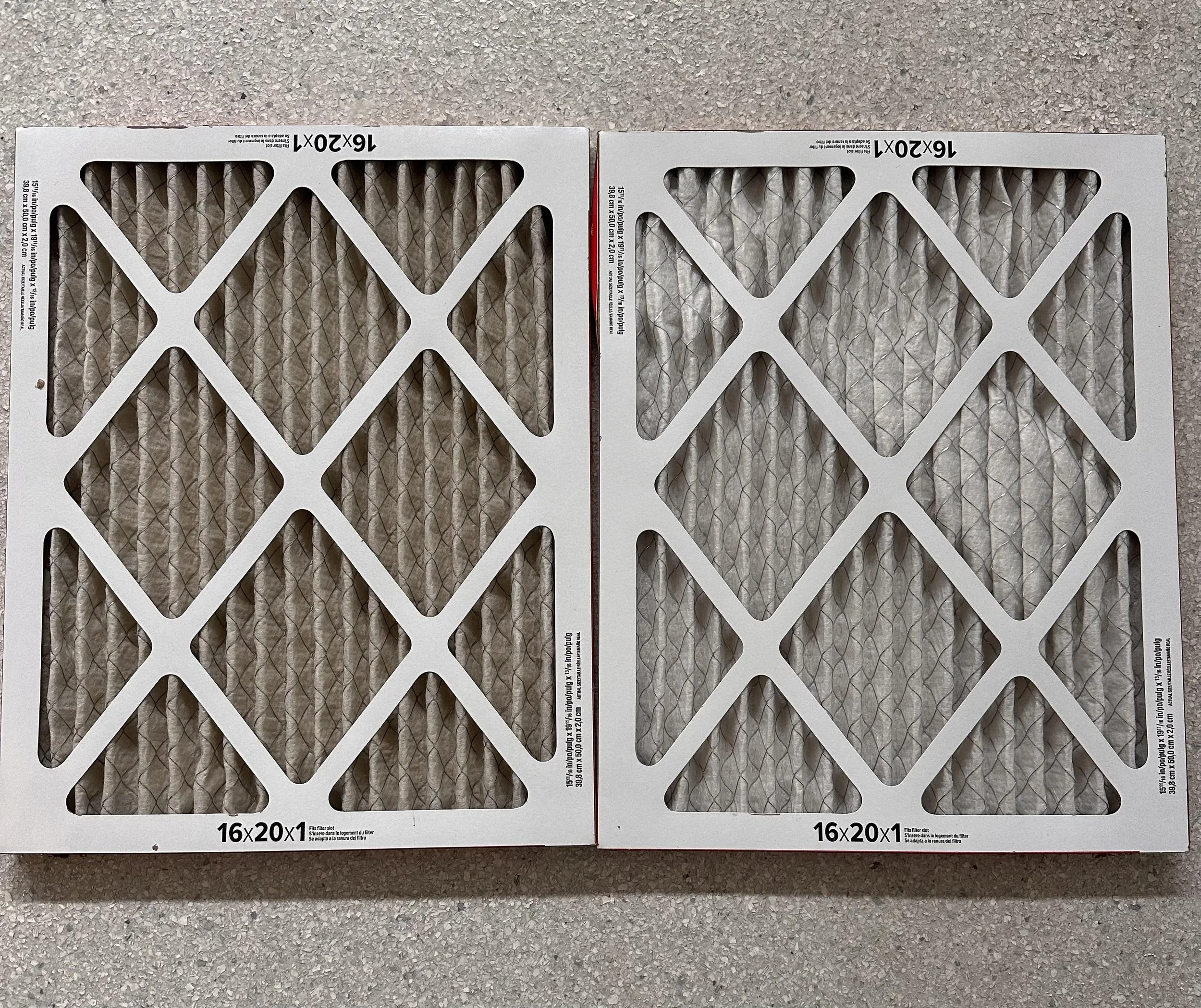
Replacing your air filter regularly is one of the simplest things you can do to protect your HVAC system and the air quality in your home. J Martin IAQ recommends checking your filter every 30 to 90 days depending on your home and usage. Serving Yorba Linda, Anaheim Hills, and Placentia.
How AC Service Frequency Changes as Your System Ages
The service frequency that makes sense for your home depends partly on how old your equipment is. A new system installed in the last three to five years, with a valid manufacturer warranty and modern components, genuinely needs only one professional tune-up per year. The parts are new, the refrigerant charge is at factory spec, and the electrical connections are tight. Annual service at this stage is about maintaining efficiency and documenting the maintenance history that the warranty may require.
Systems in the five-to-ten-year range are in their prime working years but are starting to accumulate wear. Capacitors, contactors, and fan motors are the components most likely to show degradation in this window. Once-yearly service is still appropriate for most homes, but homeowners in this range should pay close attention to the technician's notes. If the tech reports a capacitor testing at the low end of its tolerance or a contactor showing pitting on the contact surfaces, those are early warnings. Addressing them proactively during the tune-up is far less expensive than waiting for a failure.
For systems older than 10 years, twice-yearly service becomes a more prudent investment. The compressor, the most expensive component in the system, is approaching the second half of its expected lifespan. Refrigerant leaks become more likely as brazed fittings age and vibration fatigues copper lines. Electrical components operate closer to their failure thresholds. Biannual service at this stage is not about convenience; it is about extending the remaining life of a system that costs $8,000 to $18,000 to replace. Every additional year of service life you gain through maintenance is a year you are not financing a new system. Industry data from ASHRAE (the American Society of Heating, Refrigerating and Air-Conditioning Engineers) indicates that air conditioning systems typically last 15 to 20 years with proper maintenance, which means a 10-year-old system serviced biannually has a realistic chance of lasting another 5 to 10 years.
Frequently Asked Questions
How often should I service my AC if I have pets?
If you have dogs or cats, service your AC at least once a year and strongly consider twice-yearly visits. Pet hair and dander circulate through the return air system and coat the evaporator coil and blower wheel, reducing airflow and efficiency. You should also change your air filter every 30 to 60 days during the cooling season, rather than the standard 60 to 90 days, to prevent buildup from restricting airflow.
Is an AC tune-up really worth the cost in Orange County?
Yes. A standard tune-up costs $129 to $199 in Orange County in 2026. The Department of Energy estimates that well-maintained systems use 15 to 20 percent less energy. On Southern California Edison's current residential rate of roughly 34.5 cents per kilowatt-hour, a 15 percent efficiency improvement on a system that accounts for 40 to 50 percent of your electric bill can save $135 to $360 per year. The tune-up pays for itself in energy savings alone, before accounting for the avoided repair costs.
What happens during a professional AC tune-up?
A professional AC tune-up includes inspecting and cleaning the condenser and evaporator coils, testing refrigerant pressures and charge levels, measuring electrical draw on the compressor and fan motors, checking capacitor values, testing the contactor, flushing the condensate drain line, calibrating the thermostat, inspecting the air filter, and verifying airflow across the supply and return registers. The visit typically takes 45 minutes to one hour for a single-system home.
Can I service my AC myself instead of hiring a professional?
You can and should handle basic maintenance tasks between professional visits: changing the air filter monthly during the cooling season, keeping the outdoor unit clear of debris with two feet of clearance, and flushing the condensate drain line with vinegar. However, checking refrigerant levels, measuring electrical components, and diagnosing mechanical issues require specialized tools, training, and a California contractor license. Professional and homeowner maintenance complement each other and are not interchangeable.
How often should I change my AC filter in Orange County?
During the cooling season (May through October), check your filter monthly and replace it when it looks dirty. Most Orange County homes need a filter change every 30 to 90 days, depending on the filter type, whether you have pets, and how much dust your home generates. Standard 1-inch fiberglass filters should be replaced every 30 days during heavy use. Higher-efficiency pleated filters rated MERV 8 to 13 can last 60 to 90 days. Daikin recommends checking every two weeks during peak use.
Does regular AC maintenance really save money on energy bills?
Yes, and the savings are well-documented. The Department of Energy reports that regular HVAC maintenance reduces energy consumption by 15 to 20 percent. For a typical Orange County home spending $1,800 to $3,600 per year on electricity, with HVAC accounting for 40 to 50 percent, that translates to $135 to $360 in annual savings. Clean coils, proper refrigerant charge, and unrestricted airflow allow the system to cool your home using less electricity per hour of runtime.
Should I get my AC serviced in spring or fall?
Spring is the most important time for AC service in Orange County, ideally March or April. This ensures your cooling system is inspected and ready before temperatures climb. If you service your system twice a year, schedule the second visit in October or November to cover the heating components before winter. Spring service is the priority because cooling season is longer and more demanding than heating season in Orange County's climate.
Keep Your AC Running Strong All Year
The answer to how often you should service your AC in Orange County comes down to your system's age, your home's location, and how hard the system works. Once a year in early spring is the baseline. Twice a year is the right call for older systems, pet owners, and inland homes. The cost of annual service, $129 to $199 for a standard tune-up, is a fraction of the cost of the emergency repairs and premature replacements that result from deferred maintenance. Our HVAC maintenance team has seen that pattern play out across thousands of Orange County homes over the past decade, and the math always favors prevention.
J Martin Indoor Air Quality has served more than 5,000 Orange County families since 2014. Licensed, bonded, and insured (CA Contractor License CL#998956), with a 4.97-star rating across thousands of reviews, we are a family-owned company with a full-time crew, not a franchise and not a call center. When you call, Kathryn or Alexis answers at our Anaheim office. When a technician arrives, it is Jesus, Jack, Angel, or another member of our full-time team, the same people who will be here next year for your next service visit.
Call us at (714) 462-4686 to schedule your AC tune-up or ask about our True Maintenance Plan, or request a free consultation online.