
Spring AC Prep for Yorba Linda Homeowners: Get Ready Before the Heat Hits
Updated on May 20, 2026
Last June, a homeowner in East Lake Village called us in a panic. It was 101 degrees outside. She'd turned on her air conditioner for the first time since the previous fall, and nothing happened. No cool air. No fan. Just a faint clicking sound from the outdoor unit and a house that was climbing past 85 degrees with three kids under ten running around. When our technician arrived, he found a capacitor that had failed. A $175 part that, if it had been caught during a spring tune-up, would have been a routine replacement. Instead, it was an emergency service call on one of the busiest days of the year. She'd waited three hours for us, and she was one of the lucky ones. Some of our competitors were quoting two- and three-day wait times that week.
We hear this story in some variation dozens of times every summer at J Martin Indoor Air Quality. The details change. Sometimes it's a frozen evaporator coil caused by a filter that hasn't been changed since last year, sometimes it's a refrigerant leak that's been slowly getting worse, sometimes it's ductwork that finally disconnected in the 160-degree attic. But the theme is always the same. The homeowner skipped spring prep, and now they're dealing with a bigger, more expensive, more stressful problem in the middle of a heat wave.
This guide is going to help you avoid being that homeowner. It's built specifically for Yorba Linda, not copy-and-pasted from some national HVAC website that doesn't know the difference between our dry inland heat and a humid Florida summer. We're going to cover everything you can do yourself this spring, what it should cost when you bring in a professional, and how Yorba Linda's specific climate and housing stock affect your AC system in ways that homeowners in other parts of Orange County don't have to think about. By the end, you'll know whether you can handle your spring AC prep yourself or whether it's time to book a professional AC tune-up in Orange County.
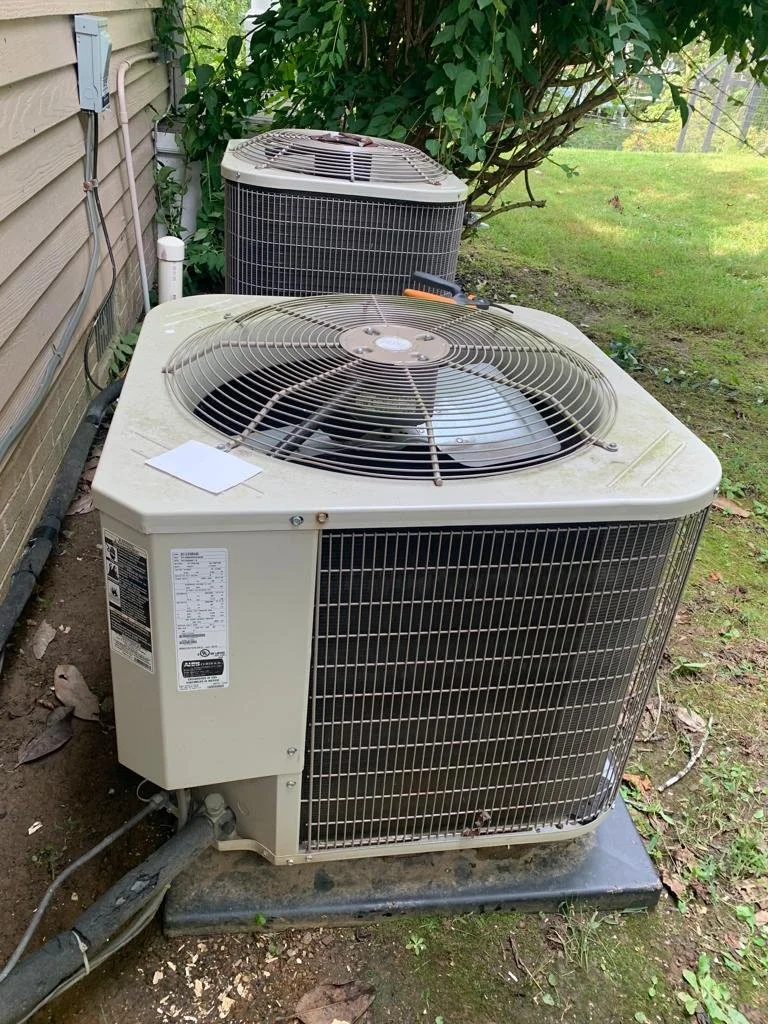
The outdoor condenser unit is the first place Yorba Linda homeowners should check during spring AC prep.
Why Yorba Linda's Climate Demands Spring AC Prep
Yorba Linda sits in a unique microclimate within Orange County. We're an inland community nestled against the foothills of the Santa Ana Mountains at the northeastern edge of the county. That geography means our summers play by different rules than what homeowners experience in coastal cities like Newport Beach or Huntington Beach, where ocean breezes keep things relatively mild. While coastal temperatures hover in the comfortable low 80s during summer, Yorba Linda's average highs climb into the mid-to-upper 80s from June through September, with August averaging around 87°F. Those are just the averages. During heat waves, which seem to arrive earlier and last longer with each passing year, Yorba Linda can easily hit 100°F or higher. We've seen stretches where it stays above 95 for five, six, seven consecutive days. That kind of sustained heat puts enormous stress on an air conditioning system that hasn't been prepped.
What makes this even more punishing for your AC is the dry heat. Yorba Linda receives only about 13 to 15 inches of rain per year, and almost none of it falls between May and October. That means dust accumulates on everything: your outdoor condenser unit, your ductwork, your air filter, and every component in between. Santa Ana winds make this dramatically worse. Those hot, dry winds sweep through from the east, carrying dust, pollen, and fine particulate debris right into your HVAC system. If you haven't prepped your system before those winds kick up, you're asking your air conditioner to work overtime while breathing through a dirty straw.
The other factor that makes spring prep non-negotiable here is the age of our housing stock. Many Yorba Linda neighborhoods were developed between the late 1960s and early 1990s. East Lake Village was built starting in 1979 around that 15-acre private lake. Bryant Ranch features homes from the 1960s through the 1980s, many of which still have original R-22 refrigerant systems that are now incredibly expensive to service. Even the homes near the Nixon Library are a mix of mid-century and 1970s-era construction. If your home falls into this age range, there's a good chance your HVAC equipment has been replaced at least once, but the ductwork may still be original. Ductwork that's been sitting in attic heat exceeding 150°F during summer for 30, 40, or even 50 years doesn't perform like it used to. Insulation degrades. Joints separate. Connections loosen. All of that affects how efficiently your system cools your home when the heat arrives. If you're curious about what duct deterioration actually looks like and when cleaning versus full replacement makes sense, we covered that in depth in our Complete Guide to Air Duct Cleaning.
Start Outside: Your Condenser Unit
The first thing every Yorba Linda homeowner should do when spring rolls around is walk outside and take a hard look at your condenser unit, the big metal box sitting on a concrete pad, usually along the side or back of your house. Over the fall and winter months, this unit collects more debris than most people realize. Leaves from your neighbor's liquidambar trees, dirt blown in by Santa Ana winds, cobwebs, and sometimes even nesting materials from small animals or insects that found shelter during the cooler months.
Before you touch anything, go to your electrical panel and flip the breaker that controls your AC system to the off position. Safety always comes first. Once the power is completely off, take a few minutes to clear away anything that's accumulated around the unit. You want at least two feet of clearance on all sides for proper airflow. In Yorba Linda neighborhoods like Hidden Hills and Eastside, where mature landscaping is common, bushes and ornamental grasses growing into this clearance zone over the winter is one of the most frequently overlooked problems we encounter.
Look at the condenser fins themselves, the thin metal slats that wrap around the outside of the unit. They're designed to allow air to flow through freely. When they get bent or clogged with debris, your system's efficiency drops fast. You can carefully straighten mildly bent fins with a fin comb, which costs about $10 to $15 at any hardware store. For cleaning, use a garden hose (not a pressure washer, which damages the fins) and spray gently from the inside out, pushing debris away from the unit rather than deeper into it.
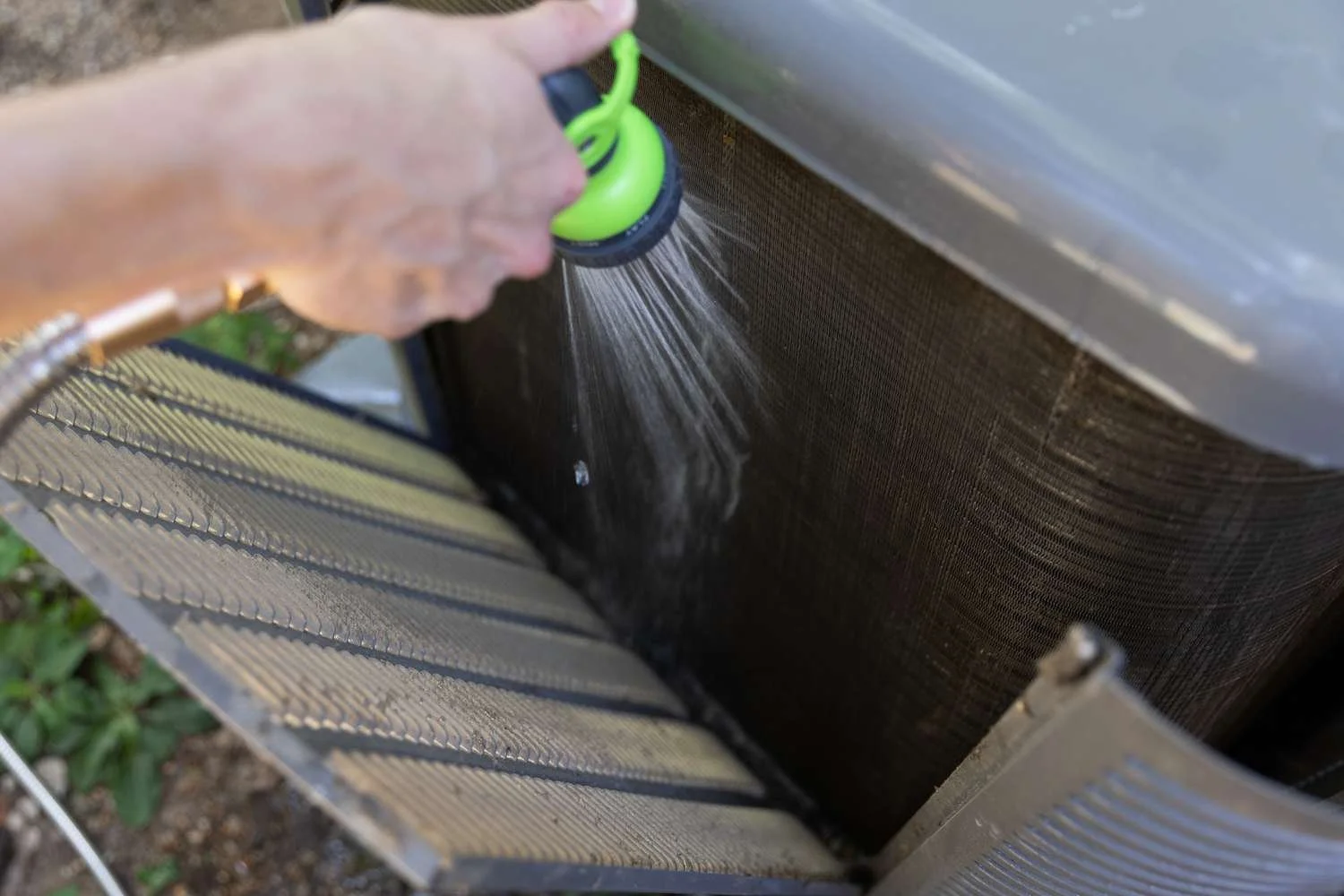
Dirty condenser coils force your AC to work harder and raise energy bills. A quick spring cleaning can restore efficiency before Yorba Linda's summer heat arrives.
While you're out there, inspect the refrigerant lines running between the outdoor unit and your house. These are the copper tubes wrapped in foam insulation. If the insulation is cracked, missing, or deteriorated, it reduces your system's ability to efficiently transfer refrigerant. Replacing foam insulation sleeves is cheap, typically under $10 for materials, and can make a measurable difference in cooling performance. However, if you notice frost or ice on these lines, oily residue around fittings, or hear a hissing sound, stop and call a professional. These are signs of a refrigerant leak, and that's not something you should attempt to diagnose or fix yourself. Refrigerant handling requires EPA Section 608 certification, and improper handling can damage your system and create serious safety hazards.
Replace Your Air Filter: The Single Most Impactful DIY Step
If there's one piece of advice you take from this entire post, let it be this: check and replace your air filter before you run your AC for the first time this spring. This is the single most impactful thing a homeowner can do for their HVAC system, and it takes less than five minutes.
In Yorba Linda's dusty, dry climate, air filters get dirtier faster than in more humid areas. During the cooling season, we recommend checking your filter every 30 days and replacing it at least every 60 to 90 days. If you have pets, live near one of the equestrian trails that Yorba Linda is known for, or have family members with allergies or respiratory conditions, monthly replacement is the safer bet.
A standard pleated filter with a MERV rating between 8 and 13 works well for most Yorba Linda homes. MERV 8 filters capture dust, pollen, and mold spores effectively. MERV 13 filters also capture bacteria, smoke particles, and some virus carriers, but they create more airflow resistance, meaning your system works harder to push air through them. For most residential systems in our area, a MERV 11 filter offers the best balance between air quality improvement and system performance.
Not sure where your filter lives? Check the return air vent, usually a large grille on a wall or ceiling in a central hallway, or look inside the air handler unit itself, typically located in a closet, garage, or attic. Slide the filter out and hold it up to a light. If you can't see light coming through it, it's past due. A standard filter costs between $5 and $20 depending on size and MERV rating. Neglecting it is one of the most expensive mistakes homeowners make. A clogged filter forces your system to work dramatically harder, spikes your electric bill, and can cause your evaporator coil to freeze, which then requires a professional service call running $150 to $300 just for the diagnosis and thaw.
If you want to go beyond your standard filter and explore advanced air purification options, especially relevant given Yorba Linda's wildfire proximity, our post on indoor air quality solutions covers everything from high-performance media filters to UV light systems and whole-home purification technology.
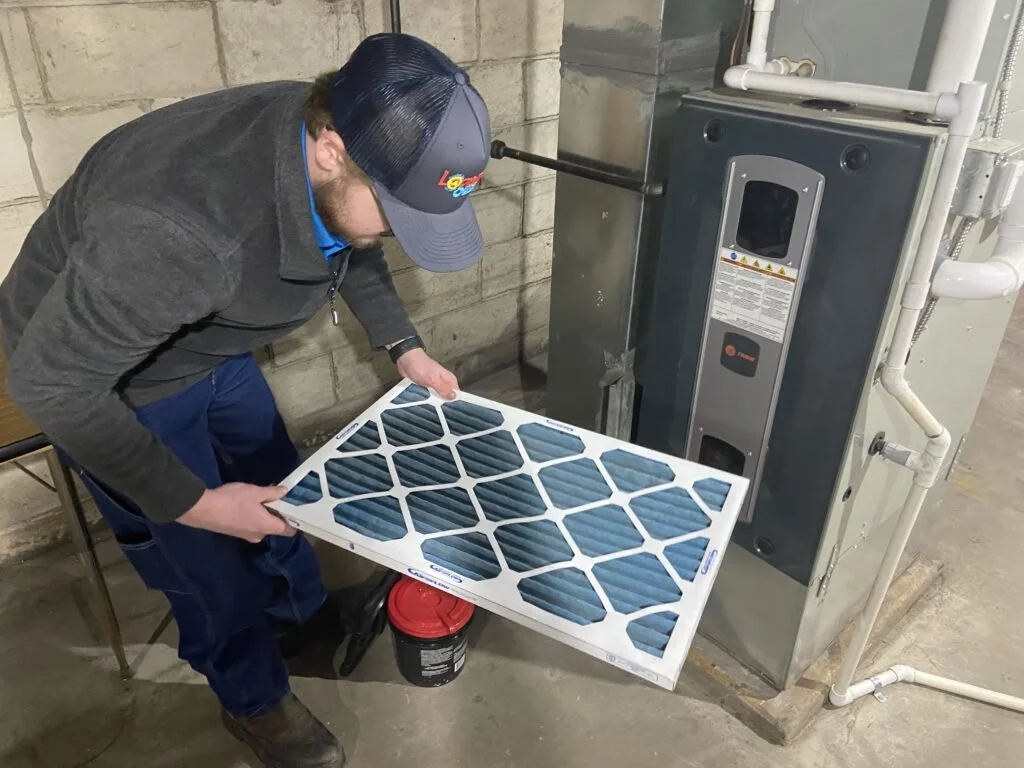
We get this call every summer in Orange County: 'Why isn't my AC cooling the house?' In many cases, the fix starts with replacing a clogged air filter.
Test Your System and Dial In Your Thermostat
Once you've handled the outdoor unit and swapped the filter, head inside and test your system. Set your thermostat to cooling mode and lower the temperature a few degrees below the current indoor temperature. You should hear the system kick on within a minute or two. Then walk through your home and check every vent. Is cool air flowing? Is the airflow consistent from room to room, or are some areas getting strong output while others barely register?
Uneven cooling is one of the most common complaints we hear from Yorba Linda homeowners, and it often traces back to ductwork problems rather than equipment failure. Homes with ductwork running through an attic that hits 150°F or more during summer lose a staggering amount of cooled air before it ever reaches your living spaces. The Department of Energy estimates that duct losses can account for up to 30% of a home's energy consumption. If you're noticing significant temperature swings between rooms, a professional duct evaluation is worth the investment. Sometimes the fix is as simple as sealing a disconnected joint, while other times, especially in pre-1990s homes, replacement may be warranted.
One important note about uneven temperatures: if you've been closing vents in rooms you don't use, thinking it saves energy, that strategy is actually backfiring. Closing supply vents increases pressure in your duct system, which can cause leaks, increase energy consumption, and even damage your equipment over time. We wrote an entire post explaining the truth about closing vents in unused rooms and what to do instead.
While your system is running, listen for unusual sounds. A steady, low hum is normal. Rattling often indicates a loose panel or component. Grinding suggests a motor bearing issue. Squealing or screeching can point to a belt problem in older systems or a struggling motor in newer ones. And clicking that doesn't stop could mean a relay or electrical issue. Any of these sounds warrant a call to a licensed HVAC technician. Small mechanical problems caught in spring cost a fraction of what they cost when they've escalated into a full breakdown during a July heat wave.
If you have a programmable or smart thermostat, spring is also the time to update your schedule for the cooling season. The Department of Energy recommends setting your thermostat to 78°F when you're home and bumping it up to 82°F to 85°F when you're away. Every degree you raise the setpoint saves roughly 3% on cooling costs. Make sure your fan setting is on "AUTO" rather than "ON." The AUTO setting runs the fan only during cooling cycles, which helps your system properly dehumidify the air and prevents moisture from being blown back into your home. The ON setting runs the fan continuously, which sounds helpful but actually re-evaporates moisture off your evaporator coil and pushes it right back into your living space.
Clean Your Vents, Returns, and Condensate Drain
These are quick DIY tasks that punch above their weight. Over the winter, dust settles on your supply vents and return air grilles. When the AC kicks on for the first time, that dust gets blown around your home or pulled into the system. Remove each vent cover, wash them with warm water and mild dish soap, and let them dry completely before reinstalling. While the covers are off, vacuum as far into the duct opening as you can reach with a hose attachment.
If you notice dark discoloration on the walls or ceiling around your vents, that's called filtration soiling, and it indicates air is leaking around the edges of the vent rather than flowing cleanly through it. This happens when vents aren't properly sealed to the ductwork or when your system's airflow is unbalanced. It's not just cosmetic; it means your system isn't distributing air as efficiently as it should be.
Next, check your condensate drain line. Your air conditioner doesn't just cool the air. It also removes moisture, and that moisture drains through a PVC pipe that runs from your indoor air handler to an exterior drain or utility sink. Over time, algae, mold, and debris build up inside this line and cause clogs. When that happens, water backs up into the drain pan and can overflow, causing damage to your ceiling, walls, or flooring. We see this in Yorba Linda homes more often than you'd expect, particularly when the air handler sits in the attic.
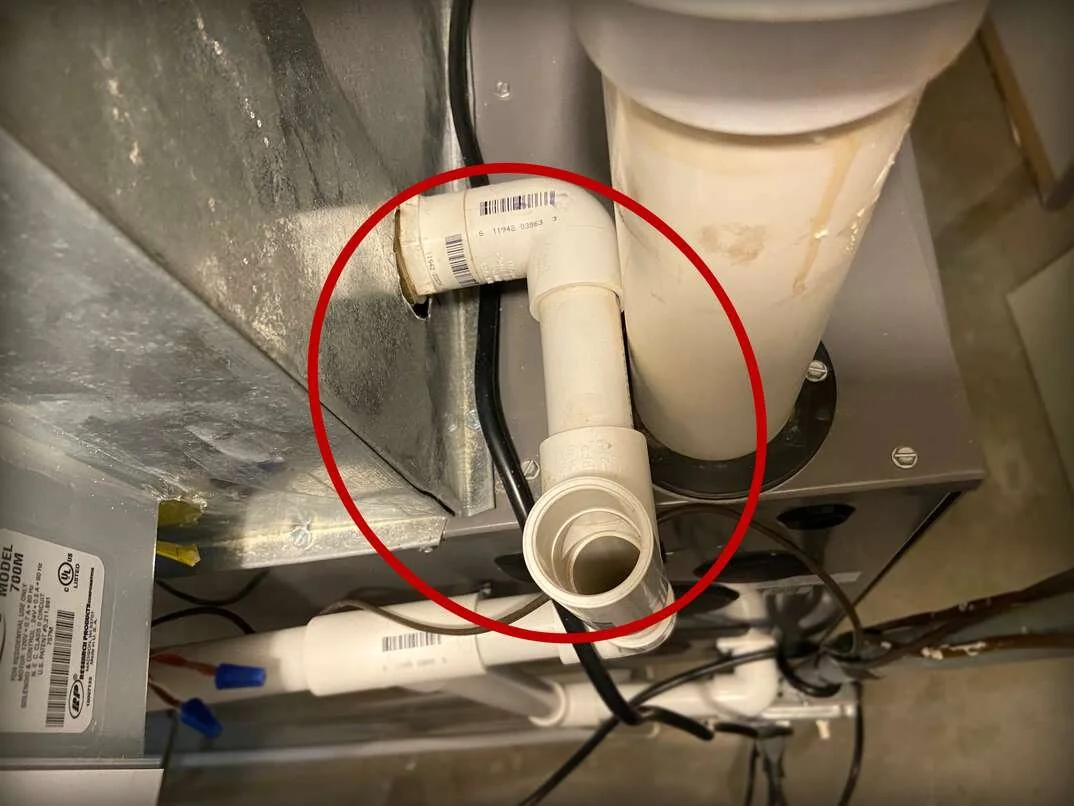
In Yorba Linda's dusty climate, condensate drain lines can clog with algae and debris. Spring HVAC maintenance helps keep the drain clear before summer heat arrives.
To check it, locate where the line exits your home, usually near the outdoor condenser unit or along the foundation. If water drips out when the system is running, the line is clear. If nothing comes out, or if you notice water pooling around your indoor unit, it may be clogged. You can try clearing a minor clog by pouring a cup of distilled white vinegar down the drain access point near the air handler. Let it sit for 30 minutes, then flush with clean water. If the clog persists, or if you're already seeing water damage, call a professional immediately. A clogged condensate line is one of the most common causes of HVAC-related water damage, and catching it in spring saves you hundreds or thousands compared to dealing with a flooded ceiling in August.
The Professional Spring Tune-Up: What It Costs and Why It's Worth Every Dollar
Everything we've covered so far is well within most homeowners' ability. But there are critical components of your AC system that require professional tools, training, and certification to inspect and service properly. That's where a spring tune-up comes in.
A professional AC tune-up in Orange County typically costs between $75 and $200 for a standard service, with most homeowners paying around $100 to $150. Some companies offer premium packages with deeper diagnostics for $200 to $350. Here's what a qualified technician does that you can't do yourself: they check refrigerant levels and pressures to verify optimal cooling performance, inspect and test electrical components including the capacitor, contactor, and wiring connections, clean the evaporator coil inside your air handler (nearly impossible to access without proper tools), measure the temperature differential across the coil to confirm the system is cooling correctly (you want 15 to 20 degrees between supply and return air), test the blower motor, check amp draws on major components, and verify that all safety controls are functioning.
The real value isn't just the immediate maintenance. It's early detection. A failing capacitor that costs $150 to $250 to replace during a routine April tune-up becomes a $300 to $500 emergency service call in August when your system dies at 100 degrees and every HVAC company in Orange County has a multi-day wait list. The Department of Energy has found that well-maintained HVAC systems use 15% to 20% less energy than neglected ones. On a typical Yorba Linda summer electric bill that might run $200 to $400 per month, that's $30 to $80 in monthly savings just from keeping your system properly tuned. Over a cooling season, that easily covers the cost of the tune-up itself.
At J Martin, every technician who enters your home is licensed, certified, background-checked, and trained not just on the technical side, but on how to communicate honestly with homeowners about what they actually need. We don't work on commission, which means no one on our team has a financial incentive to recommend a replacement when a repair will do. If you're curious about what goes into our hiring and training process, and why it matters for the person who shows up at your door, we wrote about it in detail in our post on how we screen and train our HVAC technicians.
The R-410A Phaseout: What Every Yorba Linda Homeowner Needs to Know This Spring
This is the section most HVAC blog posts aren't talking about yet, and it's one of the most important things affecting Orange County homeowners right now.
If your AC system was manufactured before 2010, there's a strong chance it uses R-22 refrigerant, commonly called Freon. R-22 production was completely banned in the United States in 2020, and the remaining supply is shrinking every year. If your system needs a refrigerant recharge and it uses R-22, expect to pay $150 to $600 or more depending on how much is needed. That cost is only going up.
But here's what most homeowners don't realize: R-410A, the refrigerant that replaced R-22 and has been the standard in new residential systems since 2010, is also being phased out. Starting January 1, 2025, manufacturers can no longer produce new equipment that uses R-410A. The replacement refrigerants are R-454B (branded as Opteon XL41 by Chemours) and R-32, both of which have significantly lower global warming potential. Existing R-410A systems will continue to be serviced and recharged for years to come, so you don't need to panic and rip out a working system. But this phaseout has consequences that ripple into spring maintenance.
First, R-410A prices are expected to climb as production shifts away from it, similar to what happened with R-22. A recharge that currently costs $100 to $320 may cost more in coming years. Second, if your system is 10 to 15 years old and uses R-410A, and your spring tune-up reveals that it needs significant repairs, you now need to factor in the long-term cost trajectory of that refrigerant when deciding between repairing and replacing. Third, new equipment using the next-generation refrigerants is arriving on the market right now, and many of these systems are significantly more efficient than what they replace. If you've been putting off a conversation about whether your aging system is worth continuing to repair, spring is the time to have it.
We break down exact replacement costs, available rebates (some up to $8,000), and the financial crossover point where replacement makes more sense than repair in our 2025-2026 Guide on HVAC Replacement Cost in Orange County. It's the most detailed pricing guide you'll find for our market, with real numbers we're actually quoting right now.
Don't Forget Your Ductwork
Most homeowners think about the AC unit when they think about spring prep, but the ductwork that distributes cooled air throughout your home is equally important. In Yorba Linda, where the vast majority of homes have ductwork running through the attic, this deserves special attention.
During winter, the ductwork sits relatively cool and undisturbed. But as attic temperatures climb in spring and reach extreme levels during summer, every weakness in your duct system gets amplified. Joints that have loosened over time leak conditioned air into the attic. Insulation that has degraded allows heat to transfer into the duct, warming air before it reaches your rooms. Flex duct that has sagged, kinked, or been compressed by stored items restricts airflow and creates hot spots.
If you feel comfortable accessing your attic, a visual inspection in spring is worthwhile. Look for obvious disconnections, tears in the outer jacket, or sections where the duct has collapsed significantly. Feel connections for escaping air. Even small leaks add up to major energy loss and reduced comfort. Be cautious, though. Attic work should always be done early in the morning when temperatures are coolest. Never enter an attic during the heat of the day in our climate.
The National Air Duct Cleaners Association recommends professional duct cleaning every three to five years. Given Yorba Linda's dusty environment, Santa Ana wind events, and the fact that wildfire smoke particles can infiltrate and linger in ductwork long after fires are contained, homeowners in our area often benefit from cleaning closer to the three-year mark. Professional duct cleaning typically costs between $300 and $600 for a standard home, depending on system size and contamination level. Our Complete Guide to Air Duct Cleaning explains the full process, how to avoid scams, and what to expect from a reputable service.
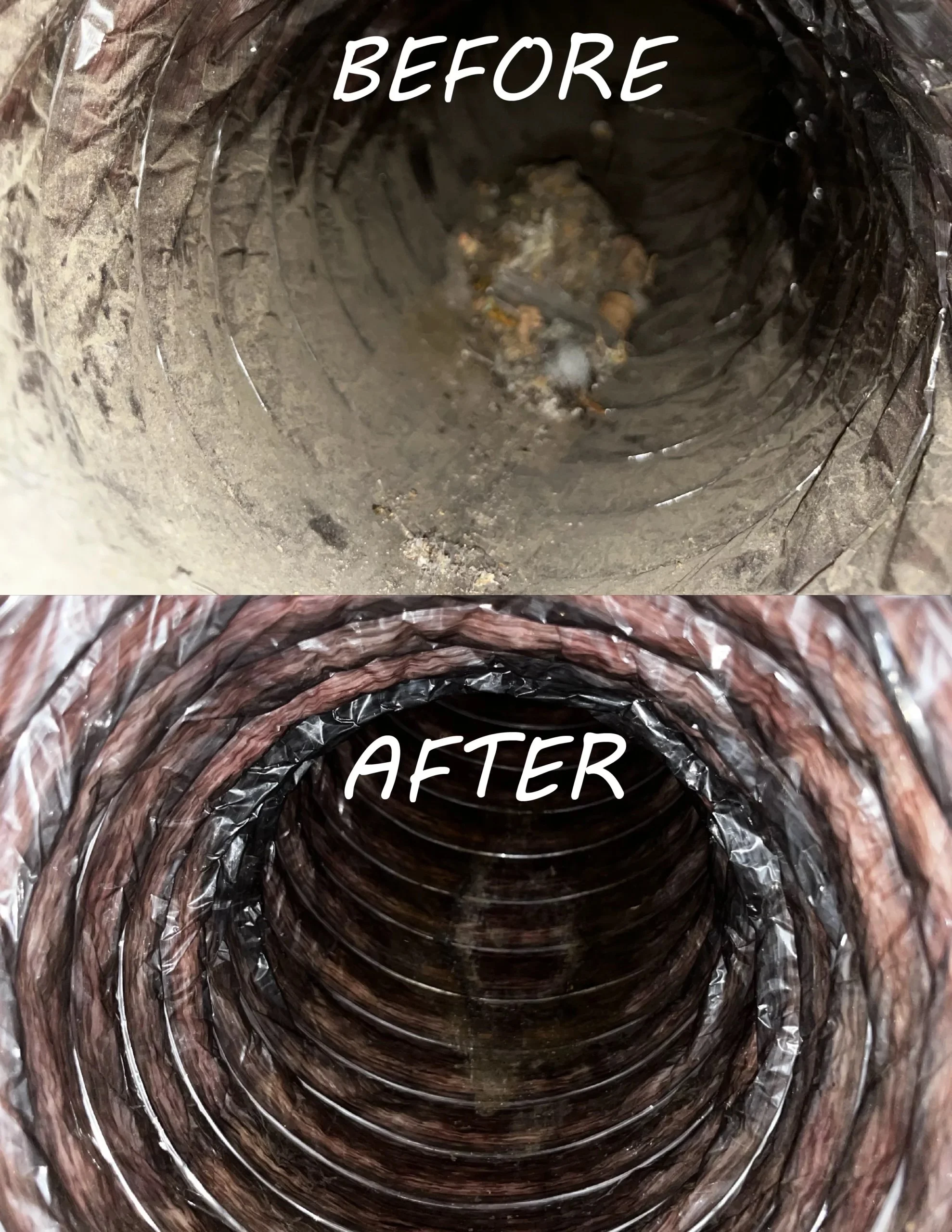
Most homeowners never see the inside of their ductwork. This is what we often find before cleaning and why routine maintenance makes a big difference.
Spring Upgrades That Pay for Themselves in Yorba Linda
Spring prep isn't just about maintaining what you have. It's also the right time to consider upgrades that make a measurable difference in your comfort and your utility bills. A few options make particular sense for our climate and housing stock.
Whole house fans are one of the smartest cooling investments for Yorba Linda homes. Even when daytime highs push into the 90s, our summer evenings regularly drop into the 60s and low 70s thanks to our inland foothill location. A whole house fan pulls that cool evening air through your entire home in three to four minutes, flushing out the hot, stale air through the attic and allowing you to shut off the AC entirely for the night. Many of our customers cut their cooling costs by 50% to 90% during the months they use a whole house fan. The modern QuietCool models we install are nothing like the old units that sounded like a helicopter landing on your roof. They operate quietly enough to run while you sleep. Installation typically runs $1,500 to $3,000 depending on the model and your home's configuration.
Smart thermostats are another worthwhile spring upgrade. If you're still running a basic programmable thermostat or an old mercury dial unit, upgrading to something like an Ecobee or Google Nest can improve your energy efficiency by 10% to 15% and give you remote control of your system from your phone. Many models also adjust for humidity, provide usage reports, send maintenance reminders, and detect when your system is running abnormally. Installation runs $200 to $400 including the thermostat and professional setup.
If indoor air quality is a concern (and with our proximity to wildfire-prone areas in the Chino Hills and Santa Ana Mountains, it should be), spring is a smart time to explore whole-home air purification. These systems install directly into your existing ductwork and treat the air throughout your entire house, unlike portable room purifiers that only address one space at a time. Options range from high-performance media filters to advanced purification technology that neutralizes viruses, bacteria, and volatile organic compounds. We detailed all of these options in our post about improving your home's indoor air quality.
Your Spring AC Prep Timeline
Timing matters. The ideal window for spring AC prep in Orange County is February through early April. Here's how to pace it.
February through early March is when you handle the outdoor unit cleanup, filter replacement, vent and return cleaning, condensate drain check, and thermostat reprogramming. These are all tasks you can knock out on a Saturday morning without any special tools or skills.
Mid-March through early April is when you should schedule your professional tune-up. This is the sweet spot. Technicians aren't yet buried in emergency summer calls, which means more flexible scheduling and sometimes better pricing. If you're on a maintenance plan, your spring tune-up may already be included.
Before the first heat wave, which in Yorba Linda can arrive as early as late April some years, run your system for a full test cycle. Let it operate for at least 30 minutes and walk through every room checking for even, consistent cooling. If anything seems off, you still have time to address it before you genuinely need the system to perform.
When to Skip DIY and Call a Pro Immediately
There are certain situations where spring prep crosses from "homeowner project" to "call a professional right now."
If your outdoor unit has visible damage like dented panels, corroded components, or signs of animal intrusion, a technician needs to evaluate it. If you smell anything unusual when the system runs, whether it's a burning odor, a chemical smell, or a persistent musty scent that doesn't clear after the first few minutes, professional diagnosis is essential. Burning smells can signal electrical issues. Chemical odors may indicate a refrigerant leak. Musty smells often mean mold in your ductwork or on the evaporator coil. This same logic applies to strange smells from your heating system in the fall. We wrote a detailed breakdown in our post about why your heater smells weird when you turn it on, and much of it translates directly to cooling season as well.
If your system turns on but doesn't cool, or short-cycles (turning on and off repeatedly in quick succession), there's likely a compressor, refrigerant, or electrical controls issue that requires professional equipment to diagnose. If you see ice forming on refrigerant lines or the outdoor unit, turn the system off immediately and call for service. Running the system with ice buildup can cause compressor damage, and the compressor is the most expensive component to replace, often costing $1,500 to $3,000 or more for parts and labor.
And if your system is over 15 years old and you're noticing declining performance, climbing energy bills, or increasingly frequent repairs, spring is the right time to have an honest conversation about whether continued repairs still make financial sense. We'll always tell you the truth. At J Martin, 95% of our service calls result in a same-day repair, not a replacement recommendation. But when a system has genuinely reached the end of its useful life, we'll be straight about that too. That approach is a big part of why Yorba Linda homeowners keep choosing us year after year.
The Bottom Line
Most AC failures during Orange County heat waves are preventable. The condenser that overheats because it was surrounded by overgrown bushes. The evaporator coil that freezes because a clogged filter restricted airflow for months. The capacitor that finally gives out because no one checked it since last summer. These are the calls that fill our schedule every July and August, and every one of them could have been a quick tune-up and a $15 filter back in March.
Yorba Linda homeowners who take spring prep seriously enjoy lower energy bills, fewer emergency repairs, better indoor air quality, and a home that stays comfortable even when the thermometer pushes past triple digits. You know how our summers go. Don't wait until you're sweating through it.
If you'd like to schedule a spring professional AC tune-up, have questions about your system, or want to explore options like a whole house fan, air purification, or a smart thermostat upgrade, give us a call at (714) 462-4686. J Martin Indoor Air Quality has been serving Yorba Linda and Orange County families for over 15 years. We're family-owned, every technician is background-checked and certified, and nobody on our team works on commission, so the advice you get is always based on what's best for your home, not what's best for our bottom line. We'd love to help you get ready for summer the right way.
J Martin Indoor Air Quality proudly serves Yorba Linda, Anaheim, Anaheim Hills, Brea, Fullerton, Villa Park, Placentia, Orange, and communities throughout Orange County. Call (714) 462-4686 or visit jmartiniaq.com to schedule service.
J Martin Indoor Air Quality | (714) 462-4686 | Services