
Heater Blowing Cold Air: Causes, Fixes, and What It Costs (2026)
Posted on July 7, 2026
When your heater is blowing cold air, the three most common causes are a thermostat set to "Fan Only" instead of "Auto" (free to fix), a dirty air filter that has caused the furnace to overheat and shut off its burners ($5 to $30 for a new filter), or a failed ignitor or flame sensor ($80 to $350 to replace). In most cases, the furnace itself is not broken. It has either been told to do the wrong thing by the thermostat, starved of airflow by a clogged filter, or shut itself down as a safety precaution because a sensor has failed.
Before calling for service, check two things: your thermostat settings and your air filter. Those two checks alone resolve roughly half the "heater blowing cold air" calls we receive across Orange County each winter. If neither solves the problem, the issue is almost certainly inside the furnace, specifically in the ignition system, the gas valve, or a safety switch, and requires a technician to diagnose safely.
When Jesus arrived at a Lake Forest home last January where the homeowner said the furnace had been running all morning but the house was 58 degrees, the diagnosis took less than ten minutes. The thermostat was set correctly, and the filter was clean. Jesus opened the furnace panel, ran the ignition sequence, and watched the hot surface ignitor glow but fail to light the burners. The flame sensor, coated in a thin layer of oxidation after sitting idle for nine months, was not detecting the flame and was shutting the gas valve as a safety measure. Jesus cleaned the sensor with fine-grit emery cloth, ran three successful ignition cycles to confirm the fix, and the house was back to 72 degrees within an hour. The service call was $125. That is a typical outcome for this type of repair, and it is why we encourage homeowners not to assume the worst when their furnace stops producing heat.
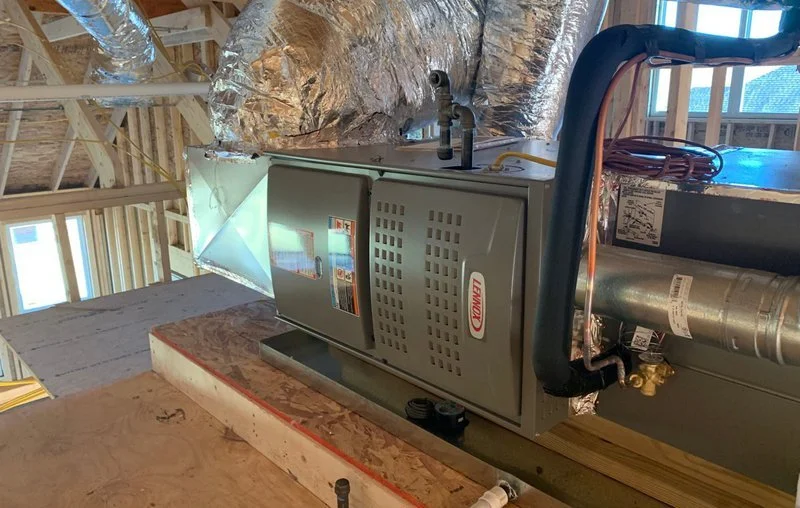
Furnace blowing cold air? Nine times out of ten it's a simple fix. Call J Martin for same-day service: (714) 462-4686.
Quick Answer
A heater blowing cold air is most often caused by a thermostat set to "Fan Only" instead of "Auto" (free fix), a dirty air filter triggering the furnace's safety limit switch ($5 to $30 for a new filter), or a failed ignitor or flame sensor ($100 to $495 to replace). Check your thermostat and air filter before calling for service. If neither resolves the issue, call an HVAC technician for ignition system diagnosis.
Why Your Furnace Blows Cold Air Before It Heats Up
Before diagnosing a problem, it helps to understand that a short burst of cool air at the start of a heating cycle is normal. When your furnace fires up, the blower fan starts before the heat exchanger has fully warmed. This initial air feels cool or room-temperature because it is passing through a heat exchanger that has not yet reached operating temperature. After 2 to 5 minutes, the air should turn warm. If it stays cold after 5 minutes of continuous operation, or if the furnace cycles on and off repeatedly without ever producing warm air, there is a problem worth investigating.
The distinction matters because homeowners sometimes call for service during what is actually normal furnace behavior, especially if they have not run their heating system in months. Orange County's mild climate means many furnaces sit idle from April through November, and the first startup of the season often produces a brief period of cool air along with a burning dust smell, both of which are normal and temporary.
The 7 Most Common Causes of a Heater Blowing Cold Air
After ten years of handling furnace calls across Orange County, we have identified seven causes that account for nearly every "heater blowing cold air" diagnosis. They are listed here from most common (and least expensive) to least common (and most expensive).
1. Thermostat Set to "Fan Only" or "On"
When the thermostat fan setting is set to "On" instead of "Auto," the blower runs continuously, even when the furnace is not actively heating. The air coming from the vents between heating cycles is unheated, room-temperature air that feels cold. Switch the fan setting to "Auto" so the blower only runs when the furnace is actively producing heat. This is the single most common reason for a heater blowing cold air, and the fix costs nothing.
2. Dirty or Clogged Air Filter
A clogged air filter restricts airflow across the heat exchanger, causing the furnace to overheat internally. When the internal temperature exceeds a safe threshold, the high-limit safety switch trips and shuts off the burners. The blower fan continues running to cool the furnace down, pushing unheated air through the vents. This cycle repeats: the furnace lights, overheats within minutes, shuts the burners off, and blows cold air until it cools down enough to try again. Replacing the filter ($5 to $30) restores airflow and stops the overheating cycle. Our guide on how often to replace HVAC filters covers the maintenance schedule.
3. Dirty or Failed Flame Sensor
The flame sensor is a small metal rod inside the burner assembly that detects whether a flame is present after the gas valve opens. If the sensor is coated with oxidation, carbon buildup, or corrosion, it cannot detect the flame and signals the furnace control board to shut off the gas valve as a safety precaution. The burners go out within seconds of lighting, and the blower continues to push cold air. Flame sensor cleaning or replacement costs $100 to $495.
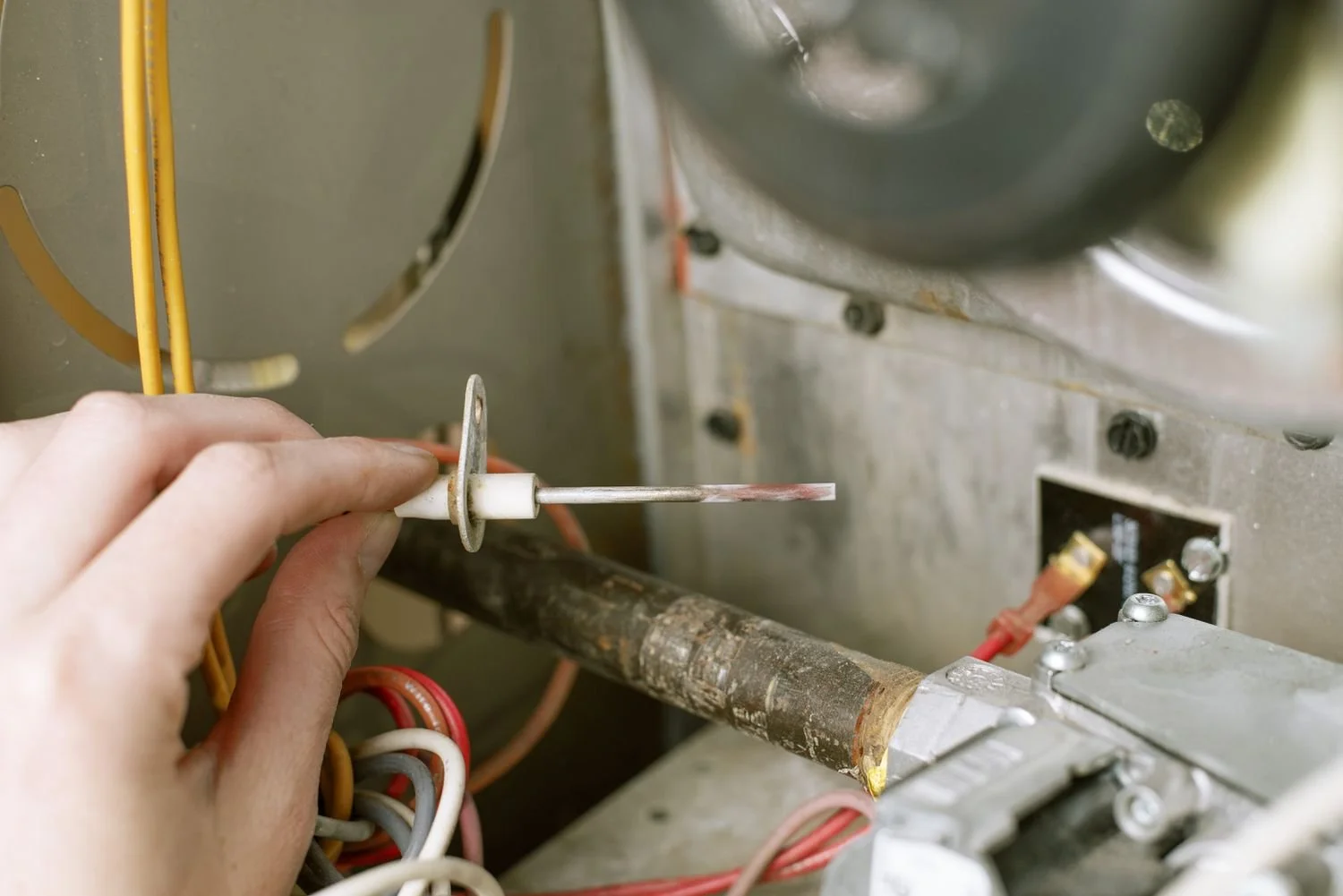
A flame sensor coated in oxidation like this one will shut your furnace down within seconds of every ignition attempt. J Martin offers same-day flame sensor diagnosis across Orange County. Call (714) 462-4686.
4. Failed Hot Surface Ignitor
The hot surface ignitor (HSI) is a ceramic element that glows red-hot to light the gas burners. These ignitors are fragile and have a typical lifespan of 3 to 7 years. When an ignitor cracks or burns out, the gas never lights and the furnace blows cold air. The furnace control board will typically attempt 3 to 4 ignition cycles before locking out entirely. Ignitor replacement costs $150 to $495, or $150 to $650 if you need emergency or after-hours service.
5. Thermocouple Failure (Older Furnaces)
Furnaces manufactured before the mid-1990s often use a standing pilot light and thermocouple instead of an electronic ignition system. The thermocouple is a safety device that keeps the gas valve open only when it detects heat from the pilot flame. If the thermocouple fails or the pilot light goes out, the gas valve closes and the furnace produces no heat. Thermocouple replacement costs $100 to $300. If your furnace still uses a standing pilot light, it is likely 25 or more years old, and a replacement conversation may be worth having. We still see standing pilot furnaces in older Yorba Linda and Placentia homes from the 1970s and 1980s, similar to the aging systems we discuss in our guide on furnace startup failures in Yorba Linda, and while they can be repaired, the efficiency difference between a 60% AFUE standing pilot furnace and a modern 96% AFUE condensing furnace is significant enough to affect monthly gas bills by $30 to $50 during heating season.
6. Condensate Drain Line Blockage (High-Efficiency Furnaces)
High-efficiency condensing furnaces (90% AFUE and above) produce water as a byproduct of the combustion process. This condensate drains through a small line, typically to a floor drain or condensate pump. If the drain line clogs with dust, mold, or debris, or if it freezes in rare cold snaps, water backs up and triggers an overflow safety switch that shuts the furnace down. Clearing a condensate line costs $75 to $200. You can identify a high-efficiency furnace by its white PVC exhaust vent pipe rather than a metal flue.
7. Gas Valve Failure
The gas valve controls the flow of natural gas to the burners. When it fails, no gas reaches the burners, the ignitor glows but nothing lights, and the furnace blows cold air. Gas valve replacement costs $350 to $800 in Orange County, including the part and labor. The valve itself runs $75 to $300 depending on whether a universal or OEM (original equipment manufacturer) part is used, with the remainder covering diagnostic time and labor. This is less common than ignitor or flame sensor failure but is a straightforward repair for an experienced technician.
What to Check Before You Call a Technician
Two of the seven causes listed above are things you can check and fix yourself in under five minutes. Before calling for service, work through these steps.
Check your thermostat settings. Confirm the system is set to "Heat" (not "Cool" or "Off") and the fan is set to "Auto" (not "On"). Set the target temperature at least 3 degrees above the current room temperature to trigger a heating cycle. If the furnace starts producing warm air within 5 minutes, the thermostat setting was the issue.
Check and replace the air filter. Locate your air filter (typically behind a return vent grille or in a slot on the furnace itself). If the filter is gray, dusty, or visibly clogged, replace it. After replacing the filter, turn the furnace off for 5 minutes to allow the high-limit switch to reset, then turn it back on. If warm air returns, the clogged filter was causing the furnace to overheat and shut down.
Check the pilot light (older furnaces only). If your furnace has a standing pilot light, look through the observation window on the front panel. If the pilot is out, follow the relighting instructions printed on the furnace panel. If the pilot will not stay lit after relighting, the thermocouple likely needs replacement.
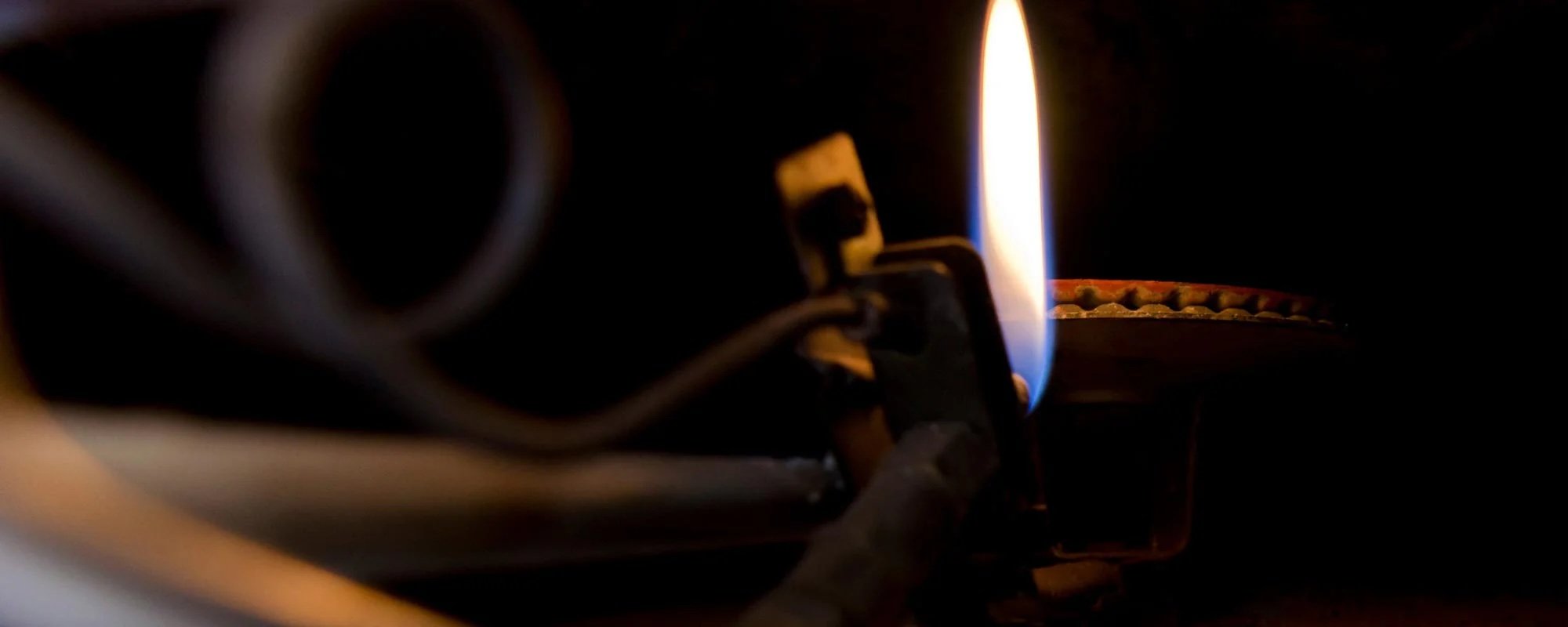
If your pilot light keeps going out, the thermocouple is usually the cause. J Martin offers same-day furnace diagnostics across Orange County. Call (714) 462-4686.
Check the furnace error codes. Most modern furnaces have a small LED indicator light visible through the front panel observation window. The light blinks in a pattern that corresponds to a diagnostic code. The code chart is printed on a sticker inside the furnace panel door. A steady green light usually means normal operation. Blinking patterns indicate specific faults. Note the pattern and share it with your technician when you call, as this speeds up diagnosis significantly.
Roughly half of all "heater blowing cold air" service calls are resolved by checking two things: the thermostat fan setting (switch from "On" to "Auto") and the air filter (replace if dirty). Both checks take under 5 minutes and cost $0 to $30.
How Much Does It Cost to Fix a Heater Blowing Cold Air in 2026?
The repair cost depends on which component has failed. The table below shows current 2026 costs for the most common furnace repairs that cause cold air from the vents in Orange County.
2026 Furnace Repair Costs for Heater Blowing Cold Air in Orange County
| Cause | Typical repair cost | DIY possible? |
|---|---|---|
| Thermostat set to Fan On (setting change) | $0 — free | Yes |
| Dirty air filter (replacement) | $5 – $30 | Yes |
| Condensate drain line clearing | $75 – $200 | Sometimes |
| Flame sensor cleaning or replacement | $100 – $495 | No |
| Thermocouple replacement | $100 – $300 | No |
| Hot surface ignitor replacement | $150 – $495 | No |
| Gas valve replacement | $600 – $1200 | No |
| Blower motor replacement | $900 – $3,000 | No |
| Draft inducer motor replacement | $800 – $1,800 | No |
| Heat exchanger replacement | $1,200 – $2,500+ | No |
The most common repairs fall in the $0 to $350 range. Thermostat corrections and filter replacements are free or nearly free. Flame sensor and ignitor replacements, which together account for the majority of "furnace will not light" diagnoses, run $100 to $495. The expensive repairs (blower motor, draft inducer, heat exchanger) are less common and typically occur in furnaces that are 15 or more years old. When a heat exchanger fails, the repair cost often exceeds 50% of the cost of a new furnace, which is when we have the repair-versus-replace conversation with homeowners.
The most common furnace repairs that cause cold air blowing from the vents cost $0 to $350 in Orange County in 2026. A flame sensor cleaning runs $100 to $495. An ignitor replacement runs $150 to $495. The expensive repairs (heat exchanger at $1,200 to $2,500) are uncommon and typically indicate an aging system near end of life.
When Cold Air Means a Serious Problem
Most heater-blowing-cold-air scenarios are minor and inexpensive to fix. Two situations, however, indicate a potentially serious issue that requires immediate professional attention.
Cracked heat exchanger. The heat exchanger is the metal chamber where combustion gases heat the air that circulates through your home. If the heat exchanger develops a crack, combustion gases (including carbon monoxide) can leak into the airstream. Modern furnaces have safety switches that detect this condition and shut the furnace down, which results in cold air from the vents. If your carbon monoxide detector has alarmed or if your technician identifies a cracked heat exchanger, do not attempt to restart the furnace. Heat exchanger replacement costs $1,200 to $2,500 or more, but in furnaces older than 15 years, full system replacement ($5,000 to $12,000 depending on the system) is usually the more practical option. A cracked heat exchanger is one of the few furnace problems that constitutes a genuine safety hazard. Every Orange County home with a gas furnace should have a working carbon monoxide detector on each floor, and we recommend testing them at the start of each heating season when you first turn the furnace on.
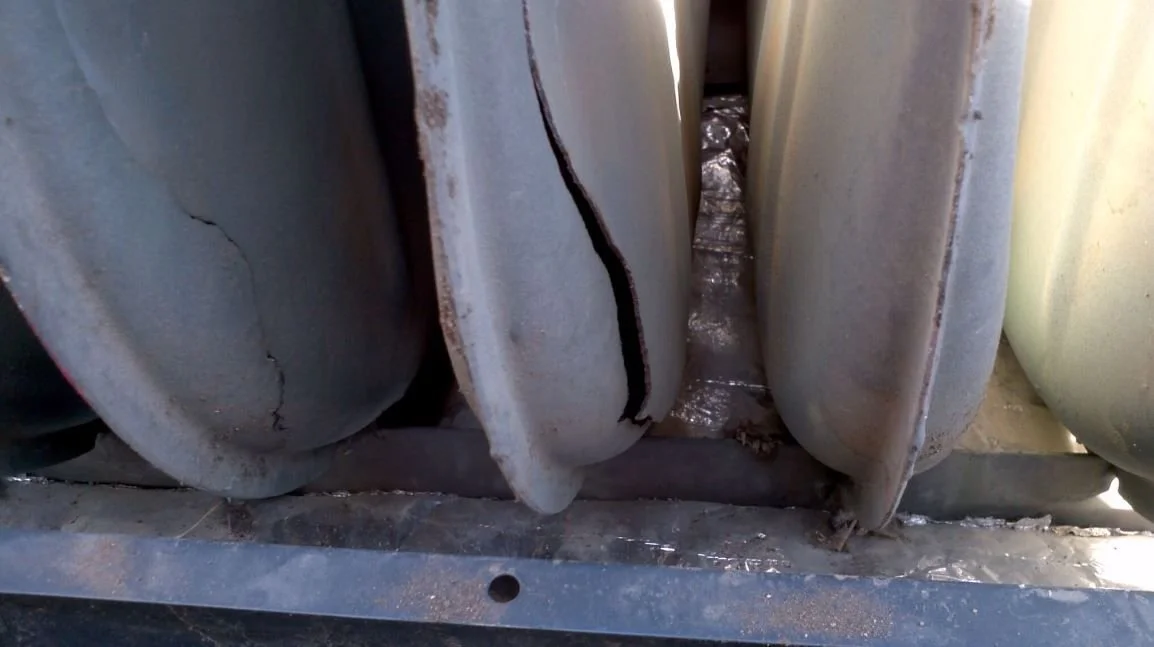
This is what a failed heat exchanger looks like. When we find one, we tell you honestly whether repair or replacement makes more sense for your situation, and we never recommend a $10,000 system when a repair will do the job.
Gas smell with no ignition. If you smell natural gas near the furnace and the burners are not lighting, turn the furnace off at the switch, leave the area, and call your gas utility's emergency line (SoCalGas: 1-800-427-2200) before calling an HVAC technician. A gas smell without ignition can indicate a gas valve that is open but the ignition system has failed, allowing unburned gas to accumulate. This is rare with modern furnaces because safety controls close the gas valve within seconds of a failed ignition attempt, but it can occur in older systems with degraded safety components.
Why Orange County Furnaces Are Especially Prone to Startup Failures
Orange County's mild climate is a blessing for comfort but creates a specific challenge for furnace reliability. Most OC homeowners run their furnace for only 2 to 4 months per year, typically December through February with occasional use in November and March. That means the furnace sits idle for 8 to 10 months, during which dust settles on the flame sensor, the ignitor, the burner ports, and the heat exchanger. Spiders and insects build nests in burner tubes. Condensate lines dry out and allow mold growth that causes blockages when the system restarts.
This is why the first cold night of the season generates a surge of "heater blowing cold air" calls across Orange County. The furnaces are not broken in a traditional sense. They are dirty from months of sitting unused, and the first startup exposes every component that has accumulated dust or corrosion over the idle period. The homeowners who schedule a fall tune-up in October or November, before they need the heat, rarely experience these startup failures. During a tune-up, our technicians clean the flame sensor, test the ignitor, clear the burner ports, flush the condensate line, and run multiple heating cycles to verify reliable operation. Our furnace troubleshooting checklist covers the full inspection sequence. We also check for early signs of heat exchanger wear, which is especially important in furnaces older than 15 years where micro-cracks can develop during the thermal stress of seasonal startup after months of dormancy.
Another OC-specific factor is the tendency for homeowners to delay furnace repairs because winter is short and mild. A furnace that blows cold air on a 50-degree night in December feels inconvenient, not dangerous, so homeowners sometimes wait days or weeks before calling. The risk is that a minor $125 flame sensor issue can evolve into a more expensive repair if the furnace continues to short cycle, stressing the control board and other ignition components. Addressing heater problems promptly, even in a mild climate, protects the system and keeps repair costs low.
What to Expect When You Call J Martin for a Heater Blowing Cold Air
When you call (714) 462-4686, Kathryn or Alexis will ask whether you have checked the thermostat and filter, whether the furnace is making any sounds (clicking, humming, cycling on and off), and whether you have noticed any error code blinking on the furnace panel. This helps our technicians arrive prepared with the right parts.
Our technicians (Jesus, Jack, Angel, Irvin, Kevin, Tony, Christian, Rex, Carlos, Santiago, and Joel) carry flame sensors, ignitors, thermocouples, gas valve assemblies, and diagnostic equipment on every call. Most heater-blowing-cold-air repairs are completed during the initial visit in under an hour. You receive a clear diagnosis, upfront pricing before any work begins, and a recommendation for preventing the issue from recurring. We serve all 26 cities in our Orange County service area, including Lake Forest, Mission Viejo, and Yorba Linda, with same-day scheduling available for heating emergencies.
Frequently Asked Questions
Why is my heater blowing cold air?
The most common causes are a thermostat set to "Fan Only" instead of "Auto" (the blower runs without heat), a dirty air filter causing the furnace to overheat and shut off its burners, or a failed flame sensor or ignitor preventing the gas from lighting. Check your thermostat and filter first. If both are fine, the issue is likely inside the furnace and requires a technician.
Why does my furnace blow cold air for a few minutes then warm up?
A short burst of cool air at the start of a heating cycle is normal. The blower fan starts before the heat exchanger has fully warmed, so the first 2 to 5 minutes of air may feel cool or room-temperature. If the air turns warm after a few minutes, your furnace is operating correctly. If it stays cold after 5 minutes, there is a problem.
Can a dirty air filter cause my heater to blow cold air?
Yes. A severely clogged filter restricts airflow across the heat exchanger, causing the furnace to overheat internally. The high-limit safety switch then shuts off the burners while the blower fan continues running, pushing unheated air through the vents. Replacing the filter and allowing the furnace to reset for 5 minutes usually resolves the issue.
How much does it cost to fix a furnace blowing cold air?
Most repairs cost $0 to $350 in Orange County in 2026. A thermostat adjustment is free. A filter replacement costs $5 to $30. A flame sensor cleaning or replacement costs $100 to $495. An ignitor replacement costs $150 to $495. Expensive repairs like heat exchanger replacement ($1,200 to $2,500) are uncommon and typically affect furnaces older than 15 years.
Why does my furnace keep turning on and off without heating?
This behavior is called short cycling and is usually caused by a dirty air filter (causing the limit switch to trip repeatedly), a faulty flame sensor (shutting off the gas after each ignition attempt), or an oversized furnace that heats too quickly and shuts down. Check the filter first. If the filter is clean and the furnace continues to short cycle, call a technician to inspect the flame sensor and control board. Our article on furnace not working: common causes and quick fixes covers additional troubleshooting steps.
Is it safe to run my furnace if it is blowing cold air?
In most cases, running the furnace while it blows cold air is not dangerous, just ineffective. The furnace's safety systems (limit switch, flame sensor, gas valve controls) are designed to prevent hazardous conditions. The one exception is if you smell gas near the furnace. If you detect a gas odor, turn the furnace off, leave the area, and call your gas utility's emergency line before calling an HVAC technician.
Should I replace my furnace if it keeps blowing cold air?
Not necessarily. Most cold-air issues are caused by inexpensive component failures (flame sensor, ignitor, filter). Replacement is worth discussing if your furnace is 15 or more years old and requires a major repair like a heat exchanger ($1,200 to $2,500) or if repair costs exceed 50% of the cost of a new system. A furnace younger than 10 years old with a single component failure is almost always worth repairing.
Get Your Heat Back Today
A heater blowing cold air is one of the most common furnace problems in Orange County, and in most cases it is one of the least expensive to fix. Whether it is a thermostat setting, a dirty filter, or a failed ignitor, the fix is usually straightforward and completed in a single visit. If you have already checked your thermostat and filter and the problem persists, the next step is a professional diagnosis that identifies the exact component that has failed.
J Martin Indoor Air Quality has served Orange County families since 2014, with a 4.97-star rating across thousands of reviews. Our full-time crew handles furnace repair and heating service across all 26 cities in our service area. Licensed, bonded, and insured under California Contractor License CL#998956.
Call us at (714) 462-4686 for same-day furnace diagnosis, or schedule service online.