
When to Replace Your AC Filter vs Clean It (2026 Guide)
Posted on August 6, 2026
Replace your AC filter; do not try to clean it, unless you specifically purchased a washable electrostatic filter designed to be rinsed and reused. The standard fiberglass and pleated filters that come with most Orange County HVAC systems are disposable by design, and attempting to wash or vacuum them damages the fiber structure that makes them work. Most homeowners should be swapping in a fresh disposable filter every 30 to 90 days, depending on household factors like pets, allergies, and how often the system runs.
The confusion is understandable. Washable filters do exist, and they can save money over time. But they represent a small fraction of what we see installed in homes across Orange County. Our HVAC maintenance team inspects thousands of filters every year during tune-ups and service calls, and roughly nine out of ten systems we open use standard disposable filters. When homeowners try to rinse or vacuum those disposable filters to stretch another month out of them, they end up with a filter that looks cleaner but actually performs worse, letting more dust and allergens pass through while restricting airflow in ways that cost more on the energy bill than a new $8 filter ever would.
When our technician Angel was running a spring tune-up in a Placentia home last April, he pulled out a pleated filter the homeowner had been rinsing in the bathtub every few weeks for months. The pleats were warped, the media was visibly thinned, and the system's evaporator coil was already starting to accumulate the kind of dust buildup that leads to frozen coils and expensive repairs. A new MERV 11 pleated filter cost $12. The potential coil cleaning and repair bill it prevented would have been $300 to $600.
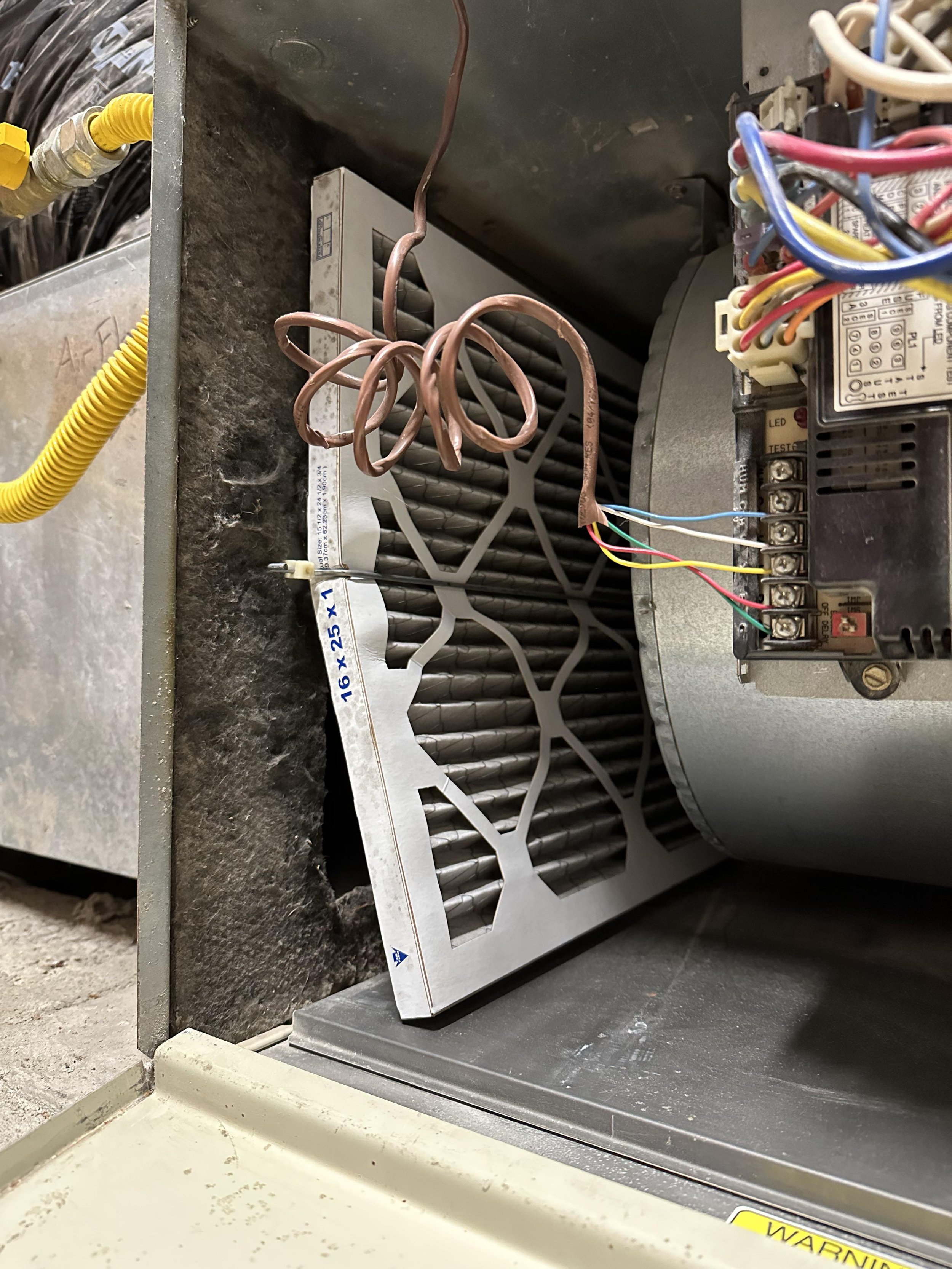
A filter this clogged and warped is not just an air quality problem; it's putting real strain on your evaporator coil and blower motor. J Martin's technicians catch this during every tune-up so Orange County homeowners don't end up with a $500 repair from a $10 fix.
Quick Answer
Most AC filters are disposable (fiberglass or pleated) and should be replaced every 30 to 90 days, not cleaned. Only washable electrostatic filters, which typically cost $30 to $75 upfront and carry MERV ratings of 1 to 4, are designed to be rinsed and reused. If you are not sure which type you have, check the filter frame for a label. If it says "disposable" or lists no cleaning instructions, replace it with a fresh one.
Why Most AC Filters Are Designed to Be Replaced, Not Cleaned
The disposable pleated filter that sits in most Orange County HVAC systems works by trapping particles in a dense web of synthetic fibers arranged in accordion-style folds. Those pleats create a large surface area, roughly two to three times the flat dimensions of the filter frame, which allows the filter to capture dust, pollen, pet dander, and other airborne debris without choking off the airflow your system needs to cool or heat efficiently. Over 30 to 90 days of use, those fibers fill up. The filter's job is done, and it needs to be swapped for a fresh one.
Attempting to wash a disposable pleated filter creates three problems at once. First, water pressure deforms the pleats, collapsing sections that should remain open and creating gaps where unfiltered air can pass through. Second, rinsing washes out the electrostatic charge that many pleated filters carry to attract fine particles. That charge is built into the manufacturing process and cannot be restored at home. Third, residual moisture left in the compressed folds of a reinstalled filter creates a breeding ground for mold and bacteria, which the system then blows directly into your living space.
Vacuuming a disposable filter is less destructive than washing, but it still falls short. A vacuum removes surface dust but leaves embedded particles trapped deep in the fiber matrix. The filter looks cleaner, but its actual filtration capacity is not restored. According to the U.S. Department of Energy, a dirty or degraded filter can increase your HVAC system's energy consumption by 5 to 15 percent. For an Orange County household spending $250 to $350 per month on electricity during summer, that translates to $12 to $52 in wasted energy each month, all to avoid buying a filter that costs $5 to $20.
A dirty or degraded AC filter can increase your HVAC system's energy consumption by 5 to 15 percent, according to the U.S. Department of Energy.
Fiberglass flat filters, the cheapest type at $1 to $3 each, are even less suitable for cleaning. Their loose fiber mat has almost no structural integrity when wet. These filters are designed to protect the equipment, not to improve indoor air quality, and they should be replaced every 30 days without exception.
The One Type of AC Filter You Can Clean and Reuse
Washable electrostatic filters are the exception. These filters use layers of woven polypropylene or aluminum mesh that generate a static charge as air passes through them, attracting and holding dust and larger particles. Unlike disposable filters, their frame and media are built to withstand repeated washing, typically lasting 5 to 10 years before the mesh degrades enough to need replacement.
The tradeoff is filtration efficiency. Most washable electrostatic filters carry MERV ratings between 1 and 4, which means they capture about 60 to 75 percent of large particles (dust mites, pollen grains, carpet fibers) but let smaller particles like pet dander, mold spores, and fine dust pass through. A standard disposable pleated filter rated MERV 8 to 13 captures 70 to 95 percent of those same particles plus the finer ones. For households with allergy sufferers, asthma, or pets, that gap in filtration is significant.
Washable filters make the most sense in specific situations: vacation homes or rental properties where the owner wants to minimize ongoing filter purchases, homes with minimal occupancy and no pets, or systems where the homeowner prioritizes long-term cost savings over maximum air filtration. In Orange County, where pollen seasons run nearly year-round and Santa Ana winds carry desert dust and particulate matter through homes, most families we work with at J Martin get better results from disposable pleated filters in the MERV 8 to 11 range, replaced on a regular schedule.
Washable electrostatic filters typically carry MERV ratings of 1 to 4 and capture about 60 to 75 percent of large airborne particles. Disposable pleated filters rated MERV 8 to 13 capture 70 to 95 percent, including finer particles like pet dander and mold spores.
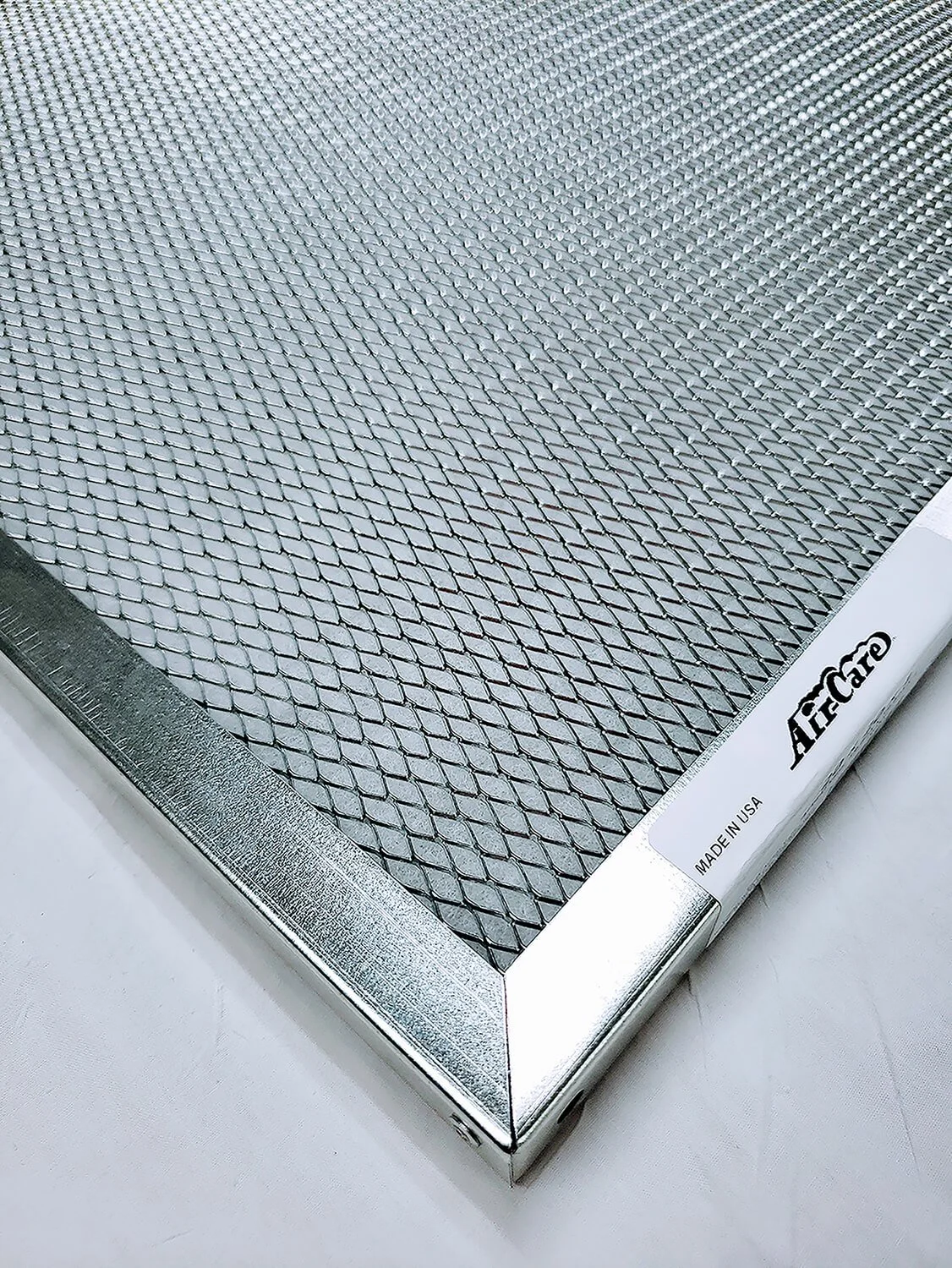
A lot of Orange County homeowners assume all filters can be rinsed and reused. This AirCare aluminum mesh filter can. The pleated cardboard one probably sitting in your system right now cannot. Knowing the difference saves you from accidentally making your air quality worse.
How to Tell Which Filter Type Is in Your System Right Now
Identifying your filter type takes about 30 seconds. Turn off your HVAC system, locate the return air vent or filter access panel (usually on a wall, ceiling, or near the air handler), and slide the filter out. Look at the frame and the filter media itself.
A disposable filter has a cardboard or thin paperboard frame. The filter media is either a flat, loosely woven fiberglass mat (the cheapest type, usually blue or white) or a denser pleated material folded in accordion-style ridges. Somewhere on the frame you will find a printed label with the filter's dimensions, its MERV rating (typically MERV 4 to MERV 13 for residential), and the word "disposable" or instructions to "replace" at a specific interval. If your filter has a cardboard frame, it is disposable. Do not wash it.
A washable filter has a rigid metal or thick plastic frame, often aluminum. The media is a flat mesh or layered woven material, not pleated paper or fiberglass. The frame will typically be labeled "washable," "reusable," or "permanent," and may include cleaning instructions printed directly on it. Some brands, like Permatron and K&N, are well-known washable filter manufacturers. If your filter has a metal frame and flat mesh media, you can clean it according to the manufacturer's directions. If you have questions about your specific filter type, your HVAC technician can confirm during any routine filter inspection.
Disposable vs Washable AC Filters at a Glance
The following table compares the two main residential filter categories across the factors that matter most to Orange County homeowners deciding whether to replace or clean their AC filter. All cost figures reflect 2026 pricing.
2026 Comparison: Disposable Pleated Filters vs Washable Electrostatic Filters for Residential HVAC
| Feature | Disposable Pleated Filter | Washable Electrostatic Filter |
|---|---|---|
| Cost per filter | $5 to $20 (1-inch); $15 to $40 (4-inch) | $30 to $75 (one-time purchase) |
| Annual cost | $20 to $80 (replacing every 60 to 90 days) | $0 after initial purchase |
| MERV rating range | MERV 4 to MERV 13 | MERV 1 to MERV 4 |
| Filtration efficiency | Captures 70 to 95% of airborne particles | Captures 60 to 75% of large particles only |
| Lifespan | 30 to 90 days per filter | 5 to 10 years with proper care |
| Maintenance | Remove and discard; install new filter | Remove, rinse with hose, dry completely, reinstall |
| Best for | Homes with pets, allergies, or air quality concerns | Low-occupancy homes, vacation properties, budget priority |
| Mold risk | None (fresh filter each time) | Moderate (if reinstalled damp) |
For most Orange County families, the disposable pleated filter in the MERV 8 to MERV 11 range offers the best combination of filtration, convenience, and system protection. The annual cost of $20 to $80 in filters is a fraction of what a single frozen-coil repair costs, and it keeps the air noticeably cleaner in homes where OC's year-round pollen and dust are a daily reality.
How Often to Replace a Disposable AC Filter in Orange County
The general recommendation is every 90 days, but in Orange County that timeline often needs to be shorter. Several factors specific to this region push filters toward the 30 to 60 day replacement range for many households.
Pets are the single biggest accelerator. A household with one dog or cat should plan on replacing the filter every 60 days. Two or more pets, or breeds that shed heavily, push that closer to every 30 to 45 days. Pet hair and dander load a filter far faster than ambient household dust alone, and the buildup is visible if you pull the filter out and hold it up to a light source.
Allergies are the second factor, and Orange County is one of the more challenging allergy environments in Southern California. Tree pollen (oak, olive, eucalyptus) peaks from January through May. Grass pollen overlaps from April through July. Weed pollen, including ragweed and sagebrush, runs from September through November. Dust mites thrive year-round in the mild, temperate conditions. Homeowners with allergy sensitivity should consider replacing filters every 30 to 60 days during peak pollen months and using MERV 11 or higher rated filters to capture the smaller particles that trigger symptoms.
Santa Ana wind events, which typically blow from September through May, carry desert dust, ash, and fine particulate matter into homes, loading filters much faster than normal conditions. After a multi-day Santa Ana event, it is worth pulling your filter out and checking it regardless of when you last replaced it. We see filters that were clean two weeks earlier come out gray and visibly clogged after a heavy wind event.
Home age and ductwork condition also play a role. Older homes in neighborhoods like Fullerton, Placentia, and Anaheim, many built in the 1960s through 1980s, often have aging ductwork with small leaks that pull attic dust and insulation particles into the system. These homes tend to go through filters faster than newer construction in communities like Ladera Ranch or Rancho Santa Margarita. Our complete guide to filter replacement frequency covers these variables in more detail.
In Orange County, households with pets should replace their AC filter every 30 to 60 days. Homes with allergy sufferers should use MERV 11 or higher filters and replace them every 30 to 60 days during peak pollen months (January through July).
How to Clean a Washable AC Filter the Right Way
If you have confirmed that your filter is a washable electrostatic type with a metal or rigid plastic frame, cleaning it properly is straightforward but requires attention to two critical details: cleaning direction and drying time.
Start by turning off your HVAC system. Remove the filter and take it outside or to a utility sink. Most washable filters have an arrow on the frame indicating airflow direction. When cleaning, spray water from the opposite side of the airflow arrow first, pushing trapped debris out the way it came in. Then flip the filter and rinse from the airflow side. Use a standard garden hose, not a pressure washer, which can damage the mesh layers. For heavily soiled filters, apply a small amount of mild dish soap, let it sit for 10 minutes, then rinse thoroughly from both sides until the water runs clear.
The second critical step is drying. A washable filter must be completely dry before reinstallation. Reinstalling a damp filter creates conditions for mold and bacteria growth inside your ductwork, which the system then circulates through every room in your home. In Orange County's dry climate, air drying in direct sunlight usually takes 20 to 30 minutes. In cooler or more humid conditions, allow up to an hour. Do not use a hair dryer or other heat source, which can warp the frame or damage the mesh.
When our technician Jesus services homes with washable filters during routine AC maintenance visits, he checks the mesh for signs of degradation: thinning fibers, warped frame sections, or persistent discoloration that does not wash out. These are signs the filter has reached the end of its useful life and should be replaced, even if it has not hit the 5 to 10 year mark. A washable filter that no longer holds its electrostatic charge after cleaning is not doing much more than a window screen.
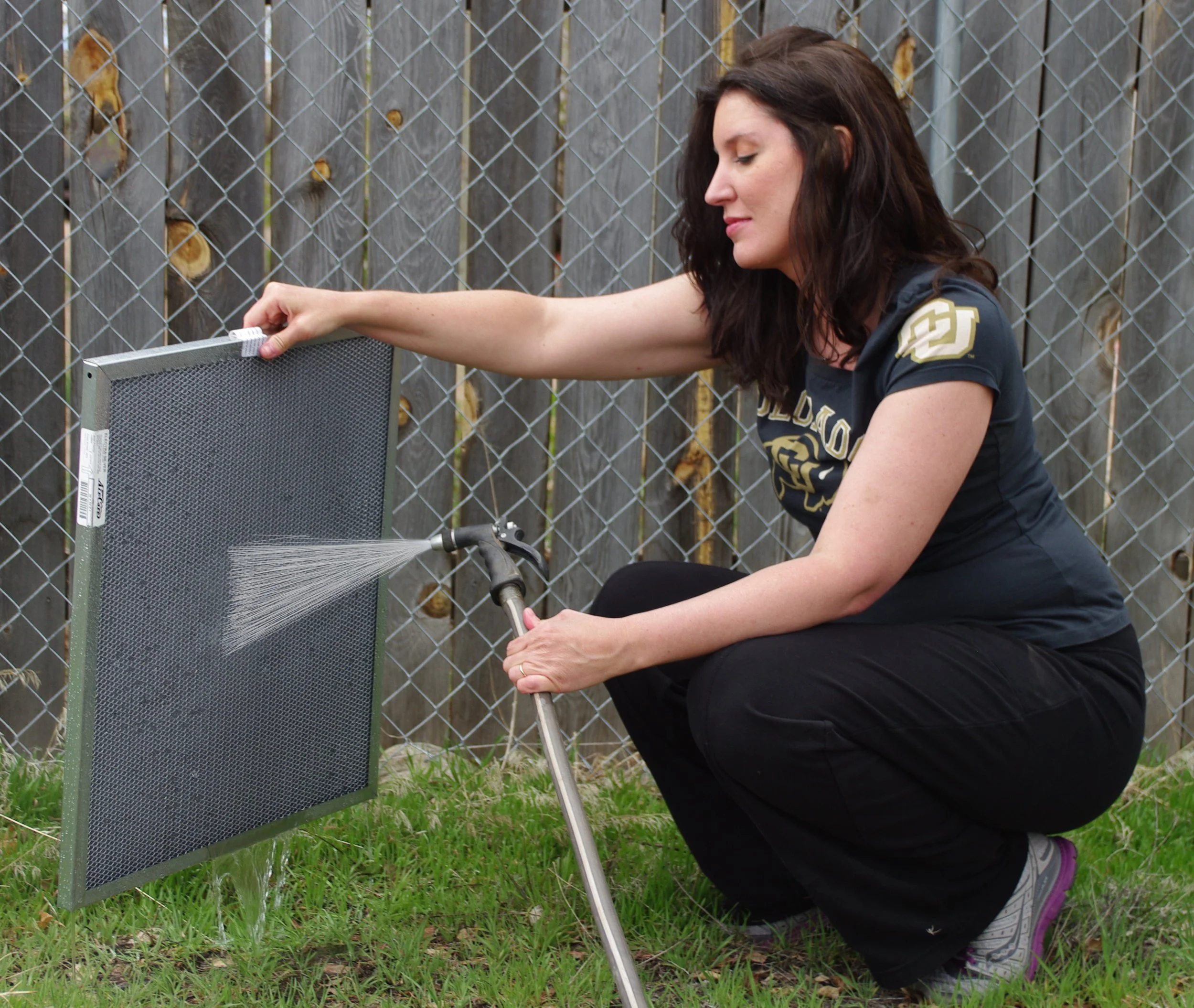
Cleaning a washable electrostatic filter the right way means rinsing from the opposite side of the airflow arrow first, using a standard garden hose, never a pressure washer. J Martin technicians walk Orange County homeowners through the right maintenance steps for whatever filter type is in their system.
What Happens When You Skip Filter Changes or Cleanings
A neglected filter does not just reduce air quality. It triggers a chain of mechanical consequences that can turn a $10 filter replacement into a $500 to $3,000 repair bill.
The first consequence is restricted airflow. As the filter loads with dust and debris, less air passes through to the evaporator coil. The coil, starved of warm air flowing across it, drops below freezing and ice begins to form on its surface. This is the frozen evaporator coil problem that our team diagnoses multiple times per week during Orange County's cooling season, and a clogged filter is the most common cause.
If the system continues running with a frozen coil, the compressor in the outdoor unit is forced to work against abnormal pressure conditions. Compressor damage from prolonged operation with a frozen coil is one of the most expensive residential HVAC repairs, typically running $1,800 to $3,200 for the part and labor. In many cases, a failed compressor on an older system triggers the repair-versus-replace conversation, turning what started as a skipped filter change into a full system replacement discussion.
Beyond the mechanical damage, a clogged filter degrades the air you breathe. Dust, pollen, mold spores, and pet dander that would normally be trapped recirculate through the home continuously. For the roughly 30 percent of Orange County residents who suffer from seasonal allergies or asthma, this recirculated particulate can mean the difference between comfortable days indoors and persistent symptoms that medication alone cannot control.
The energy cost compounds over time. That 5 to 15 percent increase in energy consumption from a dirty filter does not reset when you finally change the filter if the system has already sustained damage. Coil icing, blower motor strain, and duct pressure imbalances caused by prolonged filter neglect can reduce overall system efficiency for years. Changing your filter on schedule is one of the cheapest forms of preventive maintenance available. Our AC maintenance checklist for Orange County homeowners puts filter replacement at the top of the list for a reason.
If your system is already showing signs of strain, running constantly but not cooling effectively, cycling on and off frequently, or producing weak airflow from the vents, checking the filter is always the first step. If the filter is the problem, the fix is immediate and inexpensive. If the filter is clean and the problem persists, you can reach our team at (714) 462-4686 to schedule a diagnostic visit.
Which MERV Rating Should Orange County Homeowners Choose?
MERV stands for Minimum Efficiency Reporting Value, a standardized scale that rates a filter's ability to capture particles of specific sizes. The scale runs from MERV 1 (minimal filtration) to MERV 20 (hospital-grade filtration). For residential HVAC systems, the practical range is MERV 8 to MERV 13, and choosing the right level depends on your household's needs and your system's compatibility.
MERV 8 is the baseline for effective residential filtration. A MERV 8 filter captures at least 70 percent of particles between 3 and 10 microns, including pollen, dust mites, mold spores, and textile fibers. For homes without pets, without allergy sufferers, and with relatively new ductwork, MERV 8 provides solid protection for both the equipment and the indoor air at the lowest filter cost, typically $5 to $10 per 1-inch filter.
MERV 11 is the sweet spot for most Orange County families. It captures 85 percent or more of particles in the 3 to 10 micron range and begins catching smaller particles like pet dander, fine dust, and some bacteria. Given OC's year-round pollen load and the prevalence of pet-owning households, MERV 11 provides a meaningful upgrade in air quality without significantly restricting airflow in most residential systems. A 1-inch MERV 11 filter typically costs $8 to $15.
MERV 13 is the highest rating most residential systems can handle without modification. It captures 90 percent or more of particles down to 0.3 microns, including smoke, smog, and some virus-carrying droplets. However, MERV 13 filters create more airflow resistance, and not every system is designed for that level of restriction. Older systems, undersized returns, or ductwork with existing leaks may struggle with MERV 13 filters, leading to the same airflow problems that a dirty filter causes. Before upgrading to MERV 13, have your HVAC technician confirm your system can handle the increased static pressure. In our experience at J Martin, about 60 percent of the residential systems we service in Orange County can safely run MERV 13 without airflow issues, but the other 40 percent are better served by MERV 11.
One important note: MERV 13 and above filters tend to load faster because they capture more and smaller particles. Plan on replacing a MERV 13 filter every 30 to 60 days in a home with pets or during heavy pollen season, compared to every 60 to 90 days for a MERV 8.
Frequently Asked Questions
Can I wash and reuse my pleated AC filter to save money?
No. Pleated AC filters with cardboard frames are designed for single use. Washing them deforms the pleats, removes the electrostatic charge that attracts fine particles, and can introduce mold risk if the filter is reinstalled damp. A new pleated filter costs $5 to $20, and replacing it on schedule protects your system from damage that could cost hundreds or thousands of dollars to repair.
How do I know if my AC filter is washable or disposable?
Check the filter frame. Disposable filters have cardboard or thin paperboard frames and are labeled "disposable" or "replace every X days." Washable filters have rigid metal or thick plastic frames and are labeled "washable," "reusable," or "permanent." If the frame is cardboard, the filter is disposable regardless of what the media looks like.
How often should I replace my AC filter in Orange County?
Most Orange County homeowners should replace standard 1-inch disposable filters every 30 to 90 days. Homes with pets should change every 30 to 60 days. Homes with allergy sufferers should change every 30 to 60 days during peak pollen months (January through July). Thicker 4-inch and 5-inch filters can last 6 to 12 months. Check the filter monthly regardless of schedule.
Are washable AC filters better for the environment?
Washable filters produce less waste because they are reused for 5 to 10 years instead of being discarded every few months. However, their lower MERV ratings (typically 1 to 4) mean they provide significantly less filtration than disposable pleated filters rated MERV 8 to 13. For households that prioritize indoor air quality or have allergy or respiratory concerns, the filtration tradeoff may outweigh the environmental benefit.
What MERV rating is best for Orange County homes with allergies?
MERV 11 is the recommended minimum for Orange County homes with allergy sufferers. MERV 11 captures 85 percent or more of particles in the 3 to 10 micron range, including pollen, mold spores, and pet dander. MERV 13 provides even better filtration but may restrict airflow in some older systems, so confirm compatibility with your HVAC technician before upgrading.
Can a dirty AC filter make my electricity bill go up?
Yes. The U.S. Department of Energy reports that a dirty filter can increase HVAC energy consumption by 5 to 15 percent. For an Orange County household spending $250 to $350 per month on electricity during summer, that means $12 to $52 per month in wasted energy from a single clogged filter.
What happens if I never change my AC filter?
A severely clogged filter restricts airflow to the evaporator coil, which can cause the coil to freeze. Running the system with a frozen coil can damage the compressor, which is one of the most expensive HVAC repairs at $1,800 to $3,200. A neglected filter also recirculates dust, pollen, and allergens through every room, degrades indoor air quality, and shortens the overall lifespan of the HVAC system by 3 to 5 years.
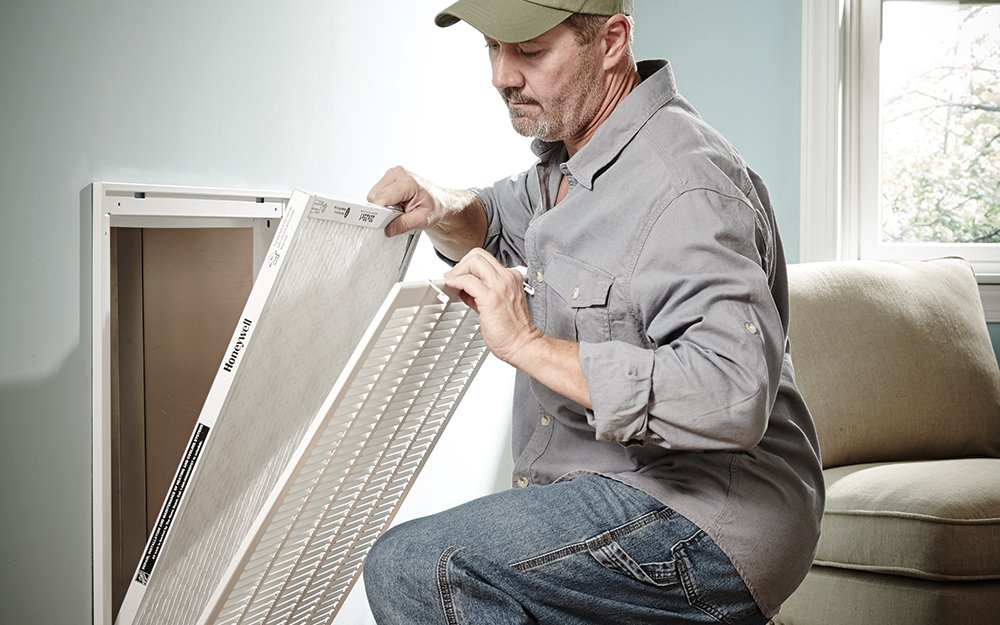
If you can't remember the last time you pulled your filter out and checked it, that's your sign to do it today. A clogged filter is the most common cause of frozen coils and high energy bills in Orange County homes. Call J Martin if yours looks worse than expected: (714) 462-4686.
Keep Your System Running Right with the Right Filter
Replacing your AC filter on schedule is the single most effective and least expensive thing you can do to protect your HVAC system and improve the air quality in your home. Whether you use a disposable pleated filter replaced every 30 to 90 days or a washable electrostatic filter cleaned monthly, staying on top of this one task prevents the cascade of problems, frozen coils, compressor strain, spiking energy bills, and poor air quality, that follow when filters get neglected.
If you are not sure which filter type or MERV rating is right for your system, or if your AC is already showing signs of restricted airflow, our team can help. J Martin Indoor Air Quality has provided honest, pressure-free HVAC maintenance service to Orange County families since 2014. Our True Maintenance Plan includes filter checks at every visit, and our technicians will recommend the right filter for your specific system and household, not the most expensive one on the shelf.
We have served over 5,000 Orange County families with a 4.97-star rating across thousands of reviews. When you call, Kathryn or Alexis answers at our Anaheim office, not a national call center. Licensed, bonded, and insured under California Contractor License CL#998956.
Call us at (714) 462-4686 for same-day service, or request a free consultation online.