
New HVAC System in Brea: What to Expect in 2026
Posted on September 17, 2026
Most Brea homeowners installing a new HVAC system in 2026 pay between $10,000 and $22,000, with the typical 1,800 to 2,500 square foot home landing between $13,500 and $16,500 once equipment, labor, permits, and the new R-454B refrigerant transition costs are factored in. The exact figure depends on system type, system size, ductwork condition, and whether you choose a traditional gas-and-AC setup or a heat pump.
That range is wider than it was three years ago, and there is a real reason. Federal refrigerant rules took effect on January 1, 2025, regional efficiency standards (SEER2) tightened, and labor and copper costs have climbed. Industry data shows residential HVAC pricing is up 18 to 25 percent since 2023, and Brea sits inside that trend. We see it every day on quotes we write across the city, from the 1970s tract homes near Country Hills to the newer Olinda Ranch builds and the custom homes up Carbon Canyon Road.
This guide is the version of the answer we wish more Brea homeowners had before they called the first contractor on Google. We have served Brea families since 2014, and we have written hundreds of HVAC replacement quotes in your zip codes. We will walk you through what a fair 2026 number looks like, why Brea pricing diverges from coastal Orange County, what equipment options actually fit your home, which 2026 incentives still apply, and what the install week looks like from the day we drop the equipment to the moment your new system passes city inspection. If you would rather skip ahead to a real conversation, you can reach our team at (714) 462-4686, or browse our full air conditioning and HVAC service for context.
Quick Answer
A new HVAC system in Brea costs $10,000 to $22,000 in 2026, with most 1,800 to 2,500 square foot homes landing between $13,500 and $16,500. The price depends on system type (heat pump or AC plus furnace), tonnage, ductwork condition, refrigerant standard (R-454B is now required on new ducted systems), and SEER2 efficiency rating. Brea installations typically take one to three days from haul-off to inspection.
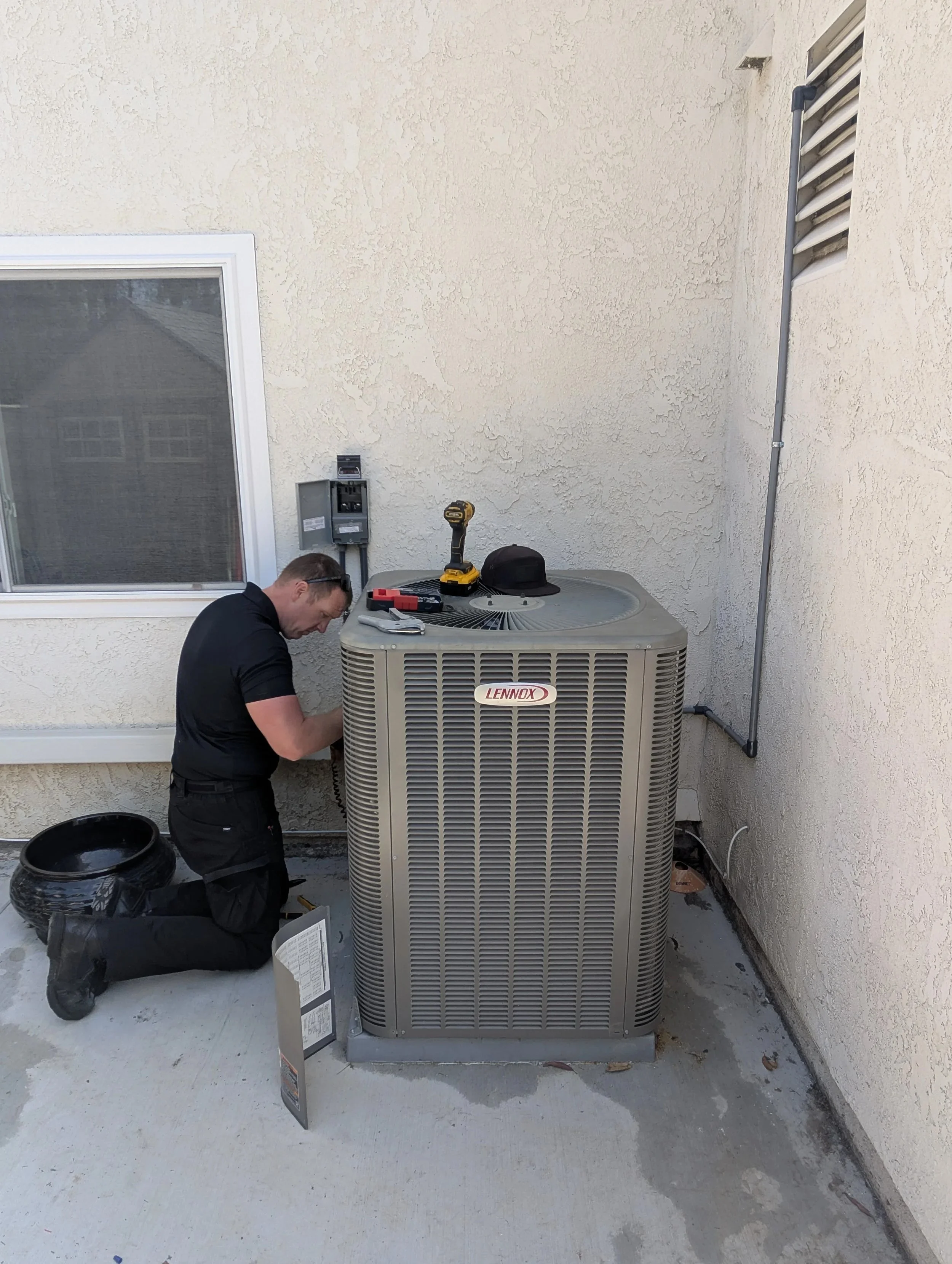
Same crew, every visit. When our team arrives at your Brea home, it's a technician who's been with J Martin for years, not a rotating subcontractor. That's how we've kept a 4.97-star rating across thousands of installs.
How Much a New HVAC System Costs in Brea in 2026
For a Brea home in the 1,800 to 2,500 square foot range, which describes most of the city's housing stock, a complete new HVAC system in 2026 falls into three pricing tiers. The basic tier, around $9,500 to $13,500, covers a builder-grade single-stage AC paired with an 80 percent AFUE gas furnace at the new SEER2 minimum efficiency. The mid tier, around $13,500 to $17,500, gets you a two-stage AC, a 95 percent AFUE furnace, and a smart thermostat. The premium tier, around $17,500 to $22,000, includes variable-capacity inverter equipment, full ductwork inspection and sealing, and the higher-warranty manufacturers like Daikin or Trane.
The table below reflects the prices we see on actual Brea quotes in the first half of 2026. These figures assume the existing ductwork is in usable condition. If your ducts need full replacement, add $3,500 to $7,500 to any tier.
Estimated 2026 Brea HVAC System Replacement Cost by Tier and Home Size (existing ductwork in usable condition)
| Home Size | Basic Tier | Mid Tier | Premium Tier |
|---|---|---|---|
| 1,200 to 1,800 sq ft (3-ton) | $9,500 to $11,500 | $11,500 to $14,500 | $14,500 to $18,000 |
| 1,800 to 2,500 sq ft (4-ton) | $11,500 to $13,500 | $13,500 to $17,500 | $17,500 to $22,000 |
| 2,500 to 3,500 sq ft (5-ton or zoned) | $13,500 to $16,000 | $16,000 to $20,000 | $20,000 to $27,500 |
A new HVAC system in Brea costs $9,500 to $22,000 in 2026, depending on home size and equipment tier. The typical 4-ton mid-tier system installed in a 1970s Brea tract home runs about $14,500.
Where does that money actually go? In a typical $14,500 Brea project, the outdoor AC condenser accounts for $3,500 to $5,500, the indoor furnace or air handler runs $2,500 to $4,500, supporting parts (line set, refrigerant, electrical disconnect, thermostat, condensate pump, smart vents) total $1,500 to $2,500, labor lands at $2,500 to $4,000, and permit and inspection fees are typically $250 to $450 in the City of Brea. For a deeper component-level breakdown that applies across Orange County, see our Orange County HVAC replacement cost guide for 2025-2026.
Pricing has climbed since 2023, and we want to be honest about why. The 2023 SEER2 rule raised the minimum efficiency for new equipment in the Southwest region (which includes California), the January 2025 refrigerant transition forced manufacturers to redesign their entire residential lineup around R-454B, and copper, electronics, and skilled labor have all gotten more expensive. The result is that the same system that cost $11,000 in 2022 is closer to $14,000 in 2026, and that increase is industry-wide, not specific to one contractor.
Why Brea HVAC Pricing Differs From Coastal Orange County
Brea sits in northern Orange County, about 25 miles southeast of Los Angeles, and the climate is meaningfully hotter than the coastal cities. Average summer high temperatures in Brea climb to 87 degrees by August, and the city sees roughly 29 days a year above 90 degrees. By contrast, a Newport Beach summer rarely tops 80. That ten to fifteen degree daytime gap matters when an HVAC contractor sizes your system. A 3-ton AC that works perfectly in coastal Orange County will run constantly and never fully cool the upstairs of an equivalent home in Brea.
The same dynamic shows up in equipment costs. We tend to specify slightly larger condensers and larger evaporator coils for Brea homes than for the same square footage in Newport Beach or Huntington Beach. We also recommend higher SEER2 ratings more often, because the system runs more hours per year and the efficiency premium pays back faster. A 16 SEER2 system in Brea typically returns its $1,500 upgrade premium in about six years through lower SCE summer bills. The same system in Newport Beach takes closer to ten years to pay back.
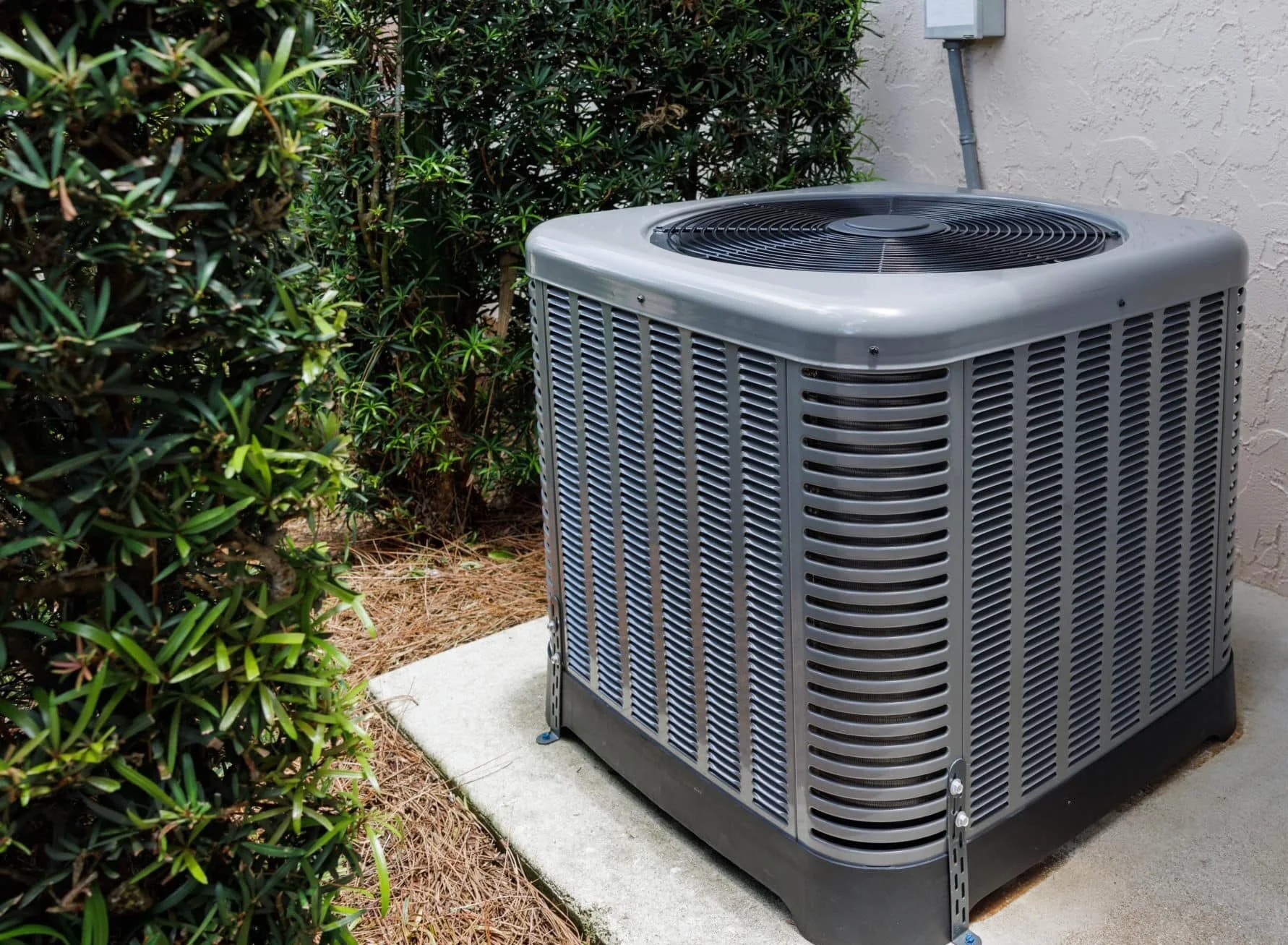
If your outdoor unit is more than 12 years old, 2026 refrigerant rules could affect your replacement options. Call J Martin at (714) 462-4686 to talk through your Brea home.
Brea housing stock plays into pricing too. Most homes across Brea were built in the 1970s, which means the original ductwork is now around fifty years old. Roughly half the Brea homes we quote need at least partial duct repair or replacement, and that adds $1,500 to $7,500 to a project. Newer Brea developments like Olinda Ranch and Blackstone usually have ductwork in better shape, but the homes themselves are larger and demand 4 or 5-ton systems instead of 3-ton.
Carbon Canyon, Olinda Village, and the hillside neighborhoods up Birch Street present their own pricing wrinkles. Custom homes with vaulted great rooms, large window walls facing south or west, and detached guest casitas often need zoned systems or a hybrid central plus mini-split setup. Those projects routinely land in our premium tier or above.
What Equipment Options You'll See on a Brea HVAC Quote
When we hand a Brea homeowner an HVAC replacement quote in 2026, three configurations cover most of what they will see. Each has a different price profile, a different operating cost story, and a different fit depending on the home.
The first is the traditional setup: a split-system air conditioner outside paired with a gas furnace inside. This is what most 1970s Brea tract homes already have, and it remains the lowest installed price for most 4-ton applications. The natural gas furnace handles winter, the AC handles summer, and the two share a single duct system and thermostat.
The second is an all-electric heat pump. A heat pump replaces both the AC and the furnace with one outdoor unit that reverses direction to heat or cool. It costs more up front (typically $2,500 to $4,500 more than a comparable AC plus furnace combo) and it runs on electricity year-round. For Brea homeowners with rooftop solar, a heat pump often pencils out as the lowest total cost over ten years. For homes without solar, the math depends on your SCE rate and your gas usage. Our Heat Pump vs Gas Furnace cost comparison for Orange County walks through the math at current rates.
The third is a dual-fuel hybrid. This pairs a heat pump with a small backup gas furnace that only runs on the coldest mornings. It costs the most up front but offers the broadest comfort window and the lowest operating cost in mixed-rate scenarios. We install very few of these in Brea because the climate rarely justifies the complexity, but it is the right answer for homes in Carbon Canyon at higher elevations where occasional 38 degree mornings push a standalone heat pump.
2026 Brea HVAC Equipment Options Compared (typical 4-ton system, mid-tier efficiency)
| Configuration | Typical Installed Cost | Best Fit | 10-Year Operating Cost |
|---|---|---|---|
| AC + Gas Furnace (traditional) | $13,500 to $16,500 | Most 1970s Brea homes; existing gas line; no solar | $11,000 to $14,000 |
| All-Electric Heat Pump | $16,000 to $20,500 | Homes with solar; all-electric households; no gas line | $8,500 to $12,500 |
| Dual-Fuel Hybrid (Heat Pump + Furnace) | $18,500 to $24,000 | Carbon Canyon, hillside, mixed-rate scenarios | $9,500 to $13,000 |
SEER2 ratings are worth a brief word here. SEER2 (the new federal efficiency standard for cooling, in effect since January 2023) replaced the older SEER metric. The minimum legal SEER2 for a new split-system AC under 45,000 BTU/h installed in California is 14.3 SEER2, with an EER2 floor of 11.7. Our SEER2 vs SEER rating guide for Orange County covers the full picture, but the short version is that a 14.3 SEER2 system meets code while a 16 to 18 SEER2 system meaningfully cuts your summer cooling bill.
The 2026 Refrigerant and Efficiency Standards Affecting Your Quote
Two regulatory changes are driving most of the pricing differences between a 2022 quote and a 2026 quote. The first is the R-410A refrigerant phase-out. As of January 1, 2025, manufacturers can no longer produce or import new residential split-system AC units or heat pumps that use R-410A. The replacement is R-454B, a refrigerant with about 78 percent lower global warming potential. R-454B equipment costs roughly 10 to 15 percent more than the R-410A equivalent it replaced, and that premium is now baked into every new HVAC quote we write.
If you have an R-410A system that is still working, you do not need to replace it. The phase-out applies to new manufacturing, not to existing equipment. R-410A refrigerant remains available for service through reclaimed and recycled supply, though pricing is climbing as production tapers. We still service R-410A systems daily across Brea, and we will keep doing so as long as our supply chain allows. For the full picture, see our R-410A phase-out guide for Orange County homeowners.
R-454B is the new federal refrigerant standard for residential ducted HVAC systems. It carries a global warming potential of 466, compared to R-410A at 2,088. New Brea installations in 2026 use R-454B; existing R-410A systems can still be serviced.
The second change is regional SEER2 enforcement. California sits in the Southwest region under federal efficiency rules, which carries the strictest SEER2 floor in the country. A new split-system AC under 45,000 BTU/h must hit at least 14.3 SEER2 with 11.7 EER2. Older 13 SEER and 14 SEER systems cannot legally be installed as new equipment in Brea or anywhere else in California. The practical effect is that the entry-level system sold five years ago is no longer available, and the new entry level is more efficient and more expensive.
One more 2026 wrinkle to know about: the federal Section 25C tax credit, which previously offered up to $2,000 toward a qualifying heat pump and up to $600 toward a qualifying central AC, expired on December 31, 2025. Heat pump and AC purchases or installations completed in 2026 are not eligible for that specific credit. Geothermal heat pumps remain eligible for a 30 percent federal tax credit through 2032, but those are rare in Brea homes. Our California HVAC rebates and tax credits guide for 2026 tracks what is still available.
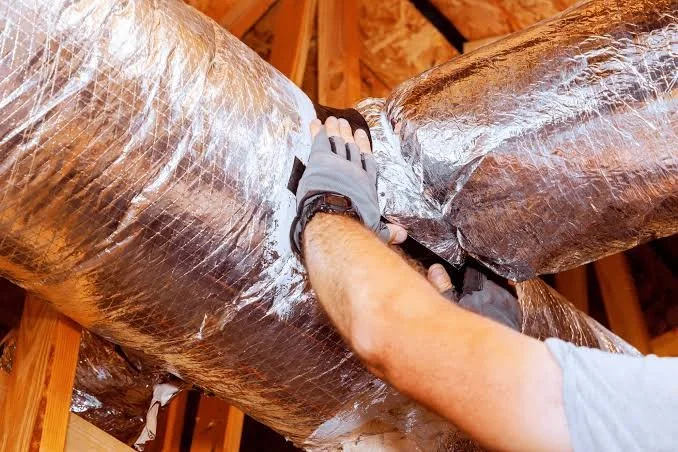
Roughly half the Brea homes we quote need duct repair or replacement, adding $1,500 to $7,500 to the project. Better to know before install day. Call (714) 462-4686.
Federal and California Incentives in 2026: What's Left for Brea Homeowners
The incentive picture for new HVAC installations in Brea looks different in 2026 than it did even a year ago. Section 25C is gone for air-source heat pumps and central AC. The big remaining buckets are state-administered rebates through TECH Clean California (HEEHRA and HOMES) and utility-specific programs through Southern California Edison and SoCalGas.
HEEHRA Phase I, the income-qualified rebate that offers up to $8,000 toward a heat pump for income-eligible California homeowners, was fully reserved as of February 24, 2026. New single-family applications are on a waitlist pending Phase II funding announcement. If you are income-qualified and considering a heat pump, get on the waitlist now even if Phase II timing is uncertain. We can help you confirm eligibility and submit the reservation through a HEEHRA-trained contractor pathway.
For homeowners who don't qualify for HEEHRA, the most reliable 2026 savings come from utility rebates and time-of-use rate optimization rather than tax credits. SCE periodically offers rebates on smart thermostats and on participation in demand-response programs. SoCalGas has its own furnace rebate when you replace an old gas furnace with a 95 percent AFUE or higher model. The amounts shift quarterly, so we check current programs at the time of every quote rather than promising a number months in advance.
Two budget items are worth thinking about even though they aren't incentives. The first is your SCE rate plan. If you are on a tiered residential rate, switching to a time-of-use plan and shifting heavy AC use off the 4 PM to 9 PM peak can reduce summer bills by 15 to 30 percent without any equipment change. The second is rooftop solar. If you already have solar, an all-electric heat pump aligns your largest energy load (heating and cooling) with your largest energy production. If you are sizing solar in the next 12 months, knowing whether you are going heat pump or gas furnace changes the math.
What the Installation Process Actually Looks Like
The day-to-day reality of replacing an HVAC system in Brea is shorter than most homeowners expect. A standard 4-ton AC plus furnace replacement in a 1970s tract home typically takes a single day. A heat pump conversion that requires electrical panel work takes two days. A full duct replacement adds another one to two days. In all cases the home is left livable each night, and we coordinate the work to keep heat or cooling running for as much of the project as possible.
Last August Tony and Christian completed a 4-ton mid-tier replacement on a 1972 home in Country Hills. The original system was a 16-year-old single-stage Goodman with an undersized return that had been struggling for three summers. We arrived at 7:30 in the morning, removed the old condenser and furnace by 10:30, set the new equipment by 1:00, completed the electrical and refrigerant work by 4:00, and had the system running by 5:30. The City of Brea inspector signed off the next morning. The homeowner texted Kathryn the following Saturday to say the upstairs bedroom that had not cooled below 78 degrees in two summers was at 71 degrees by 9 AM.
Here is what to expect on a typical Brea install week.
Typical 2026 Brea HVAC Installation Timeline (Standard 4-Ton AC + Furnace Replacement)
| Day | What Happens | Homeowner Action Needed |
|---|---|---|
| Pre-install (1 to 5 days before) | Permit pulled with City of Brea, equipment ordered, install crew scheduled | Sign agreement, confirm utility access |
| Install Day 1, morning | Crew arrives 7-8 AM, removes old condenser, furnace, line set, and refrigerant | Clear access path; pets secured |
| Install Day 1, afternoon | New equipment set, refrigerant lines brazed, electrical connected, thermostat installed | Ask questions; review system operation |
| Install Day 1, evening | System charged with R-454B, commissioned, leak-tested, walkthrough with homeowner | Confirm cooling and heating modes work; sign completion |
| Day 2 to 5 | City of Brea inspector visits, signs off permit, paperwork closed | Be home for inspection if homeowner access is required |
The Brea building department is reasonable to work with and inspectors typically come within three business days of permit submission. If your existing electrical panel cannot support a heat pump, we add an electrical sub-panel or a panel upgrade as a separate but coordinated trade. That work is common in 1970s Brea homes that still have the original 100-amp service.
How to Vet a Brea HVAC Contractor
Choosing the right contractor matters more than choosing the right brand. The same Carrier or Trane equipment installed badly will perform worse than a properly installed Goodman, and warranty coverage on a major brand depends on the installation meeting manufacturer specifications. We have seen Brea homes where a five-year-old high-end system failed early because the line set was the wrong diameter or the airflow was never measured.
Three quick filters to apply when reviewing Brea HVAC quotes:
First, verify the California contractor license. Every legitimate HVAC company in California carries a C-20 license. Ours is CL#998956, and you can look up any contractor on the California Contractors State License Board website. If a quote does not list a license number, walk away. License lookup takes less than a minute and protects you from work that won't pass inspection.
Second, ask whether the company performs a Manual J load calculation before sizing your system. A Manual J calculation accounts for square footage, insulation, window orientation, ceiling height, and local climate. It is the only correct way to size a residential HVAC system. A contractor who sizes the new system to match the old one is using a shortcut that often perpetuates an existing comfort problem. Our Orange County AC sizing guide walks through how Manual J actually works.
Third, read the warranty terms carefully. A 10-year manufacturer warranty on parts is standard. A 12-year warranty (offered by Daikin and others) is better. The labor warranty is the part most homeowners don't notice, and it varies wildly. Some local franchises offer one year of labor coverage, while we offer ten. The labor warranty matters because manufacturer parts coverage doesn't pay the technician's time. For a deeper checklist, our guide to red flags when choosing an OC HVAC company covers what to watch for, and our guide to choosing an HVAC company in nearby Fullerton applies similar logic for north OC homeowners.
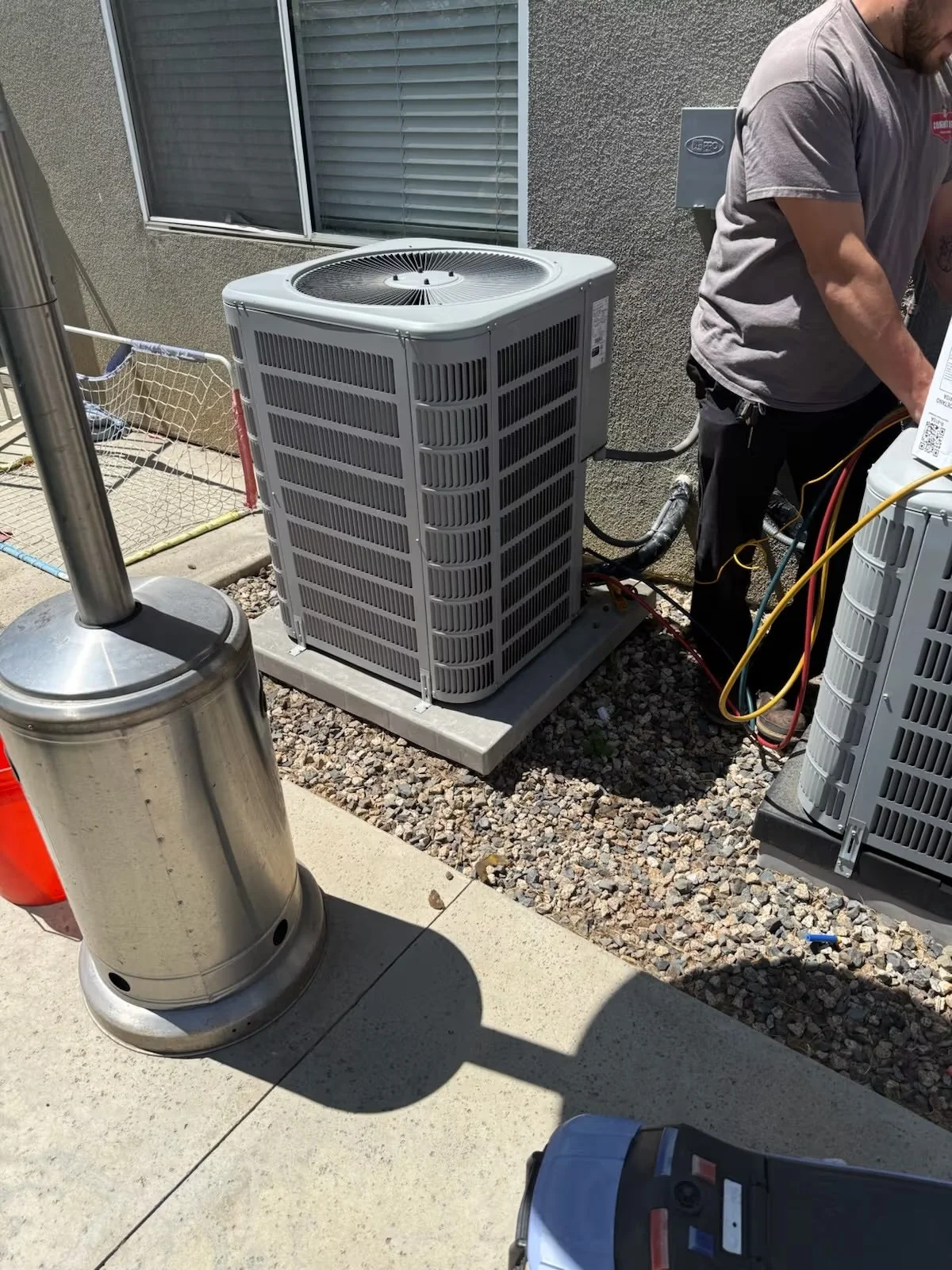
Every new condenser we install is charged with R-454B and leak-tested before we walk you through the system. No shortcuts on commissioning, no surprises later.
Sizing Mistakes That Cost Brea Homeowners
Roughly four out of every ten replacement quotes we see from other contractors specify the wrong system size for the home. Two patterns dominate. The first is matching the new system to the old one (often called like-for-like sizing), which simply repeats whatever sizing mistake was made in 1985. The second is oversizing as a perceived safety margin, which actually hurts performance.
An oversized AC short-cycles. It cools the air quickly without running long enough to pull humidity out, leaves the home feeling clammy, wears the compressor faster, and uses more electricity per cooled hour. We see this constantly in Brea homes where a 5-ton system was installed in a 2,000 square foot home that needs 3.5 tons. The owners often complain that the upstairs is cold while the downstairs is humid, and they assume the answer is a bigger zoning project. The actual answer, after a Manual J recalculation, is usually a properly sized 3.5-ton variable-capacity system.
The opposite mistake (undersizing) is rarer in newer homes and more common in older Brea tract homes that have had additions. A homeowner adds a 400 square foot bonus room over the garage, the original 3-ton system was already at capacity for the original 1,600 square feet, and now the addition never cools. We have walked into more than one home in Country Hills where the family had been living with a hot bonus room for a decade because nobody had recalculated load after the addition.
If your existing home has any of these symptoms (one room that never cools, AC that runs constantly on hot afternoons, AC that short-cycles every ten minutes, a humid feel even at 72 degrees), the right next step is a load calculation, not a bigger condenser.
Frequently Asked Questions
How much does a new HVAC system cost in Brea in 2026?
A new HVAC system in Brea costs $10,000 to $22,000 in 2026 depending on system type, home size, and ductwork condition. Most 1,800 to 2,500 square foot homes pay between $13,500 and $16,500 for a mid-tier system. Heat pumps run $2,500 to $4,500 more than equivalent AC plus furnace setups, and full duct replacement adds $3,500 to $7,500 to any tier.
How long does HVAC installation take in Brea?
A standard AC plus furnace replacement in Brea takes one day from removal to commissioning. Heat pump conversions that require electrical panel work take two days. Full ductwork replacement adds one to two more days. The City of Brea typically signs off the permit inspection within three business days of completion.
Do I need a heat pump or a traditional AC plus gas furnace for my Brea home?
For most 1970s Brea tract homes with an existing gas line and no rooftop solar, a traditional AC plus gas furnace is the lowest installed price and a sound choice. For homes with solar, all-electric setups, or no existing gas service, a heat pump typically wins on ten-year total cost of ownership. Carbon Canyon and Olinda Village hillside homes occasionally benefit from a dual-fuel hybrid for the coldest mornings.
What size HVAC system do I need for my Brea home?
Brea homes between 1,200 and 1,800 square feet typically need a 3-ton system. Homes between 1,800 and 2,500 square feet need 4 tons. Homes above 2,500 square feet need 5 tons or zoned systems. These are starting points, not final sizing. A proper Manual J load calculation accounts for insulation, window orientation, and Brea's hotter inland climate, and it should always be done before equipment is ordered.
Is there a federal tax credit for new HVAC in Brea in 2026?
The federal Section 25C tax credit for air-source heat pumps and central AC expired December 31, 2025. New HVAC installations completed in Brea during 2026 are not eligible for the 25C credit. Geothermal heat pumps still qualify for a 30 percent federal credit through 2032, and California state programs (HEEHRA, when funded) and utility rebates remain the main 2026 incentive paths.
Do I need a permit to replace my HVAC system in Brea?
Yes. The City of Brea requires a mechanical permit for any HVAC system replacement, including like-for-like swaps. Permit fees are typically $250 to $450 and the inspection is required to close the permit. A licensed contractor pulls the permit on your behalf as part of a normal install.
What is R-454B and why does my Brea HVAC quote mention it?
R-454B is the new federally mandated refrigerant for residential ducted HVAC systems, replacing R-410A on new equipment manufactured after January 1, 2025. R-454B has roughly 78 percent lower global warming potential than R-410A. Every new HVAC quote in Brea in 2026 will reference R-454B because all newly manufactured ducted residential systems now use it. Existing R-410A systems can still be serviced as long as reclaimed refrigerant supply lasts.
Ready for a Real Brea HVAC Quote?
A new HVAC system is one of the larger investments a Brea homeowner makes, and it's one where the right contractor decision pays off for the next fifteen years. Our team has been writing HVAC quotes across Brea, Fullerton, Yorba Linda, and the rest of north Orange County since 2014, and we hold ourselves to honest pricing and proper Manual J sizing on every project.
J Martin Indoor Air Quality has served Orange County families since 2014 with a full-time crew (no subcontractors), upfront pricing, and same-day service when you need it. Licensed, bonded, and insured (CA Contractor License CL#998956), with a 4.97-star rating across thousands of reviews and more than 5,000 OC families served. When you call, you reach Kathryn or Alexis at our Anaheim office, not a national call center. When a tech arrives, it is Jesus, Jack, Angel, or another full-time crew member who has been with us for years.
If you want a real number for your Brea home, with the load calculation, equipment options, and timeline laid out the way this guide describes, call us at (714) 462-4686 or request a free in-home consultation. We will look at your existing system, measure your ductwork, walk your home, and give you a written quote that reflects 2026 pricing reality. For a comparison perspective from our most popular service area, our 2026 Yorba Linda HVAC installation cost guide is a good companion read, and our full air conditioning service page has the complete picture of what we install.