
What Size AC Unit Does My Orange County Home Actually Need?
Posted on April 21, 2026
A homeowner in Anaheim Hills called us last summer after spending $9,800 on a brand-new 5-ton air conditioning system. Six weeks after installation, she was calling because the house felt cold and clammy, the upstairs was freezing while the downstairs thermostat read 74, and her electricity bills were higher than they'd been with the old unit. The system was barely a month old and already making her uncomfortable.
The problem wasn't the equipment. It was a brand-name unit with solid efficiency ratings and a proper installation. The problem was that her 1,900-square-foot home needed a 3-ton system, not a 5-ton system. The previous contractor had defaulted to the same tonnage as the system being replaced, which had itself been oversized when it was installed 22 years earlier. Nobody had ever done a load calculation. Nobody had asked whether the original sizing was correct. They just matched what was already there and assumed that bigger meant better.
We see the wrong size HVAC system installed constantly at J Martin Indoor Air Quality. Homeowners across Orange County are living with AC systems that are the wrong size for their homes, and most of them have no idea. The system turns on, it blows cold air, and so they assume it's working correctly. But the wrong size unit doesn't just affect comfort. It affects your energy bills, your equipment's lifespan, your indoor humidity, the evenness of cooling throughout your home, and ultimately how much money you'll spend on HVAC over the next 15 to 20 years. Getting the size right is the single most important decision in the entire replacement process, and it's the one that gets skipped or shortcut most often. If you're still weighing whether replacement is even the right move, our repair-or-replace decision framework walks through how to make that call before you start sizing a new system.
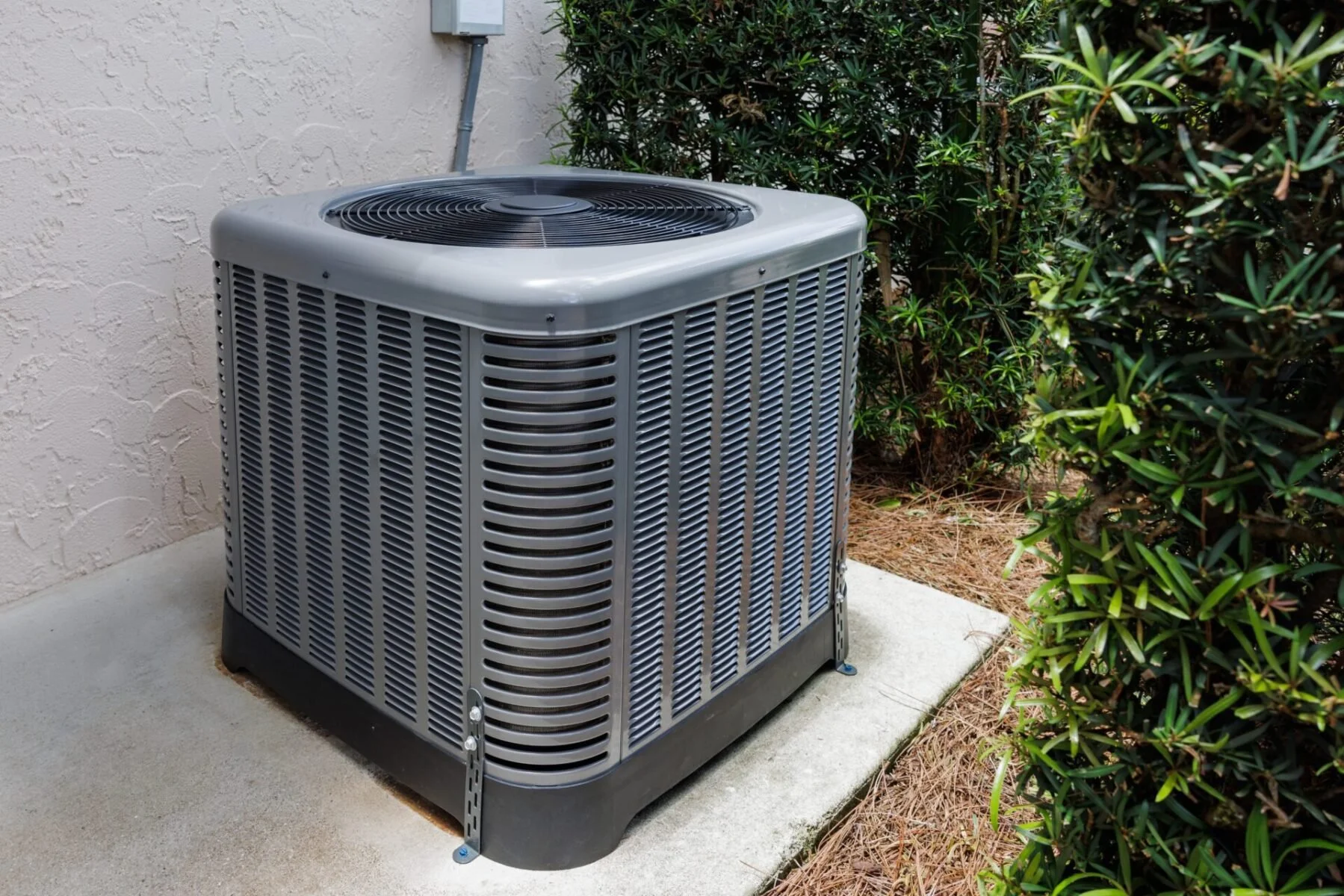
Installing the wrong AC size can leave your home uncomfortable and drive up energy bills. J Martin performs proper load calculations for Orange County homes. Call (714) 462-4686.
What "Size" Actually Means (It's Not About Physical Dimensions)
When HVAC professionals talk about AC size, they're not referring to how big the unit is physically. They're talking about its cooling capacity, measured in tons. One ton of cooling capacity equals 12,000 BTUs (British Thermal Units) per hour, which is the amount of energy needed to melt one ton of ice in 24 hours. It's an old measurement with historical roots, but it's the standard the industry uses.
Residential air conditioners are manufactured in half-ton increments: 1.5, 2, 2.5, 3, 3.5, 4, 4.5, and 5 tons. A 3-ton unit produces 36,000 BTUs of cooling per hour. A 5-ton unit produces 60,000 BTUs per hour. For most single-family homes in Orange County, the correct size falls somewhere between 2 and 5 tons, with 2.5 to 4 tons covering the vast majority of homes in the area.
If you want to know what size system is currently installed in your home, you can decode it from the model number on your outdoor condenser unit. Look at the metal data plate on the side or back of the unit and find the model number (not the serial number). Within that string of letters and numbers, you'll find an even two-digit number like 18, 24, 30, 36, 42, 48, or 60. That number represents the BTU capacity in thousands. Divide it by 12 and you have the tonnage. For example, if your model number contains "36," you have a 3-ton system (36,000 BTUs divided by 12,000 equals 3 tons). If it contains "48," you have a 4-ton system.
This is useful information to have before you talk to any contractor, because it gives you a baseline. If a contractor proposes replacing your 3-ton system with a 5-ton system and can't clearly explain why, that's a conversation worth having before you sign anything.
The Square Footage Shortcut (And Why It Gets People in Trouble)
The most common rule of thumb you'll find online is that you need about 1 ton of cooling capacity for every 400 to 600 square feet of living space. By that math, a 2,000-square-foot home would need roughly a 3 to 3.5-ton system. Some calculators use a simpler formula: multiply your square footage by 20 BTUs, then divide by 12,000 to get tonnage.
These rules of thumb exist because they're easy. And for a rough ballpark estimate, they're not useless. But they're dangerously imprecise for making a purchasing decision that costs $8,000 to $15,000 and affects your comfort for the next two decades. Here's why.
Two homes that are both 2,000 square feet can have radically different cooling needs. A single-story ranch home in Yorba Linda with south-facing windows, minimal shade, original 1970s insulation (R-19 in the attic), and single-pane windows might need a full ton more cooling capacity than a similar-sized two-story home in the same neighborhood with north-facing living areas, mature tree shading, upgraded insulation (R-38), and dual-pane low-E windows. The square footage is identical. The cooling load is not even close.
Orange County's climate adds another variable that generic national calculators don't account for. Inland cities like Yorba Linda, Anaheim Hills, Brea, and Fullerton regularly hit the mid-90s and triple digits during heat waves, while coastal cities like Huntington Beach and Newport Beach rarely break 85. A home in Anaheim Hills needs meaningfully more cooling capacity per square foot than a home of the same size in Laguna Beach. A sizing chart designed for national averages doesn't capture that difference.
The bottom line is that square footage can get you in the right neighborhood, but it can't get you to the right address. For that, you need an actual load calculation.
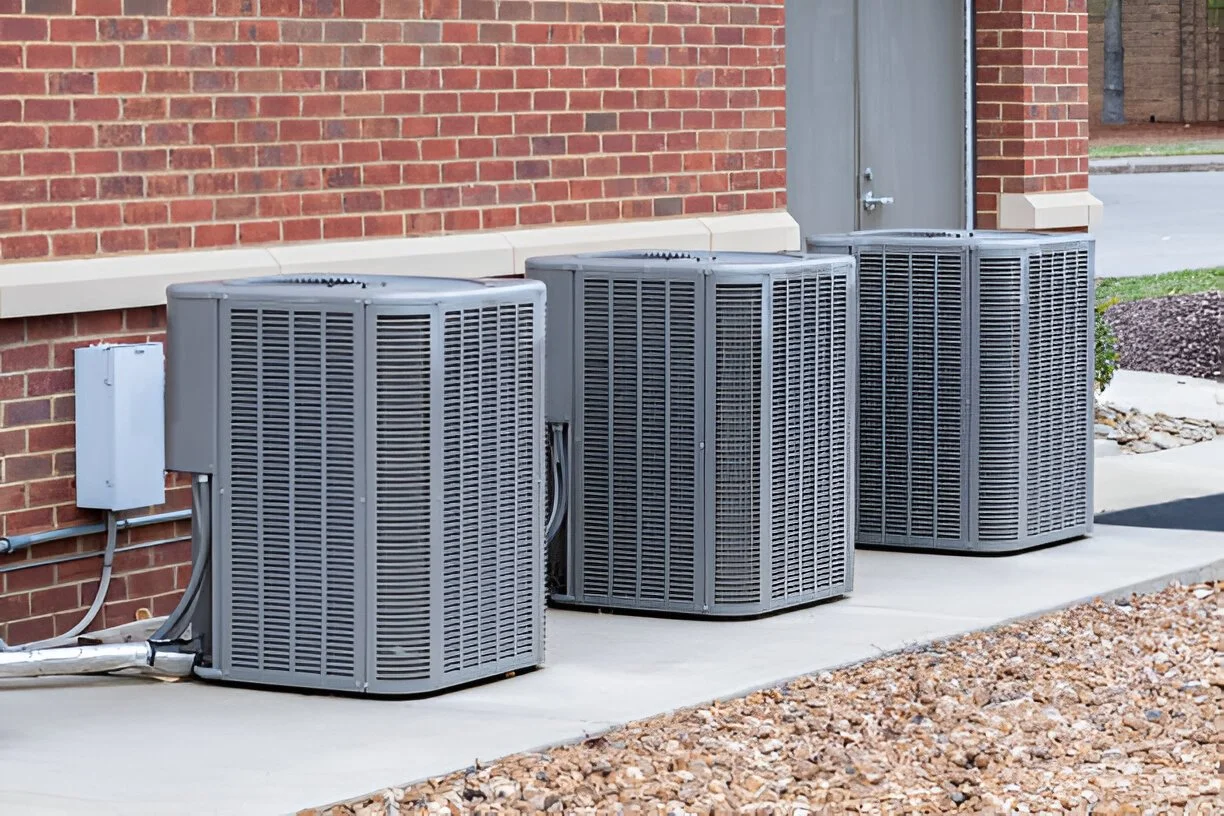
Not all air conditioners are the same size. J Martin uses Manual J load calculations to determine the correct AC tonnage for Orange County homes.
Manual J: The Right Way to Size an AC System
A Manual J load calculation is the engineering standard for determining the correct heating and cooling capacity for a specific home. It was developed by the Air Conditioning Contractors of America (ACCA) and is considered the gold standard by the Department of Energy, equipment manufacturers, and building codes. California's Title 24 energy code requires it for new construction and major HVAC alterations.
A Manual J calculation evaluates your home's total square footage and conditioned volume (accounting for ceiling height, since a home with 10-foot ceilings has significantly more air volume than one with 8-foot ceilings). It factors in the R-value and condition of your insulation in the attic, walls, and floors. It accounts for the number, size, type, and orientation of your windows, because a large west-facing window absorbs dramatically more solar heat than a small north-facing one. It considers your home's construction materials, the tightness of the building envelope (how much air leaks in and out), the number of occupants, heat-generating appliances, and the local climate data for your specific area rather than a broad regional average.
The output is a precise calculation of how many BTUs of cooling (and heating) your home actually needs to maintain comfortable temperatures under the most demanding conditions your local climate produces. That number translates directly into the correct tonnage for your system.
A proper Manual J calculation costs $150 to $500 when performed as a standalone service. Many reputable HVAC contractors include it as part of the replacement proposal process at no additional charge, because they understand that proper sizing is the foundation of a successful installation. If a contractor offers to replace your system without performing or referencing a load calculation, that's a significant red flag. They're guessing, and you're the one who'll pay for the consequences of that guess for the next 15 to 20 years.
At J Martin, a Manual J calculation is a standard part of every system replacement we perform. It's not optional and it's not an upsell. It's how responsible HVAC work is done.
What Happens When Your AC Is Too Big
This is the more common problem in Orange County, and it's counterintuitive because most people assume that a bigger AC system is always better. More cooling power means the house gets colder faster, which sounds like a good thing. In reality, an oversized system creates a cascade of problems that affect your comfort, your equipment, and your wallet.
An oversized AC cools the air near the thermostat very quickly, satisfying the setpoint and shutting off before the system has run long enough to properly cool the entire house or remove humidity from the air. This is called short-cycling. A properly sized system might run for 15 to 20 minutes per cycle, gradually cooling and dehumidifying the air throughout the home. An oversized system might blast cold air for 5 to 8 minutes, reach the thermostat setpoint, shut off, then restart 10 minutes later when the temperature climbs back up. This on-off-on-off pattern repeats all day.
The consequences are real. First, short-cycling means the system never runs long enough to adequately dehumidify the air. In Orange County, humidity isn't as extreme as in Florida or the Gulf Coast, but it's still a factor, especially during monsoonal moisture events in late summer and early fall. A short-cycling system leaves the house feeling cold and clammy instead of cool and comfortable.
Second, the rooms farthest from the thermostat never receive enough conditioned air before the system shuts off. The thermostat location (typically a central hallway) reads 74 degrees while the master bedroom at the end of the duct run is still 79. This is especially pronounced in homes with aging or deteriorated ductwork that's already restricting airflow before the short-cycling compounds the problem. You either live with uneven temperatures or crank the thermostat lower to compensate, which overcools the rest of the house and drives up energy costs. If your home has always had the "upstairs is too hot, downstairs is too cold" problem, oversizing is one of the most common contributing factors, along with ductwork issues and the basic physics of heat rising.
Third, the frequent startup cycles are hard on the compressor. Starting the compressor draws far more electricity and creates far more mechanical stress than running it continuously. A system that cycles on and off 8 to 10 times per hour wears out significantly faster than one that runs 3 to 4 longer cycles. Compressor replacement is the single most expensive AC repair, typically running $1,500 to $3,000 for parts and labor.
Fourth, your energy bills are higher than they should be. The startup surge on each cycle consumes more electricity than sustained running, and the inefficiency of short-cycling means the system uses more total energy to maintain the same temperature compared to a properly sized unit running longer, smoother cycles.
We detailed many of these airflow and distribution issues, including the common mistake of closing vents to try to redirect cooling, in our post on the truth about closing vents in unused rooms. If your home has uneven temperatures, that post is worth reading before you assume the system itself is the problem.
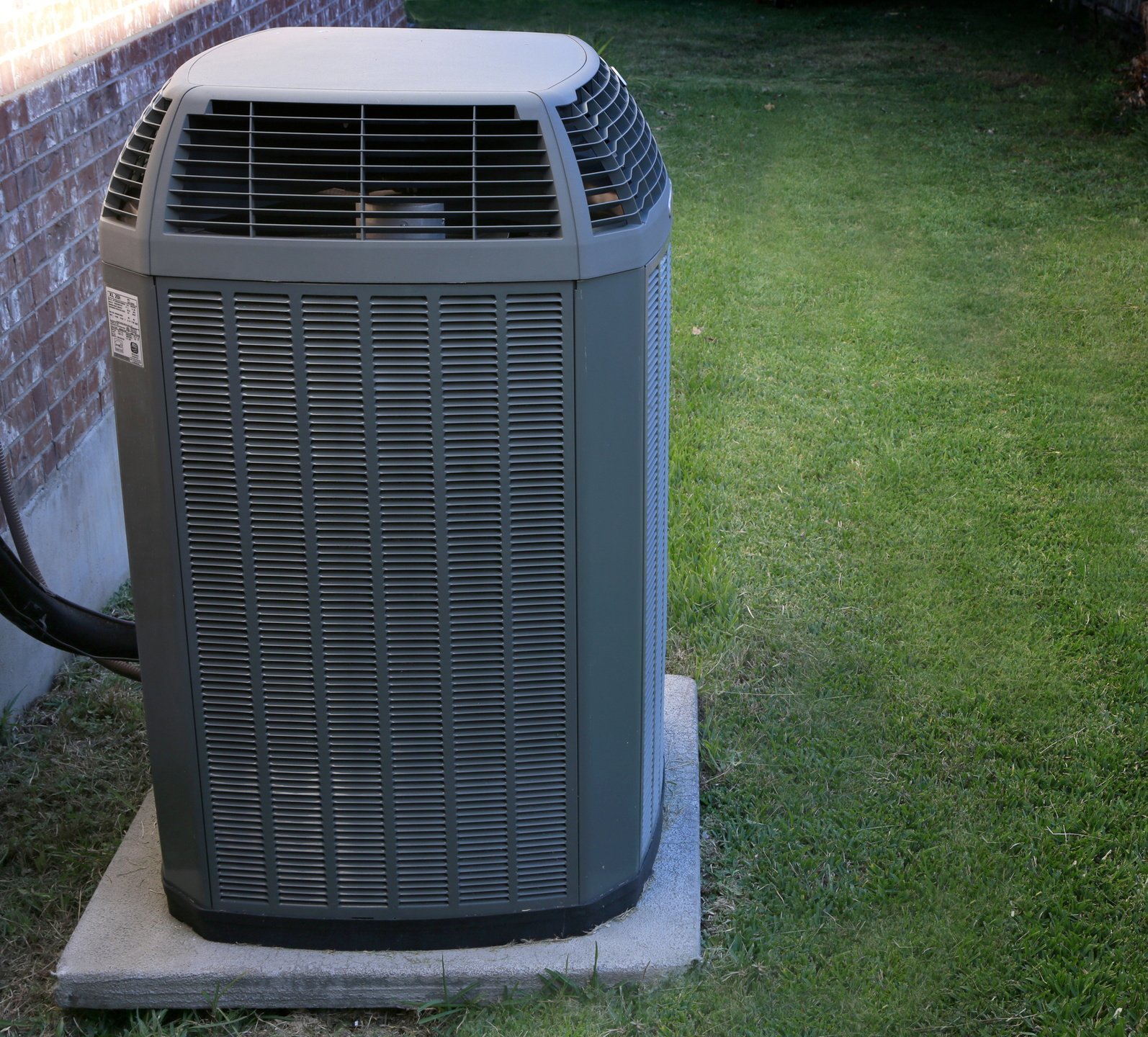
A larger air conditioner doesn’t guarantee better cooling. Without proper load calculations, an oversized AC unit can create comfort problems and higher energy bills.
What Happens When Your AC Is Too Small
Undersized systems create the opposite problem, and it's more obvious to homeowners because you can feel it directly. The AC runs and runs and runs, but the house never reaches the temperature you've set on the thermostat, particularly on the hottest days of the year.
In Orange County's inland cities, where heat waves push temperatures above 100 degrees, an undersized system may run continuously for 10 to 14 hours without ever pulling the indoor temperature below 78 or 80 degrees. You're paying for all that runtime (your electric bill spikes accordingly), the equipment is under constant stress with no rest cycles, and you're still not comfortable.
Continuous operation at maximum capacity accelerates wear on every mechanical component: the compressor, the fan motor, the contactor, and the capacitors. The system's lifespan shortens. Components that might last 15 years under normal cycling conditions fail in 8 to 10 years under constant load.
Undersizing was particularly common in Orange County homes built in the 1960s and 1970s, when builders used crude rules of thumb and when air conditioning was still considered somewhat of a luxury in Southern California's mild coastal climate. The problem is that what was "mild" in 1970 is measurably hotter today, and homeowner expectations for indoor comfort have changed considerably. A 2-ton system that might have been marginally adequate for a 1,600-square-foot home in Fullerton 50 years ago is almost certainly undersized for that same home today, especially if the home has added square footage, converted a garage, or seen its insulation degrade over the decades.
If your AC runs for hours without reaching the setpoint on hot days, or if your energy bills seem disproportionately high for your home's size, undersizing should be on the list of potential causes alongside ductwork problems and insulation deficiencies.
How Orange County's Climate Changes the Sizing Math
Generic AC sizing calculators treat the entire country, or at best broad climate zones, as a single calculation. Orange County's microclimate variations make that approach particularly unreliable.
Yorba Linda, Anaheim Hills, and Brea sit 15 to 20 miles inland from the coast and at higher elevations. Summer highs regularly reach the upper 80s, with heat waves pushing into the upper 90s and triple digits. The September 2024 heat wave brought temperatures 12 to 14 degrees above seasonal averages across northern Orange County. These areas need more cooling capacity per square foot than the coastal cities.
Santa Ana winds add another dimension. These hot, dry wind events can spike temperatures 15 to 20 degrees above normal in a matter of hours, and they drive fine dust and particulate into condenser coils, reducing efficiency. A system sized for average conditions without accounting for Santa Ana wind events may struggle during exactly the periods when you need cooling the most.
Sun exposure varies dramatically even within the same neighborhood. A south-facing or west-facing home absorbs significantly more solar heat through its roof and walls than a north-facing home of identical construction. Hillside homes in Hidden Hills, Sunny Hills, and the Anaheim Hills estates often have one side of the house receiving intense afternoon sun with no shade protection, creating a heat load that a generic calculator simply can't account for.
Attic temperatures in Orange County homes regularly exceed 150 degrees during summer. Every degree of attic heat radiates down through the ceiling into your living space and heats the ductwork running through the attic. Two identical homes with different levels of attic insulation can have cooling loads that differ by 20% to 30%, translating to a half-ton or full-ton difference in the correct system size.
All of these factors are captured in a proper Manual J calculation. None of them are captured in a square-footage-based online calculator.
What You Can Figure Out on Your Own (And What You Can't)
There are several things you can determine yourself that will give you a useful starting point and help you have a more productive conversation with an HVAC contractor.
First, find your current system's tonnage using the model number method described earlier. This gives you a reference point. If your current system has been keeping you comfortable, it may be correctly sized (though not necessarily, since many homes have compensated for oversizing by running the system at higher thermostat settings or simply tolerating the short-cycling).
Second, calculate your home's approximate conditioned square footage. Include every room that receives air from the HVAC system and exclude the garage, unfinished attic, and any spaces that aren't connected to the duct system. Note whether you have standard 8-foot ceilings, 9-foot ceilings, vaulted ceilings, or a mix.
Third, assess your insulation situation. If you can safely access the attic, look at the insulation. If you can see the tops of the ceiling joists above the insulation, or if the insulation is visibly compressed and matted down, you're well below modern standards. Homes with poor insulation need more cooling capacity (or, ideally, insulation upgrades that reduce the cooling load and potentially allow for a smaller, less expensive system).
Fourth, note your window situation. Count the number of windows, note which direction they face, and whether they're single-pane, dual-pane, or have low-E coatings. Large, west-facing single-pane windows are the biggest contributors to solar heat gain. This information helps a contractor understand your home's thermal profile.
What you can't determine yourself is the exact tonnage your home needs. That requires the Manual J calculation and the professional judgment of someone who understands how all of these variables interact in your specific home with your specific climate. The purpose of doing this preliminary research isn't to size the system yourself. It's to know enough to evaluate whether the contractor sizing your system is doing it properly.
How to Evaluate What a Contractor Tells You
When you're getting quotes for a new AC system, the sizing conversation is one of the most revealing indicators of a contractor's quality and honesty.
A contractor who walks around your home for five minutes, asks what size system you currently have, and proposes the same tonnage is not doing a load calculation. They're guessing based on what's already there, which may have been wrong from the start.
A contractor who suggests you need a larger system than what you currently have, without performing measurements or calculations and without identifying a specific reason (such as a room addition that increased your square footage), may be upselling you on capacity you don't need. A larger system costs more to purchase, more to install, and more to operate.
A contractor who performs or references a Manual J calculation, can explain the results in plain language, and sizes the system based on your home's actual cooling load rather than a rule of thumb or the existing equipment is doing the job right. They should be able to tell you: here's your home's cooling load in BTUs, here's the tonnage that matches it, and here's why.
At J Martin, we walk homeowners through this process because we believe you should understand why we're recommending what we're recommending. We don't work on commission, so there's no incentive for us to sell you a bigger system than you need. A properly sized 3-ton system that keeps you perfectly comfortable for 15 years is a better outcome for everyone than an oversized 5-ton system that short-cycles, wears out early, and leaves you with uneven temperatures. You can read more about how we screen and train our technicians to understand the kind of people we put in your home and why it matters. That commitment to doing things the right way, starting with repairs rather than replacements 95% of the time, is also a big part of why Orange County homeowners keep choosing us over larger, less personal operations.
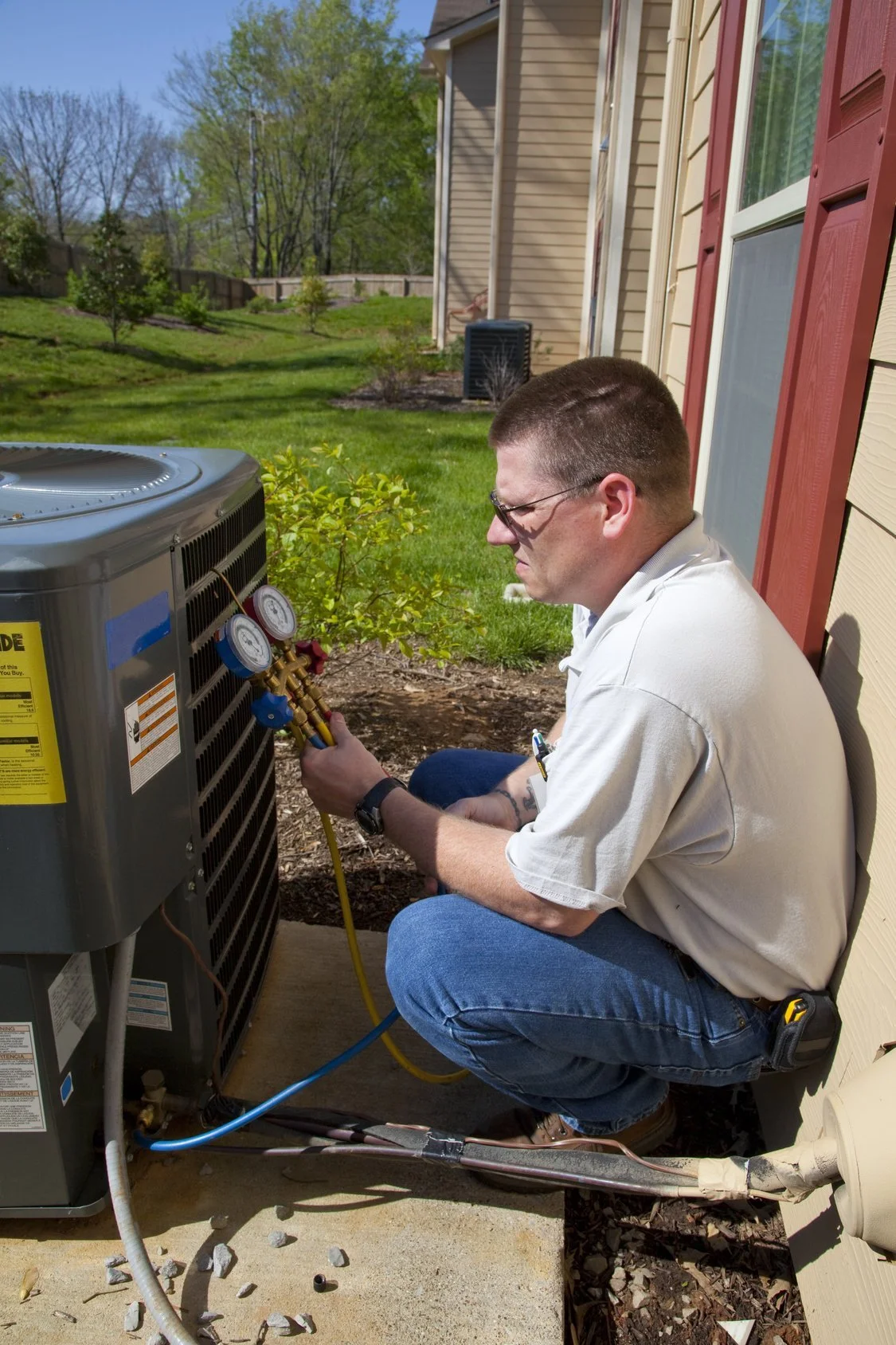
Proper AC sizing starts with a professional inspection and load calculation, not guesswork.
When a Mini-Split Makes More Sense Than Upsizing Your Central System
Sometimes the sizing conversation reveals that the central system is actually the right size for the majority of the home, but one or two specific areas are consistently uncomfortable. The upstairs bedroom that's always 5 degrees warmer than the rest of the house. The converted garage that the original ductwork was never designed to reach. The home office addition that was tacked on without extending the HVAC system.
In these situations, the worst thing you can do is oversize the central system to compensate for one problem area. That subjects the entire house to the short-cycling issues described earlier, just to get a little more cold air to one room. A targeted solution almost always makes more sense.
Ductless mini-split systems are designed for exactly this scenario. A single-zone mini-split provides independent heating and cooling to one room without any ductwork, with its own thermostat and independent operation from the central system. A single-zone installation typically runs $4,000 to $9,000, and multi-zone systems serving two to four rooms from one outdoor unit range from $9,000 to $40,000. That's often less expensive than upsizing the central system, and it solves the actual problem rather than creating new ones.
If your home has comfort issues in specific areas and you're wondering whether the central system needs to be larger or whether a targeted solution is the better approach, the answer depends on your specific situation. But the question is worth asking, and a good contractor should present both options rather than automatically quoting the most expensive one.
Don't Forget the Ductwork
No discussion of AC sizing is complete without addressing the delivery system. Your AC unit produces cooled air. Your ductwork delivers it to each room. If the ductwork is undersized, leaky, poorly insulated, crushed, disconnected, or deteriorated, even a perfectly sized AC system will underperform.
In many Orange County homes built in the 1970s and 80s, the ductwork is the bottleneck, not the equipment. Ducts that have been sitting in attic temperatures exceeding 150 degrees for 35 to 50 years develop leaks at joints, lose their insulation wrapping, sag and create airflow restrictions, and sometimes disconnect entirely. The Department of Energy estimates that duct losses can account for up to 30% of a home's cooling energy.
If you're replacing your AC and the contractor doesn't inspect and address the ductwork as part of the project, you're potentially installing a new engine in a car with a broken transmission. The money you spend on the new system won't deliver the comfort or efficiency you're paying for.
Duct sealing costs $300 to $1,000 for moderate repairs. Full duct replacement runs $2,000 to $6,000 depending on the home's size and layout. When done at the same time as a system replacement, the combined improvement in efficiency and comfort is far greater than either upgrade alone. Our Complete Guide to Air Duct Cleaning covers the full spectrum from cleaning to sealing to replacement.
And if you're trying to understand the full cost picture for a new HVAC system in Orange County, including equipment options, efficiency tiers, and available incentives, our 2025-2026 HVAC Replacement Cost Guide lays out every number.
The Bottom Line
The right size AC for your Orange County home isn't something you can reliably determine from a chart, a calculator, or a rule of thumb. It's the product of a proper load calculation that accounts for your specific home's square footage, insulation, windows, orientation, construction, and the local climate conditions it will need to perform in.
Getting it right means lower energy bills, more consistent comfort, better humidity control, quieter operation, and an equipment lifespan that matches or exceeds the manufacturer's projections. Getting it wrong, whether too big or too small, means you pay more for less comfort and replace the system sooner.
If you're considering a new HVAC installation or heat pump for your Orange County home and want to know exactly what size you need, give us a call at (714) 462-4686. J Martin Indoor Air Quality performs a proper Manual J load calculation on every system replacement, and we'll walk you through the results so you understand exactly why we're recommending what we're recommending. No guesswork. No upselling. Just the right system for your home.
If indoor air quality is also on your radar, as it should be for any Orange County homeowner dealing with Santa Ana winds and wildfire seasons, our post on improving your indoor air quality covers the options that can integrate with your new system from day one.
J Martin Indoor Air Quality proudly serves Yorba Linda, Fullerton, Anaheim, Anaheim Hills, Brea, Villa Park, Placentia, Orange, and communities throughout Orange County. California License #998956.
J Martin Indoor Air Quality | (714) 462-4686 | Services