
R-410A Phase-Out: What Orange County Homeowners Need to Know in 2026
Updated on May 18, 2026
If you own an air conditioner or heat pump installed in the last 15 years, it almost certainly uses R-410A refrigerant. This refrigerant has been the industry standard since the mid-2000s, and it's what keeps your home cool by absorbing heat from indoor air and releasing it outside.
Now R-410A is being phased out. The transition started in 2025, and the changes will affect repair costs, equipment availability, and HVAC replacement decisions for years to come. But despite what some contractors might tell you, this is not an emergency that requires you to rush out and replace your system immediately.
This guide explains what's actually happening, what it means for your existing system, how it affects repair costs, and how to make smart decisions about new HVAC equipment installation in the years ahead.
What Is R-410A and Why Is It Being Phased Out?
R-410A is a hydrofluorocarbon (HFC) refrigerant that replaced R-22 (commonly called Freon) starting in 2010. When R-22 was phased out due to its ozone-depleting properties, R-410A became the standard for residential air conditioners and heat pumps because it doesn't damage the ozone layer and operates more efficiently than its predecessor.
The problem with R-410A is its Global Warming Potential (GWP). GWP measures how much heat a gas traps in the atmosphere compared to carbon dioxide over a specific time period. R-410A has a GWP of 2,088, meaning it traps 2,088 times more heat than an equivalent amount of carbon dioxide over 100 years.
The American Innovation and Manufacturing (AIM) Act, signed into law in December 2020, gave the Environmental Protection Agency authority to phase down HFC production and use by 85% by 2036. As part of this mandate, the EPA established the Technology Transitions rule, which sets GWP limits for refrigerants used in new HVAC equipment.
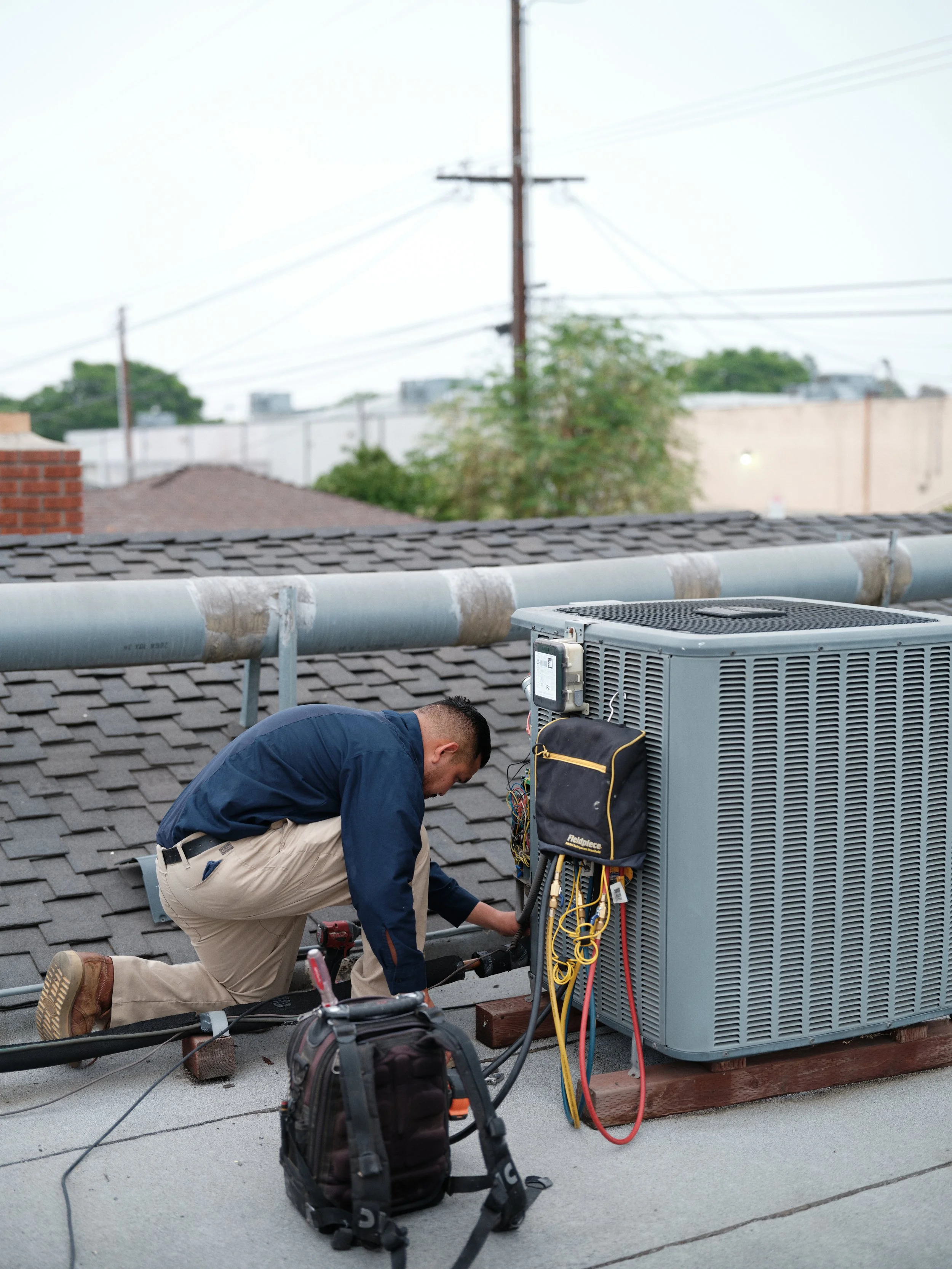
Your R-410A system doesn't need immediate replacement despite what some contractors claim. What you do need: honest advice about repair costs versus replacement timing as refrigerant prices rise. That's what we provide.
Starting January 1, 2025, manufacturers can no longer produce or import new residential split system air conditioners and heat pumps that use R-410A. The deadline for packaged units (self-contained systems) is January 1, 2028.
The replacement refrigerants meeting the new GWP requirements include R-454B (GWP of 466) for ducted systems and R-32 (GWP of 675) for ductless mini-split systems. Both are classified as A2L refrigerants, meaning they have low toxicity and mild flammability.
The Timeline: What Has Already Happened and What's Coming
Understanding the actual timeline helps separate facts from sales tactics. Here's what has already occurred and what's ahead:
January 1, 2025: Manufacturers stopped producing new R-410A residential split systems and heat pumps. Equipment manufactured before this date can still be sold and installed.
January 1, 2026: The original deadline for installing R-410A split systems manufactured before 2025. However, in late 2025, the EPA announced it would deprioritize enforcement of this installation deadline, effectively allowing contractors to continue installing pre-2025 inventory without immediate penalty. The EPA stated it would focus enforcement resources on manufacturing and import violations rather than installations of legally manufactured equipment.
January 1, 2028: Deadline for installing R-410A packaged units (self-contained systems) manufactured before 2025.
2036: Target date for achieving 85% reduction in HFC production and consumption under the AIM Act.
Ongoing: R-410A refrigerant will continue to be available for servicing existing systems through reclaimed and recycled supplies. There is no deadline requiring homeowners to replace working R-410A systems.
What This Means for Your Current System
If your air conditioner or heat pump currently uses R-410A and is working properly, you do not need to replace it. The phase-out targets new equipment manufacturing, not existing installations.
Your R-410A system can continue operating for its full expected lifespan, which is typically 15 to 20 years for well-maintained equipment. Technicians can still service these systems, add refrigerant if needed, and replace components.
The key consideration is repair costs. As R-410A production decreases, the refrigerant will become more expensive. This follows the same pattern we saw with R-22: when production stopped in 2020, prices for R-22 skyrocketed from around $20 per pound to $150 to $250 per pound over the following years.
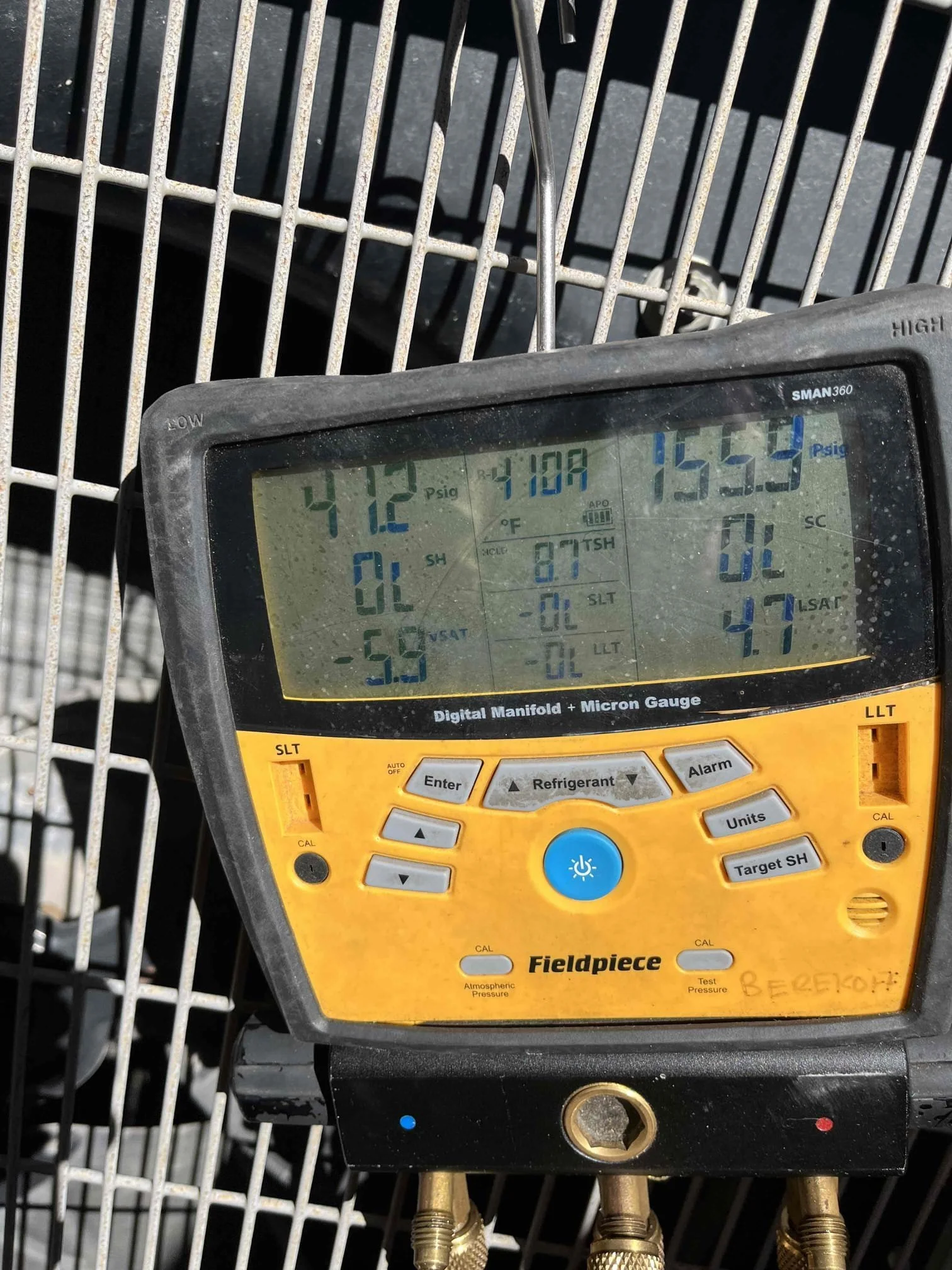
Accurate refrigerant diagnostics matter more than ever with R-410A prices at $50-$100 per pound. Know exactly what your system needs before paying for repairs. Professional assessment: (714) 462-4686.
R-410A pricing has already increased. In 2020, R-410A cost approximately $4 to $8 per pound wholesale. By 2024, homeowners were paying $50 to $100 per pound installed, including the service call and labor. Industry sources report that R-410A prices have increased approximately 375% since 2020 due to production phase-downs.
Most residential air conditioners require 2 to 4 pounds of refrigerant per ton of cooling capacity. A typical 3-ton system (common for Orange County homes around 1,800 to 2,200 square feet) would need 6 to 12 pounds for a complete recharge. At current prices of $50 to $100 per pound installed, a full recharge costs $300 to $1,200 depending on the amount needed.
These costs will continue rising as supply decreases. By 2030 or beyond, R-410A pricing could follow the R-22 trajectory, potentially reaching $150 to $250 per pound or higher.
How This Affects Repair Decisions
The refrigerant phase-out changes the math on repair versus replacement decisions, but not as dramatically as some contractors suggest.
For minor repairs like capacitor replacement, thermostat issues, or electrical problems, the refrigerant type doesn't matter. These repairs remain cost-effective regardless of what refrigerant your system uses.
For repairs involving refrigerant, the calculation becomes more complex. If your system has a leak requiring significant refrigerant replacement, you need to factor in current R-410A prices plus the likelihood that prices will continue rising. A repair that costs $800 today might cost $1,500 in three years if the leak recurs and refrigerant prices have doubled.
The general principle: if your R-410A system is less than 10 years old and needs a refrigerant-related repair, the repair is usually still worthwhile because you have significant useful life remaining. If your system is 12 to 15 years old and needs an expensive refrigerant-related repair, replacement with new equipment using the newer refrigerants becomes more attractive because you're approaching end-of-life anyway. For a fuller breakdown of how to think through this question, including the $5,000 rule and the other six factors that should drive the call, see our repair-or-replace decision framework. Refrigerant type is one input, but system age, repair history, and energy efficiency all matter.
Compressor replacement deserves special consideration. A new compressor for an R-410A system costs $1,500 to $3,000 installed. If your system is more than 10 years old and the compressor fails, many homeowners find that investing that money toward a new system with a 10-year warranty and newer refrigerant makes more financial sense than extending the life of aging equipment by another 5 to 7 years.
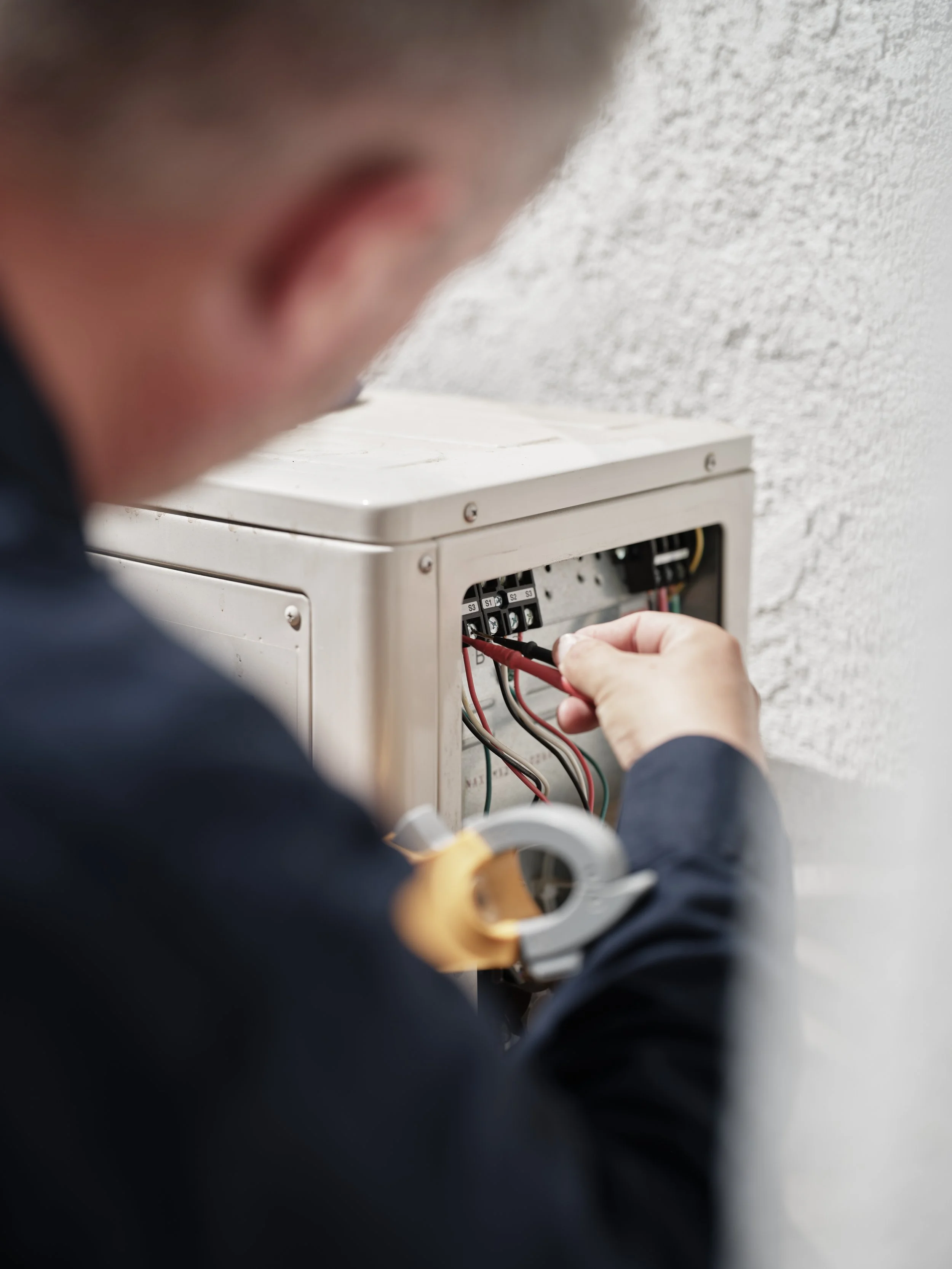
Many R-410A system repairs have nothing to do with refrigerant. Electrical components, capacitors, contactors, and thermostats can all be replaced at standard costs. The phase-out doesn't change the economics of these common repairs.
What About Retrofitting to New Refrigerant?
You cannot retrofit an existing R-410A system to use R-454B or R-32. The new refrigerants operate at different pressures, require different lubricants, and need systems specifically designed for their properties. The new A2L refrigerants also require leak detection sensors and safety controls that aren't present in R-410A systems.
Any contractor suggesting they can convert your existing system to new refrigerant is either misinformed or dishonest. The only path to the new refrigerants is replacing the outdoor unit, and often the indoor coil as well.
New Equipment: What to Expect
If you're in the market for new HVAC equipment, you'll now be purchasing systems that use R-454B (for most ducted systems) or R-32 (for ductless mini-splits).
The new equipment costs more than the R-410A systems it replaced. Industry sources indicate price increases of 10% to 15% for the transition, on top of general price increases that have affected the HVAC market since 2020. The average residential system replacement cost has risen from approximately $6,000 in early 2020 to approximately $12,000 in 2024-2025, driven by a combination of material costs, labor costs, efficiency regulations, and the refrigerant transition.
The new equipment costs more than the R-410A systems it replaced. Industry sources indicate price increases of 10% to 15% for the transition, on top of general price increases that have affected the HVAC market since 2020. The average residential system replacement cost has risen from approximately $6,000 in early 2020 to approximately $12,000 in 2024-2025, driven by a combination of material costs, labor costs, efficiency regulations, and the refrigerant transition. For a full breakdown of what HVAC replacement actually costs in Orange County in 2025-2026, including system-by-system pricing, brand comparisons, and what's driving the increases locally, see our complete cost guide.
The A2L designation means these refrigerants are mildly flammable, but the risk is minimal in real-world conditions. R-454B requires an ignition source to combust, and even then, the flame speed is extremely slow. HVAC technicians are receiving training on the new refrigerants, and installation practices are similar to R-410A with some additional safety considerations.
For Orange County specifically, the new refrigerants may offer a performance advantage in extreme heat. Some preliminary data suggests R-454B systems maintain better cooling output at high outdoor temperatures compared to R-410A. In an area where summer temperatures regularly exceed 100 degrees, this could translate to better comfort on the hottest days.
Should You Buy R-410A Equipment Now?
Through 2025 and into early 2026, some contractors may have remaining inventory of R-410A equipment manufactured before the January 2025 deadline. In some cases, this equipment is being offered at discounted prices as distributors clear inventory.
Purchasing R-410A equipment now has both advantages and disadvantages:
Potential advantages: Lower upfront cost compared to new R-454B equipment. Proven technology with a long track record. Technicians are experienced with installation and service.
Potential disadvantages: Rising refrigerant costs for future repairs. Eventually, parts availability may become more limited (though this is likely 10+ years away). You're buying into a technology at the end of its production life rather than the beginning.
For most homeowners, if your system is failing and needs replacement, purchasing whatever equipment your trusted contractor recommends is reasonable. The refrigerant type matters less than proper sizing, quality installation, and working with a reputable company. A well-installed R-410A system will serve you well for 15+ years, and refrigerant costs for routine maintenance are manageable even at projected future prices.
If you're proactively planning a replacement and have flexibility on timing, waiting for the R-454B market to mature may be worthwhile. By late 2026 and into 2027, the supply chain for new refrigerant equipment will be more established, any manufacturing issues will be resolved, and pricing may stabilize.
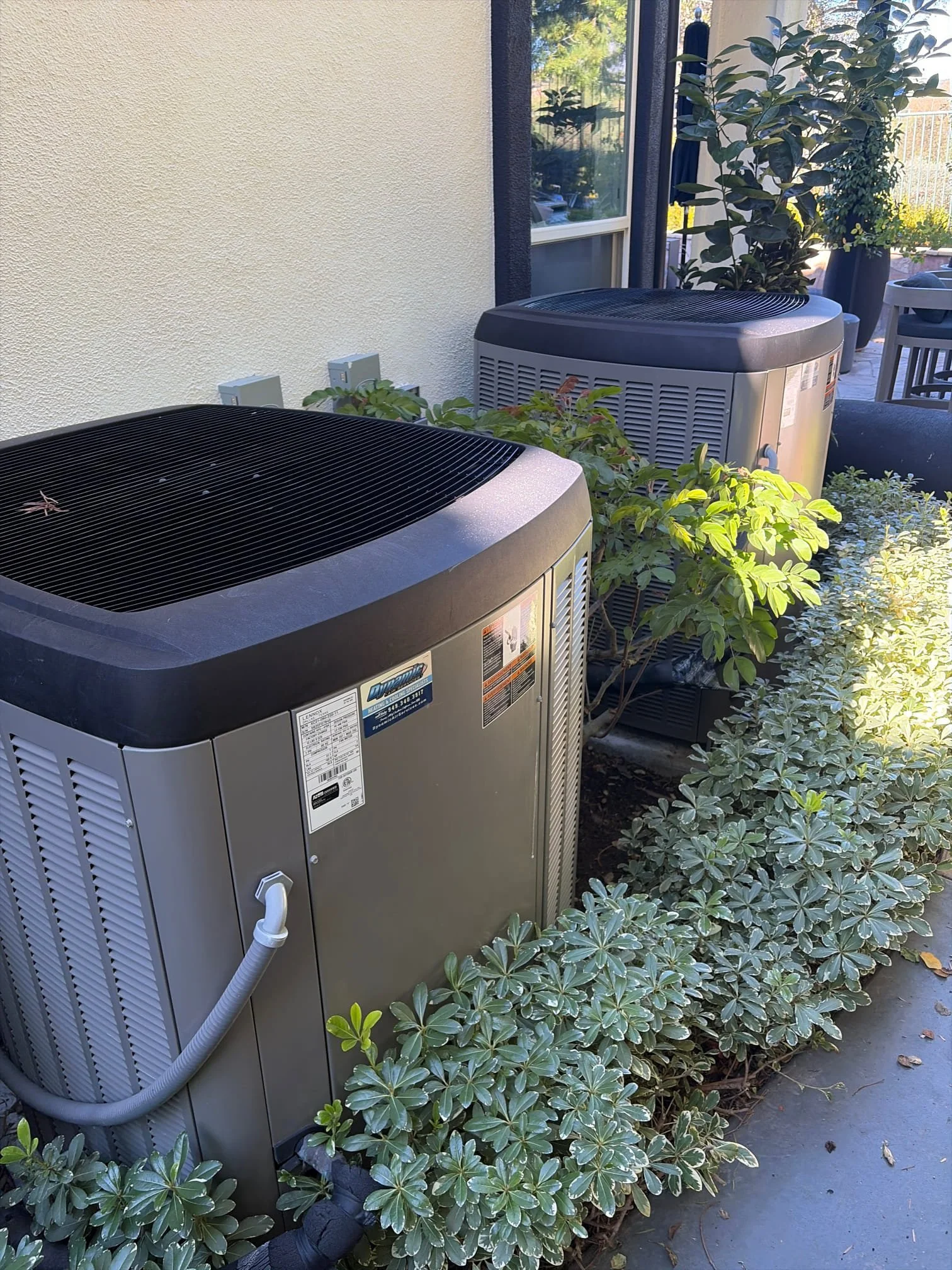
These R-410A air conditioners can continue operating for their full 15-20 year lifespan. The phase-out affects new equipment manufacturing, not existing installations. Orange County homeowners deserve facts, not fear tactics about the refrigerant transition.
The R-22 Comparison: What History Tells Us
Many homeowners remember the R-22 phase-out and wonder if R-410A will follow the same pattern. There are similarities and important differences.
R-22 production ended completely in 2020 after a gradual phase-down. Homeowners with R-22 systems saw refrigerant costs rise from approximately $20 per pound to $150 to $250 per pound over several years. By 2024, R-22 systems were essentially uneconomical to repair if they needed significant refrigerant.
R-410A is following a similar pattern, but the timeline is longer. R-410A production is being phased down to 85% reduction by 2036, not banned outright. Reclaimed and recycled R-410A will remain available for servicing existing systems, though at increasing cost.
The practical lesson from R-22: if your system is working fine, keep using it. Plan for eventual replacement but don't panic. When major repairs become necessary, factor rising refrigerant costs into your decision. And when you do replace, you'll get a more efficient system that will serve you for another 15 to 20 years.
What Honest Contractors Should Tell You
Be cautious of contractors using the refrigerant transition as a high-pressure sales tactic. Here's what honest communication looks like:
Honest: "Your R-410A system will continue working for years. Refrigerant costs for repairs will increase over time, which is worth considering if you're facing a major repair on an older system."
Dishonest: "R-410A is being banned and you need to replace your system immediately or it will be illegal to service."
Honest: "New systems use R-454B refrigerant, which costs about 10-15% more but has lower environmental impact and may perform better in extreme heat."
Dishonest: "If you don't replace now, you'll be stuck with obsolete equipment that no one can work on."
Honest: "Your 8-year-old system has plenty of life left. If it needs a refrigerant-related repair, we can discuss whether repair or replacement makes more sense based on your specific situation."
Dishonest: "With the phase-out coming, you should replace now before prices go up even more."
The refrigerant transition is real, and it does affect long-term ownership costs. But it's not an emergency requiring immediate action for homeowners with working equipment.
Practical Recommendations for Orange County Homeowners
Based on the current regulatory landscape and market conditions, here's practical guidance for different situations:
If your R-410A system is less than 10 years old and working well: Continue using it. Budget for routine maintenance and be aware that refrigerant costs for any repairs will be higher than in the past. Don't replace prematurely.
If your R-410A system is 10 to 15 years old and working well: Start planning for eventual replacement. Get a system assessment to understand its current condition. If major repairs become necessary, carefully evaluate repair versus replacement costs including projected refrigerant costs.
If your R-410A system is more than 15 years old: You're approaching end-of-life regardless of refrigerant issues. Begin researching replacement options. Any major repair at this age is unlikely to be cost-effective.
If your system needs replacement now: Work with a reputable contractor who can explain your options for both remaining R-410A inventory and new R-454B equipment. Focus on proper sizing, quality installation, and warranty terms rather than obsessing over refrigerant type.
If you have an older R-22 system still running: Consider replacement sooner rather than later. R-22 refrigerant costs make any significant repair extremely expensive, and you're operating equipment well past its typical lifespan.
Staying Informed
Refrigerant regulations continue to evolve. The EPA has reconsidered certain aspects of the Technology Transitions rule, and enforcement priorities may shift over time. California also has state-level HFC regulations that may affect Orange County homeowners independently of federal rules.
Your HVAC contractor should stay current on these changes and be able to explain how they affect your specific situation. If a contractor can't clearly explain the regulatory landscape or uses confusing or scary language to push a sale, consider getting a second opinion.
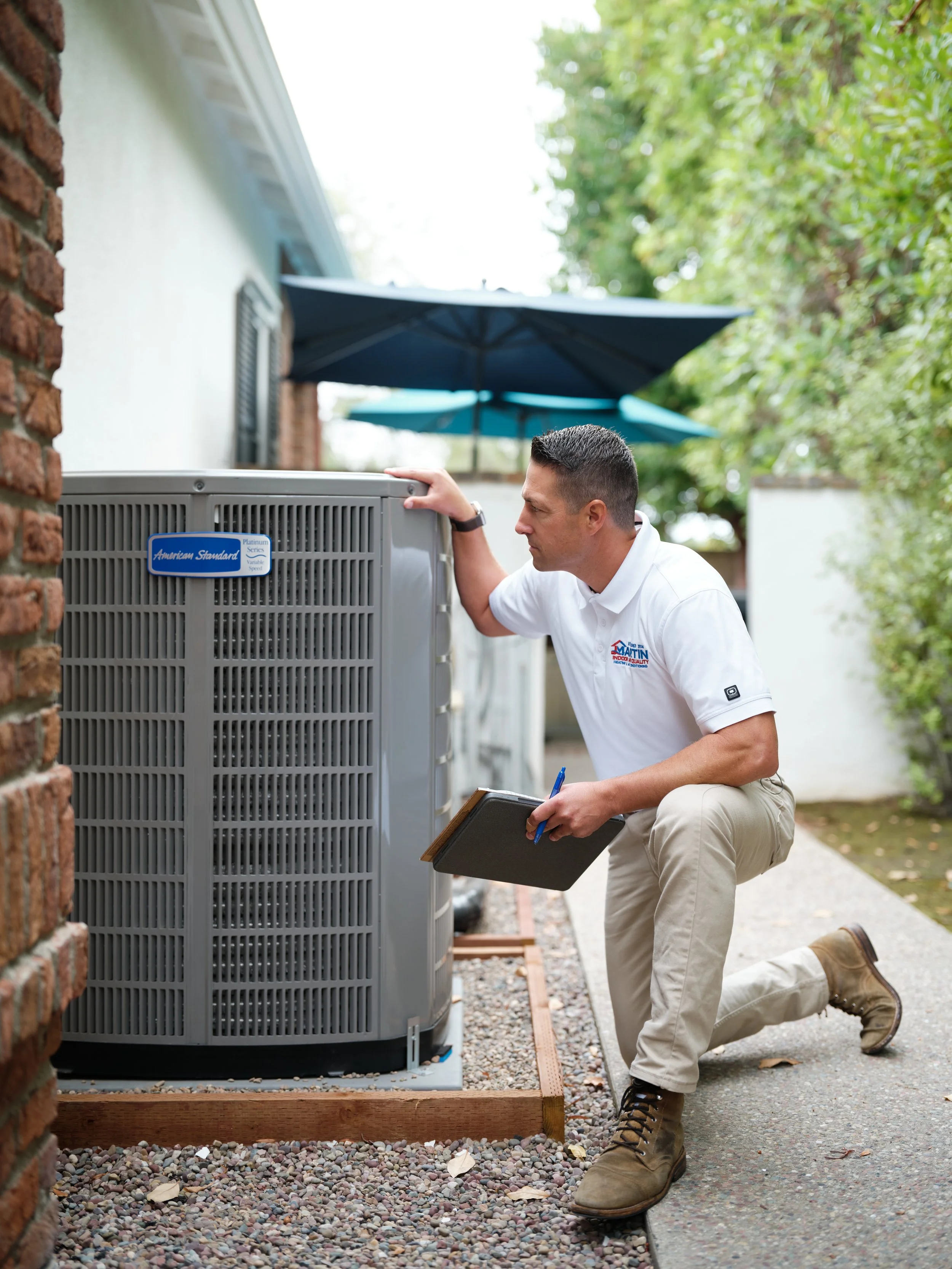
Before deciding on a $12,000 replacement, get an honest assessment of your R-410A system's condition. Age, repair history, and refrigerant costs all factor into the decision. Professional evaluation: (714) 462-4686.
Understanding A2L Refrigerants: Safety and Performance
The new refrigerants replacing R-410A are classified as A2L under ASHRAE Standard 34, which categorizes refrigerants by toxicity and flammability. The "A" indicates low toxicity, and the "2L" indicates lower flammability.
Despite the "flammable" classification, A2L refrigerants are extremely difficult to ignite under normal conditions. R-454B requires a specific ignition source, and even when ignited, the flame propagation speed is very slow compared to truly flammable substances like propane. In practical terms, A2L refrigerants are much more similar to the non-flammable R-410A than to highly flammable A3 refrigerants.
The flammability classification does require some changes in how systems are designed and installed. New R-454B and R-32 equipment includes leak detection sensors and may have different charge limits based on room size. Technicians receive specific training on A2L refrigerant handling, though most installation practices remain similar to R-410A.
For homeowners, the practical impact is minimal. You won't notice any difference in how your new system operates. The safety systems are built into the equipment, and when properly installed by a trained technician, A2L systems are considered safe for residential use.
One consideration: if you have a garage-mounted air handler or equipment in a confined space, the installer needs to ensure adequate ventilation and proper sensor placement. This is part of normal installation practices for A2L equipment.
The Component Replacement Question
A common question from homeowners with R-410A systems: what happens when individual components fail?
The EPA rules allow indefinite replacement of individual components in existing R-410A systems. If your compressor fails, you can replace it with a new R-410A compressor. If your evaporator coil develops a leak, you can replace it with a new R-410A coil. This component replacement allowance continues indefinitely under current regulations.
What you cannot do is combine multiple new components to create what is essentially a new system. If both your condenser and evaporator coil need replacement, that crosses the line from repair to new installation and would require transitioning to new refrigerant equipment.
The practical implication: component-level repairs remain available for your R-410A system throughout its useful life. The increasing cost of R-410A refrigerant affects the economics of repairs requiring significant refrigerant, but the parts themselves remain available.
Availability of R-410A components should remain strong for many years. Manufacturers continue producing replacement parts for the large installed base of R-410A equipment. This is a multi-billion-dollar market that won't disappear overnight.
California-Specific Considerations
California often implements environmental regulations ahead of federal requirements, and HFC rules are no exception. The California Air Resources Board (CARB) has its own HFC reduction targets that may affect Orange County homeowners independently of EPA rules.
Currently, California's regulations largely align with federal requirements for residential HVAC equipment. However, California has historically been more aggressive in pushing for lower-GWP refrigerants and could potentially implement stricter requirements in the future.
For practical purposes, if you're complying with current EPA requirements by purchasing equipment with R-454B or R-32, you're also complying with California regulations. The main consideration is staying informed about any future California-specific requirements that might affect equipment choices or installation practices.
California also offers various rebates and incentives for high-efficiency HVAC equipment that may help offset the higher cost of new systems, though the landscape changed significantly at the start of 2026. The federal 25C tax credit expired on December 31, 2025, and several state rebate programs are now fully reserved or in transition. Our guide to California HVAC rebates and tax credits in 2026 breaks down what's gone, what's still available to Orange County homeowners, and what's expected to launch later this year.
Orange County Climate Considerations
Orange County's climate creates specific considerations for the refrigerant transition that differ from other regions.
The mild winters mean your heating system runs less than in colder climates, which typically translates to longer equipment lifespan and less wear on components. An R-410A heat pump in Orange County may last 18 to 20 years with proper maintenance because it doesn't experience the extreme cold-weather stress that shortens equipment life in places like Minnesota or Maine.
The hot summers create the opposite consideration. During heat waves when temperatures exceed 100 degrees, air conditioners work at maximum capacity for extended periods. This stress can accelerate wear on compressors and other components. R-410A systems experience performance degradation at extreme temperatures, losing cooling capacity when you need it most.
Early data on R-454B systems suggests they may maintain better cooling output at high outdoor temperatures compared to R-410A. If this proves true, homeowners in the hottest parts of Orange County (inland areas like Yorba Linda, Anaheim Hills, and Corona) might see meaningful performance benefits from the new refrigerant systems on the most demanding days.
Coastal areas like Huntington Beach and Newport Beach have milder summer temperatures but higher humidity. The new refrigerant systems should perform comparably to R-410A in these conditions.
Maintenance Practices Going Forward
Regardless of which refrigerant your system uses, proper maintenance extends equipment life and minimizes repair costs. This becomes more important as R-410A refrigerant costs rise.
Annual professional maintenance should include checking refrigerant charge and looking for leaks. Catching a small leak early means adding a pound or two of refrigerant at current prices rather than waiting until the system fails and needs a full recharge at future (higher) prices.
Filter replacement remains the most important homeowner maintenance task. A dirty filter restricts airflow, forces the system to work harder, and can contribute to frozen evaporator coils that may damage the compressor. Compressor failure is one of the most expensive repairs on any system.
Keep the outdoor unit clear of debris, vegetation, and obstructions. The condenser needs adequate airflow to release heat efficiently. Restricted airflow causes the system to run longer and work harder, increasing wear on all components.
These basic maintenance practices don't change with the refrigerant transition. What changes is the cost consequence of neglecting maintenance: a system failure that requires significant refrigerant will cost more to repair than it would have five years ago, and that cost difference will continue growing.
Frequently Asked Questions
Is R-410A illegal now?
No. R-410A systems that are already installed can continue operating indefinitely. Manufacturers can no longer produce new R-410A equipment as of January 2025, but existing systems can be serviced and maintained with available R-410A refrigerant.
Do I have to replace my R-410A air conditioner?
No. There is no requirement to replace working R-410A equipment. The phase-out affects new equipment manufacturing, not existing installations.
Will R-410A still be available for repairs?
Yes. R-410A will remain available through reclaimed and recycled supplies for servicing existing systems. However, prices will increase over time as production decreases.
How much more will R-410A cost in the future?
Prices are expected to continue rising. Based on the R-22 precedent, R-410A could eventually reach $150 to $250 per pound or higher, though the timeline is uncertain. Current prices are $50 to $100 per pound installed.
What refrigerant do new systems use?
Most new ducted systems use R-454B. Most new ductless mini-split systems use R-32. Both have significantly lower Global Warming Potential than R-410A.
Are the new refrigerants safe?
Yes. R-454B and R-32 are classified as A2L (mildly flammable), but they require an ignition source to combust and have very slow flame speeds. They are considered safe for residential use with proper installation.
How much more do new R-454B systems cost?
New equipment using R-454B typically costs 10% to 15% more than equivalent R-410A equipment, on top of general market price increases.
About J Martin Indoor Air Quality
J Martin Indoor Air Quality has been serving Orange County homeowners for over 15 years. We stay current on regulatory changes affecting refrigerants and HVAC equipment, and we provide honest assessments of your options rather than high-pressure sales tactics. If you have questions about the refrigerant transition or want an evaluation of your current HVAC system, call us at (714) 462-4686.
J Martin Indoor Air Quality | (714) 462-4686 | Services