
California HVAC Rebates and Tax Credits in 2026: What's Gone, What's Left, and What's Coming
Updated on May 18, 2026
If you've been researching a new air conditioner or heat pump for your Orange County home and Googling "HVAC rebates California 2026," you're probably confused. Half the results you're finding still list the federal 25C tax credit as if it's available. Some are promoting the HEEHRA rebate program with up to $8,000 in savings. Others mention TECH Clean California incentives of $1,000 to $1,500.
Here's what most of those pages aren't telling you: the federal tax credit expired on December 31, 2025. The HEEHRA rebate program is fully reserved for all of Southern California as of January 2026, with a waitlist and no guarantee of additional funding. And TECH Clean California's own single-family heat pump incentives were fully reserved by November 2025.
The incentive landscape for California homeowners replacing HVAC systems changed dramatically at the start of 2026, and most of the information circulating online hasn't caught up yet. If you make a purchasing decision based on outdated rebate information, you could be planning around thousands of dollars in savings that no longer exist.
At J Martin Indoor Air Quality, we believe you deserve the truth before you spend $10,000 to $22,000 on a new system. This post is going to give you an honest, up-to-date picture of exactly which programs have ended, which ones are still available to Orange County homeowners right now, which ones are expected to launch later in 2026, and how to make the smartest financial decision for your home given the new reality.
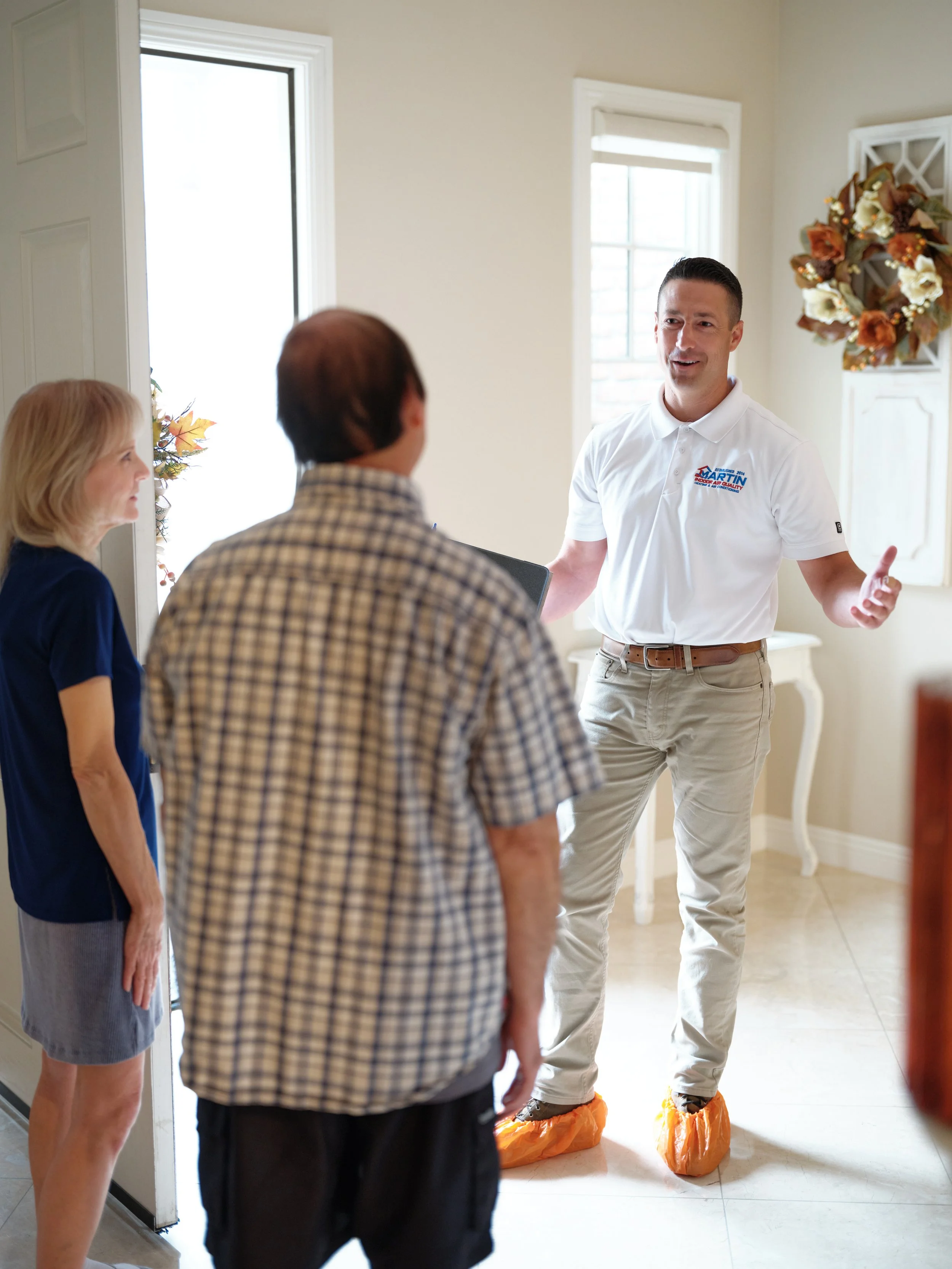
Confused about which California HVAC rebates are actually still available in 2026? Don't make a $10,000 decision based on outdated information. J Martin gives Orange County homeowners the real numbers before any work begins. Call (714) 462-4686.
What Expired at the End of 2025
The biggest change for homeowners replacing HVAC equipment in 2026 is the loss of the federal Energy Efficient Home Improvement Credit, known in the industry as the 25C tax credit. This credit allowed homeowners to claim 30% of the cost of qualifying energy-efficient equipment and installation, up to $2,000 per year for heat pumps and up to $600 per year for qualifying central air conditioners and furnaces. It also covered up to $150 for a home energy audit and up to $1,200 for insulation, windows, and electrical panel upgrades. The annual cap across all 25C-eligible improvements was $3,200.
This credit was originally part of the Inflation Reduction Act of 2022 and was scheduled to run through 2032. Congress ended it a decade early through the One Big Beautiful Bill Act, which was signed into law in 2025. The credit applies only to equipment that was purchased and placed in service (meaning fully installed and operational) by December 31, 2025. If you had a qualifying system installed before that deadline, you can still claim the credit on your 2025 tax return, which you'll file during the 2026 tax season using IRS Form 5695. But for any system installed on January 1, 2026 or later, the credit is gone.
The Residential Clean Energy Credit under Section 25D, which provided a 30% tax credit for geothermal heat pumps, solar panels, wind energy, and battery storage, also expired on December 31, 2025 under the same legislation. And the Section 45L New Energy Efficient Home Credit, which incentivized builders of energy-efficient new construction, expires for homes purchased after June 30, 2026.
What this means in dollar terms is significant. A homeowner who installed a qualifying heat pump system in 2025 could claim up to $2,000 back on their federal taxes. A homeowner installing the identical system in 2026 receives nothing from the federal government. On a $10,000 heat pump installation, that's the difference between a net cost of $8,000 and a net cost of $10,000.
What Happened to HEEHRA (The $8,000 Rebate)
The Home Electrification and Appliance Rebates program, known as HEEHRA in California, was funded by the federal Inflation Reduction Act and managed by the California Energy Commission through TECH Clean California. It offered income-qualified single-family homeowners up to $8,000 in rebates for households earning below 80% of the area median income (AMI) and up to $4,000 for households earning between 80% and 150% AMI. These were point-of-sale rebates, meaning they reduced your project cost at the time of installation rather than requiring you to wait for a tax refund.
It was, by far, the largest single HVAC incentive available to qualifying California homeowners. But here's the reality for Orange County residents in 2026: as of January 7, 2026, HEEHRA rebates for single-family home retrofits in both Central California and Southern California are fully reserved. All reservation requests that couldn't be processed before the regional budgets were exhausted have been placed on a waitlist. Northern California was expected to follow in the same timeframe.
Being on the waitlist doesn't mean you'll receive the rebate. It means that if budget becomes available through project cancellations or additional federal funding, waitlisted projects may be approved on a first-come, first-served basis. There's no timeline or guarantee for that happening.
The HEEHRA Phase I program also required that all projects be completed and invoiced by February 28, 2026. For waitlisted projects, the heat pump installation cannot begin until the reservation is formally approved, which adds further uncertainty. The California Energy Commission is currently designing HEEHRA Phase II, but no launch date, funding amount, or program details have been announced.
If you're an income-qualifying homeowner who was counting on this rebate to make a heat pump affordable, the honest answer is that this specific program is not available to new Southern California applicants right now. It may return in some form, but planning a major purchase around a program that doesn't currently have open enrollment or guaranteed funding is risky.
What's Still Available to Orange County Homeowners in 2026
The loss of the federal tax credit and the exhaustion of HEEHRA funding doesn't mean there's nothing left. Several programs remain active for Orange County homeowners, though none individually match the scale of what was available in 2025.
Golden State Rebates is a statewide program funded by California utility ratepayers and administered by CLEAResult on behalf of the four major investor-owned utilities, including Southern California Edison and SoCalGas. It provides instant rebate coupons for qualifying equipment including air conditioners, smart thermostats, heat pump water heaters, and gas water heaters. These coupons are applied at the point of purchase through participating contractors and distributors, so there's no application or waiting period. The program operates on a first-come, first-served basis and funding availability can change, so it's important to verify current offerings before committing to a purchase.
Southern California Edison equipment discounts are available for qualifying heat pump HVAC systems through SCE's partnerships with manufacturers and distributors. SCE uses energy efficiency program funds to provide discounts on qualifying equipment to contractors, who pass the savings through to customers. These aren't traditional rebates you apply for. Instead, you work with a participating contractor who offers the discounted equipment pricing as part of the installation. Ask your HVAC contractor whether they participate in SCE's heat pump equipment discount program.
SCE's Home Performance Plus program is available to SCE residential electric customers in qualifying areas, including some communities within Orange County. This program provides enhanced rebates for recommended energy upgrades, including heat pump systems, insulation, and air sealing. Eligibility is based on your service territory and community designation, so checking directly with SCE or a participating contractor is the best way to determine if your home qualifies.
GoGreenFinancing is California's statewide program that connects homeowners with lenders offering low-interest and sometimes zero-percent interest financing for energy efficiency upgrades, including HVAC replacements, insulation, and electrical panel upgrades. This isn't a rebate per se, but favorable financing terms can significantly reduce the effective cost of a system replacement by eliminating or reducing interest charges that would otherwise add thousands of dollars to the total cost over the life of a loan. You can check eligibility and find participating lenders through the GoGreenFinancing website.
Manufacturer rebates and promotions remain an important part of the savings equation. Major HVAC manufacturers including Carrier, Lennox, Trane, Daikin, and others run seasonal promotions that can range from $100 to $1,500 or more depending on the equipment and the time of year. Spring and fall are typically the best times for manufacturer incentives, as companies want to drive sales ahead of the peak heating and cooling seasons. A good HVAC contractor will know which manufacturer promotions are currently active and can help you time your purchase to maximize savings.
What's Expected Later in 2026 and Beyond
Two programs that could bring significant new rebate dollars to California homeowners are in various stages of development, though neither is available yet.
The HOMES program (Home Efficiency Rebates) is the second major rebate program funded by the Inflation Reduction Act. Unlike HEEHRA, which focused on individual appliance rebates for income-qualified households, HOMES provides rebates for whole-home energy upgrades based on measured or modeled energy savings. California received its federal award for HOMES in January 2025, and the state is splitting the funding between two tracks: 60% will go to the existing Equitable Building Decarbonization Direct Install Program, which provides no-cost upgrades for low-income residents, and 40% will go to a new Pay for Performance Program that provides rebates based on actual measured energy savings after upgrades are completed.
The HOMES rebates are not yet available to California homeowners. Program design and implementation are ongoing through the California Energy Commission. When launched, the Pay for Performance track could offer significant savings for homeowners undertaking comprehensive efficiency upgrades that include HVAC replacement combined with insulation, air sealing, and duct improvements.
HEEHRA Phase II is being designed by the California Energy Commission to continue the work of the Phase I program. No specific launch date, funding levels, or eligibility criteria have been announced. If it follows a similar structure to Phase I, it would likely offer income-based rebates for heat pump equipment through TECH Clean California-certified contractors. But until the program is officially launched with open enrollment, it shouldn't factor into your purchasing timeline.
The practical takeaway is this: if you need a new system now, make your decision based on the programs that are actually available today. If your current system is functioning and you have the luxury of waiting, keep an eye on the HOMES program launch and any HEEHRA Phase II announcements. But don't delay a critical replacement hoping for a program that may or may not materialize on a timeline that works for you.
How to Save Money on an HVAC Replacement in 2026 Without Rebates
Even without the federal tax credit and with limited state rebate availability, there are concrete strategies that can reduce the net cost of a system replacement or make it more financially manageable.
The most impactful decision you can make is choosing the right system for your home's actual needs rather than defaulting to the biggest, most expensive option. A properly sized high-efficiency system installed by a qualified contractor will outperform an oversized premium system every time. Oversizing is one of the most common mistakes in residential HVAC, and it wastes money both at the point of purchase and every month afterward through higher operating costs and shorter equipment life. A proper Manual J load calculation, which evaluates your home's square footage, insulation levels, window area, orientation, and other factors, ensures the system matches the home. This step alone can save you $1,000 to $3,000 at installation by preventing you from buying more capacity than you need.
Timing your replacement strategically makes a real difference. Emergency replacements during peak summer cost more because demand for both equipment and installation labor is at its highest. A planned replacement during spring or fall, when HVAC companies have more availability and manufacturers are running promotions, typically saves $500 to $1,500 compared to the same job done in July or August.
Addressing ductwork and insulation at the time of replacement dramatically improves the return on your investment. Installing a brand-new $12,000 system and connecting it to 40-year-old ductwork that's leaking 25% of its output into the attic is like buying a new car and putting bald tires on it. Duct sealing ($300 to $1,000) or duct replacement ($2,000 to $6,000) paired with attic insulation upgrades ($1,500 to $3,000) can improve your system's effective output by 30% to 50%, which means lower energy bills every month for the life of the equipment. For a full breakdown of what these improvements look like in your home, our Complete Guide to Air Duct Cleaning covers the spectrum from basic cleaning to full replacement.
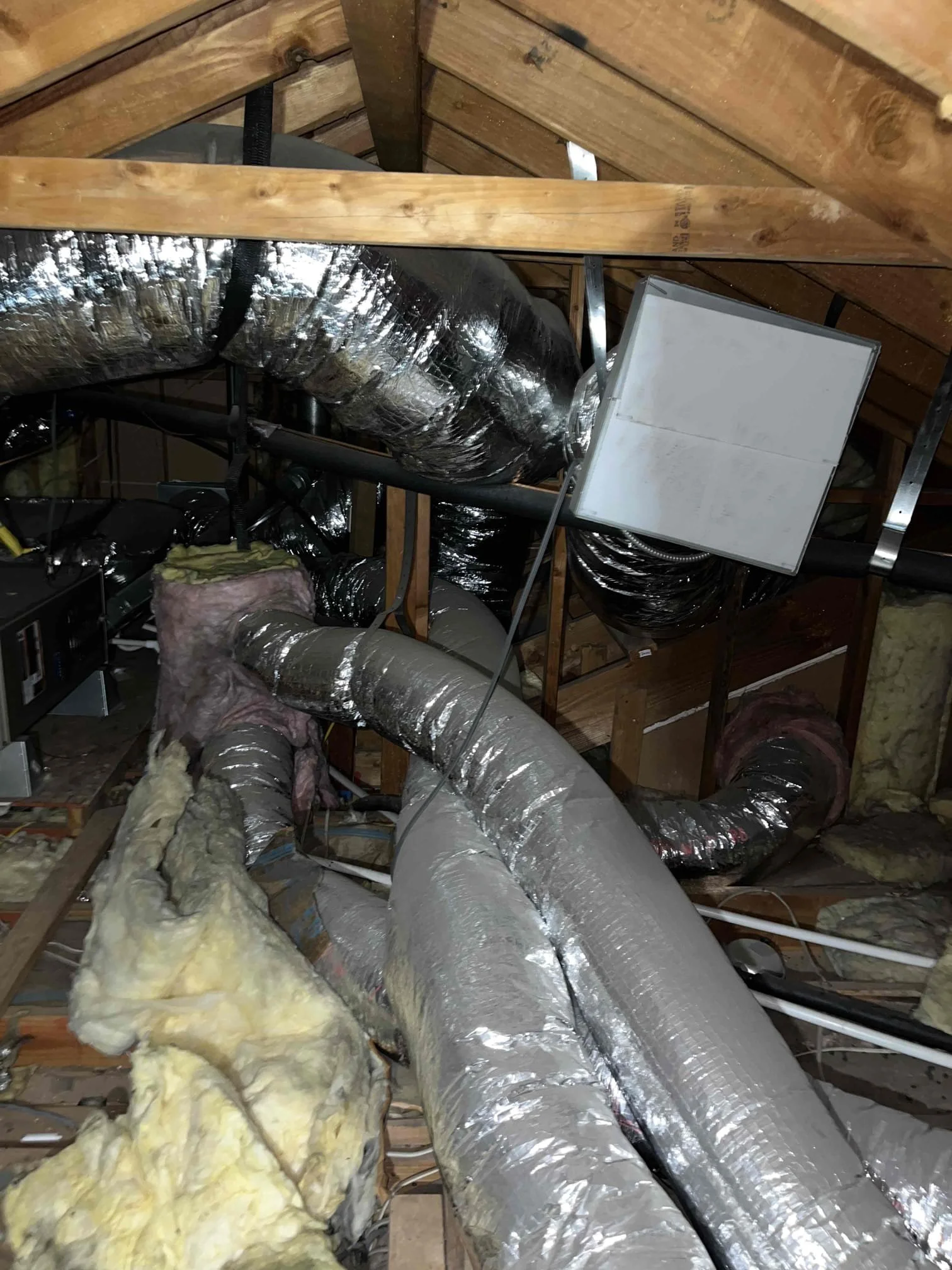
Planning an HVAC replacement in 2026 without evaluating your ductwork first is a costly mistake. With the federal tax credit gone and rebates mostly reserved, every dollar of your investment needs to count. Degraded ducts like these can cancel out 30% of your new system's efficiency from day one. Call J Martin at (714) 462-4686.
Heat pumps deserve serious consideration even without the tax credit. Orange County's mild climate is ideal for air-source heat pumps, which provide both heating and cooling from a single system. They run 30% to 50% more efficiently than traditional gas furnace and AC combinations in our climate zone, and the energy savings compound year after year. Over a 15 to 20-year system lifespan, the operational savings often exceed what the federal tax credit would have provided. A heat pump also eliminates the need for a separate gas furnace in most Orange County homes, which means one less piece of equipment to maintain and no gas line or combustion safety concerns.
For homes where specific rooms or additions need independent climate control, ductless mini-split systems remain one of the most cost-effective solutions. A single-zone mini-split installation typically runs $4,000 to $9,000, and multi-zone systems (serving two to four rooms from a single outdoor unit) range from $9,000 to $40,000. Mini-splits are particularly effective for garage conversions, ADUs, room additions, or chronic hot spots like second-floor bedrooms that the central system can't adequately reach. If your main system is still functional but one or two areas of your home are uncomfortable, a targeted mini-split installation may solve the problem for a fraction of the cost of replacing the entire system.
If you're weighing the full range of replacement costs, system types, and long-term operating expenses for a new HVAC system in our area, our 2025-2026 HVAC Replacement Cost Guide for Orange County breaks everything down by system type, efficiency level, and home size.
What You Can Do Right Now to Lower HVAC Costs Without Replacing Anything
If a full system replacement isn't in the cards this year, there are several high-impact, low-cost steps that can meaningfully reduce your energy bills and extend the life of your existing equipment.
Replacing your air filter on schedule is the single most impactful thing you can do for zero effort and minimal cost. A clogged filter forces your system to work harder, increases energy consumption, accelerates wear on the blower motor and compressor, and degrades your indoor air quality. Filters cost $5 to $30 depending on the type and MERV rating. Replacing them every 60 to 90 days (more frequently if you have pets, allergies, or live near dusty environments or equestrian trails) is the cheapest maintenance you can perform.
Scheduling annual professional maintenance is the second most impactful step. A tune-up typically costs $75 to $200 and includes cleaning, electrical testing, refrigerant pressure checks, and identification of worn components before they fail. A well-maintained system runs 10% to 15% more efficiently than a neglected one, and catching a $300 capacitor replacement before it becomes a $1,500 compressor failure is the definition of money well spent.
Sealing air leaks around your home reduces the workload on your HVAC system by keeping conditioned air inside where it belongs. Weatherstripping around doors and windows, caulking gaps around electrical outlets and plumbing penetrations on exterior walls, and sealing the attic hatch or pull-down stairs are all projects you can complete in a weekend for under $100 in materials.
If your home has rooms that are consistently too hot or too cold, resist the temptation to close vents in unused rooms to try to redirect airflow. This is one of the most common mistakes homeowners make, and it actually increases duct pressure, causes more air leakage, and can damage your equipment. We explained exactly why this happens and what to do instead in our post on the truth about closing vents in unused rooms.
Adding blown-in attic insulation to bring your home closer to the current R-38 code minimum is one of the best returns on investment available. Most Orange County homes built before 1990 have R-19 or less in the attic, and many have insulation so compressed and degraded that it's providing R-10 or less of actual protection. Upgrading to R-38 typically costs $1,500 to $3,000 and can reduce your cooling costs by 20% to 30%, paying for itself within two to four years.
If you're in a home with aging ductwork, have a professional evaluate its condition. Deteriorated duct connections and degraded insulation wrapping are responsible for up to 30% energy loss in some homes. A targeted duct cleaning and sealing service can recover a significant portion of that wasted energy without the cost of a full system replacement.
And for Orange County homeowners looking to slash cooling costs during the months when evening temperatures drop into the 60s and low 70s, a whole house fan is one of the smartest investments available. At $1,500 to $3,000 installed, a whole house fan can cool your home in minutes using a fraction of the electricity your AC consumes, with many homeowners cutting summer cooling costs by 50% to 90% during the months they use one.
How to Protect Yourself from Outdated and Misleading Information
The gap between what's being promoted online and what's actually available in 2026 creates real risk for homeowners. Here's how to protect yourself.
Be skeptical of any HVAC contractor who quotes a price and then factors in the federal tax credit as part of your savings calculation. The 25C credit does not apply to equipment installed in 2026. If a contractor is using it to make their proposal look cheaper, that's either ignorance of the current tax code or dishonesty. Either one should give you pause.
Be cautious about contractors promoting HEEHRA rebates as if they're currently available for new projects in Southern California. The program is fully reserved with a waitlist. A contractor who tells you they can "get you the $8,000 rebate" without disclosing the waitlist status and funding uncertainty is not giving you accurate information.
Always verify incentive availability directly with the program administrator or your utility company before making financial decisions. For TECH Clean California and HEEHRA status, the most current information is at techcleanca.com. For SCE rebates and programs, check sce.com/rebates. For Golden State Rebates, check goldenstaterebates.com. These primary sources will always be more current than third-party websites or contractor claims.
Orange County homeowners are calling us frustrated after getting quotes that include the federal tax credit that expired December 31, 2025. Our technicians know exactly what's changed, what's still available, and what your replacement actually costs today. No surprises.
When comparing proposals from different HVAC companies, insist on seeing the price of the equipment and installation separate from any incentives. This gives you an apples-to-apples comparison of what each company is actually charging for the work, regardless of which rebates they're claiming you'll receive.
And remember that the absence of a large federal tax credit doesn't change the fundamental math of replacing an aging, inefficient system. If your current HVAC system is 15 or more years old, uses R-22 refrigerant (which costs $150 to $600 per recharge and climbing), runs constantly without adequately cooling your home, or requires frequent repairs, the operational savings from a modern high-efficiency replacement still make the investment worthwhile. The tax credit was a bonus that made a good investment better. Without it, the investment is still sound. It just requires clearer analysis of the payback timeline.
If your system is in that gray zone where you're debating repair versus replacement, understanding the true costs of both options is critical. Our repair-or-replace decision framework walks through the $5,000 rule and the seven factors that should drive that call, from system age and refrigerant type to repair history and energy costs. And once you've decided replacement is the right move, our HVAC Replacement Cost Guide for Orange County breaks down what that investment actually looks like at today's prices.
Why an Honest HVAC Company Matters More Than Ever in 2026
When large federal incentives were available, the financial cushion of a $2,000 tax credit could absorb some of the cost of an oversold or oversized system. In 2026, without that buffer, every dollar of your HVAC investment needs to count. The difference between a company that recommends the right system for your home and one that upsells you on equipment you don't need is now directly reflected in your out-of-pocket cost with no rebate to soften the blow.
At J Martin Indoor Air Quality, we start with repairs 95% of the time. When replacement is the right call, we size the system to your home's actual needs using proper load calculations, not rules of thumb or the assumption that bigger is always better. We don't work on commission, so there's no financial incentive to push a more expensive system than you need. We'll help you navigate whatever incentives are currently available, time your purchase to take advantage of manufacturer promotions, and give you a clear, honest picture of what the investment looks like without inflating it with rebates that may not materialize.
We've served over 5,000 Orange County families and maintain a 4.97-star average rating because we've always operated this way, when rebates were generous and when they weren't. You can read about how we screen and train our technicians and why the person who shows up at your door matters. It's also a core part of why Orange County homeowners trust us with the biggest mechanical investment in their home.
If indoor air quality is a concern alongside your HVAC replacement, and for Orange County homeowners dealing with Santa Ana winds, wildfire smoke, and seasonal dust it should be, our post on improving your indoor air quality covers the options that integrate with your new system.
The Bottom Line for Orange County Homeowners in 2026
The incentive landscape for HVAC replacements has shifted significantly. The $2,000 federal tax credit is gone. The $4,000 to $8,000 HEEHRA rebates are fully reserved in Southern California. TECH Clean California's standard incentives are fully reserved. Multiple programs that were available as recently as late 2025 are no longer accessible to new applicants.
What remains are Golden State Rebates, SCE equipment discount programs, manufacturer promotions, favorable financing through GoGreenFinancing, and the fundamental economic case for replacing aging, inefficient equipment with modern high-efficiency systems. The HOMES rebate program and HEEHRA Phase II are in development and may bring new incentive dollars later in 2026 or into 2027, but neither is available today.
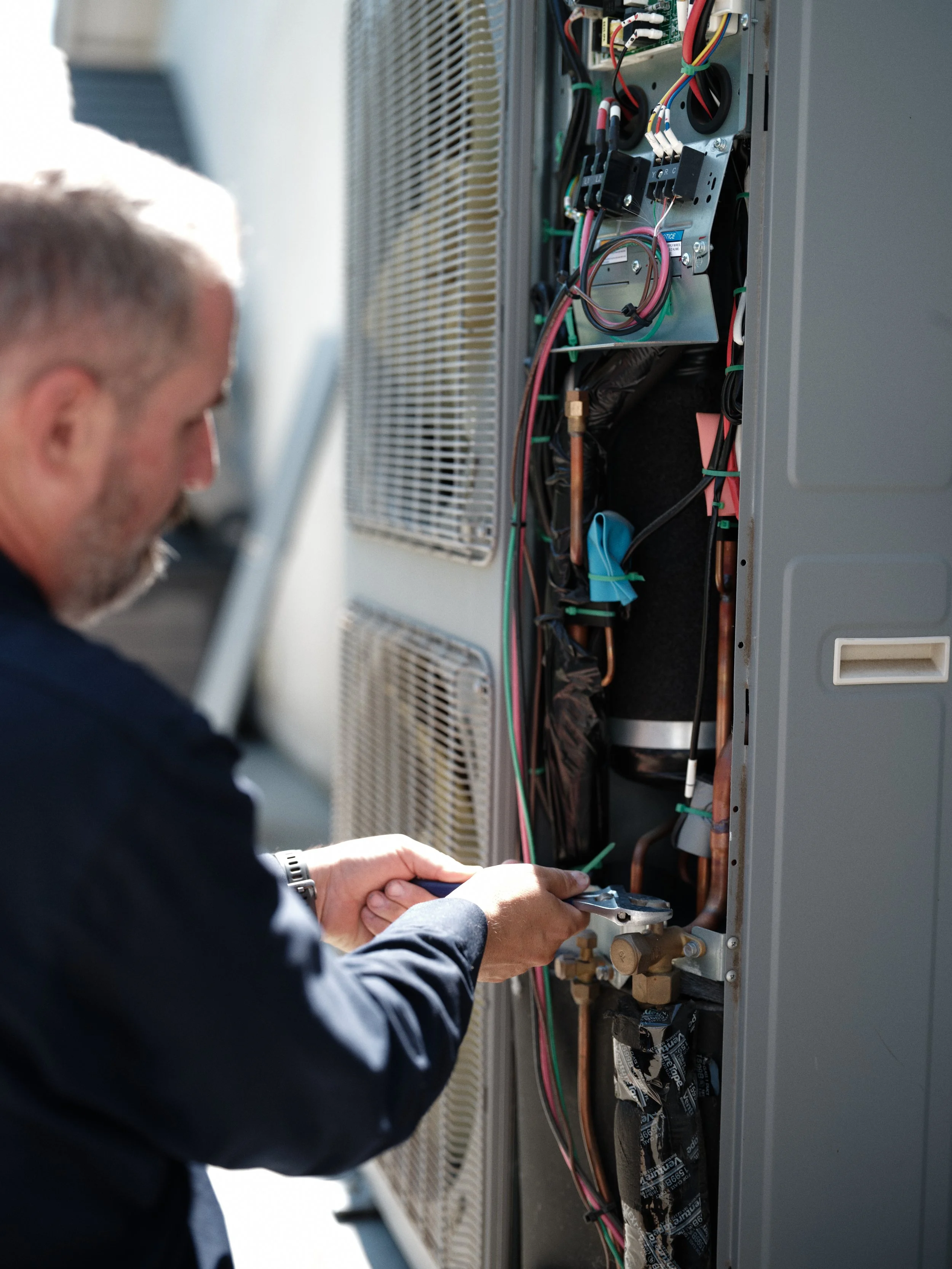
J Martin starts with repairs 95% of the time. When a technician is at your outdoor unit, the goal is an accurate assessment of what you have, not a sales pitch for what we'd like to sell you. In 2026, with fewer rebates to cushion the cost, that honesty matters more than ever.
The smart move for Orange County homeowners is to make decisions based on what's real and available right now, not on what might come back later. If your system is failing, undersized, running on R-22, or costing you hundreds more per year than a modern replacement would, the math still works in your favor. The payback period is slightly longer without the tax credit, but the long-term savings, comfort improvement, and reliability gains are unchanged.
If you want help figuring out exactly where you stand, what your current HVAC system is costing you, and what a right-sized replacement would look like at today's prices with today's actual incentives, give us a call at (714) 462-4686. J Martin Indoor Air Quality has been installing new HVAC systems and providing other services in Orange County families for over 15 years. We'll give you the real numbers, the honest assessment, and zero pressure. That's what we do.
Proudly serving Yorba Linda, Fullerton, Anaheim, Anaheim Hills, Brea, Villa Park, Placentia, Orange, and communities throughout Orange County. Call (714) 462-4686 or visit jmartiniaq.com to schedule service.
J Martin Indoor Air Quality | (714) 462-4686 | Services