
How Many BTUs Do I Need for My Mini Split? Orange County Sizing Guide (2026)
Posted on August 25, 2026
Most single-zone mini splits in Orange County need between 9,000 and 24,000 BTUs, depending on room size, insulation quality, and sun exposure. The standard rule is 20 to 25 BTUs per square foot for a well-insulated space in a moderate climate, which means a typical 300 square foot bedroom needs a 9,000 BTU unit, a 500 square foot living area needs 12,000 BTUs, and an 800 square foot open-concept space needs 18,000 to 24,000 BTUs.
That baseline gets you close, but Orange County's inland-to-coastal temperature swings can push the number higher. A south-facing bonus room in Anaheim Hills on a 98-degree August afternoon has a very different cooling load than a shaded bedroom in Laguna Niguel where the marine layer burns off by noon. The difference between getting the BTU number right and getting it wrong is the difference between a comfortable room and a system that either runs nonstop or cycles on and off every few minutes without ever properly dehumidifying.
Our ductless mini-split installation team has sized and installed hundreds of mini split systems across Orange County since 2014, from single-zone bedroom units in Tustin condos to five-zone whole-home systems in Yorba Linda. When Jesus installs a mini split, the first thing he does is measure the room, check the window exposure, and look at the insulation before he ever talks about BTU numbers. That process is what separates a system that works from one that frustrates you for the next 15 years.
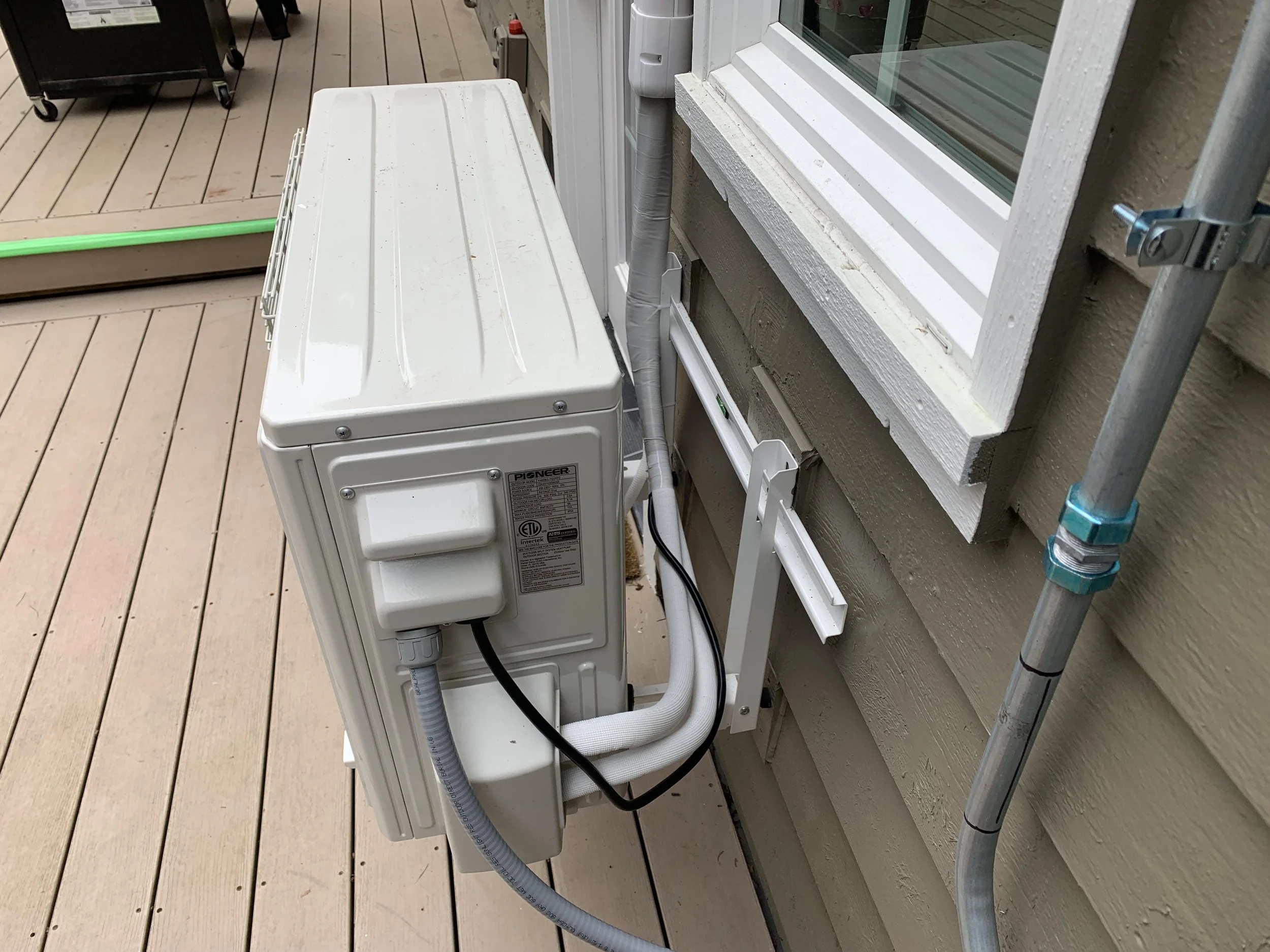
Every mini split we install starts with a full Manual J load calculation, not just a square footage guess. It's the difference between a system that lasts 15 to 20 years and one that struggles from day one.
Quick Answer
For most Orange County rooms, size your mini split at 20 to 25 BTUs per square foot. A 300 square foot bedroom needs a 9,000 BTU unit. A 500 square foot living room needs 12,000 BTUs. A 750 to 1,000 square foot open area needs 18,000 to 24,000 BTUs. Add 10 to 20 percent for south or west-facing windows, poor insulation, or rooms above a garage. Subtract 10 percent for well-shaded coastal homes. For multi-zone systems covering an entire home, outdoor condenser capacity typically ranges from 24,000 to 48,000 BTUs depending on the number of zones and total square footage.
The Basic Rule: 20 to 25 BTUs Per Square Foot
The starting point for any mini split sizing calculation is the BTU-per-square-foot rule. BTU stands for British Thermal Unit, and in HVAC terms, it measures how much heat energy a system can remove from a space in one hour. A higher BTU rating means more cooling (or heating) capacity.
For a well-insulated home in Orange County's moderate climate, 20 BTUs per square foot is the baseline for cooling. If the home has average insulation, typical of tract homes built in the 1970s through 1990s, you should use 25 BTUs per square foot. For poorly insulated spaces like unconverted garages or rooms with single-pane windows, 30 to 35 BTUs per square foot may be necessary to maintain comfort on hot days.
Here is how that formula works in practice. Take a 400 square foot master bedroom with decent insulation and standard 8-foot ceilings. At 20 BTUs per square foot, that room needs 8,000 BTUs of cooling capacity. Since mini splits come in standard sizes (9,000, 12,000, 18,000, and 24,000 BTU increments), you would choose a 9,000 BTU unit. Because modern mini splits use inverter-driven compressors that modulate their output continuously, a 9,000 BTU inverter system can run at 3,000 BTUs when demand is low and ramp up to full capacity when the afternoon heat peaks. That means rounding up one standard size carries no efficiency penalty, which is not true of older single-speed central AC systems.
The formula is a starting point, not a final answer. The next sections cover the specific factors that push the number up or down for Orange County homes.
Mini Split BTU Sizing Chart for Orange County Homes
The following table shows the recommended mini split BTU capacity for common room sizes in Orange County, assuming standard 8-foot ceilings, average insulation, and no extreme sun exposure. These figures represent the sweet spot where the system runs efficiently without being undersized or oversized. All sizing recommendations are current as of 2026.
2026 Mini Split BTU Sizing by Room Size for Orange County Homes
| Room Size (Sq Ft) | Recommended BTU | Common Room Type | Typical Installed Cost |
|---|---|---|---|
| 150 to 300 | 9,000 BTU | Bedroom, home office, nursery | $2,500 to $4,000 |
| 300 to 500 | 12,000 BTU | Large bedroom, studio, bonus room | $3,000 to $5,000 |
| 500 to 800 | 18,000 BTU | Living room, open kitchen-dining area | $3,500 to $5,500 |
| 800 to 1,200 | 24,000 BTU | Large open-concept space, combined great room | $4,000 to $6,000 |
| 1,200 to 1,500 | 36,000 BTU | Whole-floor zone, large addition | $5,000 to $7,500 |
These costs reflect professional installation in Orange County by a licensed contractor, including the indoor air handler, outdoor condenser, refrigerant line set, electrical connections, and permits. Premium brands like Daikin, Mitsubishi, and Fujitsu fall at the higher end of each range, while value brands like Pioneer or MRCOOL fall at the lower end. We install Daikin, Mitsubishi, and Fujitsu exclusively because their inverter compressors, build quality, and warranty support consistently outperform budget alternatives in Orange County's demanding summer heat.
A 12,000 BTU mini split (one ton of cooling capacity) is the most commonly installed single-zone size in Orange County homes, covering the 300 to 500 square foot range that includes most bedrooms, offices, and bonus rooms.
Five Factors That Change Your BTU Calculation in Orange County
The square footage rule gets you within range, but five factors specific to your home and its location in Orange County determine whether you need to adjust up or down.
Sun Exposure and Window Orientation
Rooms with south-facing or west-facing windows absorb significantly more solar heat than rooms facing north or east. In Orange County, where afternoon summer sun is intense and direct, a west-facing room with large windows can see its cooling load increase by 10 to 20 percent compared to a shaded or north-facing room of the same size. If your 400 square foot room faces west with a picture window, you may need 12,000 BTUs instead of the 9,000 BTU baseline.
South and west-facing rooms in Orange County require 10 to 20 percent more BTU capacity than north-facing rooms of the same size due to direct afternoon solar heat gain, particularly in inland cities like Anaheim Hills, Yorba Linda, and Brea where temperatures regularly exceed 95 degrees in summer.
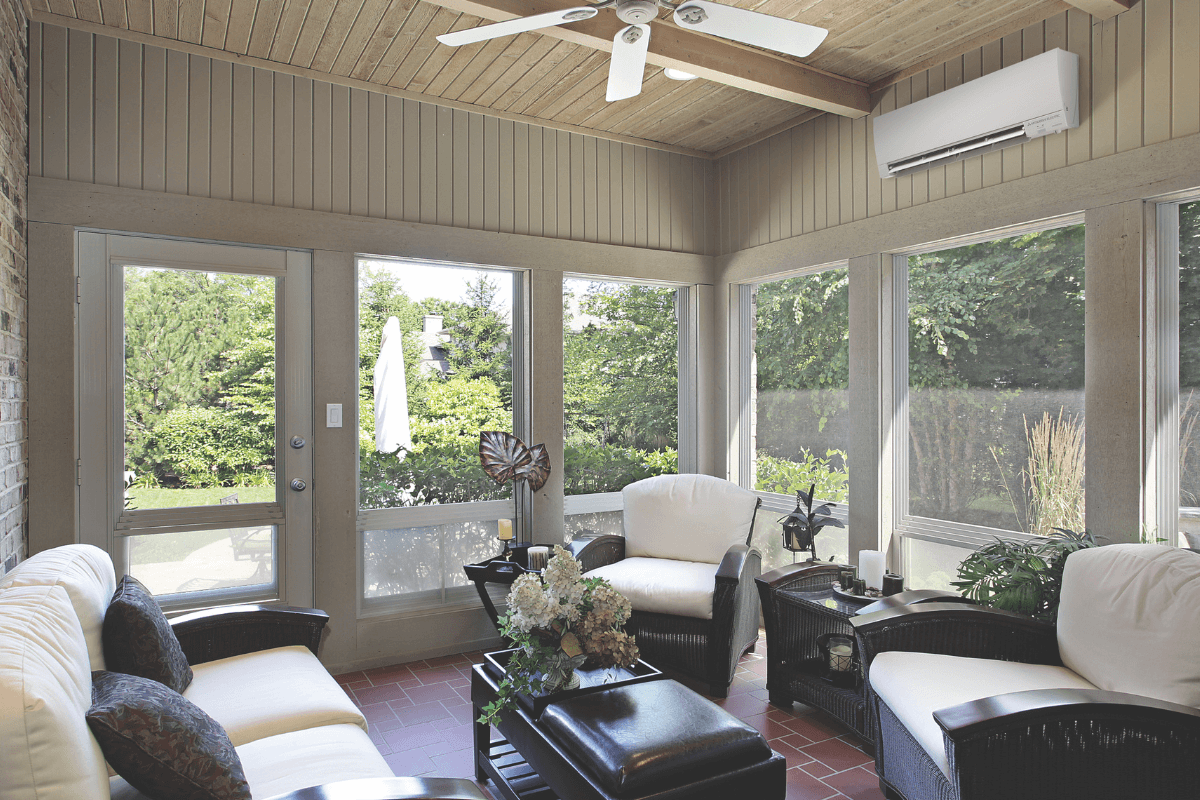
Sunrooms and rooms with floor-to-ceiling windows need more than the standard BTU calculation. Get it sized right the first time: call J Martin at (714) 462-4686.
Insulation Quality
Insulation is the single most important variable in residential HVAC sizing. A well-insulated room retains conditioned air far longer than a drafty one, directly reducing the BTU load needed to maintain a set temperature. Homes built before 1980 in Orange County often have minimal wall insulation and single-pane windows, which can increase the BTU requirement by 20 to 40 percent over a modern, well-insulated home. If your home in Fullerton was built in the 1960s and still has original windows, that 400 square foot room might need a 12,000 BTU unit where a 2015-built home in Irvine would need only 9,000 BTUs.
Ceiling Height
The standard BTU sizing formulas assume 8-foot ceilings. For every additional foot of ceiling height, add approximately 12 percent to the BTU requirement. A room with 10-foot ceilings has roughly 25 percent more air volume than the same footprint with 8-foot ceilings. Vaulted and cathedral ceilings, common in 1990s-era Orange County homes in communities like Rancho Santa Margarita and Coto de Caza, can push the ceiling to 12 or even 15 feet, significantly increasing the required BTU capacity.
Room Usage
Kitchens generate substantial heat from cooking appliances, and most HVAC professionals add 4,000 BTUs to the baseline calculation for any room with a full kitchen. Home gyms, server rooms, and rooms with multiple large electronics also produce extra heat. A home office with two monitors and a desktop computer adds roughly 1,000 to 2,000 BTUs of heat load that the mini split must offset.
Occupancy
Each additional person in a room generates approximately 600 BTUs of body heat per hour. For a single bedroom, this is negligible. For a home gym where four people work out simultaneously, or a large family room where six people gather regularly, the extra heat load matters. A 500 square foot family room that regularly hosts six people needs approximately 3,600 additional BTUs beyond the square footage baseline, which could bump the sizing from a 12,000 to an 18,000 BTU unit.
Why Orange County Inland Homes Need More BTUs Than Coastal Homes
Orange County's geography creates a significant temperature gradient from coast to inland that directly affects mini split sizing. Coastal cities like Newport Beach, Laguna Niguel, and Dana Point benefit from consistent ocean breezes and the marine layer, which keeps summer afternoons in the low 80s. Inland cities like Anaheim Hills, Yorba Linda, and Brea sit 10 to 15 degrees hotter on summer afternoons, regularly reaching 95 to 105 degrees during heat waves.
That temperature difference translates directly to BTU requirements. A 500 square foot living room in a Newport Beach home with ocean exposure might run comfortably on a 12,000 BTU mini split. That same room in an Anaheim Hills home with west-facing windows and afternoon sun exposure might need 18,000 BTUs to maintain the same 72-degree setpoint. When Angel sized a mini split system for a second-floor bonus room in a Travis Ranch home in Yorba Linda last summer, the combination of west-facing windows, above-garage location, and afternoon temperatures hitting 102 degrees meant the room needed a full 18,000 BTU unit for what was technically only a 450 square foot space. The online calculator had recommended 12,000 BTUs. The 18,000 BTU unit we installed keeps that room at 72 degrees even on the hottest days.
This is why we emphasize professional load calculations over online BTU calculators for Orange County homes. The calculators use national averages. Orange County's inland-to-coastal microclimate variations are too significant to rely on a one-size-fits-all formula.
Sizing a Mini Split for a Garage Conversion or ADU
Garage conversions and accessory dwelling units (ADUs) are one of the most common reasons Orange County homeowners call us about mini split installation. California's ADU building boom, combined with the fact that garages have no existing ductwork, makes a ductless mini split the most practical HVAC solution for these spaces. We covered the full scope of mini split installation for garage conversions in Orange County in a separate guide, but the BTU sizing specifics deserve attention here.
A standard two-car garage in Orange County measures roughly 400 to 500 square feet. After conversion, with California Title 24 energy standards requiring R-15 to R-21 wall insulation and R-30 to R-49 ceiling insulation, the space is far better insulated than it was as a raw garage. With proper insulation, a 12,000 BTU mini split handles most converted garages comfortably. If the garage faces south or west and takes direct afternoon sun, or if you plan to use it as a home gym or workshop with heat-generating equipment, a 15,000 to 18,000 BTU unit is the safer choice.
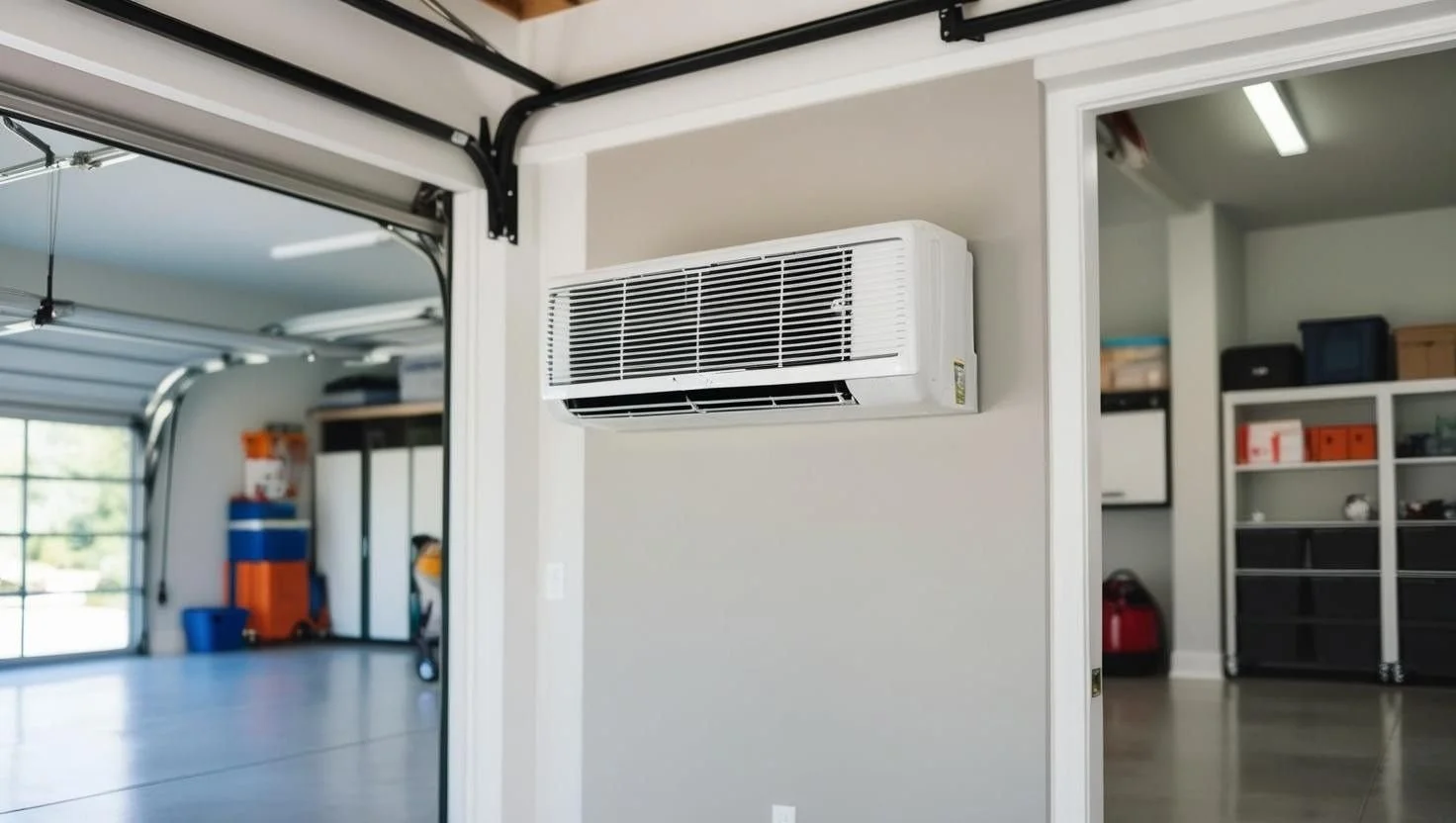
Garage conversions and ADUs need careful sizing since insulation, room use, and layout all affect the BTU load. We run a full load calculation on every garage conversion install.
For ADUs that are larger than a single garage bay, typically 600 to 800 square feet with a kitchen and bathroom, an 18,000 to 24,000 BTU single-zone system or a small multi-zone system with a 24,000 BTU outdoor unit and two indoor heads provides both the cooling capacity and the zone control to keep the bedroom comfortable at night while the living area stays cool during the day. Kevin installed a Daikin two-zone system in a 650 square foot garage ADU conversion in Placentia earlier this year, with a 9,000 BTU head in the bedroom and a 12,000 BTU head in the living and kitchen area, running off a single 24,000 BTU outdoor condenser. The homeowner uses the ADU as a rental unit, and the tenant has reported consistent comfort even during the spring heat spikes.
Single-Zone vs Multi-Zone: How Mini Split BTU Sizing Changes
A single-zone mini split system has one outdoor condenser connected to one indoor air handler, serving a single room or open area. A multi-zone system uses one larger outdoor condenser connected to two, three, four, or even five indoor air handlers, each serving a different room with independent temperature control.
For single-zone sizing, the process is straightforward: calculate the BTU need for that one room using the factors above, select the nearest standard size (9,000, 12,000, 18,000, or 24,000 BTUs), and you are done.
Multi-zone sizing is more nuanced. You size each indoor unit independently based on its room's specific needs, then select an outdoor condenser with enough total capacity to support all indoor units running simultaneously. The general guideline is that the combined BTU load of all indoor units should land at 80 to 100 percent of the outdoor unit's rated maximum capacity.
Multi-zone mini split outdoor condensers for residential use typically range from 24,000 BTUs (two zones) to 48,000 BTUs (four to five zones). Daikin, Mitsubishi, and Fujitsu all offer multi-zone outdoor units in this range, with Fujitsu offering the largest capacity at 48,000 BTUs for up to five indoor heads.
For example, a three-zone system serving a 300 square foot bedroom (9,000 BTU), a 400 square foot home office (12,000 BTU), and a 600 square foot living room (18,000 BTU) would need indoor units totaling 39,000 BTUs. You would pair those with a 42,000 or 48,000 BTU outdoor condenser to provide adequate capacity with a reasonable margin.
One important sizing consideration for multi-zone systems: for two rooms or fewer, separate single-zone units are often more cost-effective and more efficient than a multi-zone system, because each unit has its own dedicated compressor. We typically recommend multi-zone systems when homeowners need three or more zones, where the single outdoor condenser simplifies installation and reduces the outdoor equipment footprint. Our guide to mini split installation costs in Orange County breaks down the pricing differences between single-zone and multi-zone configurations in detail.
What Happens When You Get the Mini Split BTU Size Wrong
Getting the BTU size wrong creates two different sets of problems, and oversizing is actually worse than undersizing with modern inverter-driven mini splits.
An undersized mini split runs at maximum capacity continuously without ever reaching your set temperature. On a 100-degree day in Diamond Bar, a 9,000 BTU unit in a room that actually needs 18,000 BTUs will blow cool air all day but never bring the room below 80 degrees. The compressor never cycles down, energy consumption climbs, and the system wears out years earlier than it should. Your electricity bills spike because the unit runs at full output for 12 to 16 hours straight.
An oversized mini split reaches the set temperature too quickly and shuts off before the system has run long enough to remove moisture from the air. This is called short-cycling. The result is a room that hits 72 degrees on the thermostat but feels clammy and uncomfortable because the humidity is still at 65 percent. The compressor starts and stops repeatedly, 10 to 15 times per hour instead of running smoothly at a lower speed, which puts far more mechanical stress on the components than continuous operation at moderate output. A system that should last 15 to 20 years might fail in 8 to 10.
Modern inverter-driven mini splits mitigate modest oversizing better than older fixed-speed systems. Because an inverter compressor can modulate down to roughly 30 percent of its rated capacity, a 12,000 BTU inverter unit in a room that only needs 9,000 BTUs can run at 4,000 to 5,000 BTUs and maintain comfort without aggressive short-cycling. That said, a dramatically oversized unit (24,000 BTUs in a room needing 9,000) will still short-cycle even with inverter technology. The best outcome is always correct sizing, with a slight upsize being preferable to a slight undersize in Orange County's hot inland climate.
Which Mini Split Brands We Install and Their BTU Options
J Martin Indoor Air Quality is factory-trained on the three leading mini split brands: Daikin, Mitsubishi, and Fujitsu. We chose these three because their inverter compressor technology, build quality, and manufacturer warranty support consistently outperform budget alternatives in real-world Orange County installations. Our detailed guide to the best mini split brands for Orange County covers the strengths and trade-offs of each manufacturer in depth.
Mini Split Brand Comparison: BTU Range and Efficiency for J Martin Installed Brands (2026)
| Brand | Single-Zone BTU Range | Multi-Zone Outdoor Capacity | Peak SEER2 Rating | Refrigerant |
|---|---|---|---|---|
| Daikin | 9,000 to 24,000 BTU | Up to 48,000 BTU (5 zones) | Up to 21 SEER2 | R-32 (most models) |
| Mitsubishi | 6,000 to 36,000 BTU | Up to 60,000 BTU (8 zones) | Up to 23.1 SEER | R-410A / R-454B |
| Fujitsu | 9,000 to 36,000 BTU | Up to 48,000 BTU (5 zones) | Up to 33.1 SEER2 | R-410A / R-32 |
Each brand covers the full range of residential BTU needs. For single-zone installations in bedrooms and offices (9,000 to 12,000 BTU), all three brands perform exceptionally well. For larger zones or challenging installations where maximum efficiency matters, Fujitsu's top-tier 33.1 SEER2 rating on their 9,000 BTU model represents the highest efficiency available in a residential mini split today. Mitsubishi's 6,000 BTU option is the smallest available and works well for very small spaces like home offices under 200 square feet.
For multi-zone whole-home systems, Mitsubishi offers the largest capacity at 60,000 BTUs supporting up to eight indoor zones, making it the go-to choice for homeowners replacing central AC entirely with a zoned mini split system. Daikin's 2026 lineup has aggressively adopted R-32 refrigerant, which reduces global warming potential by 68 percent compared to R-410A, an important consideration for environmentally conscious homeowners. All three brands use inverter compressor technology standard, so the modulation benefits discussed earlier apply regardless of which brand you choose.
What a Professional Load Calculation Looks Like
Online BTU calculators ask for square footage and maybe climate zone. A professional Manual J load calculation, which is what our technicians perform before every mini split installation, accounts for 12 or more variables that the online tools ignore or approximate.
When Carlos arrives at your home for a mini split sizing consultation, he measures the exact room dimensions, including ceiling height. He notes every window, its size, its orientation (north, south, east, or west), and whether it has single-pane, double-pane, or low-E glass. He checks the insulation in accessible walls and ceilings. He looks at the roof color and material, because a dark tile roof in Anaheim Hills absorbs more heat than a light-colored roof in Laguna Hills. He notes whether the room is above a garage (a major heat source), shares a wall with an unconditioned attic, or sits below a second floor that provides some natural insulation.
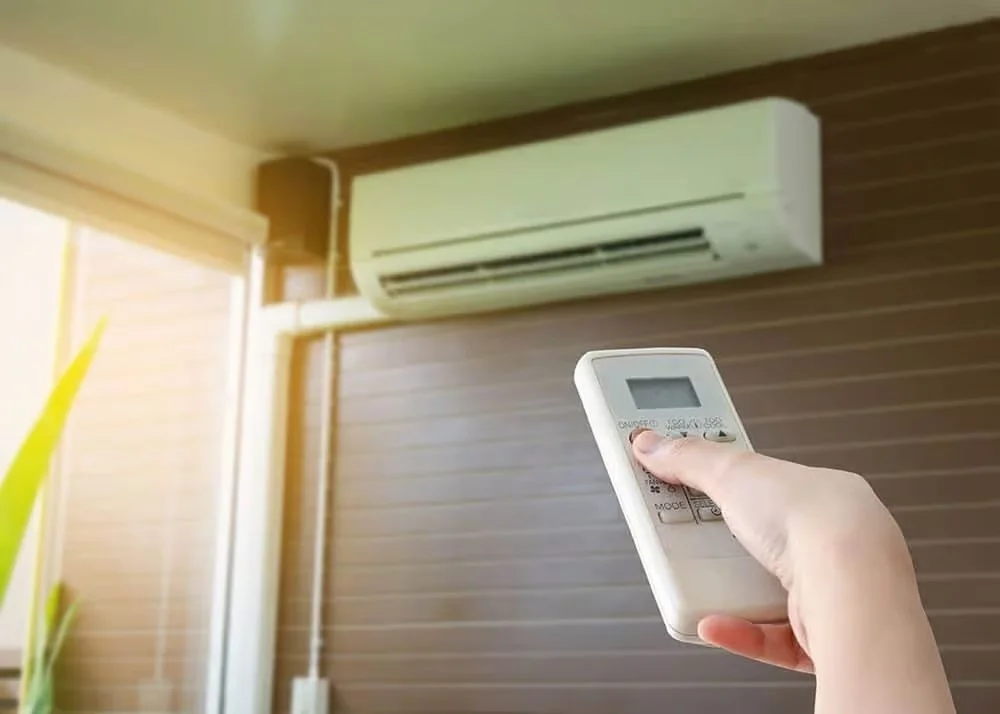
Adjusting the temperature on your mini split should be simple. If you're constantly fiddling with the remote and still can't get the room comfortable, the system is probably sized wrong, not broken.
The Manual J calculation takes all of these inputs and produces a BTU figure that is specific to that room in that home in that neighborhood. It is almost always different from what an online calculator would suggest, sometimes by 20 to 30 percent. That difference can mean the gap between a 12,000 BTU unit and an 18,000 BTU unit, which affects both comfort and the price of the system.
We provide this load calculation as part of our free in-home consultation. There is no charge and no obligation. If the numbers show that a mini split is the right solution, we provide an upfront price for the complete installation. If the numbers show that a different approach makes more sense, perhaps a central AC system would be more cost-effective for your situation, we tell you that. We do not sell equipment that is not the right fit for the home.
Frequently Asked Questions
How many BTUs do I need for a 500 square foot room with a mini split?
A 500 square foot room with standard 8-foot ceilings and average insulation typically needs a 12,000 BTU mini split in Orange County. If the room faces south or west and gets direct afternoon sun, or if it has older single-pane windows and minimal insulation, you may need to step up to an 18,000 BTU unit. The 12,000 BTU size is the most commonly installed single-zone mini split in residential applications.
Is it better to oversize or undersize a mini split?
Slight oversizing is generally better than undersizing for Orange County homes, because modern inverter-driven mini splits can modulate down to about 30 percent of their rated capacity. A modestly oversized unit runs at low speed and maintains comfort efficiently. An undersized unit runs at maximum capacity continuously, driving up electricity costs and wearing out the compressor faster. However, dramatic oversizing (twice the needed capacity) causes short-cycling and humidity problems even with inverter technology.
Can I use a mini split sizing calculator instead of a professional load calculation?
Online mini split sizing calculators provide a reasonable starting estimate based on square footage and climate zone, but they miss critical variables like window orientation, insulation quality, ceiling height, and Orange County's significant inland-to-coastal temperature differences. A professional Manual J load calculation accounts for 12 or more factors and typically produces a recommendation that differs from online calculators by 20 to 30 percent. For a single room addition, a calculator might get you close enough. For a multi-zone system or a challenging space like a garage conversion, a professional calculation is worth the time.
What size mini split do I need for a garage conversion in Orange County?
A standard two-car garage conversion (400 to 500 square feet) with proper Title 24 insulation (R-15 to R-21 walls, R-30 to R-49 ceiling) typically needs a 12,000 BTU mini split. If the garage faces south or west, or if you plan to use it as a home gym or workshop with heat-generating equipment, a 15,000 to 18,000 BTU unit is the safer choice. For ADUs larger than 600 square feet with a kitchen, consider an 18,000 to 24,000 BTU single-zone or a small multi-zone system.
How many BTUs per zone do I need for a multi-zone mini split system?
Each zone in a multi-zone mini split system is sized independently based on that room's specific cooling and heating load. A typical three-zone residential system might include a 9,000 BTU unit for the bedroom, a 12,000 BTU unit for the home office, and an 18,000 BTU unit for the living room, totaling 39,000 BTUs of indoor capacity. The outdoor condenser should have a rated capacity at or above the combined indoor total, typically a 42,000 or 48,000 BTU unit for this example.
Do mini splits in Orange County need more BTUs for heating or cooling?
In Orange County, cooling drives the BTU sizing decision. Summer temperatures in inland cities like Yorba Linda and Anaheim Hills regularly reach 95 to 105 degrees, while winter lows rarely drop below 40 degrees. A mini split sized correctly for cooling will have more than enough heating capacity for Orange County winters. Heat pump mini splits deliver roughly 10 to 15 percent more BTUs in heating mode than cooling mode, so a 12,000 BTU cooling unit typically provides 13,000 to 14,000 BTUs of heating capacity.
How long does a properly sized mini split last in Orange County?
A properly sized and professionally installed mini split from a premium brand like Daikin, Mitsubishi, or Fujitsu typically lasts 15 to 20 years in Orange County with regular maintenance. Some well-maintained systems last beyond 20 years. Correct BTU sizing is critical to longevity because a system that is dramatically oversized or undersized wears out faster from short-cycling or continuous full-speed operation. Our HVAC maintenance service includes mini split tune-ups that clean filters, check refrigerant levels, and inspect electrical connections to maximize system lifespan.
Get Your Mini Split Sized Right the First Time
Getting the BTU number right is the single most important decision in a mini split installation. Too small, and the system runs constantly without reaching your desired temperature. Too large, and it short-cycles, leaves humidity in the air, and wears out years ahead of schedule. The right size keeps you comfortable, runs efficiently, and lasts 15 to 20 years with proper maintenance.
J Martin Indoor Air Quality has been sizing and installing ductless mini-split systems across Orange County since 2014. We are factory-trained on Daikin, Mitsubishi, and Fujitsu, and we perform a full Manual J load calculation on every installation, not just a square footage estimate. Licensed, bonded, and insured under California Contractor License CL#998956, with a 4.97-star rating across thousands of reviews and more than 5,000 Orange County families served, we size every system to match the home, not to hit a sales target.
Call us at (714) 462-4686 for a free in-home mini split sizing consultation, or schedule your appointment online. When you call, Kathryn or Alexis will answer at our Anaheim office. When a technician arrives, it will be Jesus, Carlos, Angel, or another full-time member of our crew, not a subcontractor.