
Mini Split for Garage Conversion in Orange County: The Complete 2026 Guide
Posted on August 20, 2026
More Orange County homeowners are converting garages into livable space than at any point in the last decade, and the single biggest question most of them face is how to heat and cool a room that was never designed to be comfortable. A ductless mini split is the most practical, cost-effective, and code-compliant way to climate-control a garage conversion in Orange County, whether you are building a home office, a gym, a studio apartment, or a full ADU.
The reason is straightforward: most OC garages have no existing ductwork, and extending your central HVAC system into a garage is either prohibitively expensive or structurally impossible in homes built between the 1960s and 1990s. A mini split sidesteps the ductwork problem entirely. One outdoor condenser, one indoor wall unit, a three-inch hole through the wall for refrigerant lines, and a dedicated electrical circuit. That is the infrastructure. Installation typically takes a single day.
We have installed mini splits in dozens of Orange County garage conversions over the past several years, from home gyms in Yorba Linda to ADU studios in Fullerton and home offices across Anaheim Hills. When Jesus finished a Mitsubishi 18,000 BTU installation in a two-car garage conversion in the Travis Ranch neighborhood of Yorba Linda last March, the homeowner had gone from 95-degree afternoons to a steady 72 degrees in under six hours. That project, start to finish, cost $4,200, including the electrical work. It is one of the most common jobs we run between March and September.
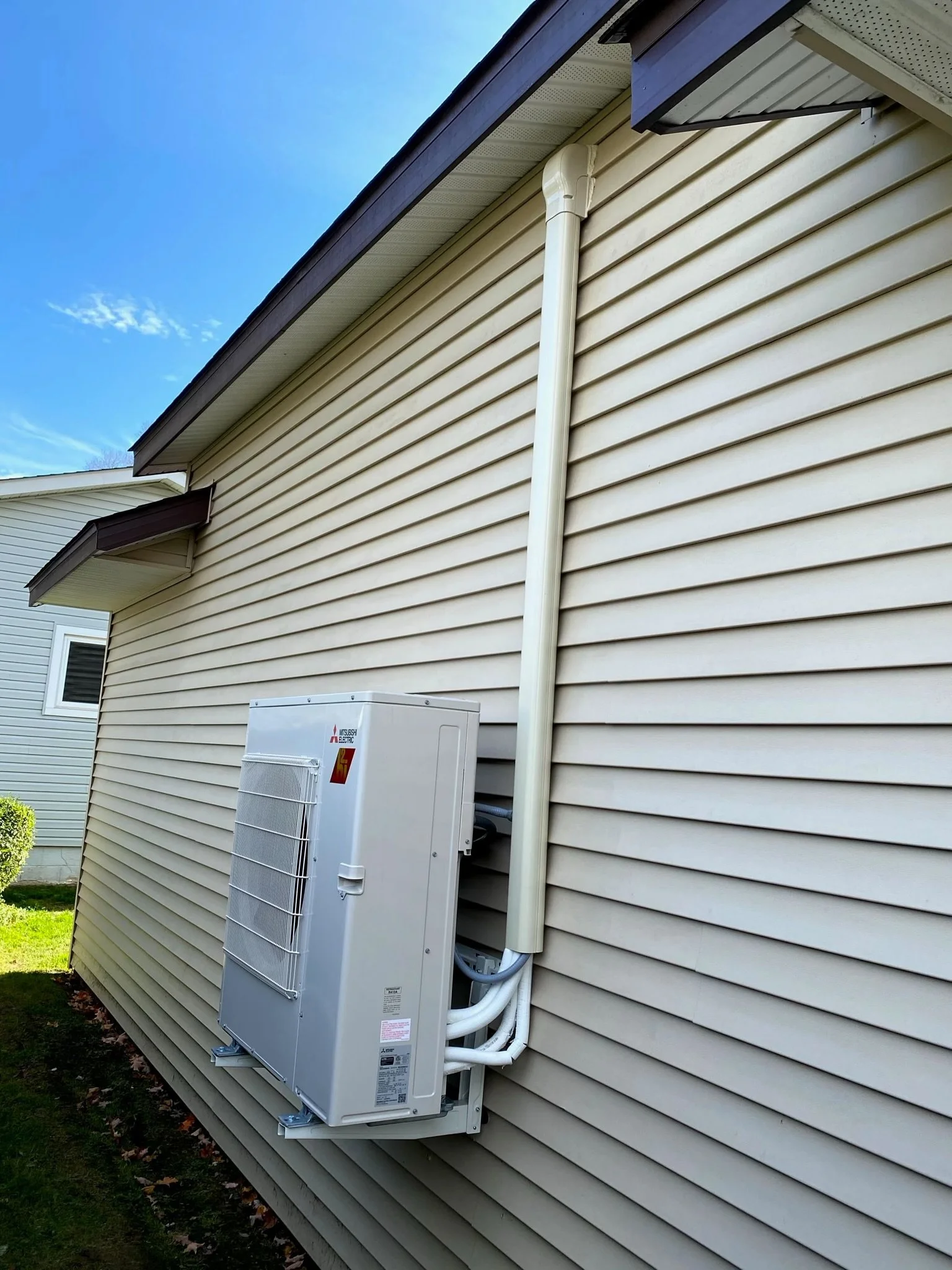
A properly installed multi-zone mini split condenser with a clean line set cover is what separates a professional installation from a shortcut. J Martin handles every detail, from the wall bracket to the permit. Call (714) 462-4686 before summer arrives in Orange County.
Quick Answer
A ductless mini split is the best way to heat and cool a garage conversion in Orange County. A single-zone system costs $2,000 to $6,000 installed (average $3,500), takes 4 to 8 hours to install, and provides both heating and cooling withoutductwork. Most one-cargarage conversions need a 9,000 to 12,000 BTU unit. Most two-car conversions need 12,000 to 18,000 BTU. Insulate walls and ceiling before installing the mini split, or the system will run constantly and never hold temperature.
Why a Mini Split Is the Best HVAC Option for a Garage Conversion
When homeowners ask us about heating and cooling a garage conversion, the conversation almost always starts with the same question: can I just extend my existing central AC into the garage?The short answer is almost always no, and even when it is technically possible, it is almost never the right call. Extending ductwork into a garage requires routing supply and return lines through walls or the attic, resizing the existing system to handle the added load, and in many OC homes built before 2000, the attic space and duct routing simply do not allow it. Even when the contractor can make it work, the cost often exceeds $8,000 to $12,000, and the added strain on your existing system shortens its lifespan.
A ductless mini split avoids all of that. The system operates independently from your central HVAC, with its own outdoor condenser, indoor air handler mounted high on an interior wall, and dedicated electrical circuit. The only connection between the two units is a set of refrigerant lines, a condensate drain, and a communication cable, all passing through a single three-inch hole in the exterior wall.
Mini splits also provide both heating and cooling in one unit. Every modern ductless mini split system is a heat pump, which means it cools in summer and heats in winter. In Orange County's Climate Zone 8, where winter lows rarely drop below 40 degrees, a mini split heat pump handles heating season without any supplemental heat source. That is a meaningful advantage over a portable AC, which only cools, leaving you with no heating solution for the 40 to 50 mornings between November and March that drop into the low 50s or high 40s in inland OC cities like Anaheim Hills, Yorba Linda, and Brea.
A ductless mini split uses 50 to 60 percent less electricity than a window AC and 65 to 75 percent less than a portable AC to deliver the same cooling output, making it the most efficient option for a garage conversion by a wide margin.
Efficiency is the other major differentiator. A ductless mini split uses 50 to 60 percent less electricity than a window AC and 65 to 75 percent less than a portable AC to deliver the same amount of cooling. Over a year of daily use in a home office or gym, that efficiencygap translates to $300 to $600 in annual energy savings on your Southern California Edison bill. For homeowners who plan to use the converted space daily, the mini split pays back its higher upfront cost within two to four years through lower operating costs alone.
What Size Mini Split Does Your Garage Conversion Need?
Getting the size right matters more in a garage than in any other room of the house. Garages have minimal insulation compared to interior rooms, concrete slab floors that absorb and radiate heat, large exterior wall surfaces exposed to direct sun, and (ifyou keep the garage door) the single worst-insulated surface in any residential structure. All of these factors mean a garage needs more BTU capacity per square foot than a bedroom or living room of the same size.
The standard HVAC sizing formula calls for roughly 20 BTU per square foot of conditioned space. For a garage conversion in Orange County, where summer afternoon temperatures in inland cities regularly exceed 95 degrees, you should plan on 25 to 30 BTU persquare foot after insulation improvements. Without insulation upgrades, you may need 30 to 40 BTU per square foot, but at that point you are better off insulating first (see the insulation section below) and sizing the mini split for the insulated space.
Mini Split BTU Sizing for Orange County Garage Conversions (2026)
| Garage Type | Typical Size | Recommended BTU (Insulated) | Common Mini Split Size |
|---|---|---|---|
| One-car garage | 200 to 350 sq ft | 6,000 to 10,500 BTU | 9,000 or 12,000 BTU |
| Two-car garage | 350 to 600 sq ft | 10,500 to 18,000 BTU | 12,000 or 18,000 BTU |
| Three-car or oversized garage | 600 to 900 sq ft | 18,000 to 27,000 BTU | 24,000 BTU or multi-zone |
A 12,000 BTU mini split is the most commonly installed size for Orange County garage conversions. It handles the typical two-car garage (roughly 400 to 500 square feet) after proper insulation, and it is the sweet spot between adequate capacity and reasonable cost. If your garage is on the larger side, faces south or west with significant afternoon sun exposure, or you plan to use heat-generating equipment (gym equipment with motors, multiple computer monitors, a workshop with power tools), move up to an 18,000 BTU unit.
One common mistake we see is homeowners buying an undersized unit to save $300 to $500 on the equipment cost. An undersized mini split runs continuously, never reaches the set temperature on hot afternoons, wears out faster, and uses more electricity than a properly sized unit cycling normally. When Angel did a site visit at a Fullerton home last summer, the homeowner had a 9,000 BTU DIY unit in a 500-square-foot uninsulated two-car garage. The unit ran nonstop and could not get the space below 82 degrees when it was 100 outside. We replaced it with a Daikin 18,000 BTU system, insulated the walls and ceiling, and the room held 73 degrees at peak afternoon heat.
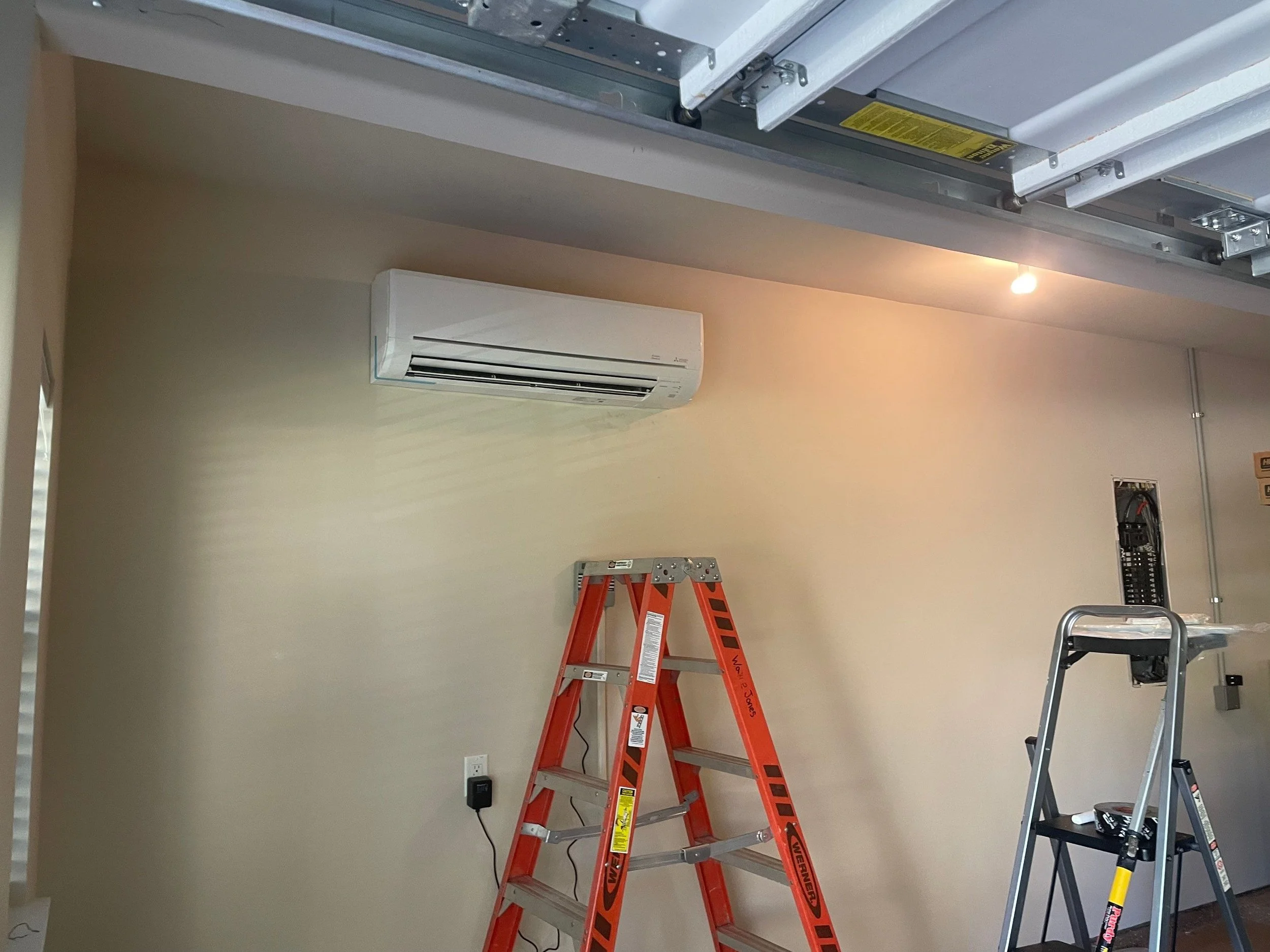
This is one of the most satisfying calls we get: a homeowner who has been putting off the garage conversion for two years finally pulls the trigger, and by the end of installation day the space is holding 72 degrees. A Mitsubishi wall unit, a dedicated circuit, and about six hours of work is all it takes to turn an unusable garage into a room you actually want to spend time in.
How Much Does a Mini Split for a Garage Conversion Cost in Orange County?
The total installed cost of a single-zone mini split for a garage conversion in Orange County ranges from $2,000 to $6,000 in 2026, with most projects landing between $3,200 and $5,200 for a one-car garage and $4,500 to $7,500 for a two-car garage. The average across all garage sizes is approximately $3,500 for a straightforward installation where the electrical panel has capacity and the wall is accessible.
Mini Split Installation Cost for Orange County Garage Conversions as of 2026
| Cost Component | Typical Range | Notes |
|---|---|---|
| Mini split equipment (single zone) | $1,200 to $3,500 | Varies by brand and BTU capacity |
| Professional installation labor | $800 to $2,000 | 4 to 8 hours typical for single zone |
| Electrical work (dedicated circuit) | $300 to $800 | New 20-amp 240V circuit from panel to garage |
| Permit (if required for ADU conversion) | $200 to $1,500 | Mechanical permit; higher for full ADU permits |
| Concrete pad for outdoor unit | $100 to $300 | If no existing pad or mounting bracket |
The average installed cost of a single-zone mini split for a garage conversion in Orange County is approximately $4,000 in 2026, including equipment, labor, and basic electrical work. A two-car garage with a higher-capacity unit typically runs $4,500 to $7,500.
Brand choice significantly affects equipment cost. Daikin, Mitsubishi, and Fujitsu are the three premium brands we install most often for garage conversions and other mini split applications across Orange County. Daikin tends to offer the best value among the three, with competitive pricing and excellent parts availability from the world's largest HVAC manufacturer. Mitsubishi commands a premium (typically $400 to $800 more than comparable Daikin or Fujitsu models) but offers the widest model selection and indoor noise levels as low as 19 decibels, which matters if your converted garage is a home office where you take video calls. Fujitsu sits between the two on price and is known for particularly strong cold-weather heating performance, though that is less relevant in Orange County's mild climate.
The cost of the mini split itself is only part of the total garage conversion budget. A full garage conversion in Orange County, including insulation, drywall, flooring, electrical upgrades, and the mini split, typically runs $15,000 to $40,000 depending on the scope. A simple home gym conversion might cost $5,000 to $15,000 total. A home office conversion with proper insulation, drywall, flooring, and networking runs $8,000 to $20,000. A full ADU conversion with plumbing, kitchen, and bathroom can reach $50,000 or more. In all of these scenarios, the mini split represents roughly 10 to 25 percent of the total conversion cost.
Insulate First, Then Install the Mini Split
This is the single most important piece of advice in this entire guide: do not install a mini split in an uninsulated garage. We cannot emphasize this enough. An uninsulated garage in Orange County can reach 120 degrees or higher on a summer afternoon when the garage door faces south or west. No residential mini split can overcome that kind of heat load. The system will run continuously, the compressor will cycle under extreme stress, your electricity bill will spike, and the unit will fail years before its expected lifespan.
Proper insulation transforms a garage from an oven into a space that a correctly sized mini split can comfortably maintain. For Orange County (California Climate Zone 8 under Title 24), the minimum insulation requirements for a garage being converted to habitable space are R-13 for walls and R-19 for the ceiling. Many contractors, and we are among them, recommend going higher: R-15 for walls and R-30 or higher for the ceiling, especially if the garage has a flat roof or an unventilated attic space directly above it.
The garage door itself is the weak link. If you are keeping the garage door (some home gym and workshop conversions do), even an insulated garage door only provides R-8 to R-18, which is significantly less than a properly insulated wall at R-13 or higher. If you are converting to a full-time living space, office, or ADU, the best approach is to frame out the garage door opening with a standard insulated wall. This single change can cut the BTU requirement by 20 to 30 percent and make the space dramatically easier to heat and cool.
Insulation cost for a typical two-car garage runs $1,500 to $3,500 for walls and ceiling combined, depending on whether you use fiberglass batts (cheapest), blown-in cellulose, or spray foam (most effective but most expensive). This is money spent before the mini split goes in, and it directly reduces the size (and cost) of the mini split you need. A 500-square-foot garage that needs an 18,000 BTU unit without insulation might only need a 12,000 BTU unit once properly insulated, saving $500 to $1,000 on equipment cost and hundreds per year on electricity.
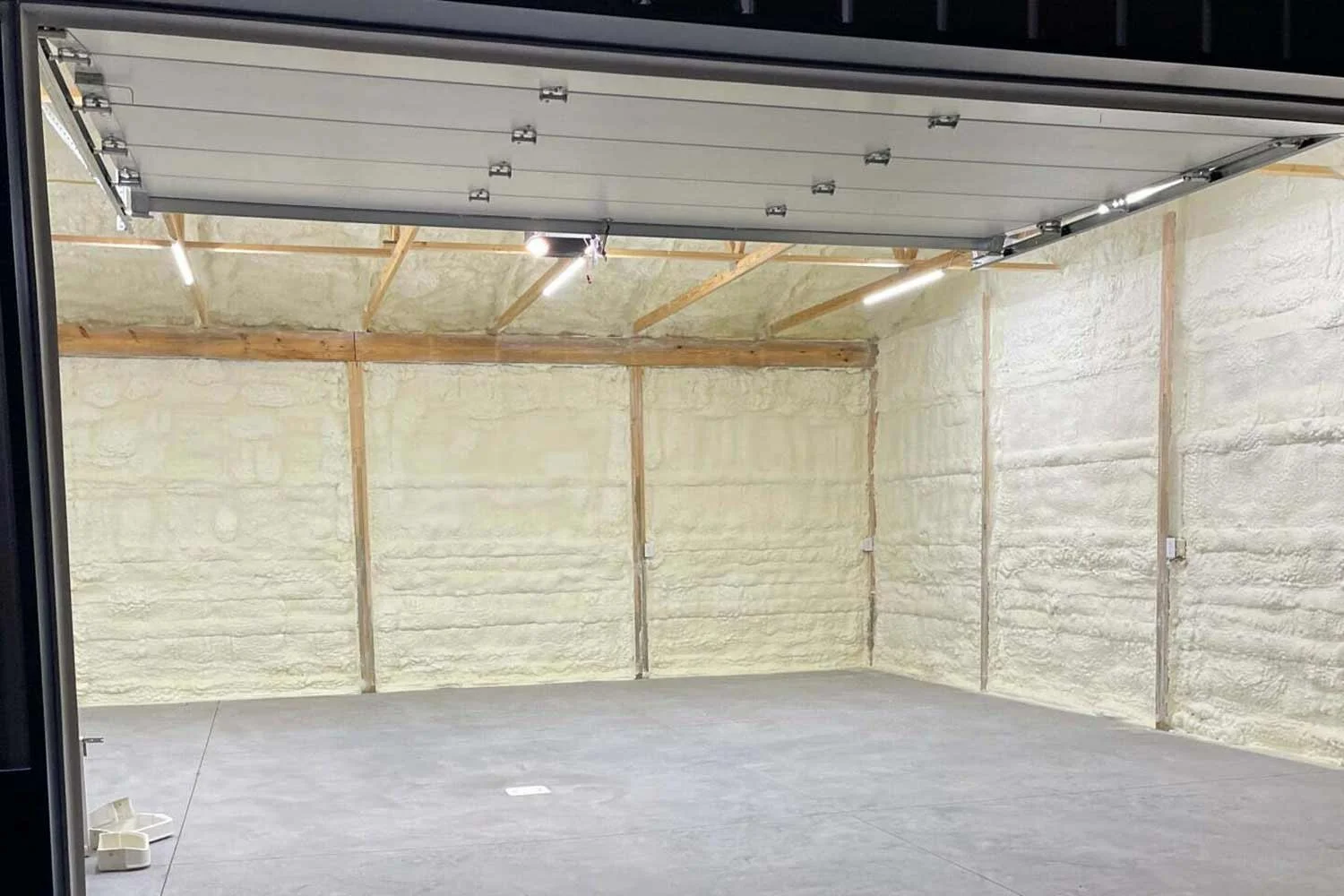
This is what proper garage conversion insulation looks like before the drywall goes up: spray foam covering every wall cavity and rafter bay, eliminating the air gaps that turn an Orange County garage into an oven in July. Insulating to at least R-13 walls and R-19 ceiling before installing your mini split reduces the BTU requirement by 20 to 40 percent and cuts your monthly electricity cost for the life of the system.
Electrical Requirements for a Garage Mini Split
Every mini split requires a dedicated electrical circuit, meaning a circuit that serves only the mini split and nothing else. This is not optional. Sharing a circuit with other garage loads (lights, power tools, a refrigerator) causes voltage sag that damages the mini split's control board and can trip the breaker on the hottest day of the year, exactly when you need cooling most.
The specific electrical requirements depend on the BTU capacity of the unit. A 9,000 or 12,000 BTU mini split typically runs on a 15-amp circuit at 120 volts (standard household voltage). An 18,000 BTU unit usually requires a 20-amp circuit at 240 volts, which means running a new 240-volt line from your electrical panel to the garage. A 24,000 BTU unit typically needs a 30-amp circuit at 240 volts.
Most Orange County garages already have a 120-volt circuit for the garage door opener and a few outlets, but they rarely have the dedicated 240-volt service a larger mini split needs. Running a new 240-volt circuit from the panel to the garage costs $300 to $800 depending on the distance and whether the panel has available breaker slots. If your panel is full, you may need a sub-panel or panel upgrade, which adds $1,500 to $3,000 to the project.
The wire sizing matters too. For most residential mini splits, 10/2 wire (two conductors plus ground) is standard for 240-volt circuits. Your installer matches wire gauge to the unit's Minimum Circuit Ampacity (MCA) nameplate rating and installs a breaker no larger than the Maximum Overcurrent Protection (MOP) rating. These specifications are printed on every mini split's nameplate and dictated by the National Electrical Code. A licensed HVAC contractor handles all of this as part of a standard installation.
Permits, Code, and Title 24 Compliance in Orange County
Whether you need a permit depends on what kind of conversion you are doing. A simple comfort upgrade (adding a mini split to a garage you use as a workshop or gym, without changing the legal use of the space) may only require a mechanical permit in some OC cities, or no permit at all. A full garage conversion to habitable living space (home office, bedroom, ADU) triggers building permits, Title 24 energy compliance, and in many cases a planning review.
For full garage-to-ADU conversions, California state law (updated with SB 1211, AB 976, and AB 434 effective 2025) streamlines the permitting process. Cities must review complete ADU applications within 60 days. AB 434 requires all California cities to establish pre-approved ADU plan programs, which can cut approval timelines to 30 days. Permit fees for garage conversions in Orange County range from $1,500 to $15,000 depending on the city and scope of work, with reduced fees for ADUs under 750 square feet, which covers nearly every single-car and most two-car garage conversions.
Title 24 (California's energy code) applies to all garage conversions to habitable space. For Orange County (Climate Zone 8), this means meeting specific insulation, window, and HVAC efficiency requirements. The mini split itself typically exceeds Title 24 efficiency requirements by a wide margin, since modern ductless systems carry SEER2 ratings (the federal efficiency standard for cooling equipment) well above the minimum threshold. The insulation, air sealing, and window requirements are usually the more involved compliance items. A HERS (Home Energy Rating System) rater must verify compliance for most garage conversions, adding $300 to $600 to the project cost.
California state law requires cities to review complete ADU applications within 60 days. Pre-approved ADU plan programs, mandated by AB 434, can cut that timeline to 30 days. Permit fees for garage conversions in Orange County range from $1,500 to $15,000 depending on the city and project scope.
For homeowners doing a simpler conversion (gym, workshop, hobby space) without changing the legal occupancy classification, the permitting requirements are lighter. You still need electrical work permitted and inspected (that dedicated circuit for the mini split), but you may not trigger the full Title 24 compliance path. Check with your city's building department. In Anaheim, for example, adding a mini split to an existing garage for comfort purposes requires a simple mechanical permit that costs under $300 and is typically approved within a week.
Mini Split vs. Portable AC vs. Window AC for a Garage
Homeowners often consider portable air conditioners or window units as cheaper alternatives to a mini split. The upfront cost is lower (a portable AC runs $300 to $700, a window unit $150 to $500), but the total cost of ownership over three to five years almost always favors the mini split, and the comfort difference is not close.
A portable AC is the least efficient option available. Most portable units carry an Energy Efficiency Ratio (EER) under 10, meaning they convert electricity to cooling at a fraction of the rate a mini split achieves. They exhaust hot air through a hose that must vent outside, and single-hose designs common in budget models create negative pressure in the room, pulling hot air in through every gap. They are loud (55 to 65 decibels), disruptive in a home office, and take up floor space.
Window units are more efficient than portables but require a window, which most garages either lack entirely or have in sizes that do not fit standard window AC units. Even when a window unit fits, it only cools. You have no heating for winter. Security is another concern: a window AC creates an easy entry point if the garage faces a side yard or alley.
The mini split costs more upfront but provides both heating and cooling, operates at 19 to 40 decibels (quieter than a whisper at the low end), mounts on the wall so it takes zero floor space, and runs at 50 to 75 percent lower electricity cost than the alternatives. For a space you plan to use daily for years, the math clearly favors the mini split. For a space you use occasionally and do not care about heating (a weekend workshop, for example), a portable AC can be a reasonable interim solution while you decide whether to invest in a permanent conversion.
What a Professional Mini Split Installation Looks Like
A professional single-zone mini split installation in a garage conversion typically follows a predictable sequence and takes 4 to 8 hours, with most standard installations completing in about 5 to 6 hours. Here is what happens.
The process starts with a site assessment. The installer determines the best wall location for the indoor unit (typically the longest interior wall, mounted 7 to 8 feet high, away from direct sunlight through windows), the best location for the outdoor condenser (on a concrete pad or wall bracket, with adequate clearance for airflow), and the shortest route for the refrigerant line set through the exterior wall. The installer also evaluates the electrical panel for capacity.
Next comes the electrical work. If a dedicated circuit does not already exist, the electrician runs a new line from the panel to the outdoor unit location. For a 240-volt circuit, this involves installing a new double-pole breaker, running 10/2 wire through the wall or attic, and terminating at a disconnect box near the outdoor unit. This step takes one to two hours depending on the distance and routing.
The installer then mounts the indoor unit's backing plate, drills the three-inch wall penetration for the line set, mounts the outdoor condenser, runs refrigerant lines and communication cable, pressurizes the system to check for leaks, releases the factory refrigerant charge, and tests the system in both cooling and heating modes.
When the installation is complete, the technician walks you through the remote control (every mini split comes with one), sets up the Wi-Fi connection if the unit supports it (most Daikin, Mitsubishi, and Fujitsu units sold in 2026 do), and explains the filter maintenance schedule. The filter in a mini split indoor unit should be cleaned every two to four weeks in a garage environment, since garages tend to have more dust than interior rooms, especially during and immediately after construction.
We handle all of this as a single-day, turnkey installation. When you work with our team on a mini split installation, the price we quote includes the equipment, all labor, the electrical circuit, the permit if one is required, and the system startup. There are no surprise charges for refrigerant, brackets, or the disconnect box, all of which some contractors list as add-ons after the initial quote.
Common Garage Conversion Uses and Which Mini Split Fits Each
The right mini split configuration depends partly on how you plan to use the converted garage. Different uses create different heating and cooling demands, and matching the system to the use case helps you avoid overspending on capacity you do not need or underspending on a system that cannot keep up.
A home office conversion is the most common garage conversion we see in Orange County in 2026. The space typically runs 200 to 400 square feet, contains a desk, monitors, and perhaps a small seating area, and needs to stay at a consistent 70 to 74 degrees during business hours. A 9,000 or 12,000 BTU mini split handles this easily in an insulated space. Noise matters here: if you take video calls, look for a unit rated at 25 decibels or lower on the indoor unit. Mitsubishi's MSZ-FH series and Daikin'sDERA series both achieve this.
A home gym presents a different challenge. The space may be larger (350 to 600 square feet for a two-car garage), and the occupants generate significant body heat during intense exercise. A 12,000 to 18,000 BTU unit is typical. Noise is less of a concern in a gym, so you can prioritize capacity and value over ultra-quiet operation. Daikin's standard wall-mount units are a strong choice here, offering excellent cooling capacity at a lower price point than the premium quiet models.
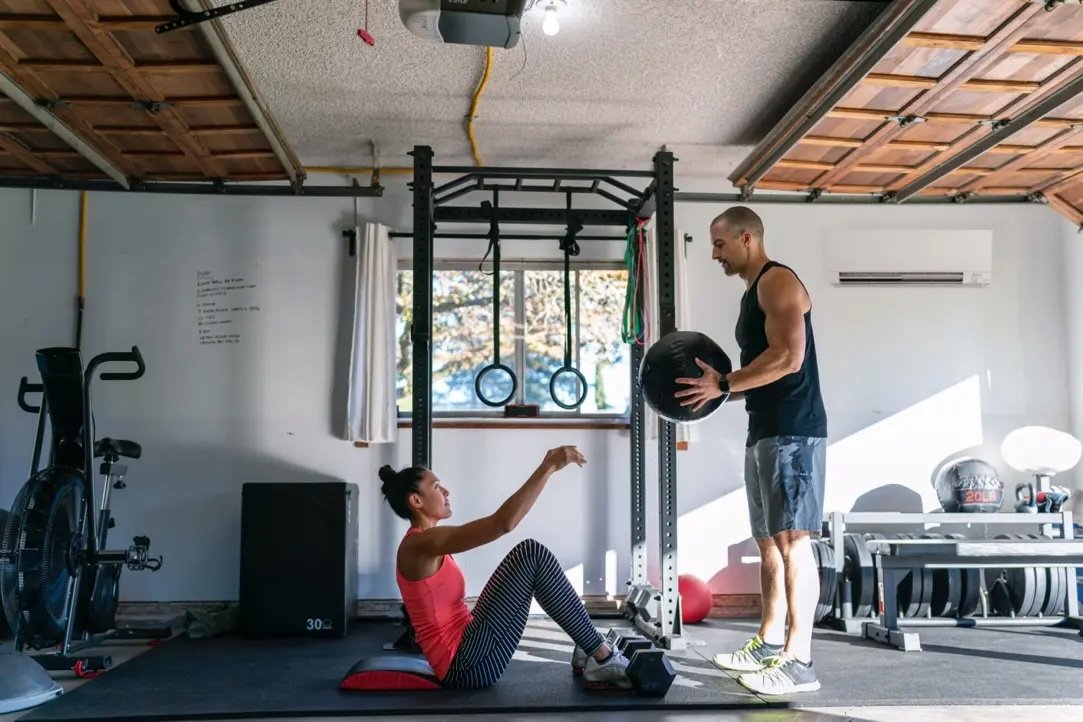
We hear this from Orange County homeowners every spring: the garage gym was great all winter but now that it is warming up they cannot use it past 9 a.m. A single-zone mini split solves that completely. Most garage gym installations are done in one day and the difference on the first hot afternoon is immediate.
A full ADU (accessory dwelling unit) conversion is the highest-end scenario. The space includes a kitchenette, bathroom, and living/sleeping area. Cooking generates heat and moisture, and the bathroom needs ventilation. A 12,000 to 18,000 BTU mini split handles the climate control, but the conversion itself triggers the full permit and Title 24 compliance path. ADU conversions in Orange County generate $2,000 to $3,000 per month in rental income according to 2026 market data, with OC rental vacancy rates below 3 percent and rents increasing 5 to 7 percent annually. The full costs, pros, and cons of ductless systems for these applications are covered in depth in our complete mini split guide.
A workshop or hobby space is the simplest scenario. A 9,000 to 12,000 BTU unit, even without full insulation, can drop a garage from 110 degrees to 80 to 85 degrees on the hottest days. If you want a consistent 72 degrees, insulate first.
Choosing the Right Brand for Your Garage Conversion
J Martin is factory-trained on three mini split brands: Daikin, Mitsubishi, and Fujitsu. All three are premium, Japanese-engineered systems with excellent reliability records, and any of them will serve a garage conversion well. The differences come down to specific strengths that may matter depending on your use case.
Daikin is the world's largest HVAC manufacturer, and that scale translates to competitive pricing and excellent parts availability. For a garage gym or workshop where you want reliable performance without paying the premium-brand surcharge, Daikin is our most common recommendation. A Daikin 12,000 BTU wall-mount unit with installation typically runs $4,000 to $5,200 in our pricing.
Mitsubishi Electric pioneered ductless technology in North America and holds the premium position in the market. Their systems offer the widest selection of indoor unit styles and the lowest noise levels in the industry, with some models operating at just 19 decibels, quieter than a library. For a home office where noise during calls matters, Mitsubishi is the top choice. Expect to pay $400 to $800 more than a comparable Daikin or Fujitsu unit.
Fujitsu offers quiet operation and strong cold-weather performance at a price point between Daikin and Mitsubishi. Their cold-climate advantage is less relevant in OC's mild winters, but Fujitsu remains an excellent middle-ground choice for garage conversions. Our detailed comparison of the best mini split brands for Orange County covers the full spec-by-spec differences.
Frequently Asked Questions
How much does it cost to install a mini split in a garage conversion in Orange County?
A single-zone mini split installation for a garage conversion in Orange County costs $2,000 to $6,000 in 2026, with the average project running approximately $3,500. The total depends on the BTU capacity of the unit, the brand, whether new electrical work is needed, and whether permits are required. A one-car garage conversion typically costs $4,200 to $5,200 installed, while a two-car garage runs $4,500 to $7,500.
What size mini split do I need for a two-car garage in Orange County?
Most two-car garages in Orange County (350 to 600 square feet) need a 12,000 to 18,000 BTU mini split after proper insulation. If the garage is insulated to at least R-13 walls and R-19 ceiling, a 12,000 BTU unit handles most two-car garages up to about 500 square feet. For larger garages, those with significant sun exposure, or garages used as home gyms with heat-generating equipment, an 18,000 BTU unit is the safer choice.
Do I need a permit to install a mini split in my garage in Orange County?
It depends on the scope of your conversion. Adding a mini split to an existing garage for comfort (workshop, gym) typically requires only a mechanical permit, which costs under $300 in most OC cities. A full garage conversion to habitable space (home office, bedroom, ADU) triggers building permits, Title 24 energy compliance, and potentially a planning review. ADU permit fees in Orange County range from $1,500 to $15,000 depending on the city and project scope.
Can I install a mini split in my garage myself?
DIY mini split kits exist (brands like MRCOOL sell pre-charged systems), but we do not recommend DIY installation for a garage conversion. The electrical work requires a licensed electrician in California. Incorrect refrigerant line installation can cause leaks, reduced efficiency, and compressor failure. A professional installation ensures the system is sized correctly, the electrical circuit meets code, and the manufacturer's warranty remains valid. Warranty claims are routinely denied when the system was not installed by a licensed contractor.
How long does it take to install a mini split in a garage?
A professional single-zone mini split installation takes 4 to 8 hours, with most garage installations completing in about 5 to 6 hours. This includes mounting the indoor and outdoor units, running the refrigerant line set, connecting the electrical circuit, pressure testing, and system startup. If new electrical work from the panel is needed, add one to two hours for the circuit installation.
Is a mini split better than a portable AC for a garage?
A mini split is significantly better than a portable AC for any garage you plan to use regularly. Mini splits use 65 to 75 percent less electricity than portable ACs, operate at 19 to 40 decibels compared to 55 to 65 decibels for portables, provide both heating and cooling (portables only cool), and mount on the wall instead of taking up floor space. The only advantage of a portable AC is lower upfront cost ($300 to $700 versus $2,000 to $6,000 for a mini split), but the operating cost difference closes that gap within two to four years of regular use.
Do I need to insulate my garage before installing a mini split?
Insulating before installing is strongly recommended and in many cases required by code. An uninsulated Orange County garage can reach 120 degrees on a summer afternoon. No residential mini split can overcome that heat load efficiently. Proper insulation (R-13 walls, R-19 ceiling minimum for OC Climate Zone 8) reduces the BTU requirement by 20 to 40 percent, lowers electricity costs, and allows the mini split to actually maintain your target temperature. Insulation for a two-car garage typically costs $1,500 to $3,500.
Ready to Convert Your Garage? Here Is How to Start
A mini split garage conversion is one of the most straightforward HVAC projects we handle, and for most Orange County homeowners, it is the single smartest investment in a garage that is currently sitting empty or functioning as overflow storage. Whether you are building a home office, a gym, an ADU for rental income, or just a comfortable space to spend time in, a professional ductless mini split installation is what makes it work.
The first step is a site assessment. We measure the space, evaluate insulation, check your electrical panel capacity, and recommend the right system size and brand for your specific use case and budget. The assessment is free, takes about 30 minutes, and there is no obligation.
J Martin Indoor Air Quality has served Orange County families since 2014, with a full-time crew of factory-trained technicians (no subcontractors) and a 4.97-star rating across thousands of reviews. We are certified installers for Daikin, Mitsubishi, and Fujitsu mini split systems, and every installation comes with upfront pricing, no surprise charges, and a workmanship warranty. Licensed, bonded, and insured under California Contractor License CL#998956.
Call us at (714) 462-4686 to schedule your free garage assessment, or request a free in-home consultation online. When you call, you will reach Kathryn or Alexis at our Anaheim office, not a call center. And when one of our techs arrives for the assessment, it will be Jesus, Angel, Jack, or another member of our full-time crew, the same people who will do the installation.