
Central AC vs Ductless Mini Split Cost in Orange County: The Full 2026 Comparison
Posted on July 16, 2026
A central AC replacement in Orange County typically costs $10,000 to $22,000 with existing ductwork, while a single-zone ductless mini-split runs $4,000 to $9,000 installed, and a multi-zone mini-split system covering a whole home costs $9,000 to $40,000. The right system depends on your home's layout, whether you already have ducts, and how many rooms you actually need to cool.
If your home has well-sealed ductwork and you want uniform whole-home cooling, central AC is almost always the less expensive upfront option. But if you are adding cooling to a room that was never ducted, converting a garage, or living in an older Orange County home where the ductwork leaks more air than it delivers, a ductless mini-split can save you thousands over the life of the system. Our ductless mini-split specialists install both system types across Orange County every week, and the answer is rarely as simple as "one is better than the other."
When Angel finished a two-zone Daikin mini-split installation in an Irvine townhome last spring, the homeowner had spent three summers trying to cool a converted upstairs loft with a portable AC unit. The portable unit cost $65 a month to run and never got the room below 78 degrees. The mini-split handles both the loft and the primary bedroom for about $28 a month in cooling costs. That is the kind of scenario where ductless makes obvious financial sense, but it is not the right answer for every home or every budget.
Quick Answer
For a whole-home comparison in Orange County, central AC replacement with existing ducts costs $10,000 to $22,000 for the condenser and coil, but runs 20 to 30 percent less efficiently due to duct losses. A multi-zone ductless mini-split costs $9,000 to $40,000 installed but delivers SEER2 ratings of 20 to 33, lasts 15 to 20 years, and typically saves $30 to $60 per month on electricity. If you only need to cool one room or addition, a single-zone mini-split at $4,000 to $9,000 is the clear value play. The right choice depends on your home's existing ductwork, how many rooms you need to cool, and whether you plan to stay long enough to recoup the efficiency savings.
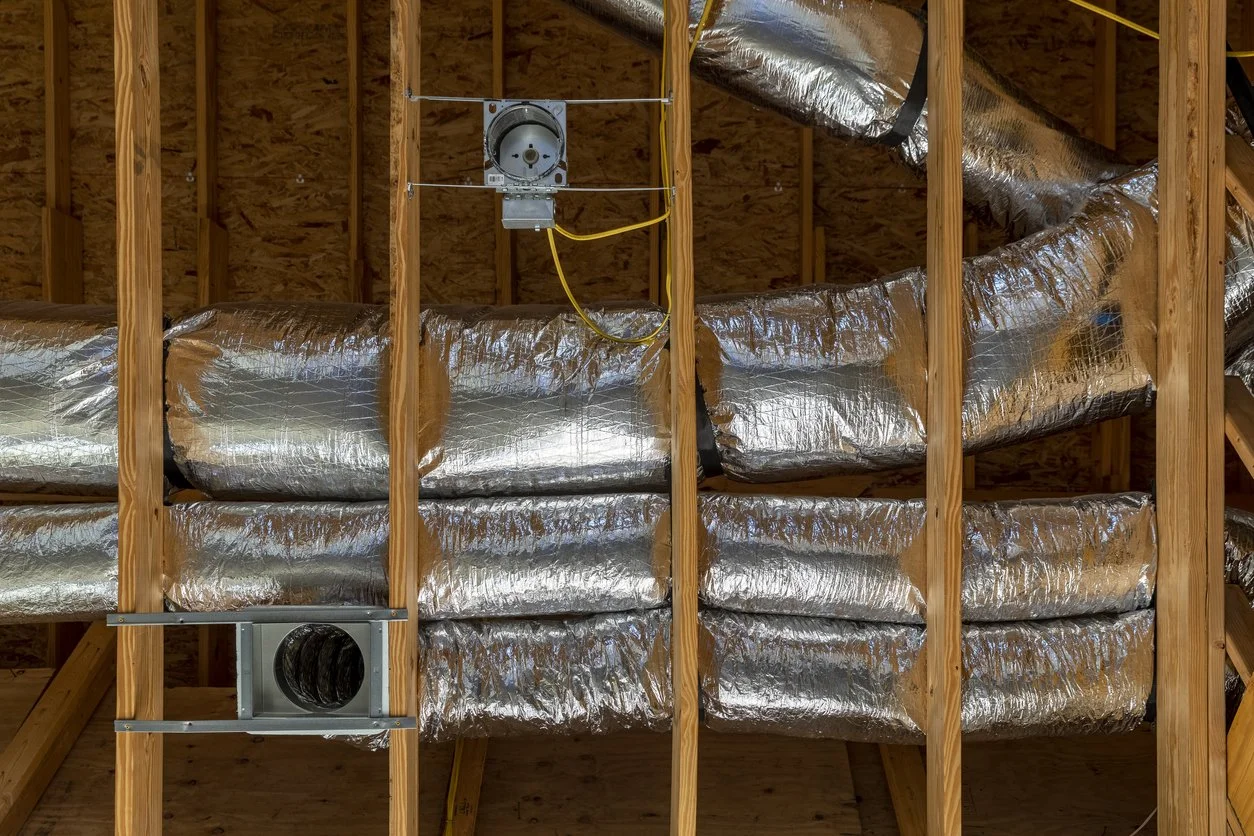
If your central AC ductwork is 20 or more years old, it is likely losing 20 to 30 percent of every dollar you spend on cooling before the air ever reaches the room. J Martin inspects ductwork condition at no charge during every in-home estimate across Orange County. Call (714) 462-4686.
What Central AC Replacement Actually Costs in Orange County in 2026
Central air conditioning remains the most common cooling system in Orange County's single-family homes, and replacing an existing central AC unit is usually the most straightforward path when your current system fails. The cost depends on what you are replacing and how much of the existing infrastructure you can keep.
A standard central AC replacement, where the ductwork is in good condition and you are swapping out the outdoor condenser and the indoor evaporator coil, runs $10,000 to $22,000 in Orange County in 2026. The lower end of that range reflects a basic 14 SEER2 system in a smaller home (under 1,800 square feet), while the upper end covers a 3 to 4 ton system with a SEER2 rating of 16 to 18 in a typical 2,000 to 2,500 square foot OC home.
If you want a high-efficiency central AC system with a SEER2 rating of 19 or above, expect to pay $6,000 to $12,500 installed. These systems use variable-speed compressors that run quieter, dehumidify better, and use significantly less electricity on mild days. For homeowners who plan to stay in the home for 10 or more years, the higher efficiency tier often pays for itself through lower SCE bills.
The cost jumps substantially when ductwork needs replacement or major repair. A full central AC system installation with new ductwork runs $12,000 to $18,000 or more, depending on the home's layout and how accessible the attic and wall cavities are. In many Orange County tract homes built in the 1960s through 1980s, the original ductwork was undersized, poorly sealed, or routed through unconditioned attic space where summer temperatures can exceed 150 degrees. Replacing that ductwork is often the most expensive single line item in a central AC installation.
The average Orange County homeowner replacing a central AC system with existing ductwork pays $5,500 to $6,500 for a mid-efficiency unit installed by a licensed contractor in 2026.
What Ductless Mini-Split Installation Costs in Orange County in 2026
Ductless mini-split pricing works differently from central AC because you are paying per zone rather than for a single whole-home system. Each zone consists of one outdoor compressor (or a share of a multi-zone compressor) and one indoor air handler mounted on the wall, ceiling, or floor.
A single-zone mini-split system, which cools one room, costs $4,000 to $6,000 installed in Orange County. The range depends on the BTU capacity (9,000 to 24,000 BTU covers most single rooms), the brand, and the SEER2 efficiency rating. A basic 12,000 BTU wall-mounted unit from a mid-tier brand lands around $3,000 to $3,500 installed. A premium Daikin, Mitsubishi, or Fujitsu unit with a SEER2 rating above 20 runs $4,000 to $6,000.
Multi-zone systems add indoor heads to a single outdoor compressor. A two to three zone system runs $7,000 to $12,000 installed, while a four or five zone system covering most of a home costs $10,000 to $18,000. The per-zone cost decreases as you add zones to a shared outdoor unit, but the total system cost increases.
J Martin installs all three of the major ductless brands we are factory-trained on: Daikin, Mitsubishi, and Fujitsu. The efficiency differences between them are meaningful. Mitsubishi's MSZ-FS series achieves up to 40.1 SEER2, which is the highest residential rating on the market. Fujitsu's Airstage LZAS1 hits 33.1 SEER2. Daikin's LV series runs at 19.5 SEER2 with exceptionally quiet 37-decibel indoor operation. We recommend specific brands based on the room size, the home's orientation, and whether the homeowner prioritizes maximum efficiency or lowest upfront cost.
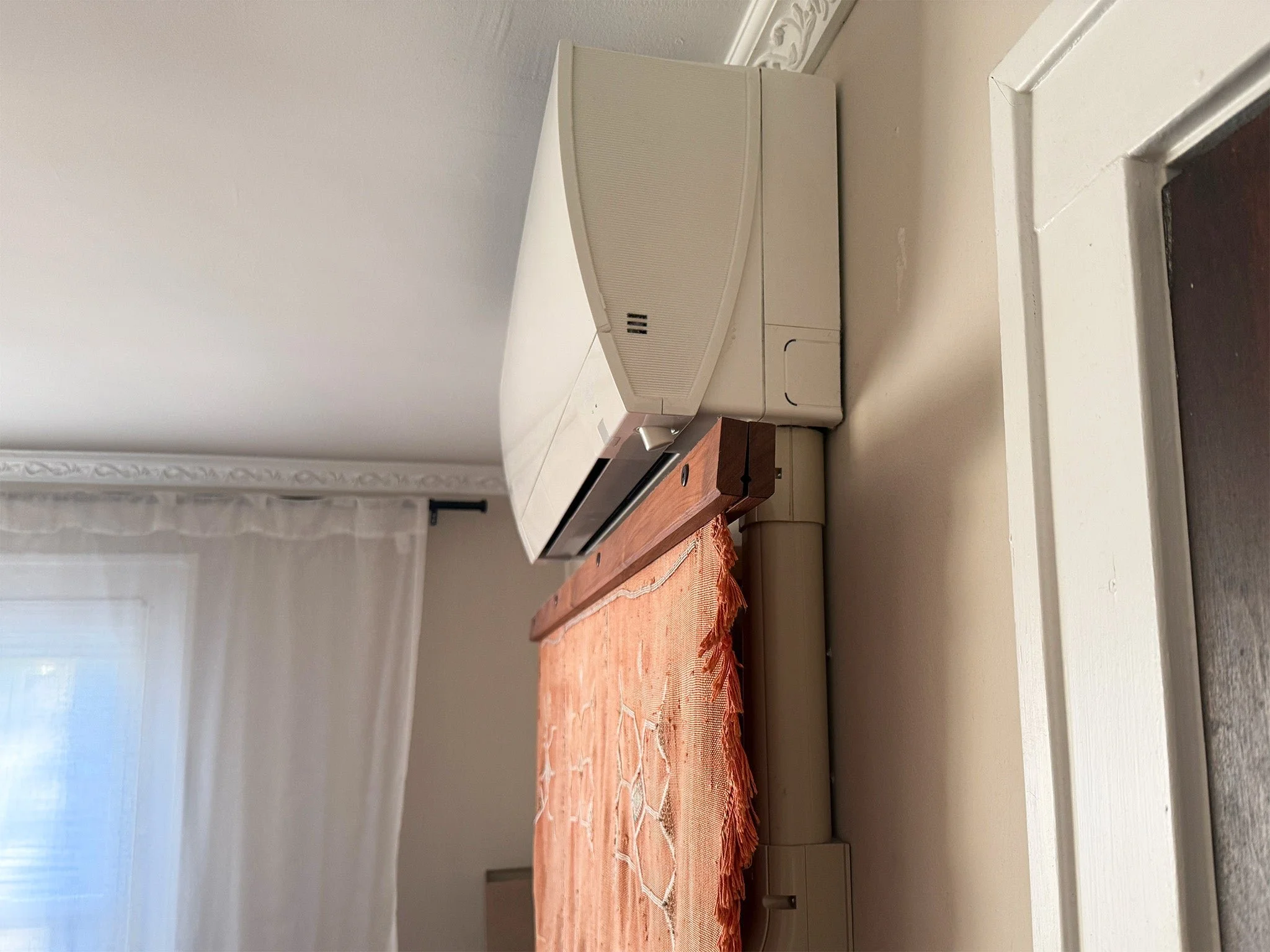
Mitsubishi mini-splits are among the most efficient residential cooling systems on the market, with SEER2 ratings up to 40.1. J Martin is factory-trained on Mitsubishi installation and service, which means the unit is sized correctly, the refrigerant charge is verified, and the warranty is valid from day one.
Why Mini-Split Pricing Is Per-Zone
The per-zone pricing model is the single biggest source of confusion in the ductless mini-split cost conversation. Homeowners see "$3,000 for a mini-split" and assume that covers their whole house. It does not. A single-zone system cools one room. If you want five zones to cover a whole home, you are looking at five indoor units, one or two outdoor compressors, and five sets of refrigerant lines run through your walls, which is why the whole-home price reaches $9,000 to $40,000.
The flip side of per-zone pricing is flexibility. If you only need cooling in one bonus room, one garage conversion, or one master bedroom that your central AC cannot reach, a single $3,000 to $5,000 mini-split solves the problem without touching the rest of the house. That targeted approach is often far more cost-effective than replacing an entire central AC system just to fix one hot room.
Central AC vs Mini Split: The Full Cost Comparison
The following table compares central AC and ductless mini-split systems across every dimension that affects what you will actually pay and what you will get for that investment. All figures reflect 2026 pricing for Orange County residential installations.
2026 Central AC vs Ductless Mini-Split Cost and Performance Comparison for Orange County Homes
| Category | Central AC (Existing Ducts) |
Ductless Mini-Split (Whole-Home Multi-Zone) |
Ductless Mini-Split (Single Zone) |
|---|---|---|---|
| Upfront Cost | $3,500 to $7,500 | $9,000 to $40,000 | $5,000 to $9,000 |
| SEER2 Range | 14 to 22 | 20 to 33+ | 20 to 33+ |
| Duct Energy Loss | 20 to 30% | 0% (no ducts) | 0% (no ducts) |
| Average Lifespan | 12 to 15 years | 15 to 20 years | 15 to 20 years |
| Monthly Operating Cost (2,000 sq ft home) |
$120 to $180 (summer) | $80 to $130 (summer) | $25 to $45 (single room) |
| Annual Maintenance Cost | $150 to $400 | $250 to $800 (multiple heads) | $75 to $150 |
| Best For | Homes with good existing ductwork, whole-home uniform cooling | Homes without ducts, older homes, additions, zone control | Single rooms, additions, garage conversions, bonus rooms |
The table makes the pattern clear. Central AC wins on upfront cost when ducts already exist and are in good condition. Mini-splits win on efficiency, lifespan, and long-term operating cost. The single-zone mini-split is in a category of its own: it is the most affordable way to add cooling to any single space.
Efficiency and Energy Savings: Where Mini-Splits Pull Ahead
The efficiency gap between central AC and ductless mini-splits is not small, and it is not theoretical. It translates directly into what you pay Southern California Edison every month.
Modern central AC systems carry SEER2 ratings between 14 and 22. SEER2 (Seasonal Energy Efficiency Ratio 2, the updated federal efficiency standard that replaced the original SEER metric in 2023) measures how efficiently a system converts electricity into cooling over an entire season. A 16 SEER2 central AC system is a solid mid-range choice. A 20 SEER2 system is considered high-efficiency.
Ductless mini-splits routinely achieve SEER2 ratings of 20 to 33, with premium models from Mitsubishi and Fujitsu reaching above 33. That is not a marginal difference. A mini-split rated at 25 SEER2 uses roughly 36 percent less electricity to produce the same cooling as a 16 SEER2 central AC unit, based on the rated efficiency alone.
But the rated efficiency is only half the story. Central AC systems lose 20 to 30 percent of their conditioned air to duct leaks, poorly sealed connections, and heat gain in unconditioned attic spaces, according to ENERGY STAR. The U.S. Department of Energy estimates duct losses can account for more than 30 percent of a central AC system's total energy consumption. A central AC system rated at 16 SEER2 that loses 25 percent of its output through the ducts is effectively operating at 12 SEER2 at the register.
According to ENERGY STAR, 20 to 30 percent of the conditioned air in a central AC system is lost through duct leaks, poor connections, and heat gain in unconditioned spaces. Ductless mini-splits eliminate this loss entirely.
Ductless mini-splits deliver conditioned air directly from the wall-mounted head to the room. There are no ducts to leak, no attic to heat the air before it reaches the room, and no pressure imbalances pushing cooled air into the wrong spaces. The rated efficiency is close to the actual efficiency.
In practice, Orange County homeowners who switch from a central AC system to ductless mini-splits report electricity bill reductions of 20 to 40 percent for cooling, which translates to roughly $30 to $60 per month during the summer cooling season. Over a 15-year system life, that adds up to $5,400 to $10,800 in energy savings, which can offset or exceed the higher upfront cost of a multi-zone mini-split installation.
When Central AC Is Still the Right Choice for Your Orange County Home
Despite the efficiency advantages of ductless systems, central AC remains the right choice for many Orange County homeowners, and we install more central AC systems than mini-splits in a typical month.
The clearest case for central AC is a home with well-maintained, properly sealed ductwork. If your ducts were installed or replaced within the last 15 to 20 years, are sealed with mastic rather than tape, and run through conditioned or insulated spaces, the duct loss issue shrinks significantly. In that scenario, a 16 to 18 SEER2 central AC system costing $5,000 to $7,000 delivers whole-home cooling for roughly half the upfront cost of a comparable multi-zone mini-split.
Central AC also makes sense when you want uniform temperature throughout the entire house. Mini-splits cool individual zones, which is an advantage when you want different temperatures in different rooms, but can feel inconsistent if you prefer every room at the same 72 degrees. Central AC with a single thermostat and a well-designed duct system achieves that uniform feel more naturally.
When Jesus inspects ductwork in Yorba Linda homes, particularly in the newer developments built after 2000, he frequently finds the ducts in solid condition. In those cases, we typically recommend a straight central AC replacement rather than converting to ductless. The math does not justify a $15,000 mini-split installation when a $6,000 central AC replacement will cool the home effectively for the next 12 to 15 years. That is the kind of honest assessment we give every homeowner, even though the mini-split installation would be a higher-ticket job for us.
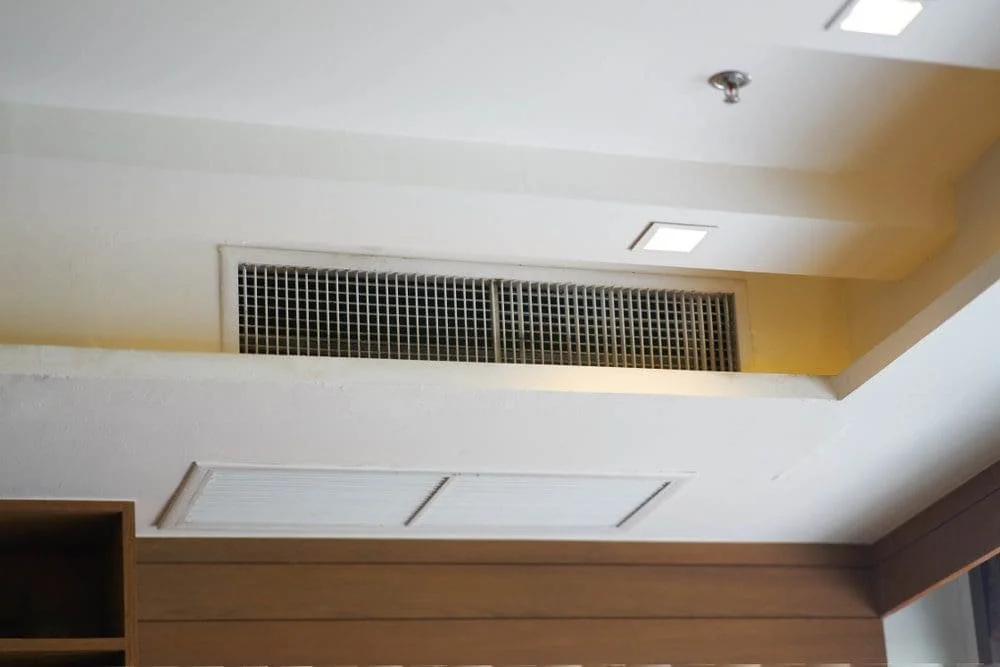
We see this in Orange County homes every week: a return vent so clogged with dust that the central AC system is essentially choking. Most homeowners have no idea it is affecting their cooling. It is one of the first things we check, and one of the easiest things to fix before recommending anything more expensive.
Budget is the other factor. If your AC has failed in the middle of summer and you need cooling restored this week, a $4,000 to $6,000 central AC replacement with your existing ducts is the fastest and most affordable path back to comfort. A multi-zone mini-split installation typically takes two to three days and costs two to three times as much. For homeowners who need a solution now and plan to sell within five years, central AC replacement is almost always the practical choice.
For a detailed breakdown of what full system replacement costs in Orange County, see our complete HVAC replacement cost guide.
When a Ductless Mini-Split Is the Better Investment
Mini-splits become the clear winner in specific scenarios that are increasingly common in Orange County's housing stock.
The first is homes with no existing ductwork. Many older Orange County homes, particularly those built in the 1950s and 1960s in neighborhoods across Santa Ana, Fullerton, and Anaheim Hills, were constructed before central AC became standard. These homes either have no ducts at all or have ducts that were retrofitted decades ago and are now deteriorating. Adding new ductwork to these homes costs $5,000 to $10,000 on top of the central AC equipment, bringing the total to $12,000 to $18,000 or more. At that price point, a multi-zone mini-split at $10,000 to $16,000 costs the same or less, runs more efficiently, and does not require tearing into walls and ceilings to route new ducts.
The second is room additions, garage conversions, and ADUs (accessory dwelling units). Orange County's ADU boom has been a major driver of mini-split installations over the past three years. A garage converted to a home office or guest suite needs its own cooling, and extending the existing central AC ductwork to cover the new space is often impractical or code-prohibited. A single-zone mini-split at $3,000 to $5,000 solves the problem cleanly.
The third scenario is homes where one or two rooms are consistently too hot or too cold, despite a functioning central AC system. The classic Orange County example is the two-story tract home where the upstairs master bedroom sits 5 to 8 degrees warmer than the downstairs living area. As we detailed in our mini-split vs central AC comparison for Yorba Linda homes, adding a single mini-split head to that upstairs bedroom costs $4,000 to $9,000 and lets the homeowner set the bedroom to a comfortable temperature independently, without overcooling the rest of the house.
The fourth is long-term ownership. If you plan to stay in your home for 10 to 15 years or more, the higher upfront cost of a mini-split system is offset by lower monthly energy bills and a longer equipment lifespan. A homeowner who invests $14,000 in a multi-zone mini-split instead of $6,000 in a central AC replacement spends $8,000 more upfront but saves $5,400 to $10,800 in energy costs over 15 years and avoids a likely second replacement that the central AC would need around year 13.
What About Rebates and Tax Credits in 2026?
The incentive landscape for HVAC systems changed significantly heading into 2026, and the changes affect mini-splits more than central AC.
The federal Section 25C energy efficiency tax credit, which previously offered up to $2,000 for qualifying heat pump systems (including ductless mini-split heat pumps), expired on December 31, 2025. The One Big Beautiful Bill Act, signed into law in July 2025, eliminated the 25C credit for systems installed after that date. This is a meaningful loss for homeowners considering mini-split heat pumps, which had qualified for the full $2,000 credit. Standard central AC systems had only qualified for up to $600 under the same program, so the gap between the two system types narrowed with the credit's expiration.
California's HEEHRA (Home Energy Efficiency and Electrification Rebate Act) program, which offered up to $8,000 in rebates for income-qualified homeowners installing heat pump systems, is fully reserved for single-family homes in Southern California as of early 2026. Phase II funding has been discussed but no timeline has been confirmed.
TECH Clean California still offers $1,000 per heat pump HVAC system installed, with a maximum of two systems per home, for a potential $2,000 in incentives in 2026. This applies to qualifying ductless mini-split heat pumps.
The incentive that remains most accessible is TECH Clean California, which offers $1,000 per heat pump HVAC system (including mini-split heat pumps), with a maximum of two incentivized systems per home for up to $2,000. Southern California Edison also maintains its own rebate programs, though availability and amounts change throughout the year. We recommend checking SCE's rebate portal at the time you are ready to purchase, as funding can be reserved quickly.
One additional factor worth noting: as of January 1, 2026, all new residential HVAC systems must use refrigerants with a global warming potential (GWP) of 700 or lower, per the EPA's Technology Transition Rule. This effectively means all new systems use R-32 or R-454B instead of the older R-410A. Both central AC and mini-split manufacturers have already transitioned their product lines, so this affects pricing for both system types equally. Existing R-410A systems can still be serviced with reclaimed refrigerant, but new R-410A units are no longer being manufactured.
For a deeper look at the current state of California HVAC incentives, see our 2026 rebates and tax credits guide.
The 10-Year Cost of Ownership: Central AC vs Mini-Split
Upfront cost tells only part of the story. The following table estimates the total cost of owning each system type over 10 years, including the initial installation, energy costs, and routine maintenance, for a typical 2,000 square foot Orange County home.
Estimated 10-Year Total Cost of Ownership for a 2,000 Sq Ft Orange County Home (2026)
| Category | Central AC (Existing Ducts) |
Ductless Mini-Split (Whole-Home Multi-Zone) |
Ductless Mini-Split (Single Zone) |
|---|---|---|---|
| Upfront Cost | $3,500 to $7,500 | $10,000 to $18,000 | $2,500 to $6,000 |
| SEER2 Range | 14 to 22 | 20 to 33+ | 20 to 33+ |
| Duct Energy Loss | 20 to 30% | 0% (no ducts) | 0% (no ducts) |
| Average Lifespan | 12 to 15 years | 15 to 20 years | 15 to 20 years |
| Monthly Operating Cost (2,000 sq ft home) |
$120 to $180 (summer) | $80 to $130 (summer) | $25 to $45 (single room) |
| Annual Maintenance Cost | $150 to $300 | $200 to $400 (multiple heads) | $75 to $150 |
| Best For | Homes with good existing ductwork, whole-home uniform cooling | Homes without ducts, older homes, additions, zone control | Single rooms, additions, garage conversions, bonus rooms |
The central AC system costs roughly $4,800 less over 10 years in this scenario, but it is nearing the end of its useful life at that point. A central AC installed in 2026 will likely need replacement by 2038 to 2041 (12 to 15 year lifespan), while the mini-split should run until 2041 to 2046 (15 to 20 year lifespan). If you extend the comparison to 15 years and include the cost of replacing the central AC at year 13 (an additional $6,000 to $7,000), the mini-split becomes the less expensive option over the full ownership period.
The scenario shifts more dramatically in favor of mini-splits if the home has poor ductwork. Adding $5,000 to $8,000 in duct replacement to the central AC column pushes its 10-year total to $25,000 to $28,000, which exceeds the mini-split even before accounting for the central system's shorter lifespan.
The takeaway is that central AC wins on 10-year cost when ducts are in good shape. Mini-splits win on 15-year cost and whenever ductwork needs significant repair or replacement.
How J Martin Helps You Choose the Right System
We install both central AC and ductless mini-split systems with the same full-time crew, and we are factory-trained on the three leading ductless brands: Daikin, Mitsubishi, and Fujitsu. We also install Carrier, Lennox, Trane, Goodman, Rheem, and every other major central AC brand. We do not push one system type over the other because we profit from both equally.
What we do offer is an honest assessment based on your specific home. When you schedule a free in-home consultation, one of our technicians, whether it is Jesus, Jack, Angel, or another member of our full-time crew, will inspect your existing system, evaluate your ductwork condition, measure your home's cooling load, and give you a clear recommendation with upfront pricing for both options where applicable.
If your ducts are solid and a $5,500 central AC replacement will keep you comfortable for 12 to 15 years, that is what we will recommend. If your ducts are failing and you are better served by a $12,000 mini-split installation that will last 20 years and cut your energy bills by 30 percent, we will tell you that instead. We have been serving Orange County families since 2014, and our 4.97-star rating across thousands of reviews reflects the fact that we recommend what is right, not what is most expensive.
If you are ready to find out which system fits your home and budget, call us at (714) 462-4686 or visit our professional AC and cooling services page to learn more.

Trying to decide between central AC and a ductless mini-split before summer? J Martin's licensed technicians are booking free in-home estimates now across Orange County. One visit. Honest numbers. No pressure. Call (714) 462-4686.
Frequently Asked Questions
Is a ductless mini-split cheaper than central AC to install?
A single-zone ductless mini-split costs $2,500 to $6,000 installed, which is often less than a central AC replacement at $3,500 to $7,500. However, if you need a whole-home multi-zone mini-split system, the cost rises to $10,000 to $18,000, which is typically more than replacing a central AC system with existing ductwork. The upfront cost comparison depends entirely on how many zones you need and whether your home already has functional ductwork.
Can a ductless mini-split cool an entire house in Orange County?
Yes, a multi-zone ductless mini-split system with four to five indoor heads and one or two outdoor compressors can cool an entire Orange County home. A system covering a typical 2,000 to 2,500 square foot home runs $10,000 to $18,000 installed and delivers SEER2 ratings of 20 to 33, which is significantly more efficient than most central AC systems. The trade-off is higher upfront cost compared to central AC with existing ducts.
Do mini-splits increase home value in Orange County?
Mini-splits can increase home value, particularly in homes that previously lacked central cooling or in homes where they add comfort to previously unconditioned spaces like garage conversions, ADUs, or bonus rooms. Buyers in Orange County increasingly recognize ductless systems as modern, efficient upgrades. However, for a home that already has a functioning central AC system, adding mini-splits as a supplement is unlikely to deliver a dollar-for-dollar return at resale.
How long does a mini-split last compared to central AC?
Ductless mini-splits typically last 15 to 20 years with regular maintenance, while central AC systems last 12 to 15 years in Orange County's climate. The longer lifespan is one of the factors that makes mini-splits more cost-competitive over a full ownership cycle, even when the upfront installation cost is higher. Both system types require annual professional maintenance to reach the upper end of their expected lifespan.
What SEER2 rating should I look for in a ductless mini-split?
For Orange County's climate, a SEER2 rating of 20 or higher is a good target for a ductless mini-split. SEER2 (Seasonal Energy Efficiency Ratio 2) is the current federal efficiency standard that replaced the original SEER metric in 2023. Premium models from Mitsubishi reach 40.1 SEER2, Fujitsu reaches 33.1 SEER2, and Daikin's LV series hits 19.5 SEER2. Higher SEER2 ratings cost more upfront but deliver lower monthly energy bills over the life of the system.
Are there still tax credits for mini-splits in California in 2026?
The federal Section 25C tax credit for heat pump systems expired on December 31, 2025, so mini-split heat pumps installed in 2026 no longer qualify for the $2,000 federal credit. However, TECH Clean California still offers $1,000 per qualifying heat pump HVAC system, with a maximum of two systems per home ($2,000 total). Southern California Edison may also offer utility rebates that change throughout the year. Check SCE's rebate portal at the time of purchase for current availability.
Is it worth ripping out central AC and replacing it with mini-splits?
Removing a functioning central AC system and replacing it entirely with mini-splits is rarely cost-effective in the short term. The scenario where it makes financial sense is when your central AC and ductwork are both failing and need replacement simultaneously. If the combined cost of a new central AC system plus duct repair or replacement exceeds $12,000 to $15,000, a multi-zone mini-split at a similar price point offers better efficiency, a longer lifespan, and zone-by-zone temperature control. In most other cases, the more practical approach is to keep your central AC for whole-home baseline cooling and add a single mini-split zone to any problem rooms.
Ready to Compare Your Options? Let Us Help.
Choosing between central AC and ductless mini-splits is not a decision you should make from a cost table alone. Every Orange County home has a different layout, different ductwork, different sun exposure, and different comfort priorities. The right system is the one that matches your specific situation.
J Martin Indoor Air Quality has served Orange County families since 2014, installing both central AC and ductless mini-split systems with our own full-time crew. We are licensed, bonded, and insured under California Contractor License CL#998956, with a 4.97-star rating across thousands of reviews. When you call, you reach Kathryn or Alexis at our Anaheim office, not a national call center. When a technician arrives, it is Jesus, Jack, Angel, or another member of our permanent team.
Call us at (714) 462-4686 for a free in-home assessment, or schedule a consultation online. We will inspect your home, evaluate both options, and give you honest, upfront pricing with no pressure to choose the more expensive system.