
Best Mini Split Brands for Orange County's Climate in 2026
Posted on August 18, 2026
When Jesus finished installing a Daikin mini split in a Yorba Linda garage conversion last April, the homeowner tested the remote and the room dropped from 94 degrees to 74 in under forty minutes. That kind of performance is not unusual for the right brand paired with the right installer, but choosing the wrong brand in Orange County's climate can mean years of repair calls and efficiency losses. Daikin, Mitsubishi, and Fujitsu are the three best mini-split brands for Orange County homes in 2026, and they are the only three brands our technicians are factory-trained to install.
That last detail matters more than most homeowners realize. A mini split is only as good as the technician who sizes it, mounts it, runs the refrigerant lines, and commissions it. Factory training means our crew has completed manufacturer-specific certification courses covering system design, installation procedures, refrigerant handling, and warranty activation for each of these three brands. It also means we carry the installer credentials that unlock extended warranties of up to 12 years, something a general HVAC company without those certifications cannot offer.
This guide breaks down each brand's strengths, weaknesses, and best applications for Orange County's specific climate conditions. We also cover LG, Carrier, and the DIY brands you will find online, along with the 2026 refrigerant transition, available rebates, and how to decide which brand fits your home. If you are researching ductless mini-split installation for an addition, a room that central AC cannot reach, or a whole-home system, this is the comparison we wish every homeowner could read before signing a contract.
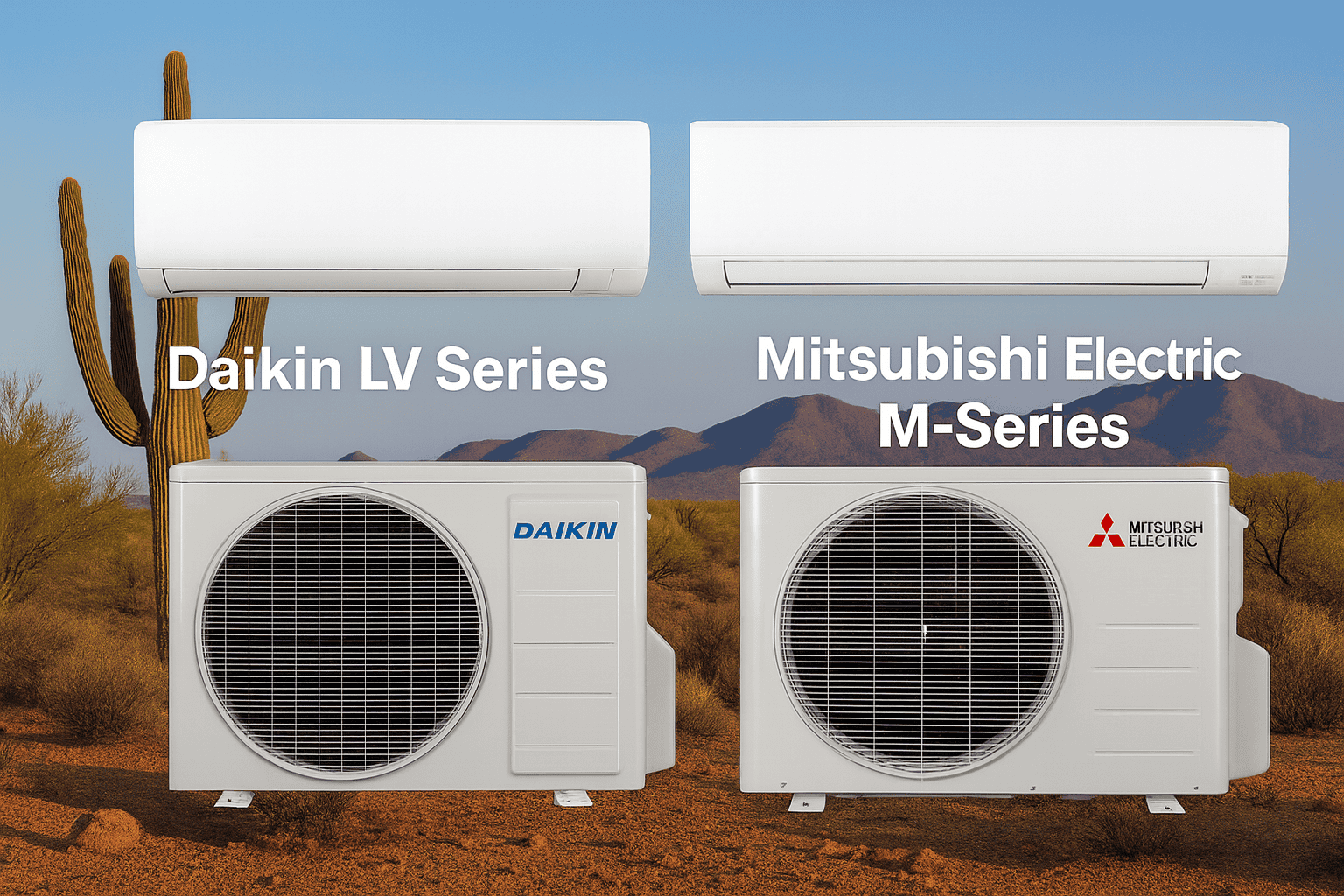
We get this question every week: Daikin or Mitsubishi? The honest answer is it depends on your space, your budget, and what you are trying to solve. Daikin is where we start most single-zone conversations. Mitsubishi is what we recommend when whole-home performance and aesthetics matter most.
Quick Answer
Daikin, Mitsubishi, and Fujitsu are the top three mini-split brands for Orange County in 2026. Daikin offers the best overall value with SEER2 ratings up to 22.5 and competitive pricing. Mitsubishi leads in premium performance with SEER2 ratings up to 33.1 and the widest range of indoor unit styles. Fujitsu excels in quiet operation and efficiency, making it ideal for bedrooms and home offices. All three brands have transitioned to R-32 refrigerant, and all three offer 10 to 12 year warranties when installed by a certified contractor like J Martin.
Why Orange County's Climate Changes the Mini Split Equation
Orange County has a hot-summer Mediterranean climate, classified as Koppen Csa, which means long dry summers with essentially no rainfall from June through October. That climate profile creates specific demands on a mini-split system that national buying guides routinely miss. A brand recommendation written for Seattle or New York does not apply here because the operating conditions are fundamentally different.
The most important factor is the inland-versus-coastal temperature split. A home in Newport Beach or Laguna Niguel might see summer afternoon highs of 78 to 82 degrees, while a home in Anaheim Hills or Yorba Linda regularly hits 95 to 102 degrees on the same day. That 10 to 15 degree difference is not a minor variation. It changes the cooling load calculation, the required SEER2 (Seasonal Energy Efficiency Ratio 2, the current federal efficiency standard for cooling) rating for meaningful energy savings, and the operating range the outdoor unit must handle without losing capacity.
Orange County averages 29 days per year above 90 degrees Fahrenheit, with most of those concentrated in inland valleys between July and October. During Santa Ana wind events, inland temperatures can spike above 105 degrees for consecutive days. A mini-split brand that performs well in moderate climates but loses cooling capacity above 100 degrees will leave an Anaheim Hills or Yorba Linda homeowner uncomfortable exactly when they need cooling the most.
All three brands we recommend, Daikin, Mitsubishi, and Fujitsu, are rated for continuous operation at outdoor temperatures up to 115 degrees Fahrenheit. That headroom matters in Orange County. Some budget brands max out at 104 or 109 degrees, which sounds adequate until a September heat wave pushes the mercury past their rated limit and the system either shuts down or runs at reduced capacity.
The Three Brands We Install and Why
J Martin is factory-trained on Daikin, Mitsubishi, and Fujitsu mini splits. That means our technicians, including Jesus, Jack, and Angel, have each completed manufacturer-specific certification programs covering proper sizing, installation, refrigerant line sets, electrical connections, and system commissioning for all three brands. Factory training is not a marketing label. It is a prerequisite for activating extended manufacturer warranties and for accessing technical support lines that general contractors cannot reach.
We chose these three brands over the dozens available because they consistently deliver the best combination of efficiency, reliability, noise performance, and long-term parts availability for Orange County's climate. We have installed hundreds of mini-split systems across the county since 2014, and the warranty claim rate on these three brands is a fraction of what we saw when we occasionally installed other manufacturers in our early years.
Daikin: Best Overall Value for Orange County
Daikin is the world's largest HVAC manufacturer, and that global scale translates directly into competitive equipment pricing and excellent parts availability in the Southern California market. When a Daikin component needs replacement, our team can typically source the part within 24 to 48 hours because Daikin maintains strong distribution networks across the western United States. That parts availability reduces downtime for homeowners and keeps repair costs lower than brands with thinner supply chains.
Daikin's residential mini-split lineup in 2026 spans several product tiers. The compact FIT series starts at 17.5 SEER2, which meets the new federal minimum and suits budget-conscious projects like single-room additions. The Entra series, running on R-32 refrigerant, delivers 18 SEER2 at a noise level of just 31 decibels, quieter than a whispered conversation. The mid-range Oterra series reaches 21 SEER2, and in our testing across Orange County installations, Oterra units maintained efficiency within 5 percent of their rated specifications even at outdoor temperatures of 95 degrees. At the top of the lineup, the DZ9VC achieves 22.5 SEER2, and the LV series delivers 19.5 SEER2 at a whisper-quiet 37 decibels for the 24,000 BTU model that covers large open living areas.
A single-zone Daikin mini split installed in Orange County typically costs $3,500 to $6,500 in 2026, making it the most accessible of the three premium brands for homeowners on a defined budget.
Daikin's warranty structure rewards working with a certified installer. Through a general contractor, you get 7 years on the compressor and 5 years on parts. Through a Daikin Comfort Pro dealer like J Martin, that extends to a full 12-year parts and compressor warranty at no additional cost. That warranty difference alone can save a homeowner $1,500 to $3,000 over the life of the system if a major component fails in years 6 through 12.
We recommend Daikin most often for single-zone applications: garage conversions, bonus rooms, master bedrooms in homes with weak central AC, and accessory dwelling units. For most Orange County homeowners looking for a straightforward, reliable mini split at a competitive price, Daikin is where we start the conversation.
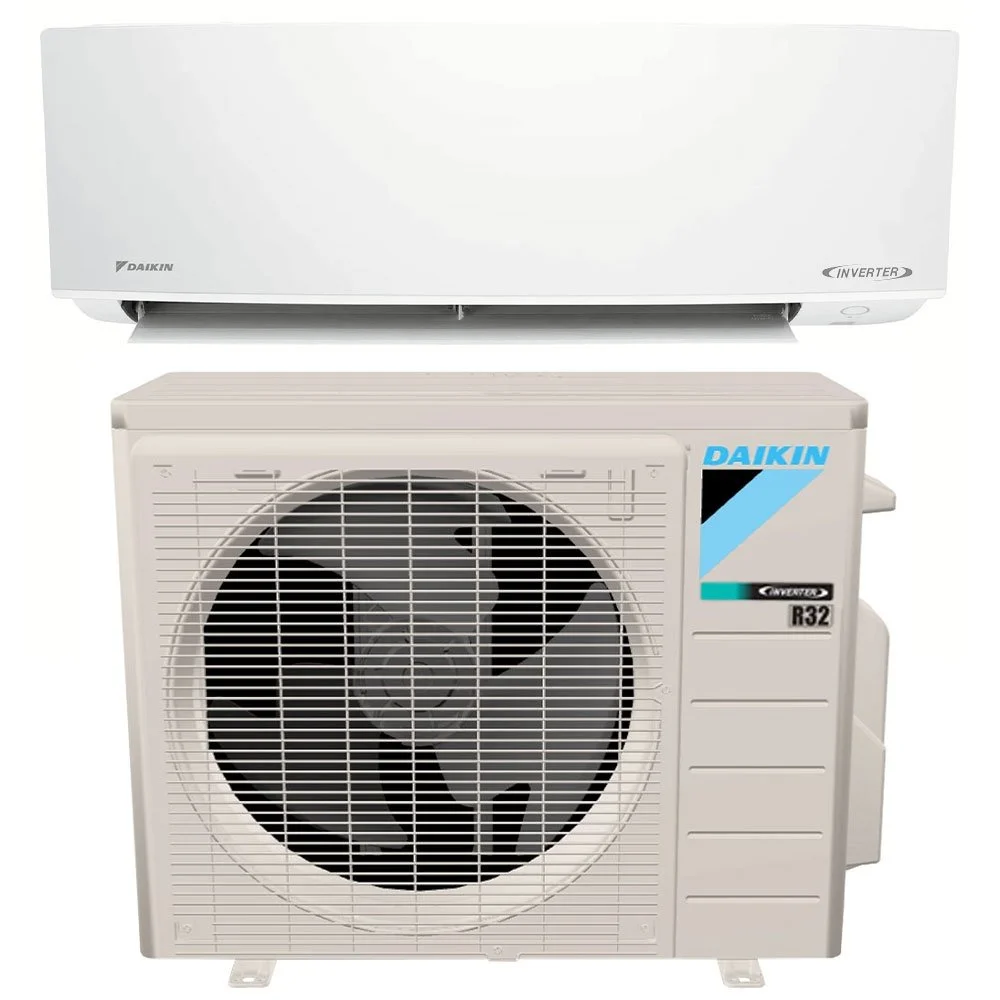
Daikin is the world's largest HVAC manufacturer, and their R-32 inverter mini split line delivers up to 22.5 SEER2 with a 12-year parts and compressor warranty when installed by a certified Daikin Comfort Pro dealer. J Martin holds that certification for every Daikin system we install across Orange County.
Mitsubishi: Premium Performance and Maximum Flexibility
Mitsubishi's mini-split technology sets the industry benchmark for efficiency, with SEER2 ratings spanning from 16 on entry-level units to a remarkable 33.1 on their premium single-zone systems. The MSZ-FS model reaches an exceptional 40.1 SEER2 with Hyper-Heat capability, though that extreme efficiency is more relevant for cold-climate heating than for Orange County's cooling-dominated needs. What matters here is that even Mitsubishi's mid-range models consistently outperform competing brands at the same price point on cooling efficiency.
Where Mitsubishi truly separates itself is in the variety of indoor unit styles. No other brand offers as many options for how the system appears and distributes air inside your home. Wall-mounted units are the standard, but Mitsubishi also offers ceiling cassettes that mount flush with the ceiling for a nearly invisible look, floor-mounted consoles that sit low on the wall beneath windows, and concealed ducted units that hide in the attic or ceiling cavity and deliver conditioned air through short duct runs. Many homes use a combination: a ceiling cassette in the open-concept living and kitchen area for even 360-degree air distribution, wall units in the bedrooms for direct control, and a ducted unit for a hallway serving multiple smaller rooms.
Mitsubishi's FH series operates at just 19 decibels on its lowest fan setting. For reference, 20 decibels is the sound level of a quiet whisper, and most people cannot consciously perceive sound below 25 decibels. In a bedroom or home office, that near-silence is a meaningful quality-of-life feature that distinguishes Mitsubishi from brands running at 30 to 35 decibels.
The warranty structure mirrors Daikin's general framework: 7 years on the compressor and 5 years on parts through a standard installation. Through a Mitsubishi Diamond Contractor, which J Martin holds credentials for, that extends to a 12-year parts and compressor warranty. The Diamond Contractor program also provides access to Mitsubishi's advanced technical support and priority parts fulfillment.
We recommend Mitsubishi for homeowners planning multi-zone whole-home mini-split systems, for homes where aesthetics and unit style variety matter (particularly in modern or recently remodeled interiors), and for any project where the client wants the highest available efficiency regardless of budget. A single-zone Mitsubishi installation in Orange County typically runs $4,000 to $8,000 depending on the model tier and installation complexity, with multi-zone systems ranging from $10,000 to $25,000 or more for four to eight zones.
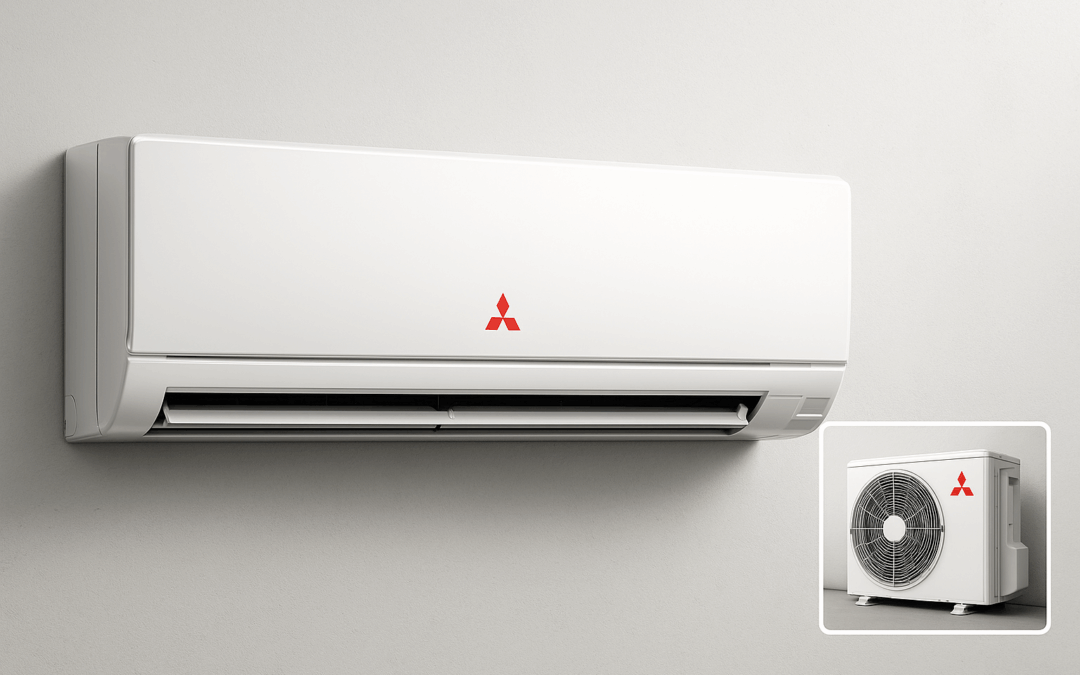
Mitsubishi Electric mini splits book out fast in Orange County during summer. If you are planning a whole-home ductless system for 2026, now is the time to schedule your in-home assessment before the installation calendar fills. Call J Martin at (714) 462-4686.
Fujitsu: Quiet Efficiency for Bedrooms and Home Offices
Fujitsu's AIRSTAGE Halcyon series has built a strong reputation among HVAC professionals for combining high efficiency with exceptionally quiet operation, a combination that makes Fujitsu our go-to recommendation for bedrooms, nurseries, home offices, and any space where noise sensitivity is the primary concern.
The numbers back this up. Fujitsu's 9,000 BTU Halcyon LZAS1 model achieves a 33.1 SEER2 rating, matching Mitsubishi's best. The 12,000 BTU AIRSTAGE LZBS1 reaches 29.4 SEER2 with a 12.9 HSPF (Heating Seasonal Performance Factor) rating, the highest in its BTU class. Mid-range Fujitsu models sit in the 21 to 26 SEER2 range, and even the entry-level single-zone systems deliver 18 to 20 SEER2, well above the federal minimum of 14.3 SEER2 for split systems.
Fujitsu has fully transitioned its new product lines to R-32 refrigerant, which the company describes as offering better heat transfer efficiency with lower environmental impact than the R-410A it replaces. In our experience installing Fujitsu R-32 systems across Orange County over the past two years, the performance improvement is noticeable: slightly faster cooling times and marginally lower energy consumption compared to equivalent R-410A models, consistent with the industry data showing R-32 delivers up to 10 percent more cooling capacity.
Fujitsu's warranty through a standard installation is 7 years on the compressor and 5 years on parts. Through a Fujitsu Elite contractor, which J Martin qualifies as, coverage extends to 10 years on both parts and compressors. While shorter than the 12-year programs offered by Daikin and Mitsubishi through their top-tier dealer networks, Fujitsu's 10-year coverage still significantly exceeds the industry standard and covers the period when most component failures occur.
We recommend Fujitsu for single-zone installations in noise-sensitive rooms, for homeowners who prioritize efficiency per dollar, and for projects where the budget needs to stay moderate without sacrificing performance. A single-zone Fujitsu installation in Orange County typically costs $4,000 to $7,000 in 2026.
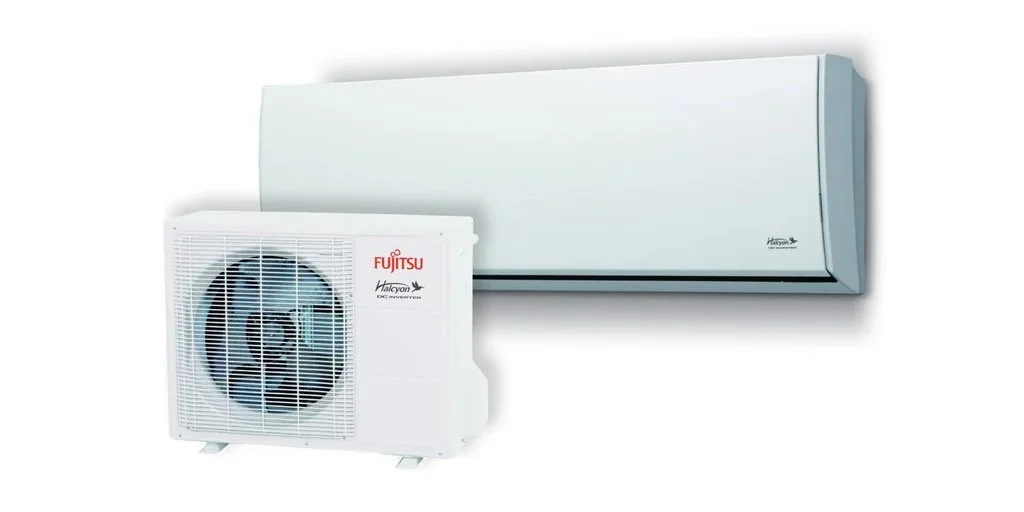
The Fujitsu Halcyon DC Inverter series delivers up to 33.1 SEER2 with some of the quietest operation in its class, as low as 20 decibels on low fan. J Martin holds Fujitsu Elite contractor credentials, which means every Halcyon system we install qualifies for the full 10-year parts and compressor warranty at no additional cost.
How the Top Three Mini Split Brands Compare
The following table summarizes the key specifications and strengths of each brand as of 2026, based on current product lines and our installation experience across Orange County.
2026 Mini Split Brand Comparison for Orange County Homes
| Specification | Daikin | Mitsubishi | Fujitsu |
|---|---|---|---|
| SEER2 Range | 17.5 to 22.5 | 16 to 33.1 | 18 to 33.1 |
| Noise Level (Indoor, Low Fan) | 31 to 37 dB | 19 to 35 dB | 20 to 34 dB |
| Max Operating Temperature | 115°F | 115°F | 115°F |
| Refrigerant (2026 Models) | R-32 | R-32 / R-454B | R-32 |
| Warranty (Certified Installer) | 12-year parts and compressor | 12-year parts and compressor | 10-year parts and compressor |
| Warranty (Standard Install) | 7-year compressor, 5-year parts | 7-year compressor, 5-year parts | 7-year compressor, 5-year parts |
| Indoor Unit Styles | Wall mount, ducted | Wall, ceiling cassette, floor, ducted | Wall mount, ducted, floor |
| Single-Zone Installed Cost (OC) | $3,500 to $6,500 | $4,000 to $8,000 | $3,500 to $7,000 |
| Best For | Value, single-zone, garage conversions | Multi-zone, whole-home, aesthetics | Bedrooms, quiet rooms, efficiency per dollar |
All three brands, Daikin, Mitsubishi, and Fujitsu, are rated for continuous operation at outdoor temperatures up to 115 degrees Fahrenheit, which covers even the most extreme Orange County heat waves.
The table reveals that Mitsubishi offers the widest SEER2 range and the most indoor unit style options, but Daikin and Fujitsu close the gap significantly on efficiency while often coming in at a lower installed cost. For most single-zone projects in Orange County, the practical performance difference between a 22 SEER2 Daikin and a 25 SEER2 Mitsubishi translates to roughly $40 to $80 per year in electricity savings on a system cooling a single room. That savings takes years to offset the higher equipment cost, which is why we often recommend Daikin for single-zone projects where budget matters and Mitsubishi for multi-zone systems where the efficiency gains compound across four to eight zones.
What About LG, Carrier, and DIY Brands?
We are occasionally asked about brands beyond our core three, and it is a fair question. LG, Carrier, and a growing number of DIY-oriented brands all sell mini-split systems in Orange County, and some of them offer impressive specifications on paper.
LG mini splits deliver SEER2 ratings in the 18 to 21.5 range, which is competitive with Daikin's mid-tier models. LG's standout feature is smart home integration: their systems offer Wi-Fi control, compatibility with major smart home platforms, and a polished app experience. The limitation in Orange County is installer ecosystem depth. LG does not have the same density of factory-certified mini-split installers in our service area as Daikin, Mitsubishi, or Fujitsu, which means warranty coverage and technical support access can be inconsistent depending on who installs the system.
Carrier is a legacy HVAC brand with strong name recognition, and their Infinity series mini split reaches an impressive 35.1 SEER2. Their Performance series at 26 SEER2 and Comfort series at 22.4 SEER2 are solid options. However, Carrier's core strength is central HVAC systems, not ductless. Their mini-split product line is narrower than Daikin's or Mitsubishi's, and we find that their parts distribution network for ductless components in Southern California is not as fast as the three brands we specialize in.
DIY mini-split brands like MrCool, Senville, and Pioneer have gained visibility through online retailers, often at significantly lower price points than professionally installed systems. We understand the appeal of saving money, but we consistently advise caution. These systems require proper refrigerant line sizing, vacuum pulling, leak testing, and electrical work that, if done incorrectly, can void the manufacturer warranty and create safety hazards. The refrigerant in modern mini splits, whether R-32 or R-410A, requires EPA Section 608 certification to handle legally. Improper installation is also the leading cause of premature compressor failure, which is the single most expensive mini-split repair at $1,800 to $3,200 for the compressor alone.
If another brand is genuinely the right fit for a homeowner's specific situation, we will say so. Our income comes from installation labor, not equipment markups, so we have no financial incentive to steer you toward one brand over another. We recommend Daikin, Mitsubishi, and Fujitsu because those are the brands we know inside and out, and that expertise translates to faster installations, fewer callbacks, and stronger warranty protection.
The R-32 Refrigerant Shift and What It Means for Your 2026 Purchase
Starting January 1, 2026, any newly manufactured residential split system air conditioner or heat pump sold in the United States must use a refrigerant with a Global Warming Potential (GWP) below 700. This effectively ends the era of R-410A, the refrigerant that has been standard in HVAC systems since the early 2000s, and transitions the industry to lower-impact alternatives. For mini splits, the primary replacement is R-32.
R-32 is not just an environmental upgrade. Performance testing shows that R-32 systems deliver up to 10 percent more cooling capacity and 9 percent better energy efficiency than identical R-410A systems. In heating mode, R-32 produces a 14 percent higher coefficient of performance, meaning a mini split running R-32 can do the same work while drawing less electricity. For Orange County homeowners, this translates to lower monthly Southern California Edison bills and a system that reaches your set temperature slightly faster.
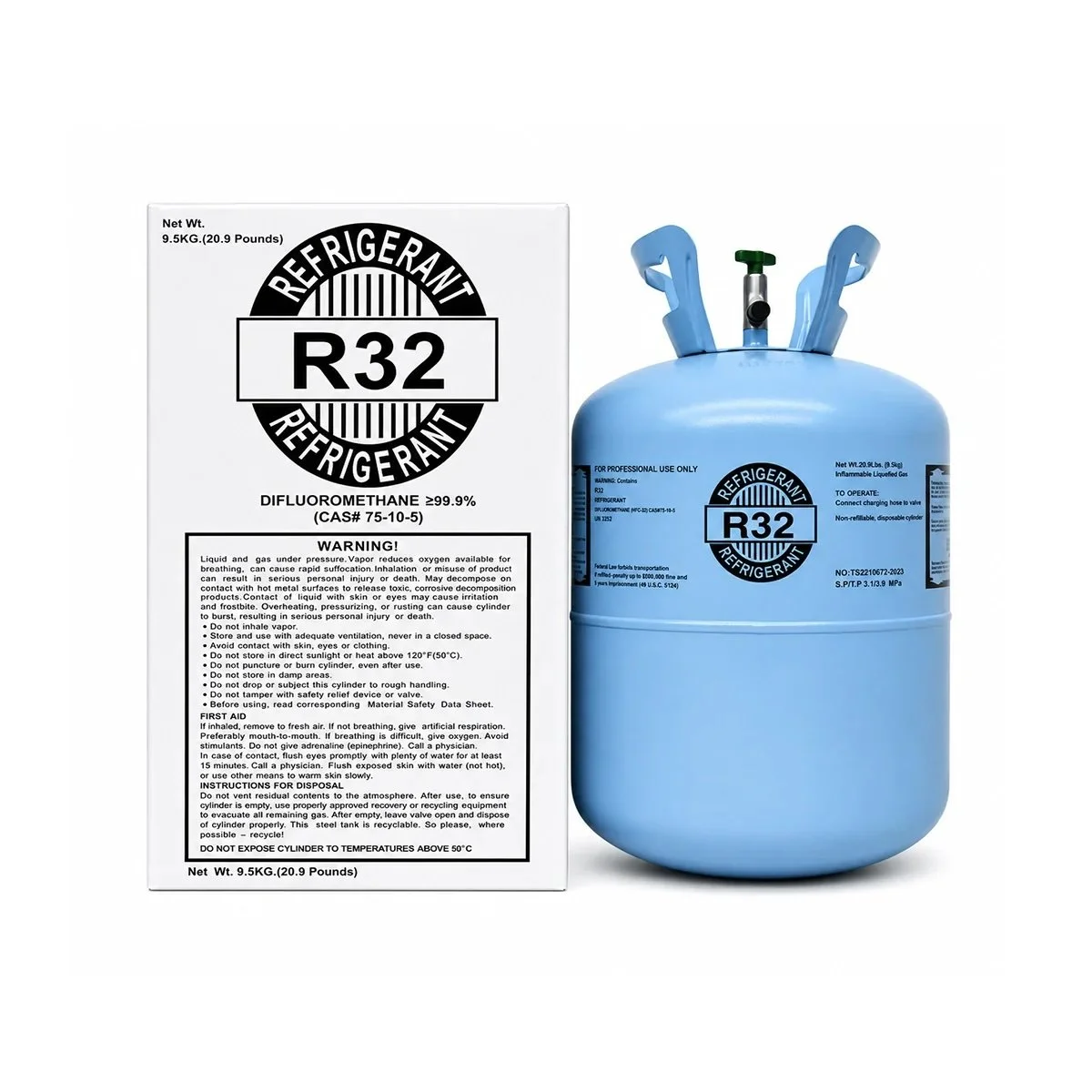
California's 2026 refrigerant requirement mandates that new residential heat pump systems use refrigerants with a global warming potential of 700 or lower. R-32 meets that standard. R-410A does not. If your contractor is not installing R-32 systems, they are not keeping up with California code. Call J Martin at (714) 462-4686.
R-32 carries an A2L safety classification, which means it is mildly flammable with a low burning velocity. The practical risk is extremely low: A2L refrigerants require a specific ignition source and a concentration well above what a typical leak would produce in a residential room. Modern mini splits include built-in leak detection sensors as a safeguard. In the thousands of R-32 systems installed across the industry over the past several years, residential safety incidents have been essentially nonexistent.
All three brands we recommend have fully transitioned their 2026 product lines to R-32 for mini-split systems. If you are purchasing a mini split in 2026, you will receive an R-32 system regardless of which of these three brands you choose. Existing R-410A systems already installed in your home can continue operating and being serviced indefinitely. The R-410A phase-out affects new manufacturing, not existing equipment.
Rebates and Incentives for Mini Splits in Orange County in 2026
The rebate landscape for mini splits shifted significantly entering 2026. The federal Section 25C Energy Efficient Home Improvement Credit, which provided a tax credit of 30 percent of the installed cost up to $2,000 for qualifying heat pumps, expired on December 31, 2025. That credit is no longer available for systems installed in 2026 or later.
The TECH Clean California program offers up to $1,000 per qualifying mini-split heat pump system, with a maximum of two incentivized systems per home for a total of $2,000 in potential rebates.
At the state level, the TECH Clean California program continues to offer incentives. Single-family homeowners can receive up to $1,000 per qualifying heat pump HVAC system, with a maximum of two systems per home for up to $2,000 total. However, as of February 2026, the federal HEEHRA (Home Energy Efficiency and Electrification Rebate Act) rebates administered through TECH Clean California are fully reserved statewide for single-family projects. New applicants are placed on a waitlist, and availability depends on funding replenishment or project cancellations.
Southern California Edison also offers the Home Performance Plus program, which provides rebates of approximately $1,145 per ton for ductless mini-split heat pumps for qualifying households in designated communities. Eligibility depends on location and income criteria, and our office team can help determine whether your home qualifies.
Our office staff, Kathryn and Alexis, walks every customer through available rebates and incentive programs during the quoting process. The landscape changes frequently, and programs that are fully reserved today may reopen with new funding. We track these programs actively so homeowners do not have to. For the latest on Orange County HVAC incentives, our 2026 California HVAC rebates and tax credits guide covers every program in detail.
How to Choose the Right Mini Split Brand for Your Home
Choosing between Daikin, Mitsubishi, and Fujitsu comes down to four factors: your budget, the number of rooms you need to condition, your sensitivity to noise, and how much the system's appearance matters in your space.
If your project is a single room, whether that is a garage conversion, a sunroom, a bonus room over the garage, or a master bedroom that your central AC struggles to keep comfortable, Daikin typically offers the best value. You get a reliable, efficient system at the most competitive installed price, backed by a 12-year warranty through a certified installer like J Martin. For most single-zone projects in Orange County, Daikin is the pragmatic choice.
If you are conditioning multiple rooms or replacing central AC entirely with a multi-zone mini-split system, Mitsubishi's wider product range and variety of indoor unit styles give you more design flexibility. A four-zone Mitsubishi system with a ceiling cassette in the living room, wall units in the bedrooms, and a ducted unit serving the hallway creates a whole-home comfort system that looks intentional rather than retrofitted.
If noise is your deciding factor, whether for a home office where you take calls, a nursery, or a bedroom where any mechanical sound disrupts sleep, Fujitsu and Mitsubishi both deliver near-silent operation at 19 to 20 decibels on their lowest settings. Fujitsu tends to offer slightly lower pricing than Mitsubishi at comparable noise levels, which makes it the value pick for noise-sensitive single-zone applications.
In all cases, the installer matters as much as the brand. A perfectly engineered Mitsubishi system installed by a technician who does not pull a proper vacuum on the refrigerant lines will underperform a mid-range Daikin installed correctly. This is why we emphasize factory training and certified installation: the equipment only delivers its rated performance when the installation meets the manufacturer's specifications. We offer free in-home consultations where our team evaluates your space, discusses your priorities, and recommends the brand and configuration that fits, without pressure and with full transparency on pricing. You can see our complete mini-split installation cost breakdown for Orange County to understand what drives the final number.
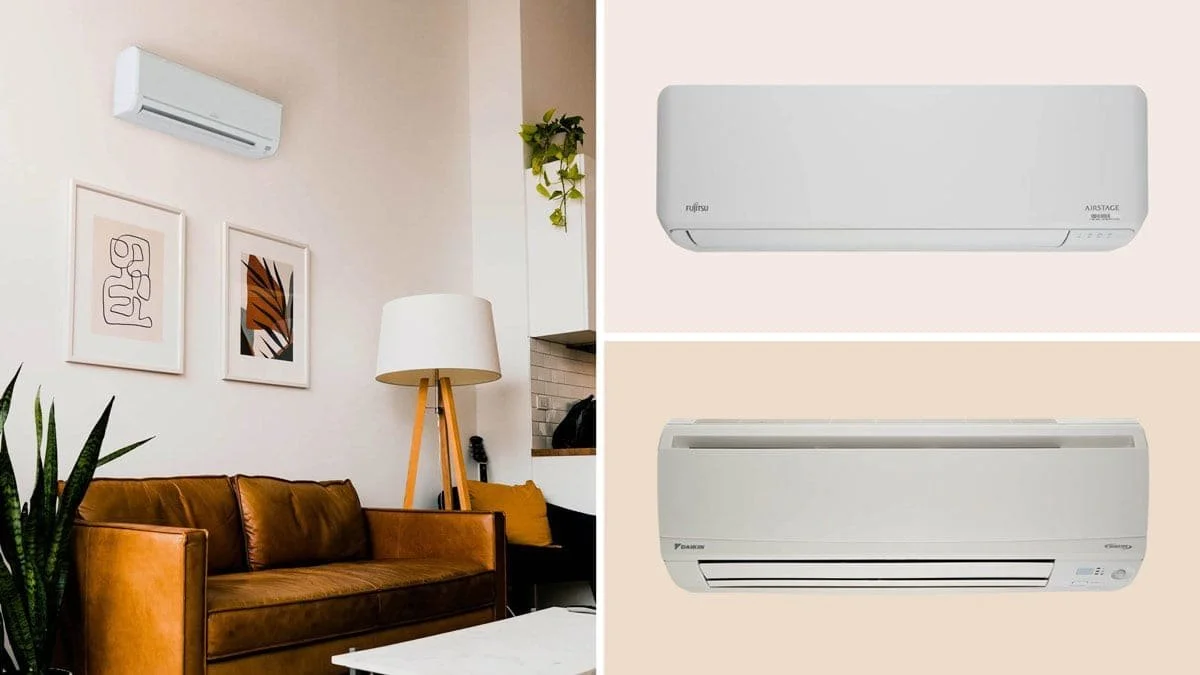
The most common thing homeowners tell us after their first summer with a mini split is that they forgot it was there. That is exactly how it should work. A Fujitsu Airstage or Daikin unit sized correctly for your living space runs quietly in the background and keeps the room comfortable without ever demanding your attention.
Frequently Asked Questions
What is the best mini split brand for hot climates like Orange County?
Daikin, Mitsubishi, and Fujitsu are the three best mini-split brands for hot climates like Orange County. All three are rated for continuous operation at outdoor temperatures up to 115 degrees Fahrenheit, covering even extreme heat waves. Daikin offers the best overall value with SEER2 ratings up to 22.5, Mitsubishi leads in premium efficiency up to 33.1 SEER2, and Fujitsu delivers strong efficiency with exceptionally quiet operation.
How much does a mini split cost to install in Orange County in 2026?
A single-zone mini-split installation in Orange County costs $4,000 to $9,000 in 2026, depending on the brand, model tier, and installation complexity. Multi-zone systems covering two to four rooms typically range from $9,000 to $40,000, while whole-home systems with five or more zones can exceed $25,000. California installation costs run approximately 35 percent above the national average due to higher labor rates and stricter regulatory requirements.
Are mini splits more efficient than central AC?
Yes. Mini splits are significantly more efficient than central air conditioning. Central AC systems typically achieve SEER2 ratings of 13 to 21, while modern mini splits range from 16 to 33 SEER2. Mini splits also eliminate the energy losses associated with ductwork, which can account for 20 to 30 percent of cooling energy in a central system. For a detailed comparison, see our central AC vs. ductless mini split cost comparison.
Do mini splits work for whole-house cooling in Orange County?
Mini splits can effectively cool an entire home in Orange County using a multi-zone configuration. A single outdoor condenser unit can support two to eight indoor units, each controlled independently, allowing different temperatures in different rooms. Mitsubishi offers the widest range of indoor unit styles for whole-home applications, including ceiling cassettes, wall mounts, floor consoles, and concealed ducted units that can serve multiple rooms through short duct runs.
What SEER2 rating should I look for in a mini split?
For Orange County homes, a SEER2 rating of 20 or higher provides meaningful energy savings compared to the federal minimum of 14.3. For a primary living space or whole-home system you plan to use for a decade or more, 20 to 26 SEER2 is a strong target that balances efficiency gains with equipment cost. Ratings above 26 SEER2 offer additional savings but with diminishing returns on the upfront investment for most residential applications.
Is the federal tax credit still available for mini splits in 2026?
No. The federal Section 25C Energy Efficient Home Improvement Credit expired on December 31, 2025, and is no longer available for mini-split installations completed in 2026. California state rebates through the TECH Clean California program offer up to $1,000 per qualifying heat pump system, though HEEHRA funding was fully reserved statewide as of February 2026. Southern California Edison may offer additional utility rebates depending on your location and eligibility.
How long do mini splits last in Orange County?
A properly installed and maintained mini split typically lasts 15 to 20 years in Orange County. The coastal climate is easier on outdoor units than extreme heat or cold regions, potentially extending lifespan. Regular maintenance, including annual coil cleaning and refrigerant level checks, is the single biggest factor in reaching the upper end of that range. Our complete guide to ductless mini splits in Orange County covers maintenance schedules in detail.
Ready to Find the Right Mini Split Brand for Your Home?
The best mini split brand is the one that matches your home's needs, your budget, and your priorities, installed by a team that knows that specific brand inside and out. Whether Daikin, Mitsubishi, or Fujitsu is the right fit depends on your room count, your noise tolerance, and how you plan to use the system. We sort that out during a free in-home consultation where we measure the space, evaluate your electrical panel, discuss your goals, and provide an upfront quote with no surprises.
J Martin Indoor Air Quality has served over 5,000 Orange County families since 2014. We are factory-trained on all three mini-split brands we recommend, licensed and insured under CA Contractor License CL#998956, and maintain a 4.97-star rating across thousands of reviews. When you call, you reach Kathryn or Alexis at our Anaheim office, not a national call center. When a technician arrives, it is Jesus, Jack, Angel, Kevin, or another full-time J Martin crew member, not a subcontractor.
Call us at (714) 462-4686 for same-day consultations, or request a free in-home estimate online.