
Air Purifier vs HVAC Filter: Which Is Better for Orange County Allergies in 2026?
Posted on August 27, 2026
For most Orange County homes, a properly rated HVAC filter (MERV 11 to 13) handles the majority of allergy triggers at $80 to $200 per year, while a standalone HEPA air purifier ($200 to $1,000 upfront plus $40 to $100 in annual filter costs) adds targeted protection for bedrooms and high-sensitivity households. The right choice depends on your specific symptoms, your home's HVAC system design, and whether you are dealing with seasonal pollen, year-round dust, pet dander, or all three.
Orange County's allergy landscape is uniquely challenging. Tree pollen from oaks and olives peaks March through April, Bermuda grass pollen rises May through June, and weed allergens like ragweed and sagebrush linger into November. Add Santa Ana wind events that drive fine dust and particulate matter indoors, and you have a region where proper HVAC maintenance and filtration is not optional for allergy sufferers.
When Angel and Kevin installed a whole-house media filter cabinet paired with a bedroom HEPA unit in a Mission Viejo home last spring, the homeowner reported a noticeable difference within 48 hours. She had been running a single portable purifier in the living room for two years but never addressed the HVAC filter side. That combination approach is what we recommend for most families dealing with moderate to severe allergies, and it costs far less than most people assume.
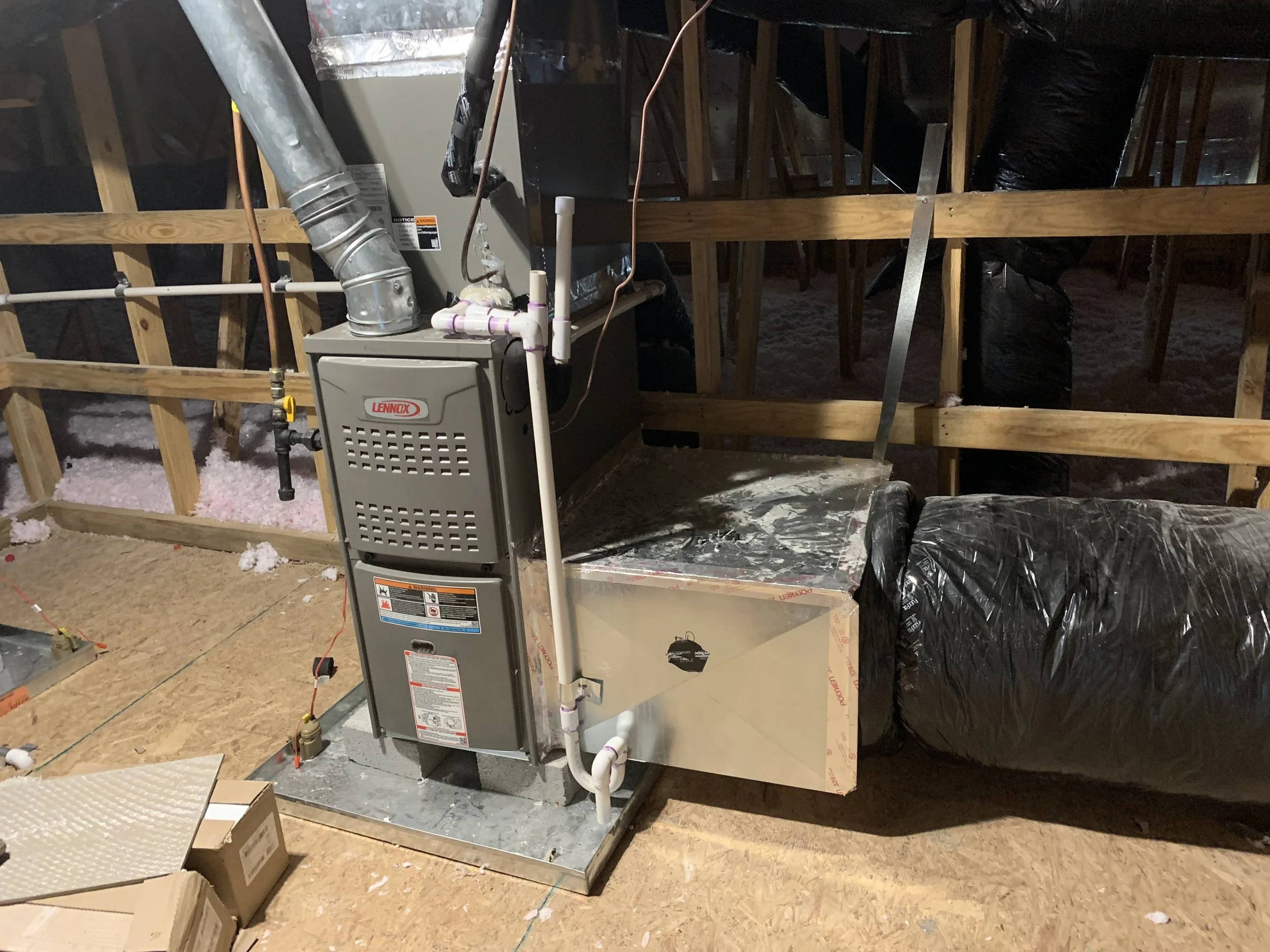
A properly installed Lennox furnace and air handler like this one processes every cubic foot of air in your home multiple times a day. The filter protecting it determines how much pollen, dust, and dander your family is breathing.
Quick Answer
A MERV 11 to 13 HVAC filter costs $80 to $200 per year and captures 75% to 90% of common allergy particles (pollen, dust mites, pet dander, mold spores) across your entire home. A HEPA air purifier costs $200 to $1,000 upfront plus $40 to $100 per year in replacement filters and removes 99.97% of particles but only in the room where it operates. For most Orange County allergy sufferers, upgrading the HVAC filter is the higher-impact first step. Adding a bedroom HEPA unit provides the most complete protection.
How HVAC Filters Control Allergens Across Your Entire Home
Your central HVAC system already moves all the air in your home through a filter multiple times per day. A typical residential system cycles the full air volume six to eight times in a 24-hour period. That means every particle floating in your living room, bedroom, and hallway passes through the HVAC filter repeatedly. The question is whether that filter is actually capturing the particles that trigger your symptoms.
MERV (Minimum Efficiency Reporting Value) ratings measure a filter's ability to capture particles of specific sizes. For allergy relief, the critical range is 1.0 to 10.0 microns, which covers pollen grains (10 to 100 microns), mold spores (2 to 20 microns), dust mite debris (1 to 10 microns), and pet dander (2.5 to 10 microns). A MERV 8 filter, the most common filter sold at hardware stores, captures about 70% of particles in the 3.0 to 10.0 micron range but misses the smaller end of mold spores and fine dander.
A MERV 11 filter captures 65% to 79% of particles between 1.0 and 3.0 microns. A MERV 13 filter captures 75% to 85% of particles as small as 0.3 microns and up to 90% of particles in the 1.0 to 3.0 micron range. For most allergy sufferers in Orange County, MERV 13 is the practical ceiling because filters rated MERV 14 and above create enough airflow restriction to damage standard residential HVAC systems.
The key advantage of HVAC filtration is whole-home coverage. Every room connected to your duct system benefits every time the blower runs. You do not need a separate device in each room, and there is no additional noise, no counter space taken up, and no extra electrical draw beyond what your system already uses. For a household where allergies affect multiple family members across multiple rooms, upgrading the HVAC filter delivers the broadest improvement for the lowest ongoing cost.
A MERV 13 HVAC filter captures up to 90% of particles between 1.0 and 3.0 microns, covering pollen, mold spores, dust mite allergens, and pet dander, across every room in your home for $80 to $200 per year.
How Air Purifiers Work and What They Actually Remove
A standalone air purifier sits in a single room and draws air through its own filtration system independently of your HVAC. The gold standard for allergy relief is a True HEPA filter, which removes 99.97% of particles at 0.3 microns. That is significantly more effective at capturing the smallest allergenic particles than any filter you can safely run in a residential HVAC system.
The trade-off is coverage. A portable HEPA air purifier rated for a 400-square-foot room protects that room and only that room. Air in your hallway, kitchen, and other bedrooms remains unfiltered unless you buy additional units. For a 2,000-square-foot Orange County home, covering the main living spaces with portable purifiers could require three to four units at $200 to $1,000 each.
Beyond HEPA portables, whole-house air purifiers integrate directly into your ductwork. These systems range from extended media cabinets ($500 to $1,000 installed) to electronic air cleaners ($600 to $2,400 installed) to full whole-house HEPA bypass systems ($1,000 to $4,000 installed). A whole-house system provides both the superior filtration efficiency and the whole-home coverage, but the upfront cost is substantially higher than either a filter upgrade or a portable unit.
UV-C germicidal lights are sometimes marketed as air purifiers, but they serve a different function. UV-C lights installed inside your HVAC system are effective at killing bacteria and mold on the evaporator coil surface, but the CDC classifies UV germicidal irradiation as an adjunct measure that cannot replace particulate filtration. If your primary concern is pollen, dust, and dander, a UV light alone will not address those allergens.
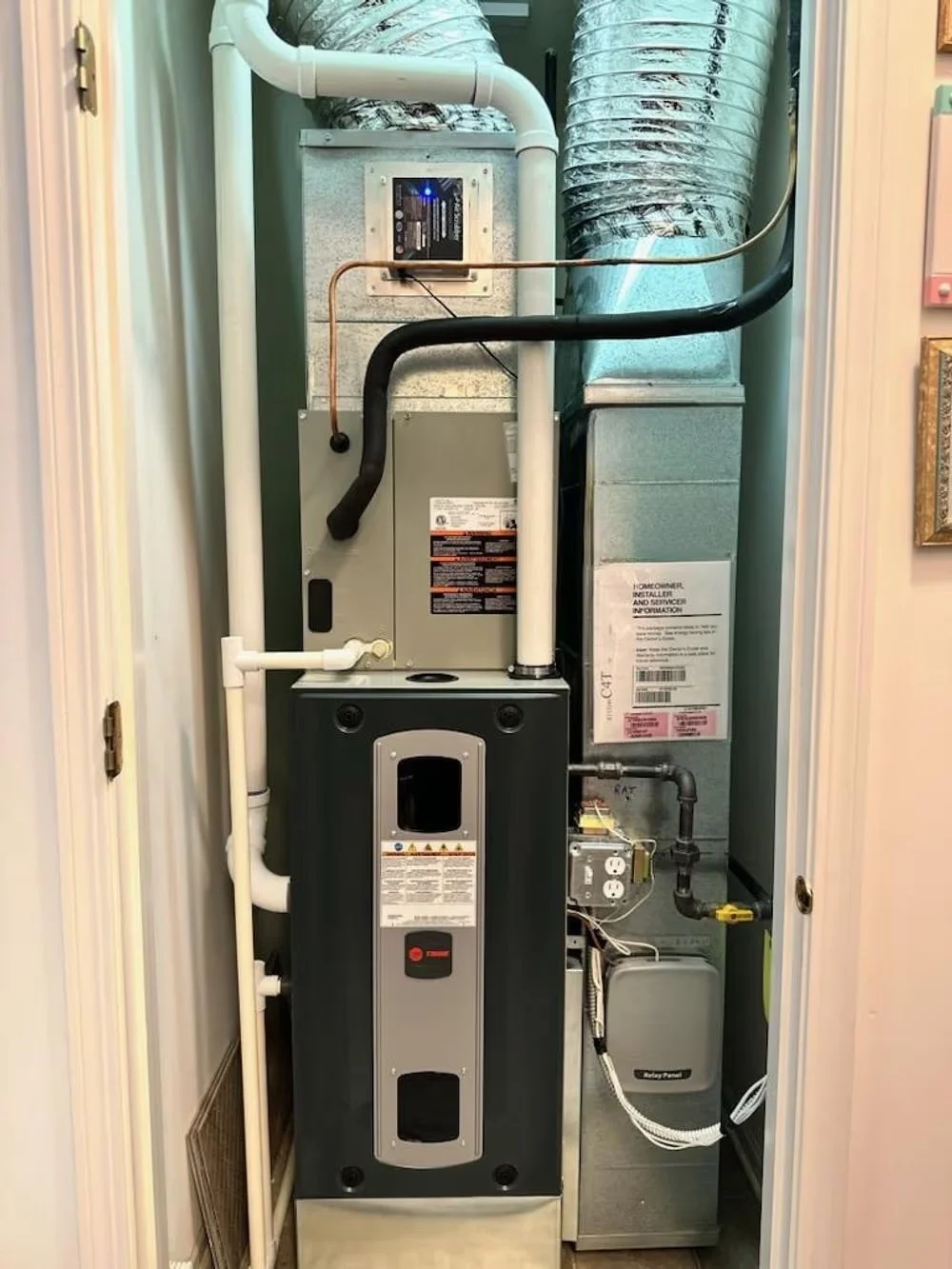
A UV-C germicidal light installed inside the air handler works on your coil surface continuously, reducing mold growth and bacterial buildup before air reaches your ducts. J Martin installs and services these as part of a complete whole-home IAQ approach.
Why Orange County Allergies Demand Better Filtration Than Most Regions
Southern California's mild climate means allergy season never fully ends. In most of the country, a hard freeze kills pollen production for four to five months. In Orange County, some allergen source is active in every calendar month. Oak and olive tree pollen dominates March and April. Bermuda grass and ryegrass pollen rise through May and June. Ragweed and sagebrush carry weed pollen from late summer into November. Mold spores thrive year-round in coastal humidity, particularly in homes near Laguna Beach, Newport Beach, and Dana Point where marine moisture keeps relative humidity elevated.
Then there are Santa Ana wind events. When hot, dry winds blow from the inland deserts toward the coast, they lift fine particulate matter, dust, and (in recent years) wildfire ash into the air. The Orange County Health Care Agency issues air quality advisories during these events and specifically recommends running air conditioning on recirculate mode and using air purifiers. Homes in Anaheim Hills, Yorba Linda, and the foothill communities experience the worst concentrations because they sit directly in the path of these wind corridors.
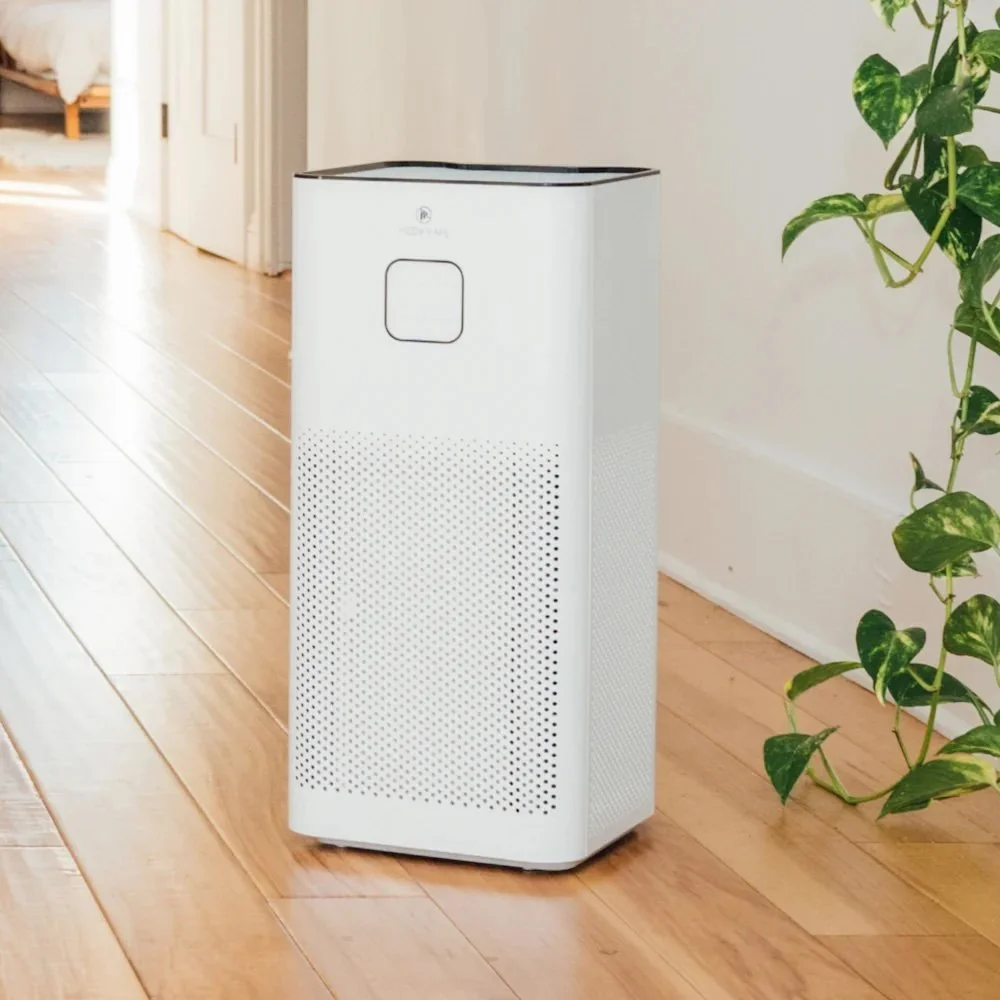
Orange County allergy season doesn't wait. A portable HEPA air purifier removes 99.97% of pollen, dust, and dander in the room where you need it most. Not sure which unit is right for your space? Call J Martin at (714) 462-4686.
For homeowners in these areas, a basic MERV 8 filter simply cannot keep up during Santa Ana events. The particle load overwhelms a low-rated filter within days, and the fine dust passes straight through to circulate inside the home. This is where either upgrading to MERV 13 or adding a HEPA purifier (or both) becomes a health decision, not just a comfort preference.
Orange County's year-round pollen cycle, coastal mold conditions, and Santa Ana wind dust events mean that allergy sufferers here need higher-grade filtration than homeowners in most other U.S. regions.
Air Purifier vs HVAC Filter: The Full 2026 Cost and Performance Comparison
The table below compares the most common filtration options available to Orange County homeowners in 2026, including upfront cost, annual operating cost, particle removal effectiveness, and coverage area. All costs reflect current California pricing including installation where applicable.
2026 Air Purifier vs HVAC Filter Comparison for Orange County Homes
| Filtration Option | Upfront Cost | Annual Operating Cost | Particle Removal (1–3 Microns) | Coverage |
|---|---|---|---|---|
| MERV 8 HVAC filter (1-inch, standard) | $0 (already installed) | $40 to $80 (4 replacements) | 20% to 35% | Whole home |
| MERV 11 HVAC filter (1-inch, upgrade) | $0 (drop-in replacement) | $60 to $120 (4 replacements) | 65% to 79% | Whole home |
| MERV 13 HVAC filter (4-inch media cabinet) | $200 to $400 (cabinet install) | $80 to $150 (1–2 replacements) | 75% to 90% | Whole home |
| Portable HEPA air purifier (single room) | $200 to $1,000 per unit | $40 to $100 per unit (filter + electricity) | 99.97% | One room (300–500 sq ft) |
| Whole-house HEPA bypass system | $1,000 to $4,000 installed | $100 to $200 (filter + maintenance) | 99.97% | Whole home |
| Electronic air cleaner (in-duct) | $600 to $2,400 installed | $50 to $100 (cleaning + cells) | 85% to 95% | Whole home |
The most striking pattern in this comparison is the gap between cost and coverage. A MERV 13 upgrade in a 4-inch media cabinet delivers 75% to 90% particle removal across your entire home for roughly $200 to $400 upfront and $80 to $150 per year. A single portable HEPA unit achieves 99.97% removal but only protects the room it sits in. For a family with three bedrooms and a living room, matching that whole-home coverage with portables would cost $800 to $4,000 upfront and $160 to $400 per year in filter replacements.
When Upgrading Your HVAC Filter Is Enough
For the majority of Orange County households dealing with seasonal allergies, upgrading the HVAC filter to MERV 11 or MERV 13 is the single most cost-effective improvement. This approach works best when your allergy symptoms are mild to moderate (sneezing, itchy eyes, congestion that responds to antihistamines), when your symptoms occur throughout the house rather than in one specific room, when you have a newer HVAC system (built after 2000) with a variable-speed or multi-speed blower motor, and when nobody in the household has severe asthma or immunocompromised conditions.
We recommend the 4-inch media cabinet approach over 1-inch high-MERV filters for two reasons. First, a 4-inch MERV 13 filter creates significantly less airflow restriction than a 1-inch MERV 13 because the pleated surface area is roughly four times larger. Second, the 4-inch filter lasts six to twelve months between replacements instead of one to three months for a 1-inch, which means fewer trips to the hardware store and more consistent performance. The cabinet itself costs $200 to $400 installed and fits into most existing duct systems with minimal modification.
If you already have a properly selected HVAC filter and your allergies are manageable, you may not need any additional equipment. The most common mistake we see is homeowners buying expensive portable purifiers while running a cheap fiberglass filter (MERV 1 to 4) in their HVAC system. That is like locking your front door while leaving the garage wide open.
When You Need an Air Purifier (or Both)
There are specific scenarios where a HEPA air purifier adds meaningful value beyond what even a MERV 13 HVAC filter can provide. The first is severe asthma or allergies that do not respond adequately to medication and standard filtration. When a family member's symptoms are severe enough to affect sleep, work, or daily function, the 99.97% capture rate of a True HEPA filter in the bedroom creates a clean-air sanctuary for the eight hours of sleep where the respiratory system recovers.
The second scenario is pet ownership in combination with allergies. Cat and dog dander particles range from 2.5 to 10 microns, and a MERV 13 filter captures most of them. But pets also shed allergens continuously, and the concentration near the animal (or in the room where the pet sleeps) can overwhelm whole-house filtration. A portable HEPA in the bedroom where a pet-allergic family member sleeps creates a buffer zone.
The third scenario is homes without central ductwork. Older Orange County homes, particularly those built before 1970 in Santa Ana, Fullerton, and parts of Anaheim, may rely on wall heaters or window units with no central air handler to filter through. In these homes, portable HEPA purifiers are the only filtration option short of a full HVAC retrofit.
The fourth scenario is Santa Ana wind events and wildfire smoke. During active wind events, outdoor PM2.5 levels in Orange County can spike to unhealthy ranges within hours. A MERV 13 filter helps significantly, but adding a HEPA purifier in the room where your family spends the most time provides an extra layer of protection when particle loads are extreme. We tell homeowners to think of the HEPA as their "emergency mode" device during these events.
If your AC is struggling during these events or you want to make sure your system can handle the extra load, our team can assess your setup. Call us at (714) 462-4686 for a same-day air quality consultation.
What We Recommend for Orange County Homes After 10 Years of IAQ Work
After more than a decade of installing, maintaining, and troubleshooting indoor air quality systems across Orange County, our standard recommendation for allergy sufferers is a two-layer approach. Layer one is a 4-inch MERV 13 media filter cabinet integrated into the existing HVAC system. Layer two is a single high-quality HEPA portable in the master bedroom. This combination delivers whole-home filtration (75% to 90% of allergens removed from all circulating air) plus near-perfect filtration (99.97%) in the room where you spend eight hours sleeping and breathing deeply.
The total cost for this setup typically runs $400 to $800 for the media cabinet installation plus a quality bedroom purifier. Annual operating costs are $120 to $250 for both filter replacements combined. Compare that to a whole-house HEPA bypass system at $1,000 to $4,000 installed, and the two-layer approach delivers 90% of the benefit at 20% to 40% of the cost.
When Jesus ran a diagnostic on a Ladera Ranch home last fall where the homeowner had three portable purifiers running simultaneously, the electricity cost alone was adding $35 per month to the power bill. The HVAC system was running a MERV 4 fiberglass filter that had not been changed in over a year. We installed a media cabinet with a MERV 13 filter, moved one of the portable purifiers to the master bedroom, and returned the other two. The homeowner's allergy symptoms improved more with that single $350 cabinet installation than they had with $2,200 worth of portable purifiers.
The most effective allergy control strategy for Orange County homes combines a 4-inch MERV 13 media filter in the HVAC system ($200 to $400 installed) with a single HEPA air purifier in the master bedroom ($200 to $600), delivering whole-home coverage plus near-perfect bedroom protection for under $800 total.
Common Mistakes That Make Orange County Allergies Worse
The first mistake is running a high-MERV filter in a system that cannot handle the airflow restriction. A 1-inch MERV 13 filter in an older single-speed blower creates a static pressure problem. The system works harder, the evaporator coil can freeze, the heat exchanger can crack from overheating, and the blower motor burns out prematurely. The repair bill for a frozen coil or cracked heat exchanger far exceeds the cost of a proper media cabinet installation that achieves MERV 13 without the airflow penalty.
The second mistake is never changing the filter regardless of its rating. A dirty MERV 13 filter performs worse than a clean MERV 8. Once the filter media is saturated with captured particles, airflow drops and particles begin bypassing the filter entirely. For 1-inch filters, check monthly and replace every one to three months. For 4-inch media filters, replace every six to twelve months depending on household dust levels and pet ownership.
The third mistake is buying an air purifier that is too small for the room. Every portable purifier has a rated coverage area (typically measured in square feet). A unit rated for 200 square feet in a 450-square-foot living room will barely make a difference. Check the CADR (Clean Air Delivery Rate) and match it to your room size. For pollen specifically, look for a pollen CADR of at least 200 for a standard bedroom.
The fourth mistake is running the HVAC fan on "auto" mode during allergy season. When the fan is set to "auto," it only runs when the system is actively heating or cooling. During mild Orange County spring days when neither heating nor cooling is called for, the fan sits idle and your filter does nothing. Switching to "fan on" or "circulate" mode keeps air moving through the filter continuously, which dramatically improves filtration during the months when pollen counts are highest.
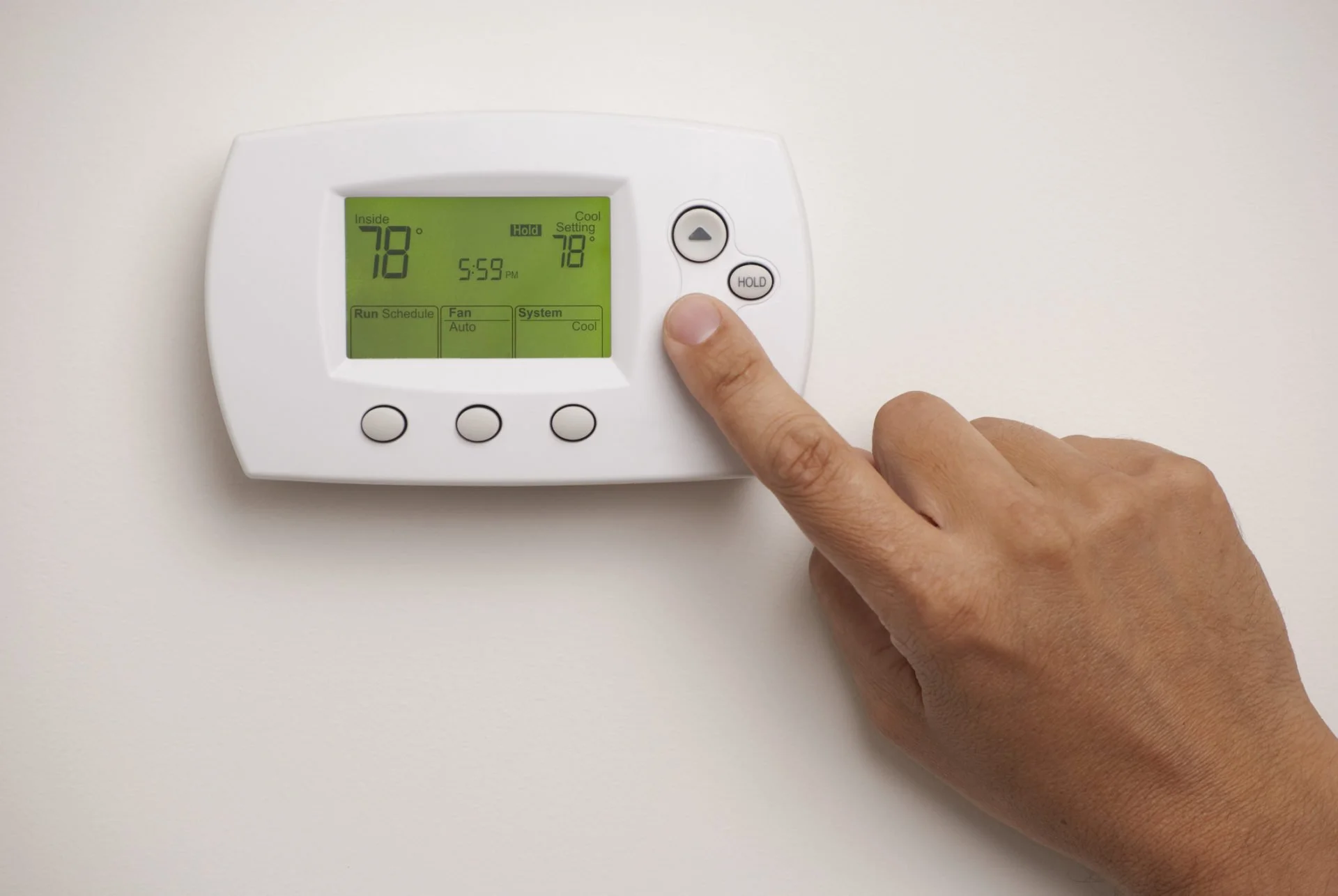
This is the setting most people never change. If your fan says 'Auto,' it's been sitting idle every mild spring day while pollen counts outside were at their highest.
We covered filter selection in detail in our guide on when to replace versus clean your AC filter, and that guidance applies directly here. The short version: if you can see daylight through your filter when you hold it up, it is capturing almost nothing.
The Role of Duct Cleaning in Allergy Control
Neither HVAC filters nor air purifiers address allergens that have already settled inside your ductwork. Over years of operation, dust, pet dander, pollen, and mold spores accumulate on duct interior surfaces. Every time the blower kicks on, some of that accumulated debris gets re-entrained into the airflow and distributed throughout the home, bypassing the filter entirely because it enters the supply side after the filter.
Professional duct cleaning removes this built-up contamination and gives your filtration system a clean baseline to work from. We typically recommend duct cleaning before upgrading to a higher-MERV filter, especially if the home has not had ducts cleaned in five or more years, if there are visible dust deposits at supply registers, if the home has undergone renovation (drywall dust, sawdust), or if a new pet has been introduced to the household.
Duct cleaning is not a substitute for proper filtration, and proper filtration is not a substitute for clean ducts. They address different parts of the same problem. A freshly cleaned duct system paired with a MERV 13 media filter and a bedroom HEPA unit is the closest thing to hospital-grade air quality you can achieve in a residential home without spending $4,000 or more on a whole-house HEPA bypass system.
How to Choose the Right Solution for Your Home
Start by identifying your primary allergy triggers. If your symptoms are worst during specific pollen seasons (spring trees, summer grasses) and affect you throughout the house, the HVAC filter upgrade is your highest-impact first step. If your symptoms are worst at night and primarily affect sleep quality, a bedroom HEPA purifier may deliver faster relief. If your symptoms are severe year-round regardless of season, the combination approach is likely necessary.
Next, check your current HVAC system's filter configuration. If your system uses a 1-inch filter slot, you have two options: upgrade to the highest MERV your system can safely handle (typically MERV 11 for older single-speed systems, MERV 13 for newer variable-speed systems), or have a 4-inch media cabinet installed for $200 to $400 that accommodates a MERV 13 filter without the airflow restriction. Our team can measure your system's static pressure to determine the maximum safe MERV rating in about fifteen minutes during a routine visit.
If you want a comprehensive assessment of your home's indoor air quality and the best filtration strategy for your specific situation, our complete guide to IAQ solutions for Orange County allergies covers the full range of options from ventilation to humidity control to filtration. And our HVAC maintenance service includes a filter assessment and recommendation as part of every tune-up.
Frequently Asked Questions
Is a MERV 13 filter safe for my HVAC system?
Most residential HVAC systems manufactured after 2000 can safely run a MERV 13 filter, particularly in a 4-inch media cabinet configuration. A 4-inch MERV 13 filter creates significantly less airflow restriction than a 1-inch MERV 13 because the larger surface area distributes the air load. Systems with single-speed blower motors and older ductwork may be limited to MERV 11. A qualified HVAC technician can measure your system's static pressure and confirm the maximum safe rating in about fifteen minutes.
How much does it cost to add a HEPA air purifier to my HVAC system?
A whole-house HEPA bypass system installed into your existing ductwork costs $1,000 to $4,000 in Orange County in 2026, depending on the system size and installation complexity. The bypass design routes a portion of your airflow through a true HEPA filter without restricting main duct airflow. Annual filter replacement costs run $100 to $200. This is the premium option for households with severe allergies or immunocompromised family members.
Do air purifiers help with Orange County wildfire smoke?
Yes. Wildfire smoke particles are primarily in the PM2.5 range (under 2.5 microns), which is small enough to pass through standard MERV 8 filters. A HEPA air purifier removes 99.97% of these particles in the room where it operates. During Santa Ana wind events that carry wildfire smoke into Orange County, running a HEPA purifier in your main living area and bedroom provides significant protection. A MERV 13 HVAC filter also helps but captures only 75% to 85% of particles in this size range.
Should I run my HVAC fan continuously during allergy season?
Running the fan in "on" or "circulate" mode during peak allergy months (March through June in Orange County) keeps air moving through your filter even when the system is not actively heating or cooling. This can improve indoor air quality significantly on mild days when the thermostat would not otherwise trigger the system. The additional electricity cost is roughly $15 to $30 per month for a standard residential blower motor. The trade-off is worthwhile for allergy sufferers, especially during tree and grass pollen peaks.
How often should I replace my HVAC filter if I have allergies?
For allergy sufferers in Orange County, replace 1-inch filters every 30 to 60 days during peak pollen season (March through June) and every 60 to 90 days the rest of the year. Replace 4-inch media filters every 6 to 9 months. Homes with pets, multiple occupants, or heavy Santa Ana wind exposure should replace filters at the shorter end of these ranges. A visibly gray or dark filter is already past its effective life.
Can I use both an air purifier and a high-MERV HVAC filter at the same time?
Combining a MERV 13 HVAC filter with a portable HEPA air purifier is the most effective approach for allergy control in Orange County homes. The HVAC filter provides baseline whole-home protection (75% to 90% of allergens captured from all circulating air), while the HEPA purifier creates a near-allergen-free zone (99.97% capture) in the specific room where it operates. There is no conflict or diminishing return from running both simultaneously. The two systems complement each other.
What MERV rating do I need for pet allergies specifically?
Pet dander particles range from 2.5 to 10 microns, which a MERV 11 filter captures at 65% to 79% efficiency and a MERV 13 captures at 75% to 90%. For households with cats (which produce smaller, stickier allergen particles than dogs), MERV 13 is recommended. If a family member has severe pet allergies, adding a HEPA purifier in their bedroom provides the additional 99.97% capture rate needed to keep symptoms under control overnight.
Get the Right Filtration for Your Orange County Home
Choosing between an air purifier and an HVAC filter upgrade does not have to be complicated. For most Orange County allergy sufferers, the answer is not one or the other. It is starting with the HVAC filter (the foundation that protects your entire home) and adding a targeted HEPA purifier where it matters most. That two-layer approach delivers the best allergy relief per dollar spent in our region's year-round pollen environment.
J Martin Indoor Air Quality has helped more than 5,000 Orange County families improve their indoor air since 2014. Our team, including technicians like Jesus, Angel, and Kevin who handle IAQ installations daily, can assess your current HVAC system, measure static pressure, recommend the right MERV rating, and install a media filter cabinet in a single visit. Licensed, bonded, and insured under CA Contractor License CL#998956, with a 4.97-star rating across thousands of reviews.
Call us at (714) 462-4686 to schedule an air quality consultation, or request a free in-home estimate online. When you call, Kathryn or Alexis answers at our Anaheim office. No call centers, no high-pressure sales. Just honest recommendations for cleaner air.