
Should I Repair or Replace My AC? The Decision Framework That Saves You Thousands
Updated on May 12, 2026
Your air conditioner just died on a 95-degree afternoon in Anaheim, and the technician is standing in your driveway with a clipboard. The diagnosis: a failed compressor. The quote: $1,800. And now you're staring at the number on that clipboard wondering whether you should write the check or put that money toward something new.
This is one of the most expensive decisions you'll make as a homeowner, and it usually happens at the worst possible time. Mid-July, when you can barely think straight because your house feels like the inside of a parked car. The wrong call can cost you thousands. Repair a system that's going to die in six months anyway, and you've wasted every dollar. Replace a system that had five good years left, and you've spent $10,000 you didn't need to. That's why understanding the real cost of AC repair in Orange County matters before making a decision in the middle of a heat wave.
Here's the thing most HVAC companies won't tell you: there's no single right answer that applies to every situation. But there is a decision framework, a set of real questions with real numbers, that takes the guesswork out of it. We've used this framework with over 5,000 customers across Orange County, from aging systems in Yorba Linda's East Lake Village to salt-corroded units along the Newport Beach coast. And in our experience, homeowners who follow it consistently save thousands compared to those who make emotional, heat-of-the-moment decisions.
Let's walk through it.
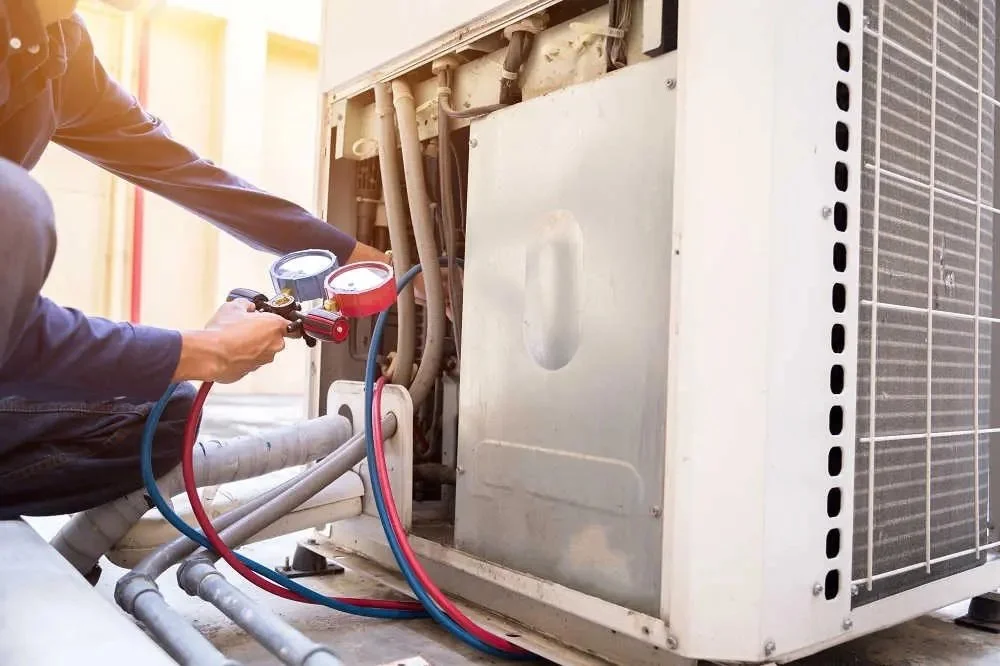
Before recommending a replacement, a good HVAC technician will fully diagnose your AC system and explain whether a repair actually makes more financial sense.
The $5,000 Rule: Your Starting Point (But Not Your Whole Answer)
The most well-known tool in the repair-or-replace toolbox is the $5,000 rule, and for good reason. It's simple, it's math-based, and it gives you a concrete number to work with instead of a vague feeling.
Here's how it works: multiply the age of your AC unit (in years) by the cost of the proposed repair (in dollars). If the result is greater than $5,000, replacement is generally the smarter financial move. If it's under $5,000, the repair is probably worth it.
Let's run a few real-world scenarios that we see regularly here in Orange County.
Scenario one: your air conditioner is eight years old and needs a new capacitor. The quote is $250. Eight times $250 equals $2,000. That's well under the $5,000 threshold, and a capacitor replacement on an eight-year-old system is a no-brainer repair. You'll likely get another seven to ten years out of that unit with proper maintenance.
Scenario two: your system is 12 years old and the evaporator coil has failed. The quote comes in at $2,200 for parts and labor. Twelve times $2,200 equals $26,400. That number blows past the $5,000 threshold, and the math is telling you what your gut probably already suspects: it's time to seriously consider a new system.
Scenario three: your unit is six years old, and it needs a new blower motor. The quote is $650. Six times $650 equals $3,900. You're under the threshold, and since a six-year-old system has plenty of life left, repair makes sense here.
The $5,000 rule is an excellent starting point, and HVAC professionals across the country use it as a first filter in the decision-making process. But here's where most articles on this topic stop, and that's a problem. The $5,000 rule doesn't account for energy efficiency gains, refrigerant phase-outs, warranty coverage, the frequency of past repairs, or the specific climate challenges we deal with in Southern California. That's why you need the full framework, not just one formula.
Factor One: How Old Is Your System, Really?
Age is the single biggest predictor of whether repair or replacement makes sense. Most central air conditioning systems in Orange County last between 10 and 20 years, with properly maintained units averaging closer to 15 to 18 years and neglected units dying as early as eight to ten.
If your system is under 10 years old, you should almost always repair it unless you're dealing with a catastrophic failure like a cracked compressor housing or a condemned heat exchanger. Even expensive repairs (a new evaporator coil at $1,500 to $2,500, or a compressor replacement at $1,200 to $2,500) are usually worth it on a system that has five to ten good years ahead of it. You're spending a fraction of what a full replacement would cost, and you're getting real value from that investment.
If your system is between 10 and 15 years old, you're in the gray zone where every repair deserves careful consideration. This is where the $5,000 rule is most useful. A minor repair like a contactor or capacitor is still a clear repair situation. But a major component failure (compressor, evaporator coil, condenser coil) starts to look different. You're investing serious money in equipment that's past its midlife point, and you have to weigh that repair cost against the possibility that something else will fail in the next year or two.
If your system is over 15 years old, the math almost always favors replacement when a major repair comes up. At this stage, even a $400 repair multiplied by 15 or 16 years puts you at or above the $5,000 threshold. More importantly, a system this old is running on borrowed time. It's using significantly more electricity than a modern unit, it may be running on R-410A refrigerant that's being phased out, and even if you fix today's problem, another component is likely right behind it.
We see this pattern constantly in neighborhoods like Yorba Linda's Bryant Ranch and Travis Ranch, where many homes were built in the late 1980s and early 1990s. Homeowners will repair the compressor, then the evaporator coil fails three months later, and then the blower motor starts acting up after that. By the time they add up all the repairs, they've spent $4,000 to $5,000 and still have an unreliable 18-year-old system.
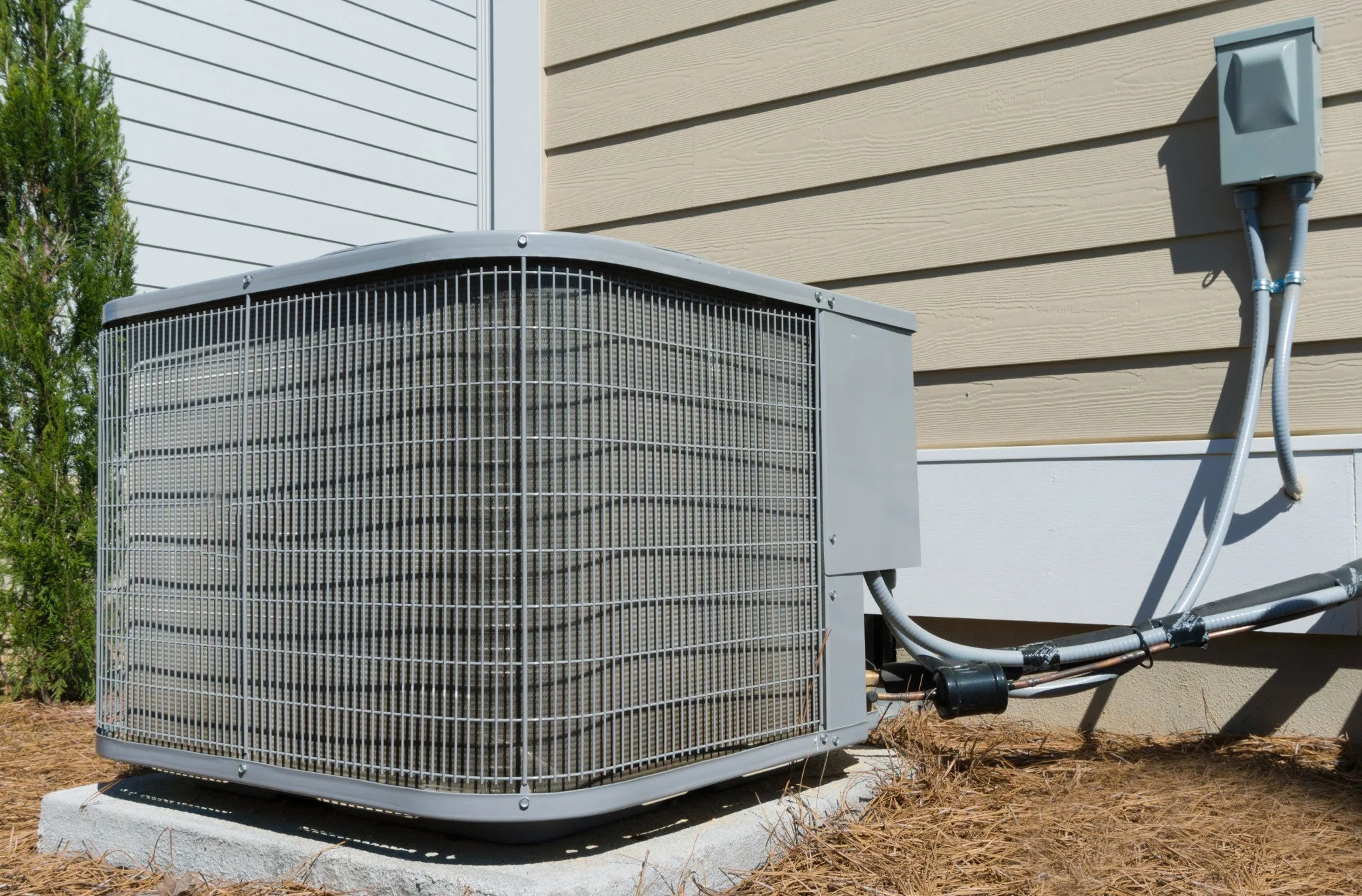
When your outdoor AC unit starts struggling during a heat wave, the real question becomes whether a repair will fix it—or if replacement is the smarter investment.
Factor Two: What's Actually Broken?
Not all AC repairs are created equal, and the specific component that failed tells you a lot about whether more trouble is coming.
Minor repairs are your capacitors, contactors, relays, fan motors, and thermostat wiring issues. These components have a natural lifespan that's often shorter than the system itself, so replacing them is expected maintenance, similar to replacing brake pads on your car. Costs typically range from $150 to $500, and these repairs rarely signal deeper problems. Unless your system is ancient, these are straightforward repair situations.
Moderate repairs include refrigerant leak detection and repair, blower motor replacement, and circuit board failures. These run between $400 and $1,200 depending on the specific component and your system's brand. These repairs warrant a closer look at the system's overall condition. A refrigerant leak on a five-year-old system is worth fixing. The same leak on a 14-year-old unit that's already had two other repairs this year? That's a different conversation.
Major repairs are the ones that really force the question: compressor replacement ($1,500 to $3,500), evaporator coil replacement ($1,500 to $4,500 depending on warranty status), and condenser coil replacement ($900 to $2,900). These are the heart, lungs, and circulatory system of your air conditioner, and when one fails on an older unit, it often means the entire system is wearing out. A compressor failure on a system that's past the 10-year mark is frequently the moment of truth in the repair-versus-replace decision.
Here in Orange County, evaporator coil failures are particularly common because of our climate. Salt air along the coast corrodes copper tubing faster than inland areas, and the fine dust that blows in during Santa Ana wind events can accelerate wear on components that aren't properly maintained. If you're in a coastal community like Newport Beach or Huntington Beach and your evaporator coil has failed on a system that's 10 or more years old, the odds of the condenser coil following suit within a few years are high, and at that point, you've effectively paid for half a new system in repair costs.
Factor Three: What Refrigerant Does Your System Use?
This is a factor that's changed dramatically in the last few years, and it's one that many homeowners aren't aware of until they're hit with a surprise at repair time.
If your system still runs on R-22 (commonly known as Freon), there is no question: replacement is the right move when a major repair comes up. R-22 was banned from production in 2020, and the only supply available today is reclaimed or recycled refrigerant. Prices have skyrocketed to the point where a simple refrigerant recharge can cost $600 to $1,200 or more, and that's assuming your technician can even source it. Any system still running on R-22 is at minimum 15 years old and has exceeded its expected useful life.
If your system uses R-410A (also called Puron), the situation is more nuanced but still worth understanding. The EPA has been phasing down R-410A under the American Innovation and Manufacturing (AIM) Act as part of a broader effort to reduce greenhouse gas emissions. As of January 2025, manufacturers can no longer produce new equipment using R-410A. The installation of new R-410A split systems in new construction was restricted as of January 2026, though the EPA has signaled that enforcement around existing home replacements will be low priority. The replacement refrigerants, R-454B and R-32, have lower global warming potential and are making their way into new equipment from major manufacturers.
Here's what this means for your repair-or-replace decision in practical terms: if your R-410A system is relatively young (under 10 years old), there's no reason to panic. R-410A will remain available for service and repairs for many years. The refrigerant itself won't be phased out of production until the 2040s, and reclaimed R-410A will be readily available for even longer. Your system is fine.
But if your R-410A system is approaching the end of its life and needs a major repair, the refrigerant transition adds another point in the replacement column. New systems using R-454B or R-32 are more energy efficient, have lower environmental impact, and are built to current standards that will be supported for the next 15 to 20 years. Investing $2,000 in a repair on an aging R-410A system that you'll need to replace within a few years anyway means you're just delaying the inevitable while also missing out on the efficiency gains of modern equipment.
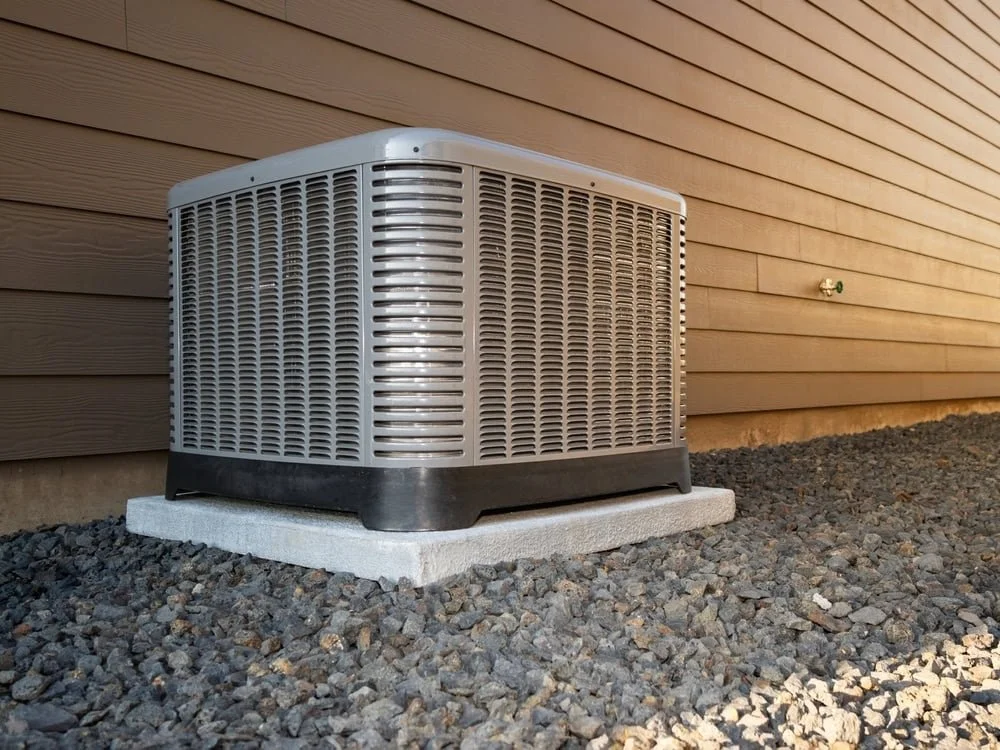
Your outdoor condenser unit is where many expensive AC failures occur, and where the repair-or-replace decision often starts.
Factor Four: How Much Are You Spending on Energy?
This is the factor most homeowners overlook, and it's often the one that tips the scales most dramatically.
Air conditioning efficiency is measured by SEER ratings (Seasonal Energy Efficiency Ratio) which tell you how much cooling output you get per unit of energy consumed. Higher SEER means lower electricity bills. In 2023, the Department of Energy updated efficiency standards, and all new systems in the southern United States (including California) now require a minimum SEER2 rating of 15.
If your current system is 12 to 15 years old, it's probably running at a SEER rating somewhere between 10 and 13. Replacing it with even a baseline modern system at 15 SEER2 represents a 15 to 50 percent improvement in efficiency. A mid-range system at 17 to 18 SEER2, or a high-efficiency variable-speed system at 20 SEER2 or above, offers even more dramatic savings.
Let's put real dollars to that. In Orange County, where electricity rates from Southern California Edison average around $0.30 per kWh and AC systems run seven to nine months per year, the difference between a 10 SEER system and a 16 SEER system can easily translate to $400 to $800 per year in electricity savings. Over the 15-year life of a new system, that's $6,000 to $12,000 in reduced utility costs, money that directly offsets the upfront investment.
This energy calculation is especially important when you're in that gray zone between repair and replacement. If the $5,000 rule puts you right around the threshold, and your current system is running at 10 or 12 SEER, the energy savings from a modern unit often push the math firmly into replacement territory. You're not just getting a new air conditioner. You're getting dramatically lower monthly bills for the next 15 years. When you factor in the Inflation Reduction Act's federal tax credits of up to $2,000 for qualifying high-efficiency heat pumps and the various California rebate programs, the out-of-pocket difference between repairing and replacing shrinks considerably.
Factor Five: How Often Have You Been Calling for Repairs?
A single repair, even an expensive one, doesn't necessarily mean your system is done. But a pattern of repairs tells a very different story.
Think of it like your car. If you replace the alternator at 80,000 miles, that's just maintenance. But if you replace the alternator, then the water pump fails two months later, and then the transmission starts slipping, you're not dealing with isolated incidents. You're dealing with a vehicle that's wearing out across the board.
The same logic applies to your AC. We recommend keeping a simple repair log (even just notes in your phone) that tracks every service call, what was repaired, and how much it cost. When you can see the pattern laid out in front of you, the decision becomes much clearer.
A good rule of thumb: if you've had two or more unscheduled repair calls within a two-year period, and the cumulative cost of those repairs exceeds $1,500, your system is trending toward replacement. At that point, you're not investing in a healthy system. You're propping up a failing one.
We had a customer in Fullerton last year who had spent $400 on a refrigerant recharge in the spring, followed by $600 on a fan motor in the summer, and was now facing an $800 repair for a circuit board. The system was 13 years old. Each individual repair passed the $5,000 rule on its own, but added together, this homeowner had spent $1,800 in eight months on a system that clearly wasn't done breaking. We walked through this framework together, and the decision to replace was obvious, and it should have been made after that second repair call.
Factor Six: How Comfortable Is Your Home?
Numbers and formulas are important, but so is the basic question of whether your current system is actually keeping you comfortable. If you've been living with hot spots in certain rooms, humidity that won't come down, or a system that runs all day without ever reaching your set temperature, these are symptoms that go beyond what a simple repair can fix.
In many Orange County homes, particularly those built in the 1970s through 1990s, the original AC system was sized for a different climate than what we experience today. Summers are hotter and longer than they were 30 or 40 years ago. A system that was borderline adequate in 1990 is genuinely undersized now, and no amount of repair work will change that.
When we encounter comfort complaints alongside a major repair need, we perform a load calculation to determine whether the existing system is actually the right size for the home. In about 30 percent of the replacement jobs we do, we find that the previous system was undersized, improperly installed, or paired with ductwork that's deteriorated to the point where it's leaking conditioned air into the attic. In those cases, replacement isn't just about getting a new air conditioner, it's about getting a properly designed system that actually solves the comfort problem you've been living with for years.
If your home has rooms that are always too hot or too cold, if your system can't keep up on days when it hits 100 degrees, or if the humidity in your house feels oppressive even with the AC running, these issues should carry significant weight in your decision. A repair will fix the immediate mechanical failure, but it won't fix the underlying comfort problem.
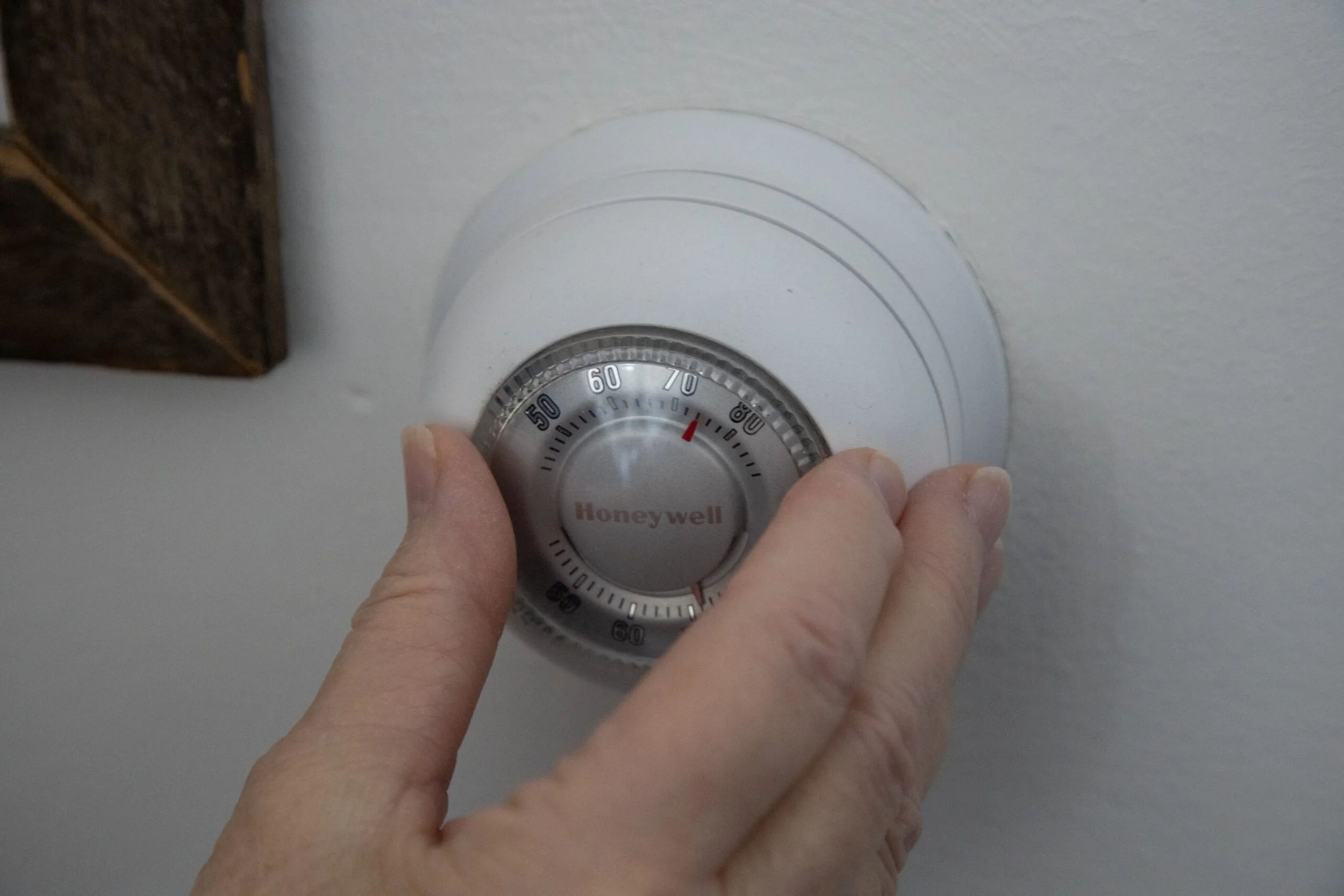
Before assuming your AC needs a major repair, check your thermostat settings. If your system still isn't cooling, J Martin offers same-day AC diagnostics across Orange County. Call (714) 462-4686.
Factor Seven: What Are Your Plans for the House?
This one doesn't get talked about enough. If you're planning to sell your home within the next two to three years, a new HVAC system can be a meaningful selling point. Buyers notice HVAC age immediately, and a documented new system with a transferable manufacturer's warranty (typically 10 years on parts) adds both real value and peace of mind that shows up in offers.
On the other hand, if you're selling within the next six months and the repair is relatively minor, it may not make sense to invest $10,000 or more in a new system that you won't personally benefit from. In that case, making the repair and disclosing the system's age honestly in the sale may be the more practical choice.
If you're staying in your home for the long haul (and most of our customers in Orange County are) the calculus favors replacement more strongly on borderline decisions. The energy savings compound year after year, the comfort improvements matter every single day, and the peace of mind of knowing your system is reliable during a July heat wave is worth something that doesn't show up on a spreadsheet.
DIY Steps Before You Call Anyone
Before you even pick up the phone, there are a few things you can check yourself that might save you a service call entirely, or at least give you better information to work with when the technician arrives.
Start with your thermostat. It sounds basic, but check that it's set to "cool" and not "heat" or "fan only," that the set temperature is below the current room temperature, and that the batteries aren't dead if it's a battery-operated model. We get calls every summer that turn out to be nothing more than a thermostat setting issue, and there's no shame in it. These things happen.
Next, check your air filter. A severely clogged air filter can cause your system to freeze up, blow warm air, or shut down entirely due to restricted airflow. Pull the filter out and hold it up to a light source. If you can't see light through it, replace it. A new filter costs $5 to $20 at any hardware store and takes 30 seconds to install. If your system froze up because of a dirty filter, turn the system off, let it thaw for two to four hours, replace the filter, and try it again. In many cases, this solves the problem completely.
Check your circuit breakers. Your air conditioner typically has two breakers: one for the indoor air handler or furnace and one for the outdoor condensing unit. If either has tripped, reset it once. If it trips again immediately, leave it off and call a professional. A repeatedly tripping breaker indicates an electrical problem that shouldn't be tinkered with.
Step outside and look at your condenser unit. Is it running? Is the fan spinning? Is there any visible damage, debris blocking the unit, or ice formation on the copper lines? If the outdoor unit is completely silent when the system should be running, the issue is likely electrical (a failed capacitor, contactor, or wiring problem). If the unit is running but not blowing cold air, the problem is more likely refrigerant-related or compressor-related.
Finally, check your condensate drain line. This is the PVC pipe that runs from your indoor unit to a drain or outside. If it's clogged, your system may have a safety switch that shuts down the entire unit to prevent water damage. You can try clearing a clog by pouring a cup of distilled white vinegar down the drain line, waiting 30 minutes, and then flushing it with warm water. If the drain was clogged and the float switch was activated, clearing it and resetting the system may get everything running again.
These simple checks take 15 to 20 minutes and can either solve the problem entirely or give you much more useful information to share with the technician who comes out to diagnose the issue. The more you know before the service call, the better positioned you are to make a smart decision about what comes next.
When to Call a Professional (And How to Find an Honest One)
If you've run through the DIY checks above and your system still isn't working, it's time to call a licensed HVAC technician. There are certain situations where you should skip the DIY steps entirely and call right away: if you smell burning or something electrical, if you see sparking or arcing near the unit, if there's a strong chemical or rotten egg smell, or if the system is making loud banging, grinding, or screeching noises that it's never made before.
When you do call for service, finding an honest technician makes all the difference. The HVAC industry has a reputation problem, one that we've seen firsthand from customers who come to us after getting quotes from other companies. Some outfits pay their technicians on commission, which creates an inherent incentive to recommend replacement over repair, to inflate repair costs, or to diagnose phantom problems that conveniently require expensive solutions. That's not a knock on every commission-based company, but it's a structural incentive you should be aware of.
Here's what to look for: a company that provides a written estimate before any work begins, that explains the diagnosis in plain language, that gives you options rather than pressure, and that's willing to tell you when a repair is the better financial decision, even though a replacement sale would put more money in their pocket. Ask whether their technicians are background-checked and certified. Ask whether there's a diagnostic fee and whether it's applied toward the repair if you move forward. And don't be afraid to get a second opinion on any repair that exceeds $1,000. A reputable company will never be offended by that request.
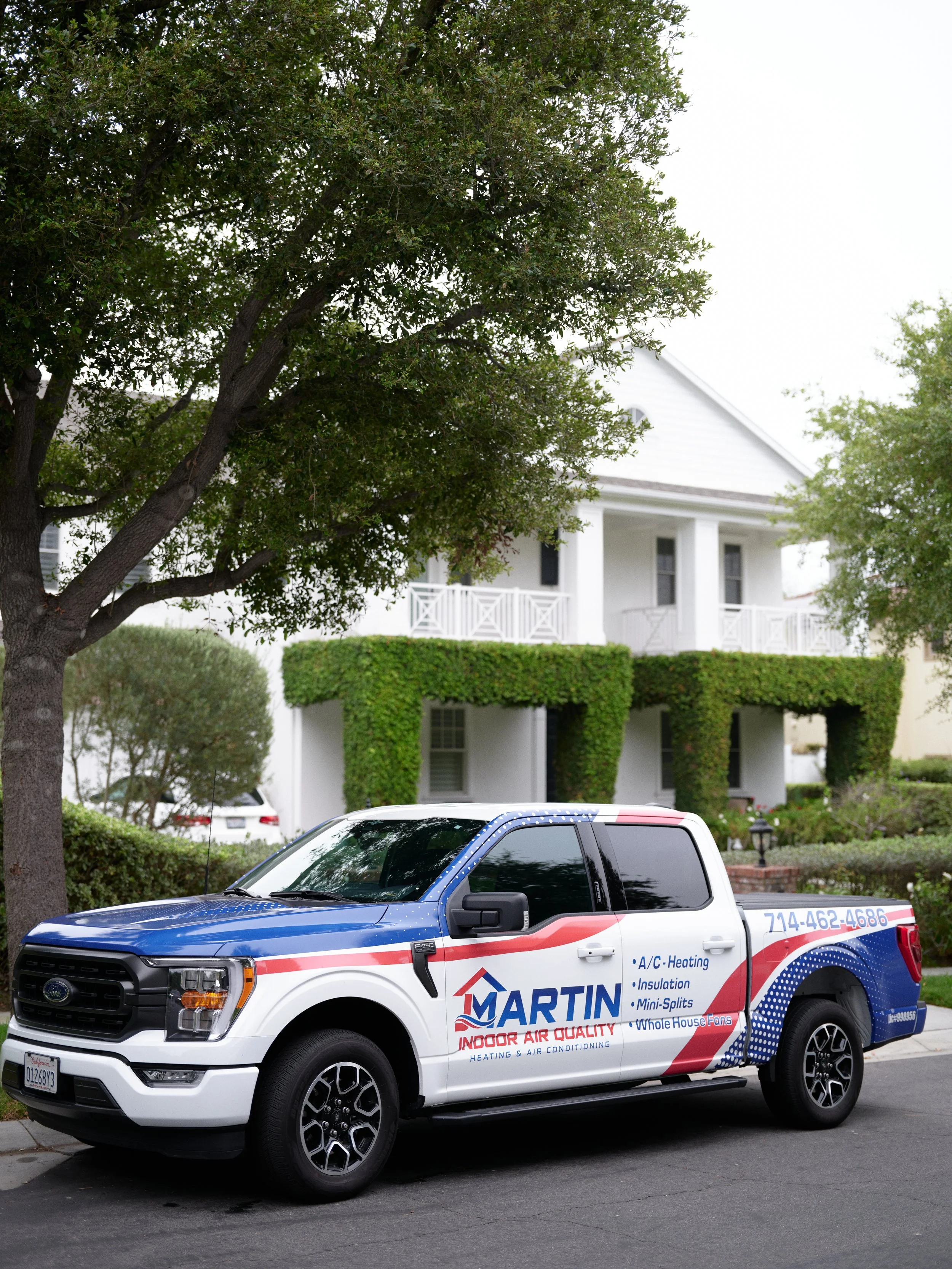
When homeowners across Orange County need honest answers about AC repair vs replacement, J Martin technicians show up ready to diagnose the system and explain the real options.
At J Martin, we're non-commissioned. Our technicians earn the same paycheck whether they recommend a $200 repair or a $12,000 replacement. That changes the conversation completely. When our guy tells you that a repair makes sense, he's telling you because it actually makes sense, not because he needs to hit a monthly quota. And when he tells you it's time for a new system, you can trust that he's looked at the full picture and genuinely believes that's the right call for your home and your budget.
Putting It All Together: The Decision in Practice
Let's bring the whole framework together with a real example that reflects what we see regularly in Orange County homes.
A homeowner in Brea has a 13-year-old, 3-ton Carrier system that's been well-maintained with annual tune-ups. It uses R-410A refrigerant and has a SEER rating of 13. The system has had one minor repair in the past two years (a capacitor replacement for $200). Now the evaporator coil has failed, and the repair quote is $2,200.
Running the $5,000 rule: 13 times $2,200 equals $28,600. Way over the threshold. But let's look deeper.
The system's age puts it past midlife but not necessarily at end-of-life. It's been well-maintained with minimal repair history. The R-410A refrigerant is still serviceable and will be for years to come. However, the SEER rating of 13 is below current minimum standards, meaning a new system would deliver at least 15 to 20 percent better efficiency. The evaporator coil replacement is a major repair on a component that suggests broader system wear. And the current cost of a new 3-ton system in Orange County ranges from about $9,500 to $13,500 for a standard AC and furnace combination.
In this case, we'd walk the homeowner through both paths honestly. The repair buys probably three to five more years of service, saving the replacement cost now but leaving them with an aging, less efficient system. The replacement costs significantly more upfront but comes with a new warranty, dramatically lower energy bills, modern refrigerant compatibility, and 15 or more years of reliable service. For a homeowner staying in the home long-term, replacement is likely the stronger financial decision when energy savings are factored in. For someone planning to sell within a year or two, the repair could make more sense as a short-term bridge.
There's no single right answer. But with this framework, you're making an informed decision instead of an emotional one, and that's the difference between saving thousands and wasting them.
The Bottom Line
The repair-or-replace decision doesn't have to be agonizing. Start with the $5,000 rule to get a baseline. Then layer in the system's age, the specific component that failed, your refrigerant type, your energy costs, your repair history, your comfort levels, and your plans for the home. When you consider all seven factors together, the right answer usually becomes clear.
And if you're in Orange County and you want someone to walk through this AC repair or replace framework with you in person, with no pressure and no commission, give us a call at 714-462-4686. We'll send one of our certified technicians out, diagnose the problem, explain your options, and give you a written estimate before anything happens. If repair is the right call, we'll tell you. If replacement makes more sense, we'll show you why with real numbers, not sales tactics.
Your AC is one of the biggest investments in your home. Make sure the decision to repair or replace it is based on facts, not fear.
J Martin Indoor Air Quality | (714) 462-4686 | Services