
Furnace Not Working? 7 Things to Check Before You Call for Repair
Updated on May 18, 2026
It's 6 AM. You wake up, and the house feels off. Not dramatically cold, but that uncomfortable kind of cool where you can tell something isn't right. You walk over to the thermostat and the temperature reads 58 degrees. The furnace should have kicked on hours ago, but it didn't. Nothing is blowing. Or maybe it's blowing, but the air isn't warm. Either way, your furnace is not working, and you need to figure out why.
In Orange County, furnace problems don't carry the same life-or-death urgency they do in places like Minnesota or Chicago. Our winters are mild by comparison, and nighttime lows in Yorba Linda, Anaheim, and Brea typically hover in the 40s and low 50s between December and March. But "mild" doesn't mean comfortable. A house that drops into the upper 50s overnight is an unpleasant place to be, especially for families with young children, elderly parents, or anyone dealing with health conditions. And when your furnace stops working during one of our periodic cold snaps where overnight temperatures dip into the mid-30s, the situation moves from inconvenient to genuinely concerning.
Before you pick up the phone and schedule a service call, though, there are several things worth checking yourself. A surprising number of furnace problems come down to simple issues that don't require a technician at all: a tripped breaker, a dirty filter, a thermostat that got bumped to the wrong setting. Walking through these checks first can save you the cost of a diagnostic visit (typically $75 to $200) and get your heat back on in minutes rather than hours.
This guide covers seven specific things to check when your furnace is not working, the costs you can expect if professional repair is needed, the safety situations where you should skip the troubleshooting and call for help immediately, and how to keep your furnace from failing you again next winter.
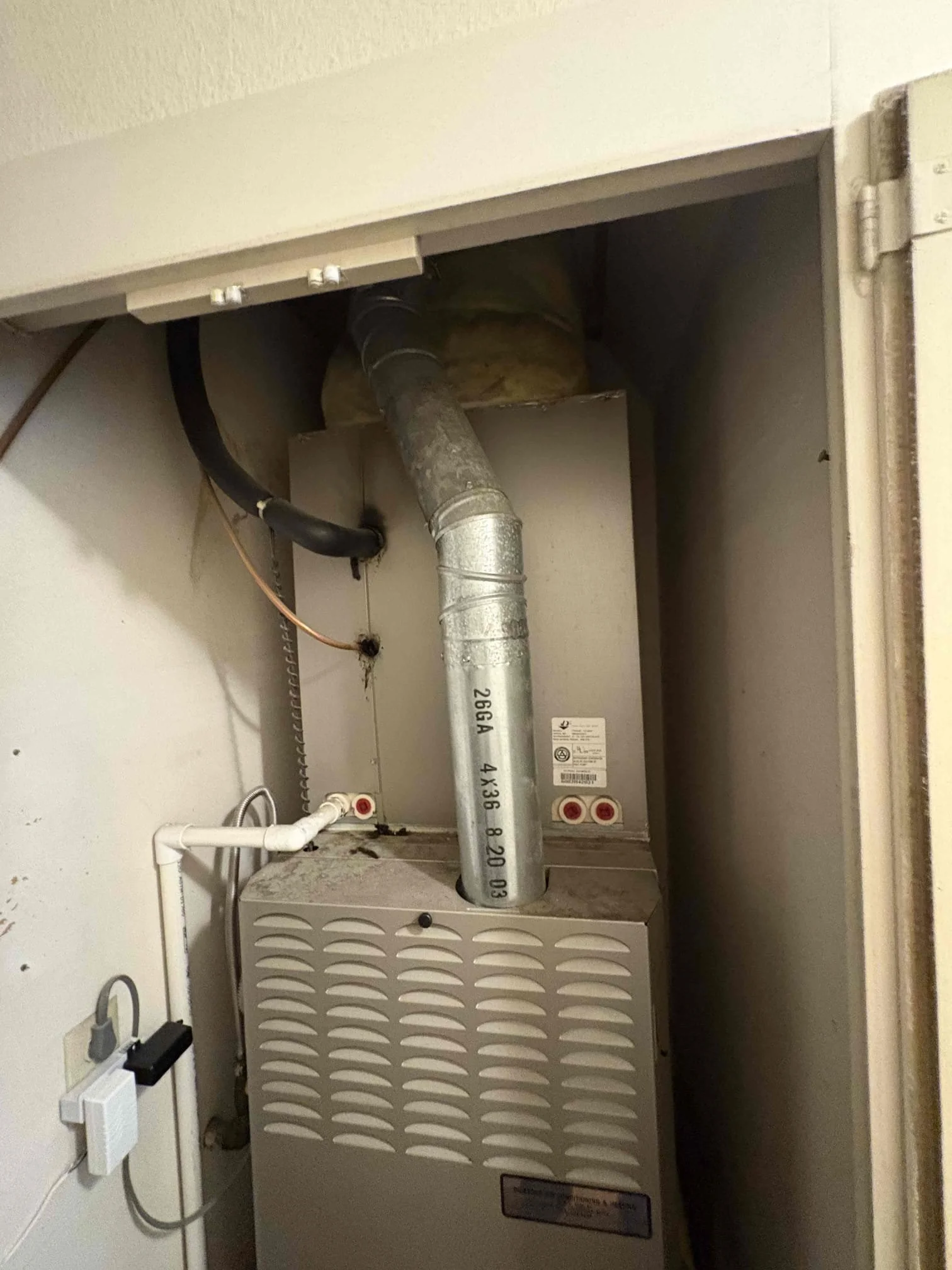
Is your furnace not working this morning? Before you call for repair, check the access panel, the power switch, and the gas valve on your unit. If none of that gets it running, J Martin offers same-day diagnostics across Orange County. Call (714) 462-4686.
Before Anything Else: Know When to Skip the DIY and Call Immediately
There are a few situations where troubleshooting is not appropriate and the only correct response is to get everyone out of the house and call for professional help.
If you smell gas or detect a rotten-egg odor anywhere near your furnace, do not flip any switches, do not light anything, do not use your phone inside the house. Natural gas is odorless on its own, but utility companies add a sulfur-like odorant called mercaptan specifically so you can detect leaks. If you smell it, leave the house immediately with everyone (including pets), move a safe distance away, and call SoCalGas at 1-800-427-2200 or 911. A gas leak is a genuine emergency that can lead to explosion, fire, or carbon monoxide poisoning.
Similarly, if your carbon monoxide detectors are alarming, treat it as real until proven otherwise. CO is colorless and odorless, and exposure symptoms (headaches, dizziness, nausea, confusion) are easily mistaken for the flu. A cracked heat exchanger in your furnace can leak combustion gases, including CO, directly into your home's air supply. Evacuate first, then call your gas company and an HVAC professional.
If neither of those situations applies and you're simply dealing with a furnace that won't turn on or isn't heating properly, the following seven checks are safe for any homeowner to work through.
Check 1: Your Thermostat Settings and Power
This sounds almost too obvious to mention, but thermostat issues account for a huge percentage of "furnace not working" service calls where the furnace itself is perfectly fine. HVAC technicians will tell you that a meaningful portion of their winter service visits end with a thermostat adjustment rather than a mechanical repair.
Start by confirming the thermostat is set to "Heat" rather than "Cool," "Fan," or "Off." Then verify that the set temperature is at least five degrees above the current room temperature. If the set point is only a degree or two above the room reading, the furnace may not engage because the differential isn't large enough to trigger a heating cycle.
If your thermostat runs on batteries (most wireless and many programmable models do), replace them with fresh ones. Dying batteries can cause erratic behavior, blank screens, loss of programming, and failure to communicate with the furnace altogether. Even hardwired thermostats can lose their programming after a power outage, so check that your schedule and temperature settings haven't reset to factory defaults.
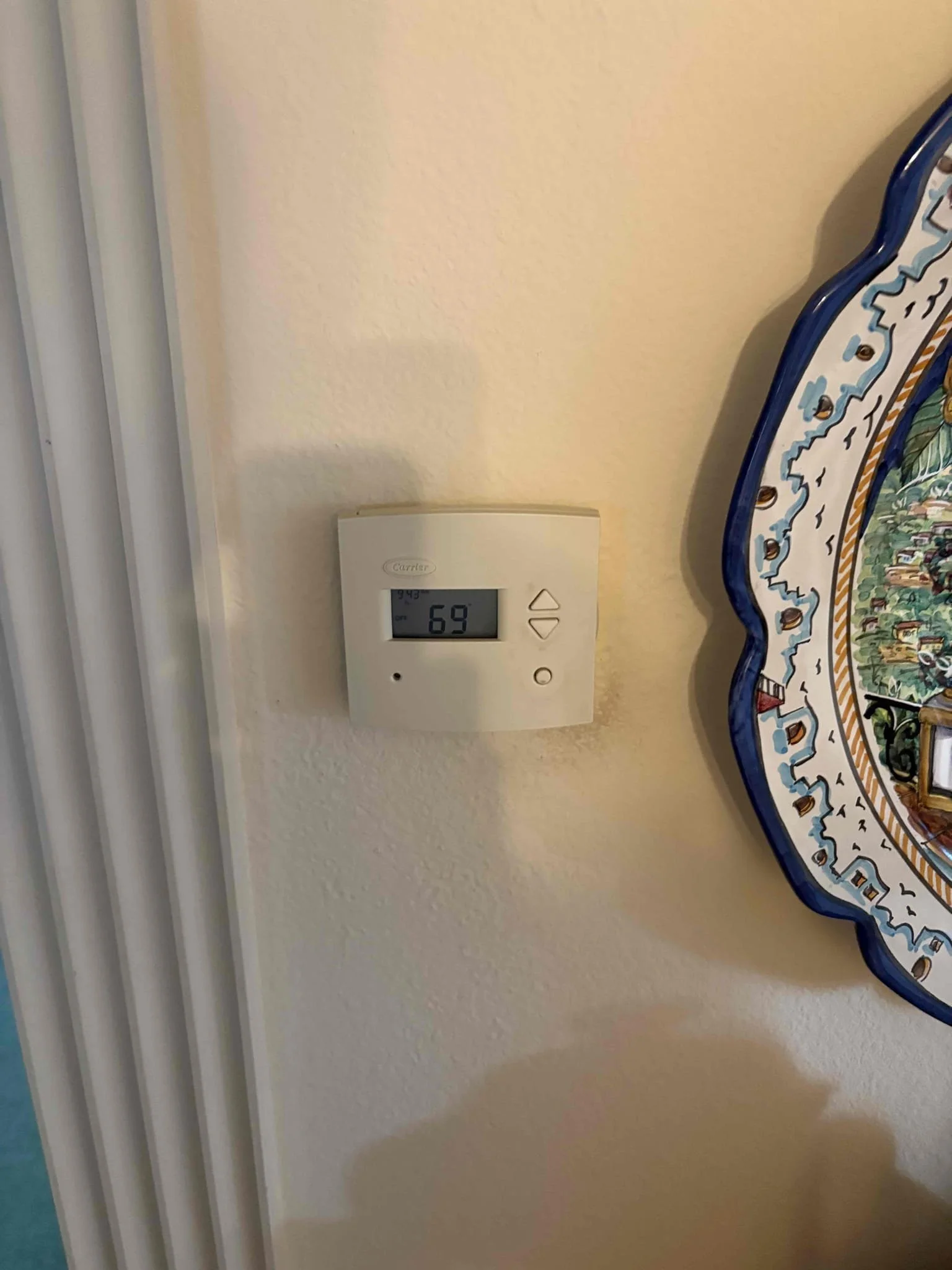
A meaningful number of furnace not working calls we receive in Orange County end with a thermostat adjustment rather than a mechanical repair. J Martin will always walk you through the simple checks first before recommending a service visit, because an honest diagnosis starts before we ever show up at your door.
Smart thermostats like Nest, Ecobee, and Honeywell models occasionally need a software restart. If the screen is frozen or unresponsive, try pulling the thermostat off its wall plate, waiting 30 seconds, and snapping it back on. This forces a reboot that often resolves glitchy behavior.
One more thing to consider: thermostat location matters. If your thermostat is near a drafty window, an exterior door, or in a spot that gets direct afternoon sunlight (common in west-facing rooms throughout Orange County homes), it may be reading temperatures that don't reflect the actual conditions in the rest of your house. This can cause the furnace to cycle on and off at the wrong times or not engage when it should.
Check 2: The Furnace Power Switch and Circuit Breaker
Every furnace, even a gas furnace, requires electricity to operate. The blower motor, the electronic ignition system, the control board, and the thermostat circuit all need power. If the electricity to your furnace has been interrupted, the system simply won't start.
There are two common points where power can be lost. The first is the furnace power switch, which looks like a standard light switch and is usually mounted on the side of the furnace or on a wall nearby. It exists so that technicians can safely disconnect power during service, but it's easily bumped by accident, especially if your furnace is in a closet, utility room, or garage where people pass by regularly. If you find this switch in the "Off" position, flip it back on, give the system 30 to 60 seconds, and see if the furnace initiates a startup cycle.
The second place to check is your home's electrical panel (the breaker box). Find the breaker labeled "Furnace," "HVAC," or "Heating" and see if it's tripped. A tripped breaker will be in a middle position between "On" and "Off" rather than fully in either direction. To reset it, push the breaker firmly to the "Off" position first, then flip it back to "On." You should hear a solid click.
If the breaker trips again immediately after you reset it, do not keep forcing it. A breaker that trips repeatedly is indicating an electrical fault somewhere in the system, and continuing to reset it creates a fire risk. This is a situation where you need a professional to diagnose whether the issue is in the furnace's wiring, a motor, or the breaker itself.
Here is an important detail that's easy to overlook: some furnaces have an internal fuse on the control board. If the fuse has blown (usually from a power surge or a wiring issue), the furnace will have power at the breaker but still won't operate. This fuse is inside the furnace cabinet, and while a handy homeowner can sometimes locate and replace it (they're typically standard 3-amp or 5-amp automotive-style fuses), this check does require opening the furnace's access panel and being comfortable working around electrical components.
Check 3: The Air Filter
If your furnace is turning on but shutting down after a few minutes, or if it's running but barely producing warm air, a clogged filter is the most likely culprit. This is consistently the number one cause of furnace problems that HVAC technicians encounter, and it's also the easiest and cheapest thing for a homeowner to fix.
Your furnace's air filter sits between the return air duct and the blower compartment, and its job is to trap dust, pet hair, pollen, and other airborne particles before they can reach the heat exchanger and blower motor. When the filter becomes clogged, it chokes off the airflow that the furnace needs to operate safely. The heat exchanger, which is the component that actually generates warmth, depends on a steady stream of air passing over it to dissipate heat. Without adequate airflow, the heat exchanger overheats, and a safety device called the high-limit switch shuts the burners down to prevent damage or fire.
This is why a furnace with a dirty filter often exhibits a frustrating pattern: it starts up, runs for a few minutes, shuts off, waits, starts again, shuts off again. That on-and-off cycling (called short cycling) wastes energy, puts stress on the ignition system and blower motor, and never gets the house warm.
To check the filter, turn off the furnace at the thermostat, locate the filter slot (usually on the bottom or side of the furnace, or in a return air grille on a wall or ceiling), and slide the filter out. Hold it up to a light. If you can't see light passing through it, it's overdue for a replacement. Standard pleated filters cost $5 to $20 at any hardware store. In Orange County, where we don't use our furnaces as heavily as colder climates, replacing the filter every 60 to 90 days during heating season is a reasonable schedule. If you have pets, allergies, or are running the system frequently during a cold stretch, check it monthly.
This single check resolves the problem in a remarkable number of cases. If you swap the filter and the furnace starts running normally, congratulations. You just saved yourself a $150+ service call with a $10 filter.
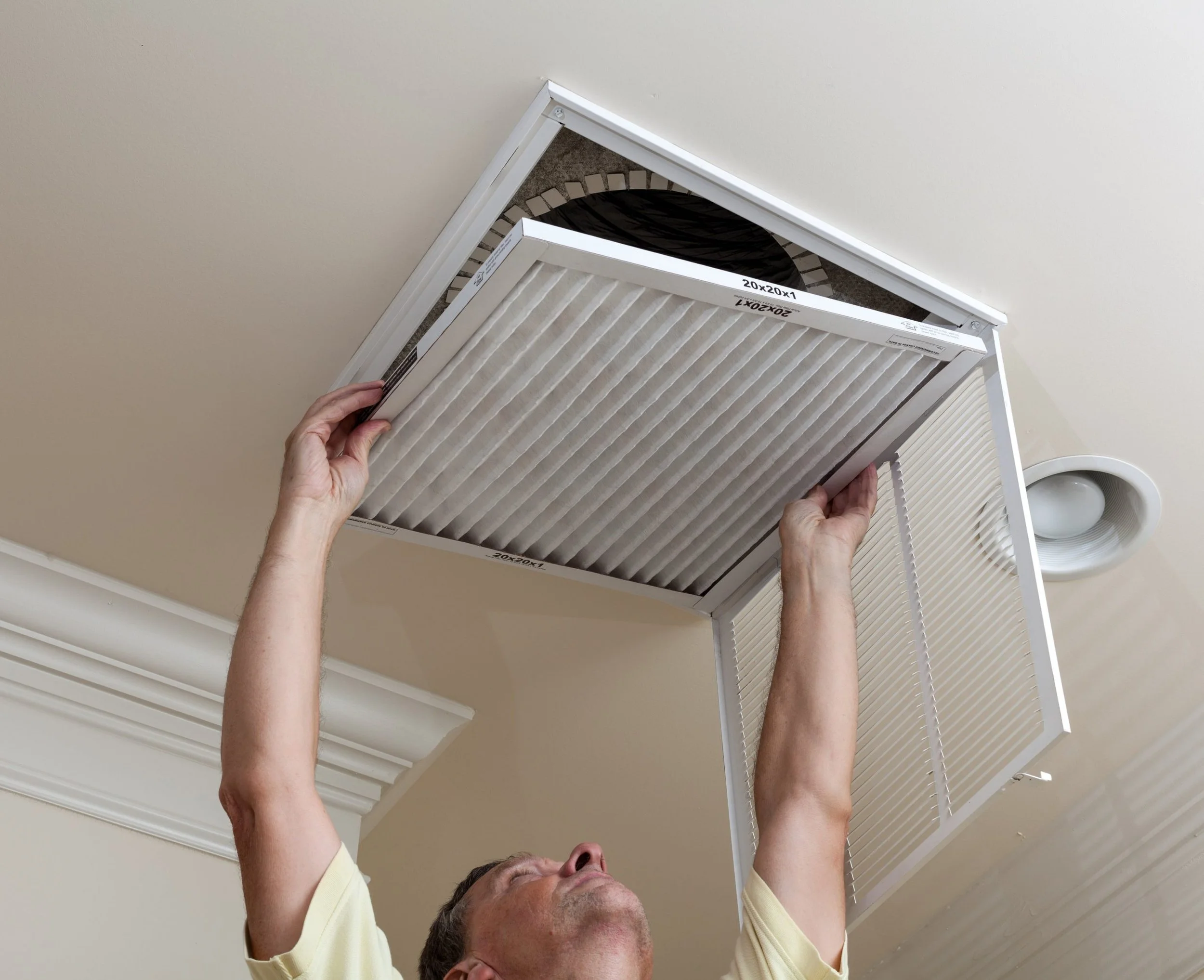
A dirty air filter is the number one reason furnaces stop working in Orange County homes. Check yours before calling for repair. Read the full 7-step guide at jmartiniaq.com.
Check 4: The Gas Supply
If you have a gas furnace (and most homes in Yorba Linda, Anaheim, Fullerton, Brea, and Villa Park do), the furnace needs a steady supply of natural gas to produce heat. If the gas supply has been interrupted, the ignition system may click and attempt to light but fail, or the furnace may not attempt to start at all.
Check the gas shutoff valve near your furnace. It's typically a small lever on the gas pipe leading into the unit. When the lever is parallel to the pipe, the valve is open. When it's perpendicular (at a 90-degree angle to the pipe), it's closed. If someone turned the valve off during a previous repair, during a home renovation, or by accident, the furnace has no fuel.
You can also verify that other gas appliances in your home are working. Try turning on a gas stove burner or your gas water heater. If nothing else in the house is getting gas either, the issue may be at the meter or with your utility service rather than with the furnace itself. In that case, contact SoCalGas to check for service interruptions in your area. Occasionally, utility work in the neighborhood or a meter issue can disrupt gas flow to your home without any obvious warning.
One thing worth noting for Orange County homeowners: because we use our furnaces relatively lightly compared to colder climates, a gas supply issue can go unnoticed for weeks or even months during the warmer seasons. The problem only becomes apparent on the first cold night when the thermostat calls for heat and nothing happens. This is another reason that a brief test run in October, well before you actually need the furnace, is such a valuable habit.
If the gas valve is open and other appliances work fine but the furnace still won't ignite, the problem may be with the furnace's internal gas valve, ignition system, or flame sensor. Those are professional-level repairs that we'll cover in the cost section below.
Check 5: The Ignition System and Pilot Light
Modern furnaces manufactured in the last 20 to 25 years use electronic ignition systems (either a hot surface igniter or an intermittent pilot) rather than a standing pilot light. If your furnace is one of these newer models, the ignition system is what lights the burners each time the thermostat calls for heat. When the igniter fails or becomes coated in residue, the burners won't light and the furnace will cycle off after a few failed attempts.
You can sometimes observe the ignition cycle by removing the furnace's lower access panel and watching what happens when the thermostat calls for heat. On a properly working system, you'll see the draft inducer fan start, followed by a click or glow from the igniter, followed by the burners lighting with a steady blue flame. If you see the igniter glow but the burners don't light, the issue is often a dirty flame sensor, a small metal rod positioned in the burner assembly. The flame sensor's job is to confirm that a flame is present after the gas valve opens. If it's coated with oxidation or carbon buildup, it can't detect the flame and forces the system to shut down as a safety precaution.
Cleaning a flame sensor is something a moderately handy homeowner can do. Turn off the power and gas to the furnace, locate the sensor (it's a thin metal rod, usually held in place by a single screw), carefully remove it, and gently rub the metal probe with fine-grit sandpaper or steel wool until it's clean and shiny. Reinstall it, restore power and gas, and test the system. If the furnace fires up and stays on, you've found the problem.
For older furnaces with a standing pilot light, the pilot may simply have gone out. Refer to the lighting instructions printed on the furnace's label (or in the owner's manual) to relight it. You'll typically need to turn the gas valve to "Pilot," hold down the reset button, and use a long lighter or match to ignite the pilot flame. Hold the button for 30 to 60 seconds to allow the thermocouple to heat up, then release. If the pilot won't stay lit after multiple attempts, the thermocouple may be worn out and need replacement, which is a straightforward repair for a technician and usually costs $100 to $250.
Important safety note: if you smell gas at any point during this process, stop immediately, leave the house, and call for help. Do not attempt to light anything if there is a detectable gas odor beyond the brief moment of initial ignition.
Check 6: The Access Panel, Safety Switch, and Condensate Drain
Many furnaces have a safety interlock switch built into the access panel (the front cover of the furnace). This switch is designed to prevent the furnace from operating when the panel is removed, which protects both homeowners and technicians from exposure to moving parts and hot surfaces during service. If the access panel isn't fully seated and pressed in, the safety switch remains open and the furnace won't start.
This catches people off guard more often than you'd expect. If someone recently changed the filter, inspected the furnace, or had service work done and didn't push the access panel all the way back into place, the system will sit there silently refusing to do anything.
Check that the access panel (or panels, as some furnaces have both an upper and lower panel) is firmly pushed in and latched. You may need to press firmly or slide it into a track depending on your furnace model. If the panel was slightly ajar, seating it properly may be all it takes to restore operation.
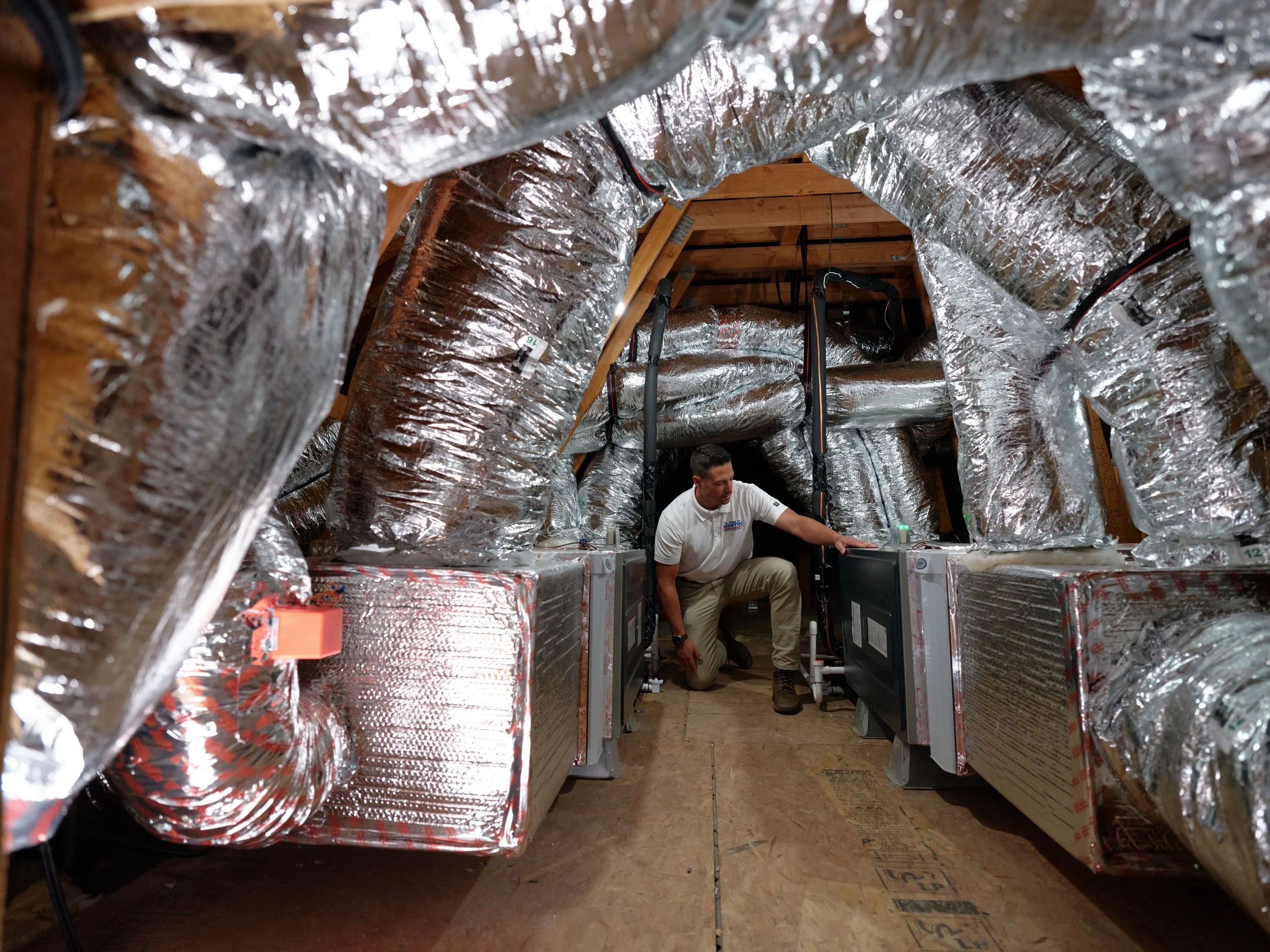
Every November we hear the same thing from Orange County homeowners: 'My furnace worked fine last winter.' Six months of sitting idle is exactly when problems surface. A quick test run in October, before you actually need the heat, is the difference between a minor fix and a cold morning with no options.
While you're at the furnace, there's one more thing worth checking if you have a high-efficiency condensing furnace (identifiable by a PVC exhaust pipe rather than a metal flue). These units produce water as a byproduct of the combustion process, and that water drains through a small tube into a floor drain or condensate pump. If the drain line becomes clogged with algae, mineral buildup, or debris, the water backs up and triggers a safety switch that shuts the furnace down to prevent water damage.
You can often clear a clogged condensate line by locating the drain tube (it's typically a small-diameter plastic line coming from the bottom or side of the furnace), disconnecting it carefully, and flushing it with a mixture of warm water and a small amount of white vinegar. If water flows freely after flushing, reconnect the line, and the furnace should be able to restart. If the line remains blocked or the condensate pump (if your system uses one) isn't running, a technician can address it quickly during a service call.
Check 7: Your Vents, Registers, and Airflow
If the furnace is running and producing warm air at the unit itself but certain rooms aren't getting heat, the problem may not be the furnace at all. It may be an airflow distribution issue.
Walk through every room and check that all supply registers and return air grilles are open and unobstructed. Furniture pushed against a vent, a rug laid over a floor register, or a return grille blocked by a bookshelf can all restrict airflow enough to cause noticeable comfort problems. Closing vents in unused rooms, a common energy-saving strategy that many homeowners use, actually increases static pressure in the duct system, forces the blower to work harder, and can reduce heating performance throughout the entire house.
In Orange County homes, ductwork typically runs through the attic. Over time, ducts can develop leaks at connections, become disconnected entirely, or suffer damage from attic work, pest activity, or simple deterioration of the flex duct material. If your ducts are leaking heated air into the attic instead of delivering it to your rooms, the furnace has to run significantly longer to maintain temperature, and some rooms may never feel adequately warm. If you've noticed that one side of the house is always colder than the other, or that specific rooms never seem to heat up regardless of thermostat settings, a professional duct inspection is worthwhile.
Duct sealing and repair typically costs $300 to $2,000 depending on the extent of the damage and the accessibility of the ductwork. For significant duct problems, especially in older homes across Anaheim, Fullerton, and Villa Park where original ductwork from the 1970s and 1980s may be deteriorating, full duct replacement is sometimes the better long-term investment.
What Furnace Repairs Cost in 2026
If your DIY checks don't resolve the issue, it's time to call a licensed HVAC technician. Here's what to expect in terms of cost for the most common furnace repairs in 2026, based on current industry data.
A diagnostic service call to have a technician evaluate the problem typically runs $75 to $200. Many companies apply this fee toward the cost of the repair if you approve the work, so it's worth asking about that policy when you call to schedule.
Thermostat repair or replacement is one of the simpler fixes, ranging from $100 to $300 for a basic repair. Upgrading to a smart thermostat during the visit can run $300 to $600 installed but often pays for itself through energy savings within a year or two.
Flame sensor cleaning or replacement is another affordable repair at $100 to $250. This is one of the most common furnace repairs technicians perform, and it's usually completed in under an hour.
Igniter replacement runs $150 to $450 depending on the furnace brand and model. Hot surface igniters are consumable parts that wear out over time, and replacement is considered routine maintenance rather than a major repair.
Blower motor repair can range from $150 to $450 for minor issues, while a full blower motor replacement costs $500 to $2,000 depending on whether you have a standard single-speed motor or a more expensive variable-speed model.
Draft inducer motor replacement, which affects the venting of combustion gases, typically costs $200 to $1,500. This is an important safety component since a malfunctioning draft inducer can lead to dangerous exhaust gas buildup.
Control board replacement runs $200 to $1,200. The control board acts as the furnace's brain, coordinating the ignition sequence, monitoring safety switches, and communicating with the thermostat. When it fails (sometimes from power surges, which are common during Santa Ana wind events when the power grid can fluctuate), the furnace either won't start or behaves erratically.
Heat exchanger repair or replacement is the most expensive common furnace repair, typically costing $400 to $1,500 or more. A cracked heat exchanger is also a serious safety concern because it can allow combustion gases, including carbon monoxide, to mix with the air circulating through your home. If a technician diagnoses a cracked heat exchanger, this is one situation where replacement of the entire furnace often makes more financial sense than the repair alone, particularly if the system is more than 15 years old.
The Repair vs. Replace Decision
A furnace that needs a $200 flame sensor cleaning is an easy call. Fix it and move on. But when you're looking at a $1,500 heat exchanger replacement on a 17-year-old system, the math changes significantly.
The general industry guideline is that if the cost of a repair exceeds 50 percent of the price of a new furnace, and the system is past the 15-year mark, replacement is usually the smarter financial move. A new gas furnace (including professional installation) typically costs $4,000 to $8,000 depending on efficiency rating, brand, and the complexity of the installation. High-efficiency condensing furnaces with AFUE ratings of 95% or higher fall at the upper end of that range but can reduce your heating costs by 20 to 30 percent compared to an older standard-efficiency unit.
In Orange County's mild climate, where furnaces run far fewer hours per year than they would in the Midwest or Northeast, the energy savings from a high-efficiency upgrade take longer to recoup. But you also get the benefit of a full manufacturer's warranty (typically 5 to 10 years on parts, with some brands offering limited lifetime heat exchanger coverage), modern safety features, quieter operation, and compatibility with current thermostat technology.
Another factor to consider is repair frequency. If you've had two or three repair visits in the past two years and the bills are adding up, the cumulative cost of keeping an aging system alive often exceeds what you'd spend on a single, planned replacement. Beyond the direct repair costs, there's the disruption factor: lost time waiting for technicians, uncomfortable nights without heat, and the stress of never knowing when the next failure will hit.
Heat pumps are also worth mentioning here, especially for Orange County homeowners. Our mild winters make this region ideal for heat pump systems, which can both heat and cool your home using a single unit. Modern heat pumps operate efficiently in temperatures down to the low 30s (well within our typical winter range) and can reduce heating energy consumption by 30 to 50 percent compared to a gas furnace. They also qualify for federal tax credits of up to $2,000 and various California energy efficiency rebates. If your furnace is at the end of its life and you're considering a full system replacement, a heat pump is worth exploring as an alternative.
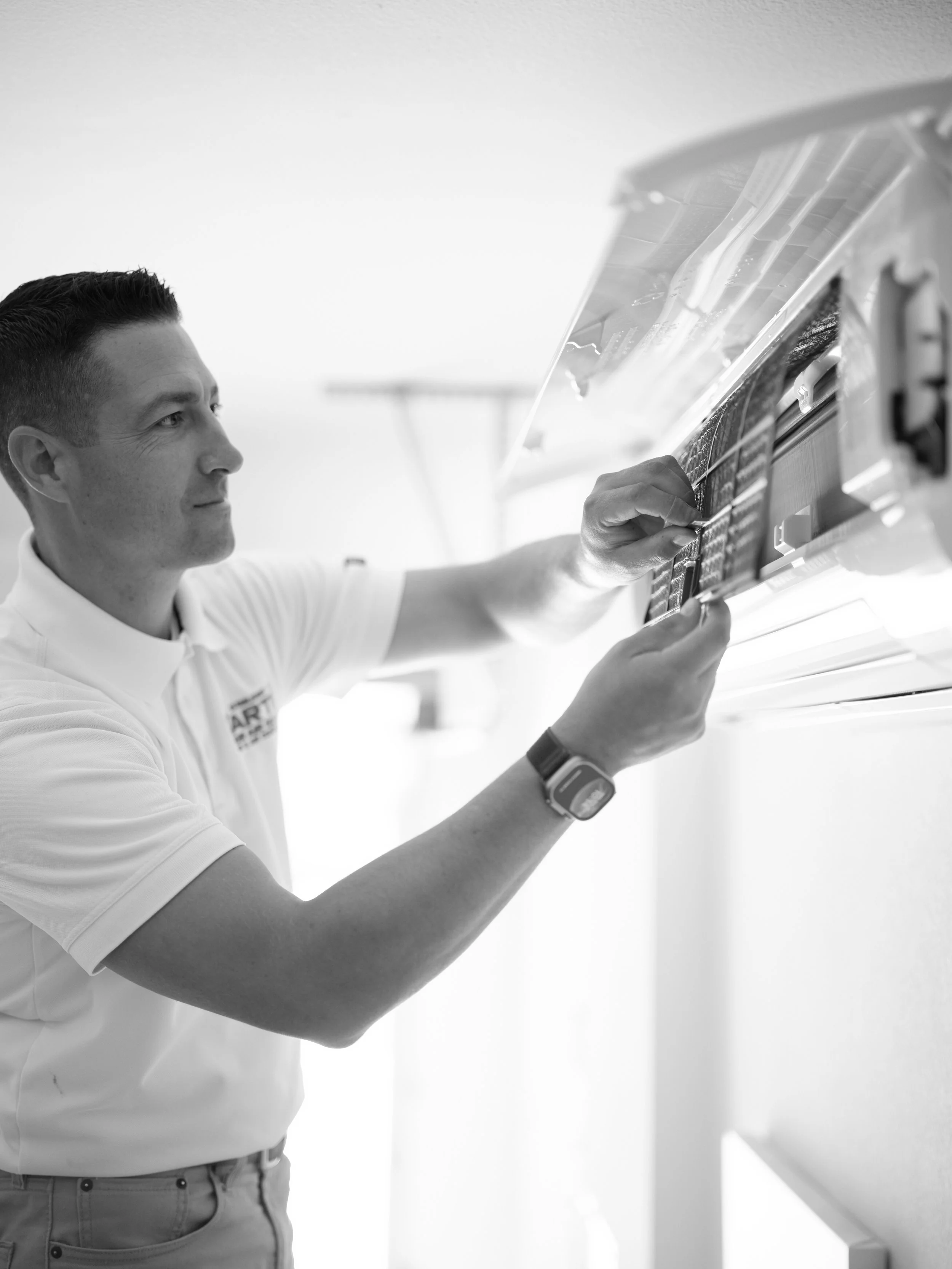
When J Martin evaluates a furnace that isn't working, we look at the whole picture. Sometimes the right answer is a $200 flame sensor cleaning. Sometimes it's a conversation about whether a heat pump makes more financial sense than repairing a 17-year-old system. You'll always get the honest answer.
If your furnace is less than 10 years old, single repairs almost always make sense. Between 10 and 15 years, it depends on the repair cost and the system's overall condition. Beyond 15 years, weigh the repair cost against the value of starting fresh with a new, warranted system.
Why Your Furnace Might Smell Strange When It First Turns On
If your furnace is working but produces an unusual odor when it first fires up after sitting idle for months, that's a separate (and usually harmless) issue. Dust accumulates on the heat exchanger, burners, and inside the cabinet during the months when the furnace isn't running, and when the burners ignite for the first time in the season, that dust burns off and creates a brief burning smell. It typically dissipates within 20 to 30 minutes.
However, certain smells are not normal and warrant immediate attention. A persistent burning odor that doesn't go away, a smell like rotten eggs (gas leak), an electrical or metallic burning smell, or a musty mildew odor from the ducts all point to issues that need professional evaluation. We cover this topic in depth in our guide to why your heater smells weird when you first turn it on.
Preventing Furnace Problems Before They Start
The single most effective thing you can do to prevent your furnace from failing when you need it is to schedule a professional tune-up before heating season begins. In Orange County, that means sometime in October or early November, before the first real cold stretch hits.
During a professional furnace maintenance visit, a technician will inspect and clean the burners, check the heat exchanger for cracks, test the ignition system, verify the flame sensor is clean and responsive, inspect the blower motor and wheel, check electrical connections, test the safety controls and limit switches, measure gas pressure, verify proper venting and exhaust, and confirm thermostat calibration. This comprehensive inspection catches developing problems while they're still inexpensive to fix and ensures that the system is ready to run reliably all winter. A standard furnace tune-up typically costs $70 to $200, and it's one of the best investments you can make in your home comfort. To learn more, visit our page on HVAC maintenance plans.
Between professional visits, your main responsibility is filter maintenance. Replace or clean your filter every 60 to 90 days during heating season (more frequently if you have pets or allergy concerns), keep the area around your furnace clear of stored items, and never block supply or return vents anywhere in the house. Also make sure your carbon monoxide detectors are functioning and have fresh batteries. California law requires CO detectors in every home with a gas appliance, and they should be tested monthly.
One more prevention tip specific to Orange County: because our furnaces sit idle for six to eight months during the warmer seasons, the first startup of the year is when problems are most likely to appear. Components that were working fine in March may have degraded by November. Running your furnace briefly during a mild evening in October, before you actually need it, gives you the chance to identify issues on your schedule rather than during a cold snap when every HVAC company in the county is booked solid.
We're Here When You Need Us
At J Martin Indoor Air Quality, we've been repairing furnaces and keeping Orange County families warm (and cool) for 15 years. We're a family-owned company serving Yorba Linda, Anaheim, Brea, Fullerton, Villa Park, and surrounding communities, with a 4.97-star average rating across more than 5,000 customers. Our technicians are fully certified, background-checked, and never work on commission, which means you'll always get an honest diagnosis and a straightforward recommendation.
If you've worked through the seven checks in this guide and your furnace still isn't working, give us a call at (714) 462-4686. We offer same-day service for heating emergencies, transparent pricing before any work begins, and the kind of genuine, no-pressure experience that's made us Orange County's most trusted HVAC company.
J Martin Indoor Air Quality | (714) 462-4686 | Services