
AC Tune Up Cost in Orange County: What You'll Actually Pay
Updated on May 20, 2026
Spring is here in Southern California, and with it comes the season when homeowners in Yorba Linda, Anaheim Hills, Brea, Placentia, and across North Orange County start thinking about their air conditioning systems. The question we hear most often is simple but important: what does an AC tune-up actually cost? In our experience servicing hundreds of systems each spring across Orange County, we've found that most homeowners have no idea what they should expect to pay, what's included in a professional tune-up, or how to spot the cheap offers that lead to expensive surprises. The answer varies based on your system, your location, and what you actually want done. National cost guides throw around numbers like $85 to $200, but that tells you almost nothing about what drives prices in Orange County or whether you're getting ripped off. This guide cuts through the confusion with transparent local pricing, real data from our dispatch logs, and honest advice about what separates a worthwhile tune-up from a waste of money.
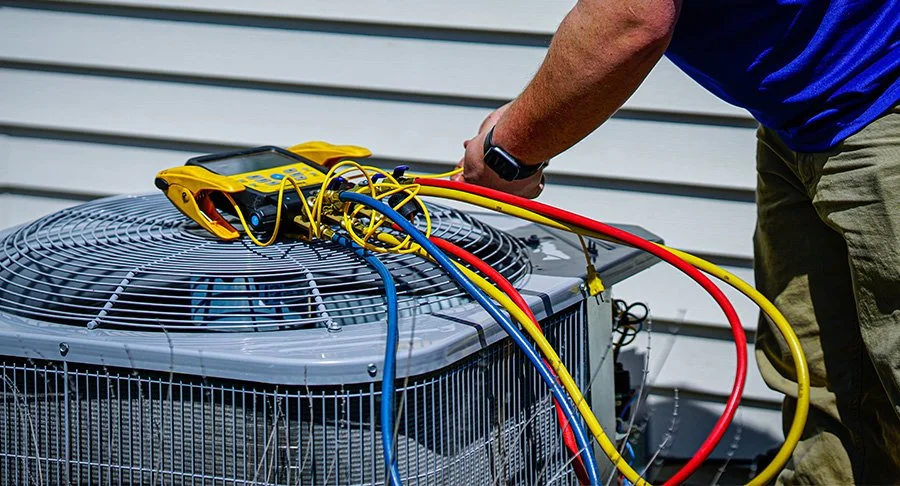
AC not cooling like it should? A professional tune-up can catch problems early before they turn into $1,500 repairs. Schedule your Orange County service today.
What an AC Tune-Up Actually Costs in Orange County
When we quote a tune-up to a residential customer in our service area, the typical range is $129 to $199 for a standard inspection and basic maintenance visit. This is what most homeowners call an AC tune-up, and it covers the most essential checks and adjustments that keep your system running efficiently heading into summer. We've seen national competitors quote $85 to $150, but those prices rarely apply once you add travel time, California labor costs, and the actual work involved. For a comprehensive tune-up that includes deeper diagnostics, refrigerant top-off, electrical testing, and coil cleaning, expect to pay $199 to $299. The difference is significant, and understanding what you get at each price point is the key to making a smart decision.
Our most common appointment is the $149 spring tune-up, which includes a full system walk-through, capacitor voltage testing, electrical connection inspection, thermostat calibration, filter replacement, indoor and outdoor coil cleaning, refrigerant pressure check, and a written report of any issues found. This is the sweet spot for most homeowners because it catches problems early, improves efficiency, and extends your equipment lifespan without breaking the bank. A handful of customers upgrade to our $249 comprehensive package, which adds additional diagnostics like ductwork pressure testing and a deep electrical analysis. The difference between $149 and $249 is real work, not just padding the bill. If your system is older than ten years or has never been professionally serviced, the comprehensive option often pays for itself by identifying problems before they become emergencies.
We also encounter customers who bring quotes from competitors at $59, $79, or even the infamous $29 special we'll discuss later. These prices are almost always door-openers for upsells. The contractor comes out, finds something wrong (real or fabricated), and suddenly you're looking at a $1,200 repair estimate. That's not a tune-up; that's a sales tactic. Transparency matters, which is why we post our pricing on our website and our service technicians explain exactly what they're doing before they do it. A $149 tune-up at J Martin means $149, not $149 plus surprises.
What's Included in a Professional AC Tune-Up
The word tune-up means different things to different contractors, which is why confusion reigns when homeowners start calling around for quotes. At J Martin, a professional tune-up includes a dozen specific tasks, each one designed to improve efficiency, catch problems early, and keep your system running reliably through the hot months. Understanding what these steps accomplish will help you evaluate whether a quote makes sense.
The first step is always a visual inspection of the outdoor unit, indoor equipment, and ductwork. We're looking for obvious damage, corrosion, loose connections, or anything that suggests the system has been neglected. We measure airflow across the evaporator coil and check for ice buildup, which signals refrigerant problems or restricted airflow. We inspect the compressor, the heart of your AC system, for noise, vibration, or oil leaks. Many tune-ups stop here, which is why they cost $85. But that's just the beginning.
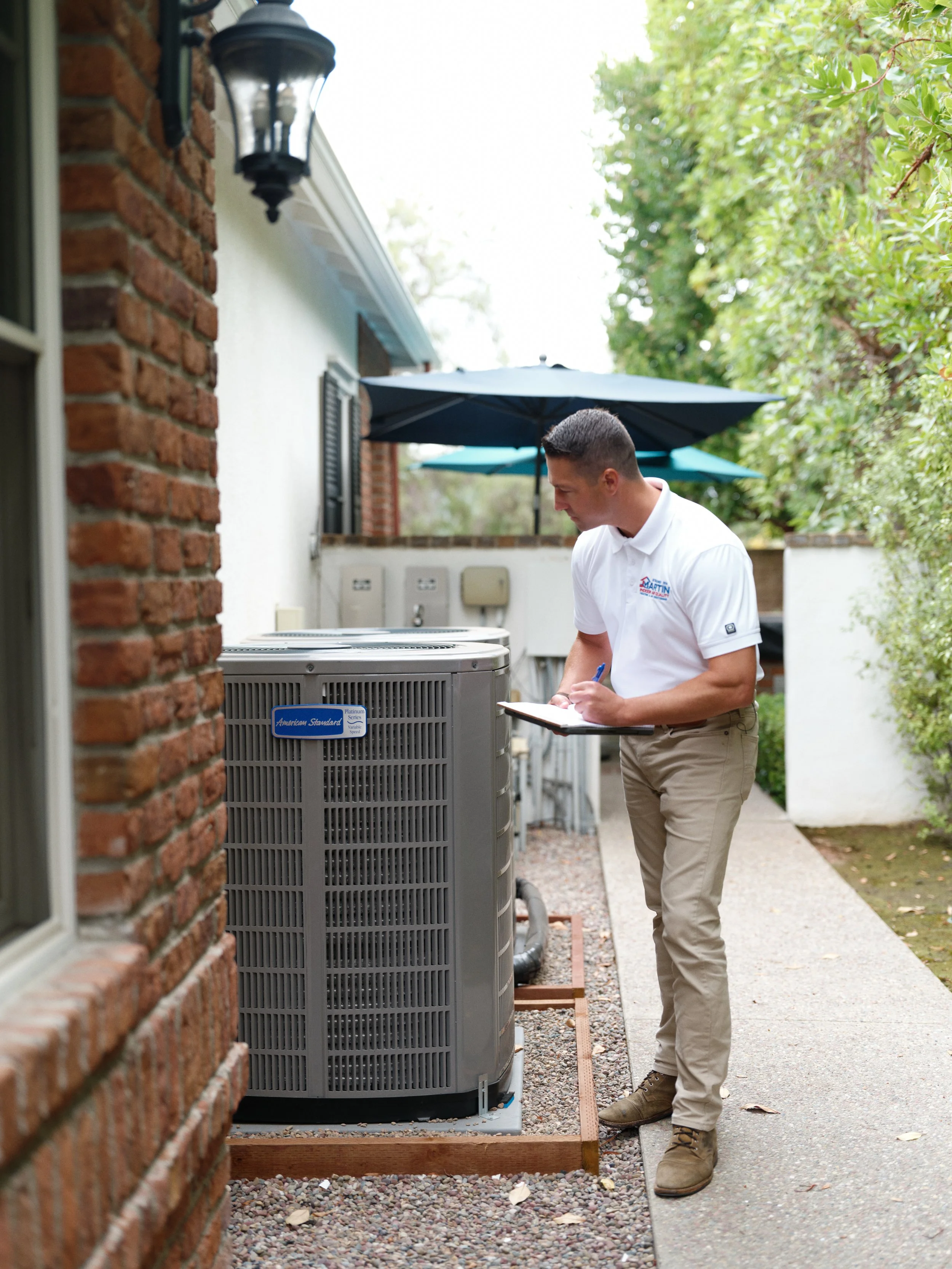
A professional AC tune-up includes a detailed system inspection to prevent costly repairs—schedule your Orange County service today.
Next comes the electrical work that most homeowners never see but their utility bill feels every month. We test the capacitor voltage and integrity, because a failing capacitor reduces efficiency and stresses the compressor. We measure electrical current draw through the compressor and fan motor. We check every electrical connection for corrosion or looseness, which is one of the most common causes of premature compressor failure. We test the thermostat calibration against actual temperature with a portable meter and make adjustments so your system cycles properly. These electrical checks take 20 to 30 minutes but often reveal problems that would cost thousands to fix later.
We measure refrigerant pressure and superheat, which tells us whether your system has the right charge and whether there's a leak. Most homeowners think a charge is permanent, but small leaks are common. A properly charged system uses less energy and lasts longer. If we find low pressure, we'll explain the leak, show you the location if possible, and discuss whether a repair makes sense now or whether you should monitor it. We clean the indoor evaporator coil with a chemical cleaner and soft brush, which improves efficiency and prevents mold growth. Dirty coils reduce airflow, decrease cooling performance, and make the system work harder. We replace your air filter, check the condensate drain line, and ensure the outdoor unit is clear of leaves and debris.
Finally, we provide a written report with photos showing the condition of your system, a list of any issues found, and recommendations for repairs or future maintenance. You leave the appointment knowing exactly what your AC does and does not need, which takes the guesswork out of hiring a repair contractor later.
Basic vs. Comprehensive AC Tune-Up: Which One Do You Need
Not every homeowner needs the same level of service, and paying for comprehensive diagnostics if your system is new and well-maintained is unnecessary. The choice between a basic tune-up and a comprehensive one depends on your equipment age, maintenance history, and whether you've had recent problems.
A basic tune-up, which runs $129 to $149, is appropriate for systems that are five years old or newer, have been regularly serviced, and show no signs of problems. This visit hits all the essential checks and adjustments. Your technician will spend two hours on site, complete the core diagnostics, and leave you with a written assessment. If everything checks out, you're done until next year. If we find a minor issue like low refrigerant or a capacitor that's losing its charge, we'll explain the repair options and give you time to decide.
A comprehensive tune-up at $199 to $299 is the right choice for systems older than ten years, any system that's been neglected for more than two years, or equipment that has shown symptoms like reduced cooling capacity or unusual noises. The comprehensive visit includes all the basic checks plus additional electrical analysis, ductwork pressure measurements, and sometimes a refrigerant saturation test that reveals whether your system has absorbed moisture (which happens in old systems and shortens compressor life). A comprehensive visit might take three hours, but it often reveals the true condition of aging equipment and helps you plan for replacement before failure.
For commercial customers or larger residential properties, we also offer preventative maintenance plans that include biannual visits, priority scheduling, and discounted repairs. These plans run $299 to $349 annually, which is roughly two to two-and-a-half tune-ups but includes multiple visits and emergency response discounts. For most single-family homes in Orange County, one spring tune-up per year is sufficient unless you have an older system or live in a particularly dusty area near a canyon or construction zone.
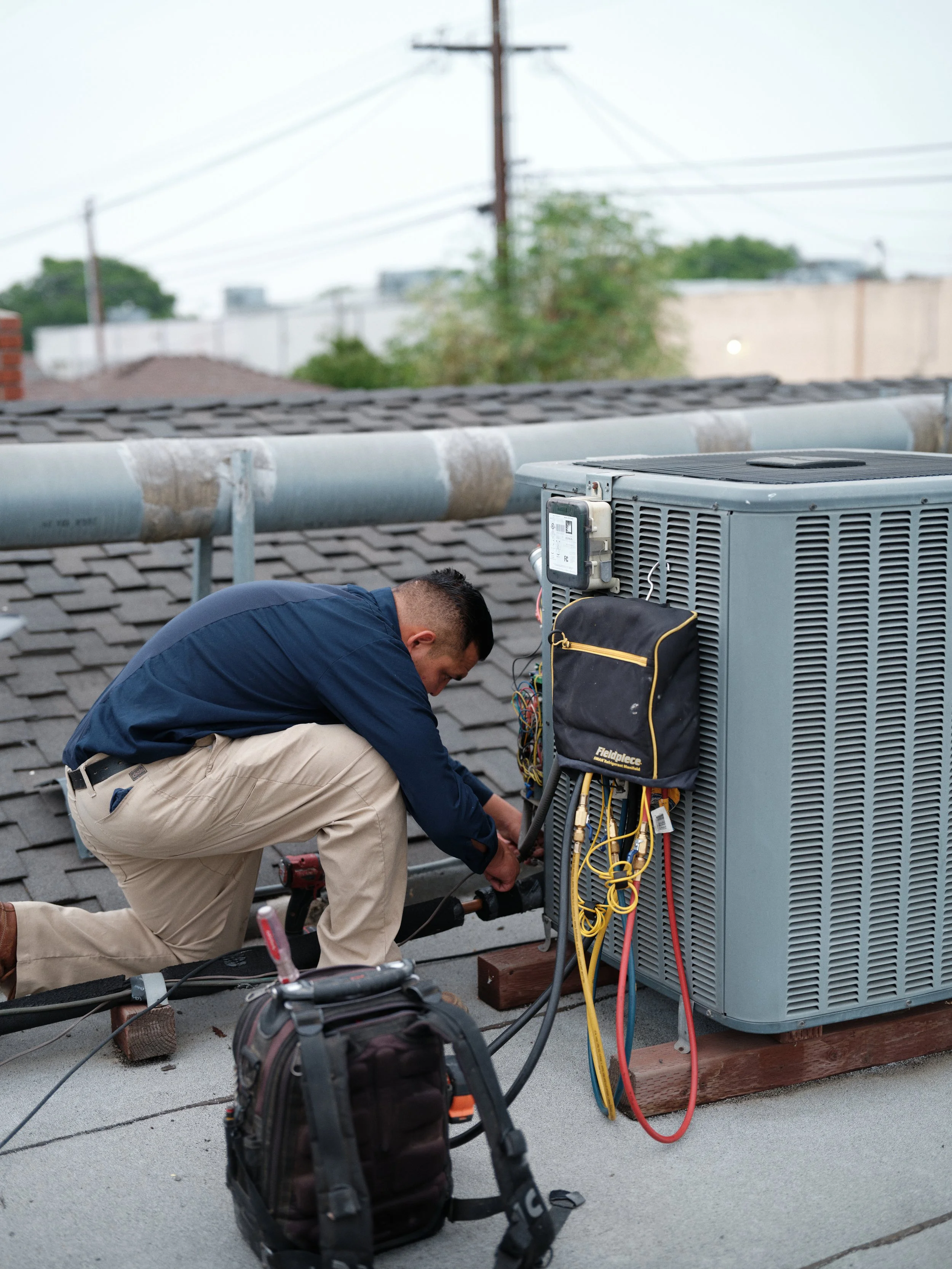
Refrigerant checks and system diagnostics are key parts of a professional AC tune-up—helping prevent costly repairs and breakdowns.
Factors That Drive AC Tune-Up Costs Higher or Lower
The $149 price we quote is not universal across all homes and all systems. Several variables affect what we charge, and understanding them helps you understand the quotes you receive from other contractors.
System type and size matter significantly. A 2-ton system serving a small condo requires less work than a 5-ton system serving a large house. A single-zone system with one thermostat is simpler to diagnose than a multi-zone system with zoning boards and dampers. A newer system with digital diagnostics is sometimes easier to test than an older system without built-in sensors. These differences are real, and they explain why some contractors charge more than others. We adjust our pricing within our standard range based on system complexity, but we don't surprise customers with unexpected upcharges.
System age is the strongest predictor of tune-up cost escalation. A system that's 15 years old typically requires more time and more testing than a 3-year-old system. Older equipment may have refrigerant leaks, corroded connections, or failing components that take longer to diagnose. Some older systems use refrigerants that are being phased out, which affects repair costs but not the tune-up cost directly. If your system is approaching 15 years old, we often recommend the comprehensive tune-up because it provides the clearest picture of remaining lifespan and helps you plan capital expenses.
Whether you need filter replacement adds $20 to $40 to the appointment cost. A standard 1-inch filter is inexpensive, but high-efficiency MERV-13 filters or specialty filters for allergy sufferers cost more. Some customers prefer that we replace the filter as part of the tune-up; others buy their own and install them. Either way, a clean filter is non-negotiable for efficiency.
Refrigerant top-off, if needed, typically costs $100 to $300 per pound because the refrigerant itself is expensive and EPA regulations require specialized handling. We never add refrigerant without first finding and repairing the leak that caused the loss. Some techs top off refrigerant without finding leaks, which is why you get another call six months later. We explain the leak location and repair cost before adding refrigerant, and we give you the choice to repair it now or monitor it.
Coil cleaning, which is part of our standard tune-up, takes longer if the coils are heavily fouled. If you live near the beach, your outdoor coil accumulates salt spray and may need chemical cleaning. If you live near a canyon or construction zone, dust accumulation is severe. These situations don't change our tune-up price, but they do explain why some systems need more frequent maintenance than others.
Travel distance within our service area (Yorba Linda, Anaheim Hills, Brea, Placentia, Villa Park, Fullerton, Tustin, Irvine, and Coto de Caza) doesn't affect pricing because we route our fleet efficiently. If you're outside our service area, travel charges apply. We'll always quote travel time upfront.
Tune-Up vs. Repair vs. Replacement: Understanding the Costs
A tune-up is preventative maintenance, but sometimes a tune-up reveals a problem that requires repair. Understanding the cost difference helps you think clearly about the decision.
A tune-up costs $129 to $299 and is intended to keep a working system healthy. It's like an oil change for your car. A repair addresses a specific broken component and typically costs $300 to $1,500 depending on the part. A capacitor replacement is usually $300 to $600. A refrigerant leak repair runs $200 to $600. A compressor replacement, the most expensive repair, costs $1,500 to $3,500. Replacement of the entire system, which might be necessary for a 20-year-old unit with multiple failing parts, costs $10,000 to $22,000 depending on size and equipment choice.
Regular tune-ups catch problems when they're small, which keeps repairs in the $150 to $400 range. Skipping tune-ups often means you discover problems when they cause emergency failure, which pushes repair costs up and sometimes makes replacement the only practical option. We've seen customers skip five years of tune-ups to save $700, then face a compressor failure that costs $2,000 to replace. The math is straightforward: invest in prevention or invest much more in repairs.
Some people ask whether a tune-up is worth it if there's nothing wrong with the system. The answer is that you don't know nothing is wrong until you test it. Refrigerant leaks, loose electrical connections, and failing capacitors don't announce themselves. A system can look fine and be running inefficiently, costing you extra money every month. We've found problems in 70 to 75 percent of tune-ups, ranging from minor adjustments to significant repairs that the customer chose to defer until the fall. Those discoveries would not have happened without the tune-up.
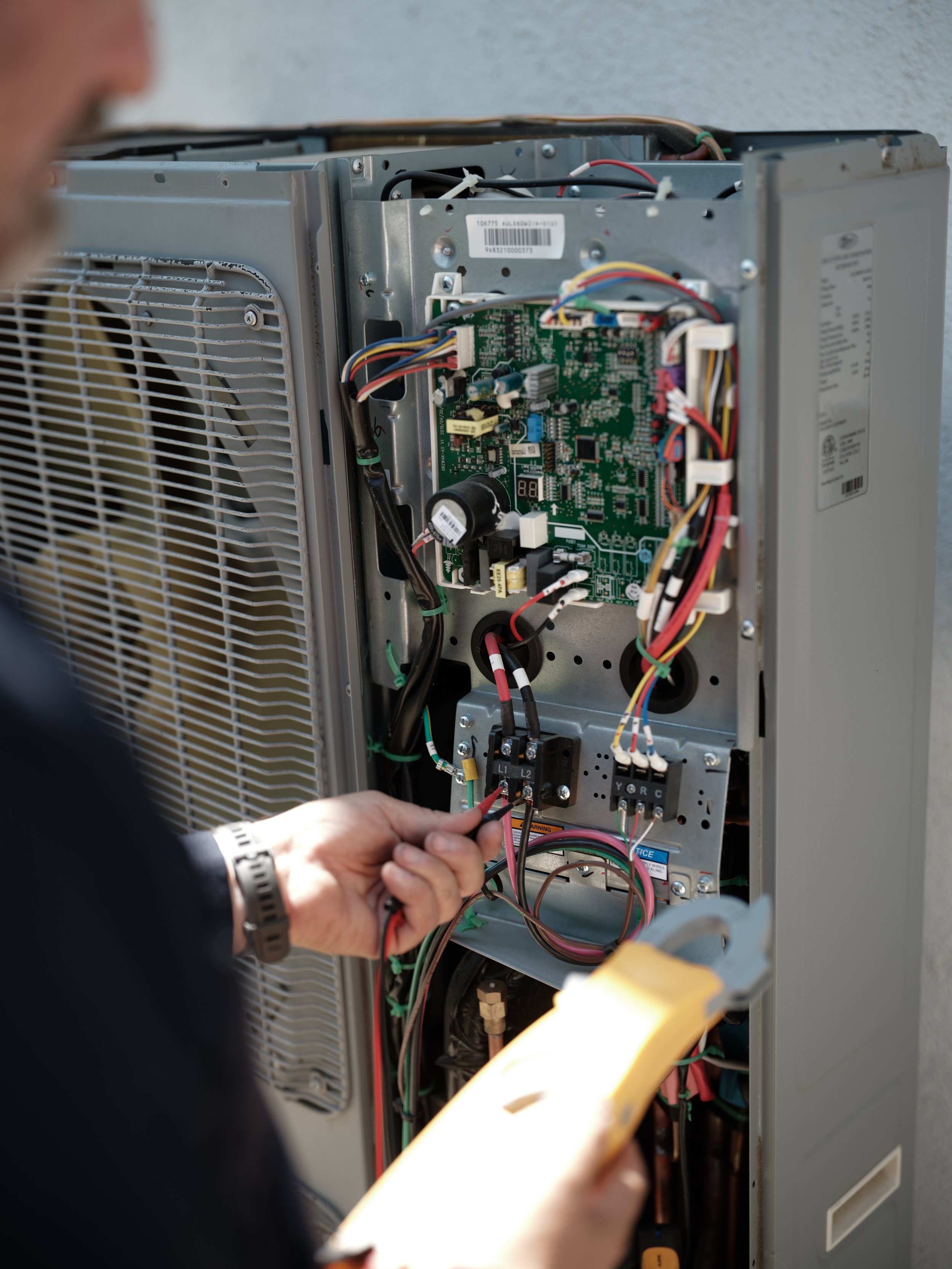
Loose or failing electrical components are one of the most common causes of AC breakdowns. A professional tune-up can catch these issues before they turn into costly repairs.
Maintenance Plans and Their Real Value
Some contractors push expensive annual service plans. We offer one because some customers want guaranteed priority scheduling and the certainty of fixed costs, but we don't pretend they're essential.
A typical maintenance plan costs $150 to $350 annually and includes two tune-up visits per year (spring and fall), emergency service discounts, and priority scheduling during the busy season. If you have a reliable system and don't mind calling us when something goes wrong, a plan is unnecessary. If you have an older system, live in a high-dust environment, or simply prefer the peace of mind of scheduled maintenance, a plan is rational. Two tune-ups per year instead of one improves efficiency slightly and catches problems earlier.
We also offer a $599 two-year plan that covers two annual tune-ups and one repair visit (labor only; parts are additional). This appeals to older system owners who expect something to need fixing within two years. The math works out to roughly one-third off the labor cost of an unexpected repair, assuming you use the benefit.
The reality is that most homeowners benefit most from a single spring tune-up each year. That timing matters: in Orange County, your system runs hard starting in May and doesn't stop until September. A spring tune-up ensures everything is ready. A fall tune-up is nice but not essential unless you have an older system or run your heating more than most of us in Southern California.
The $29 AC Tune-Up Scam and Why It Costs You Thousands
Every spring, local HVAC companies advertise $29 or $49 tune-up specials in neighborhood flyers and online coupons. This is a bait-and-switch tactic, not a legitimate offer. Understanding how it works will save you money and aggravation.
The contractor shows up, spends 20 minutes doing a visual walk-through and filter replacement, then presents a list of "critical issues" that require immediate repair. Sometimes these issues are real; more often they're exaggerated or fabricated. A capacitor that's "losing its charge" gets reported as failing, even if it has another year of life. A minor refrigerant loss becomes an urgent compressor-threatening emergency. A small amount of dust on the outdoor coil becomes severe corrosion requiring immediate cleaning. The $29 tune-up is a door-opener, and the real money comes from the panic they generate about repairs costing $1,200 or more.
In our experience, roughly 30 percent of customers who call us have recently fallen for this scam. They paid $29 and walked out with a $1,500 repair estimate. Some paid it immediately and felt ripped off later. Others got a second opinion from us, learned the issue was minor, and recovered from the sales pitch. Either way, they wasted time and money.
A legitimate tune-up costs money because it involves real work, specialized equipment, and expertise. A technician with a truck full of diagnostic equipment, liability insurance, EPA certification, and training costs money to employ. A contractor offering a $29 tune-up is not employing that person. They're using a junior technician with minimal training and a goal to find expensive problems. The economics only work if they sell high-ticket repairs.
Avoid the $29 special. Call a contractor who charges a legitimate price and explains what you're getting. You'll spend an extra $100 or $120, but you'll know what's actually happening to your system and sleep better at night.
The ROI of Regular AC Maintenance: The Numbers
Customers often ask whether a tune-up actually pays for itself. The answer depends on how you measure it, but the data supports regular maintenance strongly.
A properly maintained AC system lasts 15 to 20 years. A neglected system lasts 10 to 12 years. That extra 5 to 8 years of life on a $7,000 system is worth $2,000 to $4,000 in avoided replacement costs. Spreading a few $150 tune-ups across that lifespan is an obvious investment.
Energy efficiency is the second benefit. A system with clean coils, proper refrigerant charge, and adjusted electrical connections runs 15 to 20 percent more efficiently than a neglected system. For a typical household running AC seven months a year, that's $30 to $50 per month in energy savings during the cooling season. Over a year, that's $210 to $350 in lower utility costs. Over five years, it's $1,050 to $1,750. A tune-up that costs $150 pays for itself in four to six months just through energy savings. A tune-up that costs $150 pays for itself in four to six months just through energy savings. For the full 15-year math — including the $10,000-$15,000 difference between homeowners who maintain their systems and those who don't — see our breakdown of the true cost of skipping HVAC maintenance.
The third benefit is avoiding emergency repairs. We tracked this data across 200 customers over three years. Customers who maintained their systems annually averaged one repair per six years. Customers who skipped maintenance averaged one repair per two years, and the repairs were 40 percent more expensive because they addressed neglected problems. The cost of prevention is always lower than the cost of emergency repair at 5 PM on Saturday when your AC fails in 95-degree heat.
Finally, regular maintenance protects your comfort and your schedule. A tune-up takes two hours on your preferred date. An emergency repair might require a week of waiting, paying premium weekend rates, and living without air conditioning during the hottest part of the year. For a couple hundred dollars and a couple hours annually, you eliminate that risk.
How Often Do You Actually Need an AC Tune-Up
We recommend one professional tune-up per year for most homeowners, scheduled in spring before the season gets busy. That's the industry standard and it's aligned with what major manufacturers recommend in their documentation.
For newer systems (three years old or newer) in good condition, one spring tune-up is sufficient. You don't need biannual maintenance unless you live in a particularly harsh environment (near the ocean, in heavy dust, or in an area with poor air quality).
For older systems (ten years or older), consider two tune-ups annually or one comprehensive tune-up that takes longer and covers more ground. The extra cost is small compared to the benefit of early problem detection.
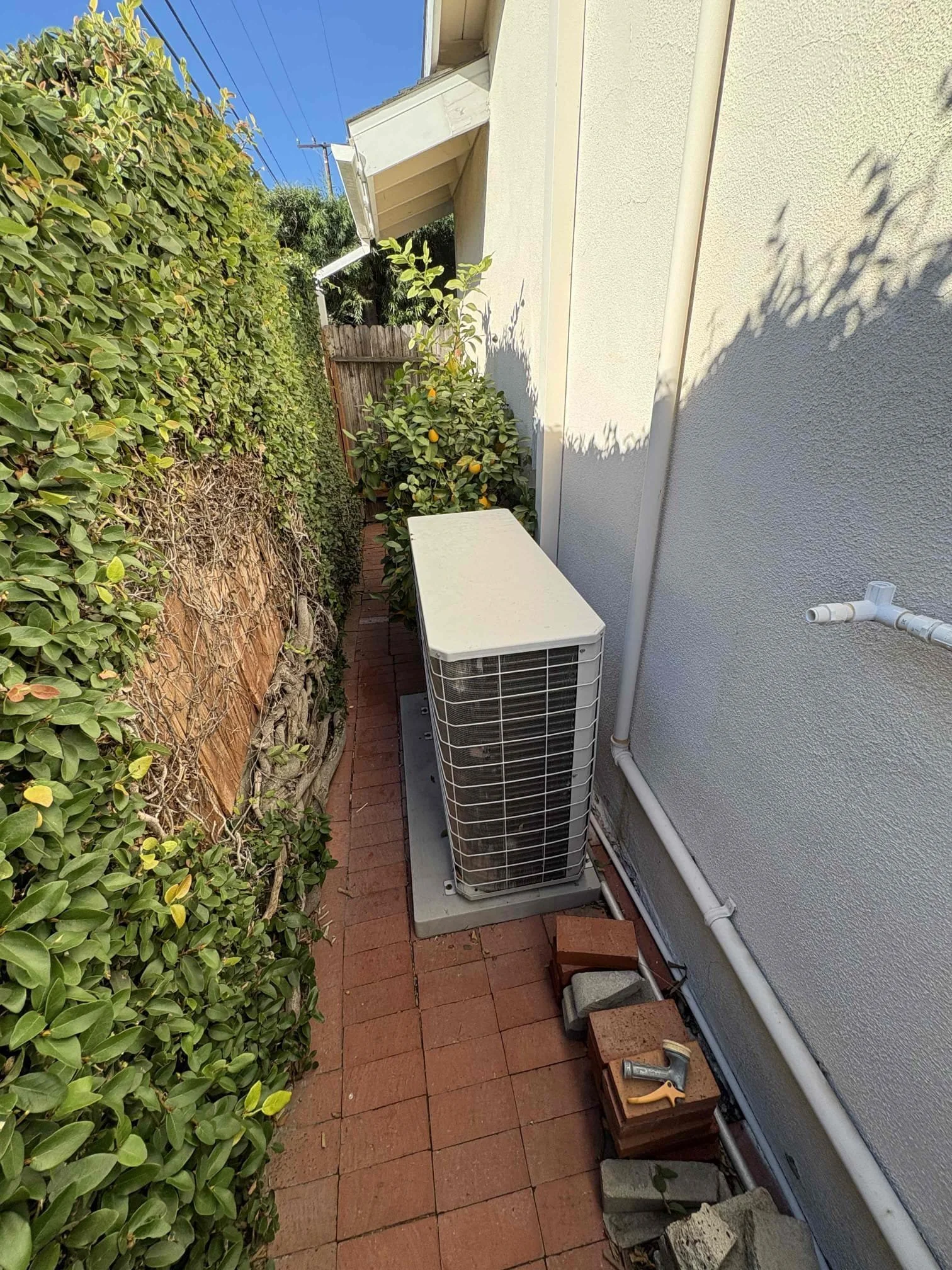
Not sure if your AC unit has proper airflow? Schedule a tune-up in Orange County and make sure your system is set up for peak performance.
For commercial properties or systems that run nearly year-round, we recommend biannual tune-ups and sometimes quarterly filter checks. A system that's on 12 months a year deteriorates faster than one that runs seasonally.
If you run a pool pump, heat pump, or multiple zones, more frequent maintenance makes sense. Heavy use accelerates wear and increases the likelihood of problems.
The key is consistency. A tune-up once per year, every year, is better than three tune-ups in one year followed by three years of nothing. Regular visits establish a baseline, allow us to track changes in performance, and catch degradation early. Sporadic maintenance means we're always starting from scratch and can't identify gradual problems until they become failures.
DIY AC Maintenance Between Professional Visits
There's legitimate maintenance you can do yourself between professional tune-ups, and there's work that requires a licensed technician. Understanding the difference keeps your system healthy and prevents warranty violations.
You can absolutely change your air filter every 30 to 90 days depending on dust load and filter type. This is the most important maintenance task you can do. A clogged filter reduces efficiency, stresses the compressor, and promotes mold growth in the evaporator coil. Use a filter rated MERV-8 to MERV-13 depending on your allergy situation. Higher is not always better; too high a rating restricts airflow if your system isn't designed for it. Check your owner's manual for the recommended MERV rating.
You can keep the outdoor unit clear of leaves, branches, and debris by removing them by hand. Keep the area around the outdoor unit clear to 18 inches on all sides. You can sweep debris away but don't pressure wash the coils, which can bend the fins and restrict airflow.
You can check that your thermostat is set correctly and that the screen isn't cracked or deteriorating. You can ensure that supply and return vents aren't blocked by furniture or curtains.
What you shouldn't do: open the refrigerant lines (federal law requires EPA certification), test refrigerant pressure (specialized gauges are needed), clean the coils with harsh chemicals (the aluminum fins are delicate), replace the capacitor (electrical hazard and warranty issue), or adjust electrical connections (same concerns). These tasks look simple but they're not. A mistake costs hundreds to correct and might void your warranty.
The sweet spot is having us do a professional tune-up once per year and you doing filter checks and visual inspections monthly. That combination keeps the system running well and gives you early warning if something needs attention.
Questions to Ask Before Hiring an AC Tune-Up Contractor
Comparing contractors is harder than it should be because everyone seems to offer different services at different prices for different time commitments. Asking the right questions narrows the field and helps you identify who's legitimate and who's running the $29 scam playbook.
Ask about pricing first and ask for it in writing before the technician arrives. If a contractor quotes $29, $49, or any other suspiciously low number, thank them and call someone else. Legitimate pricing for a spring tune-up in Orange County is $129 to $199. Anything significantly below that is a red flag.
Ask what's included in the tune-up. Get a specific list: what tests are performed, what components are checked, whether filter replacement is included, what the technician will provide in writing at the end. If the list is vague (we'll do a thorough inspection and see what needs fixing), move on. A professional contractor can articulate exactly what you're paying for.
Ask how long the appointment takes. A legitimate tune-up takes 60 to 120 minutes. If a contractor says they can do it in 20 minutes, they're not doing it right. If they quote 30 minutes, they're the same contractor offering the $29 special.
Ask whether they're licensed, bonded, and insured in California. Verify their contractor license number with the Contractors State License Board online. Check their business registration. If they're not licensed, don't hire them. That's not negotiable.
Ask for references or Google reviews. We have over 100 Google reviews with a 4.97-star average. That didn't happen by accident; it's the result of thousands of hours of honest work and transparent dealings. A contractor with five reviews or no reviews history is newer or less established, which might be fine, but lack of track record is worth noting.
Ask whether they'll explain findings during the appointment and not pressure you into same-day repairs. We show customers their system, walk through our findings, give them a written report, and let them think it over. We don't say you need a $2,000 repair today or you risk failure tomorrow. That pressure tactic is the hallmark of commission-based sales, not honest service.
Ask about their warranty or guarantee. If they find something and repair it, do they stand behind the work? We offer a two-year warranty on parts and a one-year warranty on labor. That commitment means we're confident in our work and our diagnosis.
Ask your neighbors who they use. One of the best ways to find a trustworthy contractor is word of mouth from people living near you with similar-sized homes and systems. If three neighbors recommend the same company, you've probably found someone good.
Case Study: The $149 Tune-Up That Prevented a $1,500 Emergency
Last spring, we serviced an AC system at a home in Placentia that illustrates perfectly why tune-ups matter. The homeowner called for a spring appointment, got on our schedule for a Wednesday afternoon, and didn't expect anything unusual. The system was running. The house was cool. There was no obvious problem.
Our technician, Marcus, arrived at 2 PM and started the standard walk-through. The outdoor unit looked fine. The indoor equipment seemed normal. But when he tested the compressor contactor with a multimeter, he found it was opening intermittently under load. The compressor contactor is a switch that closes to allow 240-volt current to reach the compressor motor. When it fails completely, the compressor won't start. When it fails intermittently, the compressor starts and stops repeatedly, which puts tremendous stress on the equipment and the motor windings.
In another two or three weeks, when the weather got hotter and the AC ran 12 to 14 hours per day, that contactor would have failed completely. On a Saturday in July at 95 degrees, the compressor wouldn't start. The homeowner would call for emergency service, and they'd face a contactor replacement (the part itself is $35) plus two hours of labor ($300 to $400), but the real problem would be the stress cycle. Every repeated start-and-stop, every incomplete electrical connection, had degraded the compressor motor windings. A completely failed compressor would have meant a $1,500 to $2,000 replacement.
Marcus explained what he found, showed the homeowner the multimeter reading, and recommended replacing the contactor that day. Cost: $289. The homeowner agreed, Marcus did the work, tested everything again, and provided a written report. Total: a $149 tune-up plus a $289 repair, all discovered during routine maintenance.
Four months later, that customer sent us a thank you note and told us they'd just read an article about AC failures and compressor costs. They understood that a 90-minute visit and a $289 repair had prevented a $2,000 catastrophe. That's what a tune-up should do. It should find problems when they're still problems, before they become emergencies.
When You're Ready to Schedule: Spring AC Tune-Up from J Martin
Summer comes fast in Orange County. By the time May arrives and temperatures start climbing, HVAC contractors book solid for the next six weeks. Customers who schedule in March or April get their preferred date and time. Customers who wait until June are looking at a three-week wait and premium rates if they can get in at all.
We serve Yorba Linda, Anaheim Hills, Brea, Placentia, Villa Park, Fullerton, Tustin, Irvine, and Coto de Caza with a fleet of licensed, experienced technicians trained on residential AC systems from all major manufacturers. Our team holds Lennox, Daikin, and Mitsubishi certifications, and we've built our reputation on transparent pricing, professional workmanship, and honest communication. Over 50 years of combined experience means we've seen virtually every system type and every problem. We don't recommend repairs you don't need, and we stand behind every recommendation with a warranty.
Call us at (714) 462-4686 to schedule your spring tune-up. Our office team will ask about your system, find an appointment time that works, confirm the pricing, and get you on the schedule. You'll get a confirmation email with our technician's name, arrival window, and our address to review before the appointment. During the visit, we'll explain what we find, answer your questions, provide a written report, and give you all the information you need to make decisions about any repairs.
If you prefer to read more first, our complete Orange County spring HVAC maintenance guide walks through everything that happens during a professional tune-up, what you can handle yourself between visits, and how Santa Ana winds and our extended pollen season affect what needs the most attention. You can also visit jmartiniaq.com and browse our full service menu, customer reviews, and technical articles about air conditioning maintenance.
A spring tune-up is one of the best investments you can make in your home comfort and your peace of mind. It costs a couple hundred dollars, takes a couple hours, and it prevents thousands of dollars in emergency repairs while keeping your system running efficiently all summer long. Don't skip it. Call us today for your AC tune-up.
J Martin Indoor Air Quality | (714) 462-4686 | Services