
Is a Smart Thermostat Worth It? Real Savings Data for Orange County Homes
Posted on April 16, 2026
A Yorba Linda homeowner called us for a tune-up last spring and mentioned he'd installed a Nest Learning Thermostat about eight months earlier. He wasn't sure it was doing anything. The house felt the same, the display looked nice on the wall, and the app was fun to check, but his SCE bills didn't seem any different. We pulled up his energy usage data through the Nest app while we were there. It turned out the thermostat had been saving him about 12% on cooling runtime compared to the previous year. The problem was that SCE had raised rates by roughly 13% over that same period, which completely masked the savings. Without the thermostat, his bills would have been noticeably higher. With it, they'd stayed roughly flat during a year when most of his neighbors saw increases.
That's the reality of smart thermostats in Orange County in 2026. They work. The energy savings are real and documented across multiple independent studies. But whether a smart thermostat is "worth it" depends on what you're paying for electricity, how you use your HVAC system, which thermostat you choose, and whether you actually use the features that generate the savings. A $250 thermostat that sits on the wall running a schedule you set once and never adjusted is a very different investment than the same thermostat actively managing your system around your daily patterns, your utility's peak pricing windows, and the rooms you actually occupy.
At J Martin Indoor Air Quality, we install and service smart thermostats as part of our HVAC work across Orange County. We've seen them make a meaningful difference, and we've seen homeowners spend $250 on a gadget they never configured properly. This post is going to give you the actual numbers at current SCE rates, a clear comparison of the major models, the features that matter most for Orange County homes, and a straight answer on whether upgrading makes financial sense for your situation.
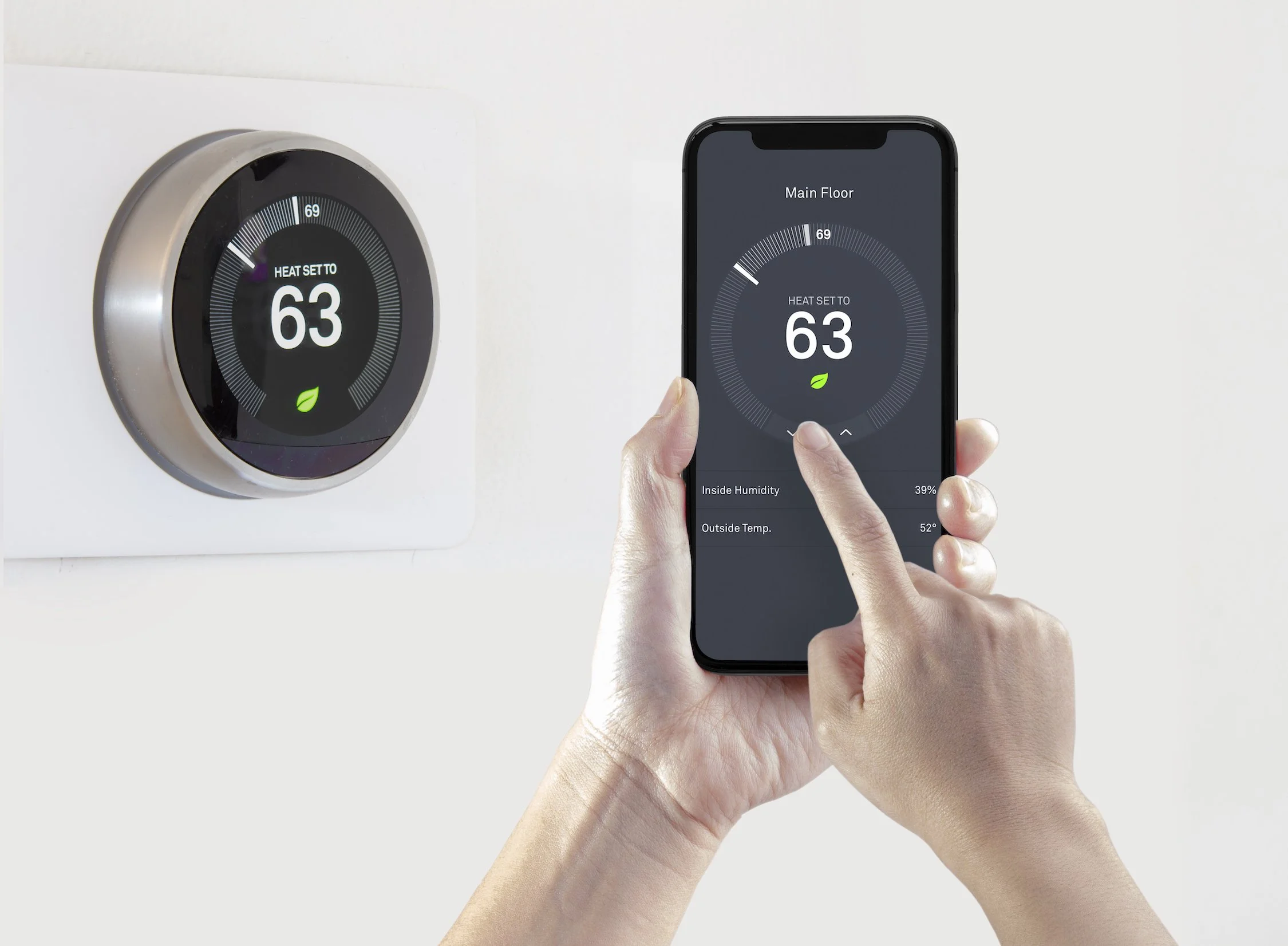
Still adjusting your thermostat manually? A smart thermostat can automatically reduce HVAC runtime and lower energy use at SCE’s high electricity rates. J Martin helps Orange County homeowners upgrade and configure them correctly.
What the Research Actually Shows About Smart Thermostat Savings
The most commonly cited savings figures come from three sources: the EPA's ENERGY STAR certification program, the thermostat manufacturers themselves, and independent studies of real-world usage data.
ENERGY STAR's testing methodology analyzes real-world data from a large sample of homes across multiple climate zones. Their conclusion is that ENERGY STAR-certified smart thermostats save approximately 8% on heating and cooling bills, which translates to roughly $50 per year for the average American household. That $50 figure is based on national average energy costs, which are significantly lower than what Orange County homeowners pay. More on that math in a moment.
Google's Nest thermostat has been the subject of two independent studies showing average savings of 10% to 12% on heating and about 15% on cooling. Based on typical national energy costs, Nest estimates the average customer saves around $140 per year. Ecobee published an internal analysis of customer data showing savings of up to 23% on heating and cooling costs, with estimated annual savings around $200. Honeywell's T9 has shown roughly 12% savings in independent testing, with higher results in homes using the room sensor feature for zoned temperature management.
These numbers are useful as baselines, but they need context. Studies consistently show that the actual savings depend heavily on several factors: what thermostat you were using before (switching from a manual thermostat yields bigger savings than upgrading from a programmable one), how consistently you were managing your previous thermostat (the less disciplined your habits, the more a smart thermostat improves things), how often your home is unoccupied during the day, and how extreme your local climate is. Orange County checks some of these boxes in ways that push savings higher than the national average.
The Orange County Math: What These Savings Actually Look Like at SCE Rates
Here's where this gets interesting for Orange County homeowners, because our electricity costs are substantially higher than the national average, which means percentage-based savings translate into larger dollar amounts.
As of January 2026, Southern California Edison's average residential rate is approximately 34.5 cents per kilowatt-hour. That's the average. If you're on a time-of-use (TOU) plan, which most SCE residential customers are, your actual rate varies from as low as 24 cents per kWh during off-peak hours to as high as 74 cents per kWh during peak summer afternoon hours. The tiered rate plan charges 31 cents per kWh up to your baseline allocation, then jumps to 42 cents per kWh beyond that.
The average SCE residential customer uses roughly 500 kWh per month, which works out to an average monthly bill in the range of $170 to $240 depending on season, rate plan, and usage patterns. Heating and cooling typically account for roughly 50% of a home's total electricity consumption according to the Department of Energy, which means the average Orange County homeowner spends approximately $1,000 to $1,400 per year on HVAC-related electricity.
Now let's apply the savings percentages. At a conservative 8% savings (the ENERGY STAR baseline), an Orange County homeowner spending $1,200 per year on HVAC electricity saves roughly $96 per year. At the manufacturer-claimed ranges of 10% to 15%, that same homeowner saves $120 to $180 per year. And at the higher end of documented savings (15% to 20%, achievable with consistent use of advanced features like geofencing, occupancy sensing, and TOU optimization), savings reach $180 to $240 per year.
Compare that to the national average of $50 per year, and you can see why a smart thermostat is a better investment for Orange County homeowners than for most of the country. Our electricity costs roughly double the national average, so our dollar savings are roughly double as well.
The payback period at current SCE rates is straightforward. A mid-range smart thermostat costing $130 to $200 pays for itself in roughly one to two years at conservative savings estimates. A premium model at $250 to $280 pays for itself in 18 months to just under three years. After that, every year of savings is pure return on a one-time purchase.
And here's the factor most online calculators miss: SCE rates have been increasing consistently, with an 83% increase over the past decade. The higher rates climb, the more valuable each percentage point of savings becomes. A thermostat that saves you $150 this year at 34.5 cents per kWh will save you more next year if rates increase again, which historical trends strongly suggest they will.
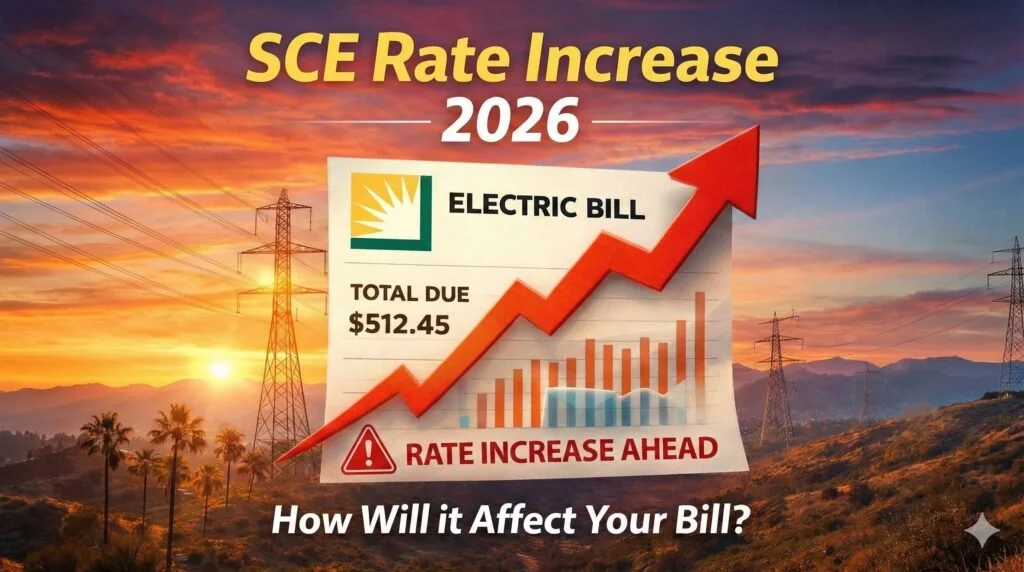
SCE electricity rates keep climbing in 2026, which means even small HVAC efficiency improvements can make a noticeable difference in your monthly bill.
Why Smart Thermostats Save More Than Programmable Thermostats
If you already have a programmable thermostat, you might wonder whether upgrading to a smart thermostat is worth the additional cost. The answer depends on one honest question: are you actually using the programmable features?
Research consistently shows that 40% to 70% of homeowners with programmable thermostats never program them or use the hold/override button so frequently that the programming is effectively meaningless. A programmable thermostat that's set to 74 degrees and left on "hold" permanently is just an expensive manual thermostat. If that describes your situation, the upgrade to a smart thermostat will likely generate the full 10% to 15% savings because the smart thermostat will do automatically what you've been meaning to do manually for years.
The fundamental advantage of smart thermostats over programmable ones is that they don't rely on you to create or maintain a schedule. They learn your patterns (what time you wake up, what time you leave, what time you return, what temperature you prefer at different times of day) and create the schedule themselves. When your routine changes, the thermostat adapts without requiring you to reprogram anything.
Geofencing is the feature that makes the biggest practical difference for many households. Using your smartphone's location, the thermostat detects when everyone has left the house and automatically shifts to an energy-saving setback temperature. When someone starts heading home, the thermostat begins conditioning the house so it's comfortable by the time you arrive. This eliminates the most common source of wasted energy: cooling or heating an empty house all day because nobody remembered to adjust the thermostat on the way out.
For Orange County homeowners on SCE's time-of-use rate plans, some smart thermostats can also optimize operation around peak pricing windows. The most expensive electricity hours on SCE's TOU plans are 4 PM to 9 PM on weekdays. A thermostat that pre-cools your home during cheaper afternoon hours and then reduces AC runtime during the peak window can shift a meaningful portion of your cooling load from 74 cents per kWh electricity to 24 cents per kWh electricity. That rate differential alone can generate significant savings during the hottest months.
The Major Smart Thermostats Compared: Which One Is Right for Your Home
The smart thermostat market has matured considerably. Here's how the major options stack up for Orange County homeowners in 2026.
The Google Nest Thermostat (not the Learning model) is the value sweet spot at approximately $130. It offers geofencing, Eco mode (automatically reduces heating/cooling when you're away), a clean interface, and full Google Home integration. It lacks a touchscreen (you use the app or the dial on the device) and doesn't include room sensors, but for a single-story home or any household that primarily needs automated away detection and scheduling, it does the job well. Multiple reviews and testing sites consistently rank it as the best overall value for most homes.
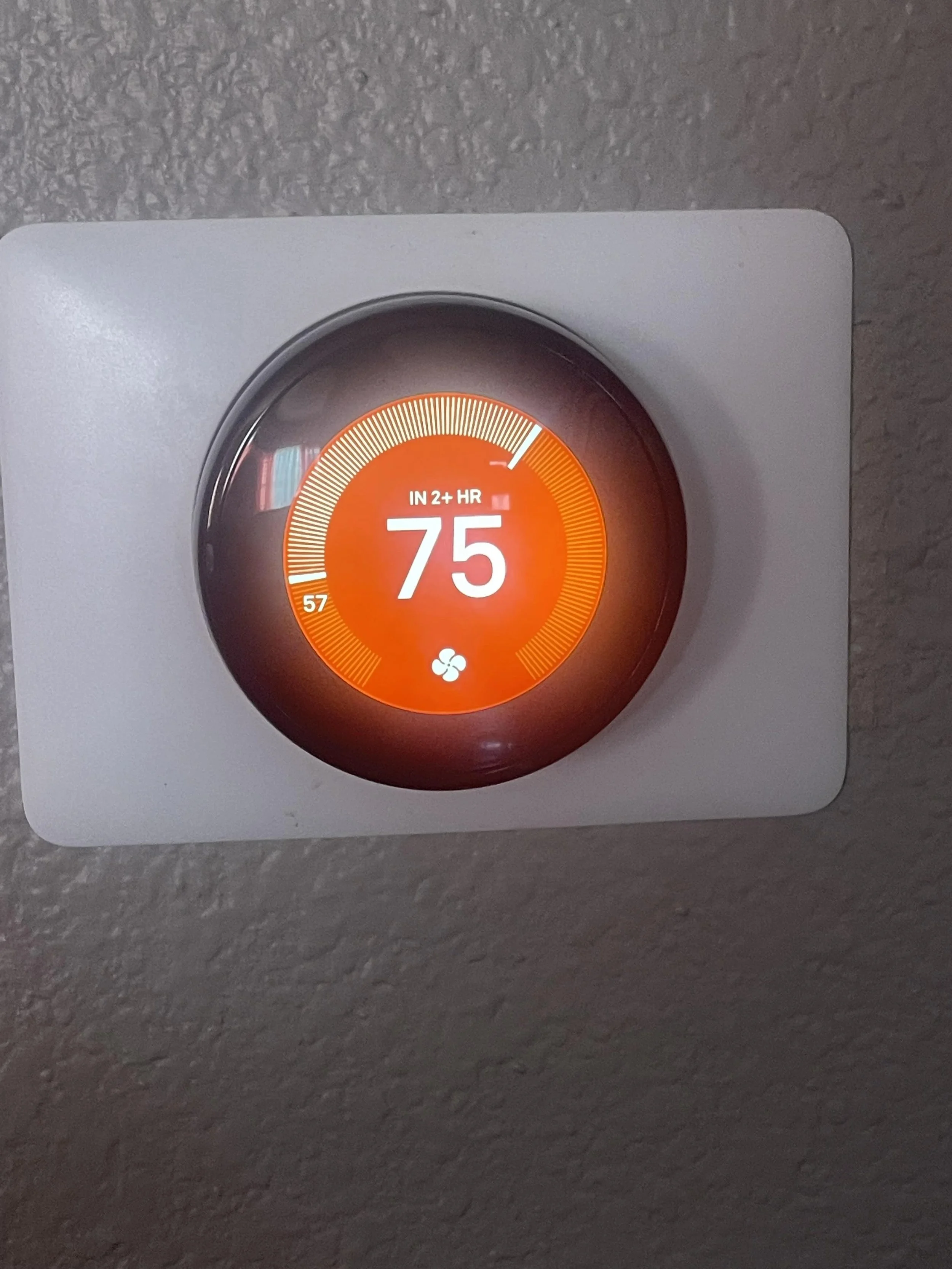
A smart thermostat automatically adjusts temperatures like this based on your schedule, helping Orange County homeowners reduce HVAC runtime and energy costs.
The Google Nest Learning Thermostat (4th Generation) at approximately $250 to $280 is the premium Nest option. The 4th generation added a larger 2.7-inch display, Matter protocol support (works with Apple Home, Google Home, and Alexa), and AI-driven schedule optimization that fine-tunes your energy use over time. It offers optional room sensors and is the strongest option for homeowners deep in the Google ecosystem. One limitation worth noting: in homes without a C-wire (common wire), Nest uses a "power-stealing" workaround that works in most cases but can occasionally cause issues with certain HVAC systems. If your home was built before 1990, have your HVAC contractor verify C-wire availability before purchasing.
The Ecobee Smart Thermostat Premium at approximately $250 includes a room sensor in the box and supports up to 32 additional sensors. This is its defining advantage: the ability to measure and manage temperature in multiple rooms rather than only at the thermostat location. For two-story Orange County homes where the upstairs runs 5 to 8 degrees warmer than the downstairs, Ecobee's "Follow Me" feature directs the system to prioritize the rooms you're actually occupying based on sensor occupancy detection. The Premium model also includes a built-in indoor air quality monitor tracking humidity and volatile organic compounds (VOCs), a built-in Alexa speaker, and radar-based occupancy detection. It works with Apple HomeKit, Google Home, and Alexa. Ecobee also offers the Enhanced model at approximately $190, which provides most of the same core features without the air quality monitor and built-in speaker.
The Honeywell Home T9 at approximately $170 to $200 is the reliability-focused option. Honeywell has manufactured thermostats longer than any other company, and the T9 reflects that experience with broad HVAC compatibility, a straightforward interface, and room sensor support (up to 20 sensors). It includes a C-wire adapter in the box, which solves the most common installation complication in older homes. It works with Alexa and Google Assistant but does not support Apple HomeKit. For homeowners who want solid, no-nonsense smart scheduling and room sensing without the extra features (air quality monitoring, built-in speakers) they may never use, the T9 is a strong choice.
The Amazon Smart Thermostat at approximately $80 is the budget entry point. Made in partnership with Honeywell, it's ENERGY STAR certified and integrates deeply with Alexa. It lacks room sensors, doesn't have a learning algorithm, and has a basic display, but it delivers the core smart features (geofencing through Alexa, scheduling, remote control) at a price that pays for itself in under a year at SCE rates. For households already using Echo devices and looking for the quickest return on investment, it's hard to beat.
Which Features Actually Save You Money (And Which Are Just Nice to Have)
Not every smart thermostat feature generates energy savings. Here's the breakdown of what moves the needle on your SCE bill versus what's simply convenient.
Automatic scheduling and learning algorithms are the foundation. Every percentage of savings starts with the thermostat running your system less when you don't need it and more efficiently when you do. This is the core value proposition, and every model listed above delivers it.
Geofencing and occupancy detection are the highest-impact features for most households. If your home is empty during work hours, automatically setting back the temperature during those 8 to 10 hours saves the most energy. The Department of Energy estimates that setting your thermostat back 7 to 10 degrees for eight hours a day can save up to 10% on heating and cooling annually. Smart thermostats automate this without requiring you to remember.
Room sensors deliver meaningful savings in homes with significant temperature differences between rooms or floors. Without sensors, the thermostat reads temperature at one location (usually a central hallway) and makes decisions based on that single data point. If your hallway reads 74 but your upstairs bedroom is 80, the system doesn't know. With sensors, the thermostat can prioritize occupied rooms, which often means less total runtime because it's targeting the spaces you're actually using rather than overcooling the entire house to compensate for one warm room. If your home has the common problem of being uncomfortably warm upstairs while the downstairs feels fine, room sensors help, though they're not a substitute for addressing the underlying ductwork or insulation issues that cause the imbalance in the first place. We've covered the real solutions for uneven temperatures in our post on the truth about closing vents in unused rooms, which explains why the most common "fix" actually makes the problem worse.
Energy usage reports are valuable for awareness but don't save energy directly. They help you understand your patterns and make informed adjustments. Most smart thermostats provide monthly reports showing runtime hours, energy consumption trends, and comparisons to previous periods. These are genuinely useful for identifying problems, like noticing that runtime suddenly increased, which might indicate a maintenance issue.
Built-in air quality monitoring (Ecobee Premium) is a nice-to-have rather than a money saver. It tracks humidity and VOCs but doesn't actively reduce energy consumption. For Orange County homeowners concerned about indoor air quality, especially during wildfire season and Santa Ana wind events, a dedicated air quality solution integrated with your HVAC system will be far more effective than a thermostat sensor.
Voice control (Alexa, Google Assistant, Siri) is pure convenience. It doesn't save energy. It's nice, but don't pay a premium for it if savings are your primary goal.
Can You Install a Smart Thermostat Yourself?
Most smart thermostats are designed for DIY installation, and many homeowners successfully complete the job in 20 to 45 minutes. The process involves turning off power to your HVAC system at the breaker, removing the existing thermostat faceplate, photographing the wiring configuration (important), connecting the labeled wires to the matching terminals on the new thermostat's base plate, mounting the base plate, and attaching the thermostat. The apps from Nest, Ecobee, and Honeywell all include step-by-step guided installation with photos and compatibility checkers.
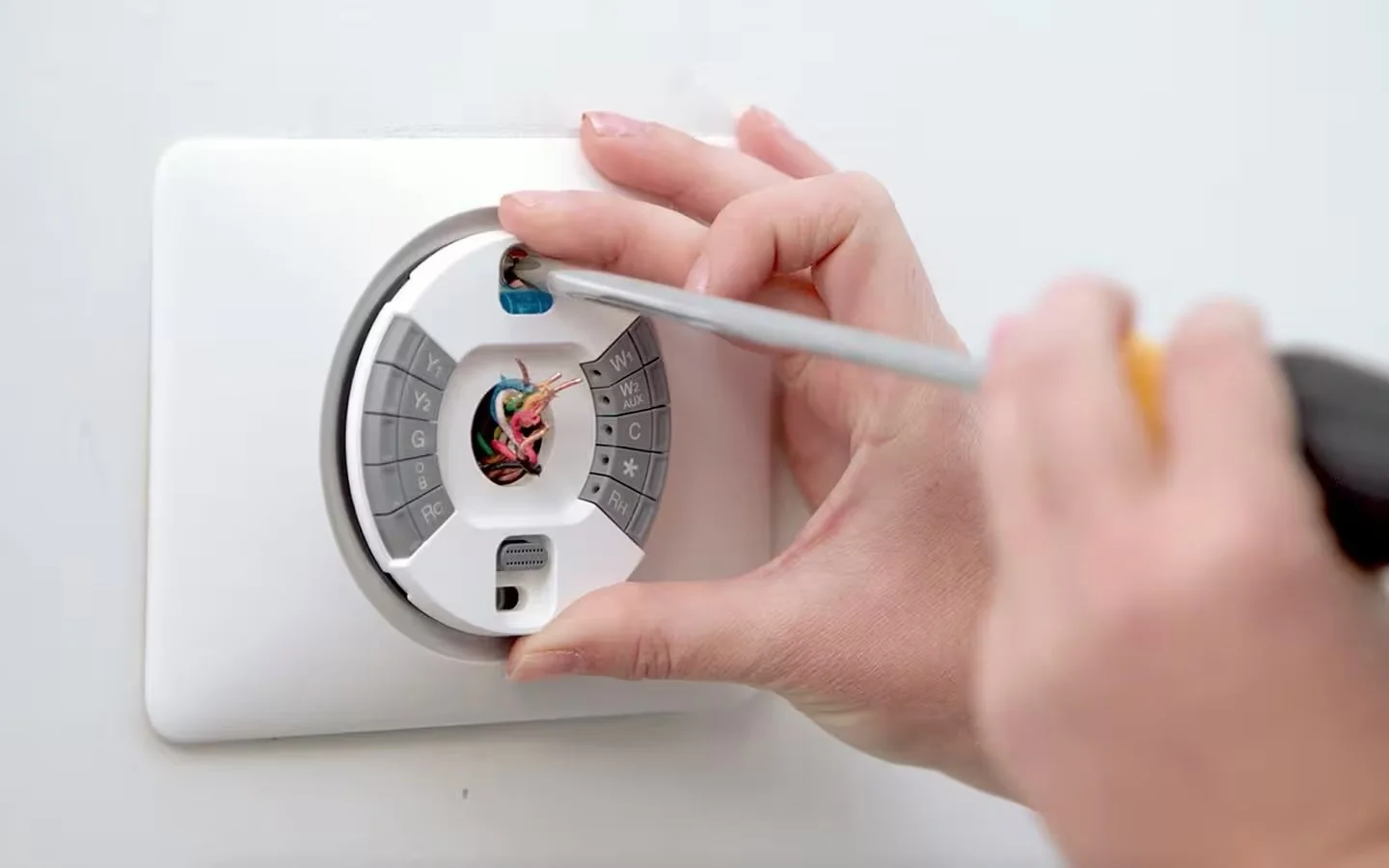
Installing a smart thermostat is often a straightforward DIY project, but making sure the wiring and HVAC compatibility are correct is key to getting the energy savings.
That said, there are situations where professional installation is the better choice. If your home doesn't have a C-wire and the thermostat requires one (Ecobee includes a Power Extender Kit for this, Nest uses power-stealing, Honeywell T9 includes a C-wire adapter), the installation becomes more complex. If your HVAC system has unusual wiring, such as a dual-fuel setup (heat pump plus gas furnace backup), multi-stage heating or cooling, or a zoned system with multiple thermostats and dampers, the wiring and configuration need to be correct for the system to operate properly. Getting this wrong can cause the system to run inefficiently, fail to switch between heating and cooling modes correctly, or activate expensive auxiliary heat when it shouldn't.
Professional smart thermostat installation typically costs $100 to $200, and many HVAC companies include thermostat installation at no additional charge when it's done as part of a system replacement or maintenance visit. If you're already scheduling a tune-up or having HVAC work done, it's often the most cost-effective time to have the thermostat swapped.
What a Smart Thermostat Can't Fix
Smart thermostats optimize the operation of your existing HVAC system. They don't fix fundamental problems with the system itself. If your AC is undersized for your home, a smart thermostat can reduce how often it runs but can't make it cool a space it was never sized to handle. If your ductwork is deteriorated and leaking 25% to 30% of conditioned air into the attic, the thermostat can't recover that lost air. If your insulation has degraded to half its original R-value, the thermostat can't insulate your home.
In homes with these underlying issues, a smart thermostat still helps at the margins, but the biggest savings come from addressing the root causes. We see this constantly in Orange County homes built in the 1970s and 1980s where the ductwork has been sitting in 150-degree attics for 40 to 50 years. Installing a $250 thermostat on a system that's losing a third of its output through duct leaks is optimizing around the wrong problem. Sealing or replacing the ductwork ($300 to $6,000 depending on the scope) generates far more savings per dollar spent.
If your system is 15 or more years old, running on R-22 refrigerant, or consistently failing to maintain comfortable temperatures, the conversation should be about whether the system itself needs to be replaced rather than whether a new thermostat will squeeze more efficiency out of aging equipment. A smart thermostat paired with a new high-efficiency system is the ideal combination. A smart thermostat paired with a failing 20-year-old system is putting a bandage on a wound that needs stitches.
And if you're in the process of evaluating your ductwork condition alongside your thermostat upgrade, our Complete Guide to Air Duct Cleaning covers everything from basic cleaning to full replacement.
SCE Programs and Rebates for Smart Thermostats
Southern California Edison and its partner programs have historically offered rebates and incentives for smart thermostat purchases and enrollment in demand response programs. The availability and specifics of these programs change periodically, so checking directly with SCE at sce.com is always the best way to confirm what's currently active.
The Save Power Days program (also known as demand response) is worth particular attention for smart thermostat owners. When enrolled, SCE notifies you in advance of high-demand days when the grid is under stress. During these events, your smart thermostat may pre-cool your home and then slightly adjust the temperature during the peak period. You retain the ability to override the adjustment at any time. In exchange, you receive bill credits for participating. Enrollment is voluntary and the credits add up, particularly during the summer months when demand response events are most frequent.
Golden State Rebates, the statewide instant coupon program funded by California utility ratepayers, has included smart thermostats among its eligible products. These coupons are applied at the point of purchase through participating retailers or contractors. Availability fluctuates with program funding, so verifying current offerings at goldenstaterebates.com before purchasing is a smart step.
For a complete picture of what incentive programs are currently available and which ones have expired or been fully reserved, our California HVAC Rebates and Tax Credits 2026 post covers every active program.
The Bottom Line: Is a Smart Thermostat Worth It for Your Orange County Home?
For most Orange County homeowners, yes. The combination of SCE's above-average electricity rates, Orange County's cooling-dominated climate, and the proven savings data makes a smart thermostat one of the highest-return, lowest-risk home improvements available. The payback period is one to two years for mid-range models and under three years even for premium options, after which the savings continue indefinitely for the life of the thermostat (typically 10 to 15 years).
The best candidates for a smart thermostat upgrade are homeowners currently using a manual or basic programmable thermostat, households where the home is regularly unoccupied during the day, anyone on an SCE time-of-use rate plan (which is most residential customers), and owners of two-story homes with temperature differences between floors who can benefit from room sensors.
The cases where a smart thermostat may not be the most impactful first step are homes with seriously deteriorated ductwork, homes with critically undersized or aging HVAC systems, or homes with significant insulation deficiencies. In those situations, the thermostat upgrade should come after the more fundamental issues are addressed, because fixing the big problems first creates a better foundation for the thermostat to optimize.
If you're not sure which category your home falls into, or if you want to combine a smart thermostat upgrade with a system tune-up, duct evaluation, or efficiency assessment, give us a call at (714) 462-4686. J Martin Indoor Air Quality has been serving Orange County families for over 15 years. We can evaluate your current system, recommend the right thermostat for your equipment, and install it properly so it works from day one. We don't work on commission, which means our recommendation is based on what actually makes sense for your home, not on which thermostat carries the highest markup. You can read about how we approach every customer interaction and why 5,000 families trust us with the comfort of their homes.
J Martin Indoor Air Quality proudly serves Yorba Linda, Fullerton, Anaheim, Anaheim Hills, Brea, Villa Park, Placentia, Orange, and communities throughout Orange County. California License #998956. Call (714) 462-4686 or visit jmartiniaq.comto schedule service.
J Martin Indoor Air Quality | (714) 462-4686 | Services