
Spring HVAC Maintenance: Your Complete Orange County Guide
Updated on May 20, 2026
Spring has arrived in Orange County, and with it comes the perfect opportunity to prepare your air conditioning system for the brutal summer heat ahead. The season between March and May offers an ideal window to catch problems before they turn into costly emergency repairs during peak cooling season. We know from experience that homeowners who invest in spring HVAC maintenance enjoy more reliable cooling, lower energy bills, and the peace of mind that comes with knowing their system is ready for 115-degree afternoons. This comprehensive guide will walk you through everything you need to know about spring HVAC maintenance in our unique Southern California climate.
Why Spring HVAC Maintenance Matters in Orange County
The transition from winter to spring represents a critical turning point for your air conditioning system. In Orange County, winter temperatures rarely drop below the 50s, which means many homeowners skip heating season entirely or use it sparingly. This can create a false sense of security about system health. When April arrives and daytime temperatures climb into the 80s and 90s, your AC suddenly shifts from occasional use to constant operation within just a few weeks.
Every spring, our technicians complete over 200 AC tune-ups across North Orange County, from Yorba Linda to Anaheim Hills to Villa Park. We find recurring issues that spring maintenance could have prevented: low refrigerant levels that have leaked away during idle winter months, capacitors showing early signs of failure, outdoor coils clogged with winter dust and pollen, and electrical connections loosened by thermal cycling. The typical homeowner who schedules a spring tune-up pays between $85 and $200 for this preventive service. The homeowner who skips it and waits for a mid-July breakdown pays $1,500 to $3,000 for emergency repairs plus lost cooling on the hottest days.
Orange County's specific climate challenges make spring maintenance even more critical than in other regions. Our coastal and inland microclimates create vastly different humidity and dust patterns. Santa Ana winds in late spring blow fine desert dust inland, coating outdoor coils and reducing efficiency. Our extended pollen season runs longer than most of the country, straining indoor air quality systems. And our summers intensity has increased over the past decade, with more days exceeding 100 degrees and heat domes lasting weeks longer than they did in the 1990s. These factors combine to put real stress on HVAC systems that aren't properly maintained.

Orange County summers don’t wait and neither should your AC maintenance. J Martin helps homeowners stay ahead of the heat with honest, thorough spring tune-ups.
What a Professional Spring Tune-Up Actually Includes
When we say "spring HVAC maintenance," we're referring to a specific, thorough process that every licensed HVAC contractor should follow. Understanding what this includes helps you know whether you're getting real value from a tune-up or just paying for a service call. A quality professional tune-up takes 60 to 90 minutes and touches every critical component of your system.
The inspection begins outdoors with the condenser unit. Our technicians visually inspect the coils for debris buildup, rust, or physical damage. In Orange County's dusty spring climate, coil cleaning is often necessary. We use specialized coil cleaner and compressed air to remove accumulated dust and pollen without damaging the delicate aluminum fins. This step alone can recover 5 to 15 percent of system efficiency. We then check all electrical connections at the outdoor unit, looking for corrosion or loose terminals. Even a loose wire connection creates resistance that forces the motor to work harder and generates heat that can damage internal components.
Inside the home, we inspect the indoor coil (the evaporator) and the surrounding area for leaks, rust, or frozen coils. The refrigerant charge is tested using gauges that measure system pressure and temperature. Proper refrigerant level is critical: too little reduces cooling capacity and wastes energy, while too much creates excessive pressure that damages the compressor. We compare the measured superheat and subcooling values against manufacturer specifications to determine if a charge adjustment is needed. If we find a refrigerant leak, we locate it, repair it, and then charge the system properly.
The blower motor is tested for proper operation, noise level, and secure mounting. We inspect all ductwork connections at the indoor unit for leaks or separation. We test the thermostat to ensure it's controlling the system accurately and check that the system cycles on and off at appropriate temperatures. The capacitor, which stores electrical energy to start the compressor and fan motors, is tested with specialized equipment. A failing capacitor is one of the most common failure points we find during spring maintenance, and replacing one costs $200 to $300 before it fails and damages other components.
Finally, we change or clean the air filter and provide a full written report of the system's condition, any issues found, and recommendations for repairs or future attention. This entire process gives us a complete picture of your system's health and allows us to catch problems before they cause failures.
DIY Spring Maintenance Tasks You Can Handle
While professional tune-ups require specialized tools and knowledge, homeowners can absolutely handle several important maintenance tasks that keep systems running smoothly between professional visits. These tasks cost almost nothing and take just a few minutes.
The air filter is the simplest and most important DIY task. Standard 1-inch filters should be replaced every one to three months, with spring requiring more frequent changes because pollen is at peak levels. If you have a 4-inch or 5-inch deep filter or a whole-house filter system, replacement frequency extends to every six to twelve months, but you should still check filters in late March to establish a baseline. A clogged filter forces your system to work harder, reducing efficiency and potentially causing the evaporator coil to freeze if airflow is severely restricted.
Walk around your outdoor condenser unit and remove any debris. During spring, you might find leaves from oak trees, desert dust from Santa Ana winds, or pollen accumulation. Clear leaves and branches from the top of the unit and gently clean around the sides. Never pressure wash the coils yourself, as excessive water pressure can bend the aluminum fins, but you can use a soft brush to dislodge loose dust. Make sure the ground around the unit slopes away from the foundation to prevent water pooling during our rare spring rains.
Check your thermostat batteries if it's a wireless model, and verify that it's set to cool mode rather than heat or auto mode. Many homeowners forget to switch from winter heat mode to cooling mode, and auto mode can cause confusing cycling behavior. If you have a programmable thermostat, spring is an excellent time to adjust your setpoints for the coming warmer months. Even a 2-degree adjustment can reduce cooling costs by 3 to 4 percent.
Inspect the condensate drain line, the small plastic pipe that runs from your indoor unit outdoors. Pour a small amount of water down it to ensure it flows freely. If water backs up, the drain is likely clogged with algae or mineral buildup. You can clear minor clogs with a wet vacuum or by flushing the line with vinegar and water. Severe clogs require professional service because they can cause water damage to your equipment and home.
Finally, visually inspect all ductwork you can access in crawlspaces, basements, or attics. Look for tears, loose connections, or separation of duct sections. Torn or separated ducts waste cooled air before it reaches your rooms, reducing efficiency and increasing energy costs. Professional duct sealing and testing is something to discuss with your contractor if you notice problems.
Orange County Specific Challenges: Santa Ana Winds, Pollen, and Microclimates
Understanding the unique environmental challenges of Orange County's spring season helps explain why our maintenance recommendations sometimes differ from national guidelines. Santa Ana winds, which typically occur in late spring and early summer, blow hot, dry air from inland deserts toward the coast. These winds carry fine dust and particulate matter that coats outdoor HVAC equipment more heavily than in most of the country. Inland areas in Yorba Linda, Brea, and Placentia experience more Santa Ana dust than coastal communities, requiring more frequent outdoor unit cleaning during peak wind season. (If you're in Yorba Linda specifically, our dedicated Yorba Linda spring AC prep guide covers the microclimate factors, foothill geography, older housing stock, dust accumulation patterns, that affect AC systems differently here than in coastal cities.)
Orange County's pollen season extends longer than northern states, peaking from February through May but lingering even into June. Our combination of oak trees, which produce prolific pollen, and the lack of hard freezes that kill pollen-producing plants elsewhere means that air filters clog faster here. Homeowners with allergies or air quality concerns benefit significantly from upgrading to MERV-13 filters during spring months, or adding a whole-house air purifier to their system. The connection between HVAC filter maintenance and home air quality is direct and measurable.
Our coastal versus inland microclimates create different maintenance priorities. Coastal communities like Tustin benefit from marine layer moderation but must contend with salt air corrosion on outdoor equipment. Inland communities like Anaheim Hills and Villa Park experience more extreme temperature swings and drier conditions. Coastal systems often see slower summer peak demand compared to inland locations, allowing different scheduling strategies for maintenance and preventive repairs. When choosing a contractor, make sure they understand your specific neighborhood's climate profile.

Just like Orange County’s spring bloom signals a seasonal shift, it’s also the right time to prepare your AC. J Martin helps homeowners stay ahead of the summer heat with reliable maintenance.
Signs Your AC Needs Attention Before Summer
Waiting until June to address air conditioning problems is almost always a mistake in Orange County. Late spring and early summer are peak times for emergency repair calls, when technicians are busy and response times are slow. Learning to recognize warning signs in March and April allows you to schedule service proactively and get the attention you need.
Unusual sounds coming from your outdoor unit deserve immediate investigation. A humming sound without the compressor starting might indicate a failed capacitor. Rattling or grinding noises suggest loose components or compressor issues. A high-pitched squealing often points to fan motor bearing problems. These sounds in March mean you have time to get them fixed before summer; the same sounds in July mean you're waiting days for emergency service.
If your system runs constantly but doesn't reach your thermostat setpoint, multiple issues could be responsible, and they're easier to diagnose and fix in spring. Low refrigerant, a clogged filter, dirty coils, or a failing compressor can all cause this symptom. The professional diagnosis during a spring tune-up will identify the problem while you still have plenty of lead time to schedule repairs without rushing.
Changes in indoor air quality sometimes accompany HVAC problems. If you notice more dust settling on furniture, or if household members with allergies are experiencing worse symptoms, your filter might need changing or your coils might need cleaning. These issues are simple fixes in spring but can become urgent health concerns during peak summer pollen season.
Visible ice forming on refrigerant lines or indoor equipment during normal operation indicates serious problems. This never happens during normal spring conditions and requires immediate professional attention. Frozen coils or lines suggest severely restricted airflow or refrigerant system problems that will cause compressor failure if not addressed.
Refrigerant Levels and System Efficiency: The Science Behind the Numbers
The refrigerant in your air conditioning system is the working fluid that absorbs heat from your home and releases it outdoors. Unlike a car engine that uses oil, your AC system shouldn't lose refrigerant during normal operation. If refrigerant levels are low, there's a leak somewhere, and that leak must be found and repaired before the system is recharged. This is why we don't simply "top off" refrigerant like checking oil in a car.
During a professional tune-up, we measure refrigerant charge using pressure gauges and temperature sensors. The superheat measurement tells us how many degrees the refrigerant is above its boiling point at the measured pressure. The subcooling measurement tells us how many degrees the liquid refrigerant is below its condensing temperature. Both measurements must fall within manufacturer specifications, which vary based on ambient temperature, system design, and the specific refrigerant being used.
Low refrigerant charge, even by small amounts, dramatically reduces cooling efficiency and capacity. A 10 percent undercharge can reduce capacity by 20 percent while increasing energy consumption by 20 percent. Over a summer cooling season, this inefficiency costs hundreds of dollars in wasted electricity. More concerning, an undercharged system forces the compressor to work harder and run longer, generating excessive heat that damages internal components and shortens compressor life. A compressor replacement costs $800 to $1,600, making refrigerant maintenance one of the most cost-effective preventive measures available.
Orange County's spring weather makes refrigerant charge diagnosis more reliable than during summer extremes. On a 75-degree day in April, we can take accurate measurements that predict how your system will perform on a 115-degree day in July. Summer measurements are complicated by the extreme heat and high system pressures, making it harder to diagnose subtle problems. This is another reason why spring tune-ups deliver better diagnostic data than summer service calls.
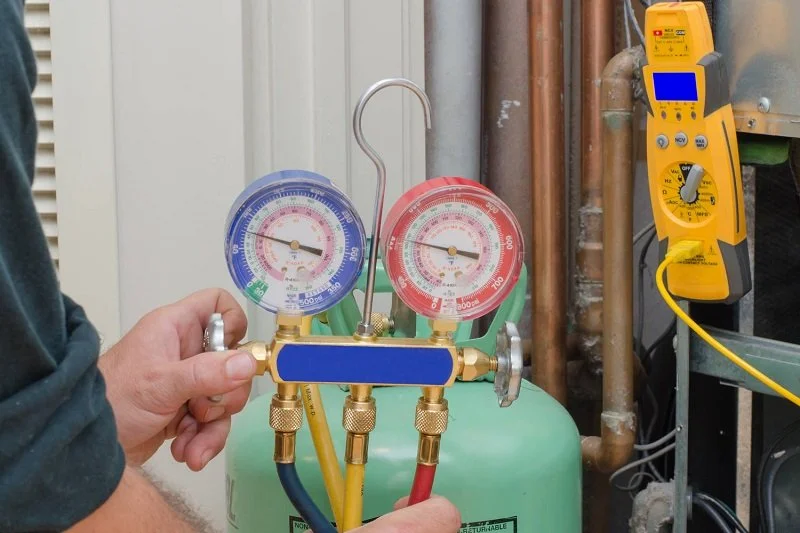
Low refrigerant levels can quietly damage your AC before summer even starts. Schedule your spring tune-up with J Martin before the heat hits.
Air Filters, Air Quality, and Seasonal Pollen Patterns
The air filter is the intersection point between your HVAC system and your indoor air quality. Many homeowners think the filter exists to protect the air conditioning equipment, and while that's partly true, the filter primarily protects the people living in the home. A quality filter removes dust, pollen, pet dander, and other particles that would otherwise circulate through your home.
Standard 1-inch fiberglass filters have a MERV rating of 4 to 6, meaning they remove only the largest particles. MERV-8 filters are better and are still relatively inexpensive. MERV-11 and MERV-13 filters offer significantly better particle removal and are worthwhile if anyone in your home has allergies or respiratory sensitivities. Higher MERV ratings increase air resistance, so your system must have adequate airflow capacity to use MERV-13 filters without losing efficiency. During your spring tune-up, ask your technician whether your system can handle higher MERV filters.
Orange County's extended pollen season, particularly from oak trees and grasses, makes spring filter changes especially important. You might get away with changing filters every two months in winter, but spring typically requires monthly changes. Installing a new MERV-11 or MERV-13 filter in late March before pollen season peaks is one of the cheapest ways to improve home air quality and reduce allergy symptoms. The filters cost $15 to $30 each and take five minutes to install.
For serious air quality concerns, whole-house air purifiers integrated into your HVAC system offer particle removal far superior to filters alone. These systems use various technologies like HEPA filtration, UV light, or ionization to remove particles as small as 0.3 microns. They're installed inside your ductwork and treat every bit of air that passes through your system. Spring is the ideal time to discuss adding an air purifier with your HVAC contractor, as installation is straightforward and you'll benefit immediately as pollen season intensifies.
Ductwork Inspection and Air Leakage: Hidden Efficiency Losses
Your ductwork is the system that distributes cooled air throughout your home, but many homeowners never think about its condition. Leaky, disconnected, or poorly insulated ducts can waste 20 to 30 percent of the cool air your system produces. In Orange County's hot climate, this waste translates directly to higher energy bills and rooms that never cool to your desired temperature.
During a professional spring inspection, technicians visually examine accessible ductwork in crawlspaces, basements, and attics. We look for obvious tears, loose connections where duct sections join, or crushed ducts that restrict airflow. We check whether ductwork in unconditioned spaces like crawlspaces or attics is properly insulated. In Orange County's hot inland areas, attic temperatures exceed 130 degrees in summer, heating any uninsulated ducts and reducing cooling efficiency.
More sophisticated ductwork testing involves using smoke generators or specialized air pressure equipment to identify leakage locations. Sealing ducts with mastic sealant or specialized tape can recover significant efficiency, though this is professional work requiring proper equipment and technique. If sealing large ductwork sections, your contractor might recommend also adding insulation rated for your climate.
The most common ductwork problem we find during spring inspections is simply disconnected or loose joints. A flexible duct section might separate from rigid ductwork, or a return air duct might have a tear from age or rodent damage. These problems are easy to identify and repair during a spring tune-up, saving money and frustration during summer when the issue becomes impossible to ignore.
Smart Thermostat Optimization for Spring and Beyond
Modern smart thermostats offer capabilities far beyond simple temperature control, and spring is the perfect time to configure yours for maximum efficiency and comfort. If you don't have a smart thermostat, a spring tune-up is an excellent time to discuss whether upgrading makes sense for your home and climate zone.
Smart thermostats learn your household schedule and preferences, automatically adjusting setpoints when you leave for work and raising temperatures when you're away on vacation. During spring when weather is still mild, programming helps reduce cooling costs before summer peak demand. A general rule is that every degree you raise your cooling setpoint saves 3 to 4 percent of cooling energy. Setting the thermostat to 78 degrees instead of 75 degrees during spring and early summer, when outdoor temperatures are still reasonable, can reduce monthly electricity costs by $20 to $40.
Geofencing capabilities use your smartphone location to adjust temperatures as you approach or leave home. This feature prevents cooling an empty house, which represents wasted energy. Setting a 4-degree difference between occupied and unoccupied temperatures can save significant energy over the season. Programming a "sleep mode" that raises temperatures by 2 to 3 degrees at night, when you're under bedding and less sensitive to warmth, provides additional savings.
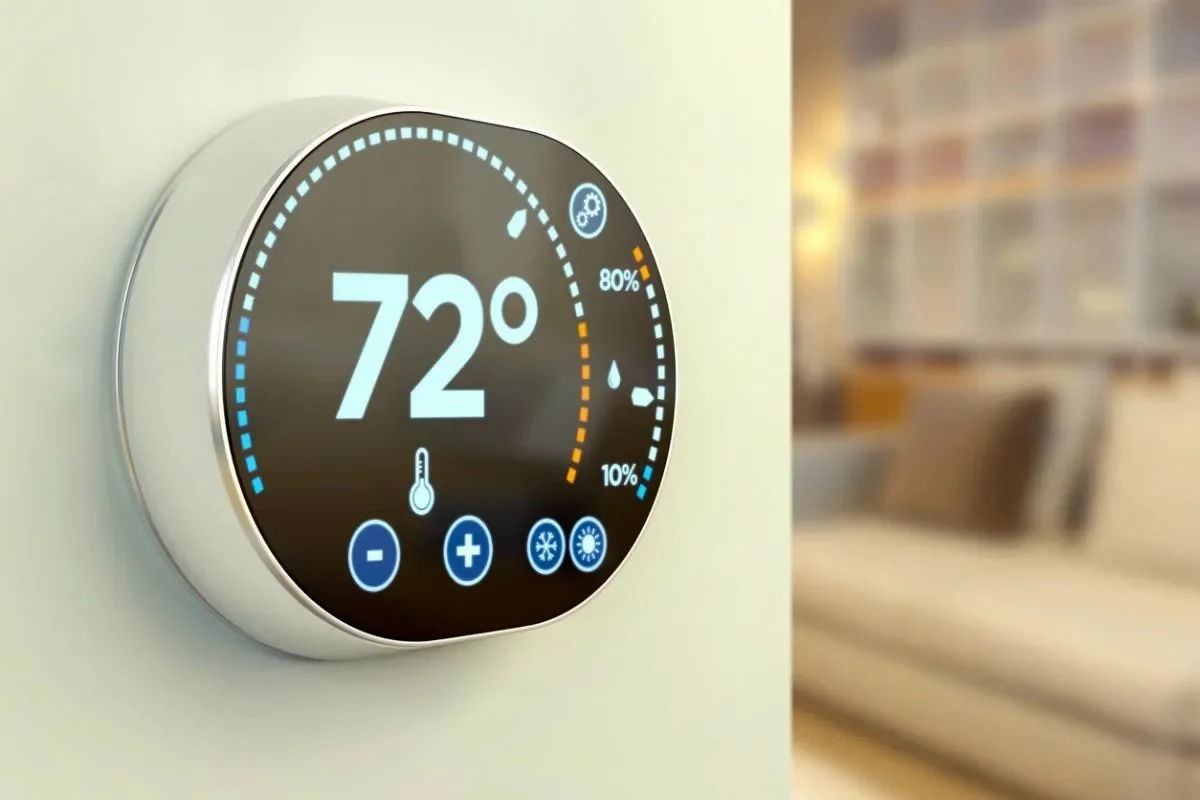
Smart thermostat settings can significantly reduce energy costs. J Martin helps Orange County homeowners fine-tune their systems for comfort and efficiency.
Some smart thermostats integrate with local utility programs that adjust setpoints slightly during peak demand periods in exchange for rebates or reduced rates. These demand response programs are increasingly common in California, and taking advantage of them requires no action beyond initial enrollment through your smart thermostat's app. Spring is a good time to investigate whether your utility offers these programs.
Your spring tune-up technician can help you verify that your thermostat is reading temperatures accurately and that it's positioned away from heat sources like direct sunlight, vents, or appliances that would cause incorrect readings. A thermostat in poor location leads to constant adjusting and wasted energy. This simple verification takes five minutes and can improve efficiency measurably.
When to Repair Versus Replace: Making the Right Decision
One of the most common questions we hear during spring tune-ups is whether homeowners should repair aging systems or invest in replacements. There's no universal answer, but several factors should guide your decision.
If your system is more than 15 to 18 years old and requires repairs exceeding $500 to $700, replacement often makes financial sense. Modern air conditioning systems are 40 to 50 percent more efficient than systems from 10 to 15 years ago, and the energy savings alone can pay back the replacement cost over 5 to 8 years. Additionally, older systems use R-22 refrigerant, which is being phased out and is becoming increasingly expensive to purchase. Any major repair on an R-22 system might not be worth it.
For systems between 10 and 15 years old, the decision depends on repair cost and the system's overall condition. A single capacitor replacement costs $200 to $300 and is absolutely worth fixing. A compressor failure on an older system, which can cost $1,500 or more, pushes toward replacement. Our spring tune-up identifies these decisions early, before emergency failures force you to make expensive choices under time pressure.
Newer systems, generally under 10 years old, should almost always be repaired rather than replaced unless the compressor has failed. Repairs are usually affordable relative to the system's remaining useful life. A spring tune-up identifies what repairs are needed while you have time to get quotes and schedule work at your convenience rather than in emergency mode.
If you're considering replacement, spring is the ideal time to discuss options. New system pricing, installation schedules, and rebate programs are all more flexible in spring than in summer when demand is peak. Financing options are more readily available from manufacturers and contractors. Comparing different efficiency levels and brands takes time, and spring gives you that time. We represent Lennox, Daikin, and Mitsubishi systems and can discuss the tradeoffs between different options based on your home's specific needs and your budget.
Case Study: How Spring Maintenance Prevented a Summer Catastrophe
A homeowner in Fullerton called us in late April, concerned that his 11-year-old Lennox system wasn't cooling as effectively as it had the previous summer. He'd always handled maintenance by replacing filters and hadn't had the system professionally serviced in three years. Spring tune-up seemed like a good precaution before peak summer demand.
Our technician arrived on a pleasant 80-degree morning and began the standard inspection. The outdoor unit was noticeably dusty, with what appeared to be several years of Santa Ana wind dust and debris accumulated around the coils and fins. The indoor filter was clogged despite supposedly being replaced recently, which suggested either an incorrect filter size or that three years had actually passed since the last change. Testing the system revealed several problems.
The refrigerant charge was low by approximately 20 percent, indicating a slow leak somewhere in the system. The compressor was straining to produce cool air with insufficient refrigerant, running continuously and consuming excessive energy. The capacitor showed voltage readings well below specifications, suggesting it was failing. The evaporator coil was moderately dirty, reducing heat exchange efficiency. Any one of these problems alone would impact system performance, but in combination they created a concerning situation.
The homeowner had two choices. He could continue with the low charge and failing capacitor, hoping to get through summer, but this risked compressor failure and a $1,600 replacement during peak season. Or he could address everything during a calm April period when service was readily available. He chose the preventive route.
We cleaned the outdoor coils, sealed the refrigerant leak, recharged the system to proper specifications, replaced the capacitor, cleaned the evaporator coil, and changed the indoor filter. Total cost was approximately $650 for parts and labor. The system immediately began operating properly, and the homeowner set it up with a programmable thermostat that would automatically adjust setpoints based on schedule and weather.
By late July, when Orange County experienced a heat dome with temperatures exceeding 110 degrees, that system ran perfectly. The homeowner's friends and neighbors were dealing with emergency service calls, astronomically high electricity bills, and systems that couldn't keep up with the heat. His system maintained comfortable 76-degree temperatures using standard energy consumption. When a neighbor's compressor failed mid-August, requiring a $2,000 replacement and two weeks without cooling, the Fullerton homeowner realized that his spring investment had prevented a far more expensive failure. He'd spent $650 to avoid a $2,000 emergency, plus the inconvenience and discomfort of living without air conditioning in peak summer heat.
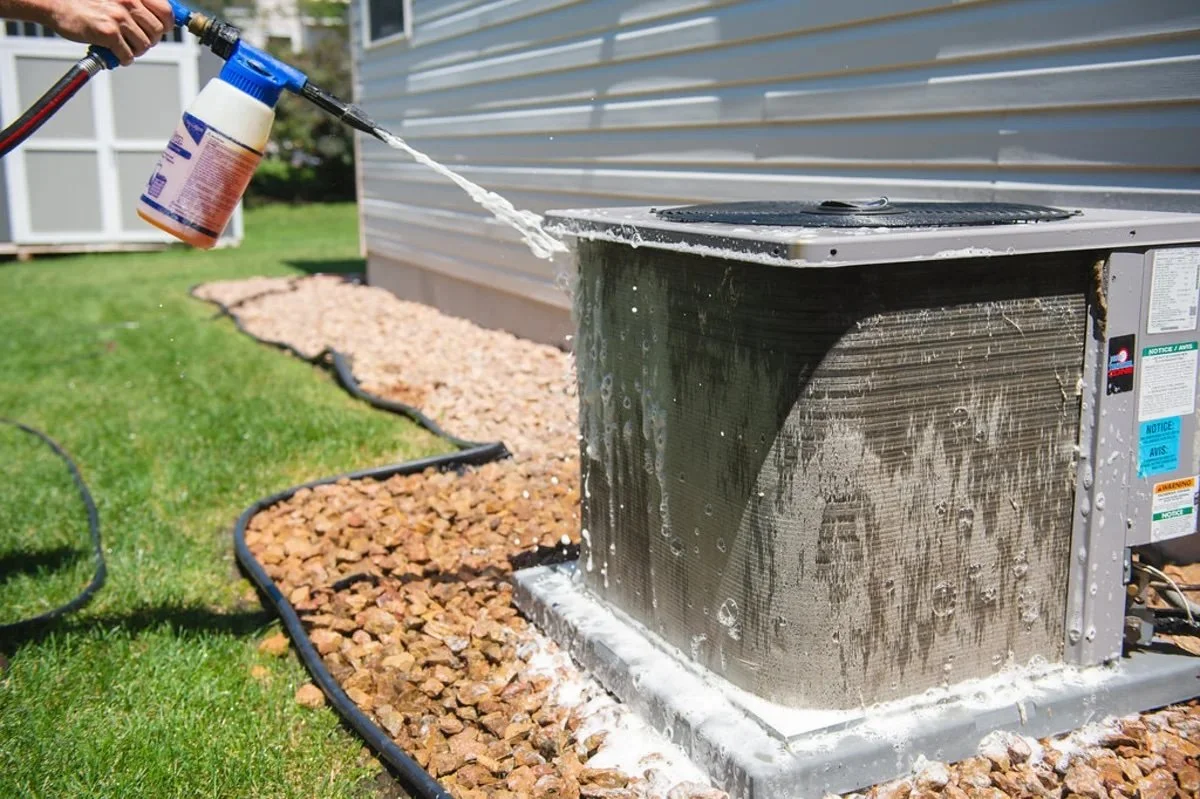
Dirty condenser coils can reduce your AC efficiency before summer even begins. Schedule your spring tune-up with J Martin before the heat hits Orange County.
More importantly, he'd learned a valuable lesson about spring maintenance that he now shares with everyone he knows. Addressing system problems when you have time and choices available is infinitely better than dealing with failures when you don't.
The Real Cost of Skipping Spring Maintenance
Many homeowners attempt to save money by skipping routine maintenance, believing that HVAC systems don't really need preventive service. This view is short-sighted and ultimately expensive. The cost comparison is actually quite stark.
A professional spring tune-up costs between $85 and $200, depending on your system's complexity and your location within Orange County. This pays for a technician's time for 60 to 90 minutes, parts like a new filter or capacitor if needed, and their expertise in diagnosing system condition. Let's use $150 as an average cost. Multiplied by annual spring tune-ups, you're spending $150 per year on preventive maintenance.
Skip that maintenance, and several outcomes are possible. Best case scenario, your system limps through summer without major failures, but it runs inefficiently, consuming 10 to 20 percent more electricity than it should. With typical summer cooling costs of $300 to $500 per month in Orange County, that extra consumption costs $30 to $100 monthly. Over a five-month cooling season, you've spent $150 to $500 in excess electricity, wiping out or exceeding the cost of spring maintenance.
More likely scenario, a component fails during summer when it's least convenient and most expensive to fix. A capacitor that would cost $250 to replace in April now costs $600 in July because of emergency service charges and technician overtime. A refrigerant leak that would cost $300 to diagnose and repair in spring costs $800 in summer. A coil that would cost $100 to clean in April causes compressor damage worth $1,600 to repair in August. The mathematics are unambiguous: preventive maintenance is cheaper than emergency repair by a factor of 2 to 5.
Even more concerning is the risk of a complete compressor failure in peak summer heat. Your system stops cooling completely, you're without air conditioning in 110-degree weather, and you're facing a $1,600 to $2,500 replacement. Your home becomes unbearably hot within hours. Running your furnace fan to circulate air without cooling provides minimal relief. You're sleeping in front of a fan, dealing with grumpy family members, and potentially seeking emergency cooling at relatives' homes or hotels. Meanwhile, the cost for a new system far exceeds the cost of spring maintenance that would have caught the failure indicators and prevented it entirely. For the full 15-year cost comparison between homeowners who maintain their systems and those who don't, our deep dive into the true cost of skipping HVAC maintenance breaks down the $10,000-$15,000 difference and where every dollar goes.
Preparing Your Home for Summer Beyond Just the AC Unit
While this guide focuses specifically on HVAC maintenance, comprehensive spring preparation for Orange County summer includes attention to other home systems that interact with your air conditioning. Proper window coverings can reduce solar heat gain significantly. Cellular shades or reflective window film on south and west-facing windows can reduce the cooling load on your AC by 10 to 20 percent, translating to lower utility costs and less strain on your system.
Landscape maintenance affects air conditioning efficiency, particularly around your outdoor condensing unit. Trees and shrubs should be positioned to provide shade over your unit without completely blocking airflow. Dense vegetation within 18 inches of your outdoor unit restricts airflow and reduces efficiency. Spring pruning to maintain proper clearance takes just a few minutes and yields measurable efficiency improvements.
Attic ventilation and insulation also affect cooling efficiency. A properly ventilated attic with adequate airflow prevents excessive heat buildup that otherwise radiates into living spaces below. Attic insulation rated at R-38 to R-49 in Southern California reduces heat transfer significantly. If your home was built before 1990, your attic insulation is likely insufficient by modern standards. This is a separate project from HVAC maintenance, but your spring tune-up technician can assess your attic condition and recommend upgrades if warranted.
Finally, sealing air leaks around doors, windows, and penetrations prevents cooled air from escaping and warm outdoor air from entering. Weatherstripping is inexpensive and takes minimal time to install. These small improvements compound with proper HVAC maintenance to create substantial energy and comfort benefits.
Your Spring HVAC Maintenance Timeline and Next Steps
Understanding when to schedule maintenance and what to expect helps you prepare and maximize the benefits of professional service. Late March and April are ideal windows for spring HVAC maintenance in Orange County. Scheduling during this period means technicians are readily available and not backlogged with emergency calls. Spring weather is still mild enough to work outside comfortably, and potential problems are identified with plenty of time to address them before peak summer demand arrives.
Contact J Martin Indoor Air Quality by mid-April to schedule your spring tune-up. Our team has 50 years of combined HVAC experience and represents Lennox, Daikin, and Mitsubishi systems. We're fully licensed, bonded, and insured, and our work carries manufacturer warranties. We serve North Orange County communities including Yorba Linda, Anaheim Hills, Brea, Placentia, Villa Park, Fullerton, Tustin, Santa Ana, and Irvine.
When you call, we'll discuss your system's age, any concerns you've noticed, and whether you've had professional service recently. We'll schedule a time that works for your schedule and arrive with all necessary tools and equipment. You can expect the tune-up to take 60 to 90 minutes, during which you're welcome to ask questions about your system's operation. When we're finished, we'll provide a detailed written report of our findings, recommendations for any repairs, and transparent pricing for all suggested work.
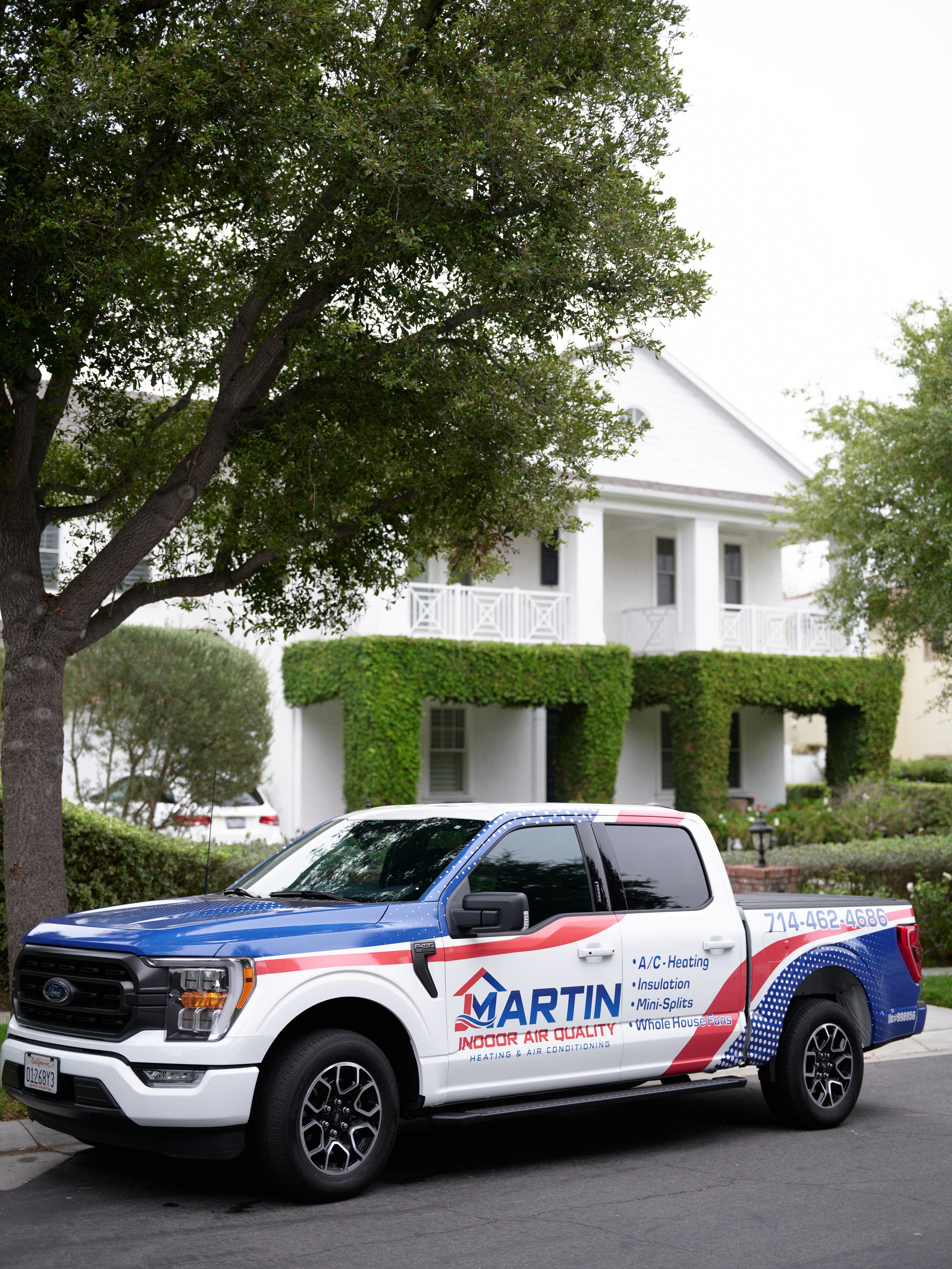
From routine maintenance to full system diagnostics, J Martin provides reliable HVAC service to Orange County homeowners you can count on.
Beyond the tune-up itself, you'll receive recommendations for filter replacement schedules based on your specific household's needs, guidance on thermostat settings for optimal efficiency and comfort, and advice on any repairs we recommend. We're happy to discuss whether your system is good for several more years or whether replacement might be cost-effective. Our goal is not to sell unnecessary repairs or replacements, but to give you complete information so you can make decisions that serve your comfort and budget best.
One final note on scheduling: don't wait until the first heat wave in May to call. By then, demand for service increases, available appointment times shrink, and you're dealing with summer pricing and emergency charges. The contractors with the best availability and most reasonable pricing are those who schedule in March and April. Your spring investment of just a few hours and a few hundred dollars can prevent thousands of dollars in emergency repairs and weeks of discomfort during Orange County's hottest months.
Spring HVAC maintenance is not a luxury or an optional nice-to-have. It's essential preparation for the challenging months ahead. Call J Martin Indoor Air Quality today at (714) 462-4686 to schedule your spring AC tune-up. We're here to make sure your home stays cool and comfortable all summer long.
J Martin Indoor Air Quality | (714) 462-4686 | Services