
Your AC Condensate Drain Is Clogged: Why It Happens and How to Prevent Water Damage
Posted on May 14, 2026
There's a puddle of water on the floor beneath your air handler, a damp spot spreading across the ceiling below the attic, or a musty smell drifting from your vents that wasn't there last week. You might assume something major has gone wrong with your air conditioning system, but the culprit behind all three of these scenarios is often one of the simplest and most overlooked components in the entire system: the condensate drain line.
A clogged condensate drain is one of the most common AC problems we see across Orange County, and it's also one of the most preventable. The repair itself is usually quick and affordable. But the water damage that results from ignoring a clog, or from not even knowing the drain exists until it backs up, can cost hundreds or thousands of dollars to remediate. Ceiling stains, warped drywall, damaged insulation, ruined flooring, and mold growth are all potential consequences of a condensate drain that's been allowed to overflow.
This guide explains exactly what the condensate drain does, why it clogs, how to recognize the warning signs before water damage occurs, step-by-step instructions for clearing a clog yourself, and when you need professional help. If you're an Orange County homeowner with an attic-mounted air handler (which describes the majority of homes in Yorba Linda, Brea, Anaheim, Fullerton, and Villa Park), this is especially important information because the potential for water damage from an overhead unit is significantly higher than from a ground-level or basement installation.
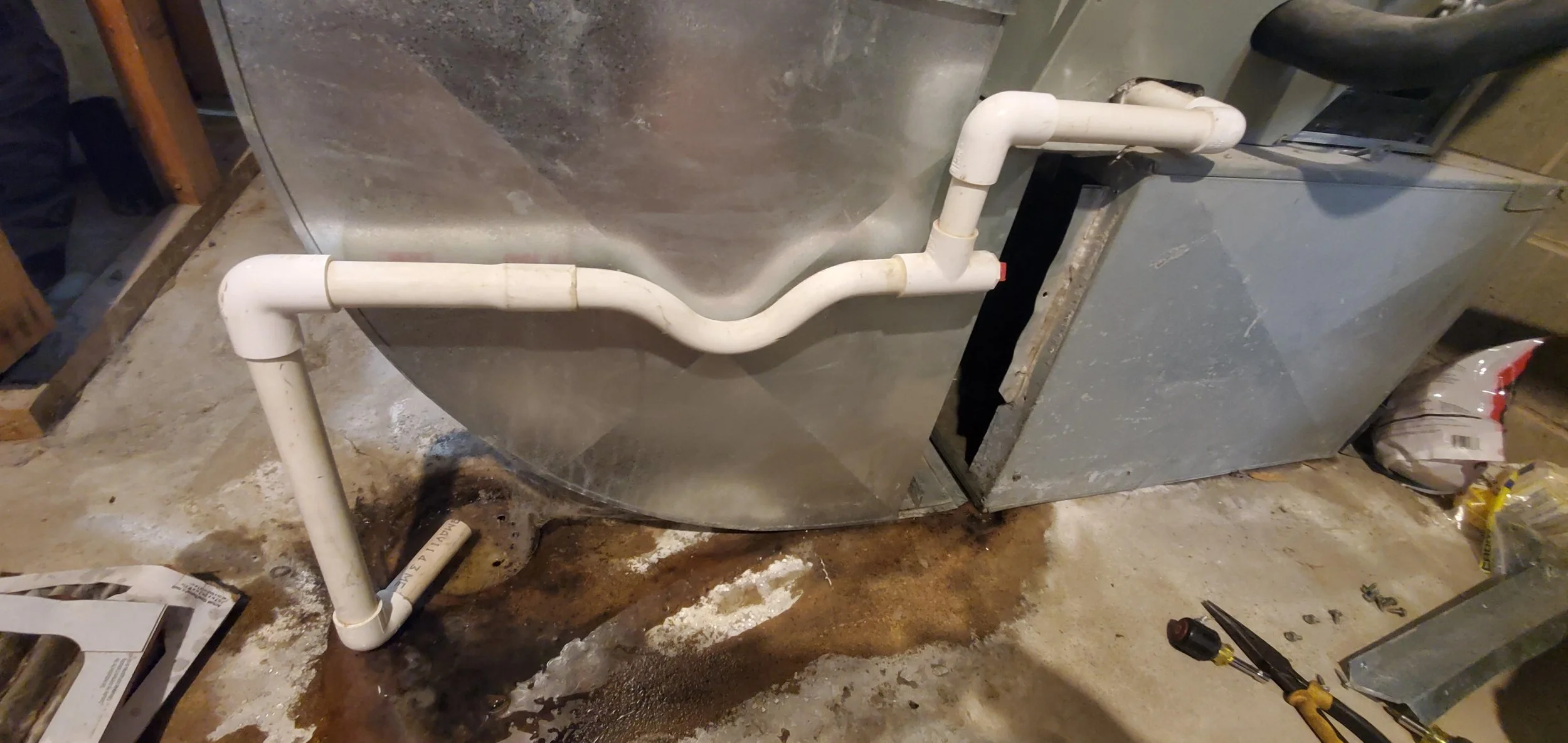
Seeing water pooling under your AC? A clogged condensate drain can quickly lead to serious water damage. J Martin offers same-day service across Orange County.
What the Condensate Drain Does and Why Every AC System Has One
Your air conditioning system doesn't just cool the air in your home. It also removes moisture from it. As warm, humid indoor air is pulled across the cold evaporator coil, the temperature of that air drops below its dew point and the moisture condenses into liquid water, the same way water droplets form on the outside of a cold glass on a warm day.
Under normal operating conditions, a residential AC system in Orange County can produce anywhere from 5 to 20 gallons of condensate water per day, depending on the humidity level, the size of the system, and how many hours it runs. That water has to go somewhere.
The condensate collects on the evaporator coil's surface and drips down into a shallow metal or plastic tray called the primary drain pan, which sits directly beneath the coil inside the air handler. From there, the water flows by gravity into the condensate drain line, a small PVC pipe (typically 3/4 inch in diameter) that routes the water from the drain pan to the outside of the house, where it exits near the foundation or near the outdoor condenser unit. When you see a small trickle of water dripping from a PVC pipe on the exterior of your home while the AC is running, that's the condensate drain doing its job.
Most systems also have a secondary (backup) drain pan and a secondary drain line. The secondary pan sits beneath the entire air handler as a safety catch in case the primary drain pan overflows. The secondary drain line typically terminates in a more visible location, often above a window or doorway, specifically so that if it starts dripping, you'll notice it and realize there's a drainage problem that needs attention. Think of it as a built-in warning system.
Many modern systems also include a float switch (also called a condensate overflow switch) on the primary drain pan. This small device detects when the water level in the pan rises above normal, which indicates a clog, and automatically shuts off the AC system to prevent overflow and water damage. If your AC suddenly stops cooling and you can't figure out why, a tripped float switch due to a clogged drain is one of the first things to check.
Why Condensate Drain Lines Clog
The condensate drain line operates in an environment that's practically designed for biological growth. It's dark, constantly moist, and warm. Over time, several things accumulate inside the line and eventually form a blockage.
The most common cause is a buildup of algae, mold, and mildew. The warm, wet conditions inside the drain line create an ideal breeding ground for these organisms. They grow along the interior walls of the PVC pipe, gradually thickening into a slimy biofilm that restricts and eventually blocks water flow. In Orange County's climate, where AC systems run for six or more months per year, this biological growth has an extended period to develop compared to shorter-season climates.
The second common cause is dust and debris mixing with the moisture. As your AC pulls indoor air across the evaporator coil, microscopic dust particles, pet dander, lint, and other airborne debris pass through or around the air filter and settle on the wet coil surface. When this debris washes off the coil and into the drain pan, it combines with the water to form a sludge that accumulates in the drain line. Over months and years, this sludge hardens into a clog. Santa Ana wind events, which are a regular occurrence in Orange County, deposit fine particulate matter throughout homes and load air filters faster than normal, increasing the volume of debris that reaches the coil and drain.
The third cause is hard water mineral deposits. Orange County receives much of its water supply from the Colorado River and from local groundwater sources, both of which have relatively high mineral content. While the condensate itself is essentially distilled water (it's formed from moisture in the air, not from the water supply), homes with high indoor humidity can introduce mineral-laden moisture into the system, and over time, mineral scale can form on the drain pan and at the drain line's entry point.
The fourth cause is improper drain line installation or routing. If the drain line doesn't maintain a consistent downward slope from the air handler to its exit point, water can pool in low spots along the line. These pooling areas become prime locations for biological growth and sediment accumulation. In homes where the AC was added after original construction (common in older Orange County neighborhoods built in the 1960s through 1980s), the drain line routing may not be optimal.
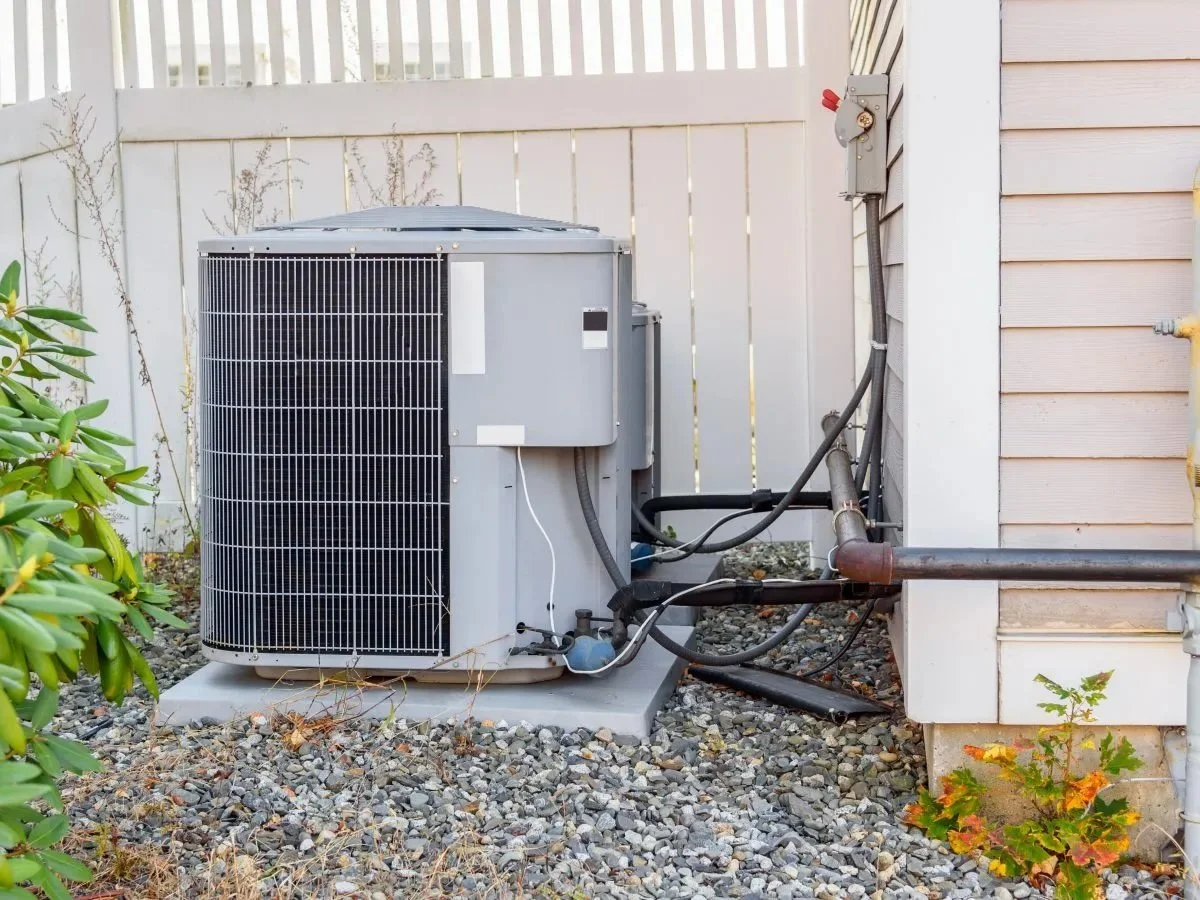
Your outdoor condensate drain line is where AC moisture should safely exit. When it’s clogged, water backs up inside your home, something we help Orange County homeowners prevent every day.
Warning Signs That Your Condensate Drain Is Clogging
Catching a clog before it causes water damage is the key. Here are the signs to watch for.
The most obvious sign is water pooling around the base of the indoor air handler or visible water stains on the ceiling below an attic-mounted unit. If you see standing water in the primary drain pan when you open the air handler's access panel, the drain line isn't carrying water away as it should.
A musty or mildew smell coming from the supply vents is another strong indicator. When biological growth in the drain line becomes significant, the stagnant water and mold produce odors that get picked up by the airflow moving through the system and distributed throughout your home. If you've noticed a smell that seems to come and go with the AC cycling, a clogged or partially clogged drain is a likely source.
Your AC shutting off unexpectedly without explanation may mean the float switch has tripped. If your system stops cooling and you've checked the thermostat, the breaker, and the air filter without finding the problem, check the drain pan for standing water. A float switch that has activated will prevent the system from running until the water level drops.
Water dripping from the secondary drain line (the one that terminates above a window or doorway) is the most direct warning sign that the primary drain has failed. If you see water coming from a PVC pipe in an unusual location on the exterior of your house that doesn't normally drip, the primary line is clogged and the secondary system has activated. This demands immediate attention.
Higher-than-normal indoor humidity is a subtler sign. If your home feels muggy or clammy even though the AC is running, impaired drainage may be preventing the system from removing moisture efficiently. Your system has to work harder to compensate, which can show up as higher energy bills even though you haven't changed your usage patterns. While there are other causes for this (including an oversized system or ductwork issues), a partially clogged drain should be on your checklist.
How to Clear a Clogged Condensate Drain Line Yourself
This is a DIY-friendly repair for homeowners who are comfortable doing basic maintenance around their HVAC system. You don't need specialized tools, and the process typically takes 20 to 45 minutes.
Start by turning off the air conditioning system at the thermostat and at the breaker. Working around the air handler while it's operating involves electrical components and moving parts, so shutting it down completely is the safe first step.
Next, locate the primary drain pan and check for standing water. The drain pan is directly beneath the evaporator coil inside the air handler. If you have an attic-mounted unit, you'll need to access the attic. If you have a closet-mounted unit, open the access panel. If there's standing water in the pan, use a wet/dry shop vacuum or old towels to remove it. While you're there, wipe the pan down with a cloth dampened with a mild soap solution to remove any sludge or biofilm.
Now find the outdoor end of the condensate drain line. This is a small PVC pipe, usually 3/4 inch in diameter, that exits the house near the foundation or near the outdoor AC unit. It may have a small cap or fitting on the end. Look for signs of algae or sludge near the opening.
If you have a wet/dry shop vacuum, this is the most effective DIY tool for clearing a clog. Place the vacuum hose over the end of the outdoor drain line and create a tight seal with your hand or a rag. Run the vacuum for one to two minutes. The suction will often pull the clog material right out of the line. Check the vacuum's collection canister afterward. If you see a dark, sludgy mass, you've likely cleared the blockage.
After clearing the clog, flush the drain line to clean out remaining debris and to confirm the line is open. Go to the indoor end of the drain line and locate the cleanout port, a T-shaped PVC fitting with a removable cap, usually located near the air handler. Remove the cap and slowly pour approximately one cup of distilled white vinegar into the line. Vinegar is mildly acidic and helps break down algae and biofilm without damaging the PVC pipe. Let it sit for 30 minutes, then follow it with a cup of warm water. Go outside and confirm that the water flows freely out of the outdoor drain line exit. If it does, you've successfully cleared the line.
If your system doesn't have a cleanout port (some older installations lack this feature), you can pour the vinegar directly into the drain pan's drain opening, which is the point where the pan connects to the drain line inside the air handler. Access to this area requires opening the air handler cabinet, so make sure the system is completely powered off at the breaker before reaching inside. If you're not comfortable accessing the interior of the air handler, skip this step and schedule a professional cleaning instead. A technician can also install a cleanout port during the service visit, making future DIY maintenance much easier.
One important note on technique: when using the shop vacuum on the outdoor end of the drain line, wrap a wet rag tightly around the connection point between the vacuum hose and the PVC pipe to create a better seal. The tighter the seal, the more suction reaches the clog. If the first attempt doesn't produce results, try holding the vacuum on the line for a full two to three minutes. Stubborn clogs sometimes need sustained suction to break free.
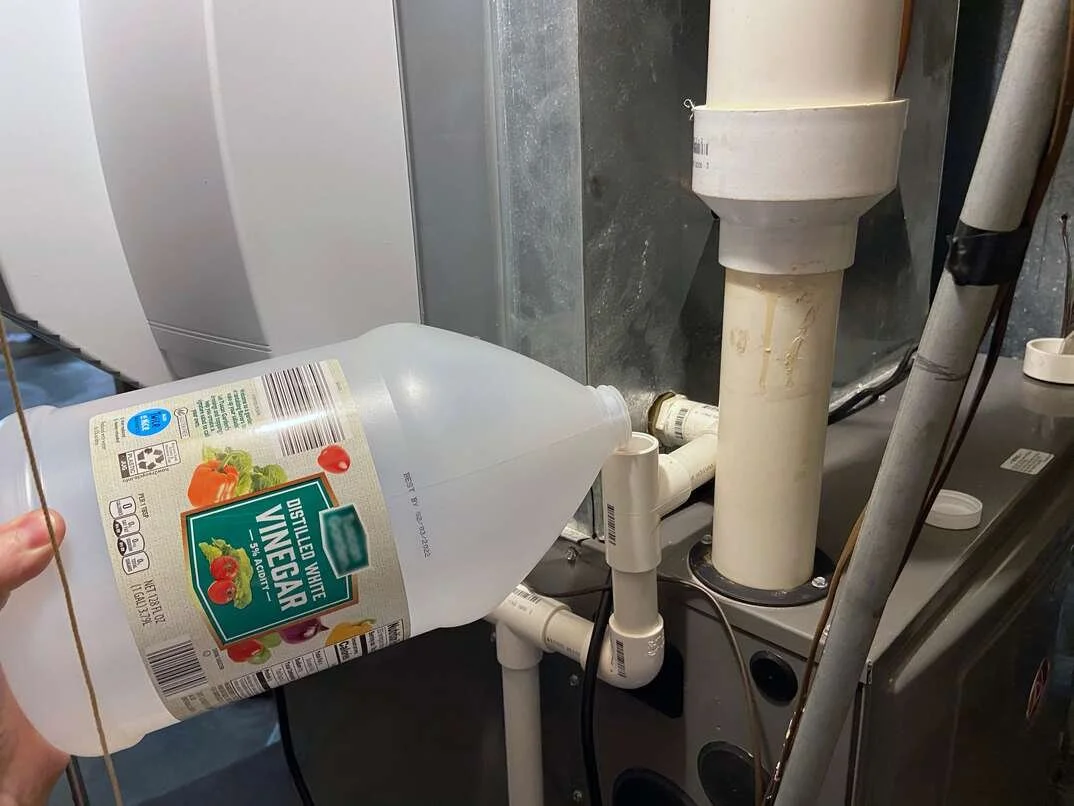
We get calls like this every summer in Orange County: 'How do I clear my AC drain line?' In many cases, a simple vinegar flush can prevent a clogged condensate drain.
Some homeowners use a diluted bleach solution (one part bleach to ten parts water) instead of vinegar. This is more aggressive at killing mold and algae, but there's an important consideration: bleach can be corrosive to certain metals, and if any portion of your drain system involves copper fittings or a metal drain pan, vinegar is the safer choice. When in doubt, stick with vinegar.
If you don't have a shop vacuum and the vinegar flush doesn't resolve the clog, you can try using a thin, flexible wire or a small plumber's brush to gently probe the drain line from the cleanout port. Work carefully to avoid pushing the clog deeper or damaging the pipe. If these methods don't work, the clog is likely too severe or too deep in the line for DIY methods, and it's time to call a professional.
What a Professional Drain Line Cleaning Involves
When a technician arrives to clear a condensate drain clog, the process is typically straightforward and relatively quick.
The technician will inspect the drain pan, the drain line connections, and the exterior drain exit point. They'll use a commercial wet/dry vacuum or a specialized condensate line pump to apply suction to the line, which is more powerful than a household shop vac and can pull stubborn clogs that DIY vacuuming couldn't move.
For severe or deep clogs, technicians may use a nitrogen flush, which involves pushing compressed nitrogen through the line at high pressure to blast the blockage out the other end. This method is highly effective and is the go-to approach for lines where biological growth has created a dense obstruction deep within the pipe.
After clearing the line, the technician will typically flush it with a commercial-grade pan and drain treatment solution that kills remaining algae and mold spores and helps prevent regrowth. They may also install condensate drain pan tablets (slow-dissolving antimicrobial tablets that sit in the drain pan and continuously release a cleaning agent as water flows over them) to provide ongoing protection between maintenance visits.
A professional condensate drain line cleaning typically costs $75 to $250, depending on the severity of the clog and whether additional work is needed. This service is often included as part of an annual AC tune-up, which runs $100 to $200 for the full maintenance visit. If the drain pan is cracked, corroded, or otherwise damaged, replacement costs $250 to $600 for a secondary pan or $600 to $1,200 for a primary pan. If the drain line itself needs to be replaced (due to damage, poor routing, or persistent clogging that can't be resolved with cleaning), expect to pay $150 to $500 depending on the length and accessibility of the line. For a broader look at what common AC repairs cost, see our complete guide to AC repair costs in Orange County.
The Real Cost: Water Damage from a Neglected Drain
The drain line cleaning itself is one of the least expensive AC repairs. What's not inexpensive is the water damage that occurs when a clog goes unnoticed.
In Orange County, the vast majority of residential air handlers are installed in the attic. This makes sense from a space and noise perspective, but it creates a significant water damage risk when the condensate drain backs up. When the primary drain pan overflows in an attic installation, gravity sends the water downward through insulation, into ceiling drywall, and potentially onto flooring and belongings below.
A small, caught-early overflow might cause a minor ceiling stain that can be patched and repainted for $100 to $300. A more significant overflow that saturates attic insulation and causes visible ceiling damage can run $500 to $2,000 to repair, including insulation replacement, drywall repair, and painting. If the water damage goes unnoticed for days (which can happen in rooms that aren't used daily, like guest bedrooms or home offices), mold can begin growing within 24 to 48 hours, and professional mold remediation costs $1,500 to $5,000 or more depending on the affected area.
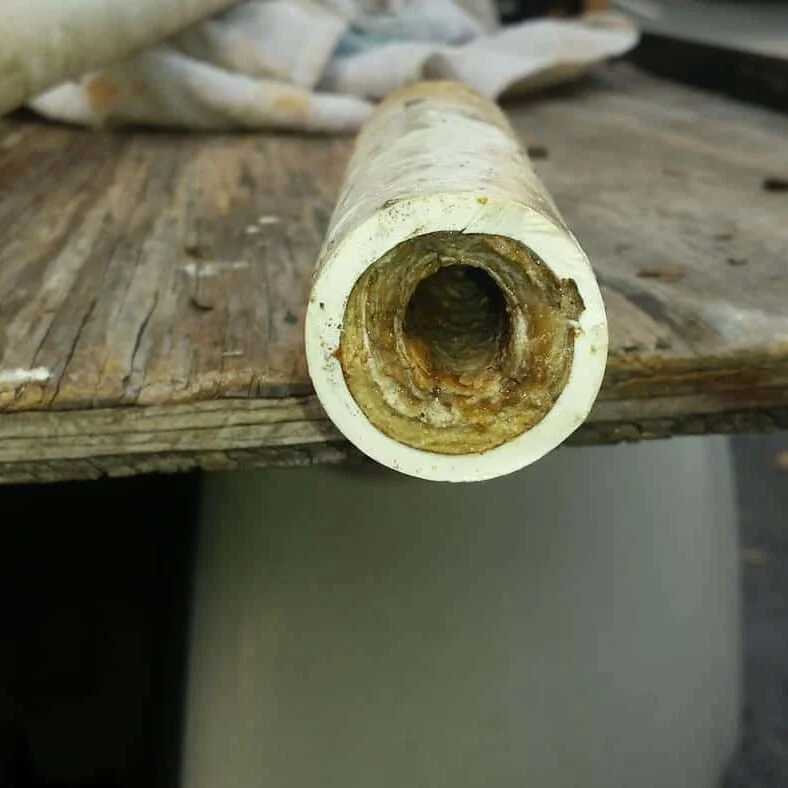
This is what a clogged AC condensate drain can look like inside. Left untreated, this buildup can quickly block water flow and cause serious damage. J Martin offers same-day service across Orange County.
To put this in perspective, a $5 cup of vinegar poured down the drain line once a month can prevent a $5,000 mold remediation bill. Very few home maintenance tasks offer that kind of return on investment.
Beyond the direct water damage, a clogged drain that causes the float switch to shut down your system creates a cascading set of problems. If the system shuts down and restarts repeatedly because the float switch trips, resets when some water evaporates, and trips again as the pan refills, you end up with a pattern of short cycling that stresses the compressor and can shorten its lifespan. And if the float switch activates during a summer heat wave, you lose cooling entirely until the drain issue is resolved, which means dealing with both a plumbing-type repair and an uncomfortably hot house at the same time. During peak summer in Orange County, indoor temperatures can climb into the 90s within hours when the AC isn't running, which is particularly dangerous for elderly family members, young children, and pets.
The bottom line is that a clogged condensate drain is a small problem that creates big consequences when ignored. Treating it as a routine maintenance task rather than waiting for an emergency is the most cost-effective approach by a wide margin.
Why This Problem Is Especially Relevant in Orange County
Several factors make condensate drain clogs more common and more consequential in our region.
The extended cooling season means more total condensate production over the course of a year. While a homeowner in a four-month cooling climate might produce condensate for 120 days, Orange County AC systems can produce condensate for 180 to 200 days per year. That's nearly double the opportunity for biological growth and sludge accumulation inside the drain line.
Orange County's water supply, sourced partly from the Colorado River and local wells, has moderately high mineral content. While this primarily affects plumbing, it can contribute to mineral scale around drain pan edges and fittings that promotes debris accumulation.
Attic-mounted air handlers are the norm in Orange County construction, particularly in homes built from the 1970s through the 2000s. Summer attic temperatures routinely exceed 130 to 140 degrees, which creates a brutally hot environment for the air handler and ductwork but ironically also creates the warm, moist conditions that accelerate biological growth in the drain system. The combination of high attic heat and consistent condensate production makes Orange County attics particularly prone to aggressive algae and mold growth in drain lines.
Santa Ana wind events, which typically occur between October and March but can happen any time, deposit fine dust throughout homes. This dust loads air filters faster and increases the amount of particulate that reaches the evaporator coil, directly contributing to the sludge that clogs drain lines.
And the financial stakes are higher with attic installations. A ground-level air handler with a clogged drain might leak onto a concrete slab or into a utility closet where it's contained and easily noticed. An attic unit leaking onto the ceiling of a master bedroom, home office, or living room can cause structural and cosmetic damage that's expensive and disruptive to repair.
How to Prevent Condensate Drain Clogs (Monthly and Annual Maintenance)
Preventing a clogged condensate drain is straightforward, and it takes very little time or money. Here's a practical maintenance routine that Orange County homeowners can follow.
Every month during cooling season (roughly April through October), pour one cup of distilled white vinegar into the drain line's cleanout port. This takes less than two minutes and kills algae and mold before they can establish a significant colony inside the line. Some homeowners prefer to pour a half-cup of vinegar every two weeks rather than a full cup monthly, which provides more consistent treatment. Either approach works well.
Every time you change the air filter (which should be every 30 to 60 days during cooling season), visually inspect the drain pan for standing water, discoloration, or sludge. If you see any, wipe the pan clean and pour vinegar down the drain. A clean filter reduces the amount of debris that reaches the coil and drain, so consistent filter changes are also condensate drain maintenance.
Once a year, schedule a professional AC tune-up before the cooling season begins. A thorough spring maintenance visit includes inspecting and cleaning the drain pan, flushing the drain line, checking the float switch (and recommending installation of one if your system doesn't have it), cleaning the evaporator coil (which reduces the debris that washes into the drain), and verifying proper drain line slope and connections. Learn more about what's included in our maintenance services on our maintenance page.
Consider asking your technician about condensate drain pan tablets. These slow-dissolving tablets sit in the drain pan and release an antimicrobial agent continuously as water flows over them, providing ongoing protection between monthly vinegar treatments. They typically cost $5 to $15 for a pack that lasts several months.
If your system doesn't have a float switch on the primary drain pan, have one installed. A float switch costs $20 to $50 for the part, and installation during a maintenance visit is usually under $100. This single device can prevent thousands of dollars in water damage by shutting the system off before the drain pan overflows. For attic-mounted systems, a float switch is not optional. It's essential.
When to Call a Professional
You can handle monthly vinegar treatments, filter changes, and basic drain pan inspections on your own. Call a licensed HVAC technician if any of the following applies.
The drain line clog won't clear with a shop vacuum and vinegar flush, which usually indicates a deep or severe obstruction that requires professional equipment. You see water stains on ceilings, walls, or floors below the air handler, which means the overflow has already caused damage and you need both the drain cleared and the damage assessed. You detect a persistent musty or mold smell from the vents even after clearing the drain, which may indicate biological growth inside the air handler or on the evaporator coil itself. The float switch keeps tripping and shutting the system down even after you've cleared the drain, which could indicate a drain line slope issue, a damaged drain pan, or a problem with the float switch itself. Or you notice that your AC isn’t cooling properly in addition to the drainage issue, which may indicate a related problem like a frozen evaporator coil that's producing excessive meltwater overwhelming the drain system. If you're experiencing active water damage from an overflowing drain pan, especially from an attic-mounted unit, treat this as an emergency situation and call for same-day service to stop the leak and minimize damage.
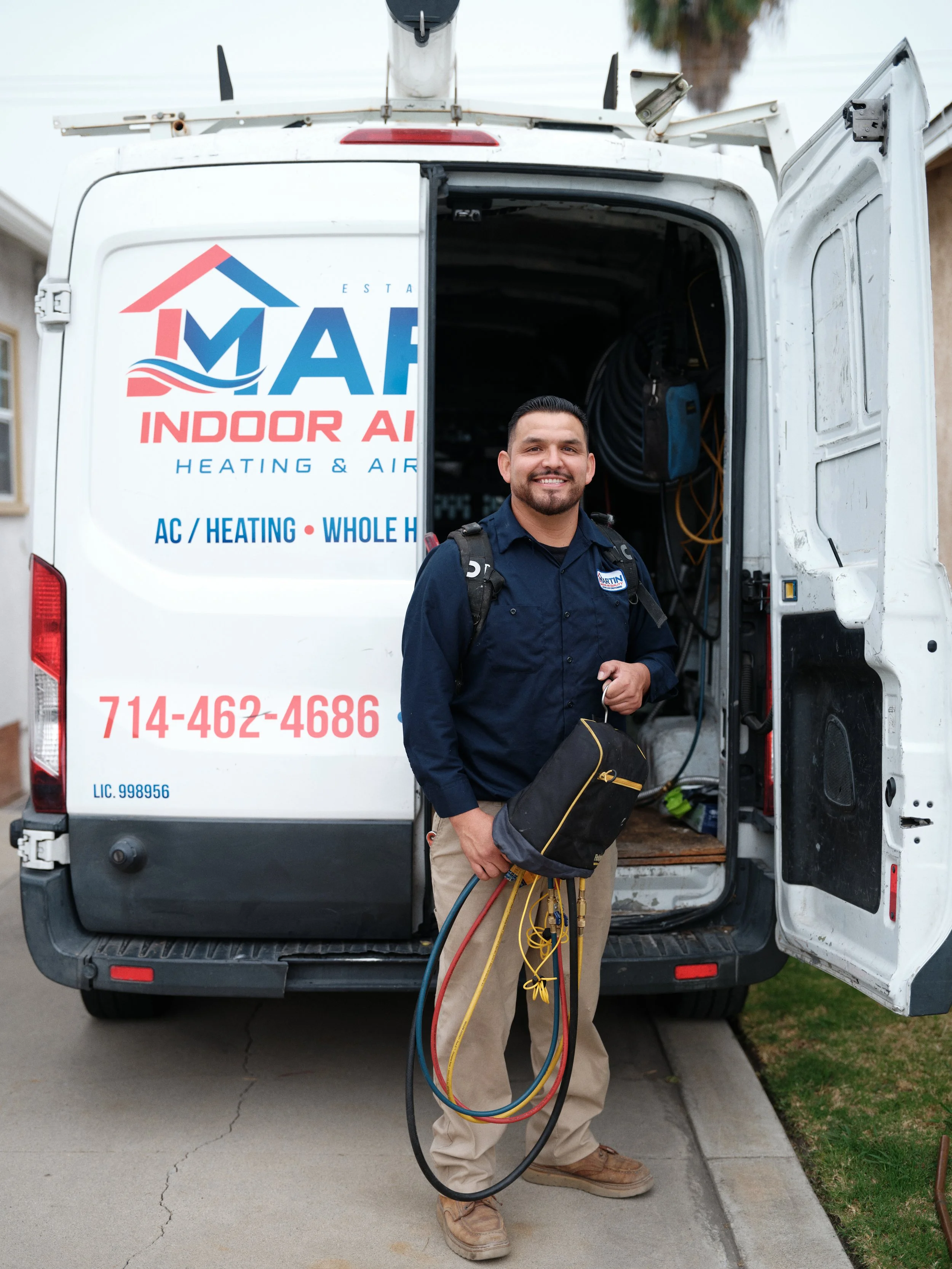
When a clogged AC condensate drain causes leaks or shutdowns, J Martin’s experienced technicians give Orange County homeowners clear answers and fast solutions.
J Martin Is Here for Orange County Homeowners
At J Martin Indoor Air Quality, clogged condensate drains are one of the most frequent service calls we handle during cooling season, especially in the early weeks of spring when systems come back online after months of sitting idle. With 15 years of experience serving Yorba Linda, Anaheim, Brea, Fullerton, Villa Park, and surrounding Orange County communities, our technicians know exactly where to look, what to clean, and how to prevent the problem from coming back.
We're a family-owned company with a 4.97-star average rating across more than 5,000 customers, and our technicians never work on commission. When we come out for a condensate drain issue, we give you an honest assessment of what happened, clear the clog, and show you exactly how to maintain the drain between service visits so you're not calling us back for the same problem next month.
If you're dealing with water leaks from your AC, unexplained system shutdowns, or musty odors from your vents, or if you want to schedule a spring tune-up that includes a thorough drain line flush, call us at (714) 462-4686. We offer same-day service for water damage situations and transparent pricing on every repair.