
Anaheim Hills HVAC Guide: Common Problems in Hillside Homes and How to Fix Them
Posted on May 12, 2026
A family in the Deer Canyon neighborhood called us after their second compressor failure in four years. The home was a 3,200-square-foot two-story built in the late 1980s, perched on a south-facing hillside lot with floor-to-ceiling windows across the back of the house and virtually no shade on the west side. Their 4-ton AC system had been replaced five years earlier by another company, and the replacement was the same 4-ton size as the original. The problem was that a 4-ton system was undersized for a south-facing hillside home with that much glass exposure. The system ran nearly continuously on hot days, never quite keeping the upstairs below 80 degrees while the downstairs hovered at 74. That constant full-load operation is what killed the compressor, twice. When we ran a proper Manual J load calculation, the home actually needed a 5-ton system. The previous installer had matched the existing tonnage without accounting for the solar heat gain, the hillside exposure, or the fact that temperatures in Anaheim Hills routinely reach 10 to 15 degrees hotter than what the coastal Orange County averages suggest.
This is what makes HVAC work in Anaheim Hills different from HVAC work in most of Orange County. The hillside topography, the sun exposure patterns, the canyon wind effects, the wildfire proximity, and the multi-level construction that defines the community all create HVAC challenges that flat-lot homes in Anaheim, Fullerton, or Placentia simply don't face. At J Martin Indoor Air Quality, we've been servicing Anaheim Hills homes for over 15 years. We know the neighborhoods, we know the building patterns, and we know exactly which HVAC problems show up in which parts of the community. This guide covers the most common issues and what to do about each one.

Living in a hillside home in Anaheim Hills? Sun exposure and elevation can overload your AC faster than you think. J Martin offers same-day HVAC diagnostics. Call (714) 462-4686.
The Geography That Shapes Your HVAC Needs
Anaheim Hills sits on the southeastern hillsides of the Santa Ana Canyon, developed primarily in the 1970s and 1980s after rancher Louis Nohl sold his approximately 5,000-acre parcel for what became one of Orange County's premier master-planned communities. The first neighborhood, Westridge, opened in 1972. By the early 1980s, the community had grown to over 15,000 residents, with development continuing through the 1990s and into the 2000s as neighborhoods like East Hills, The Highlands, and The Summit expanded the community toward the 241 toll road.
What matters for your HVAC system is the terrain. Anaheim Hills isn't flat suburban grid like central Anaheim or Fullerton. The homes climb hillsides, sit on ridgelines, nestle into canyons, and face in every compass direction depending on where the lot falls on the slope. A home on the north side of a ridge in Nohl Ranch experiences dramatically different solar loading than a home on the south face of a canyon wall in Hidden Canyon or the Anaheim Hills Estates. Two homes with identical square footage and identical HVAC equipment can have cooling loads that differ by a full ton or more based purely on hillside orientation and sun exposure.
The elevation also matters. Anaheim Hills ranges from roughly 400 to over 1,000 feet above sea level, significantly higher than the basin floor of central Orange County. The elevation pushes summer highs 5 to 10 degrees above what coastal cities experience. When Newport Beach is 82 degrees, Anaheim Hills is often 92. When a heat wave pushes the coast to 90, the Hills are pushing triple digits. The September 2024 heat advisory brought temperatures 12 to 14 degrees above seasonal averages across the region, and inland hillside communities like Anaheim Hills bore the brunt.
Problem One: Extreme Solar Heat Gain on South and West-Facing Hillsides
This is the single most impactful HVAC factor unique to Anaheim Hills, and it's the one most commonly ignored during system installation and replacement.
A south-facing hillside home receives direct, unobstructed sunlight for 8 to 10 hours per day during summer. A west-facing home catches the most intense afternoon sun from noon through sunset, when temperatures peak and the angle of the sun maximizes heat absorption through windows and exterior walls. In the Anaheim Hills Estates, Canyon View Estates, Summit Pointe, and the hillside lots throughout Nohl Ranch, many homes were designed to take advantage of canyon and city views, which means large windows facing south or west, exactly the directions that create the highest solar heat gain.
The roof and exterior walls on these sun-exposed sides absorb enormous amounts of thermal energy throughout the day. That heat conducts through the building materials and radiates into the living space, creating a heat load that the HVAC system must overcome in addition to the ambient air temperature. A flat-lot home in central Anaheim with equal sun exposure on all four sides might gain 20% to 30% of its cooling load from solar exposure. A south-facing hillside home in Anaheim Hills with large view windows can gain 40% to 50% of its cooling load from solar exposure alone.
What this means practically is that standard sizing rules underestimate the cooling needs of hillside homes. If a contractor sizes your replacement system based on square footage and a generic climate zone without physically evaluating your home's orientation, window area, and sun exposure, there's a meaningful chance the system will be undersized. An undersized system runs continuously, wears out faster, and never adequately cools the spaces with the heaviest sun exposure. We detailed the full range of problems from incorrect sizing in our post on what size AC unit your Orange County home actually needs, including why a proper Manual J load calculation is non-negotiable.
The fixes for excessive solar heat gain work on two fronts: reducing the heat that enters the home and ensuring the HVAC system is sized to handle what gets through. On the reduction side, window films or low-E window coatings can cut solar heat gain through glass by 30% to 50% for $200 to $600 per window. Exterior shade structures, awnings, or strategically planted trees on the south and west sides reduce heat absorption through walls and windows. And attic insulation upgrades from the original R-19 (common in 1970s and 1980s Anaheim Hills construction) to the current R-38 standard can reduce the heat radiating down from the roof by 20% to 30%, costing $1,500 to $3,000 for a typical Anaheim Hills home. On the HVAC side, a properly performed load calculation that accounts for orientation and glass area ensures the system is matched to what the home actually needs rather than what a generic chart suggests.
Problem Two: Multi-Level Homes and the Upstairs Heat Trap
Anaheim Hills was built as an upscale community with predominantly two-story homes. Many homes in neighborhoods like Sycamore Canyon, Deer Canyon, The Highlands, and Canyon Terrace are tri-level or have dramatic vaulted ceilings that function like multi-story spaces. The combination of multi-level construction and hillside positioning creates one of the most common complaints we hear from Anaheim Hills homeowners: the upstairs is unbearably hot while the downstairs is comfortable or even cold.
This happens because of basic physics amplified by hillside conditions. Hot air rises, so the upper floors of any multi-story home naturally accumulate more heat. In a hillside home with south or west-facing windows on the upper level, solar heat gain compounds the problem. The upper floor is absorbing heat from the sun, receiving rising heat from below, and often sitting directly beneath an attic that reaches 150 degrees or more during summer.
In homes with a single HVAC zone (one thermostat controlling the entire house), the thermostat is almost always on the main floor. It reads 74 degrees and signals the system to cycle off, while the upstairs master bedroom is still 81. You either accept the temperature difference, crank the thermostat down to 70 to compensate (overcooling the downstairs and driving up energy costs), or look for a real solution.
There are several approaches that actually solve this problem rather than just masking it. A zoning system with motorized dampers in the ductwork and separate thermostats for each floor allows the HVAC system to direct conditioned air where it's needed most. A zoning retrofit typically costs $2,000 to $5,000 depending on the home's duct configuration. For homes where specific rooms are the problem rather than an entire floor, a ductless mini-split system provides independent heating and cooling for those spaces without modifying the central system. A single-zone mini-split runs $4,000 to $9,000 installed, and multi-zone systems serving two to four rooms range from $9,000 to $40,000. We've found that Anaheim Hills homeowners who add a mini-split to a chronically hot upstairs master suite are often the most satisfied customers we have, because the improvement is immediate and dramatic.
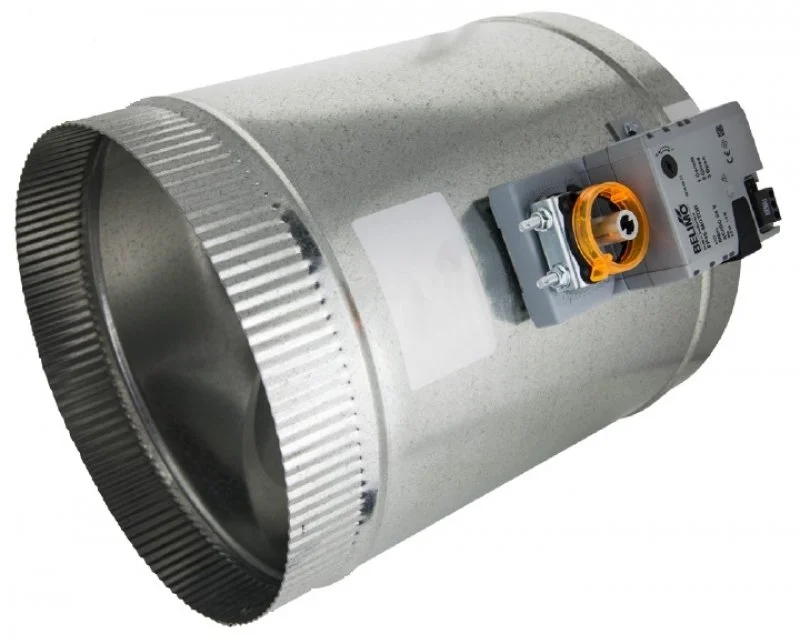
Uneven temperatures in hillside homes often come down to airflow control. J Martin installs zoning dampers to help Anaheim Hills homeowners balance comfort room by room.
If you've been closing vents downstairs trying to push more air upstairs, stop. That approach creates pressure imbalances in the duct system, increases air leakage, and can actually make the problem worse. We explained exactly why this happens and what to do instead in our post on the truth about closing vents in unused rooms.
Problem Three: Canyon Winds and Condenser Performance
Anaheim Hills sits at the mouth of the Santa Ana Canyon, which creates a natural wind corridor that affects HVAC performance in ways that homeowners in flat terrain never experience. The Santa Ana winds, which blow hot, dry air from the inland deserts through the passes and canyons toward the coast, are the most dramatic example. But even during normal weather patterns, canyon-channeled breezes carry dust, pollen, vegetation debris, and fine particulate that accumulate on the outdoor condenser unit.
Your AC condenser (the large unit outside your home) works by dissipating heat from the refrigerant through aluminum fins that must allow air to flow freely through them. When those fins become coated with dust, dirt, pollen, or debris, the condenser can't release heat efficiently, which forces the compressor to work harder and longer, increases energy consumption, and accelerates component wear.
In many Anaheim Hills neighborhoods, particularly those bordering open space, canyon trails, and equestrian areas like the properties near Deer Canyon Park, Weir Canyon, and the edges of Sycamore Canyon, condenser coils accumulate debris significantly faster than homes in developed suburban areas. We routinely see condensers in these neighborhoods that need cleaning every 6 to 12 months rather than the 12 to 24-month interval that's typical for flat-lot homes. The equestrian trails and open space that make Anaheim Hills beautiful also generate airborne particulate that your condenser collects.
The fix is straightforward but requires consistency: annual professional condenser cleaning as part of your tune-up ($75 to $200), supplemented by periodic homeowner inspection. If you can see visible debris buildup on the condenser fins between service visits, gently rinsing the unit with a garden hose (never a pressure washer) from the inside out helps maintain airflow. Keeping the area around the condenser clear of landscaping, leaf debris, and storage items by at least two feet on all sides ensures adequate airflow.
Problem Four: Ductwork Deterioration in Extreme Attic Heat
Anaheim Hills homes built in the 1970s and 1980s have ductwork that's been sitting in attic temperatures exceeding 150 degrees every summer for 40 to 50 years. That thermal stress breaks down the insulation wrapping, degrades the duct connections, and causes flexible duct material to sag, kink, and sometimes disconnect entirely.
The hillside factor compounds this because many Anaheim Hills homes have steeper roof pitches and more complex attic geometries than flat-lot tract homes. Ductwork in these attics often runs longer distances, makes more turns, and passes through tighter spaces where it's more susceptible to being crushed or kinked. The result is air delivery problems that are both harder to diagnose and more expensive to fix than in a standard single-story attic.
The Department of Energy estimates that duct losses account for up to 30% of a home's cooling energy. In an Anaheim Hills hillside home with original 1980s ductwork, that number can be even higher. We've tested homes in Canyon View Estates and The Highlands where supply register temperatures were 10 to 15 degrees warmer than they should have been, meaning the cooled air was absorbing heat from the attic through deteriorated duct insulation before it ever reached the room.
If your ductwork hasn't been inspected or serviced in more than 10 years, and especially if your home was built before 1990, a professional duct evaluation should be a priority. Duct sealing to address leaks at joints and connections costs $300 to $1,000. Full duct replacement, which is often the right call for original ductwork from the 1970s and 1980s, runs $2,000 to $6,000. Our Complete Guide to Air Duct Cleaning walks through the full range from basic cleaning to complete replacement.
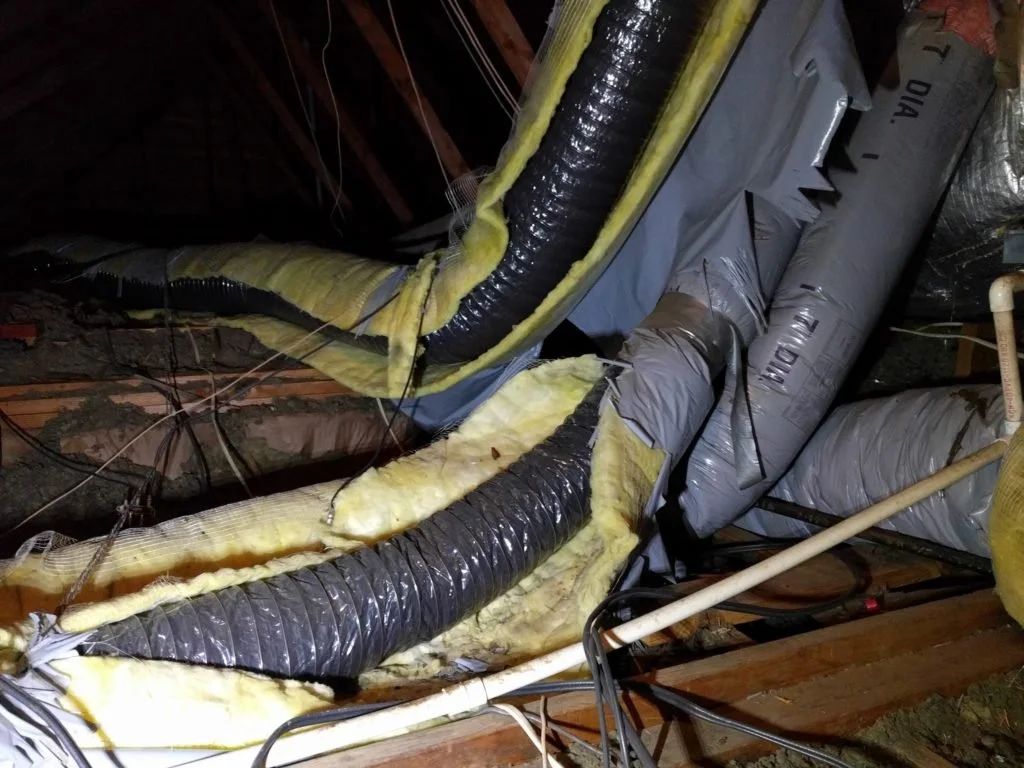
Attic ductwork in Anaheim Hills homes often deteriorates from extreme heat over time. J Martin provides honest HVAC inspections to identify airflow loss and efficiency issues.
Problem Five: Wildfire Smoke and Indoor Air Quality
Anaheim Hills has experienced multiple significant wildfires. The Freeway Complex Fire in 2008 destroyed over 200 residences, including 14 homes and 86 apartments within the community. The Canyon Fire 2 in 2017 burned 7,500 acres and destroyed or damaged approximately 60 structures. The Gypsum Canyon fire of 1982 caused $50 million in damage. Santa Ana wind conditions, which are most common from October through March, dramatically increase wildfire risk throughout the community.
For HVAC purposes, wildfire smoke creates two distinct challenges. During active fire events, outdoor air quality can become hazardous. Smoke particulate (PM2.5) is small enough to penetrate standard HVAC filters and infiltrate the home through every air pathway, including the return duct system, gaps in the building envelope, and open doors and windows. Standard MERV 8 filters, which are what most HVAC systems run by default, capture less than 20% of PM2.5 particles. Upgrading to MERV 13 filters captures approximately 50% to 70% of these particles, providing meaningfully better protection during smoke events.
The longer-term air quality concern is the cumulative particulate exposure from living in a wildland-urban interface community where Santa Ana winds regularly carry dust, ash, and fine particulate from surrounding hillsides, trails, and open space. Anaheim Hills homeowners who are sensitive to these exposures, especially households with members who have asthma, allergies, or respiratory conditions, benefit from air purification systems integrated with the HVAC system that run continuously rather than only during active fire events.
If indoor air quality is a concern for your household, our post on improving your indoor air quality covers the full range of solutions from upgraded filtration to whole-home air purifiers, and how they integrate with your existing HVAC system.
Problem Six: Aging Systems in an Aging Community
Anaheim Hills' development timeline creates a predictable HVAC replacement cycle. Homes built in the first wave of construction (Westridge 1972, Nohl Ranch mid-1970s, Peralta Hills and Mohler Loop areas from the 1940s-1950s) are on their second or third HVAC system. Homes built in the 1980s construction boom (Deer Canyon, Sycamore Canyon, Canyon Terrace, Anaheim Hills Estates) are mostly on their second system, with many of those second systems now reaching end of life at 15 to 20 years old. Homes built in the 1990s expansion (East Hills, The Highlands, Summit Pointe, The Summit) are approaching their first major replacement cycle.
The systems being replaced today in Anaheim Hills often include units that still run on R-22 refrigerant (Freon), which was banned from production in 2020 and costs $150 to $600 per recharge from dwindling supplies. They include systems with SEER ratings of 10 to 13 (modern minimum in California is SEER2 15), meaning they consume 30% to 50% more electricity than current equipment to produce the same cooling. And they include ductwork that was designed for the standards and climate of 40 to 50 years ago, not for the hotter summers and higher electricity rates Anaheim Hills homeowners face today.
If your system is approaching or past the 15-year mark, a professional evaluation to assess remaining lifespan, refrigerant type, efficiency, and ductwork condition is the smartest investment you can make before something fails during a July heat wave. We covered the complete cost picture for HVAC replacement in Orange County including equipment options, efficiency tiers, and what to expect at current prices.
What Every Anaheim Hills Homeowner Should Do Right Now
Regardless of your system's age or your neighborhood, there are several steps that every Anaheim Hills homeowner should take to protect their HVAC investment and their comfort.
Replace your air filter every 60 to 90 days, or more frequently if you live near equestrian trails, open hillsides, or active construction. Anaheim Hills generates more airborne dust and particulate than developed suburban areas, and your filter collects it. A clogged filter restricts airflow, forces the system to work harder, and degrades indoor air quality.
Schedule professional maintenance annually, ideally in spring before the summer heat arrives. A tune-up includes cleaning the condenser coils (critical for Anaheim Hills homes near open space), checking refrigerant levels and pressures, testing electrical components, verifying temperature differentials, and identifying worn parts before they fail. Annual maintenance costs $75 to $200 and typically pays for itself in efficiency gains and avoided emergency repairs.
Inspect your attic if you can safely access it. Look at the ductwork: if you can see disconnected joints, sagging runs, crushed duct sections, or insulation that's fallen away from the ducts, you have a problem that's costing you money every time the system runs. Check the insulation level: if you can see the tops of the ceiling joists above the insulation, you're below the R-38 standard and losing cooling efficiency. These visual checks don't require any expertise, just a flashlight and a few minutes.
Know your system. Find the data plate on your outdoor unit and note the manufacturer, model number, and installation date. If the model number contains the numbers "22" in the refrigerant designation, you have an R-22 system that should be on the replacement planning list. If the system is more than 15 years old, start thinking about replacement before it becomes an emergency.
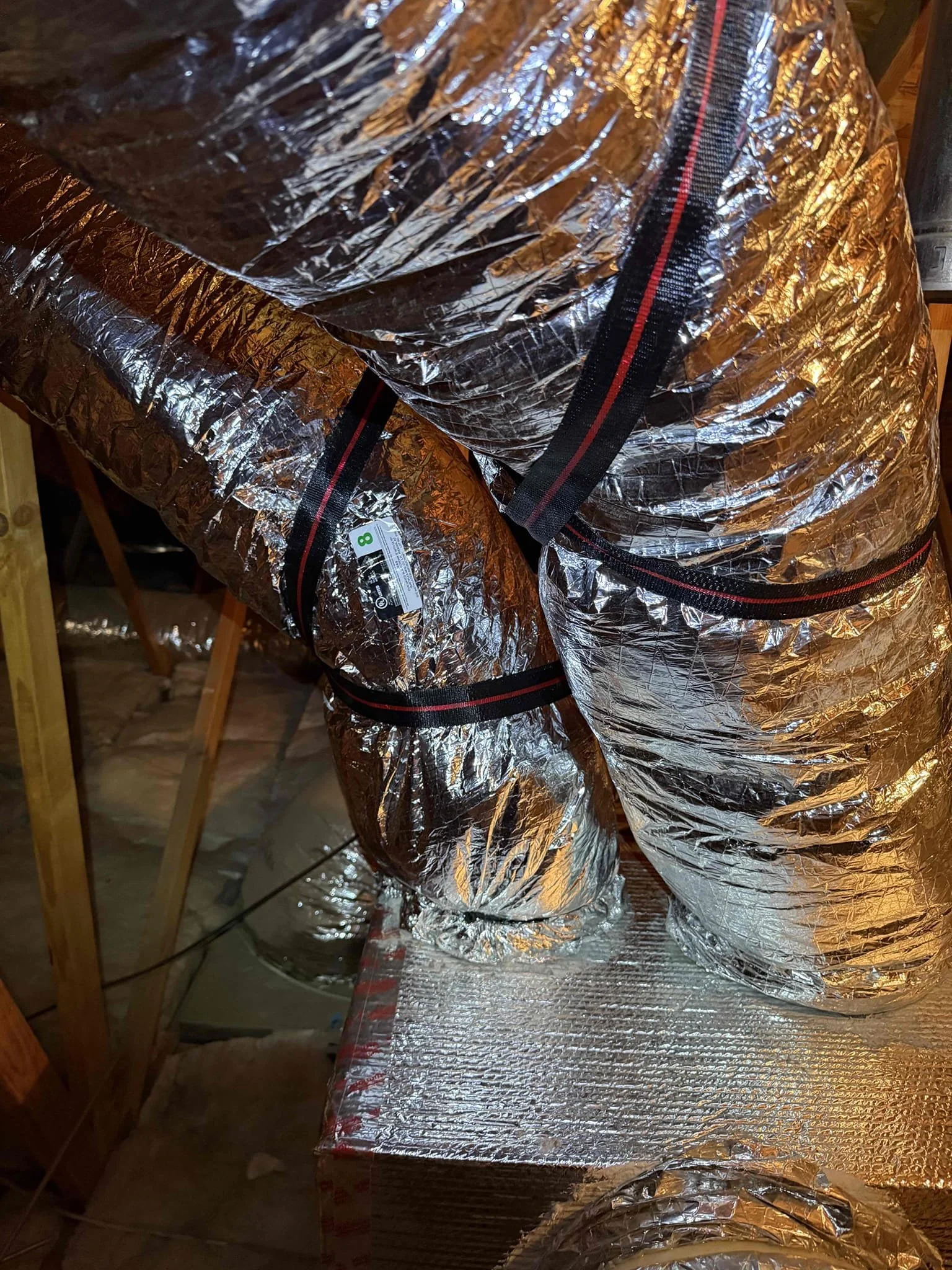
High energy bills in Anaheim Hills? Your attic ductwork could be the problem. Call J Martin: (714) 462-4686
Consider a whole house fan if you don't already have one. Anaheim Hills' evening temperatures drop into the mid-60s to low 70s for roughly 8 to 9 months of the year, which makes the community one of the best locations in Orange County for whole house fan effectiveness. A QuietCool whole house fan costs $1,500 to $3,000 installed, runs on pennies per hour of electricity, and can reduce AC-related costs by 50% to 90% during the months it's usable. For hillside homes where the AC runs extensively due to solar heat gain, offsetting even 4 to 5 hours of AC runtime per day with a whole house fan during evening hours saves $100 to $200 per month at current SCE rates. J Martin is a certified QuietCool installer, and we've put these systems in hundreds of Anaheim Hills homes.
Pay attention to unusual sounds, smells, or performance changes. A system that suddenly starts making new mechanical noises, produces a hissing sound near the refrigerant lines, develops ice on the coils, triggers the breaker, or emits burning smells needs professional attention immediately, not next week. These symptoms in Anaheim Hills' heat can escalate from minor repair to major failure within days because the system is under heavy load and has no margin for degraded performance. If you notice any of these warning signs, or if your system is running but specific rooms aren't cooling, our post on why your heater smells weird when you first turn it on covers which smells are normal and which ones demand a same-day call.
Why J Martin for Anaheim Hills HVAC
We serve Anaheim Hills because we understand it. Not just the HVAC technology, but the community itself: the hillside topography that changes every system sizing calculation, the canyon wind patterns that affect condenser maintenance schedules, the wildfire exposure that demands better filtration, the multi-level construction that requires smarter air distribution, and the 1970s and 1980s building standards that created the ductwork and insulation issues homeowners are dealing with today.
At J Martin Indoor Air Quality, we start with repairs 95% of the time. When replacement is the right call, we size the system to your specific home using a proper Manual J calculation that accounts for your hillside orientation, your window exposure, your insulation condition, and your ductwork performance. We don't work on commission, so our recommendation is based on what your home needs, not on what generates the highest sale. We've served over 5,000 Orange County families and maintain a 4.97-star average rating because this approach works for homeowners who value honesty over sales pressure. Read about why Orange County families keep choosing us and decide for yourself.
If you're an Anaheim Hills homeowner dealing with any of the issues in this guide, or if you want a professional evaluation of your system before summer arrives, call us at (714) 462-4686. We know your neighborhood. We know your home. And we'll give you the honest answers you need.
J Martin Indoor Air Quality proudly serves Anaheim Hills, Yorba Linda, Fullerton, Anaheim, Brea, Villa Park, Placentia, Orange, and communities throughout Orange County. California License #998956. Call (714) 462-4686 or visit jmartiniaq.com to schedule service.