
Why Your AC Smells Like Mildew (And How to Get Rid of It for Good)
Posted on May 26, 2026
You flip the AC on for the first time this spring, and instead of cool, clean air, you get hit with a wave of something that smells like a wet towel left in a gym bag. It's musty, damp, and unmistakable. And every time the system cycles on, it pushes that smell into every room of your house.
If your AC smells like mildew, you're not imagining it, and it's not something that will go away on its own by "running the system for a while." That smell is biological. It means mold, mildew, bacteria, or some combination of the three is actively growing somewhere inside your HVAC system, and every time the blower kicks on, it's distributing microscopic spores and volatile organic compounds throughout your home. Beyond being unpleasant, this is a legitimate indoor air quality concern, especially for family members with allergies, asthma, or compromised immune systems.
The good news is that the causes are well understood, most of them are fixable, and several long-term solutions exist that can prevent the problem from returning. This guide covers exactly where mildew grows inside an AC system, what causes it, what you can do yourself, what requires a professional, what each solution costs, and how to eliminate musty AC odors permanently rather than just masking them.
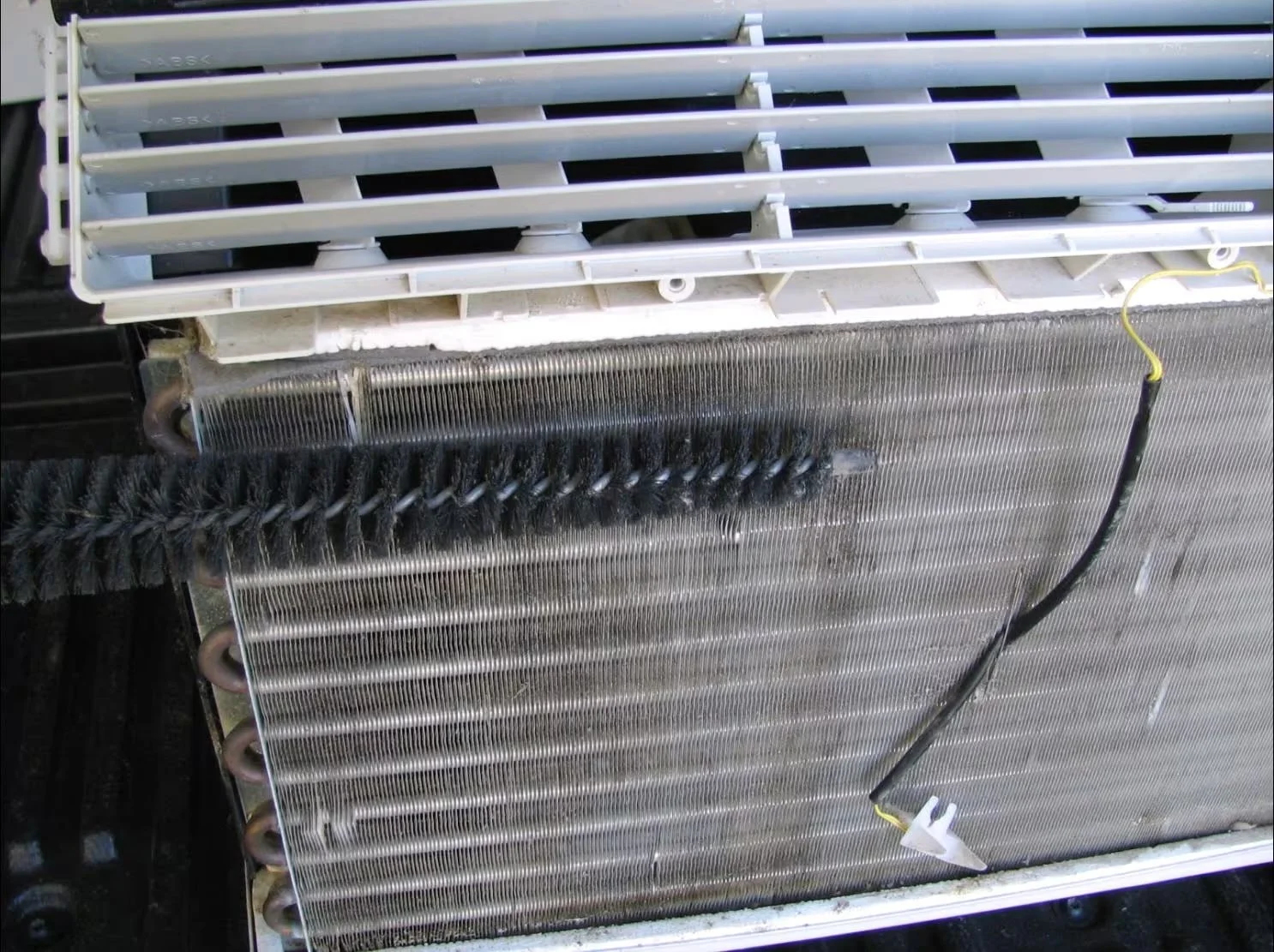
Mildew smells in your AC usually start at the evaporator coil. We clean and diagnose systems like this every day to restore clean, healthy air for Orange County homeowners.
Why HVAC Systems Are a Perfect Breeding Ground for Mildew
To understand why your AC smells like mildew, it helps to understand what mildew and mold need to grow: moisture, darkness, warmth, and an organic food source. Your HVAC system provides all four.
The evaporator coil, which sits inside the air handler, operates at approximately 40 degrees Fahrenheit and constantly collects condensation as warm household air passes over its cold surface. A residential AC in Orange County can produce 5 to 20 gallons of condensate water per day during active cooling. That moisture drips into the drain pan below and flows out through the condensate drain line. But the coil itself, the drain pan, and the surrounding interior of the air handler remain perpetually damp during the cooling season.
The ductwork that distributes conditioned air throughout your home is dark, enclosed, and (particularly in attic-mounted systems common across Orange County) subject to temperature swings that can cause condensation on interior duct surfaces. Add in the dust, skin cells, pet dander, and other organic debris that naturally accumulates inside any duct system over time, and you have a food source for biological growth.
In short, the interior of your HVAC system is essentially an incubator for mold and mildew. The only things that keep growth in check are regular maintenance, adequate drainage, clean filters, and proper airflow. When any of those factors slip, biological growth takes hold, and you start smelling it at the vents.
Cause 1: A Dirty or Clogged Condensate Drain
The condensate drain line is the most common single source of mildew smell in an AC system. This small PVC pipe carries moisture from the drain pan to the exterior of the house, and its warm, wet interior is an ideal environment for algae, mold, and biofilm to develop. Over months and years, this biological growth accumulates inside the line and can eventually clog it entirely.
When the drain line is partially or fully clogged, water sits stagnant in the drain pan beneath the evaporator coil. Stagnant water is one of the most aggressive mold producers in any environment, and the musty smell it generates gets picked up by the airflow moving through the air handler and pushed into your home through every supply vent. If you've noticed that the smell is strongest right when the system first kicks on and then fades slightly as the system runs, stagnant water in the drain pan is a very likely culprit.
We've written a complete guide to diagnosing and clearing a clogged condensate drain, which includes step-by-step DIY instructions for flushing the line with vinegar and using a shop vacuum to clear blockages. As a quick summary: pouring one cup of distilled white vinegar into the drain line's cleanout port once a month during cooling season prevents the biological buildup that causes both clogs and musty odors. This single habit is one of the most effective things you can do to keep your AC smelling clean.
Professional condensate drain cleaning costs $75 to $250 and is typically included as part of an annual AC tune-up ($100 to $200 for the full service).
Cause 2: A Dirty Evaporator Coil
The evaporator coil is where the majority of condensation forms in your system, and its large surface area (with hundreds of thin aluminum fins tightly spaced together) makes it an ideal surface for mold and mildew colonization. Over time, dust and organic debris that get past the air filter settle on the wet coil surface. This combination of moisture and organic material creates a biofilm where mold and bacteria thrive.
A mildew-covered evaporator coil doesn't just smell bad. It also reduces the system's cooling efficiency because the biofilm acts as an insulating layer that interferes with heat transfer. You might notice your AC running longer than usual without adequately cooling the house, or higher energy bills as the system works harder to compensate for the compromised coil performance.
Evaporator coil cleaning is a professional service. The coil is delicate, located inside the air handler where access is limited, and requires specialized cleaning solutions and low-pressure rinsing to clean effectively without bending the fins or pushing debris deeper. Professional evaporator coil cleaning typically costs $100 to $400 and is one of the key services included in a thorough annual maintenance visit. For a complete breakdown of common repair and maintenance costs, see our guide to AC repair costs in Orange County.
Cause 3: Mold or Mildew in the Ductwork
If your evaporator coil and drain pan are clean but the musty smell persists, the source may be inside your ductwork. Ducts can develop mold and mildew growth for several reasons.
Condensation forms on duct surfaces when there's a significant temperature difference between the conditioned air inside the duct and the surrounding environment. In Orange County, where the vast majority of ductwork runs through attics that reach 130 to 140 degrees in summer, the exterior of supply ducts (carrying cold air through a scorching attic) can develop condensation if the duct insulation is damaged, deteriorated, or insufficient. This moisture creates a foothold for mold on interior duct surfaces.
Leaky duct connections allow humid attic air to be drawn into the duct system, introducing both moisture and outside contaminants. Older ductwork (particularly the flexible duct common in homes built during the 1970s through 1990s across Anaheim, Fullerton, and Brea) often develops tears, disconnections at joints, and deteriorating insulation that create exactly these conditions.
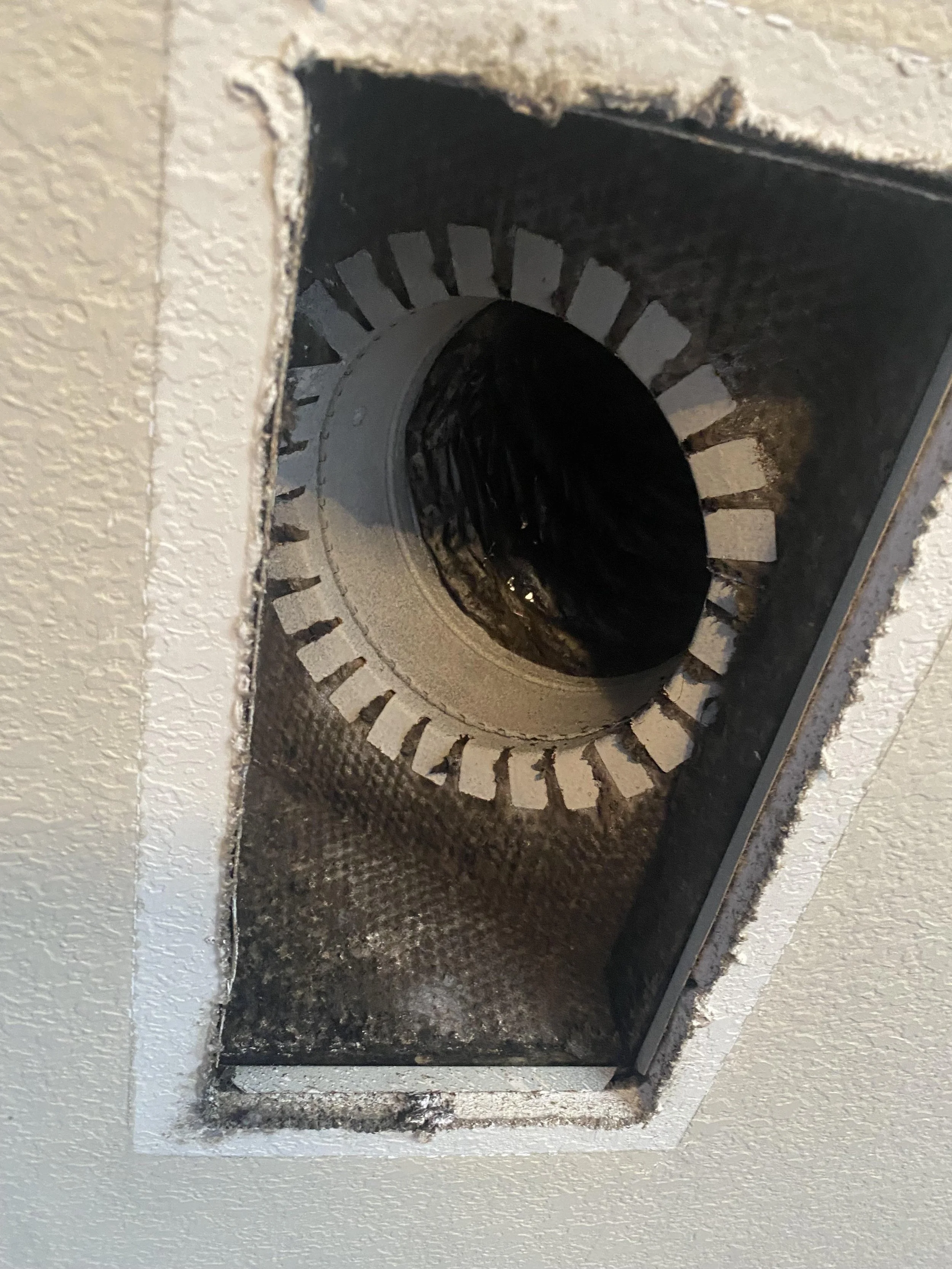
AC smells like mildew? Mold around your air vent like this can spread odors and spores throughout your home. J Martin offers same-day service in Orange County. Call (714) 462-4686.
Previous water intrusion from roof leaks, condensate pan overflows, or plumbing issues can also leave moisture inside ducts that promotes long-term mold growth even after the original water source has been addressed.
If you suspect mold in your ductwork, professional duct inspection and cleaning is the appropriate response. Our complete guide to air duct cleaning covers what's involved, what to look for in a reputable duct cleaning company, and what results to expect. Professional duct cleaning for a typical Orange County home ranges from $400 to $1,000 depending on the size of the system, the number of vents, and the extent of contamination. If mold remediation is needed (not just dust removal but active mold treatment), costs can be higher.
Cause 4: A Dirty or Overdue Air Filter
A clogged air filter doesn't directly produce a mildew smell, but it creates the conditions that allow mildew to develop elsewhere in the system. When the filter is heavily loaded with dust and debris, it restricts airflow across the evaporator coil. Reduced airflow means the coil runs colder than normal, producing more condensation and potentially causing the coil to freeze. Excess moisture on and around the coil provides the conditions mold needs to flourish.
A dirty filter can also allow more particulate to pass through to the coil and duct system, providing the organic food source that mold and bacteria feed on. In Orange County's climate, where Santa Ana wind events regularly deposit fine dust throughout homes and the extended cooling season means filters work continuously for six or more months, filter changes should happen every 30 to 60 days during cooling season. This is the single most impactful DIY maintenance task for both system performance and odor prevention. A replacement filter costs $5 to $20 at any hardware store.
Cause 5: The System Sat Idle for Months (Seasonal Startup Smell)
This is the most common version of the mildew smell in Orange County, and it happens every spring. During the winter months (roughly November through March), most Orange County homeowners don't run their AC at all or run it very infrequently. During those months of inactivity, the interior of the air handler, the evaporator coil surface, the drain pan, and the ductwork sit in a dark, enclosed environment with residual moisture and organic debris from the previous cooling season.
Over four to five months, mold and mildew establish colonies on these surfaces undisturbed. The moment you turn the AC back on in spring, the blower pushes air across those colonized surfaces and distributes spores and odors throughout the house. This is essentially the AC equivalent of the burning dust smell when you turn on the heater for the first time in fall, except instead of burning off accumulated dust, you're blowing around accumulated biological growth.
A mild seasonal startup smell that dissipates within a day or two of running the system is normal and generally not a cause for concern. A strong mildew smell that persists beyond the first day or two of operation, or that returns every time the system cycles on, indicates active biological growth that won't resolve itself with continued use. Running the system doesn't dry out or kill established mold colonies. It just distributes them.
This is precisely why scheduling a professional spring tune-up before the cooling season begins is so valuable. A technician will clean the evaporator coil, flush the drain line, inspect the drain pan, check the ductwork for moisture issues, and identify any biological growth before you're living with the smell. Learn more about what's included on our maintenance page.
Cause 6: An Oversized AC System
This cause is less obvious but worth understanding. An air conditioning system that's too large for the home it serves cools the air very quickly but doesn't run long enough to adequately dehumidify. The system reaches the thermostat's set temperature and shuts off before the evaporator coil has had time to wring sufficient moisture from the air. This rapid on-off pattern, sometimes called short cycling, leaves the coil perpetually damp without ever fully drying between cycles. The result is a home that feels cool but clammy, with indoor humidity levels that stay uncomfortably high.
High indoor humidity creates a breeding ground for mold and mildew not just inside the HVAC system but throughout the home, on walls, in closets, behind furniture, and in any poorly ventilated space. If your home consistently feels humid even though the AC keeps it at the right temperature, and you notice mildew smells that seem to come from multiple sources (not just the vents), an oversized system may be a contributing factor. This is a design issue rather than a maintenance issue, and the solutions involve either replacing the system with a properly sized unit or adding supplemental dehumidification.
For homes where the AC system is the right size but humidity is still a challenge (which can happen in coastal Orange County areas where marine layer moisture is a regular factor), a whole-house dehumidifier integrated with the HVAC system typically costs $1,500 to $2,800 installed and can make a dramatic difference in both comfort and mold prevention.
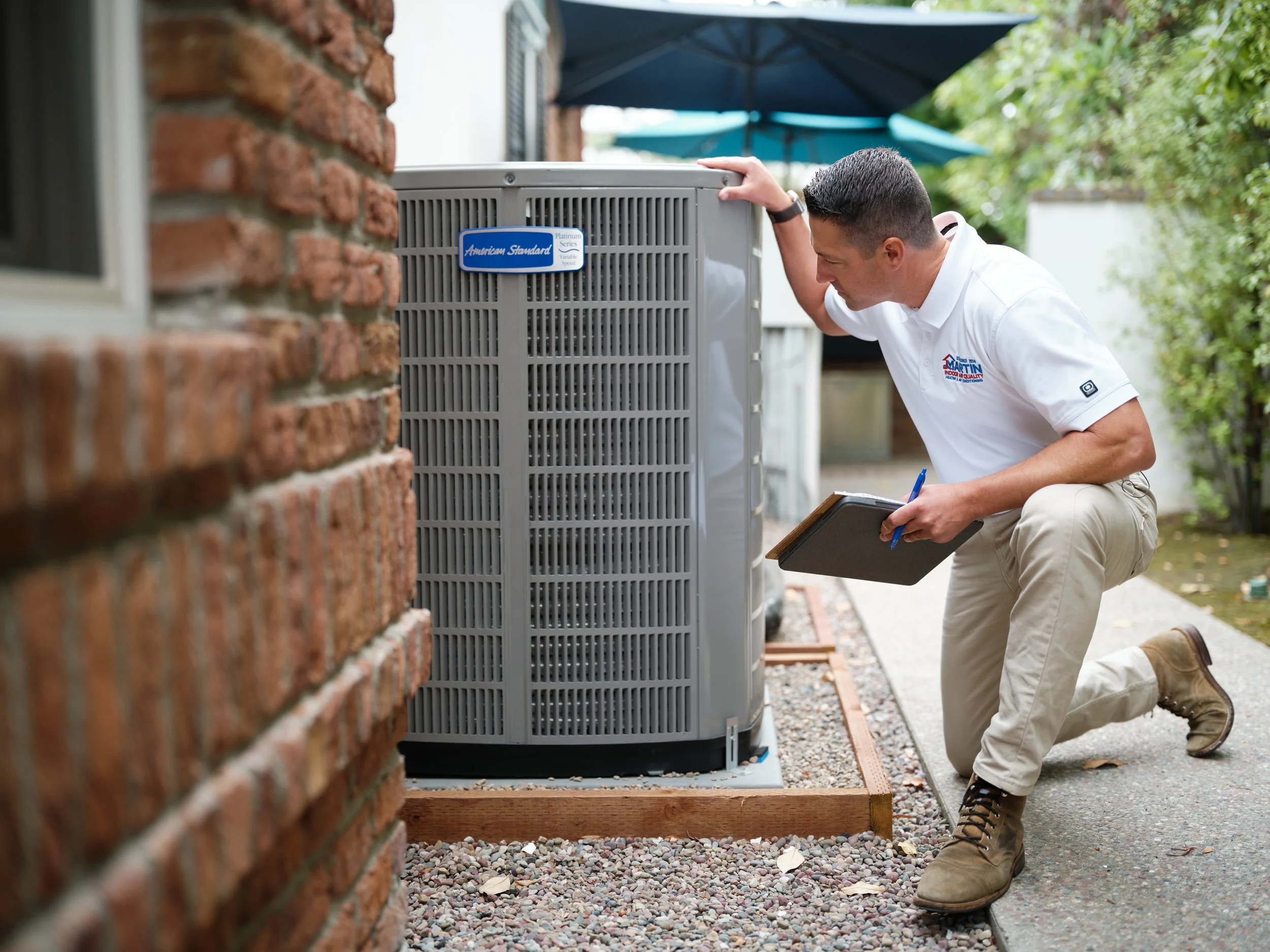
Musty AC smells often start with issues that aren’t visible to homeowners. Our technicians diagnose the root cause and fix it the right way the first time.
DIY Steps to Address a Mildew Smell from Your AC
Before calling a professional, there are several things you can do yourself that resolve the problem in many cases.
Start by replacing the air filter. A clean filter restores proper airflow and reduces the debris that feeds biological growth. If the current filter is visibly dirty or if you can't remember when you last changed it, swap it out immediately.
Next, check the condensate drain. Go outside and find the PVC drain line where it exits the house (usually near the foundation or the outdoor unit). Is water dripping from it when the AC is running? If not, the line may be clogged. Use a wet/dry shop vacuum on the outdoor end of the line to suction out any blockage, then flush with a cup of vinegar from the indoor cleanout port. Our condensate drain guide walks through this process in detail.
Check the drain pan inside the air handler for standing water, sludge, or visible mold. If you find standing water, the drain is clogged. Clean the pan with a mild soap solution and a cloth after clearing the drain.
Inspect accessible duct registers and return grilles for visible dust buildup or signs of mold (dark spots, discoloration, or a concentrated musty smell at specific vents). Remove the register covers and look inside with a flashlight. If you see significant dust or visible mold on the interior duct surfaces, professional duct cleaning is needed. Don't attempt to clean mold from ductwork yourself, as improper cleaning can dislodge spores and spread contamination to previously clean sections of the system.
One additional step that can help: after cleaning the drain and replacing the filter, run the system in "fan only" mode (switch the thermostat fan setting from "Auto" to "On") for a few hours with the windows open. This circulates fresh air through the system and helps dry out surfaces inside the air handler and ductwork that may have accumulated moisture during the idle winter months. This is especially helpful in the first week of the cooling season as a way to air out the system before switching to active cooling.
After completing these steps, run the system in cooling mode for a full day and see if the smell improves. If it's gone or significantly reduced, your filter and drain maintenance resolved the issue. If the smell persists unchanged, the source is likely the evaporator coil, deeper in the ductwork, or inside the air handler itself, all of which require professional attention.
Professional Solutions That Eliminate Mildew Smells Permanently
When DIY measures aren't enough, several professional services target the root causes of biological growth in HVAC systems.
Professional evaporator coil cleaning removes the biofilm, mold, and debris that accumulate on the coil surface over time. This is the single most effective professional intervention for a mildew smell originating from the air handler. Cost: $100 to $400 as part of a maintenance visit.
Professional duct cleaning removes accumulated dust, debris, and biological growth from the interior surfaces of your entire duct system. A thorough duct cleaning uses specialized brushes, compressed air agitation, and powerful vacuum equipment to clean the full length of every supply and return duct. Cost: $400 to $1,000 for a typical residential system.
UV germicidal light installation is a long-term solution that prevents biological growth from reestablishing on the evaporator coil and inside the air handler. A UV-C light is installed inside the air handler near the evaporator coil, where it runs continuously (for coil-sanitizing models) or whenever the system operates (for air-sanitizing models). The UV light destroys the DNA of mold spores, bacteria, and viruses that pass through or attempt to colonize the coil, effectively sterilizing the environment where biological growth is most likely to start.
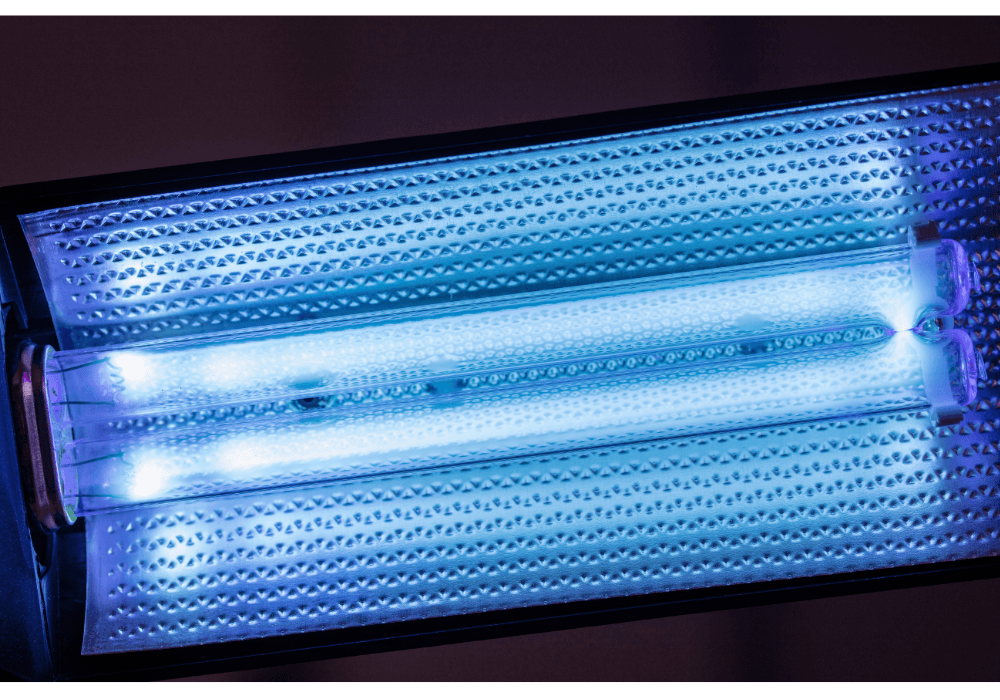
Still dealing with a musty AC smell? UV light systems stop mold and bacteria at the source inside your HVAC system. Call J Martin for same-day service in Orange County: (714) 462-4686
UV lights are one of the most cost-effective long-term indoor air quality upgrades available. Installation typically costs $200 to $800 depending on the system type and brand, with annual bulb replacement costing $30 to $100. For homes where musty smells have been a recurring problem despite regular maintenance, UV light installation often provides the definitive solution. It's especially valuable in Orange County, where the extended cooling season means the evaporator coil stays wet for six or more months, giving biological growth a prolonged window of opportunity that UV light eliminates.
For households with allergy or asthma sufferers, combining UV light with an upgraded air filtration system provides comprehensive protection against airborne biological contaminants. Higher-efficiency filters (MERV 11 to MERV 13) capture smaller particles including mold spores, and the UV light kills any biological matter that reaches the coil despite the filter. This combination addresses both the symptom (the smell) and the underlying health concern (airborne spore distribution).
Health Implications: Why a Mildew Smell Shouldn't Be Ignored
A musty smell from your AC isn't just an annoyance. It indicates that biological contaminants are being actively distributed through your home's air supply. Mold spores, even from common household molds that aren't considered toxic, can trigger allergic reactions including sneezing, runny nose, itchy eyes, and skin irritation. For people with asthma, mold exposure is a well-documented trigger for attacks. The Asthma and Allergy Foundation of America identifies indoor mold as one of the most common asthma triggers, and the EPA notes that there is no safe level of mold exposure for sensitized individuals.
Prolonged exposure to mold and mildew in indoor environments has been associated with more serious respiratory symptoms including chronic coughing, wheezing, and shortness of breath. Children, elderly family members, and anyone with a compromised immune system are particularly vulnerable. Young children, whose lungs are still developing, are especially sensitive to airborne biological contaminants, and studies have linked early childhood mold exposure to increased rates of developing asthma.
If family members are experiencing allergy-like symptoms that seem worse when they're at home and improve when they leave, indoor air quality should be investigated as a potential cause. A musty smell from the HVAC system is one of the most direct indicators that biological contaminants are present in the air supply. If this describes your situation, a combination of professional duct cleaning, evaporator coil cleaning, and UV light installation can dramatically improve the air your family breathes every day.
It's also worth noting that even if no one in your household currently has allergies or respiratory issues, continuous exposure to mold spores can sensitize the immune system over time. In other words, a musty-smelling AC isn't just unpleasant today. It can create health problems down the road that didn't exist before the exposure began.
Why Orange County Homes Are Especially Prone to This Problem
Several factors specific to our region make musty AC smells more common here than in many other parts of the country.
The extended cooling season means the evaporator coil stays wet for roughly six to seven months per year, compared to three or four months in shorter-season climates. That's nearly double the amount of time for biological growth to establish on the coil and in the drain system.
Attic-mounted air handlers, which are standard in most Orange County homes, sit in an environment that swings from extreme heat in summer (130 to 140 degrees) to cool and stagnant in winter. These temperature swings, combined with the residual moisture in the system, create conditions where mold and mildew development is practically guaranteed without proactive maintenance.
The extended idle period between cooling seasons (typically four to five months where the AC runs rarely or not at all) gives biological growth an uninterrupted window to colonize the coil, drain, and ductwork. Systems in regions where AC runs year-round actually have less mildew buildup because the continuous airflow and drainage keep surfaces from remaining stagnant for months at a time.
Coastal proximity increases humidity levels in homes throughout western Orange County, Huntington Beach, and surrounding areas. Higher indoor humidity means more condensation on coil surfaces and inside ductwork, accelerating biological growth.
And the dust loading from Santa Ana wind events contributes organic material to the system that serves as a food source for mold and bacteria, while also clogging filters faster and reducing the airflow that helps keep the system dry.
Preventing Mildew Smells Going Forward
Eliminating a current mildew smell is important, but preventing it from coming back is what saves you money, protects your air quality, and spares you the unpleasantness of living with the odor.
Change the air filter every 30 to 60 days during cooling season. This is the foundation of everything else.
Flush the condensate drain line with one cup of vinegar monthly during cooling season. This prevents the biological buildup that causes drain clogs and stagnant-water odors.
Schedule a professional spring tune-up before you need the AC for the season. A technician will clean the coil, flush the drain, and inspect for biological growth before it becomes a problem you can smell at the vents.
Consider UV light installation if musty smells have been a recurring issue. This is the most effective long-term preventive measure for biological growth on the evaporator coil.
If your home consistently feels humid even with the AC running, investigate whether a dehumidifier would help. Maintaining indoor humidity between 30 and 50 percent makes your home less hospitable to mold and mildew everywhere, not just inside the HVAC system.
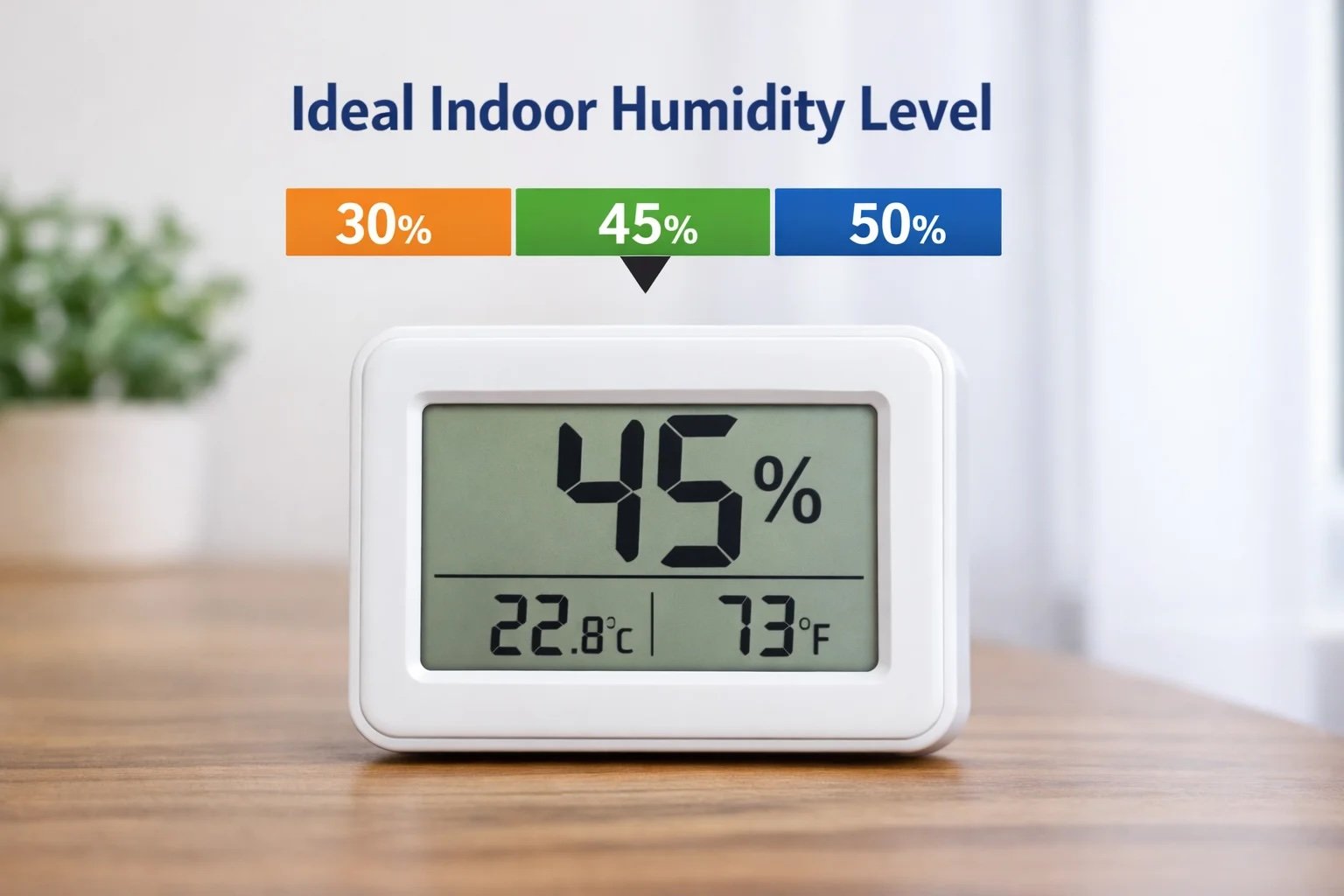
High indoor humidity is one of the biggest reasons your AC smells like mildew. Keep levels between 30 to 50 percent to prevent mold growth.
When to Call a Professional
You can handle filter changes, drain line flushes, and basic drain pan inspections yourself. Call a professional if the mildew smell persists after replacing the filter and flushing the drain, if you see visible mold on or near the air handler or duct registers, if family members are experiencing allergy or respiratory symptoms that seem connected to the AC running, if the smell is accompanied by water leaks or moisture around the air handler, or if you want to discuss UV light installation or duct cleaning as a long-term solution.
J Martin Is Here for Orange County Homeowners
At J Martin Indoor Air Quality, musty AC smells are one of the issues we're most passionate about solving because they sit right at the intersection of comfort and health. Indoor air quality isn't just our company name. It's what drives everything we do. With 15 years of experience serving Yorba Linda, Anaheim, Brea, Fullerton, Villa Park, and surrounding Orange County communities, our team diagnoses the source of mildew odors quickly and provides solutions that actually work long-term, whether that's a thorough coil cleaning, a drain line flush, professional duct cleaning, UV light installation, or a combination of approaches tailored to your home.
We're a family-owned company with a 4.97-star average rating across more than 5,000 customers, and our technicians never work on commission. That means we recommend the solution that actually fits your situation, not the most expensive option on the menu.
If your AC smells like mildew, or if you want to schedule a spring tune-up to prevent exactly this problem, call us at (714) 462-4686. We offer same-day service and transparent pricing on every visit.