
Air Filter Replacement Guide for Orange County Homeowners: Protect Your AC and Breathe Easy
Posted on May 28, 2026
Spring has arrived in Orange County, and with it comes the familiar battle against oak and sycamore pollen that settles over Yorba Linda, Anaheim Hills, Brea, and Placentia like an unwelcome houseguest. While many homeowners reach for allergy medications and close their windows tight, they're missing a crucial solution that sits quietly inside their air conditioning system: a clean, properly chosen air filter. Last spring, a Placentia homeowner called us because their AC wasn't cooling properly and their allergies had gotten worse despite running their system constantly. The culprit? A MERV 8 filter that hadn't been changed in eight months, so clogged with pollen it was restricting airflow to barely a whisper. After we replaced it with a MERV 13 pleated filter and checked the system, their cooling capacity returned, their energy bills dropped, and they could finally breathe again. This isn't an isolated story; it's something we see repeatedly in our service area. Air filter replacement is one of the most effective yet overlooked ways to improve your indoor air quality, extend your HVAC system's lifespan, and maintain the comfort and efficiency your air conditioning was designed to deliver. In this guide, we'll share what we've learned from fifty-plus years of combined experience installing, maintaining, and troubleshooting air conditioning systems across Orange County.

Most homeowners don’t realize how much a clogged air filter affects airflow, energy bills, and indoor air quality. We help Orange County homeowners fix it before it becomes a bigger issue.
Why Your Air Filter Is More Important Than You Realize
Your HVAC system's air filter does two critical jobs that most homeowners don't fully appreciate. First, it protects your heating and cooling equipment from dust, dirt, and debris that would otherwise coat the evaporator coil, the blower motor, and the compressor. Second, it filters the air your family breathes, removing particles that trigger allergies and respiratory irritation. Many people treat filter replacement like changing the oil in their car: a necessary chore they'd rather forget about. However, the stakes are higher than convenience suggests. A clogged filter forces your air conditioning system to work harder, pulling more power and generating more heat inside the equipment while delivering less cooling to your home. This creates a vicious cycle where the system runs longer to reach your thermostat's target temperature, consuming more energy and putting stress on components like the compressor, which can fail prematurely if this strain continues month after month. The financial impact of skipping regular air filter replacement can be substantial: a dirty filter can reduce your HVAC system's efficiency by up to 15 percent, and a failed compressor repair or replacement can cost $1,500 to $3,500. By contrast, replacing your filter costs between $20 and $80 depending on the type and quality, and doing it on schedule is one of the easiest preventive maintenance steps you can take.
Beyond equipment longevity, the air quality impact in a home like yours in Irvine, Santa Ana, or Tustin is significant, especially during pollen season. Your HVAC system cycles through your entire home's air multiple times per day, which means a good filter can substantially reduce the airborne particles your family is exposed to. If anyone in your household suffers from allergies, asthma, or respiratory sensitivity, a proper air filter replacement strategy can be as therapeutic as any allergy medication. We've worked with families who've reported fewer nighttime coughing fits, reduced allergy flare-ups, and improved sleep quality simply by upgrading their filter and sticking to a replacement schedule that matches their local environment.
Understanding MERV Ratings: What the Numbers Actually Mean
When you walk into a hardware store or search online for replacement filters, you'll quickly encounter the acronym MERV, which stands for Minimum Efficiency Reporting Value. This rating system, established by the American Society of Heating, Refrigerating and Air-Conditioning Engineers, measures how effectively a filter captures particles of different sizes as air passes through it. MERV ratings range from 1 to 20, and understanding what each rating means in practical terms will help you make a choice that works for your specific situation rather than simply buying what someone recommends without context.
MERV 8 filters, the standard fiberglass or low-cost pleated options you'll find at virtually every big-box retailer, capture about 20 percent of particles between 3 and 10 microns and just 20 percent of particles between 0.3 and 1 micron. These are the filters that come with most new HVAC systems, and they serve a basic purpose: they protect your equipment from dust and debris while allowing maximum airflow. In Orange County's dry climate, where air can be very dusty, a MERV 8 filter might need replacement every 30 to 45 days if you run your AC heavily. However, MERV 8 filters aren't ideal for allergy sufferers because they let a lot of pollen and fine dust slip through into your home's air.
MERV 11 filters step up the performance significantly. They capture about 50 percent of particles in the 3- to 10-micron range and roughly 65 percent of particles between 1 and 3 microns. If you're concerned about allergies but want to balance filtration with airflow, MERV 11 is often the sweet spot. These are typically thicker pleated filters that last longer than basic MERV 8 options, often going 60 to 90 days between replacements depending on your household's dust generation and seasonal factors. Most modern HVAC systems handle MERV 11 filters without the airflow restriction that comes with higher ratings, and many homeowners find the improved air quality well worth the slightly higher filter cost.
MERV 13 filters offer strong allergen capture, removing about 75 percent of particles between 0.3 and 1 micron and over 90 percent of larger particles. These are the filters we recommend for homes with anyone experiencing allergies, asthma, or respiratory sensitivities, and they're what we installed in that Placentia home we mentioned earlier. The trade-off is that MERV 13 filters are noticeably thicker and denser, which means they restrict airflow more than lower-rated options. If your HVAC system was originally designed for MERV 8 or MERV 11, jumping straight to MERV 13 can sometimes create problems, particularly if your air ducts are undersized or your blower motor is aging. Before upgrading to MERV 13, it's worth having a professional check your system to ensure it can handle the increased resistance without strain.
Going higher than MERV 13, into the MERV 16 to MERV 20 range, approaches hospital-grade filtration. These ultra-high-efficiency filters are rarely necessary for residential homes and can actually damage your HVAC system if you don't have adequate airflow capacity. The honest truth is that MERV 16 and above filters are designed for environments like surgical suites, clean rooms, and laboratories, not for living spaces. We've seen homeowners make the mistake of installing MERV 16 or 17 filters thinking "higher is always better," only to burn out their blower motor or create such high static pressure that the system struggles to circulate air properly. Unless you or a family member has severe immunocompromise or extreme respiratory disease, you're better served by sticking with MERV 13 and replacing it on a regular schedule than by trying to get superhuman filtration from a residential system not designed for it.
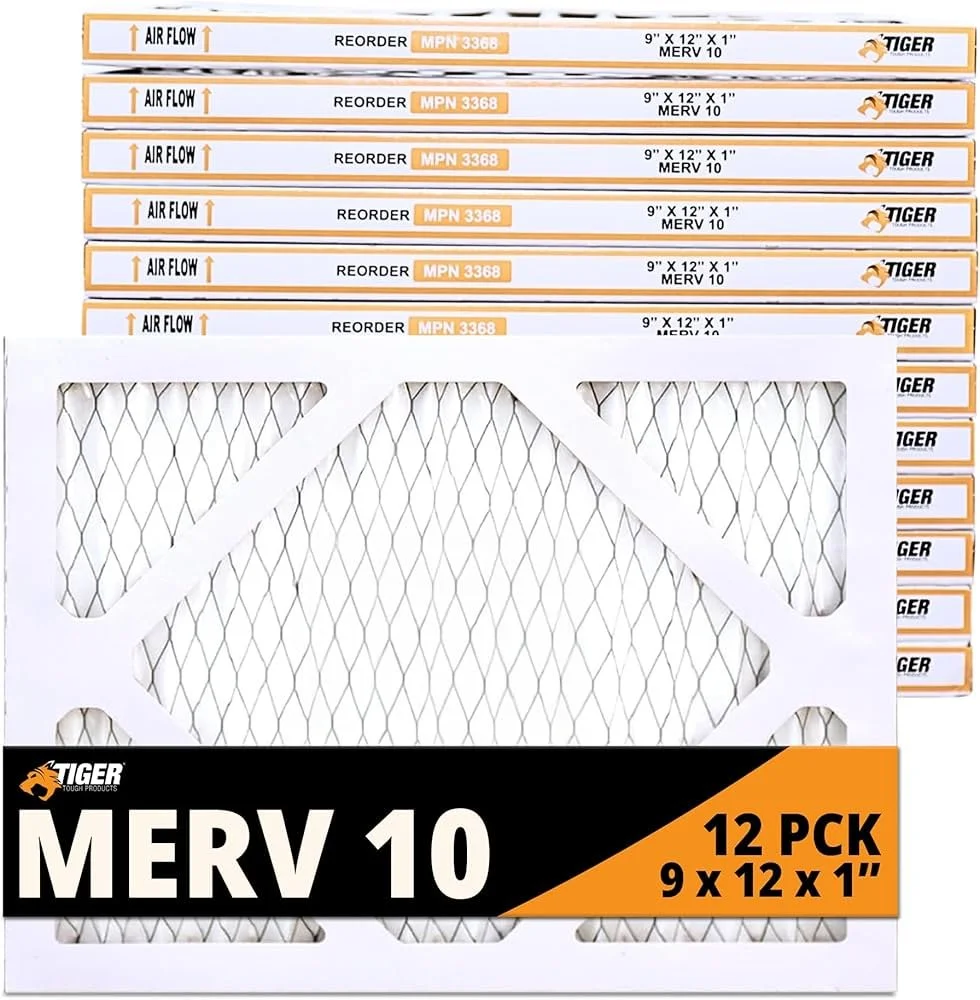
Choosing the right MERV-rated air filter makes a real difference in your home’s air quality and HVAC performance. We help Orange County homeowners find the right balance between airflow and filtration.
Types of Air Filters: Fiberglass, Pleated, HEPA, and Beyond
Not all filters with the same MERV rating perform identically because the materials and construction matter just as much as the rating itself. Understanding the different filter types available will help you choose one that matches both your air quality needs and your HVAC system's capabilities.
Fiberglass filters are the cheapest option you'll find, typically costing $5 to $15 per filter. They're thin, made from spun fiberglass material that provides minimal resistance to airflow, which is why they're included with new HVAC systems and why builders prefer them. However, fiberglass filters are also the least effective at capturing fine particles. They typically offer only basic MERV 4 to MERV 8 ratings, and they get dirty quickly, sometimes needing replacement every 30 days in homes with pets or heavy dust. If cost is your only consideration, a fiberglass MERV 8 will work, but we generally don't recommend them for homes in Orange County where spring and summer pollen seasons are significant and air quality is a genuine health concern.
Pleated filters have become the standard for most homeowners seeking a balance between cost and performance. Ranging from $15 to $50 depending on the brand and rating, pleated filters feature a folded paper or synthetic material that dramatically increases the surface area for particle capture compared to fiberglass. This design allows manufacturers to achieve MERV 11 and MERV 13 ratings while maintaining reasonable airflow. A quality MERV 11 pleated filter will typically last 60 to 90 days, and a MERV 13 pleated filter might last 60 to 75 days depending on your household's dust load. In our experience working with homes throughout Fullerton, Tustin, and Villa Park, pleated filters at the MERV 11 or MERV 13 level represent the best investment for most homeowners because they significantly improve air quality without creating the airflow problems that ultra-high-efficiency filters sometimes introduce.
HEPA filters, standing for High-Efficiency Particulate Air, are designed to capture 99.97 percent of particles 0.3 microns or larger. If MERV 13 represents strong residential filtration, HEPA filters represent the upper limit of what's practical for home use. HEPA filters are more common in standalone air purifiers and whole-home air purification systems than in standard HVAC filter slots because they create substantial airflow restriction. If your HVAC system wasn't originally designed with a HEPA filter in mind, installing one can cause pressure problems and strain on your blower motor. However, pairing a good pleated MERV 13 filter in your main air handler with a separate HEPA air purifier in your bedroom or living area can give you hospital-grade air quality without the risks of forcing ultra-high filtration through a system not designed for it.
Electrostatic filters offer another option worth considering, though they're less common than pleated filters. These filters use static electricity to attract and hold particles, and they're reusable, which appeals to environmentally conscious homeowners. However, electrostatic filters are more expensive upfront ($40 to $150), require regular cleaning to maintain effectiveness, and generally don't achieve MERV ratings as high as pleated filters. They can also generate a small amount of ozone as a byproduct of the electrostatic charging process, which some people find concerning. For most Orange County homeowners, a disposable pleated filter is simpler, more effective, and more cost-effective than maintaining a reusable electrostatic option.
How Often Should You Replace Your Air Filter in Orange County's Climate?
The standard recommendation you'll hear everywhere is "change your filter every 90 days," but that's generic advice that doesn't account for Orange County's specific climate, your household's dust generation, or your family's air quality needs. The truth is that filter replacement frequency is highly variable, and we recommend checking your filter monthly and replacing it based on what you actually see rather than working from a predetermined schedule.
In our service area's dry climate, dust accumulation is often heavier than in more humid regions. During spring allergy season, when oak and sycamore pollen are thick in the air across Brea, Anaheim Hills, and Placentia, your filter may need replacement every 30 to 45 days if you're running your air conditioning frequently. In summer, when Santa Ana winds can blow dust and pollen into your home even through closed windows, filter clogging happens faster. By contrast, in winter months when you're running your AC less or not at all, a filter might last 60 to 90 days. Households with pets, smokers, or children who track dust and dirt inside will replace filters more frequently than single-person households in quiet homes. If you have severe allergies or asthma, you might choose to replace your filter every 30 to 45 days regardless of visual condition, simply to maintain the best possible air quality.
The most reliable way to know when your filter needs replacement is a visual inspection. Once a month, remove your filter and hold it up to a light source. If you can see light passing through it clearly, it's still doing its job. If the filter looks gray or brown and light barely penetrates, it's time for a replacement. You don't need to wait for a professional to check it; a quick monthly look takes less than a minute and gives you actionable information. Many homeowners set a phone reminder on the first of each month as a prompt to inspect their filter, and this simple habit eliminates the guessing game about replacement timing.
If you want to reduce the frequency of filter replacements and save money on replacement costs, investing in a higher-quality pleated filter or upgrading to MERV 13 makes financial sense over the long term. A MERV 13 pleated filter might cost twice as much as a basic MERV 8 fiberglass option, but if it lasts three times as long and improves your air quality throughout the season, the cost per day of use is actually lower. Similarly, premium branded filters often have better construction and tighter pleating than budget-brand alternatives, which means they stay cleaner longer and maintain their effectiveness throughout their lifespan.
Warning Signs That Your Air Filter Needs Immediate Replacement
Beyond the monthly visual check, your HVAC system will give you specific signals that your filter is overdue for replacement. Recognizing these signs can prevent equipment damage and help you catch air quality problems before they become noticeable symptoms like increased allergies or respiratory irritation.
Reduced airflow from your vents is the most common indicator that your filter is clogged. If you notice that air coming from your ceiling vents feels weaker than usual, or if certain rooms aren't cooling as well as they should, your filter is likely the culprit. This reduced airflow happens because a dirty, clogged filter restricts air passage, forcing your system to work harder to push air through the home. You might also notice your AC running longer to reach your thermostat's target temperature, or the blower fan running almost constantly with minimal cool air actually reaching living spaces.

Is your AC struggling to keep up? Low refrigerant or poor maintenance can reduce cooling fast. J Martin offers same-day HVAC service across Orange County. Call (714) 462-4686.
Your air conditioning system making unusual noises is another sign of filter problems. When a filter is very clogged, the blower motor has to strain harder to move air, which can produce a higher-pitched whining sound or a grinding noise. This is your system literally working overtime to overcome the resistance the dirty filter creates. If you hear these noises, replace your filter immediately because continuing to operate with a severely clogged filter will eventually damage the blower motor itself.
A noticeable increase in dust around your home, despite vacuuming and dusting regularly, suggests that your filter isn't capturing particles effectively. When a filter gets too clogged, some air starts bypassing the filter material entirely due to high pressure, which means unfiltered air with dust and particles circulates through your home. This is particularly problematic if anyone in your household has allergies, because you might see an uptick in allergy symptoms even though you're running your AC. In homes across Irvine, Santa Ana, and Tustin where we work regularly, seasonal dust increases often trigger filter replacement calls, and replacing the filter is typically the fix.
Your energy bills rising unexpectedly, especially during mild weather when your AC shouldn't be working hard, can indicate filter problems. A clogged filter forces your system to consume more electricity to maintain your desired temperature, which translates directly to higher utility costs. If your energy bill jumps 10 to 15 percent without obvious explanation like unusual weather or changing your thermostat habits, check your filter before calling for a professional energy audit.
Choosing the Right Air Filter for Allergies and Air Quality
If you or a family member suffers from allergies, asthma, or other respiratory sensitivities, air filter selection becomes more than a maintenance task; it becomes part of your household's health strategy. The goal is to capture the maximum amount of allergens without compromising airflow, and this requires matching filter type and MERV rating to your specific situation.
For most allergy sufferers, we recommend starting with a MERV 11 pleated filter and monitoring your symptoms for a month or two. MERV 11 filters capture significantly more allergen particles than basic MERV 8 options while remaining compatible with virtually all residential HVAC systems. You'll notice improvement in allergy symptoms fairly quickly if the filter is the limiting factor; within two to four weeks of running a MERV 11 filter, many people report fewer sneezing episodes, reduced nighttime coughing, and clearer nasal passages. If you've tried MERV 11 and your allergies persist despite regular filter replacement, upgrading to MERV 13 is worth considering.
Before upgrading to MERV 13, we recommend having a professional contractor evaluate your HVAC system to ensure it has adequate airflow capacity. This evaluation takes about 15 minutes and involves checking your blower motor's CFM rating, examining your ductwork, and assessing the overall system design. Systems from manufacturers like Lennox, Daikin, and Mitsubishi that we work with regularly are generally compatible with MERV 13 filters, but some older systems or those with restrictive ductwork might struggle with the increased resistance. If your system can handle MERV 13 without issues, the improved air quality is often transformative for people with moderate to severe allergies.
If you have someone in your household with severe asthma or who is immunocompromised, combining a MERV 13 main filter with a separate HEPA air purifier designed specifically for your bedroom offers an intelligent approach. You maintain good overall home air quality with the MERV 13 filter in your HVAC system while providing exceptional air quality in the room where your family member spends the most time sleeping. This two-tier approach avoids forcing ultra-high filtration through your entire HVAC system while still providing the protection you need where it matters most.
During spring and summer when pollen counts are highest in Orange County, you might consider replacing your filter more frequently than the standard schedule suggests. If allergy symptoms spike during specific months, having a supply of your preferred MERV 11 or MERV 13 filters on hand and replacing more frequently during those seasons makes sense. We've worked with families in Yorba Linda and Brea who keep an extra filter in the garage and replace monthly during April through June, then revert to a 60 to 90-day schedule for the rest of the year. This targeted approach provides relief when pollen counts are highest without replacing filters unnecessarily in months when air quality is better.
Air Filter Replacement and Your HVAC System's Energy Efficiency
One of the most misunderstood aspects of air filter replacement is its direct impact on energy consumption and utility costs. Many homeowners assume that upgrading to a higher-efficiency filter will increase energy use, when in reality the opposite is true for systems with clogged filters, though the relationship is more nuanced than it initially appears.
When your air filter is clean and appropriate for your system, your HVAC equipment operates at peak efficiency. The blower motor doesn't have to strain to push air through the home, the compressor cycles at normal intervals, and the system reaches your thermostat's target temperature without excessive runtime. A clean filter means your system uses only the energy necessary to achieve your desired comfort level. By contrast, a clogged filter forces the blower motor to work harder and the compressor to run longer, directly increasing electricity consumption. Studies by the Department of Energy have shown that a severely clogged filter can increase HVAC energy consumption by 10 to 15 percent, which translates to noticeable increases in your monthly utility bill.
The efficiency trade-off becomes more complex when choosing between different filter types. A basic MERV 8 fiberglass filter offers minimal airflow resistance but poor particle capture. A MERV 13 pleated filter offers excellent particle capture but creates more airflow resistance than the basic option. In most cases, the efficiency gain from regular replacement of your preferred filter type outweighs any minor resistance caused by upgrading to a higher MERV rating. In other words, running a MERV 13 filter that you replace every 60 days will consume less energy overall than running a MERV 8 filter that gets clogged and dirty within 30 days.
The sweet spot for most Orange County homes is a quality MERV 11 pleated filter replaced every 60 to 75 days. This combination provides good air quality improvement without significant airflow resistance, and maintaining a consistent replacement schedule means your system never reaches the point where filtration becomes so poor that energy consumption spikes. If you've been running the same filter for months without replacement, switching to a regular replacement schedule will likely reduce your energy consumption and lower your utility bills, even if your new filter has a slightly higher MERV rating than what came before.
Common Air Filter Mistakes That Cost You Money and Comfort
In our fifty-plus years of combined experience, we've observed patterns in how homeowners approach filter replacement, and many of these patterns lead to unnecessary expense and discomfort. Learning from these common mistakes will help you avoid the pitfalls that cost other homeowners money and expose their families to poor air quality.
The most frequent mistake we see is installing a filter with the wrong dimensions or airflow direction. HVAC filters come in standard sizes like 16x25x1, 20x25x1, 16x25x4, and many others, and it's critical to match your filter's dimensions exactly to your system's specifications. Installing a filter that's slightly too small leaves gaps where unfiltered air bypasses the filter material entirely, defeating the whole purpose of filtration. Installing a filter that's too large is difficult to fit properly and can create pressure leaks. Equally important is the airflow direction; filters are designed to allow air to flow in one direction, and installing a filter backwards actually makes filtration worse. Check your old filter's size and direction before purchasing a replacement, or ask a professional if you're uncertain.
Over-filtering is another surprisingly common mistake. Some homeowners, worried about allergies or air quality, jump directly to MERV 16 or MERV 17 filters thinking that maximum filtration is always best. As we discussed earlier, this can create airflow problems that damage your equipment. High-efficiency filters require careful system evaluation and proper installation; they're not a do-it-yourself upgrade for most homes. The responsible approach is starting with MERV 11, monitoring your results, and only upgrading to MERV 13 or higher after a professional has confirmed your system can handle it.
Ignoring filter replacement until problems develop is particularly costly. Many homeowners operate in crisis mode, replacing their filter only after reduced cooling or increased allergies become obvious problems. By that point, their HVAC system has been working overtime for weeks, energy consumption is elevated, and components are experiencing unnecessary strain. Establishing a simple monthly inspection habit costs nothing and prevents all of these problems. A quick visual check of your filter on the first of each month, followed by replacement when it looks dirty, is the easiest maintenance step you can take and pays for itself through equipment longevity and energy savings.
Not replacing filters at all is, regrettably, what we see most often. Some homeowners assume filters last indefinitely or forget about them entirely. We had a homeowner in Villa Park call with a failed compressor, only to discover their filter hadn't been changed in two years. The repair cost them $2,200. They could have prevented that failure by spending $50 on filters over those two years and replacing them on schedule. This isn't a criticism; it's a reality check on the importance of basic maintenance in protecting your equipment investment.
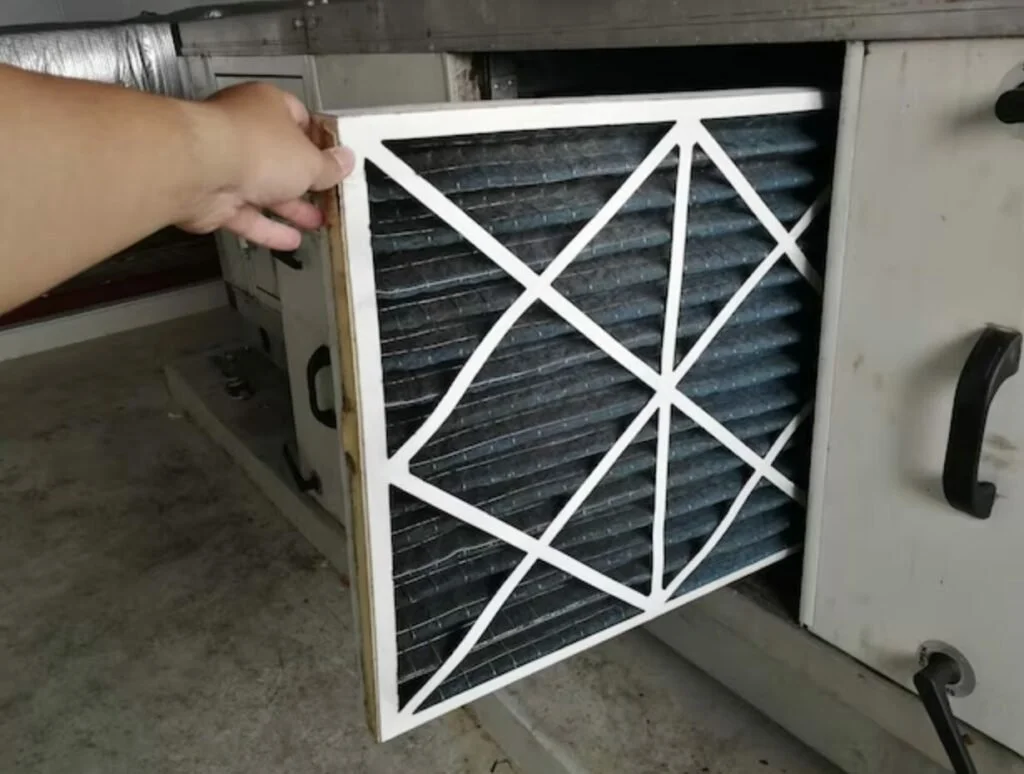
A properly installed air filter helps protect your HVAC system, improve airflow, and keep your indoor air clean. We help Orange County homeowners get it right the first time.
Professional Filter Replacement Versus DIY: When to Call an Expert
Replacing your air filter yourself is straightforward enough that most homeowners can do it without difficulty. Your filter typically sits in a simple slot or frame, accessible from your furnace closet, attic, or basement, and swapping it out takes just a few minutes. However, there are specific situations where having a professional handle filter replacement as part of a broader maintenance visit makes sense.
If you've never changed your filter before and aren't certain where it's located or how your system is configured, having a professional show you during a maintenance visit is worthwhile. They'll verify you're buying the correct size and MERV rating for your specific equipment, explain the airflow direction, and show you any quirks specific to your installation. Many homeowners feel more confident doing it themselves after seeing a professional handle it once, and you'll have a clear understanding of what maintenance your specific system requires.
If you're making an upgrade to a higher MERV filter, especially jumping from MERV 8 to MERV 13, having a professional evaluate your system first is smart. We recommend this evaluation before you buy a big box of MERV 13 filters and discover your system can't handle them. A professional can check your blower motor's CFM rating, assess your ductwork, and confirm that upgrading is safe and effective for your equipment. This evaluation typically costs $75 to $150 and prevents the possibility of paying $500 to replace a burnt-out blower motor because you chose too restrictive a filter.
If you're experiencing air quality problems, allergy flare-ups, or unexpected cooling issues and suspect your filter might be the cause, a professional can evaluate your situation comprehensively. Sometimes filter problems are actually compounded by other issues like refrigerant leaks, ductwork problems, or thermostat misalignment, and a professional can identify all contributing factors. In these cases, DIY filter replacement alone might not solve your problem.
For routine filter replacement every two months or so, doing it yourself is perfectly appropriate and saves money. Keep a few extra filters on hand, check your filter monthly, and replace when it looks dirty. This simple habit maintains your system's efficiency and keeps your air quality high without requiring professional involvement.
The Connection Between Air Filters and Overall Indoor Air Quality
While air filter replacement is foundational to good indoor air quality, it's important to understand both what filters accomplish and their limitations. A good HVAC filter captures particles like pollen, dust, pet dander, and some airborne bacteria and viruses, but it doesn't address all indoor air quality concerns.
Indoor air quality is affected by humidity levels, carbon dioxide concentration, volatile organic compounds from paints and finishes, radon, combustion gases from gas stoves and fireplaces, and biological contaminants like mold and mildew. A MERV 13 filter will help with the particulate portion of these factors, but it won't dehumidify your home if moisture is excessive, won't vent out carbon dioxide buildup if you don't have adequate ventilation, and won't filter out chemical gases. The most comprehensive approach to indoor air quality combines a good HVAC filter, proper home ventilation to exchange indoor and outdoor air regularly, humidity control to prevent mold growth, and potentially additional devices like whole-home UV purifiers or activated carbon filters if specific problems warrant them.
In Orange County's dry climate, humidity is generally not an issue, and dry climate actually works in your favor for filter longevity because moisture doesn't degrade filter materials the way it does in humid regions. However, the dry conditions and Santa Ana winds mean dust accumulation is often heavier than in other climates, which argues for more frequent filter replacement during certain seasons. Understanding your local climate's specific characteristics helps you develop a filter replacement strategy that's actually tailored to your environment rather than following generic national recommendations.
For many homeowners, focusing on consistent HVAC filter replacement will solve the majority of indoor air quality concerns, particularly if anyone in the household has allergies or respiratory sensitivity. If problems persist despite good filter maintenance, that's when consulting a professional about additional air quality improvements makes sense.
Orange County Specific Considerations: Pollen, Santa Ana Winds, and Seasonal Patterns
Orange County's specific environment creates distinct air quality challenges and opportunities that should inform your filter selection and replacement strategy. Understanding these local factors will help you optimize your approach to air filter replacement for your particular situation.
Spring in Orange County means oak and sycamore pollen season, typically peaking in March through May when trees release their pollen simultaneously across the region. This two-month period is when allergy sufferers in Brea, Placentia, Anaheim Hills, and surrounding areas experience their highest pollen counts and worst symptoms. If you or your family has spring allergies triggered by oak or sycamore pollen, having a supply of MERV 11 or MERV 13 filters on hand and replacing more frequently during March through May will noticeably reduce symptoms. Spring is also when we receive the most calls from homeowners about increased allergy symptoms; having the right filter in place during this season is genuinely life-changing for people who suffer.
Santa Ana winds, occurring primarily from October through April, create a secondary air quality challenge. These hot, dry winds can be strong enough to blow dust directly through window screens and gaps around doors, and they lift dust and debris from local roads and desert areas into the air. During Santa Ana wind events, your HVAC system works harder to filter the air being drawn in from outside, and your filter gets dirtier faster. If you live in an area of Orange County that receives particularly strong Santa Ana winds, you might need filter replacements even more frequently than homeowners in more sheltered locations. Checking your filter weekly during Santa Ana wind season can help you catch replacement needs before reduced airflow becomes a problem.
Summer in Orange County is generally drier and has lower pollen counts than spring, but high temperatures mean your air conditioning system runs much more heavily. Extended AC runtime means air is cycling through your filter constantly, and a basic MERV 8 filter can become noticeably clogged within 30 to 45 days during peak summer months. This is why investing in a higher-quality pleated MERV 11 or MERV 13 filter makes financial sense; the longer lifespan during heavy-use seasons offsets the higher per-filter cost.
Winter is when most Orange County homeowners can stretch their filter replacement intervals. With lower temperatures, AC usage drops significantly, and if you're running your system less frequently, your filter stays cleaner longer. Many homeowners can shift to a 90-day replacement schedule in winter, then move back to more frequent replacement when spring pollen season and summer heat arrive.

Santa Ana winds can quickly dry out the air and push dust and allergens into your home. Make sure your HVAC system and air filter are ready before the next wind event.
Air Filter Replacement Case Study: Brea Family's Allergy Breakthrough
To illustrate the real-world impact of thoughtful air filter selection and consistent replacement, let me share the story of a family we worked with in Brea last spring. The Martinez family had lived in their home for seven years, and over that time, Mrs. Martinez's spring allergies had gotten progressively worse. By March of last year, she was taking allergy medication every day, sometimes twice a day, and still experiencing afternoon sneezing fits and congestion that disrupted her work. Their teenage daughter was developing seasonal allergy symptoms as well, and the family was beginning to consider relocating because the spring season had become genuinely miserable.
When they called us about their AC performance in late February, they mentioned the allergy situation in passing. During our evaluation, we discovered they had a basic MERV 8 fiberglass filter that appeared original to their system's installation, which was over five years old. The filter was extensively clogged with dust and pollen, restricted airflow had caused their blower motor to be working overtime, and their energy bills during spring were naturally elevated because the system never quite achieved their thermostat's target temperature. We recommended replacing the filter with a MERV 13 pleated option immediately and establishing a replacement schedule every 60 days during pollen season.
The family purchased MERV 13 filters and established a reminder to check their filter on the first of each month. Within three weeks of the initial replacement, Mrs. Martinez reported fewer allergy symptoms and was able to stop taking her allergy medication during the day, using it only as needed for occasional symptoms. By late April, as she entered what had previously been her worst allergy month, she said her symptoms were the mildest they'd been in three years. Her daughter's developing allergies plateaued rather than worsening, and the family remarked that they were actually enjoying spring for the first time in years.
The secondary benefit was that their May and June energy bills were noticeably lower than the previous year, even though temperatures were identical. A clean filter system running on a proper replacement schedule was more efficient than the previous years' clogged-filter scenario, and their AC was able to reach their thermostat's target temperature more quickly and cycle less frequently. The Martinez family had essentially made a breakthrough on multiple fronts: better air quality, fewer allergy symptoms, lower energy bills, and improved comfort overall. All of this came from understanding the MERV rating system, choosing an appropriate filter for their situation, and committing to regular replacement on a schedule that matched their local environment.
Choosing Your Air Filter Replacement Strategy Going Forward
As you think about your own air filter replacement approach, consider your household's specific circumstances. If you live alone or with someone who has no respiratory sensitivities, a MERV 11 pleated filter replaced every 60 to 90 days is likely sufficient and represents a good balance of cost, filtration, and system compatibility. If you have someone in your household with allergies or asthma, a MERV 13 filter replaced every 60 days after professional system evaluation might be worth the investment; the improved air quality and symptom reduction often justify the cost. If you have pets, which generate additional dander and dust, plan for more frequent filter replacement regardless of your chosen MERV rating.
Establishing a simple monthly inspection habit is the foundational practice that supports whatever filter strategy you choose. Set a calendar reminder for the first of each month, take 60 seconds to remove your filter and hold it to a light, and replace it when it looks noticeably dirty. This habit costs nothing and eliminates the guessing game about timing. You'll learn your home's specific filter cycling pattern through the year, and you'll never be in the situation of discovering a severely clogged filter that's been damaging your system without your knowledge.
If you're uncertain whether MERV 13 is appropriate for your system, reach out to a professional contractor who can evaluate your equipment. A 15-minute assessment is worth the peace of mind, and it prevents the possibility of installing filters that stress your system. We're always happy to conduct this evaluation for homeowners throughout Yorba Linda, Anaheim Hills, Brea, Placentia, Villa Park, Fullerton, Tustin, Santa Ana, and Irvine.
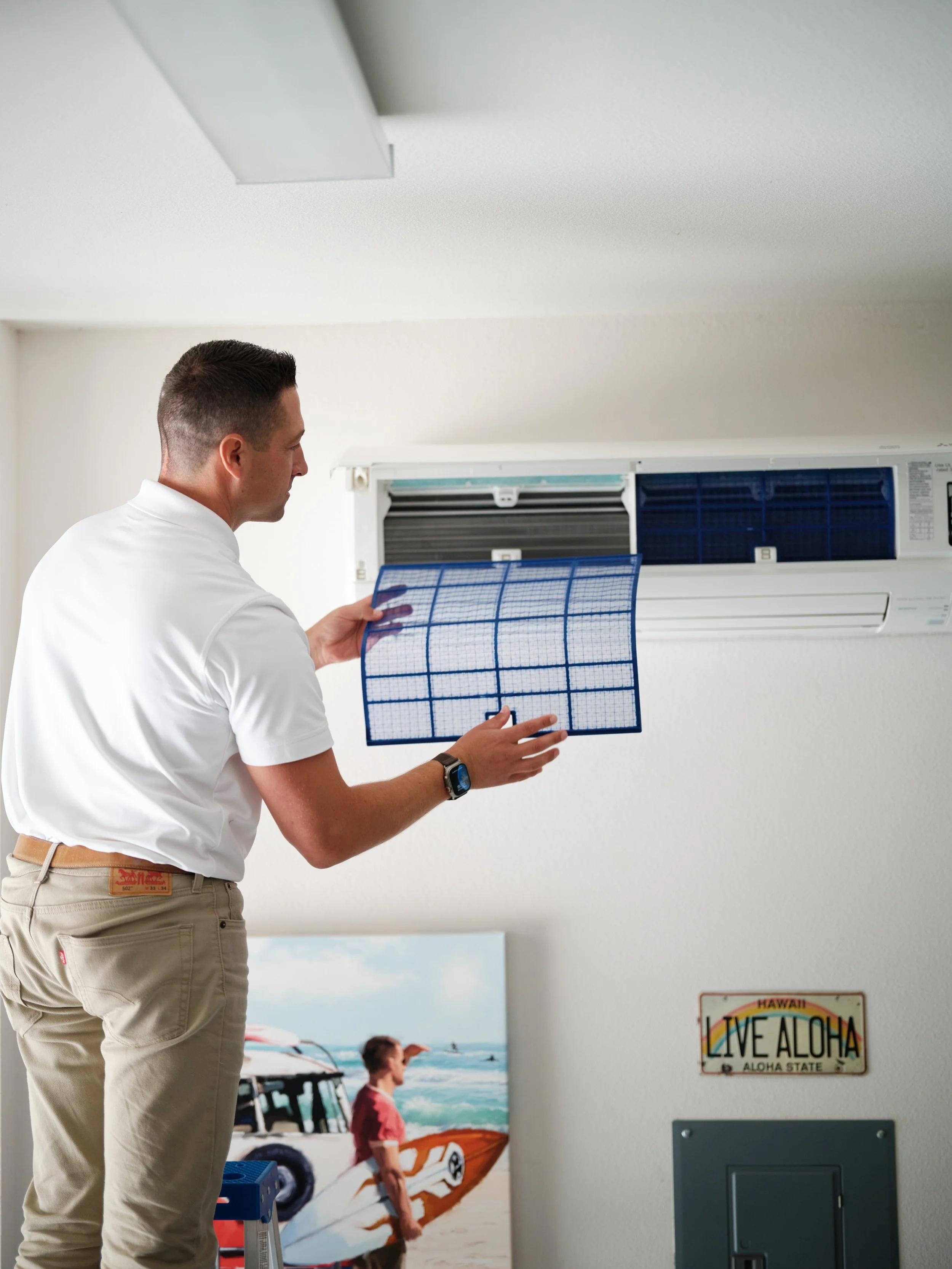
Cleaning your mini split or wall AC filter regularly helps improve airflow, boost efficiency, and reduce dust and allergens inside your home.
Conclusion: Spring Is the Season to Establish Your Filter Replacement Routine
Spring has arrived in Orange County, and with it comes the renewal of allergy season, pollen showers, and the reminder that the air we breathe inside our homes deserves attention and care. Your HVAC system's air filter is a small component that often goes unnoticed until problems develop, yet it's one of the highest-impact maintenance items you can address. A clean, properly chosen filter protects your air conditioning equipment from premature failure, improves your home's energy efficiency, and significantly reduces the airborne particles that trigger allergies and respiratory irritation.
Whether you're experiencing spring allergies for the first time, dealing with increasing HVAC efficiency problems, or simply recognizing that it's been too long since you've thought about your filter, now is the moment to establish a routine that serves your household's needs. Choose a filter appropriate for your situation and your system's capabilities, commit to monthly inspection, and replace on a schedule that matches your local environment. The investment is small, the impact is substantial, and your family's comfort and health will benefit from this simple practice.
If you have questions about which filter is right for your home, or if you'd like a professional evaluation of your HVAC system's airflow capacity before upgrading to a higher MERV rating, we're here to help. Our team of licensed contractors brings fifty years of combined experience working with homes throughout Orange County, and we understand the specific air quality challenges our region faces. You can reach us at (714) 462-4686, visit our website at jmartiniaq.com, or stop by to talk about your air filter strategy. We also invite you to explore our comprehensive guide to air conditioning systems, our information about whole house fans and their role in seasonal ventilation, and our contact page where you can request a consultation. Spring is your season to breathe easier, and it starts with something as simple as a clean, properly chosen air filter.