
Why Is One Room in My House Always Hot or Cold? Causes and Fixes That Actually Work
Updated on May 30, 1986
Your living room stays at a perfect 72°F, but your master bedroom feels like a sauna all summer and an icebox all winter no matter what you set the thermostat to. Or maybe you've got a home office that's 10 degrees warmer than the rest of your house, making afternoon Zoom calls unbearable. You've tried closing the vents in other rooms. You've adjusted the thermostat repeatedly. You've even stuck fans everywhere. Nothing helps.
This is one of the most common and frustrating HVAC problems Orange County homeowners face, and after 15 years of diagnosing AC repairs across Yorba Linda, Anaheim, Brea, and all of Orange County, I can tell you that the fix is almost never what people think it is. The solution isn't closing vents in other rooms, which actually makes the problem worse. It's not buying a bigger AC unit, which wastes energy and money. And it's definitely not just living with the discomfort because "old houses are like that."
The truth is that persistent hot or cold rooms have specific, diagnosable causes ranging from simple fixes you can handle yourself in ten minutes to ductwork problems that require professional attention. This guide walks through every common cause of temperature imbalances, explains how to identify what's causing your specific problem, and lays out the real solutions with honest cost estimates so you can fix the issue permanently instead of just managing symptoms.
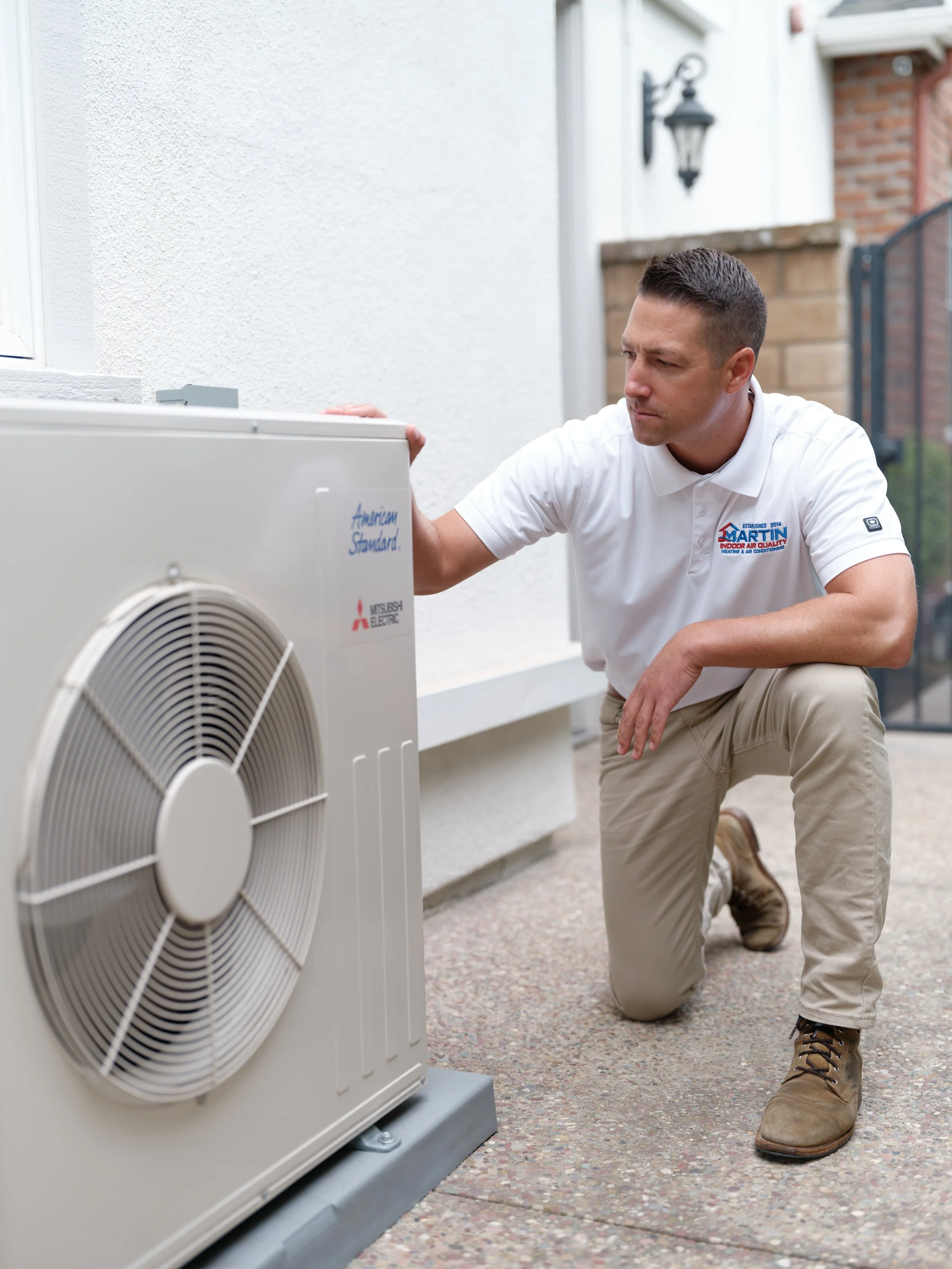
Is one room in your house always too hot or too cold? J Martin diagnoses the real cause and fixes it right the first time. Call (714) 462-4686 for same-day service across Orange County.
The Simple Stuff First: Problems You Can Fix Yourself in Ten Minutes
Before you call an HVAC company or start researching expensive solutions, check these common culprits that cause temperature problems but take almost no time or money to fix. Furniture or objects blocking air vents is embarrassingly common. Your couch gets pushed against the wall covering the supply vent, or storage boxes pile up in front of the return vent, and suddenly that room can't get proper airflow. Walk through your problem room and look at every vent. Are the supply vents where cold or hot air blows into the room completely unobstructed? Can you feel strong airflow when the system runs? Are return vents where air gets pulled back to the HVAC system blocked by furniture, curtains, or storage? Move anything blocking vents and test whether the temperature problem improves over the next few days.
Closed or partially closed vents seem like they'd help by directing more air to problem rooms, but they actually create pressure imbalances in your duct system that make temperature problems worse. Your HVAC system is designed to move a specific volume of air through all the vents. When you close vents in some rooms trying to force more air to others, you increase pressure in the ductwork which can cause leaks, reduce overall efficiency, and strain your equipment. Check every vent in your house and make sure they're fully open. This includes both supply vents and return vents. The improved air balance might solve your temperature issue without any other intervention.
Dirty air filters restrict airflow throughout your entire HVAC system. As filters collect dust, pet hair, and debris over weeks and months, they become clogged and choke off airflow. Rooms that are furthest from the air handler or that get the least airflow to begin with suffer first because they're already on the edge of adequate cooling or heating. A clogged filter pushes them over that edge into uncomfortable territory. Check your air filter right now. If you can't remember the last time you changed it, it needs changing. If you can see visible dirt and dust buildup when you hold it up to light, it needs changing. In Orange County where we run AC heavily from May through October, filters should be checked monthly and changed every one to three months depending on how dirty they get. Replace the filter and see if airflow improves to your problem room.
Closed interior doors create airflow problems in homes with inadequate return vents. Many Orange County homes have only one central return vent, usually in a hallway or main living area. When you close bedroom doors, conditioned air blows into those rooms through supply vents but has no way to return to the HVAC system because the door blocks the path back to the central return. This creates positive pressure in the closed room and negative pressure in the main house, disrupting the whole system's air balance. Try leaving interior doors open, especially bedroom doors, and see if temperature balance improves. If keeping doors open helps but you want privacy, you can install transfer grills above doors or add return vents to individual rooms, though that requires professional ductwork modification.
The Ductwork Problems: When Air Never Reaches Your Room Properly
If the simple fixes don't solve your problem, ductwork issues are the next most likely culprit. These require more investigation and usually professional repair, but they're extremely common in Orange County homes, especially those built before modern duct sealing standards. Leaking ductwork wastes 25% to 30% of conditioned air in typical homes before it ever reaches the vents. Your HVAC system pushes cooled or heated air through ducts running through your attic, crawlspace, or walls, but if those ducts have cracks, holes, loose connections, or separated joints, air escapes along the way. Rooms at the end of long duct runs or rooms served by the leakiest sections get substantially less airflow than rooms closer to the air handler or served by sealed ducts.
In Orange County, this problem is particularly common because many ducts run through hot attics where temperatures hit 130°F to 150°F in summer. Attic heat accelerates duct deterioration, causes connections to separate as materials expand and contract, and makes any leaks even more wasteful as cooled air escapes into the scorching attic before reaching your room. Signs of duct leakage include rooms that never quite reach the thermostat setting, high energy bills despite moderate use, excessive dust in some rooms more than others, and pressure imbalances where closing one door affects airflow in other rooms. You can sometimes hear whistling or hissing sounds near duct connections when the system runs, which indicates air escaping through cracks.
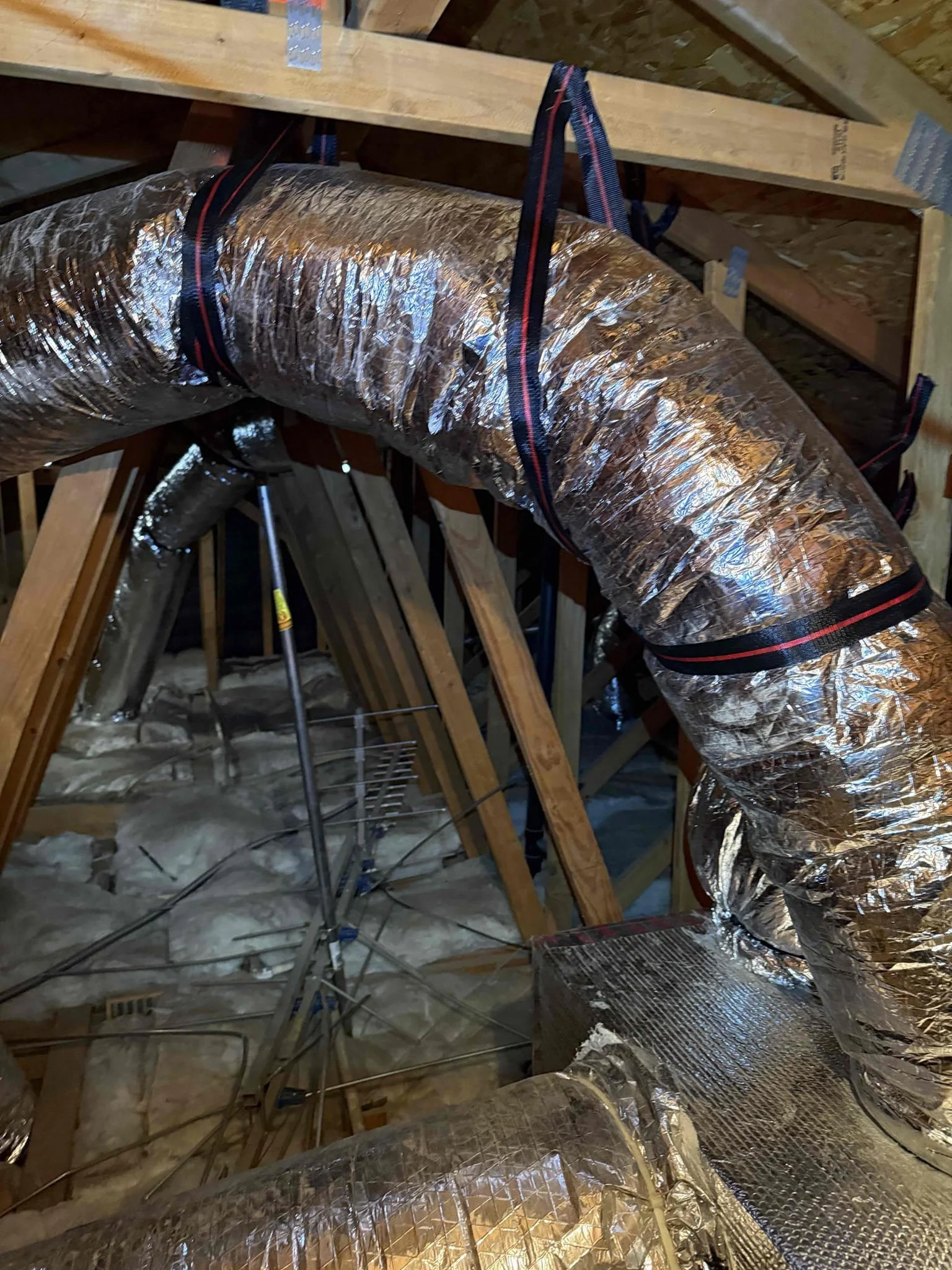
When a room won't cool down or warm up, we don't guess from inside the house. Our technicians go into the attic, inspect every duct run, and find out exactly where you're losing airflow.
Proper duct sealing requires professional work. A technician will pressure-test your duct system to identify leaks, manually seal visible gaps and connections with mastic sealant or metal-backed tape, and in some cases use aerosol sealant technology that seals leaks from inside the ducts. In Orange County, professional duct sealing typically costs $1,000 to $2,500 for a whole-house job depending on the extent of leakage and duct accessibility. This investment often pays for itself within two to four years through reduced energy bills and improved comfort.
Disconnected ductwork is exactly what it sounds like: a duct section has completely separated from its connection, and all the air meant for that room is dumping into your attic, crawlspace, or wall cavity instead. This creates a room that gets almost no airflow at all and wastes tremendous energy. Disconnected ducts usually happen at connection points where different sections join together, at elbows where ducts change direction, or where ducts connect to the main trunk line. The connections can separate due to poor initial installation, thermal expansion and contraction over years, house settling, or someone stepping on ducts in the attic during other work.
If one room suddenly gets much worse airflow than it used to, or if a room has always had terrible airflow despite adequate vent size, disconnected ductwork is a likely cause. You'll need someone to physically inspect the ducts in your attic or crawlspace to find the disconnection. Repair involves properly reconnecting the duct sections, sealing the joint with mastic, and securing it with mechanical fasteners or sheet metal screws so it doesn't separate again. This repair typically costs $200 to $500 depending on the location and extent of the problem.
Uninsulated or poorly insulated ducts lose massive amounts of energy when they run through unconditioned spaces like attics. In Orange County where summer attics reach 130°F to 150°F, uninsulated ducts feeding cool air to your bedrooms can gain 20°F to 30°F of heat before the air even reaches the room. By the time that 55°F air leaving your AC unit travels through 30 feet of uninsulated ductwork in a 145°F attic, it might arrive at your bedroom vent at 75°F or warmer, which does almost nothing to cool the room. The same principle applies in reverse during winter, though our mild Orange County winters make this less problematic than the summer issue.
Duct insulation involves wrapping accessible ductwork in insulating material rated to R-6 or R-8 value. This dramatically reduces heat gain or loss as air travels to your rooms. Professional duct insulation costs $1,000 to $4,500 for a typical Orange County home depending on how much ductwork runs through unconditioned spaces and how accessible it is. The energy savings from properly insulated ducts in our climate often recover the cost within three to five years, and the comfort improvement is immediate and dramatic.
Undersized or poorly designed ductwork delivers inadequate airflow to some rooms even when the ducts are sealed and insulated. The duct feeding your problem room might be too small in diameter to carry sufficient air volume, or the duct layout might have too many sharp bends and turns that restrict flow, or the trunk line might branch off to too many rooms without adequate capacity. Poor duct design is particularly common in room additions where new ductwork was added to an existing system without proper engineering. Someone just tapped into the nearest existing duct and ran a line to the new room, but the existing duct wasn't sized to handle the additional load.
Fixing poor duct design requires rerouting ducts, upsizing duct diameters, or in some cases adding a second HVAC zone or dedicated mini split for the problem area. This is expensive and invasive work typically costing $2,000 to $6,000 or more depending on the scope. Before committing to major duct redesign, make sure simpler solutions like sealing leaks and adding insulation won't solve the problem. Sometimes what looks like undersized ducts is really just leaky ducts wasting so much air that inadequate volume reaches the room.
The Insulation and Envelope Issues: When Your Room Can't Hold Temperature
Even with perfect ductwork and airflow, poor insulation or air leaks in the room itself can make it impossible to maintain comfortable temperatures. Poor wall and ceiling insulation lets heat flow in during summer and out during winter faster than your HVAC system can compensate. This is especially problematic in Orange County homes built before modern energy codes when insulation standards were minimal or nonexistent. A bedroom with R-11 insulation in the walls and R-19 in the ceiling might have been adequate in 1960, but it can't compete with summer sun beating on west-facing walls in Yorba Linda where afternoon temperatures hit 95°F to 100°F regularly. That inadequate insulation lets heat soak through into the room faster than your AC can remove it.
Rooms above garages are particularly vulnerable because garage ceilings often have little or no insulation, and garages themselves can reach 110°F or higher in summer. The bedroom floor above acts like a radiator heating the room from below. Signs of insulation problems include rooms that are consistently warmer or cooler than others regardless of season, exterior walls that feel hot to the touch in summer or cold in winter, high energy bills, and uneven temperatures within the same room where areas near exterior walls are much warmer or cooler than the room center.
Upgrading insulation requires either adding insulation to accessible attic spaces above the problem room, which is straightforward and costs $1 to $3 per square foot, or adding insulation to walls, which requires either removing interior drywall or drilling holes and blowing insulation into wall cavities, both invasive and expensive options. For rooms above garages, insulating the garage ceiling can make a dramatic difference and costs $500 to $1,500 for a typical two-car garage. Before committing to insulation upgrades, consider whether air sealing might deliver better bang for your buck.
Air leaks around windows, doors, electrical outlets, and penetrations through walls and ceilings let outdoor air infiltrate your room. In summer, hot air leaks in making the room warmer. In winter, conditioned air leaks out making the room colder. Orange County's temperature swings between day and night amplify this effect. A bedroom might feel fine at night when outdoor temperature is 65°F, but become unbearable during afternoon hours when outdoor temperature hits 95°F and every tiny air leak lets hot air infiltrate.
Check for air leaks by holding a tissue or smoke pencil near windows, doors, electrical outlets, and baseboards on exterior walls. On a windy day or when there's a big temperature difference between inside and outside, you'll feel drafts or see the tissue move near leaks. Common leak points include gaps around window frames, worn weatherstripping on doors, electrical outlet boxes in exterior walls, and the gap between the bottom plate of the wall and the floor. Sealing air leaks with caulk around windows, weatherstripping on doors, and foam gaskets behind outlet covers is cheap DIY work that costs $50 to $150 in materials and can make a noticeable difference. For a thorough whole-house air sealing job, professional service costs $500 to $2,000 and typically reduces heating and cooling costs by 10% to 20%.
Single-pane windows or poorly performing windows create cold spots in winter and heat gain in summer. Glass is a terrible insulator even when double-paned, and single-pane windows common in older Orange County homes transfer heat almost as freely as a hole in the wall. Rooms with large windows, especially west-facing windows that get afternoon sun, fight a losing battle against solar heat gain in summer. South-facing windows can be problematic in winter, creating cold drafts near the window even while the center of the room feels warm.
Window upgrades to dual-pane low-E glass dramatically reduce heat transfer and improve comfort. Replacement windows cost $400 to $1,200 per window installed depending on size and quality, making this an expensive solution for rooms with multiple windows. For a more affordable improvement, consider window film that reflects heat, cellular shades that provide insulation, or thermal curtains. These solutions cost $50 to $300 per window and can reduce heat gain by 30% to 50%.
The HVAC System Issues: When the Problem is the Equipment Itself
Sometimes the problem isn't the room or the ducts, but the HVAC system trying to heat and cool your home. Oversized HVAC systems cycle on and off too frequently to evenly distribute air throughout the house. When your AC or furnace is too big for your home, it reaches the thermostat setpoint very quickly and shuts off before air has circulated to distant rooms. The room with the thermostat gets comfortable, the system shuts down, but the far bedroom never received adequate airflow and remains uncomfortable. This short-cycling also wastes energy, increases wear on equipment, and creates uncomfortable temperature swings.
How do you know if your system is oversized? If it runs for only five to ten minutes at a time during moderate weather, cycles on and off frequently instead of running for longer periods, and some rooms never reach the set temperature while the room with the thermostat gets overcooled or overheated, you likely have an oversized system. Unfortunately, the only real fix is replacing the system with properly sized equipment, which costs $5,000 to $16,000 depending on the type and size. This is why proper load calculation during HVAC replacement is so critical. The biggest system isn't the best system; the correctly sized system is.
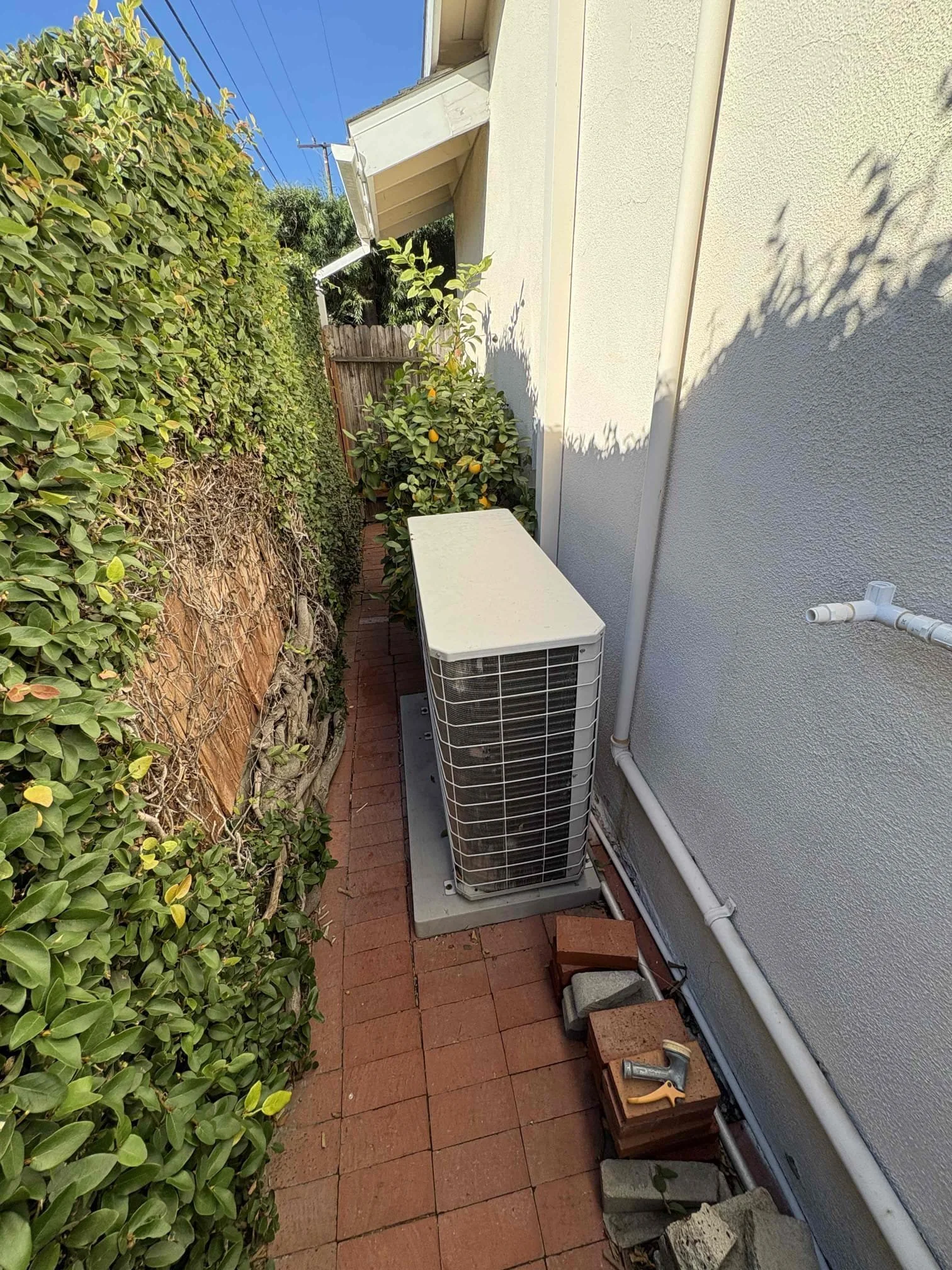
My AC runs all day but one room is still hot.' Sound familiar? The problem could be your ductwork, your insulation, or the equipment itself. The only way to know is a proper diagnosis that looks at everything, not just the thermostat.
Undersized HVAC systems run constantly but never achieve comfortable temperatures in all rooms. The system struggles to keep up with the cooling or heating load, and rooms furthest from the air handler or rooms with the most heat gain or loss suffer first. An undersized system will run for hours without cycling off, struggle to maintain temperature during extreme weather, and leave some rooms perpetually uncomfortable while barely keeping the thermostat area acceptable.
This problem is less common than oversizing because most HVAC contractors err on the side of installing slightly larger equipment. But it happens in homes where additions were built without upsizing the HVAC system, where insulation was added without accounting for reduced heating and cooling loads, or where the original system was significantly undersized from the start. The only real solution is replacing the system with adequate capacity or adding supplemental heating and cooling for the undersized areas, such as mini split systems or window units. If your system is running constantly but still can't keep up, not just in one room but throughout the house, the issue may be less about distribution and more about the system's ability to cool at all. We cover that in detail here: My AC Is Running But Not Cooling: What's Wrong?
Thermostat location affects how the system operates. If your thermostat is in the coolest part of your house, in a hallway with no sun exposure and good airflow, it will reach the setpoint while sunny bedrooms remain warm. If your thermostat is in a hot spot near a kitchen or in direct sun, it will call for cooling before other rooms need it, overcooling those spaces. The thermostat location has to represent the average temperature of your home, or at least the area you care most about being comfortable.
Check where your thermostat is located. Is it in direct sun at any point during the day? Is it near a heat source like a kitchen or fireplace? Is it in a particularly cool or warm spot? Relocating a thermostat costs $150 to $400 and can solve temperature balance problems if the current location is causing poor system response. Alternatively, upgrading to a smart thermostat with remote sensors lets you place sensors in multiple rooms and have the system respond to average temperature across all sensors rather than just one spot.
The Orange County Climate Factors That Make These Problems Worse
Orange County's specific climate creates unique challenges that amplify temperature balance problems. Summer sun exposure on west and south-facing rooms creates extreme heat gain during afternoon hours. A west-facing bedroom in Yorba Linda can gain 5,000 to 10,000 BTUs of heat from direct sun through windows between 3pm and 7pm during summer. Your AC might be adequately sized for the whole house, but it can't keep up with that concentrated solar heat gain in one room during peak sun hours. The rest of the house feels fine, but that bedroom becomes unbearable.
Solutions include installing reflective window film or cellular shades to block solar heat, upgrading to low-E windows that reject heat while allowing light, using exterior shading like awnings or shade screens, or running a dedicated mini split in that room to handle the extra cooling load without overcooling the rest of the house. Ignoring the problem and just lowering the whole-house thermostat wastes energy and makes other rooms too cold.
Attic heat amplifies every ductwork problem. Orange County summer attics commonly reach 130°F to 150°F, which is brutal on any ductwork running through them. Attic heat accelerates duct deterioration, makes every leak more wasteful as cooled air escapes into extreme heat, and adds heat to air traveling through ducts even when they're insulated. Rooms with long duct runs through the attic suffer more than rooms with short duct runs or rooms served by ducts in conditioned spaces.
Improving attic ventilation and adding attic insulation can help reduce attic temperatures by 10°F to 20°F, which indirectly helps with duct performance. Proper attic ventilation costs $500 to $2,000 depending on whether you need ridge vents, soffit vents, or powered attic fans. Adding attic insulation to R-38 or R-49 costs $1 to $3 per square foot and provides both direct benefits to rooms below and indirect benefits by keeping ductwork cooler.
Santa Ana wind events create infiltration and pressure problems in homes with even minor air leaks. These hot, dry winds blow through Orange County primarily in fall and winter, creating significant pressure differences between inside and outside that force air through any available cracks and gaps. Rooms on the windward side of the house experience positive pressure pushing hot air in, while rooms on the leeward side experience negative pressure pulling conditioned air out. This can create temporary dramatic temperature differences between rooms during wind events even if the house is normally well-balanced. Thorough air sealing helps minimize these effects. If your home tends to develop dramatic room-to-room temperature swings during these events specifically, we cover exactly why that happens and what to do about it in our guide on why your AC can't keep up during Santa Ana winds.
When Professional Solutions Make Sense: The Big Fixes
If simple DIY fixes and duct sealing don't solve your temperature problem, several professional solutions can deliver whole-house comfort. HVAC zoning systems divide your house into separate temperature zones with independent thermostats and motorized dampers in the ductwork. This is ideal for homes where different areas have genuinely different heating and cooling needs, like two-story homes where upstairs is always warmer than downstairs, or homes where a home office needs cooling all day but bedrooms only need cooling at night.
A two-zone system costs $1,700 to $2,500 installed when added to existing ductwork. Each additional zone adds $350 to $500. So a three-zone system for a two-story home might cost $2,200 to $3,000 total. Zoning requires adequate HVAC capacity and proper duct design to work correctly. Your system must be able to handle each zone independently, and you need a bypass damper or other pressure management to prevent damage when some zones close. Professional design and installation are essential because DIY zoning attempts often damage equipment.
Zoning makes most sense when you have predictable, consistent patterns in which areas need conditioning when, you have sufficient ductwork capacity to each zone, your HVAC equipment supports zoning operation, and the cost is justified by your comfort needs and energy savings. Typical energy savings from zoning run 20% to 30%, which can pay back the installation cost in four to six years.
Ductless mini split systems for problem areas avoid ductwork entirely by putting independent heating and cooling directly in the room that needs it. This is often more cost-effective and reliable than trying to fix terrible ductwork to a distant room or conditioning a space that was never part of the original HVAC system. A single-zone mini split for one problem room costs $2,500 to $5,000 installed. This includes the outdoor unit, the indoor wall-mounted air handler, refrigerant lines, electrical work, and professional installation.
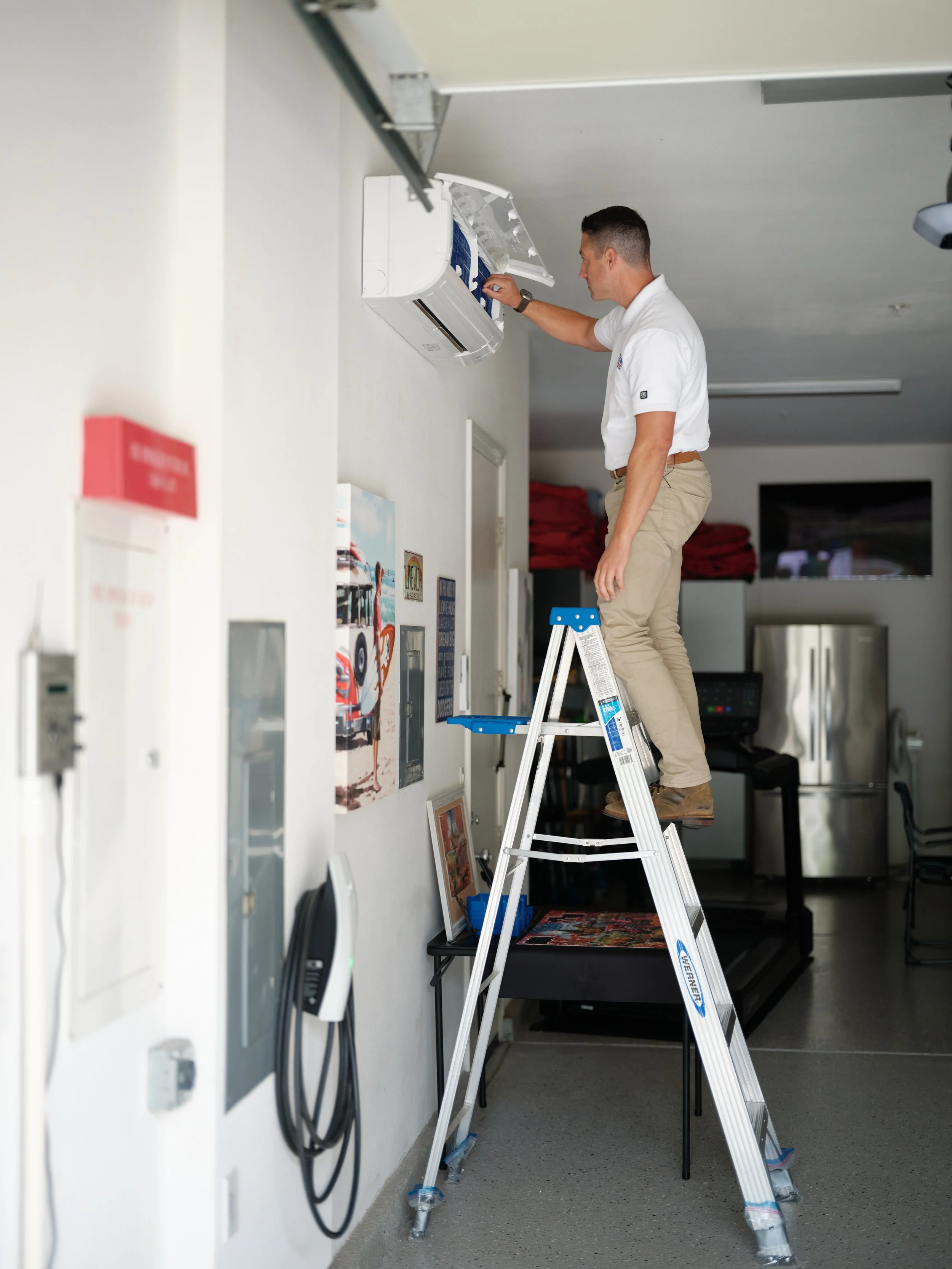
Garages and bonus rooms are some of the hardest spaces to keep comfortable with a central HVAC system. A ductless mini-split puts heating and cooling exactly where you need it. Call J Martin at (714) 462-4686 to find out if it's the right solution for your home.
Mini splits make particular sense when you have a room addition that would require expensive ductwork to connect to the main system, a converted garage or workshop that needs independent control, a room with consistently problematic temperature that resists all other solutions, or a room where you want precise control and high efficiency. The independent operation means you can cool or heat just that room without running the whole-house system, which saves energy and provides better comfort. Modern mini splits are also heat pumps, so they provide both cooling and heating from one unit.
Adding or upgrading return vents improves airflow in homes with inadequate return air paths. Many Orange County homes have only one central return vent, which creates pressure imbalances and poor air circulation. Adding return vents to individual rooms or areas costs $250 to $500 per vent including the ductwork connection. This helps air circulate properly back to the HVAC system and can solve problems where rooms feel stuffy or where closing doors makes temperature worse.
The DIY Diagnosis Process: Figuring Out What's Wrong With Your Room
Before spending money on solutions, invest time in diagnosing the specific problem affecting your room. Start by documenting the problem pattern. Is the room always hot or cold, or only during certain times of day? Does the problem occur in all seasons or just summer or winter? Does the problem get better or worse when doors are open or closed? Is the temperature in the problem room consistent throughout the room, or are some areas much warmer or cooler than others? Write down these observations because the pattern reveals the likely cause.
Check airflow at the vents. When your HVAC system runs, go to the problem room and hold your hand in front of supply vents. Is airflow strong, weak, or nonexistent? Compare the airflow to vents in other rooms. Weak airflow suggests duct problems, blocked vents, or poor duct design. No airflow suggests disconnected ductwork or a completely blocked duct. Strong airflow despite temperature problems suggests the issue is insulation, air leaks, or overwhelming heat gain rather than duct issues.
Measure actual temperature differences. Buy a simple thermometer and measure the temperature in your problem room compared to the room with the thermostat. Take measurements at the same time of day in similar conditions. A two to three degree difference is normal. A five to ten degree difference indicates a real problem. Measure temperature near exterior walls versus the room center to see if insulation or air leaks are contributing. Measure temperature near windows versus away from windows to assess window performance.
Look in your attic or crawlspace if accessible. You don't need HVAC expertise to spot disconnected ducts, damaged insulation, or obvious duct problems. If you can safely access your attic, go up there when the system is running and listen for hissing or whistling that indicates air leaks. Look at the duct running to your problem room and check if it's connected properly, insulated, and in good condition. Look for any obvious damage, disconnections, or crushed sections.
Call a professional for a thorough diagnosis if you can't identify the problem yourself. A good HVAC diagnostic visit costs $100 to $180 in Orange County and should include duct inspection, airflow measurement, pressure testing, and specific recommendations. Make sure the technician goes in the attic or crawlspace to actually inspect ducts rather than just guessing from inside the house. Ask for specific findings and written recommendations rather than just a sales pitch for new equipment.
The Bottom Line: Solving Temperature Problems Permanently
The persistent hot or cold room in your Orange County home has a specific cause, and there's a specific solution that will fix it. The key is accurate diagnosis before throwing money at fixes that don't address the actual problem. Start with the free or cheap DIY solutions: unblock vents, open all vents throughout the house, replace dirty filters, and try leaving interior doors open. These solve the problem or at least improve it in maybe 20% of cases and cost almost nothing.
If DIY efforts don't help, the problem is almost certainly ductwork, insulation, or HVAC system issues that require professional attention. Duct sealing, duct insulation, and air sealing are the most cost-effective professional fixes for most situations, typically costing $1,500 to $4,000 total and solving the majority of temperature balance problems. These improvements also reduce energy bills by 15% to 30%, which means they pay for themselves over time rather than just being pure expense.
Zoning systems and mini splits are premium solutions that make sense when you have specific needs like a two-story home with dramatically different temperatures by floor, a room addition that's difficult or expensive to connect to existing ductwork, or a problem room that resists simpler solutions. These cost more upfront but deliver precise control and often better long-term performance than trying to force inadequate ductwork and HVAC capacity to do something it wasn't designed for.
The worst approach is just living with the discomfort or trying to compensate with space heaters, window AC units, or constantly adjusting the thermostat. These band-aid solutions waste energy, cost more in the long run than proper fixes, and never actually solve the underlying problem. They also stress your HVAC equipment by making it work against bad ductwork or poor insulation. And if a professional diagnosis points to a system that's too old or too far gone to fix properly, use our repair-or-replace framework to make that decision with real numbers instead of guesswork.
Get a proper diagnosis, implement the right solution based on the actual cause, and enjoy balanced temperatures throughout your home. Your Orange County house should be comfortable in every room, and fixing temperature problems is almost always more straightforward and affordable than homeowners fear once they stop guessing and start diagnosing.
Got a room in your Yorba Linda, Anaheim, Brea, Fullerton, or Villa Park home that's always too hot or cold? J Martin Indoor Air Quality provides honest diagnostic service to identify the actual cause of your temperature problems. We'll inspect your ductwork, measure airflow, test for leaks, and give you straight answers about what's wrong and what it will cost to fix it properly. No pressure sales tactics, just real solutions based on what your specific situation needs. We’ve been installing new HVAC systems in Orange County since 2014. Call (714) 462-4686 to schedule a diagnostic visit.
J Martin Indoor Air Quality | (714) 462-4686 | Services
Related Articles: