
My AC Is Running But Not Cooling the House: What's Wrong?
Updated on August 1, 2026
You hear the system humming. The thermostat says it's on. The air handler is blowing. But somehow your house is still 82 degrees and climbing, and the air coming out of your vents feels about as refreshing as somebody breathing on you from across the room.
If your AC is running but not cooling, you're dealing with one of the most common and most frustrating problems Orange County homeowners face every summer. And around here, it's not just an annoyance. When Yorba Linda, Anaheim, or Brea temperatures push past 100 degrees during a July heat wave, a system that runs without actually cooling can turn your home into a genuinely unsafe environment within hours.
The good news is that this problem almost always has a diagnosable cause, and many of those causes are things you can check yourself before spending a dime. The not-so-good news is that some of the underlying issues (refrigerant leaks, failing compressors, frozen coils) require professional AC repair and can get expensive if you put them off.
This guide walks you through every common reason an air conditioner runs without cooling, what each fix typically costs in 2026, the DIY troubleshooting steps you can safely handle at home, and exactly when it's time to pick up the phone and call a licensed HVAC technician.
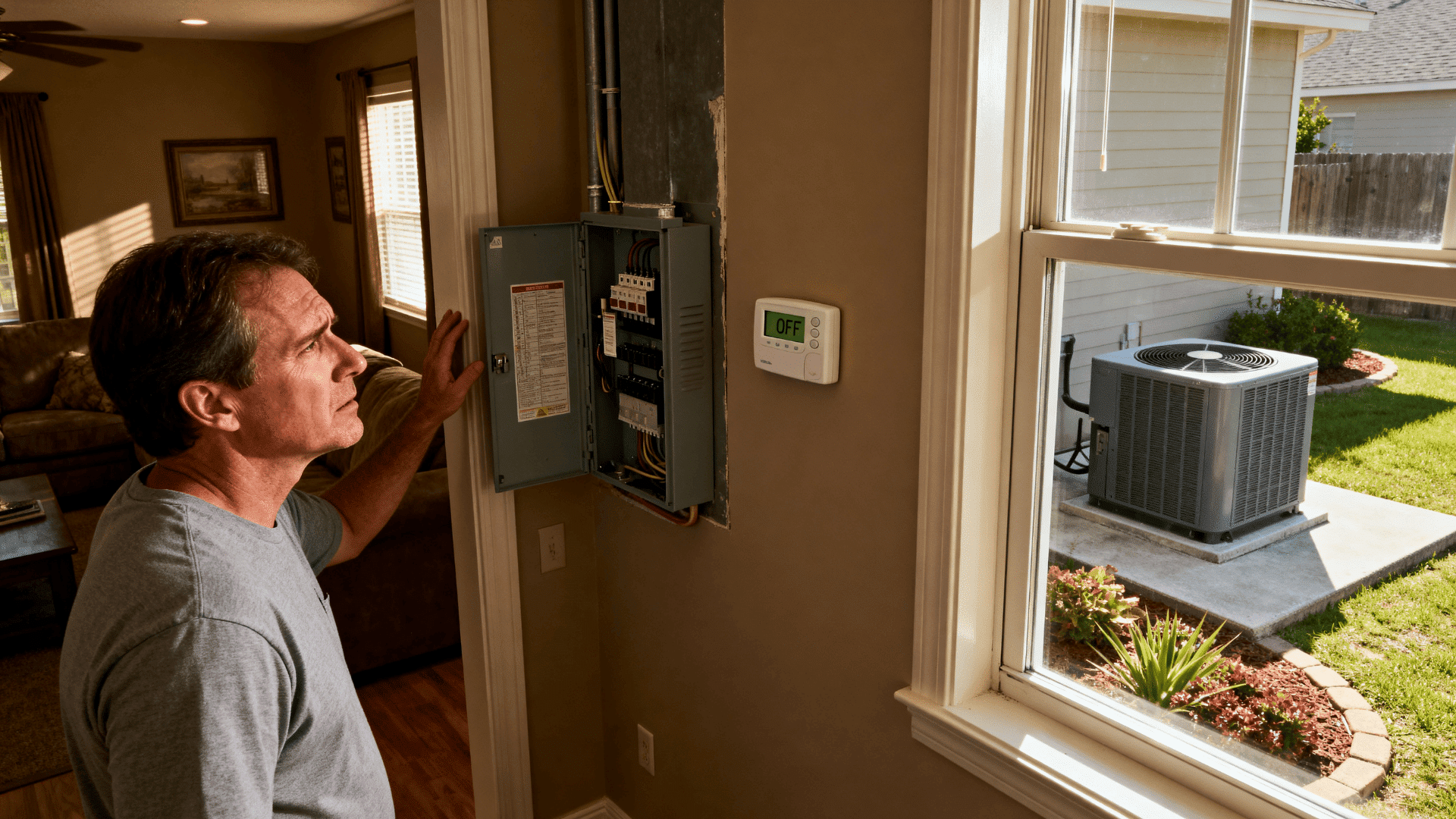
AC running but not cooling your house? If your thermostat is on but the air still feels warm, J Martin offers same-day AC diagnostics in Orange County. Call (714) 462-4686.
A Quick Look at How Your AC Actually Cools (and Why It Matters for Troubleshooting)
Understanding the basics of how your air conditioner works makes it much easier to figure out what's going wrong when it stops cooling. You don't need an engineering degree, just a general sense of the process.
Your AC operates on a simple principle: it doesn't create cold air, it removes heat from your indoor air and moves it outside. It does this using refrigerant, a chemical compound that cycles between liquid and gas states as it absorbs and releases heat. The indoor evaporator coil absorbs heat from the air inside your home, the refrigerant carries that heat through copper lines to the outdoor condenser coil, and the condenser releases the heat into the outside air. The compressor drives this entire cycle by pressurizing the refrigerant and keeping it moving.
Every major component in this cycle has to function correctly for cooling to work. If the evaporator coil is frozen or dirty, it can't absorb heat. If the condenser is blocked, it can't release heat. If the refrigerant is low, there's not enough heat-transfer medium to do the job. If the compressor fails, the whole cycle stops. And if airflow is restricted at any point, whether by a dirty filter, blocked vents, or leaky ducts, the system can't move enough air across the coils to make a difference.
That's why troubleshooting an AC that runs but doesn't cool essentially comes down to checking each link in this chain. Let's start with the simplest checks and work our way toward the more complex (and more expensive) possibilities.
Start Here: The Two-Minute Thermostat Check That Solves More Problems Than You'd Think
Before you start worrying about refrigerant leaks or compressor failure, take two minutes and look at your thermostat. It sounds almost too simple, but incorrect thermostat settings are one of the most frequent reasons HVAC technicians get called out to homes where there's actually nothing mechanically wrong with the system.
Here's what to check. First, confirm that the thermostat is set to "Cool" and not "Fan" or "Heat." If someone bumped the switch to "Fan," the blower will push air through your ducts without engaging the cooling cycle at all. The air coming from your vents will feel lukewarm because it's just recirculated room-temperature air, and the compressor never kicks on to actually remove heat. Second, verify that the set temperature is at least three to five degrees below the current room temperature. If the room is 78 and the thermostat is set to 77, the system may cycle on and off too briefly to make a meaningful difference, especially during extreme heat. Third, check the batteries. A thermostat with dying batteries can misread the temperature, display inaccurate readings, or fail to send the signal that tells your outdoor unit to start the cooling cycle. Simply swapping in fresh batteries fixes this instantly.
One more thing that's easy to overlook: thermostat placement. If your thermostat sits near a sunny window, directly above a lamp, or close to the kitchen, it may be reading a temperature that's significantly higher than the rest of your home. It thinks the house is hotter than it actually is, which throws off the entire cooling cycle. This isn't something you can fix in two minutes, but it's worth noting if you've had chronic cooling inconsistencies and can't figure out why.
If your thermostat checks out and the system is definitely set to cool, it's time to look at the more common mechanical and airflow-related causes.
A Dirty Air Filter Is the Number One Culprit, and the Easiest Fix
If we had to pick the single most common reason an AC runs but doesn't cool effectively, it's a clogged air filter. We see it constantly, and the fix couldn't be simpler.
Your air conditioner works by pulling warm air from inside your home, passing it over a cold evaporator coil to remove heat, and then circulating the cooled air back through your ducts. For that process to work, a steady flow of air needs to move across the coil. The air filter sits between your return vent and the evaporator coil, trapping dust, pet dander, pollen, and other particles before they can coat the coil or get recirculated into your living space.
When that filter gets clogged (and in Orange County, with the dry air, dust, and especially during Santa Ana wind season, it can get clogged faster than you might expect) airflow drops dramatically. The system keeps running because the thermostat is still calling for cooling, but not enough air passes over the evaporator coil to absorb heat efficiently. The result is warm or lukewarm air coming from your vents, longer run times, higher energy bills, and in worst-case scenarios, a frozen evaporator coil that shuts down cooling entirely.
Here's your DIY fix: turn off the system, locate your air filter (it's typically behind the return air grille on a wall or ceiling, or in a slot on the air handler itself), slide it out, and inspect it. If you hold the filter up to a light and can't see through it, it's overdue for a replacement. A standard pleated filter costs between $5 and $20 at any hardware store. During peak cooling season, roughly April through October in Orange County, you should be replacing it every 30 to 60 days, and every 90 days minimum during lighter use periods.
This one step alone resolves the problem for a significant number of homeowners. If you swap the filter and the system starts cooling normally within an hour, you've saved yourself a service call. If the air is still warm after a fresh filter has been in place for a while, keep reading.
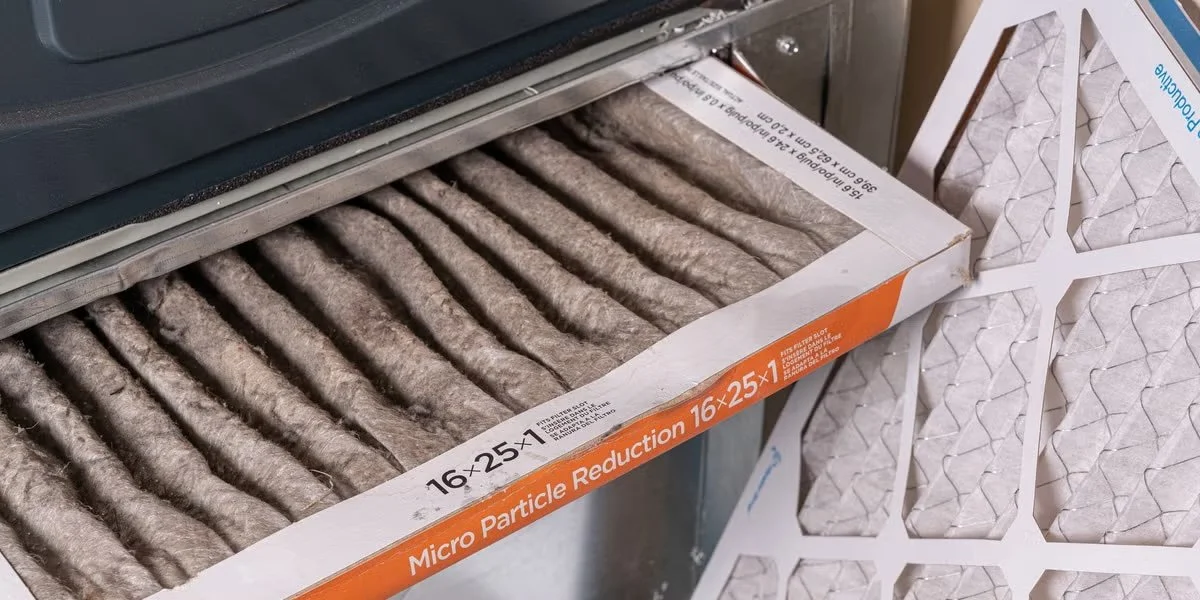
Many AC problems start with something simple: a dirty air filter restricting airflow. J Martin helps Orange County homeowners diagnose cooling problems honestly so you only fix what’s actually needed.
Blocked or Closed Vents and Restricted Ductwork
Your air conditioner can produce all the cold air in the world, but if that air can't reach the rooms where you need it, your house stays warm. Airflow restrictions are the second most common issue we see, and they're often the result of things homeowners don't even realize are causing a problem.
Walk through your house and check every supply vent and every return vent. Are any of them blocked by furniture, rugs, curtains, or boxes? Even partially covering a vent restricts airflow enough to make a noticeable difference, and closing vents in unused rooms, a strategy many people think saves energy, actually increases pressure in the duct system, forces the blower to work harder, and can reduce overall cooling performance throughout the house.
Beyond the vents themselves, the ductwork hidden in your attic, walls, and crawlspaces plays a huge role. Leaks and disconnections in ductwork can allow 20 to 30 percent of your cooled air to escape before it ever reaches your living spaces. In Orange County, where most ductwork runs through attics that can exceed 140 degrees on a summer afternoon, even small gaps or poorly sealed connections mean you're losing a massive amount of cooling capacity to your attic instead of delivering it to your home. This is especially common in older homes throughout Anaheim, Fullerton, and Villa Park, where original ductwork from the 1970s and 1980s may have deteriorated or come loose at connections over the decades.
You can visually inspect accessible ductwork for obvious disconnections or gaps, but a proper duct leakage test requires professional equipment. If you suspect your ducts are the problem, particularly if some rooms are noticeably warmer than others even though the vents are open, it's worth having an HVAC technician evaluate the system. Duct sealing or replacement typically costs between $300 and $2,000 depending on the scope of the work and the accessibility of your duct runs. It's also one of the most impactful improvements you can make for both comfort and lowering your energy bills.
Your Outdoor Condenser Unit Is Dirty or Obstructed
The condenser unit is the large box sitting outside your home, and it has a critical job: releasing the heat that the refrigerant absorbed from your indoor air. It does this by pushing air across the condenser coils with a large fan, and if anything interferes with that airflow, the system can't reject heat efficiently. The compressor keeps running, the refrigerant keeps circulating, but the heat stays trapped in the loop instead of being expelled outdoors. The net result is an AC that runs and runs without ever actually cooling your home.
In Orange County, condenser units face a few specific challenges. Landscaping is a common offender. Bushes, vines, and ornamental plants that have been allowed to grow too close to the unit can choke off the airflow the condenser needs. You should maintain at least two feet of clearance on all sides of the outdoor unit. Grass clippings, leaves, cottonwood fluff, and dust from Santa Ana wind events can also coat the condenser coils over time, creating an insulating layer that blocks heat transfer.
Here's the DIY maintenance step: turn off the system at the thermostat and at the disconnect box near the outdoor unit. Remove any visible debris (leaves, twigs, grass clippings) from around and on top of the unit. Then use a garden hose on a gentle spray setting (not a pressure washer, which can bend the delicate aluminum fins) to rinse the coils from the inside out. Let the unit dry completely before turning the system back on. This is a simple task that should be done at least once a year, ideally at the start of cooling season, and again in early fall.
If the fins on your condenser coil are visibly bent or crushed (something that can happen from impacts, hail, or careless landscaping) a fin comb tool ($10 to $15 at a hardware store) can straighten them and restore proper airflow. Professional condenser cleaning runs $100 to $250 if you'd rather have a technician handle it.
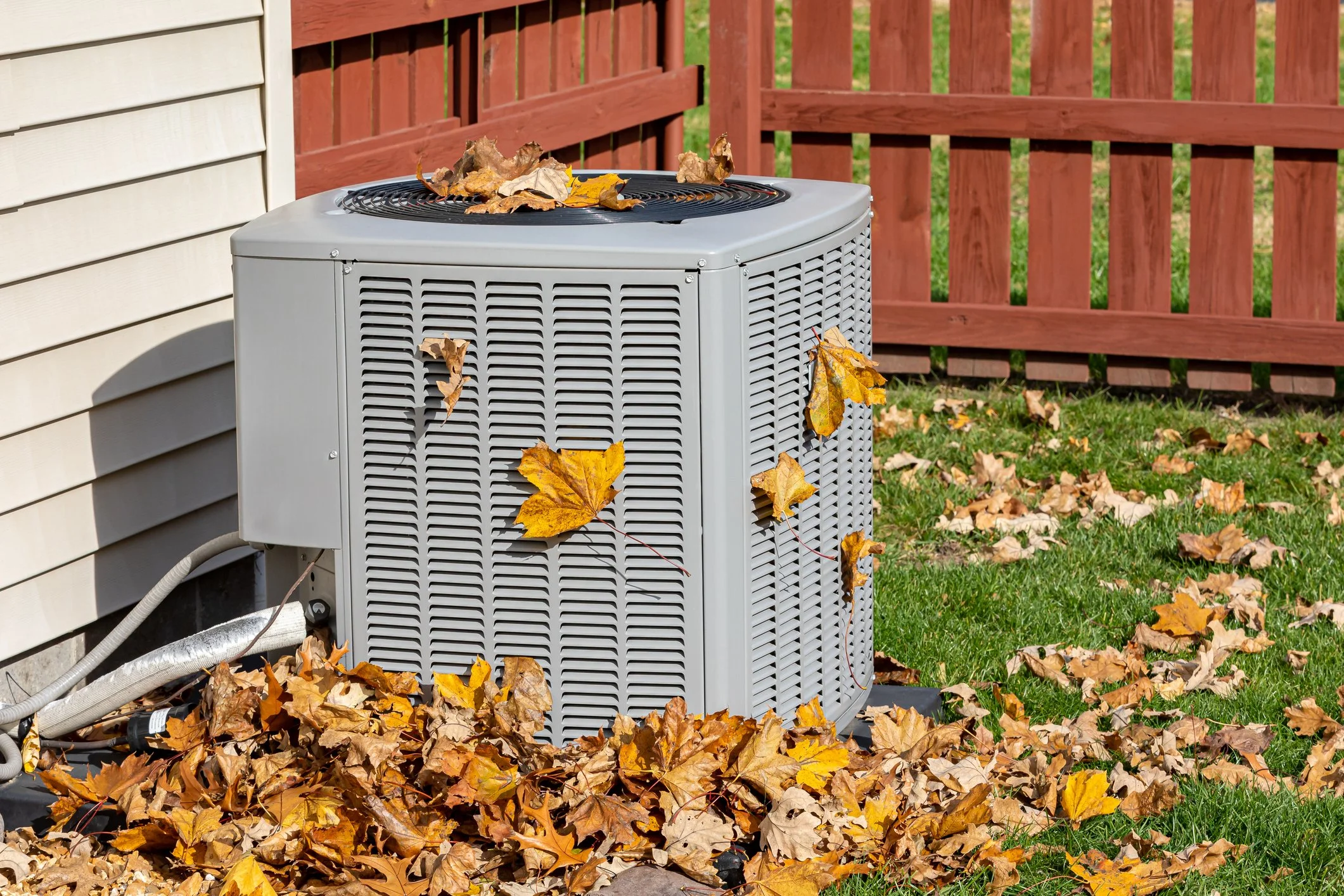
A blocked condenser is a common reason an AC runs but doesn’t cool. J Martin helps Orange County homeowners diagnose airflow problems and restore cooling performance the right way.
Low Refrigerant or a Refrigerant Leak
Refrigerant is the chemical substance that makes cooling possible. It flows through a closed loop between your indoor evaporator coil and outdoor condenser coil, absorbing heat from your home's air and carrying it outside to be released. If your system is low on refrigerant, it physically cannot absorb enough heat to cool your home effectively, no matter how long it runs.
A critical point many homeowners don't realize: refrigerant doesn't get "used up" like gasoline in a car. It circulates in a sealed system indefinitely. If your refrigerant is low, it means there is a leak somewhere, whether in a coil, a fitting, a solder joint, or a connection in the refrigerant line. Simply adding more refrigerant without finding and repairing the leak is like inflating a tire with a nail in it. The refrigerant will eventually leak out again, you'll be right back where you started, and you'll have wasted money in the process.
Signs of a refrigerant leak include warm air blowing from vents despite the system running, ice or frost forming on the refrigerant lines or evaporator coil, a hissing or bubbling sound near the indoor unit, and a system that runs constantly but never reaches the set temperature.
This is absolutely not a DIY repair. Federal law under the EPA's Section 608 regulations requires that only certified technicians handle refrigerant. It's both illegal and dangerous for homeowners to attempt to recharge their own residential AC systems.
Here's what to expect on cost. For systems using R-410A (the standard refrigerant in residential systems manufactured between 2010 and 2024), a recharge typically runs $100 to $320, with the refrigerant itself costing approximately $40 to $90 per pound installed. Most residential systems need two to four pounds per ton of cooling capacity, so a 3-ton system that's completely empty could require six to twelve pounds of refrigerant. Locating and repairing the actual leak adds $200 to $1,500 depending on where the leak is and how severe it is.
One important note for 2026: R-410A is now being phased down under EPA regulations that took effect January 1, 2025. New systems manufactured after that date use next-generation refrigerants like R-454B or R-32, which have a lower global warming potential. Your existing R-410A system can still be serviced and recharged, and R-410A is still available, but prices may begin to rise as supply decreases over the coming years. If you're already facing a major refrigerant-related repair on an older system, it's worth having a conversation with your technician about whether repair or replacement makes more financial sense.
Frozen Evaporator Coils
If your AC is running but blowing warm air, and you notice ice forming on the refrigerant lines or on the indoor unit itself, you're likely dealing with frozen evaporator coils. This happens when the coil's temperature drops below 32 degrees and moisture from the air freezes onto the coil surface. Once ice starts forming, it insulates the coil and blocks airflow, which makes the problem worse in a snowball effect. More ice forms, less air gets through, the coil gets colder, and eventually the entire evaporator can become a solid block of ice.
The most common causes of a frozen evaporator coil are restricted airflow (usually from a dirty filter or blocked return vents), low refrigerant levels from a leak, or a malfunctioning blower fan that isn't moving enough air across the coil. In some cases, running the AC when outdoor temperatures drop into the low 60s at night, which happens in Orange County during spring and fall, can also contribute to freezing.
Here's the immediate DIY step if you suspect frozen coils: turn off the air conditioner at the thermostat. Then switch the fan setting from "Auto" to "On." This keeps the blower running and pushes warm room air across the frozen coil to help it thaw. Do not try to chip the ice off. The coil fins are extremely delicate, and damaging them can cause a refrigerant leak that turns a $0 fix into a $1,000+ repair. The thawing process usually takes two to four hours, sometimes longer for severe ice buildup.
While the coil is thawing, check and replace the air filter. Once the ice has completely melted and you've confirmed the filter is clean, you can restart the system and monitor it. If the coil freezes again within a day or two, the problem is likely low refrigerant or a blower motor issue, and you'll need a professional diagnosis.
A Failing or Dead Capacitor
The capacitor is a small cylindrical component inside your outdoor condenser unit that stores electrical energy and delivers the jolt of power needed to start the compressor and condenser fan motor. Think of it like a battery that gives the motors the initial kick they need to get spinning. When a capacitor fails, one of two things typically happens: either the compressor won't start at all (meaning the system blows air but can't cool), or it tries to start, can't quite get going, and trips the safety switch.
Capacitor failure is especially common in hot climates like Orange County. Sustained high temperatures put extra stress on these components, and they tend to degrade over time. A failing capacitor might cause your AC to make a clicking or humming sound when it tries to start, produce unusual buzzing or humming noises from the outdoor unit, or intermittently fail to cool before the system shuts off entirely.
The good news is that capacitor replacement is one of the least expensive AC repairs. The part itself typically costs $10 to $45, and with professional labor, total replacement runs $150 to $400. An HVAC technician can diagnose a failed capacitor on the spot with a multimeter and usually has common replacement capacitors on their truck, making this a same-visit repair in most cases.
A word of caution: even though capacitors are inexpensive parts, they store a significant electrical charge and can deliver a dangerous or even lethal shock if mishandled. This is not a recommended DIY repair. The risk far outweighs the modest savings of doing it yourself.
Compressor Problems
The compressor is the heart of your air conditioning system. It's the component inside the outdoor unit that pressurizes refrigerant and pumps it through the entire cooling cycle. When the compressor fails or begins to fail, the system may still run (you'll hear the fan, feel air from your vents) but it won't cool because the refrigerant isn't being circulated and pressurized.
Early signs of compressor trouble include the outdoor unit running but producing no cold air, the system short cycling (turning on and off repeatedly in rapid cycles), unusual grinding, clanking, or squealing noises from the outdoor unit, or the circuit breaker tripping repeatedly when the AC tries to start.
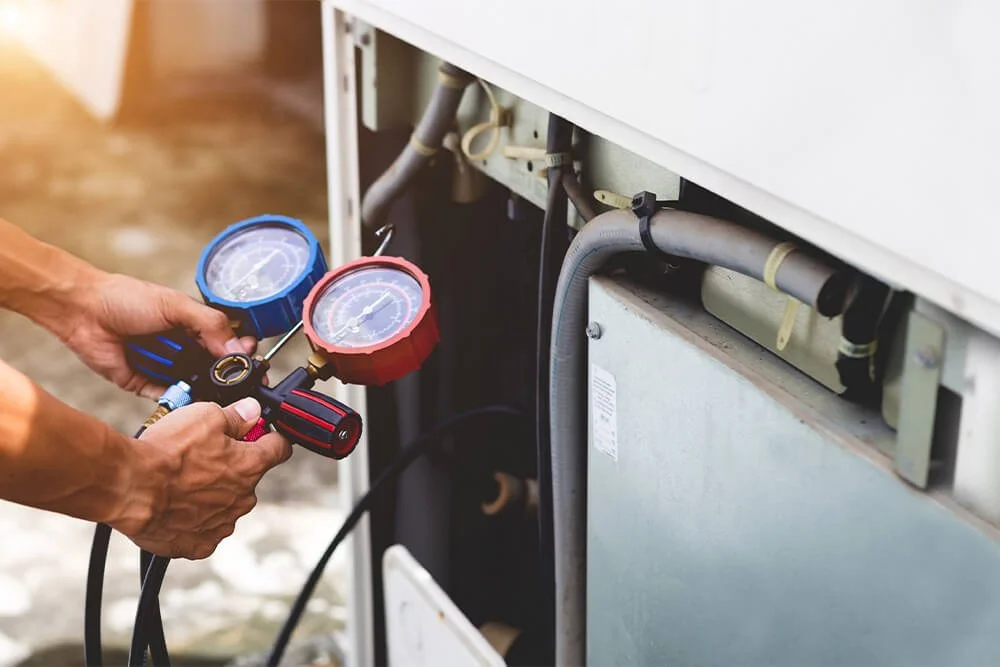
Checking refrigerant levels is one of the first steps in diagnosing an AC that’s running but not cooling. J Martin provides honest AC diagnostics for Orange County homeowners.
Compressor replacement is the most expensive common AC repair. In 2026, homeowners can expect to pay between $1,500 and $3,500 for a compressor replacement including parts and labor, with the average falling around $1,500 to $2,000 for a typical 3-ton residential system. If the compressor is still under the manufacturer's warranty (which often covers the compressor for 5 to 10 years), you'll pay only for labor and refrigerant, which usually runs $600 to $1,200.
Here's the critical decision point: if your system is more than 10 to 12 years old and the compressor fails out of warranty, it almost always makes more financial sense to replace the entire outdoor condensing unit, or the whole system, rather than sinking $2,000+ into a compressor for an aging unit that may develop other problems in the near future. The general rule of thumb in the HVAC industry is that if the repair cost exceeds 50 percent of the price of a new system, replacement is the smarter investment. A new system also comes with a fresh warranty, higher energy efficiency, and uses current-generation refrigerant.
The System Is Undersized for Your Home
Sometimes the AC isn't broken at all. It's simply too small for the space it's trying to cool. An undersized system will run nonstop on hot days and never reach the temperature you've set on the thermostat. It'll keep your house somewhat cooler than the outdoor temperature, but it can't keep up during the peak afternoon heat that Orange County summers deliver.
This problem commonly shows up in homes where an addition or converted garage increased the square footage without a corresponding HVAC upgrade, in homes where the original system was improperly sized during installation, or in older homes with poor insulation where heat gain exceeds the system's cooling capacity.
Proper sizing of an air conditioning system isn't just about square footage. A qualified HVAC technician performs a Manual J load calculation that accounts for your home's square footage, insulation levels, window size and orientation, number of occupants, ceiling height, ductwork conditions, and local climate data. In areas like Yorba Linda and Brea, where afternoon temperatures regularly push above 95 degrees and occasionally top 110 degrees during extreme heat events, the cooling load is significantly higher than what generic sizing charts suggest. A system that was adequate for a home in Portland would be grossly undersized for the same floor plan in inland Orange County.
We see this issue frequently in homes built during the 1960s through 1980s across Anaheim, Fullerton, and Villa Park, where the original HVAC system was sized for the home as originally built. Over the decades, homeowners add room conversions, enclose patios, finish attics, or replace single-pane windows with energy-efficient models that change the thermal dynamics of the house, sometimes for better, sometimes for worse. Each of these changes can shift the cooling load enough that the existing system no longer keeps up.
An oversized system creates its own set of problems, by the way. A unit that's too large for the space will cool the house down so quickly that it shuts off before running long enough to properly dehumidify the air. The result is a home that hits the right temperature on the thermostat but still feels clammy and uncomfortable, a particular issue in Orange County during the more humid late-summer months.
If an undersized system is the root cause, the only real solution is upgrading to a properly sized unit. In some cases, adding a ductless mini-split system to supplement cooling in problem areas (a converted bonus room, a home office over the garage, a master suite at the far end of the house) can address hot spots without replacing the entire central system. Mini-splits are especially effective for zoned comfort in multi-story homes where the upper floor consistently runs warmer than the ground level.
Electrical Issues and Wiring Problems
Air conditioning systems rely on a network of electrical components working in concert: the thermostat sends signals to the control board, which activates contactors that supply power to the compressor and fan motors, which are assisted by capacitors, and all of this is protected by circuit breakers and safety switches. If any link in this chain fails, the system can appear to run while failing to actually cool.
Contactors, the electrical switches that control power flow to the compressor and condenser fan, can become pitted, burned, or stuck over time, especially in the dusty, hot conditions of an Orange County summer. A failing contactor might intermittently fail to deliver power to the compressor, causing the system to blow air without cooling. The control board, which acts as the system's brain, can be damaged by power surges (common during Santa Ana wind events when power grid fluctuations occur), water intrusion, or simple age.
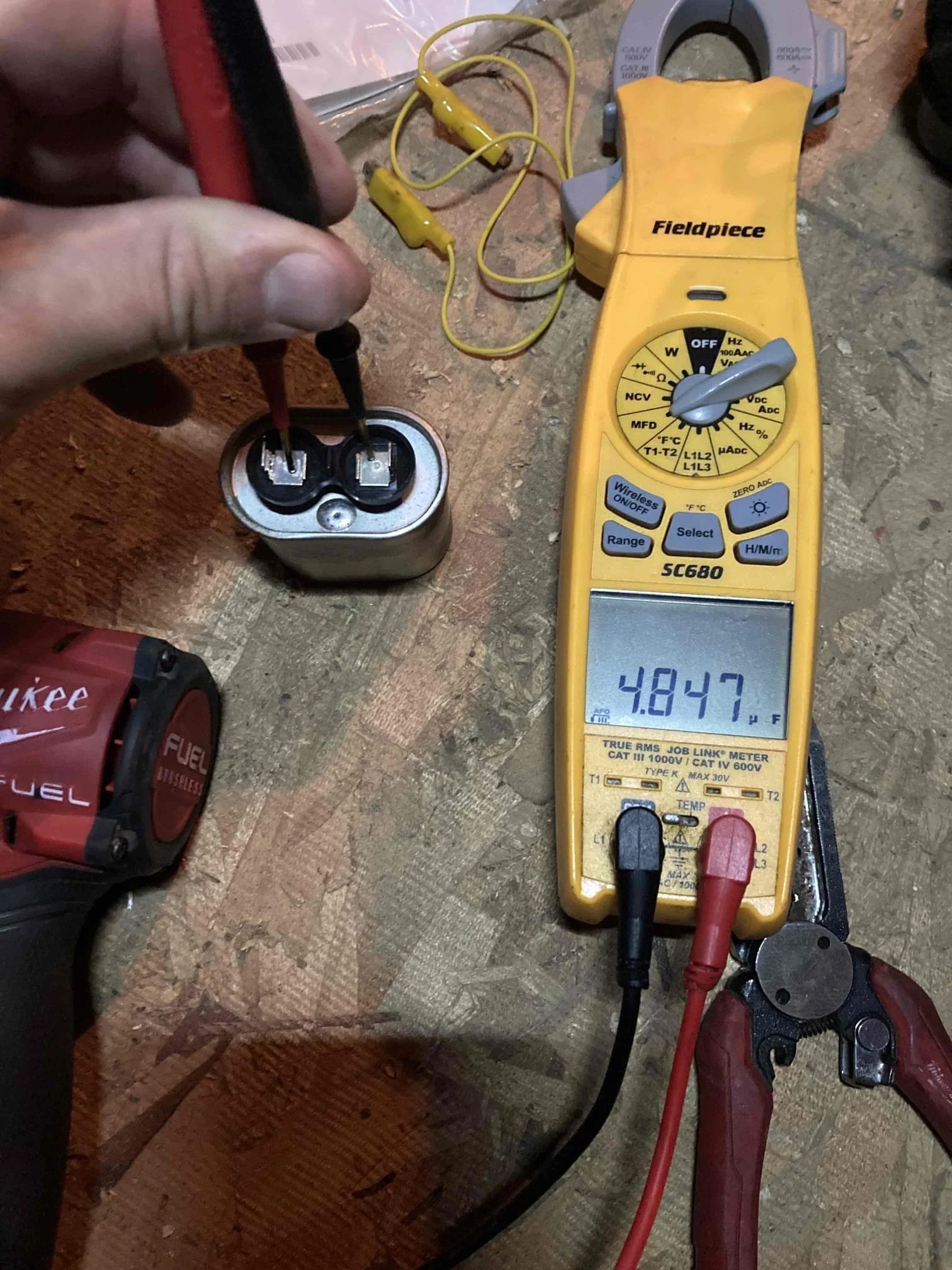
A failing capacitor can keep your AC running but prevent the compressor from starting. If your system is blowing warm air, J Martin offers fast AC diagnostics for Orange County homeowners.
Electrical diagnostics and repairs should always be performed by a licensed HVAC technician. Contactor replacement typically costs $150 to $400, and control board replacement runs $600 to $1,800 depending on the brand and availability of the part. If your system has been behaving erratically, cooling intermittently, shutting off unexpectedly, making clicking sounds, or tripping breakers, these electrical components are often the culprits.
When to Call a Professional vs. What You Can Handle Yourself
Not every AC problem requires a service call, but some absolutely do. Here's a straightforward way to think about it.
You can safely handle these steps on your own: checking and adjusting thermostat settings, replacing the air filter, clearing debris from around the outdoor condenser unit, rinsing the condenser coils with a garden hose, making sure all supply and return vents are open and unobstructed, and checking that the circuit breaker for the AC hasn't tripped (and resetting it once if it has).
Call a professional if you notice ice on the refrigerant lines or evaporator coil that returns after thawing, the outdoor unit makes grinding, screeching, or banging noises, the system short cycles (turns on and off every few minutes), you detect a hissing or bubbling sound near the indoor unit suggesting a refrigerant leak, the circuit breaker trips repeatedly when the AC tries to start, or the system runs continuously for hours without reaching the set temperature even after you've checked the filter and thermostat.
If your AC stops working entirely during a heat wave and indoor temperatures are climbing into dangerous territory, particularly if you have elderly family members, young children, or pets in the home, don't hesitate to call for emergency AC repair. Heat-related illness is a genuine health risk, and most reputable HVAC companies offer same-day or next-day service for urgent situations.
What AC Repairs Typically Cost in 2026
One of the biggest sources of anxiety when your AC stops cooling is not knowing what the repair will cost. Here's a realistic breakdown of the most common repairs associated with a system that runs but doesn't cool, based on current 2026 industry data.
A diagnostic service call to have a technician evaluate the problem typically costs $75 to $200, and many companies will apply this fee toward the cost of the repair if you proceed with the work. Capacitor replacement, one of the most common and affordable fixes, runs $300 to $600 total. Refrigerant recharge with R-410A costs $100 to $320 for a partial top-off, with the refrigerant itself priced at roughly $100 to $300 per pound installed. Leak detection and repair adds $200 to $1,500 depending on the severity and location of the leak. Condenser fan motor replacement ranges from $600 to $1,500. Evaporator coil replacement, which is a more significant repair, costs $600 to $2,000 if the unit is still under parts warranty and $1,000 to $2,500 or more if the warranty has expired. And compressor replacement, the most expensive common repair, ranges from $1,500 to $3,500 with the average around $1,200 to $2,000.
Emergency and after-hours repairs generally carry a premium, often 1.5 to 2 times the standard rate. This is another reason preventive maintenance matters. Catching small issues during a routine spring tune-up is far less expensive than dealing with a catastrophic failure at 4 PM on the hottest Saturday in July when every HVAC company in Orange County has a packed schedule.
For a deeper dive into repair pricing and the repair-versus-replace decision, check out our complete guide on AC repair costs in Orange County.
Preventing This Problem Before It Starts
The most effective way to avoid the "AC running but not cooling" scenario is consistent preventive maintenance. An annual professional tune-up in the spring, before you need the system at full capacity, gives a technician the opportunity to check refrigerant levels, inspect electrical connections, clean coils, test capacitors, verify thermostat calibration, and catch wear-and-tear issues before they become mid-summer breakdowns.
Between professional visits, the single most impactful thing you can do is stay on top of filter changes. A clean filter keeps airflow steady, protects the evaporator coil, reduces strain on the blower motor, and helps prevent frozen coils. Set a recurring reminder on your phone every 30 to 60 days during cooling season. It takes two minutes and costs less than $20.
Keep the area around your outdoor condenser unit clear, run the system periodically during the off-season to keep components lubricated and functional, and pay attention to changes in performance. A system that gradually takes longer to cool your house, produces less airflow, makes new sounds, or drives up your energy bills is trying to tell you something. Catching it early is almost always cheaper than waiting for a complete failure.
Need Help? We're Here for Orange County Homeowners.
At J Martin Indoor Air Quality, we've spent 15 years helping families across Yorba Linda, Anaheim, Brea, Fullerton, and Villa Park keep their homes comfortable through every Orange County summer. We're a family-owned company with a 4.97-star average rating across more than 5,000 customers, and we don't work on commission, which means our technicians are focused on solving your problem honestly, not upselling you on repairs you don't need.
If your AC is running but not cooling and the DIY steps in this guide haven't resolved the issue, give us a call at (714) 462-4686. We offer same-day service for urgent cooling problems, transparent pricing before any work begins, and the kind of straightforward, no-pressure experience that's kept Orange County families coming back to us for over a decade.
J Martin Indoor Air Quality (714) 462-4686 | Services