
HVAC Tax Credits in 2026: What Orange County Homeowners Can Actually Claim
Posted on September 24, 2026
Federal HVAC tax credits expired on December 31, 2025, which means Orange County homeowners installing new equipment in 2026 cannot claim a federal credit on a new install. If your qualifying system was installed and placed in service by that deadline, you can still claim up to $3,200 in federal credits on your 2025 tax return filed this year. For 2026 installations, California state and utility rebates ranging from roughly $100 to $8,000 are what is left to offset replacement costs.
That is the short version. The longer version matters because the rules changed twice in three years, and most of the homeowners we talk to in Orange County have not caught up. The Inflation Reduction Act extended these credits through 2032 in 2022. The One Big Beautiful Bill Act (Public Law 119-21), signed July 4, 2025, terminated them seven years early. If you have been searching for "hvac tax credit 2026" and getting outdated articles, that gap between what the IRA promised and what actually exists is the reason. Our air conditioning installation team handles a steady stream of these conversations every week.
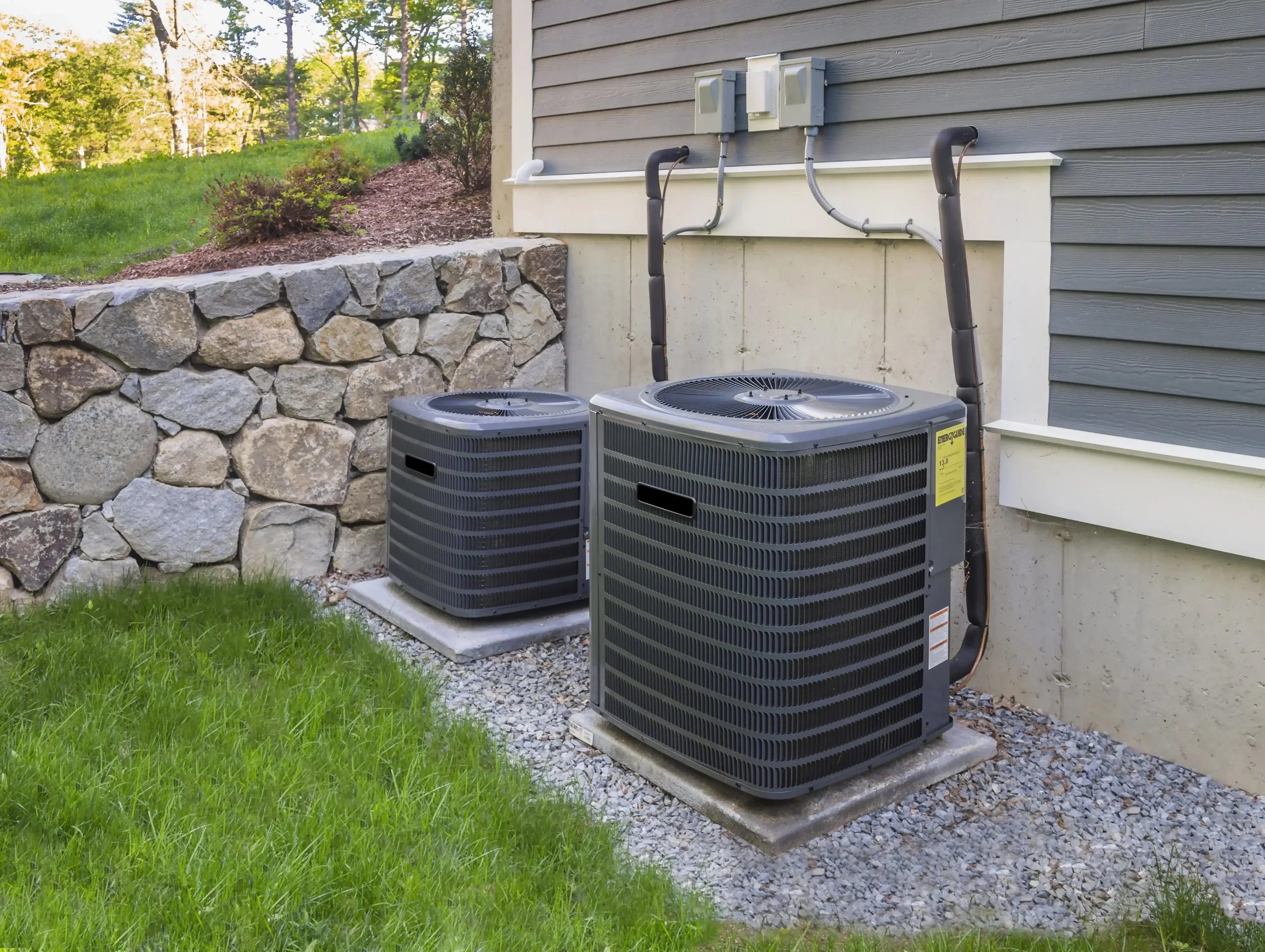
Every J Martin install includes in-house rebate filing, no extra fee, no extra step for you. Our Anaheim Hills customers get their SCE or SoCalGas paperwork handled the same week their system is commissioned.
Since 2014, our team has watched HVAC incentives expand, contract, and reset. When the IRA passed, our techs Jesus and Kevin helped Yorba Linda and Anaheim Hills families stack federal credits with SCE rebates to bring real heat pump replacement costs down by $4,000 to $5,000 per project. The same families who beat the December 31, 2025 deadline are the ones we are now helping file Form 5695 with their CPAs. For homeowners shopping in 2026, the math is different but not zero. We are going to walk through every credit and rebate that still works, what the qualifying thresholds were and are, and where the real savings live now that the federal door has closed. Want a quick read on the 2026 install economics before going further? Our 2026 Orange County HVAC replacement cost breakdown has current pricing and equipment options.
Quick Answer
Federal Section 25C and Section 25D tax credits expired on December 31, 2025. If your qualifying HVAC equipment was installed and placed in service by that date, you can still claim up to $3,200 in federal credits on your 2025 federal tax return (up to $2,000 for a heat pump, plus up to $1,200 for AC, furnace, insulation, audits, doors, and windows combined) when you file by April 15, 2026, or by October 15, 2026 with an extension. For HVAC installed in 2026, the federal credit is gone, but California programs and utility rebates from SCE, SoCalGas, and Anaheim Public Utilities can total $1,000 to $8,000 depending on equipment type, household income, and ZIP code.
What Happened to the Federal HVAC Tax Credit
The headline most homeowners missed: the One Big Beautiful Bill Act, signed into law on July 4, 2025, terminated the Energy Efficient Home Improvement Credit (Section 25C) and the Residential Clean Energy Credit (Section 25D) for property placed in service after December 31, 2025. The Inflation Reduction Act of 2022 had extended both credits through 2032. OBBBA reversed that extension and pulled the deadline forward by seven years.
Section 25C is the credit most homeowners think of when they hear "HVAC tax credit." It covered air-source heat pumps, central air conditioners, gas furnaces and boilers, electric panel upgrades, insulation and air sealing, exterior doors and windows, and home energy audits. Section 25D covered geothermal heat pumps, residential solar, solar water heating, fuel cells, and battery storage. Both credits worked the same way at the homeowner level: they reduced what you owed on your federal tax return, dollar for dollar, in the year the equipment was placed in service.
The IRS published official guidance on the OBBBA changes in a 2025 FAQ titled "FAQs for modification of sections 25C, 25D, 25E, 30C, 30D, 45L, 45W, AND 179D under Public Law 119-21." That guidance is the source homeowners and CPAs are working from in 2026. It confirms two things that matter most: equipment placed in service on or before December 31, 2025 still qualifies under the pre-OBBBA rules, and equipment placed in service on or after January 1, 2026 does not qualify for either credit.
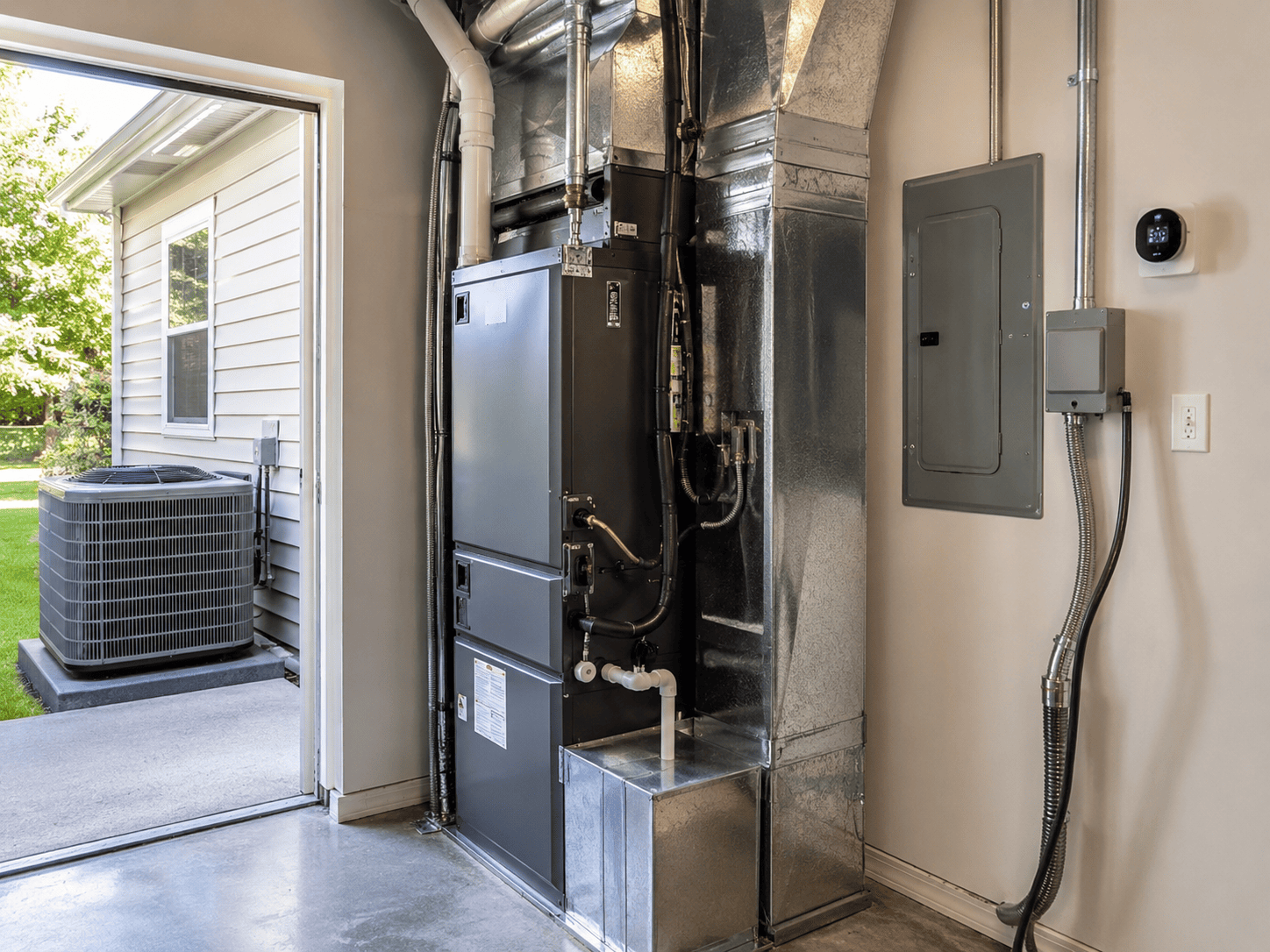
Most homeowners don't think about the electrical panel until we point it out. Going electric with a heat pump sometimes means a panel upgrade too, and we walk you through whether yours needs one before we quote the job.
"Placed in service" is the key phrase. It means the equipment is installed, operational, and being used as intended at the property. A signed contract dated December 2025 does not qualify equipment if the install actually finished in January 2026. The IRS looks at the install date on the invoice and the date the system was commissioned. Our office staff Kathryn and Alexis pulled hundreds of customer invoices in the final two weeks of December last year specifically to verify install dates for homeowners who needed proof for their 2025 returns.
The One Big Beautiful Bill Act, Public Law 119-21, terminated both Section 25C and Section 25D credits for HVAC and clean energy property placed in service after December 31, 2025, ending the Inflation Reduction Act's extension seven years early.
If You Installed HVAC in 2025, Here Is What You Can Still Claim
The 2025 version of Section 25C had a $3,200 annual cap, split into two sub-caps. The first sub-cap was $2,000 per year for qualified heat pumps and heat pump water heaters. The second sub-cap was $1,200 per year for everything else, with internal limits inside that $1,200 envelope. The credit was 30% of qualifying costs (equipment plus installation labor for heat pumps, equipment only for most other categories), up to those caps.
The qualifying thresholds for southern-region installs (which includes all of Orange County) were not casual. Heat pumps had to hit SEER2 ≥ 16, EER2 ≥ 12, and HSPF2 ≥ 9 for split ducted systems, plus ENERGY STAR Most Efficient certification. Central AC split systems had to hit SEER2 ≥ 17 and EER2 ≥ 12. Gas furnaces had to hit AFUE ≥ 97%. SEER2 (the federal cooling efficiency standard updated in 2023) replaced the older SEER metric and is what every qualifying piece of 2025 equipment was rated against.
Last December, Kevin installed a Daikin Fit ducted heat pump for a Brea family that had spent six months deciding whether to replace their 1998 gas furnace and AC at the same time. They went all-electric. The system met the heat pump qualifying thresholds with room to spare. We handed them their AHRI Reference Number, the manufacturer's PIN, the install invoice with the December 19 commissioning date, and a one-page summary their CPA used to fill out Form 5695. The $2,000 heat pump credit landed on their 2025 return. They are using that money to fund the new attic insulation we recommended for next winter.
2025 Federal Section 25C Tax Credit Caps by Equipment Type (for Equipment Placed in Service On or Before December 31, 2025)
| Equipment | Maximum Credit | Required Efficiency (Southern Region) |
|---|---|---|
| Air-source heat pump (split, ducted) | $2,000 | SEER2 ≥ 16, EER2 ≥ 12, HSPF2 ≥ 9, ENERGY STAR Most Efficient |
| Heat pump water heater | Counts toward the $2,000 heat pump sub-cap | ENERGY STAR certified |
| Central air conditioner (split) | $600 | SEER2 ≥ 17, EER2 ≥ 12 |
| Central air conditioner (packaged) | $600 | SEER2 ≥ 16, EER2 ≥ 11.5 |
| Gas furnace or boiler | $600 | AFUE ≥ 97% |
| Electric panel upgrade | $600 | 200-amp minimum, supports new electric load |
| Insulation and air sealing materials | $1,200 (combined sub-cap) | Meets IECC standards in effect 2 years before install |
| Home energy audit | $150 | Conducted by a qualified home energy auditor |
| Annual maximum (all categories) | $3,200 ($2,000 heat pump + $1,200 other) | Applies per taxpayer per year |
To actually claim the credit on a 2025 return, your CPA (or your tax software) needs three things from you. First, the AHRI matching certificate that proves the indoor and outdoor units of your system together meet the qualifying efficiency thresholds. Second, the manufacturer Product Identification Number, or PIN, which became a federal requirement starting with 2025 installations. Third, the invoice showing the install date on or before December 31, 2025. Form 5695 is where the credit is calculated. The total flows onto Schedule 3 of Form 1040.
One important constraint: the Section 25C credit is nonrefundable, and unlike its sibling credit, it cannot be carried forward to future tax years. If your 2025 federal tax liability is smaller than the credit you earned, the unused portion is permanently lost. Homeowners with low federal tax liability sometimes find that their actual benefit is smaller than the headline $3,200. A quick check with your CPA before filing avoids surprises. If you have not yet filed your 2025 return, the original deadline was April 15, 2026, with an extension available to October 15, 2026.
Geothermal Heat Pumps and the 25D Carryforward
The Residential Clean Energy Credit (Section 25D) covered ground-source (geothermal) heat pumps along with solar electric, solar water heating, fuel cells, and battery storage. For 2025 installs, the credit was 30% of qualifying costs with no annual cap. A $30,000 geothermal install yielded a $9,000 federal credit. Like 25C, it was terminated by OBBBA for property placed in service after December 31, 2025.
Geothermal is rare in Orange County (most yards do not justify the loop field cost), but where it makes sense, the 25D credit was the most generous federal incentive in the entire residential energy code. Two of the families we worked with on geothermal projects in Anaheim Hills before the deadline received credits north of $10,000 each.
Section 25D has one feature 25C does not: any unused credit can be carried forward indefinitely. If your federal tax liability in 2025 was smaller than the geothermal credit you earned, the IRS lets you apply the leftover credit to 2026, 2027, and beyond until it is fully used or until the underlying property is sold. That carryforward provision survived OBBBA. Homeowners with leftover 25D credit from a 2025 install will continue claiming it on Form 5695 in future tax years even though the credit itself is no longer being earned by new installations. This is one of the few federal HVAC-adjacent benefits still in play for 2026 filers.
If you installed solar in 2025 alongside an electric upgrade for a heat pump, both pieces flow into 25D, and any unused portion follows you forward.
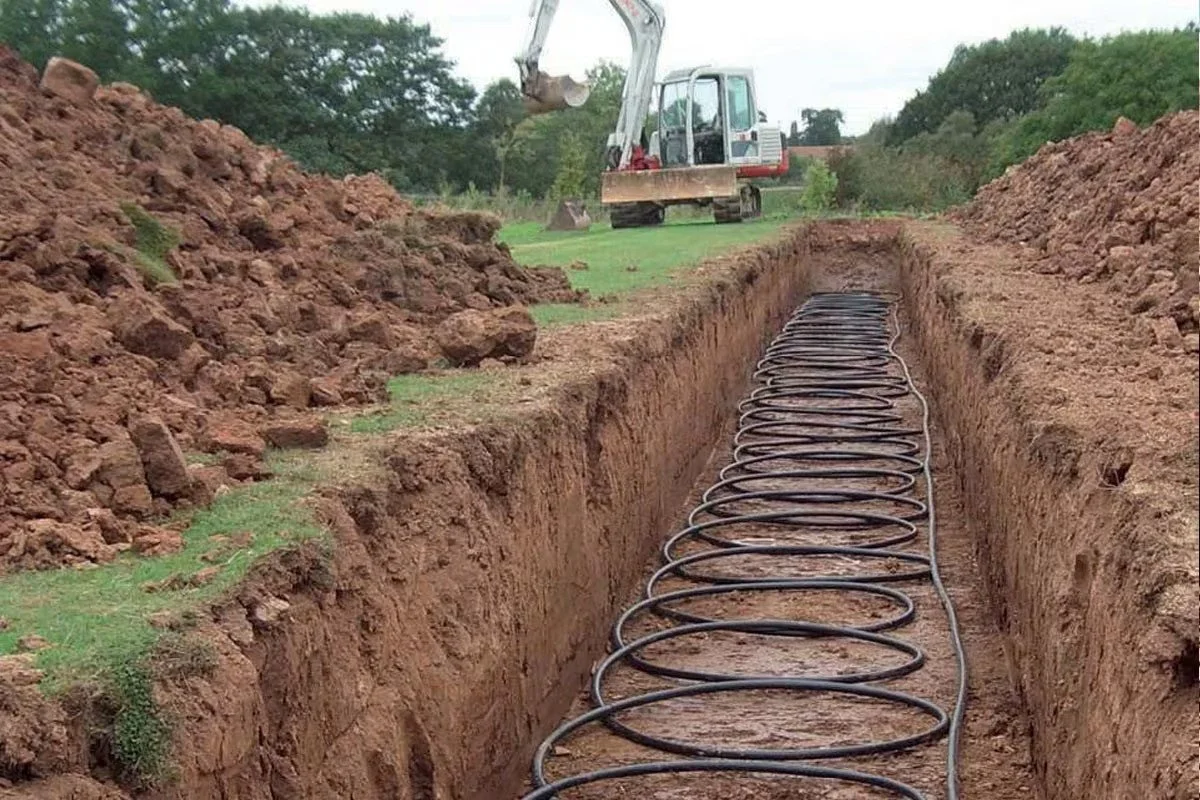
Installed geothermal before December 31, 2025? Your Section 25D credit doesn't expire with the rest, unused amounts carry forward. Ask your CPA, or call J Martin: (714) 462-4686.
What 2026 Installations Get Instead: California's Rebate Stack
The federal door is closed for 2026 installs, but California's stack is the second answer to "hvac tax credit 2026." None of these are tax credits in the strict IRS sense. They are state and utility rebates that arrive as direct payments or invoice deductions, which means they show up faster and do not depend on tax liability. They also fluctuate with funding cycles, and 2026 has been a tough year for funding. A snapshot of the major California programs as of May 2026:
The complete California rebate landscape is changing fast. The High-Efficiency Electric Home Rebate Act (HEEHRA), administered statewide through TECH Clean California, was the most generous heat pump rebate in the state for income-qualified households. As of February 24, 2026, HEEHRA single-family rebates are fully reserved across California, and the program is no longer accepting new income verification applications for single-family projects. Reservation requests submitted after January 7, 2026 are placed on a waitlist that will be processed only if Phase II funding becomes available. Phase II has been announced but no firm timeline is confirmed.
TECH Clean California's broader single-family heat pump HVAC and heat pump water heater incentives followed a similar arc. As of November 14, 2025, those single-family incentives are also fully reserved and not accepting new reservations. Multifamily projects still have funding in some regions, which matters for landlords and HOA-managed properties in places like Irvine and Mission Viejo, but does not help most single-family homeowners.
The California Energy Smart Homes program (CAESH) hit the same wall later in the year. Effective April 20, 2026, incentive and bonus funding for 2026 is fully subscribed.
The HOMES program, which the California Energy Commission launched in late 2025, is the surviving statewide option for whole-home retrofits in 2026. Rebates are based on modeled or measured energy savings, with up to $8,000 for low-income households and up to $4,000 for moderate-income households. To qualify for the higher tier, the retrofit needs to demonstrate measurable energy savings (typically 35% or more), which usually means combining heat pump HVAC with insulation, air sealing, and sometimes a heat pump water heater. HOMES funding is rolling out region by region, so Orange County availability has lagged some Northern California counties. Our team has been tracking county-level HOMES launches because the program is the only state path that still reliably produces a four-figure rebate for a single-family heat pump retrofit in May 2026.
California's biggest single-family heat pump rebate programs (HEEHRA, TECH, CAESH) are fully reserved or waitlisted for 2026. The HOMES program is the surviving statewide path, with up to $8,000 for low-income households and up to $4,000 for moderate-income households on whole-home retrofits.
Utility Rebates That Still Have Funding in Orange County
While the state programs have hit capacity, the three utilities that serve Orange County homes (Southern California Edison, SoCalGas, and Anaheim Public Utilities for the City of Anaheim) still have active rebate budgets in May 2026. These programs do not require income verification in most cases. They pay smaller amounts than HEEHRA would have, but they pay reliably and quickly.
Southern California Edison currently offers $1,000 per qualifying heat pump HVAC system installation, with up to two systems per home for a $2,000 maximum rebate. SCE customers can stack this rebate with manufacturer instant rebates and with the GoGreen financing program described below. SCE also runs Home Performance Plus for residents in designated disadvantaged communities, which adds no-cost home energy assessments and additional appliance rebates on top of the heat pump rebate.
SoCalGas, which serves natural gas to most Orange County homes, focuses its rebates on gas equipment. The current furnace rebate runs up to $25 per kBtuh for ENERGY STAR-certified gas furnaces. A typical 80,000 BTU furnace serving an Anaheim Hills two-story would yield a $2,000 SoCalGas rebate at the maximum tier. The exact amount depends on AFUE rating; the highest payouts go to 95% AFUE and above. SoCalGas does not pay rebates for fully electric heat pumps that replace a gas furnace. That asymmetry pushes some homeowners toward dual-fuel hybrid systems (heat pump + small backup gas furnace), which can capture both the SCE heat pump rebate and the SoCalGas furnace rebate on a single project.
Anaheim Public Utilities, the municipal utility for the City of Anaheim, has its own rebate stack. APU's residential heat pump replacement program offers incentives for high-efficiency replacements, plus an A/C tune-up rebate of $100 ($150 for income-qualified customers). APU customers can reach the rebate desk at 714-408-4161 to confirm current amounts, since municipal programs adjust annually. Customers in Anaheim and Anaheim Hills neighborhoods served by APU get a stack that is unique to that ZIP code group. Customers in the rest of Orange County (most of Anaheim Hills, all of Yorba Linda, Brea, Fullerton, Placentia, Newport Beach, Irvine, and the south county cities) buy power from SCE and use the SCE rebates instead.
2026 Orange County Utility HVAC Rebate Snapshot (as of May 2026, subject to funding availability)
| Utility | Heat Pump HVAC Rebate | Furnace Rebate | AC Tune-Up Rebate |
|---|---|---|---|
| Southern California Edison (SCE) | $1,000 per system, up to 2 systems ($2,000 max) | Not offered (gas equipment is SoCalGas territory) | Limited, varies by program |
| SoCalGas | Not offered (natural gas utility only) | Up to $25 per kBtuh for ENERGY STAR furnaces (typically 95%+ AFUE) | Not offered |
| Anaheim Public Utilities (APU) | Variable; check current amount with APU | Limited; check current amount with APU | $100 standard, $150 income-qualified |
For an SCE customer in Yorba Linda replacing a 17-year-old gas furnace and AC with a Daikin or Mitsubishi heat pump in 2026, the realistic utility-rebate stack is $1,000 (SCE heat pump rebate) plus whatever instant rebates the manufacturer is running that quarter. That is a real four-figure offset on a project that runs $14,000 to $22,000 installed. Our team has been quoting more heat pump vs gas furnace replacement projects in Orange County this yearbecause the utility-side math still works even without the federal credit.
GoGreen Home Energy Financing: The 0% Interest Option
Tax credits and rebates reduce the sticker price of a project. Financing changes the monthly cost. The California State Treasurer's Office runs a program called GoGreen Home Energy Financing that uses public funds to buy down interest rates at participating credit unions and banks. For most borrowers, GoGreen offers loans in the 3.48% to 8.12% range, which is significantly below typical home improvement loan rates in 2026. For low-income households located in designated disadvantaged communities, GoGreen offers a 0% interest rate buydown specifically for projects that include a heat pump for HVAC or water heating. The 0% rate is not theoretical. It launched in April 2025 and is funded through 2026 budget cycles.
The qualifying ZIP code matters as much as the income threshold. CalEnviroScreen, the state's environmental justice mapping tool, identifies disadvantaged communities census tract by census tract. Several Anaheim, Santa Ana, and parts of Fullerton census tracts qualify. A homeowner in one of those tracts who installs a heat pump can finance the project at 0% over a long enough term (often 10 to 15 years) that the monthly payment becomes lower than the projected SCE bill savings, which makes the project cash-flow positive from month one. We do not run the financing ourselves. We hand customers the GoGreen-participating lender list and walk them through the application alongside our quote.
Even for borrowers who do not qualify for the 0% buydown, GoGreen rates beat most credit-card-funded HVAC projects by a wide margin. Treating the financing program as part of the rebate stack rather than a separate consideration is one of the higher-leverage decisions a 2026 homeowner can make.
How to Stack What Is Left in Orange County (A 2026 Strategy)
The federal floor is gone, but the stack is not zero. For most Orange County homeowners replacing aging HVAC equipment in 2026, the practical path looks like this. Start by confirming which utility serves your home: SCE for most of the county, APU for parts of the City of Anaheim, and SoCalGas for natural gas everywhere except the few all-electric cities. Your rebate stack depends on that pairing.
If you are leaning electric (a heat pump), the SCE $1,000 per system rebate is the starting point. Layer in any current manufacturer instant rebate from Daikin, Mitsubishi, Carrier, or Lennox. Check whether your ZIP code qualifies for HOMES (low or moderate income) for an additional $4,000 to $8,000 on a whole-home retrofit. Apply for GoGreen financing if you qualify for the 0% buydown. The total offset on a typical $18,000 to $24,000 heat pump project in Anaheim Hills or Yorba Linda often lands between $1,000 and $9,000, depending on income, ZIP code, and equipment selection.
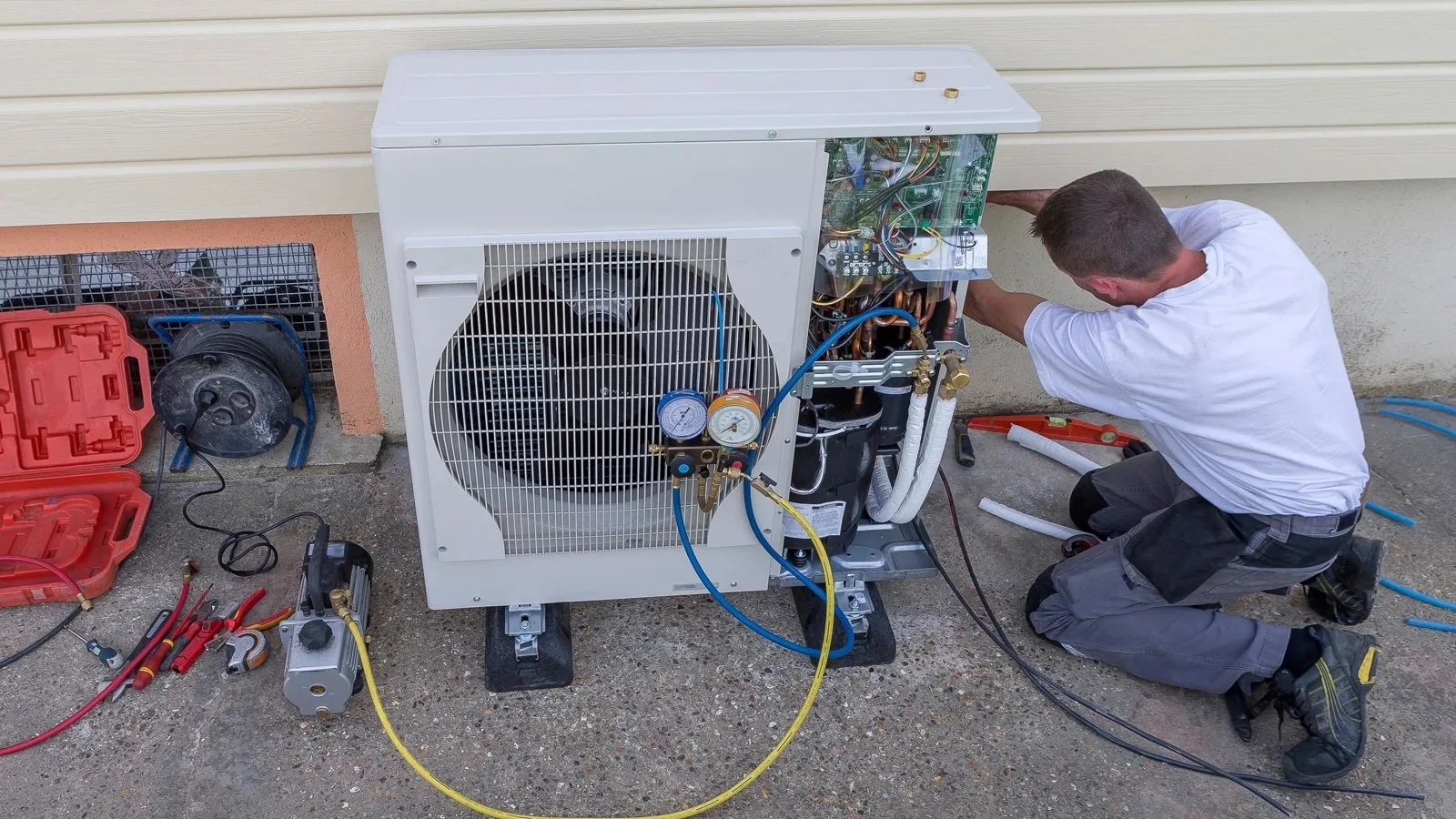
A heat pump install is more than swapping boxes. Refrigerant lines, wiring, controls, it all has to be right before we ever get to the rebate paperwork. That's the part homeowners don't usually see.
If you are staying with gas (high-efficiency gas furnace plus high-SEER2 AC), your stack runs through SoCalGas (up to $25 per kBtuh for the furnace) and any current AC manufacturer rebate. SCE does not pay for gas equipment, but it will still pay rebates on the AC if you choose certain qualifying high-efficiency models. The total offset is smaller than the electric path but real.
If you are doing a hybrid dual-fuel system (heat pump as the primary, small backup gas furnace), you can sometimes capture both the SCE heat pump rebate and the SoCalGas furnace rebate on the same project. Whether that combined offset beats a pure heat pump install depends on equipment cost and the specific rebate amounts active that quarter.
Two practical notes about contractor eligibility. First, most California utility rebates require the installing contractor to hold an active Contractors State License Board (CSLB) license. Our license number is CL#998956. Anything we install is eligible for rebate review on that ground alone. Second, many rebate programs require submission of the AHRI matching certificate within 30 to 60 days of install, plus proof of permit and inspection. We file rebate paperwork in-house for our customers as part of the install package; this is not a separate service or fee. Most of our 2026 Yorba Linda installs have included rebate filing the same week the system is commissioned.
The bigger picture for 2026: federal credits are gone, state heat pump money is mostly on a waitlist, but utility rebates and GoGreen financing remain real and available. For more help thinking through whether to repair, replace, or upgrade given the 2026 incentive landscape, our team and our heat pump installation service page are the fastest way to get current numbers for your specific home. Or call our office at (714) 462-4686 and Kathryn or Alexis can route your question to the right tech.
Frequently Asked Questions
Can I still claim the federal HVAC tax credit in 2026?
No federal HVAC tax credit applies to equipment installed and placed in service in 2026. The Section 25C and Section 25D credits were both terminated by the One Big Beautiful Bill Act for property placed in service after December 31, 2025. Homeowners who installed qualifying equipment on or before that date can still claim the credit on their 2025 federal return filed in 2026.
What if my system was installed in late December 2025 but the final inspection happened in January 2026?
The IRS uses the "placed in service" date, which is the date the equipment is installed, operational, and being used as intended at the property. If the install was completed and the system was running in December 2025, you generally qualify under the 2025 rules even if a separate jurisdictional inspection happened in January. Your invoice and the commissioning date are the documentation the IRS looks at. Confirm specifics with your CPA, and keep the install date paperwork.
How do I prove my 2025 system met the federal efficiency requirements?
You need three documents to defend the credit if the IRS asks. The AHRI matching certificate proves your indoor and outdoor units together hit the qualifying SEER2, EER2, and HSPF2 numbers. The manufacturer Product Identification Number (PIN) became a 25C requirement starting with 2025 installs. The install invoice shows the placed-in-service date. Your installing contractor should be able to hand you all three. We file these in our customer records by default, so any J Martin install from 2025 is already documented.
What is the difference between a tax credit and a rebate?
A tax credit reduces your federal tax liability dollar for dollar in the year you claim it. A rebate is a direct payment or invoice deduction that arrives separately, often within weeks of install. Tax credits depend on having enough federal tax liability to absorb them; nonrefundable credits like Section 25C are lost if your liability is too small. Rebates pay regardless of your tax situation. Most California state and utility programs are rebates, not credits.
Are California state heat pump rebates still available in 2026?
The biggest single-family programs (HEEHRA, TECH Clean California, and California Energy Smart Homes) are fully reserved as of May 2026. Waitlists exist for HEEHRA Phase II, but no firm timeline has been announced. The HOMES program for whole-home retrofits is still accepting applications in some Orange County areas, with up to $4,000 for moderate-income households and up to $8,000 for low-income households on retrofits that demonstrate measurable energy savings.
Does SCE pay rebates directly to me or to my contractor?
SCE residential rebates are typically paid as a check directly to the customer of record on the electric account, not to the installing contractor. The contractor submits the rebate paperwork on your behalf, and SCE mails the check to the address on file once the application is reviewed and approved. Approval generally takes 4 to 8 weeks from submission. We track every customer rebate submission to confirm payment landed.
What is the SoCalGas rebate worth on a typical Anaheim Hills furnace replacement?
For an 80,000 BTU 96% AFUE ENERGY STAR-certified gas furnace replacing an older unit in Anaheim Hills, the SoCalGas rebate at the highest tier of $25 per kBtuh comes out to $2,000. Lower-tier ENERGY STAR furnaces pay less. The exact payout depends on the model's certification and whether SoCalGas's program tiers have shifted since the rebate was last published. Confirm the current tier with SoCalGas before counting on a specific dollar amount.
Will federal HVAC tax credits ever come back?
Possibly, but not on any announced timeline as of May 2026. Legislation can restore or replace expired credits at any time, but the One Big Beautiful Bill Act is recent and federal energy policy is unsettled. Homeowners deciding whether to wait should weigh the certain cost of an uncomfortable home and an aging system against an uncertain future credit. Most of the homeowners we are quoting in 2026 are deciding to move forward using the utility rebate stack rather than waiting indefinitely.
Get the 2026 Numbers for Your Specific Orange County Home
The 2026 HVAC tax credit picture is honestly worse than the 2025 picture. We are not going to pretend otherwise. Federal credits ended on December 31, 2025, and most of the state heat pump rebate money is on a waitlist. What is still here (utility rebates from SCE, SoCalGas, and Anaheim Public Utilities, plus GoGreen 0% financing for qualifying ZIP codes) is real but smaller than what was available a year ago. The right question for most Orange County homeowners replacing equipment in 2026 is not "what tax credit can I get" but "what does the project cost net of every rebate and financing option I qualify for, and is that better than running my failing system another summer."
J Martin Indoor Air Quality has served Orange County families since 2014. Licensed and bonded under California Contractor License CL#998956, with a 4.97-star rating across thousands of reviews. When you call, you reach Kathryn or Alexis at our Anaheim office, not a national call center. Our techs Jesus, Jack, Angel, Irvin, Kevin, Tony, Christian, Rex, Carlos, Santiago, and Joel are full-time, not subcontracted. We file rebate paperwork in-house as part of the install package, so the rebate work happens whether the homeowner remembers to ask or not.
For a no-pressure conversation about what your 2026 replacement options look like, including the current utility rebate stack and an honest read on whether repair or replacement makes sense for your specific system, call us at (714) 462-4686 or request a free in-home consultation. If your project is straightforward and you want to see current pricing first, our air conditioning installation page has 2026 ranges for the most common system types in Orange County.