
How to Keep Energy Bills Down While Actually Staying Comfortable This Winter
Updated on May 24, 2026
Every winter, the advice is the same: turn down your thermostat and wear a sweater. That's great if you want to save $15 a month while shivering in your own home. But what if you could cut your heating costs significantly without being uncomfortable, whether through a smart thermostat in your Orange County home, better insulation, or system upgrades that pay for themselves? What if the real savings aren't about freezing yourself out but about making smarter decisions that work with your system instead of against it?
Here's the truth: energy savings and comfort aren't opposites. They work together when you understand how your heating system actually operates and where you're wasting money without realizing it. Let's skip the gimmicks and focus on what actually works for Orange County homes.
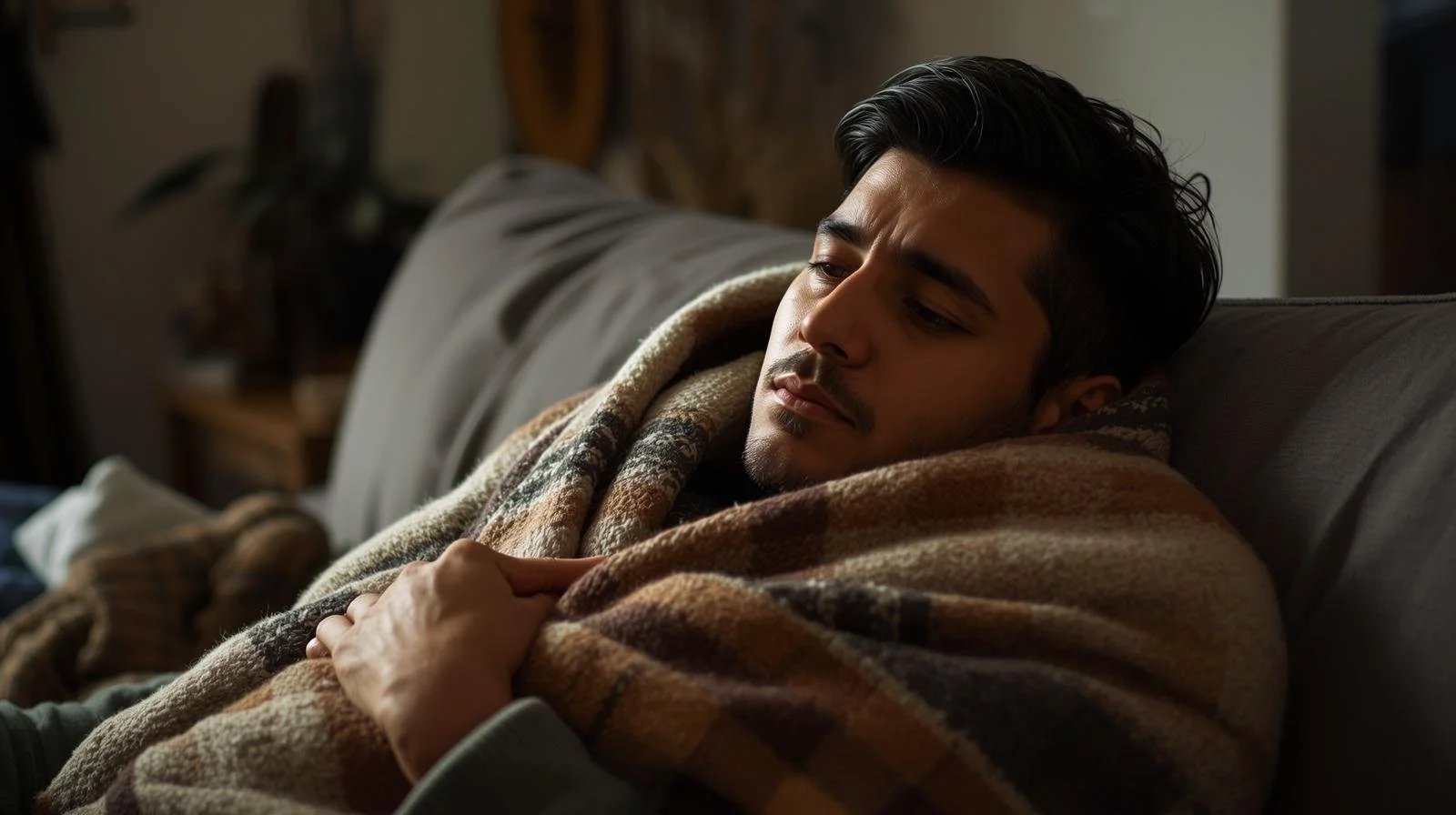
You shouldn't have to wear three layers of blankets to afford your heating bill. J Martin helps Orange County homeowners find real savings such as duct sealing, insulation upgrades, or system tune-ups all without sacrificing comfort. We make both happen.
The Real Math Behind Thermostat Settings
According to the U.S. Department of Energy, for every degree you lower your thermostat for at least 8 hours, you save approximately 1% on heating costs. Drop it by 7 to 10 degrees for 8 hours daily, and you can save up to 10% annually. That's not a gimmick. That's verified data from thousands of homes.
But here's what matters for Orange County: we have a mild climate. Your heating season is shorter and less intense than most of the country. That means small adjustments have outsized effects. When outdoor temperatures are 45 degrees instead of 15 degrees, your furnace doesn't work as hard to maintain indoor comfort. The temperature differential is smaller, which means your system cycles less frequently.
Real example: If your heating costs run $150 per month during winter, and you lower your thermostat by 3 degrees consistently, you save roughly 3% or $4.50 monthly. That's $27 over a six-month heating season just from one small change. Now multiply that by the other strategies in this article.
The Setback Strategy That Actually Works
You've probably heard that lowering your thermostat when you're away wastes energy because your furnace works harder to reheat your home. This is wrong. It's a persistent myth that won't die, but the physics are clear.
Here's what actually happens: when you lower your home's temperature, it loses heat to the outside environment more slowly. The smaller the temperature difference between inside and outside, the slower the heat loss. So yes, your furnace will run longer when you return home to bring the temperature back up. But the total energy used is still less than maintaining a constant higher temperature all day.
The Department of Energy confirms this: as soon as your house drops below its normal temperature, it loses energy to the surrounding environment more slowly. The longer your house stays at the lower temperature, the more energy you save.
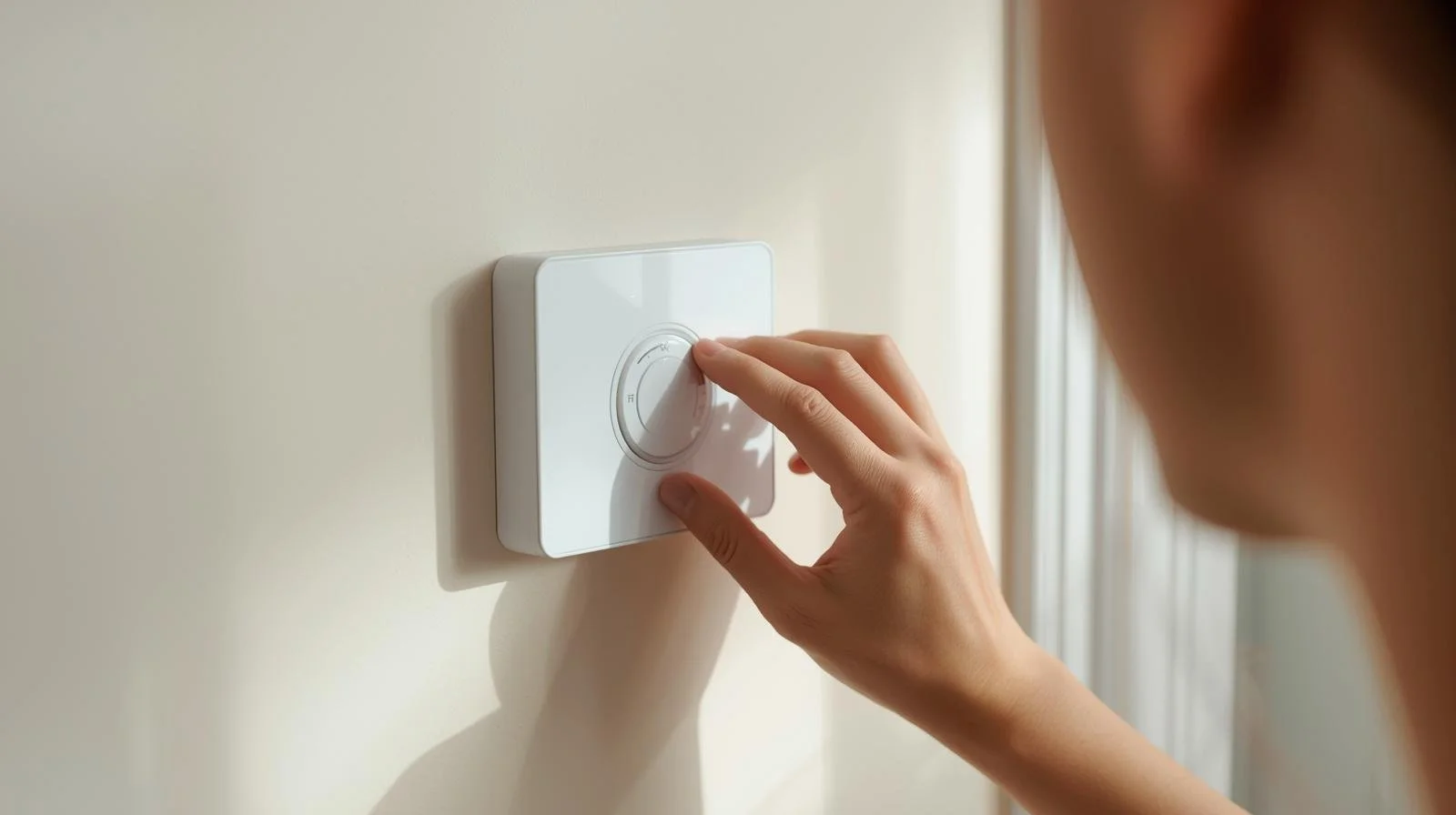
Every degree you lower your thermostat saves 1% on heating costs. For Orange County homes, that adds up fast over winter. J Martin can install a programmable thermostat and optimize your system for maximum savings. Call (714) 462-4686.
Smart Setback Settings for Orange County
While you're awake and home: 68°F is the sweet spot. It's warm enough to be comfortable with normal indoor clothing but not so warm that you're overheating your space.
While you're sleeping: Drop to 62-65°F. Most people sleep better in cooler temperatures anyway. Add an extra blanket if needed.
While you're away at work: Set it to 60-62°F. Your house doesn't need to be warm when nobody's home.
Weekend trips or vacations: 55-58°F is safe for most homes in Orange County's mild winters. This prevents pipe freezing while saving maximum energy.
The key is consistency. If you manually adjust your thermostat, you'll forget. That's where programmable or smart thermostats become worth their cost. Our article on smart thermostats and whether they're worth it breaks down the cost-benefit analysis in detail.
The Free Strategies That Make a Big Difference
Use Ceiling Fans in Reverse
Heat rises. In winter, warm air collects at your ceiling while you sit in the cooler air below. Ceiling fans have a reverse switch (usually on the motor housing) that makes them spin clockwise. This pushes warm air down from the ceiling back into your living space.
Run fans on low speed. You don't want to create a breeze, just gentle circulation. This simple trick can make a room feel 2 to 3 degrees warmer without touching the thermostat. In a house with 10-foot ceilings, this makes a huge difference.
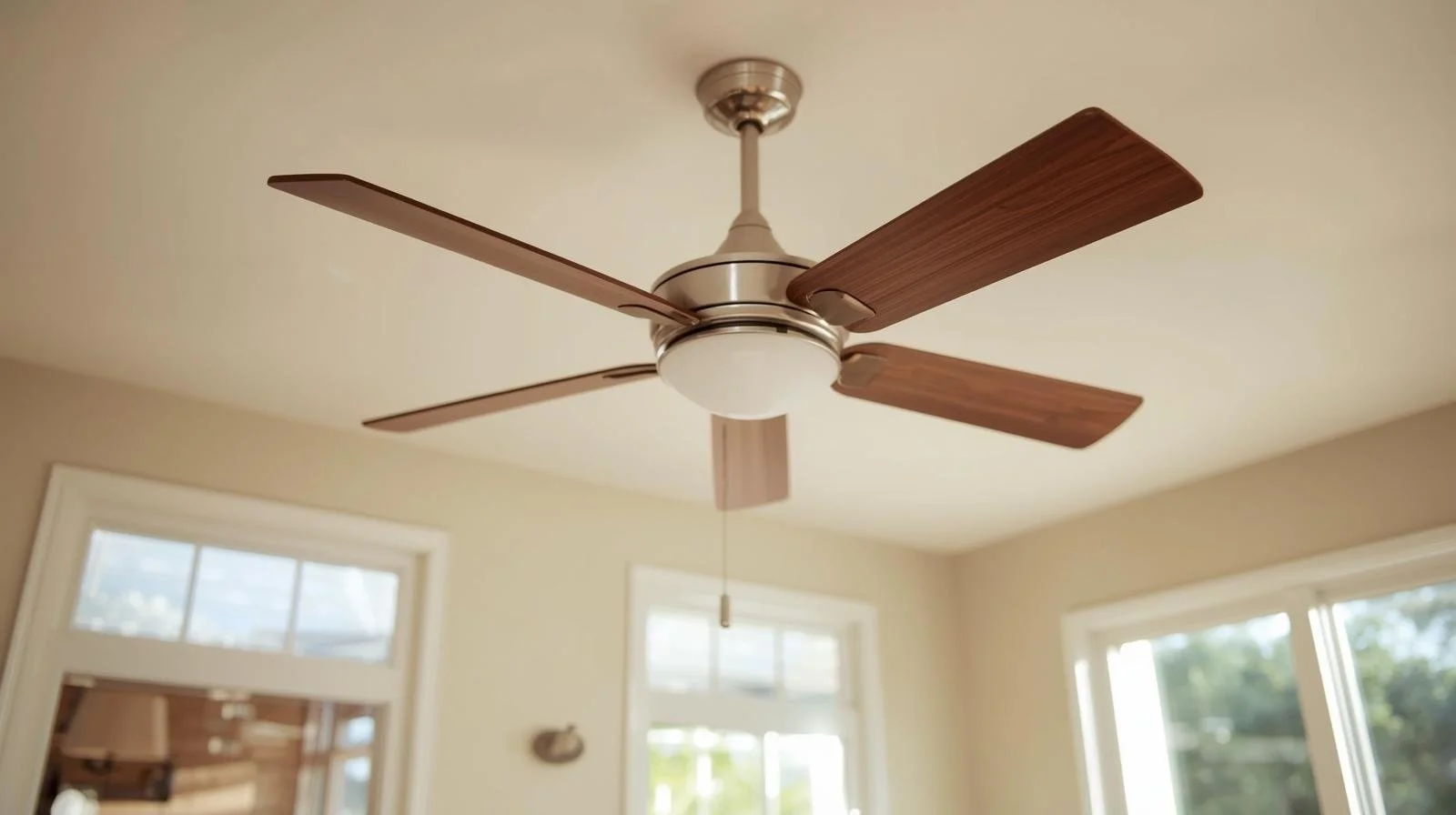
Heat rises. You sit below. See the problem? Your ceiling fan's reverse switch (clockwise rotation) pushes that warm air back down where you actually need it. Run it on low speed in winter, and you can drop your thermostat 2-3 degrees without noticing the difference.
Let Sunlight In During the Day
South-facing windows get direct sunlight during winter. Open curtains and blinds on sunny days to let free solar heat warm your rooms. This passive heating can raise room temperatures several degrees without running your furnace.
Close those same curtains at night to reduce heat loss through windows. Glass is a poor insulator. Adding that barrier between the cold window and your warm room slows heat transfer.
Stop Air Leaks Around Doors and Windows
Run your hand around door frames and windows on a windy day. Feel drafts? That's conditioned air escaping and outside air infiltrating. Weatherstripping costs $20 for an entire house worth of doors and windows. It takes an hour to install and pays for itself in weeks.
Door sweeps on exterior doors seal the gap at the bottom. These cost $5 to $10 each and stop significant heat loss. If you can see daylight under your door, you're losing money every time your heater runs.
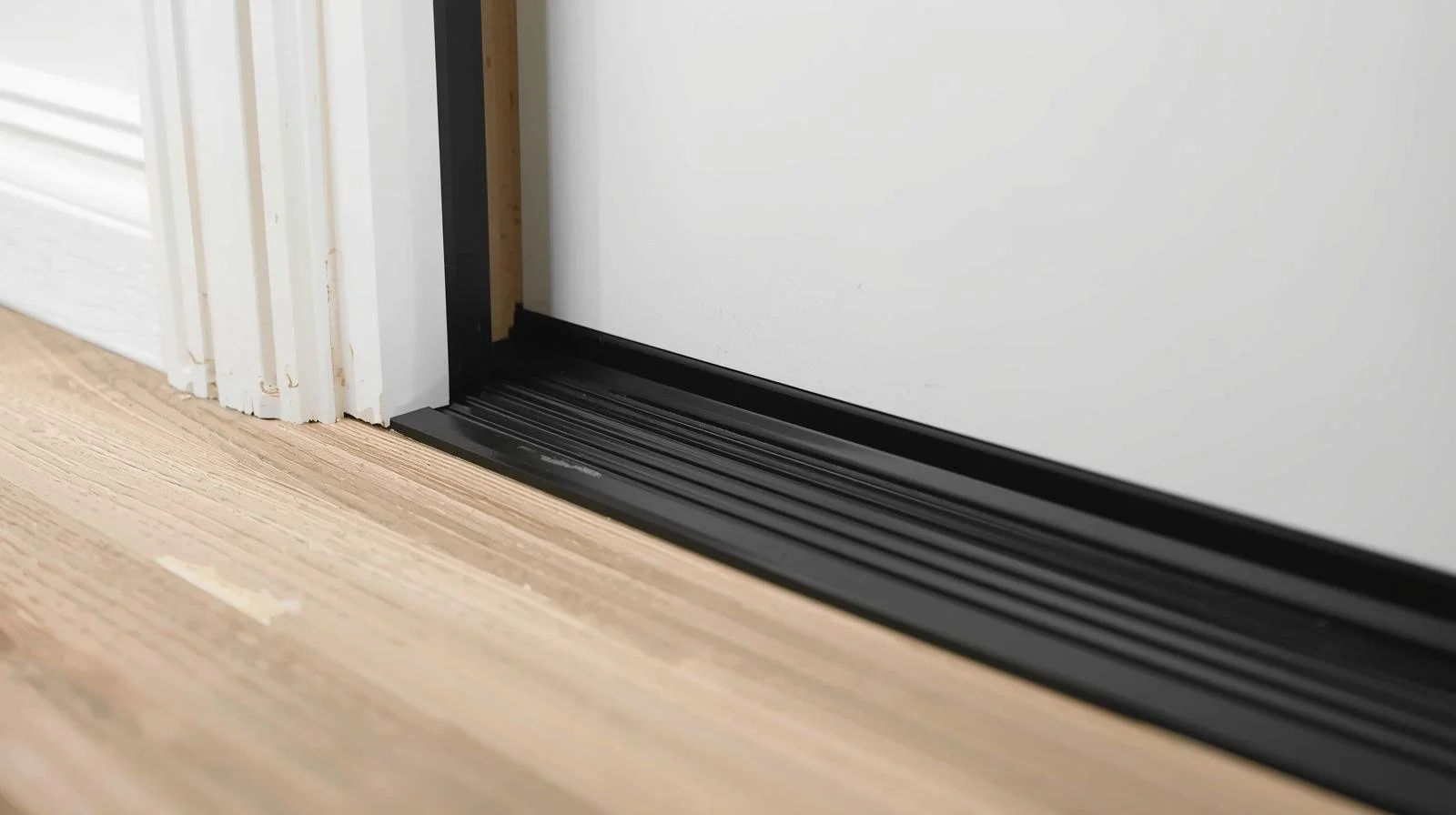
Door sweeps stop heat loss for $10 and install in minutes. Real savings start with the basics. J Martin helps Orange County homes find all the places heat might be escaping: (714) 462-4686.
Close Doors to Unused Rooms
Keep vents open (closing vents creates pressure problems we covered in our article about the truth of closing vents), but close doors to guest rooms, offices, or other spaces you're not actively using. This concentrates heated air in the areas where you actually spend time.
Layer Your Clothing and Bedding
This sounds obvious, but it works. A fleece throw blanket on the couch means you're comfortable at 66°F instead of needing 70°F. Flannel sheets and an extra blanket on the bed mean you sleep well at 62°F instead of 68°F. These small adjustments compound over months.
The Low-Cost Upgrades Worth Making
Add Attic Insulation
Many homes in Orange County, especially older ones, have inadequate attic insulation. Heat rises straight through your ceiling and into your attic, then escapes through your roof. According to the EPA, proper attic insulation can reduce heating and cooling costs by 15% or more.
Check your current insulation depth. For Orange County's climate zone, you want R-38 to R-49, which translates to 12 to 16 inches of fiberglass or cellulose. If you have less, adding insulation costs $1 to $2 per square foot but saves money for decades. Our article on how attic insulation affects HVAC efficiency explains the full impact.
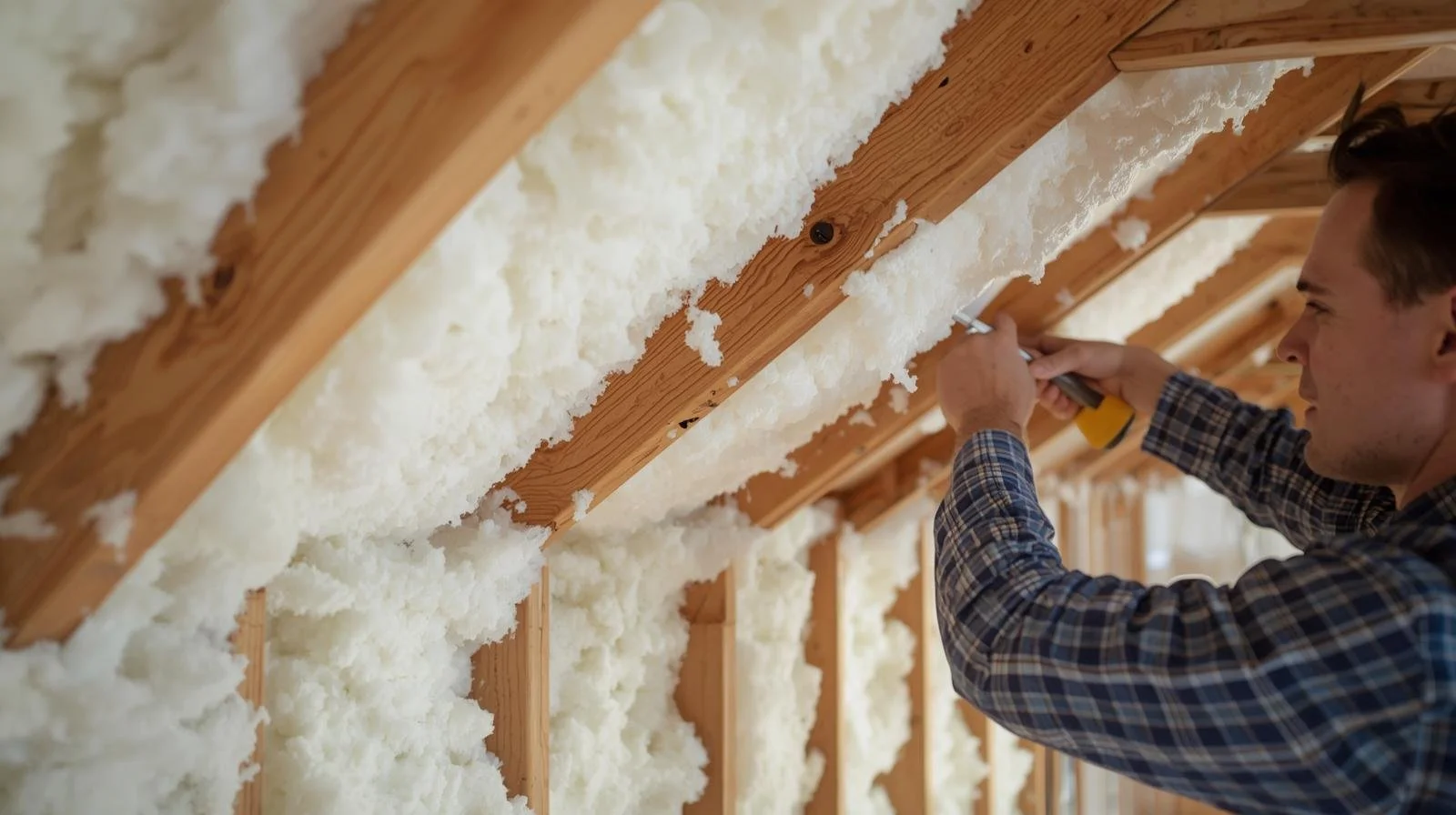
Many Orange County homes have inadequate attic insulation. Heat rises straight through your ceiling and escapes through the roof. The EPA confirms proper insulation reduces heating costs by 15% or more. J Martin can assess your insulation and recommend cost-effective upgrades: (714) 462-4686.
Install a Programmable or Smart Thermostat
Manual thermostat adjustments don't happen consistently enough to maximize savings. A programmable thermostat costs $25 to $100 and automates setback schedules. Smart thermostats cost $100 to $250 and learn your patterns, adjust for weather changes, and can be controlled remotely.
Studies show smart thermostats save 10% to 15% on heating and cooling costs. On a $150 monthly winter bill, that's $15 to $22.50 saved every month. A $200 smart thermostat pays for itself in one winter.
The Professional Solutions That Deliver Real Results
Get Annual Maintenance
A dirty, poorly maintained furnace uses significantly more energy than a clean, tuned system. Dirty burners don't burn fuel efficiently. Clogged filters restrict airflow. Worn components work harder. According to the Department of Energy, regular maintenance improves efficiency by 5% to 15%.
Annual maintenance costs $100 to $300. If it improves your system's efficiency by even 10%, and your winter heating costs are $900 over six months, you save $90. The maintenance pays for itself in energy savings alone, before considering that it also prevents expensive breakdowns. Check out our post on 5 HVAC maintenance tasks you can do yourself and what you should leave to professionals. Our TMP True Maintenance Plan includes comprehensive efficiency checks.
Seal Your Ductwork
Most Orange County homes have some level of duct leakage. Gaps at seams, disconnected sections, holes from pest damage. When your ductwork leaks, you're heating your attic or crawl space instead of your living areas.
Studies by Lawrence Berkeley National Laboratory found that typical homes lose 25% to 40% of heating and cooling energy through duct leaks. Professional duct sealing costs $1,000 to $2,000 but can reduce energy loss by 20% to 30%. If your winter heating costs $900, and duct sealing saves 25%, that's $225 per winter. The investment pays for itself in less than five years while making your home more comfortable immediately.
Our comprehensive guide to air duct cleaning covers when ductwork needs professional attention.
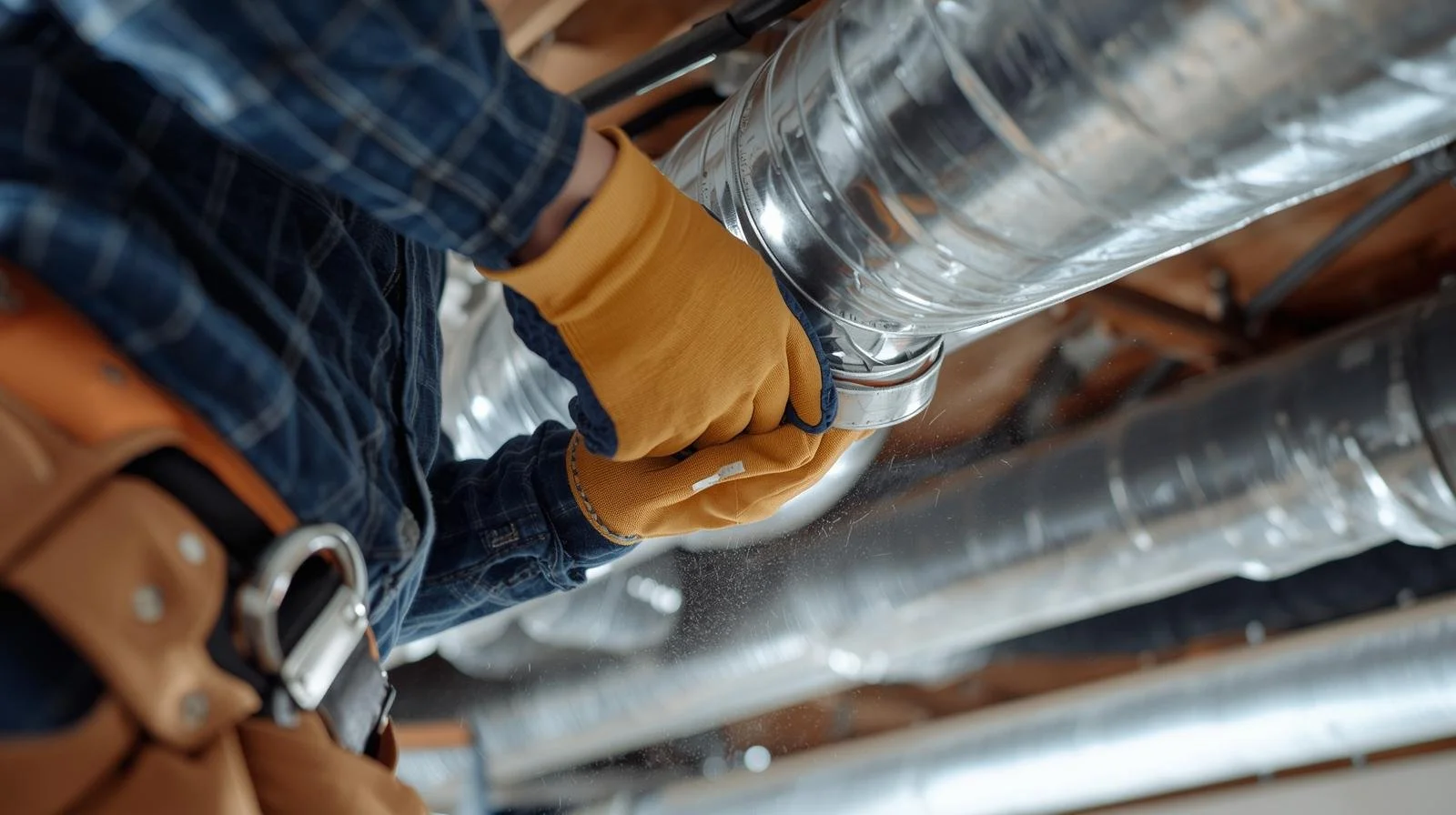
Most Orange County homes have duct leakage including gaps at seams, disconnected sections, and pest damage. When your ducts leak, conditioned air escapes before it reaches your living spaces. J Martin uses professional mastic sealant (not duct tape, which fails) to permanently seal your ductwork and stop energy waste.
Consider a System Upgrade If Your Furnace Is Old
If your furnace is 15 to 20 years old, it probably operates at 60% to 70% efficiency. Modern high-efficiency furnaces operate at 95% to 98% AFUE (Annual Fuel Utilization Efficiency). That means 95% to 98% of the fuel you pay for converts to heat instead of venting outside.
Upgrading from a 70% efficient furnace to a 95% efficient model reduces your heating costs by roughly 25%. On $900 in winter heating costs, that's $225 saved annually. A new furnace costs $3,000 to $6,000 installed, so payback happens in 13 to 27 years. But when you factor in improved comfort, reliability, and avoiding emergency replacements, the math improves significantly.
For Orange County's mild climate, heat pumps are often more efficient than furnaces. Our article on heat pumps vs traditional HVAC explains when each system makes sense.
What Doesn't Actually Save Money
Let's clear up some persistent myths:
Closing vents in unused rooms: This creates pressure imbalances, increases duct leakage, and can damage your system. The 5% you might save gets eaten by increased problems.
Cranking the thermostat way up to heat faster: Your furnace heats at a fixed rate. Setting the thermostat to 80°F doesn't make it reach 70°F any faster than setting it to 70°F. You just end up overshooting and wasting energy.
Space heaters to avoid running central heat: Electric space heaters cost significantly more per BTU than natural gas furnaces. Unless you're only heating one tiny room for a short time, central heating is cheaper.
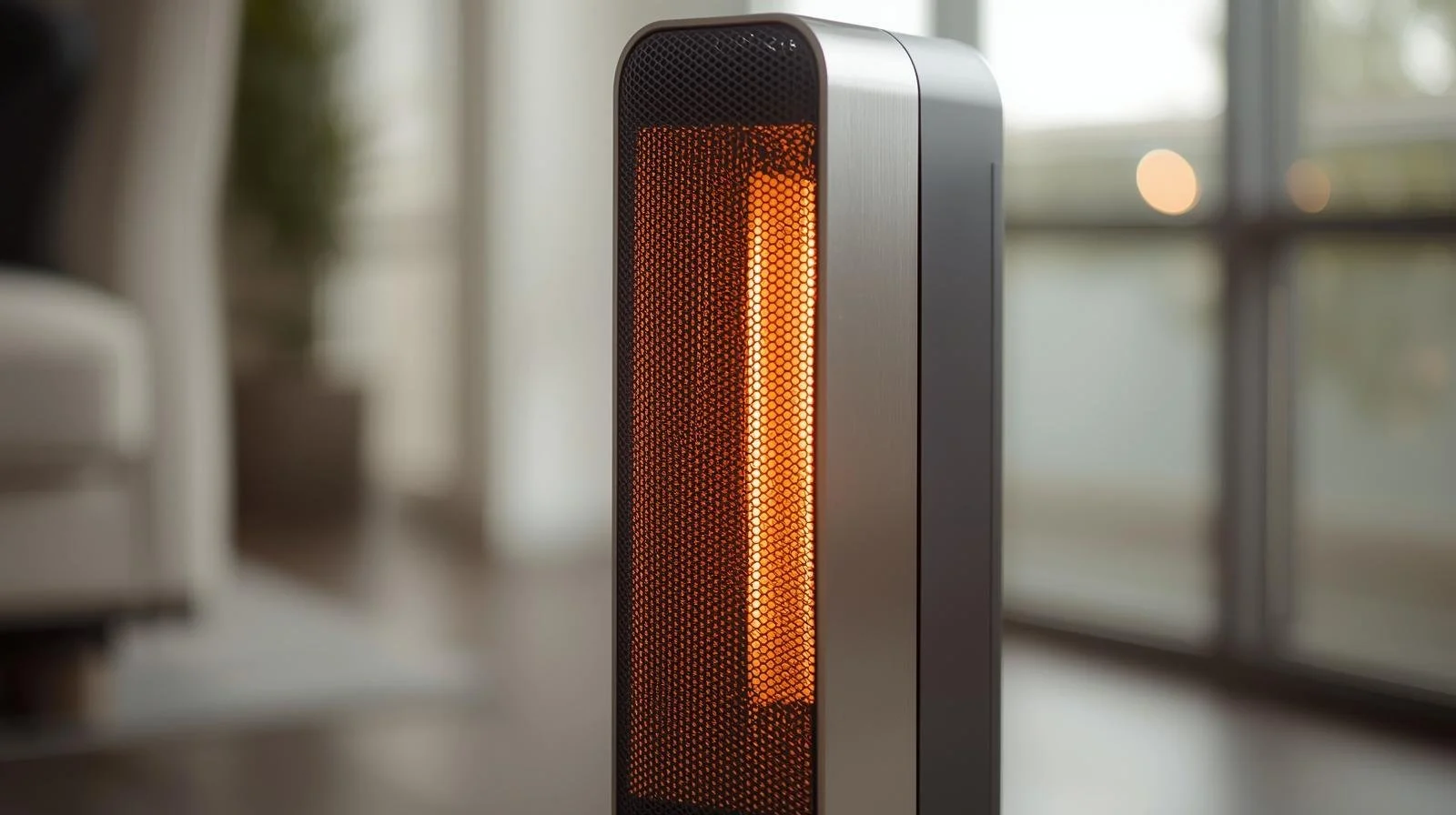
This is one of the most common energy-saving myths we see: homeowners using space heaters to avoid running central heat. The reality though is that electric resistance heating costs far more than natural gas per BTU. J Martin helps Orange County families understand what actually saves money versus what just feels like it should.
Duct tape on ductwork: Despite the name, duct tape fails on ducts. It dries out and peels off. Professional mastic sealant is what actually works for permanent duct sealing.
Build a Strategy That Works for Your Home
Energy savings don't come from one magic solution. They come from combining multiple strategies that each contribute 5% to 15% savings. Start with the free stuff: thermostat setbacks, ceiling fans, sunlight, weatherstripping. These cost nothing and deliver immediate results.
Then add low-cost upgrades: programmable thermostats, additional insulation. These have short payback periods.
Finally, consider professional solutions when the numbers make sense: maintenance, duct sealing, system upgrades. These have longer paybacks but deliver substantial savings and improved comfort.
The key is understanding that comfort and efficiency aren't enemies. Done right, they work together. A well-maintained, properly sealed, correctly sized HVAC system keeps you comfortable while using minimal energy. That's not a compromise. That's engineering.
If you want to understand where your home is wasting energy and what improvements would have the biggest impact, J Martin Indoor Air Quality can help. From smart thermostat installation in your Orange County home to duct sealing, insulation upgrades, and system tune-ups, we assess your specific situation and recommend solutions based on your home's actual needs and your budget. Visit our services page to learn more about our efficiency services, or contact us or call us at (714) 462-4686 to schedule an assessment. Lower bills and better comfort aren't mutually exclusive. Let's make both happen.
J Martin Indoor Air Quality | (714) 462-4686 | Services