
How Long Do AC Units Last in Orange County? When to Repair vs Replace Your System
Updated on May 14, 2026
Your air conditioner has been making strange noises for the past month. The energy bills keep creeping up, but the house doesn't feel as cool as it used to. You call a technician, and they give you a repair estimate that makes you wince. Now you're stuck with the question every Orange County homeowner eventually faces: Is this repair worth it, or should I just replace the whole system?
It's a decision that can cost thousands of dollars either way, and making the wrong choice means you're either throwing money away on a dying system or replacing a unit that had years of life left in it. The answer isn't always obvious, but there's a smarter way to think about it than just guessing or taking the first contractor's word for it.
After installing HVAC systems across Orange County for over 15 years, I've seen homeowners make both mistakes. Some replace perfectly good systems because they panic at a $600 repair bill. Others sink $3,000 into repairs over two years on a 17-year-old unit that was never going to make it much longer anyway. The goal of this guide is to give you the actual numbers, local factors, and decision-making framework you need to make the right call for your specific situation. If you want our complete step-by-step approach to the repair-or-replace decision, our decision framework that saves you thousands walks through the math in even more detail.
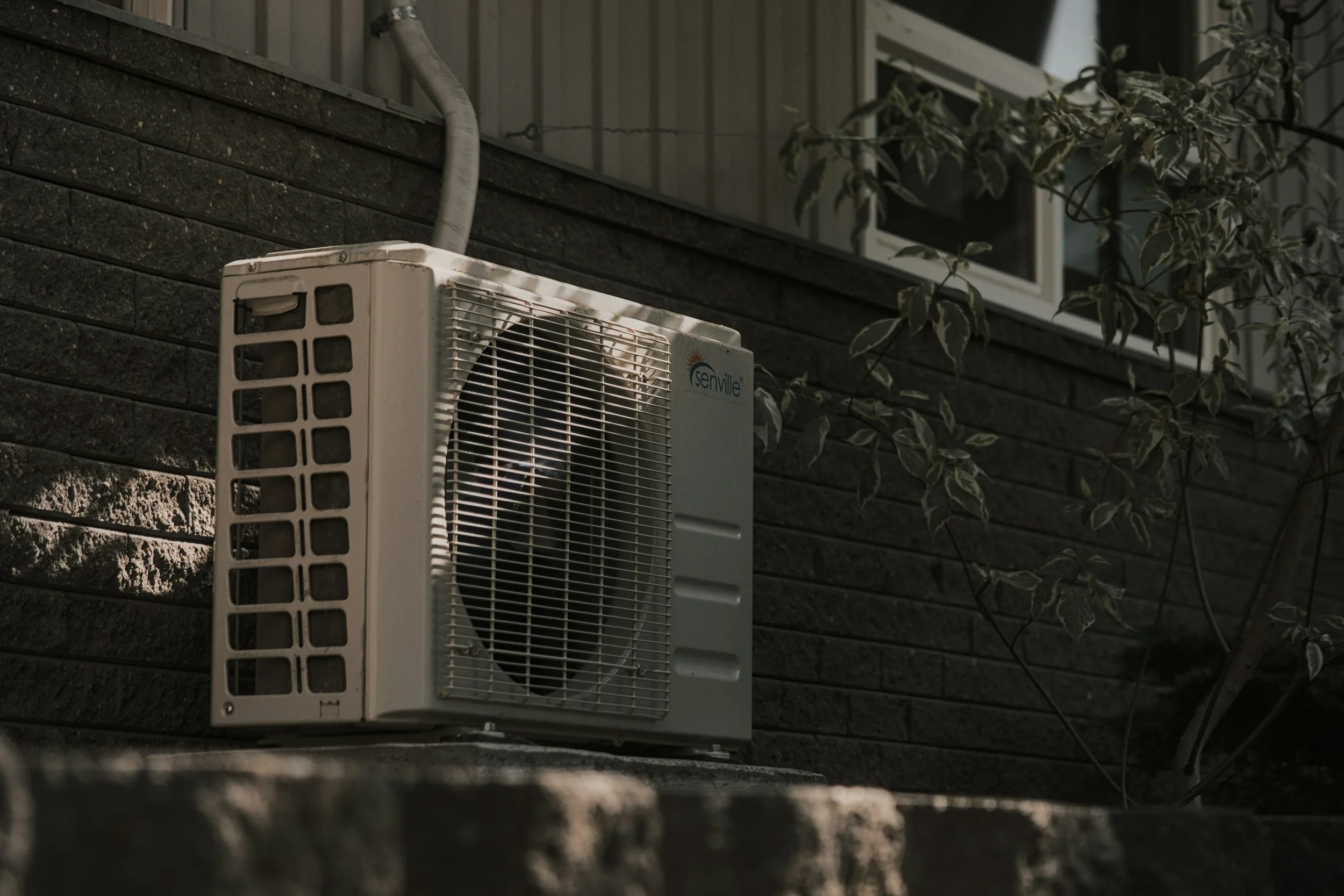
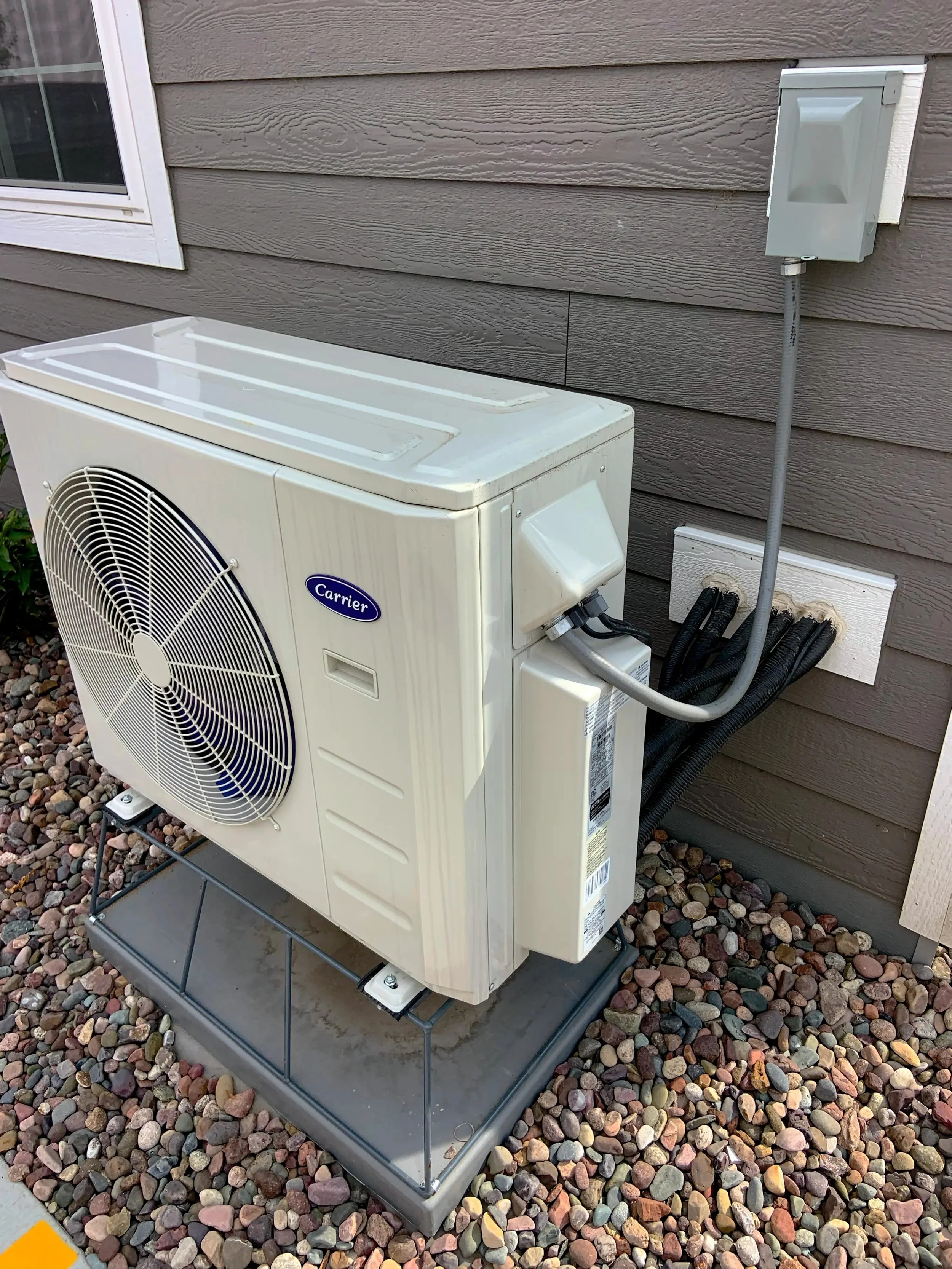
If your outdoor unit looks like this, the repair versus replace conversation is overdue. Do not wait until July to find out which way it goes. Call J Martin at (714) 406-5001 for an honest evaluation before peak season.
How Long Air Conditioners Actually Last (The National Baseline)
Before we get into Orange County specifics, let's establish what "normal" looks like. According to data from major manufacturers like Carrier, Trane, Lennox, and Bryant, along with industry organizations like ENERGY STAR, here's what you can expect from different types of cooling systems under typical conditions with regular maintenance:
Central air conditioning systems typically last between 15 and 20 years. This is the standard split system with an outdoor condenser unit and an indoor evaporator coil that most Orange County homes have. The wide range exists because lifespan depends heavily on maintenance, usage patterns, installation quality, and local climate.
Heat pumps, which provide both heating and cooling, generally last 15 to 20 years as well. However, because heat pumps run year-round in many climates rather than just during cooling season, they can experience more wear. In Orange County's mild climate where heating demand is minimal, heat pumps often hit the upper end of this range or beyond.
Ductless mini-split systems are the longevity champions, often lasting 20 to 25 years with proper care. Their indoor and outdoor components are designed to work seamlessly together, and they typically experience fewer mechanical issues than traditional systems. However, they're also more expensive upfront.
Window air conditioners have much shorter lifespans, typically just 8 to 12 years. Their exposed position makes them more susceptible to weather damage, and their lower cost makes replacement more manageable when they fail.
These national averages give you a starting point, but they don't tell the whole story for Orange County homeowners. Our local climate creates unique challenges that can significantly shorten or extend these timelines depending on several factors.
Why Orange County AC Units Face Different Challenges
Orange County's climate sits at an interesting intersection that affects how long your air conditioner will last. We're not in the brutal year-round heat of Phoenix or the extreme humidity of Florida, but we have our own set of conditions that put specific stresses on cooling systems.
The first major factor is our summer heat. Orange County experiences a Mediterranean climate with hot, dry summers where temperatures regularly climb into the 80s and 90s. Inland areas like Yorba Linda and Anaheim Hills can see stretches above 95°F during heat waves. When your AC runs for extended periods during these hot months, it accumulates more operating hours in a shorter timeframe than systems in milder climates. A unit that runs heavily from May through October is working hard for half the year, which accelerates component wear.
However, our mild winters provide an interesting counterbalance. Unlike regions where HVAC systems run year-round, Orange County air conditioners get a true off-season. From November through March, many homeowners barely touch their AC. This seasonal rest period can actually help extend lifespan compared to climates where systems never get a break. It's one reason why a well-maintained AC in Orange County can occasionally push past the 20-year mark.
The coastal salt air issue is where things get complicated. If you live within a few miles of the ocean in areas like Newport Beach or even parts of Anaheim closer to the coast, your outdoor condenser unit is constantly exposed to salt particles carried by ocean breezes. According to HVAC industry research, systems in coastal areas can experience corrosion rates up to 30% higher than those in inland locations. Salt is highly corrosive to metal components, particularly the aluminum fins and copper coils in your condenser unit.
Studies have shown that regular AC units exposed to salt air can fail within just 5 to 8 years without proper protection and maintenance, compared to the 15 to 20 year lifespan in non-coastal areas. Visible corrosion can appear within a few years, and once it starts, it accelerates system failure. This is why coastal homeowners often see their units replaced at the 10 to 12 year mark rather than the national average of 15 to 20 years.
For coastal homes, salt-resistant AC units designed with protective coatings, corrosion-resistant materials, and improved drainage systems can last 10 to 15 years or more, but these specialized systems typically cost 15% to 30% more upfront. Regular maintenance becomes even more critical in coastal areas. Rinsing the outdoor unit twice a year to remove salt buildup and having coils professionally cleaned can add years to your system's life.
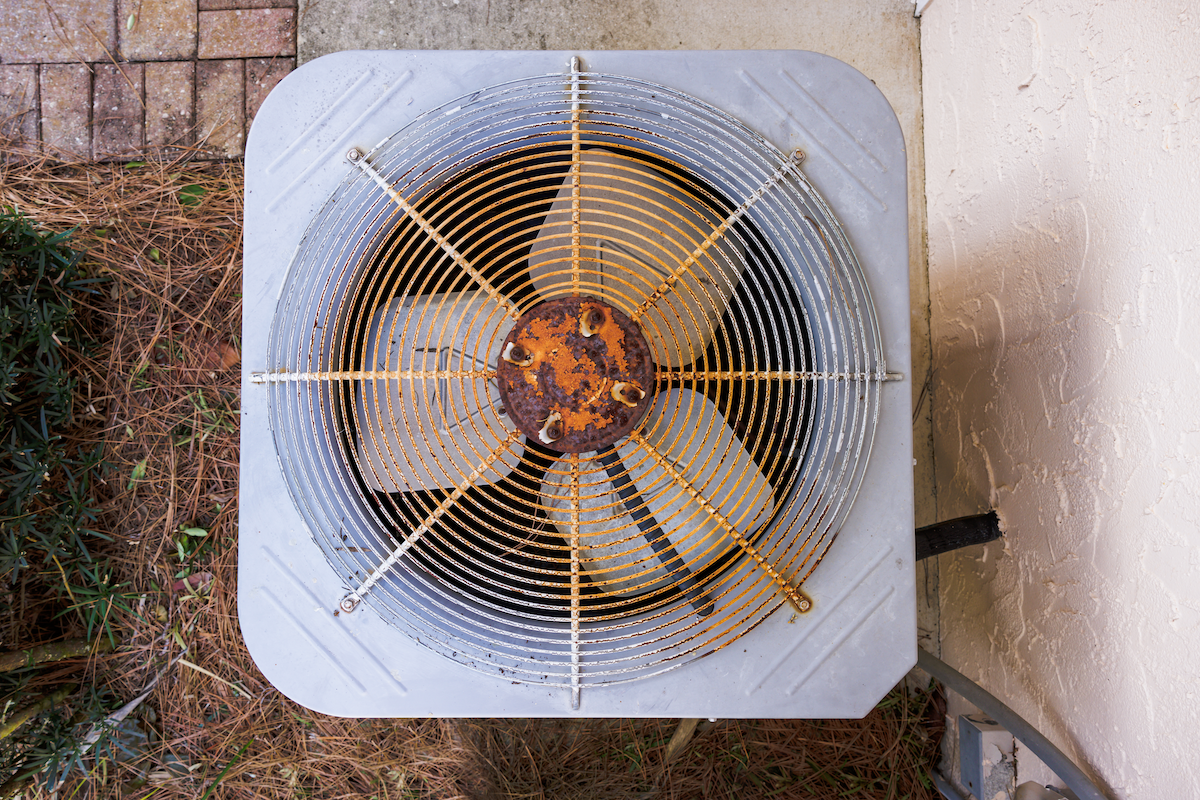
Coastal homeowners are always surprised when we show them what the salt air has done to their condenser. From the outside the unit looks fine. From the top it looks like this. This is exactly why we say coastal systems need to be evaluated earlier and more often than inland units.
High humidity, particularly in coastal areas, is another factor. According to the National Oceanic and Atmospheric Administration, humidity levels in Orange County can reach 70% during summer months. High moisture levels put additional strain on your air conditioning system because humid air requires more energy to cool. This increased workload can lead to higher utility bills and more wear on components. For many homeowners, this translates to 10% to 20% higher energy costs during peak summer months and accelerated wear on compressors and fan motors.
Poor air quality and pollution also play a role, though less dramatically than salt air. Dust and pollutants can accumulate in AC units, trapping moisture and potentially leading to mold growth. In areas with higher pollution or near busy roads, this effect is more pronounced.
Temperature fluctuations between morning and evening create another challenge. Coastal areas especially can see cool mornings followed by significantly warmer afternoons. This constant change creates inconsistent demand on your HVAC system, leading to frequent cycling as the system turns on and off. Over time, this wear can lead to premature component failure.
The Santa Ana winds, which occur primarily in fall and winter, bring their own issues. These hot, dry winds can blow debris into outdoor units and create extreme temperature swings that stress systems. While they don't run the AC much during Santa Ana events, the accumulated debris can block airflow and reduce efficiency.
All of these Orange County-specific factors combine to create an environment where the actual lifespan of your AC unit depends heavily on your specific location within the county, how well you maintain the system, and whether it was properly installed with local conditions in mind.
The Eight Warning Signs Your AC Is Approaching End of Life
Before you can make an intelligent repair versus replacement decision, you need to know what to watch for. Here are the specific signs that indicate your AC unit is entering its final years, ranked from subtle early warnings to obvious death rattles.
Rising energy bills with no change in usage patterns is often the first sign something is wrong. If your electricity costs have increased noticeably over the past year or two but you haven't changed your thermostat settings or habits, your AC is likely losing efficiency. As systems age, they have to work harder and run longer to achieve the same cooling, which drives up energy consumption. A 10% to 20% increase in summer cooling costs compared to two years ago is a red flag, especially if you've been keeping up with filter changes. We break down exactly how an aging HVAC system drives up your energy bills and what to do about it in more detail here.
Frequent repairs are perhaps the clearest indicator that you're approaching the end. According to industry experts, one or two repairs within a three-year period might indicate your system still has value and repair makes sense. However, three or more repairs during this timeframe likely means your system is losing efficiency and may be on its way out soon. If you've had your HVAC company on speed dial because something always seems to need fixing, that's a strong signal that replacement deserves serious consideration.
The system struggles to maintain comfortable temperatures throughout your home. If you're noticing some rooms are significantly warmer than others, or the system runs constantly but never quite reaches the temperature you've set, it's a sign the unit can no longer keep up with demand. This could indicate a failing compressor, low refrigerant due to leaks, or ductwork issues, but in an older system, it often signals that the overall capacity has degraded beyond the point where repairs make economic sense.
Strange noises that weren't there before deserve attention. Grinding, squealing, or rattling sounds often indicate worn bearings, loose components, or failing motors. A banging sound when the system starts up could mean a problem with the compressor. While some noises can be fixed with relatively minor repairs, in older systems they're often the first sign of major component failure that's just around the corner.
The unit cycles on and off repeatedly, a problem called short-cycling. Your AC should run in fairly long cycles to effectively cool your home and dehumidify the air. If it's turning on for just a few minutes, shutting off, then turning back on shortly after, something is wrong. Short-cycling puts enormous stress on the compressor and can dramatically shorten the system's remaining life. Possible causes include refrigerant leaks, electrical issues, or an oversized system, but in aging units it often indicates the compressor is failing.
Moisture or leakage around the unit is another warning sign. Some condensation is normal, but if you're finding puddles around your indoor unit or seeing water damage on nearby walls or ceilings, you could have a blocked condensate drain, frozen evaporator coils, or a refrigerant leak. Refrigerant leaks are particularly serious in older systems because the refrigerant itself can be expensive or even unavailable for discontinued systems.
The system uses R-22 refrigerant, also known as Freon. If your air conditioner was manufactured before 2010, it almost certainly uses R-22. The Environmental Protection Agency phased out production of R-22 in 2020 because of its harmful impact on the ozone layer. While you can still legally use your R-22 system, if it develops a refrigerant leak, you'll find that R-22 has become extremely expensive due to limited supply. A refrigerant recharge that might have cost $200 in 2015 can now run $1,000 or more. For many homeowners with R-22 systems, any major repair becomes an automatic replacement decision simply because of refrigerant costs.
The age of the system matters, but it's not the only factor. If your AC is over 15 years old and experiencing any of the above problems, replacement becomes more attractive. If it's under 10 years old, repair usually makes more sense unless you're facing a catastrophic failure like a dead compressor. The zone between 10 and 15 years is where you need to carefully evaluate the specific repair, the system's overall condition, and whether the numbers support repair or replacement.
The $5,000 Rule: A Simple Formula for Repair vs Replace Decisions
HVAC professionals have a quick calculation called the "$5,000 rule" that helps homeowners make repair versus replacement decisions. It's not perfect, and it shouldn't be your only consideration, but it provides a useful starting point for thinking through the economics.
Here's how it works: Multiply the age of your air conditioner (in years) by the estimated cost of the needed repair. If the result is greater than $5,000, replacement is generally the smarter financial choice. If it's less than $5,000, repair might still be worth the investment.
Let's work through some real-world Orange County examples. Imagine your AC is 12 years old and needs a $400 repair to replace a capacitor. The calculation is 12 × $400 = $4,800, which is less than $5,000. According to the rule, repair makes sense. The system likely has a few more years of life, and $400 is a reasonable investment.
Now consider a different scenario. Your AC is also 12 years old, but this time it needs a $600 repair to fix a refrigerant leak and recharge the system. The calculation is 12 × $600 = $7,200, which exceeds $5,000. The rule suggests replacement is the better option. Even though the repair itself isn't catastrophically expensive, you're at the point where the system's age and repair cost combined indicate you're better off investing in a new system.
Here's a third example that shows why the rule is just a starting point. Your AC is 8 years old and needs a $700 compressor replacement. The calculation is 8 × $700 = $5,600, which is over $5,000 and suggests replacement. However, the system is relatively young, and a compressor replacement might give you another 7 to 10 years of service. In this case, the repair probably still makes sense despite what the $5,000 rule suggests.
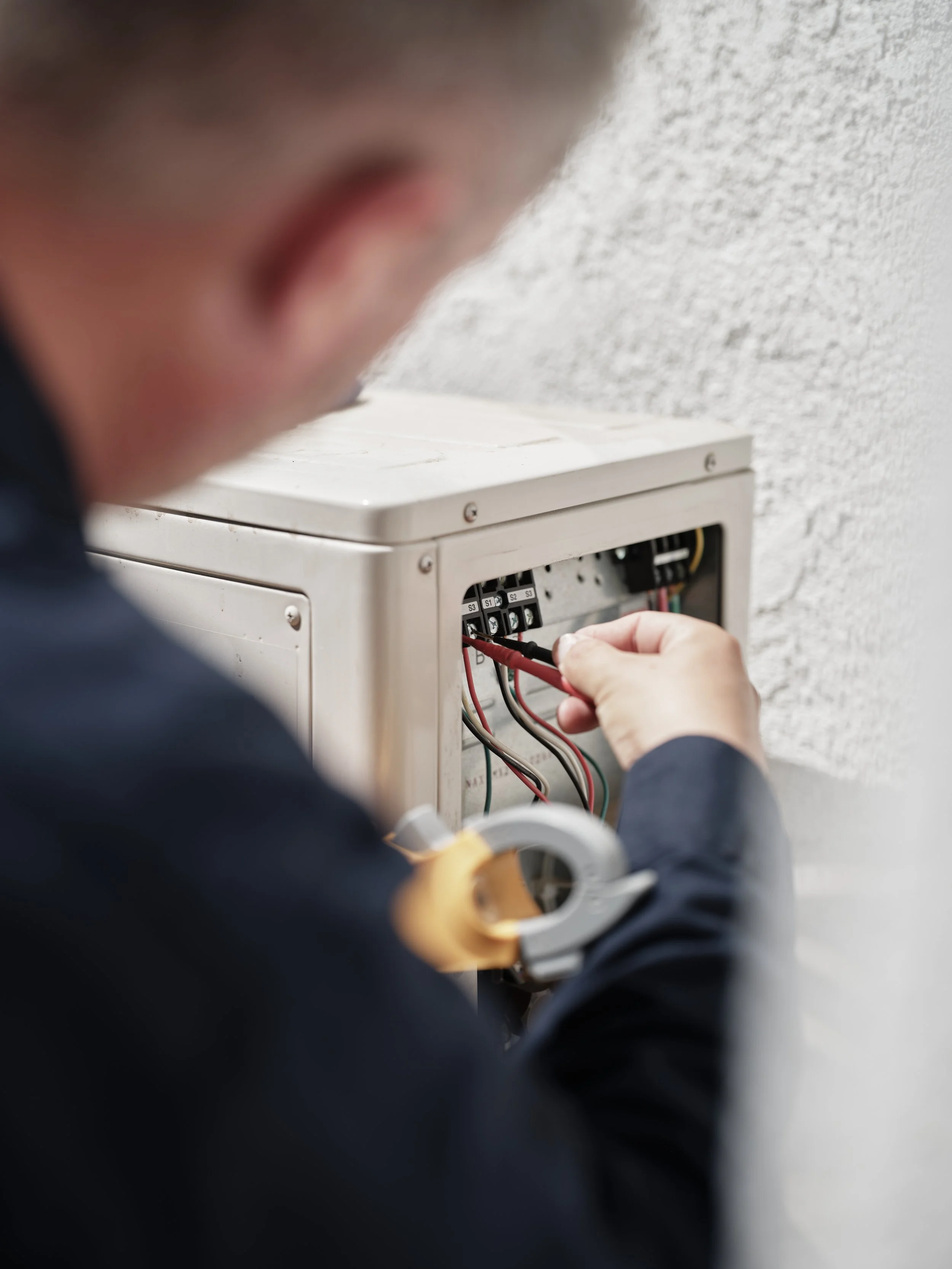
Most repair versus replace decisions come down to what a thorough diagnostic actually finds. A technician who skips the electrical testing is giving you a guess, not an assessment. This is the difference between a repair that solves the problem and one that buys you 30 days.
The rule works because it accounts for both the repair cost and the system's remaining useful life. An expensive repair on a young system represents a smaller portion of the system's total remaining value compared to the same repair on an older system. It also prevents you from sinking good money into a system that's close to the end of its natural life anyway.
There's also a related guideline called the "50% rule" that some contractors use. If the repair cost exceeds 50% of the replacement cost, and the unit is past its mid-life point, replacement usually makes more sense. For example, if a new AC system costs $12,000 installed and your repair estimate is $6,500, you're better off replacing, especially if the system is 10+ years old.
The important thing to understand is that these rules are guidelines, not absolutes. They work best when combined with other factors like energy efficiency, rebate availability, refrigerant type, and your overall comfort and long-term plans.
When Repair Makes Sense (Even If the Numbers Are Close)
There are specific situations where repairing your existing AC system is clearly the right call, even if you're getting close to the thresholds in the $5,000 rule. Understanding these scenarios can save you from prematurely replacing a system that has plenty of life left.
The system is under 10 years old and the repair is relatively minor. Air conditioners in this age range, assuming they've been properly maintained, typically have most of their useful life ahead of them. Repairs like replacing a capacitor, fixing a condensate drain, cleaning coils, replacing a fan motor, or addressing thermostat issues are all reasonable investments in a younger system. These repairs typically cost between $150 and $800 and can extend the system's life significantly.
You've maintained the system religiously with annual professional tune-ups and regular filter changes. A well-maintained AC can easily last 18 to 20 years or longer. If you have service records showing consistent maintenance, that's a strong indicator the system has been cared for and is worth repairing. Neglected systems, on the other hand, tend to cascade into multiple failures once problems start.
This is the first major repair the system has needed. If your 12-year-old AC has been virtually trouble-free and this is the first real issue, a repair makes sense. The absence of previous problems suggests good overall health. Compare that to a system that's needed repairs every year or two, which indicates deteriorating condition.
The repair doesn't involve refrigerant on an R-22 system. As mentioned earlier, R-22 refrigerant has become prohibitively expensive. However, if your older system uses R-22 and the repair doesn't require adding refrigerant, such as replacing a fan motor or capacitor, you can get a few more years out of it. Just be aware that the refrigerant issue is waiting for you, and when a leak eventually develops, replacement will be your only practical option.
You need more time to save for a replacement. HVAC system replacement is a major expense, typically ranging from $9,500 to $19,000 or more in Orange County depending on the size and type of system. If a repair can buy you another year or two to properly budget and research your options, that can be valuable, especially if you can get multiple opinions to ensure the repair is truly necessary.
The system is correctly sized for your home. Properly sized systems are increasingly rare because many older installations were done before modern load calculation methods became standard. If your current system was professionally sized and installed, that's worth preserving because it means your home is being efficiently conditioned. An improperly sized replacement, even if it's brand new, will cost more to operate and won't perform as well.
You're planning to sell your home in the next few years. If you're preparing to move, a new AC system can increase your home's value and appeal to buyers, but you likely won't recoup the full replacement cost in the sale price. A reasonable repair that keeps the system running can be the more economical choice, especially since prospective buyers will have a home inspection that verifies the system is functional.
The Hidden Cost Nobody Talks About: Summer Breakdown Risk
Here's what the pure financial calculations miss: the real cost of being stranded without air conditioning during an Orange County heat wave. This risk factor often tips the scales toward replacement even when the math says repair could work.
Picture this scenario. It's mid-July, temperatures are hitting 97°F in Yorba Linda, and your 14-year-old AC that you've been nursing along for the past two years finally gives up completely. You start calling contractors. The first three are booked solid for the next week. The fourth can maybe squeeze you in four days from now but can't guarantee it. The fifth says they can come tomorrow but the emergency service call is $350 just to show up, and if you need parts, you're looking at 3-5 business days for delivery because everyone is ordering the same components during peak season.
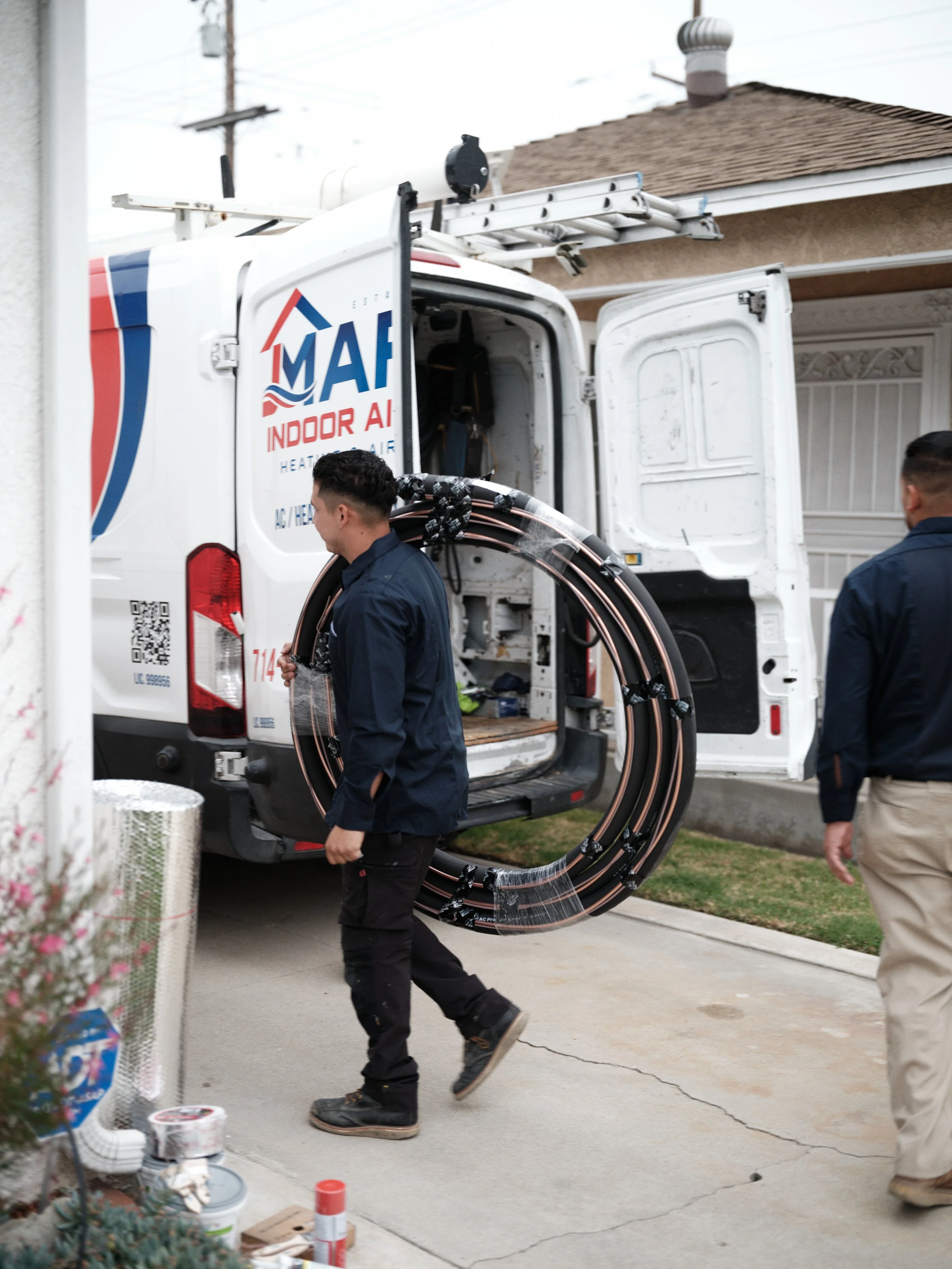
Done right from day one. Call J Martin for AC replacement at (714) 406-5001.
Meanwhile, you're living in a house that's climbing to 85°F inside. Your kids are miserable. Your elderly mother who lives with you is at genuine health risk. You can't sleep. You're running to Target to buy box fans that barely help. You end up in a hotel for three nights at $200 per night. By the time someone finally shows up, you're so desperate you'll agree to anything, including hiring a contractor you've never heard of because they're the only ones available.
This is the reality thousands of Orange County homeowners face every summer. When everyone's AC is working, there's plenty of contractor availability. When it's 95°F and systems are failing across the county, you're competing with hundreds of other desperate homeowners for a limited number of technicians. The contractors who are available often aren't the ones you'd choose under normal circumstances. The good, established companies with stellar reputations are booked weeks out because everyone wants them.
The timing risk compounds with age. A 10-year-old system that needs a repair will probably make it through the summer if you fix it in May. A 15-year-old system that needs a repair might limp through, or it might cascade into a complete failure the first time temperatures hit 100°F and the system is under maximum stress. You're gambling that nothing else breaks, and the odds get worse every year.
Emergency pricing is real. Normal service calls might run $120 to $180. Emergency calls during peak cooling season can hit $300 to $500 just for the diagnosis. Parts that would normally arrive in a day or two can take a week when suppliers are backlogged. If you need a compressor or other major component during a heat wave, you might wait 7 to 10 days even after approving the repair. That's 7 to 10 days of hotel costs, lost productivity, family stress, and genuine discomfort.
There's also the forced-decision problem. When you're desperate, you make different choices than when you can think clearly. You might approve a $2,000 repair on a 16-year-old system because you can't stand another day without AC, even though that same repair would have been an obvious "replace instead" decision if you'd been able to think about it calmly in March. Contractors know this, and while most are ethical, there's definitely a segment of the industry that takes advantage of desperate homeowners.
This is why many experienced homeowners in Orange County adopt a different strategy: if your system is over 12 years old and starting to show issues, replace it in spring or fall when contractors have availability, you can get competitive bids, and you can think clearly without suffering. The replacement might cost $11,000 to $15,000, but you're buying certainty. You know you won't be scrambling in July. You know you'll get a quality installation from a reputable contractor you've researched. You know the system will be properly sized and correctly installed because you have time to ensure those things happen.
The peace of mind has real value. You can plan the installation around your schedule instead of desperately working around a contractor's emergency availability. You can take time to understand rebates and financing options. You can be home for the installation instead of being at work and hoping everything goes well. You sleep better knowing your family won't wake up to a 90°F house on the hottest day of summer.
This doesn't mean you should replace every aging system preemptively. But it does mean that when you're running the numbers on repair versus replacement for a system that's 12+ years old, you should factor in not just the direct repair cost but the very real risk of being stranded at the worst possible time. For many homeowners, that risk calculation justifies replacement even when the pure dollar math is ambiguous.
If your system is over 12 years old and you'd rather not gamble on another summer, call us at (714) 462-4686. We'll come out, give you an honest assessment, and help you decide whether repair or replacement makes more sense before peak season hits.
When Replacement Is the Smarter Investment
Just as there are clear repair scenarios, there are situations where replacement is obviously the right choice, even if you hate spending the money. Recognizing these situations can prevent you from wasting money on repairs that won't deliver long-term value.
The system is 15+ years old and facing a major repair costing over $1,000. At this age, you're near or beyond the typical lifespan. Major repairs like compressor replacement, evaporator coil replacement, or condenser replacement often cost $1,500 to $3,500. On a 15-year-old system, that money would be better invested toward a new, efficient system that will last another 15 to 20 years and save you money on energy bills.
You've spent over $2,000 on repairs in the past two years. This indicates a pattern of cascading failures. Once an aging AC starts having repeated problems, components tend to continue failing because they're all experiencing similar wear. You're on a treadmill of repairs that will likely continue until you replace the system. Each repair feels necessary in the moment, but you're essentially making payments on a new system without actually getting a new system.
The system uses R-22 refrigerant and needs a refrigerant recharge. As discussed earlier, R-22 is no longer being produced, making it scarce and expensive. If your system needs refrigerant, you're looking at costs of $800 to $1,500 or more just for the recharge, and that doesn't address the leak that caused the loss. Even if you repair the leak and recharge, you're one leak away from another expensive refrigerant charge. Systems using modern R-410A or R-32 refrigerant don't have this problem.
Your energy bills have increased 20% or more over the past few years with no change in usage. This dramatic efficiency loss means you're already paying a hidden cost every month in wasted electricity. A new system with a SEER rating of 16 to 20 or higher can reduce your cooling costs by 20% to 40% compared to an old system with a SEER of 10 or lower. Over a 15-year lifespan, those energy savings can offset a significant portion of the replacement cost.
The system can't keep your home comfortable despite repairs. If you've already had repairs done but rooms are still too warm, humidity feels too high, or the system runs constantly without reaching the set temperature, the unit has lost capacity and cannot effectively cool your home anymore. No amount of additional repairs will restore capacity that's been lost to age and wear. Comfort matters, and if your AC can't deliver it, replacement is the answer.
You're facing a compressor replacement on a system over 10 years old. The compressor is the heart of your AC system, and replacement typically costs $1,500 to $3,500 including labor. On an older system, a new compressor doesn't fix other aging components like the condenser coils, fan motors, or indoor evaporator coil that are all the same age and likely approaching failure. You might get a few more years, but you're making a major investment in a system with limited remaining life.
You want to switch to a heat pump or upgrade efficiency. Heat pumps have become extremely popular in Orange County because our mild winters make them highly efficient for both heating and cooling. If your old AC needs replacement and you're currently using a gas furnace for heat, switching to a heat pump eliminates the furnace and provides both functions in one system. This is especially attractive with current federal tax credits up to $2,000 and utility rebates of $1,500 to $6,000 available for high-efficiency heat pumps. The actual out-of-pocket cost after incentives can make replacement very attractive even if a repair would technically work.
The installation was done poorly and you've had ongoing issues. If your system has never worked quite right, has always struggled to cool certain areas, or has been a source of problems since installation, those issues stem from improper sizing, incorrect installation, or inadequate ductwork. Repairs won't fix fundamental installation problems. Replacement with proper load calculations and professional installation can finally give you the comfort and efficiency your home deserves.
Real Orange County Replacement Costs and What You Actually Get
Let's talk about what replacement actually costs in Orange County right now, because you need real numbers to make an informed decision. These prices reflect what local contractors are quoting in 2025 and 2026, and they're higher than just a few years ago due to new refrigerant regulations, efficiency standards, and labor costs.
For a standard 3-ton AC system paired with a gas furnace, which is appropriate for a home of about 1,200 to 1,800 square feet, expect to pay between $9,500 and $13,500 installed. This includes a basic 14 to 16 SEER single-stage system, removal and disposal of your old equipment, a new outdoor pad, any necessary electrical upgrades, permits, and typically a 10-year parts and labor warranty. The wide range depends on the specific brand, the condition of your existing ductwork and electrical system, and which contractor you choose.
A 4-ton system for a home of 1,800 to 2,500 square feet runs $11,500 to $15,500 with the same specifications and inclusions. Most Orange County homes fall into this range.
If you're considering a heat pump instead of traditional AC plus furnace, a 3-ton heat pump system costs $11,000 to $16,000 installed. These systems have higher SEER2 ratings, typically 18 to 20, and are variable-speed models that qualify for maximum rebates. A 4-ton heat pump runs $13,000 to $19,000, and this is currently the most popular upgrade in Orange County. A 5-ton heat pump for larger homes of 2,500 to 3,500 square feet costs $15,500 to $22,000 or more.
A properly installed heat pump provides both heating and cooling in a single system, runs at variable speeds for better efficiency and comfort, and can qualify for up to $8,000 in combined federal and utility incentives. This is why heat pumps have become the most popular replacement option we install across Orange County.
These prices include everything needed for a complete installation: removal of your old equipment, the new system properly sized using Manual J load calculations, any electrical work required to bring things up to code, the outdoor equipment pad, permits and inspections, startup and testing, and a comprehensive warranty. What they don't include is any major ductwork replacement or modification, which can add $4,000 to $12,000 if needed. About 30% of homes require at least some ductwork replacement during an HVAC upgrade.
The reason for the price increases in 2025 and 2026 is largely driven by regulatory changes. New low-global-warming-potential refrigerants like R-454B are now mandatory in California, adding $800 to $2,000 to system costs. The SEER2 rating system replaced the old SEER system with tougher standards, so what was a 14 SEER system is now equivalent to only about 13.4 SEER2. Meeting the new minimums requires better equipment. There's also a significant labor shortage in Southern California, which has driven up installation costs.
For coastal homeowners, salt-resistant models designed specifically for the marine environment cost about 15% to 30% more than standard systems but include protective coatings on coils, corrosion-resistant materials, sealed electrical components, and improved drainage systems. If you live within three miles of the ocean, this upgrade is worth serious consideration because it can extend your system's life from 8 years to 15+ years.
It's also important to understand what proper installation includes. A reputable contractor should be doing a Manual J load calculation to properly size your system based on your home's square footage, insulation, window area, orientation, and local climate. Many installers skip this step and just replace what was there before, which perpetuates sizing problems. The contractor should pull permits and arrange for inspections. While it adds cost and time, it ensures the work meets code and protects your investment. A good warranty should cover parts for 10 years and labor for at least 5 years, though some companies offer 10-year labor warranties.
Watch out for red flags when getting quotes. If a contractor offers a "cash discount" for not reporting the installation, walk away. It's illegal in California and usually means they're not pulling permits or paying proper taxes. Quotes significantly under $9,000 for a full system replacement usually indicate the use of cheap offshore brands or cutting corners on installation quality. If no one is doing load calculations or the quote seems like it took five minutes of measuring, you're likely to end up with an improperly sized system.
Making Your Decision: A Framework That Actually Works
You've got the warning signs, you understand the $5,000 rule, you know when repair or replacement makes sense, and you have realistic cost expectations. Now let's put it all together into a decision framework you can actually use when you're staring at a repair estimate.
Start by asking yourself these questions in order. First, how old is your system? If it's under 8 years old, lean heavily toward repair unless you're facing a catastrophic failure. If it's 8 to 12 years old, the decision depends on the other factors. If it's over 12 years old and especially if it's over 15, lean toward replacement unless the repair is very minor.
Second, what's the specific repair needed? A $300 capacitor or fan motor replacement is almost always worth doing. A $700 to $1,000 coil cleaning or minor refrigerant leak repair depends on age and other factors. A $1,500+ compressor or evaporator coil replacement on a system over 10 years old usually doesn't make financial sense. Use the $5,000 rule as one data point.
Third, what's your repair history? If this is the first real repair in years, that's a good sign the system is fundamentally sound. If you've had two or three repairs in the past couple years totaling over $1,500, you're in a cycle that usually doesn't end well.
Fourth, does the system use R-22 refrigerant? If yes and any repair involves refrigerant, strongly consider replacement. The next refrigerant issue will be just as expensive.
Fifth, how's your energy bill trending? If it's climbed significantly, you're already paying for a new system in monthly installments through wasted electricity. A new efficient system can pay for itself over time through lower bills.
Sixth, are you comfortable? If the system struggles to cool your home, repairs rarely solve capacity problems caused by age and wear.
Seventh, what are your long-term plans? If you're selling in the next year, minimize your investment with a repair if possible. If you're staying 5+ years, a new system's benefits accumulate over time. If you're in between, consider how a new system might affect your home's value and marketability.
Eighth, what rebates and incentives are available? Right now in 2025 and 2026, heat pumps qualify for a federal 25C tax credit worth up to $2,000 plus utility rebates from Southern California Edison ranging from $1,500 to $6,000 depending on the system efficiency and your income level. These incentives can reduce your actual cost by 20% to 40% and might tip the scales toward replacement even if repair would technically work.
Ninth, what's your risk tolerance for a summer breakdown? If your system is 12+ years old and showing signs of stress, consider whether you're willing to gamble on making it through another Orange County summer. Being stranded without AC during a July heat wave when all contractors are booked solid isn't just uncomfortable—it's expensive, stressful, and potentially dangerous for vulnerable family members. Many homeowners find that replacing proactively in spring or fall eliminates this risk entirely and lets them choose their contractor carefully rather than desperately.
Finally, what does your gut tell you? If you've been worried about your AC for a while, if you dread the next breakdown, if you're tired of calling for repairs, that stress has value. Peace of mind matters.
Here's a practical example of how to work through this. Let's say you have a 13-year-old AC that needs a $900 repair for a refrigerant leak and recharge. The system uses R-410A, not R-22, so refrigerant cost isn't an issue. This is the second repair in three years, the first being a $350 capacitor replacement. Your energy bills seem higher but it's hard to tell if it's usage or efficiency. The house cools adequately most of the time but struggles on the hottest days.
Running the numbers: 13 × $900 = $11,700, well over the $5,000 threshold suggesting replacement. Your two-repair history adds another $350 to the consideration. The system is getting close to the 15-year average lifespan. The struggle on hot days indicates declining capacity. However, the repair itself isn't catastrophically expensive at $900, and if it buys you another 2 to 3 years, that might be worth it if you need time to budget for replacement.
In this scenario, there's no clear right answer, but you're probably better off replacing. The age, repair history, capacity issues, and $5,000 rule all point that direction. If you're not prepared for the $11,000 to $15,000 replacement cost, the $900 repair might buy you a year to save and research options, but you should go in knowing you're likely spending $900 on borrowed time.
One often-overlooked option: get multiple opinions. If one contractor says you need a $2,000 compressor replacement, get a second and maybe third opinion. Not all contractors are equally skilled at diagnosis, and there's an unfortunate segment of the industry that recommends replacement when repair would work just fine. A reputable company will be honest about whether repair makes sense for your specific situation.

Nobody on our team works on commission. When we sit down with a homeowner to talk through repair versus replacement, the only thing driving the recommendation is what actually makes sense for your system, your home, and your budget.
Protecting Your Investment: Maintenance Matters More in Orange County
Whether you decide to repair your existing system or replace it with a new one, proper maintenance becomes even more critical in Orange County's challenging climate. The difference between a system that lasts 10 years versus 18 years often comes down to how well it's been maintained.
For coastal homeowners, rinsing the outdoor condenser unit with fresh water every three to four months can significantly slow salt corrosion. You're literally washing away the salt before it has time to eat into the metal. Use a garden hose with a gentle spray, not a pressure washer which can damage the delicate fins. Spray from top to bottom and rinse thoroughly.
Professional annual tune-ups are not optional if you want maximum lifespan. A qualified technician should clean coils, check refrigerant levels, measure electrical components, lubricate motors, inspect the condensate drain, test the thermostat, and verify proper airflow. According to industry data, systems that receive annual professional maintenance typically last 3 to 5 years longer than neglected units. That tune-up that costs $120 to $180 per year is cheap insurance against premature failure.
Filter changes can't be neglected. In Orange County's dusty conditions, especially during Santa Ana wind season, filters can clog quickly. Standard 1-inch filters should be checked monthly and replaced when dirty, typically every 1 to 3 months depending on conditions. Higher-quality 4-inch or 5-inch media filters last longer, usually 6 to 12 months, but they still need to be checked. A clogged filter forces your system to work harder, increases energy costs, and accelerates wear on the blower motor and other components.
Keep at least two feet of clearance around your outdoor unit. Trim back plants, remove debris, and ensure nothing is blocking airflow. In an area prone to leaves and blowing dirt, check the unit periodically and clear away anything that's accumulated.
If you're in a coastal area and didn't buy a salt-resistant system, consider having protective coatings applied to your condenser coils. Some HVAC companies offer aftermarket coating services that can help protect standard equipment from salt damage, though it's not as effective as factory-applied coatings on purpose-built coastal units.
The Bottom Line for Orange County Homeowners
Here's what it comes down to. Air conditioners in Orange County typically last 12 to 18 years depending on location, maintenance, and usage. Coastal systems face more challenges and often need replacement at 10 to 12 years. Inland systems with good maintenance can push toward 20 years. The $5,000 rule, repair history, system age, comfort level, and summer breakdown risk together give you a framework for making repair versus replacement decisions that balance short-term cost with long-term value.
If you're facing a repair decision right now, get multiple opinions, run the numbers honestly, and consider your specific situation rather than just following a formula. Sometimes repair is obviously right. Sometimes replacement is clearly better. Often you're in the gray area where both options have merit, and that's when understanding these factors—including the very real risk of being stranded without AC during peak summer—helps you make a choice you won't regret.
The HVAC industry has plenty of contractors happy to sell you whatever makes them the most money. Your job is to be an informed homeowner who asks the right questions, demands proper load calculations and permitting, and makes decisions based on facts rather than fear or pressure. Whether you repair or replace, the goal is the same: reliable, efficient cooling that keeps your Orange County home comfortable without breaking the bank.
Need an honest assessment of your Orange County AC system? J Martin Indoor Air Quality has installed new HVAC systems in Yorba Linda, Anaheim, Brea, Fullerton, Villa Park, and all of Orange County since 2003. We'll give you straight answers about repair versus replacement with no pressure sales tactics. Call (714) 406-5001 for a free evaluation.
Related Articles:
J Martin Indoor Air Quality | (714) 462-4686 | Services