
The Complete Quiet Cool Whole House Fan Buyer's Guide for Orange County Homeowners
Posted on June 16, 2026
When Southern California summer arrives, Orange County homeowners face a familiar choice: blast the air conditioning and watch energy bills skyrocket, or find a smarter cooling solution. Over the past decade, we've watched the Quiet Cool whole house fan transform how thousands of people in our region stay comfortable. We've installed over 2,000 of these systems across Orange County since 2014, and we want to share what we've learned from real projects in Yorba Linda, Anaheim Hills, Brea, and beyond.
This comprehensive guide covers everything from how Quiet Cool systems work to which model fits your home, installation considerations from a certified installer's perspective, and honest answers about energy savings and ROI. Whether you're exploring your first whole house fan or wondering if it's right for your specific situation, you'll find practical insights here that go beyond the manufacturer's marketing.
What Makes Quiet Cool Whole House Fans Different From Standard Options
When homeowners ask us why Quiet Cool dominates the whole house fan market in Orange County, the answer comes down to engineering and noise control. Traditional whole house fans have been around for decades, but they come with a notorious problem: they sound like a jet engine. We've all experienced that stomach-rattling roar when someone's whole house fan kicks on at full speed. Quiet Cool solved this by redesigning the core mechanics of the fan itself.
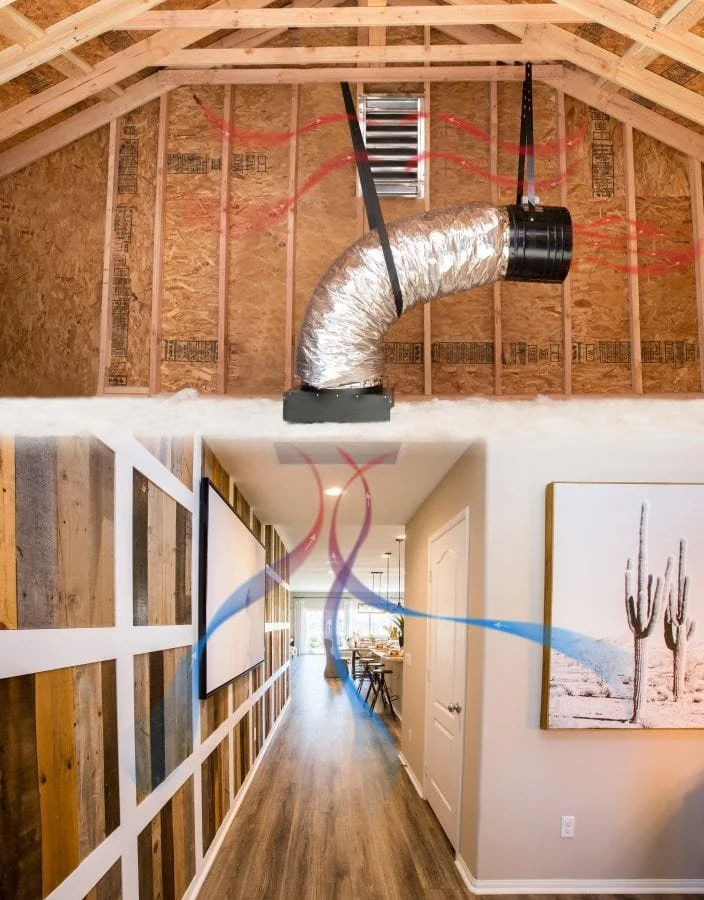
If your home still feels hot at night, you’re missing out on natural cooling. A QuietCool whole house fan can pull cool air through your home and cut AC usage fast. Call (714) 462-4686.
The key difference lies in the fan blade design and motor assembly. Quiet Cool's patented blade geometry moves air more efficiently at lower speeds, which means less noise without sacrificing CFM output. Their motors are also engineered to run cooler and smoother than competitors, reducing vibration transmission to your attic and ceiling. In Orange County's climate, where we use these systems heavily from May through October, that engineering difference adds up to real comfort.
Beyond the mechanical design, Quiet Cool has focused on what they call "intelligent cooling." Their systems include smart dampers, better insulation around the motor, and acoustic dampening materials throughout the unit. We've measured noise levels in sones at the ceiling of homes after installation, and Quiet Cool consistently outperforms standard whole house fans by 6 to 10 decibels. That doesn't sound like much until you're sitting in your living room reading and your cooling system is barely noticeable.
The company also backs their systems with strong warranties and genuine local support. Unlike generic whole house fans sold through big-box retailers, Quiet Cool has a network of certified installers who actually understand their products. This matters when you need service or have questions about your specific installation.
The Complete Quiet Cool Model Lineup Explained
Quiet Cool offers four primary residential models, each designed for different home sizes and performance requirements. Understanding the differences helps you avoid spending too much on capacity you don't need, or conversely, installing a system too small for your space.
The Quiet Cool Classic is the entry-level option, and it's solid for homes under 2,000 square feet. This model moves between 3,000 and 4,000 CFM depending on your attic configuration, and it's remarkably quiet for the price. We've installed many of these in smaller Orange County homes and condos. The Classic uses a single-speed motor and basic damper control, which means you can't fine-tune cooling the way you can with advanced models, but for straightforward situations, it gets the job done. The noise level runs around 0.8 to 1.2 sones at full speed, which is genuinely acceptable for most homeowners.
The Quiet Cool Stealth Pro sits in the middle of the lineup and represents the most popular choice in our Orange County market. We've installed more Stealth Pros than any other model, and there's good reason. This system handles homes from 2,000 to 3,500 square feet and produces between 4,000 and 5,200 CFM. It includes variable speed capability, allowing you to dial down the fan speed for gentler cooling on cooler evenings without sacrificing full power when you need it. The Stealth Pro operates at around 0.6 to 0.9 sones, making it genuinely whisper-quiet compared to what homeowners remember from older systems. The motor is also more efficient than the Classic, which translates to slightly lower energy costs over time.
The Trident Pro is Quiet Cool's premium option for larger homes and heavy-duty applications. Designed for spaces from 3,500 to 6,000 square feet, the Trident Pro moves 5,000 to 7,000 CFM and includes advanced features like a remote control with multiple speed settings and integrated humidity monitoring. This is the model we recommend for bigger Anaheim Hills properties or homes with complex layouts. The engineering is noticeably more sophisticated, with better airflow distribution and even quieter operation than the Stealth Pro. You're paying more upfront, but if your home actually needs that capacity, the Trident Pro is worth it.
Quiet Cool also makes smaller systems for specific applications like bonus rooms or second floors, but these three represent the core lineup for whole-home cooling in Orange County. When sizing, the general rule is that you want enough CFM to completely turn over your home's air every three to five minutes. We calculate this during the consultation phase by looking at square footage, ceiling height, attic ventilation capacity, and local climate patterns.
How Quiet Cool Whole House Fans Actually Cool Your Home
The basic principle of whole house fan operation is simple, but the execution matters. Unlike air conditioning, which cools air by removing heat through refrigeration, a whole house fan pulls hot outside air through your home and exhausts it into the attic, where it vents through soffit and roof vents. This works because at night in Southern California, outside temperatures often drop significantly. When your home is 78 degrees and it's 65 degrees outside, you have a genuine opportunity to cool down without any mechanical refrigeration.
The process works like this. You turn on the Quiet Cool fan, which creates negative pressure inside your home. This draws cooler outside air in through open windows and doors on the shaded sides of your house. The fan pulls this air toward the central location of the fan, creating whole-home circulation. The air then travels upward into the attic, where a damper prevents backflow. Soffit and roof vents allow that air to exit your home and dissipate into the night air.

A properly installed QuietCool whole house fan creates a cooler, more comfortable home by bringing in fresh air and reducing the need for constant AC use.
The key to success is proper window and door management. We tell homeowners to open windows on the north and west sides of their homes, where afternoon shade exists, while keeping south and east sides mostly closed. This guides cool air where you want it. On cooler evenings, you might only need the fan running at 40 to 50 percent capacity, which is where that variable speed capability becomes valuable. The Stealth Pro and Trident Pro let you dial down the speed, reducing noise and energy use while still achieving your cooling goals.
One thing Quiet Cool does better than many competitors is motor efficiency. Their motors operate at higher efficiency ratings than generic whole house fans, meaning less energy wasted as heat. They also run cooler, which extends motor lifespan. In Orange County's climate, where we might run these fans for six to eight months per year, that efficiency difference compounds over time.
Timing matters too. The most effective whole house fan use in our region happens between 9 PM and 6 AM, when outdoor temperatures are coolest. You're essentially storing cool air in your home's thermal mass. Once you've cooled your home down thoroughly, you close the Quiet Cool fan in the morning, shut your windows, and let your home coast through the day on that stored coolness. This is why Quiet Cool fans work so well in Orange County's Mediterranean climate, where nights are predictably cool even when days are very hot.
The Installation Process From a Certified Installer's Perspective
We approach every Quiet Cool installation with the same rigorous process we've refined over twelve years. The installation itself typically takes between four and six hours, depending on your attic access, ductwork configuration, and whether you're upgrading from an existing system or starting fresh.
The first critical step is proper attic venting assessment. Many homeowners don't realize that a whole house fan is only as effective as your attic's ability to exhaust air. If your attic vents are undersized, you'll create a pressure situation that actually reduces performance. We calculate required attic venting using industry standards and your home's square footage. For a typical 3,000 square foot home with a Stealth Pro system, we want at least 500 square inches of attic vent area. We've opened a lot of attics in Yorba Linda and Anaheim Hills where the existing soffit vents were simply inadequate, and we upgraded them as part of the installation.
Placement of the Quiet Cool unit matters significantly. Ideally, the fan goes in a central hallway or main closet ceiling location, somewhere that allows air to easily reach most of your home. We avoid placing fans in bedrooms or living rooms where noise might be an issue. The central location also means cooler air reaches more of your home without traveling as far through ductwork, which means better performance and less resistance.
The ducting and damper installation requires precision. We use proper ductwork sizing to avoid unnecessary resistance. Many lower-quality installations use undersized or kinked ductwork that measurably reduces airflow. We also install motorized dampers that prevent hot attic air from flowing backward into your home during the day when the system is off. This damper automatically closes when the fan isn't running, which is surprisingly important for maintaining your home's cooling during daylight hours.
We also assess whether your home needs additional attic venting. Many Orange County homes were built with minimal attic ventilation because air conditioning was already standard. A whole house fan changes the equation. If your attic vents are inadequate, the installation includes soffit or gable vent additions to handle the airflow. This is work that separates professional installation from a DIY approach that might compromise performance.
Electrical connections are straightforward for licensed contractors, but they require running dedicated circuits from your electrical panel. We pull proper permits for all our installations because electrical work needs inspection, and frankly, any contractor offering unpermitted electrical work is cutting corners. The Quiet Cool system connects to a wall control with speed settings and on/off capability, typically located in a main living area where residents can easily manage the system.
Finally, we test everything. We verify airflow distribution, check damper operation, confirm that attic venting isn't being compromised, and ensure the system operates smoothly across all speed settings. We also review operation best practices with every homeowner because installation is only half the equation. Knowing how to use your Quiet Cool system correctly is what delivers the promised energy savings.
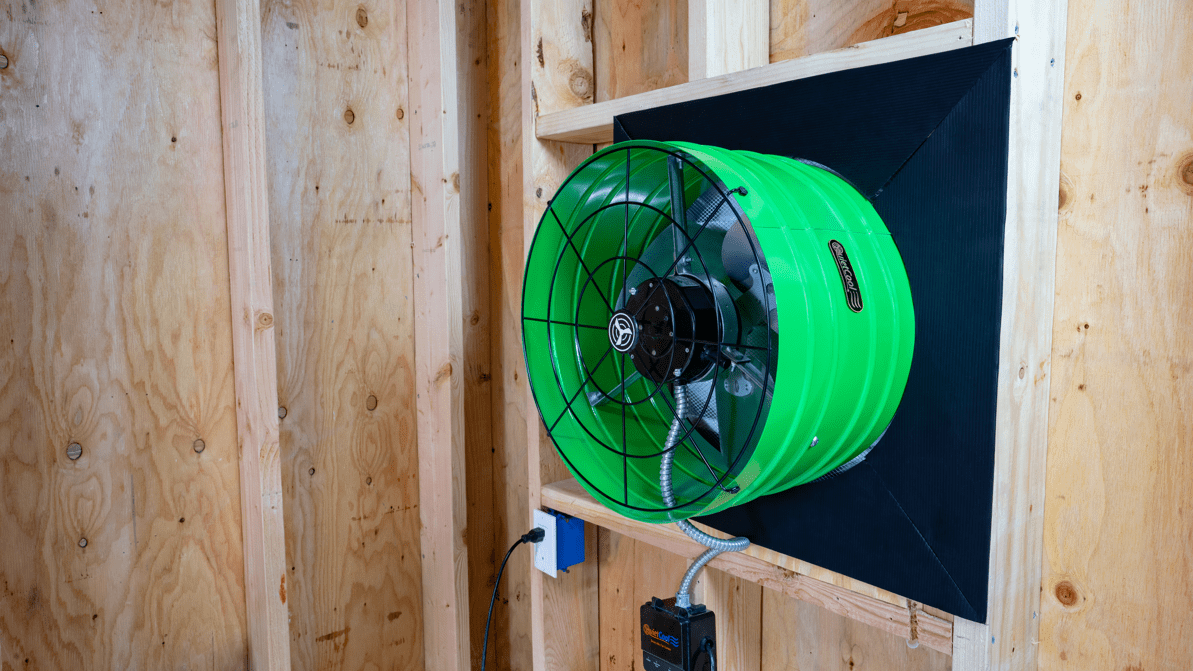
Cool your home more efficiently with a professionally installed QuietCool whole house fan. Call J Martin for expert service in Orange County.
Sizing Your Quiet Cool System for Orange County's Unique Climate
Getting the right size system is crucial, and this is where local knowledge makes a difference. Quiet Cool publishes CFM recommendations based on square footage, but Orange County's specific conditions warrant some additional considerations.
Start with your home's square footage and ceiling height. A Stealth Pro rated for 3,000 to 3,500 square foot homes refers to typical eight-foot ceilings. If your home has nine-foot or cathedral ceilings, you need proportionally more CFM. We also factor in your home's age and insulation. Older homes with poor insulation need slightly less CFM because they don't hold temperature as effectively, while newer, well-sealed homes might need more capacity to achieve the same cooling effect.
Attic ventilation capacity puts a hard ceiling on system sizing. If your home only has 300 square inches of attic vent area, installing a system designed for 5,500 CFM won't deliver that performance because your attic can't exhaust the air fast enough. We assess this in the initial consultation and either recommend a smaller system or plan vent upgrades. In several Anaheim Hills properties we've worked on, upgrading soffit vents before installing the Quiet Cool system actually allowed us to install the larger Stealth Pro instead of a Classic, delivering better performance.
Window and door opening capacity matters too. Your cool air needs a path into your home. Homes with sealed, modern windows might not open as freely as older homes with original windows. We walk through this with every homeowner because part of using a Quiet Cool system effectively is understanding your home's air movement characteristics.
Orange County's specific microclimate also matters. Homes near the coast enjoy more dramatic nighttime temperature drops and more consistent cool breezes, which favor aggressive system sizing. Homes in inland areas like Brea or Placentia get hotter and hold heat longer, which means you need more CFM capacity. During our consultation process, we consider your specific location within Orange County because a home in Tustin has genuinely different cooling needs than a property just a few miles away in a different microclimate.
The goal is selecting a system that handles full cooling on your hottest months, which in Orange County typically means June through August, while also allowing flexibility on cooler evenings when you don't need maximum capacity. Oversizing is wasteful and unnecessary. Undersizing is frustrating and defeats the purpose. We size systems to deliver complete air turnover in five to seven minutes at full capacity, which is the sweet spot for Orange County conditions.
Energy Savings and Return on Investment From Real Orange County Homes
We've collected enough data from our installed systems to speak confidently about energy savings, and the numbers are compelling. In Orange County's climate, Quiet Cool whole house fans can reduce cooling costs by 50 to 90 percent compared to running your AC during the cooling season. That wide range depends on your baseline, how aggressively you use the system, and your home's characteristics.
For a typical Orange County home running air conditioning twelve months per year at current rates, cooling represents about 30 to 40 percent of the annual electric bill. A household paying $200 monthly during cooling months can potentially reduce that to $60 to $100 by maximizing whole house fan usage during favorable conditions. Over a full cooling season from May through October, that's $700 to $1,200 in savings just during the months when Quiet Cool usage is most effective.
System costs for a Stealth Pro installation typically range from $3,500 to $5,500, including the unit, professional installation, ductwork, damper control, and any necessary attic venting upgrades. A Classic system runs $2,500 to $4,000, while a Trident Pro reaches $6,000 to $8,500. These numbers include everything needed for a complete, permitted installation from a certified contractor.
The payback period for most Orange County homeowners falls between three and six years, depending on your baseline cooling costs and how effectively you use the system. If you're someone who adjusts behavior, opening windows at night and running the fan while closing windows during the day, you'll reach payback faster. If you use a Quiet Cool as a supplement to your AC without fundamentally changing cooling behavior, the timeline stretches longer.
Beyond the first payback period, Quiet Cool systems represent genuine long-term savings. We have customers installed ten years ago who are still running their original systems with minimal maintenance. The energy savings after payback becomes pure financial benefit. That compounds to $7,000 to $12,000 in cumulative cooling cost reduction over a system's twenty-year lifespan, not accounting for rising energy rates.
We should mention that these savings require honest assessment of your home's suitability for whole house fan cooling. Homes with poor attic insulation or severe air leakage won't see the full benefit. Homes with sealed windows that don't open easily will struggle with whole house fan operation. Your cooling patterns matter too. If you run AC constantly regardless of outside temperature, a Quiet Cool fan won't save money because you won't use it. But for typical Orange County homeowners who are open to adjusting their cooling approach, the financial case for Quiet Cool installation is genuinely strong.
Quiet Cool Whole House Fans Versus Traditional Whole House Fan Options
The whole house fan category existed long before Quiet Cool invented their quiet approach. Understanding how Quiet Cool compares to generic whole house fans helps clarify why we so consistently recommend them.
Generic whole house fans, typically sold through Home Depot or online retailers, generally cost less initially. You can find basic whole house fans for $800 to $1,500 installed. But they carry significant compromises. The noise level is genuinely problematic. We've had customers in other parts of Orange County install generic fans only to find they create such profound noise that family members won't tolerate running them past 50 percent capacity. At reduced capacity, you don't get the CFM you paid for, undermining the whole value proposition.
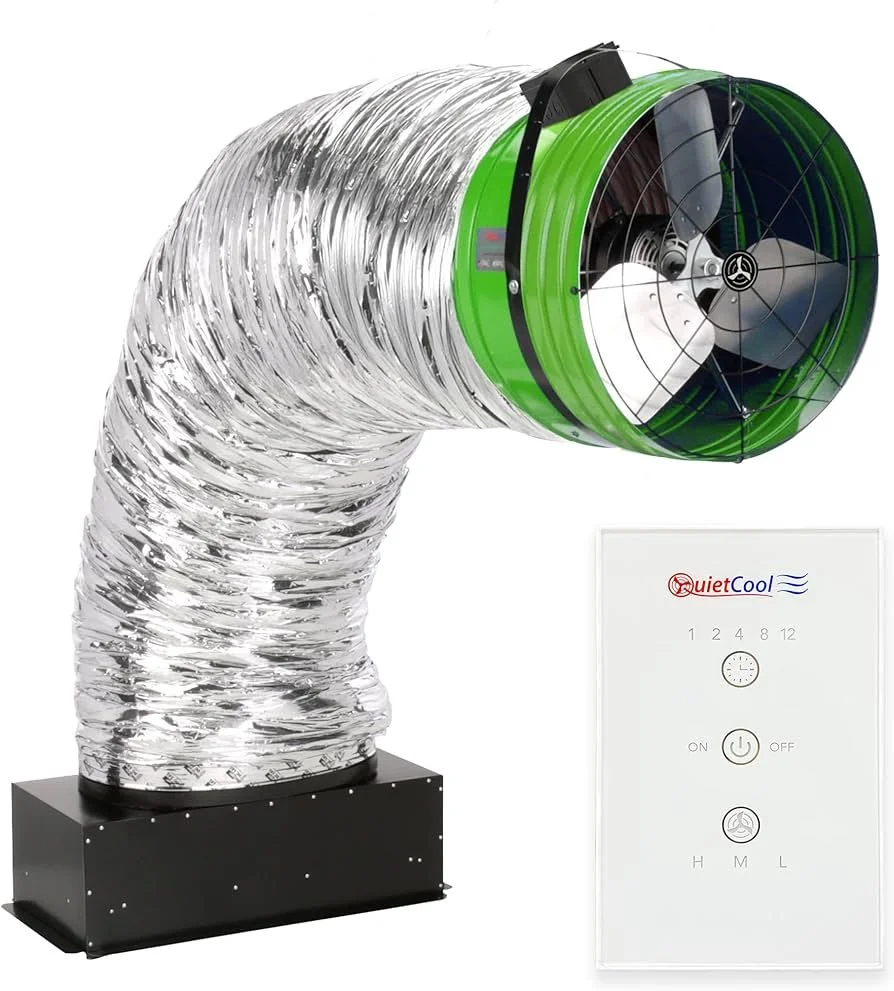
QuietCool whole house fan systems are engineered for efficient airflow, quiet operation, and long-term performance—making them a smart cooling solution for Orange County homes.
Generic fans also typically lack variable speed control, so it's all or nothing. The motor efficiency tends to be lower, meaning higher energy consumption per CFM delivered. Warranties are often shorter and less comprehensive. Repair and support is handled by retailers who have minimal technical expertise with whole house fan systems. We've replaced several generic systems that failed prematurely or never worked properly, and the savings from the lower initial cost evaporated quickly.
Quiet Cool's engineering advances translate to a meaningfully different product. Yes, you pay more upfront, but you're purchasing genuine engineering, proven reliability, and a product designed to be used effectively in real homes. The noise reduction alone makes the system usable in ways that generic alternatives simply aren't. We've never had a homeowner regret investing in Quiet Cool. We've had several regret choosing a cheaper alternative.
There's also the question of installation quality. Quiet Cool maintains a network of certified installers, and we maintain our certification by staying current with installation best practices and quality standards. Installing a generic whole house fan requires no special training, which means quality varies wildly depending on who's handling your installation. We've inspected several DIY or contractor-installed generic fans where ductwork was undersized, dampers were missing, or attic venting was completely inadequate. Those installations work poorly and cost more to fix than proper installation would have cost upfront.
Quiet Cool Whole House Fans Versus Air Conditioning
The natural comparison for many homeowners is whether a Quiet Cool whole house fan can replace air conditioning. The honest answer is that they're complementary rather than replacement technologies, though the relationship is more nuanced than manufacturers sometimes suggest.
Quiet Cool works brilliantly in Orange County's specific climate because our nights cool significantly. When it's 65 degrees outside at 10 PM and 78 degrees inside, you have a genuine cooling opportunity. Running your AC at that moment is wasteful because you're using energy-intensive refrigeration to achieve something nature is already providing. This is the scenario where Quiet Cool saves enormous amounts of money.
But Quiet Cool has limitations that AC doesn't. When it's still 75 degrees at midnight, or when your home has already cooled to 70 degrees, running the fan further produces no benefit. Quiet Cool also requires outdoor temperatures significantly cooler than indoor temperatures, which means it's ineffective during hot daytime hours when you actually want cooling. In June, July, and August, afternoon outdoor temperatures often exceed indoor comfort targets even with AC cooling the home. You genuinely need that AC capacity.
Humidity is another factor. Quiet Cool pulls outside air into your home, and if that air is humid, you're adding moisture. Orange County's humidity isn't usually problematic compared to other regions, but during rare humid periods, AC might provide better results because it removes moisture while cooling. Some Quiet Cool models include humidity sensors, which is thoughtful engineering for addressing this reality.
The practical outcome in our Orange County market is that almost every homeowner benefits most from having both systems working together. Quiet Cool handles favorable nighttime cooling, reducing daytime AC demand. Your AC handles hot daytime hours and maintains comfort when nighttime temperatures don't provide the necessary temperature differential. The combination is more efficient and cost-effective than either system alone.
We counsel against thinking of Quiet Cool as an AC replacement unless you're willing to accept genuinely reduced comfort during hot daytime hours. Most homeowners aren't, and rightfully so. The partnership approach makes both systems more efficient than either one struggling alone. Your AC runs less frequently because the Quiet Cool has pre-cooled your home overnight. The Quiet Cool works within its environmental limits rather than trying to overcome them.
Maintenance, Lifespan, and Long-Term Reliability
One of the underappreciated advantages of Quiet Cool systems is their durability and minimal maintenance requirements. Over twelve years of installing these systems, we've had remarkably few service calls compared to the number of installations. This track record translates to real confidence in recommending the product.
The motor is the critical component, and Quiet Cool's engineering here is noteworthy. We've seen motors last twelve to fifteen years with only basic maintenance. The bearings don't seize up the way some competitor systems do, because Quiet Cool designs them for the specific duty cycle of whole house fan operation. The motor isn't being asked to do something it wasn't designed for, which is key to longevity.
Seasonal maintenance is minimal. Before your first season of heavy use, it's worth checking that the damper operates freely and the ductwork hasn't accumulated dust or debris. We recommend a quick inspection of the attic vents to confirm they're not blocked by insulation or other materials. Once per year during the season, a visual check of the motor area confirms nothing has accumulated around the unit. These are not onerous tasks.
Filters aren't required for whole house fan operation, which is a significant advantage over AC systems. Some homeowners add an intake filter to reduce dust pulling in through windows, but this is optional and reduces airflow slightly. Most of our customers skip the filter and simply manage window opening to minimize dust infiltration.
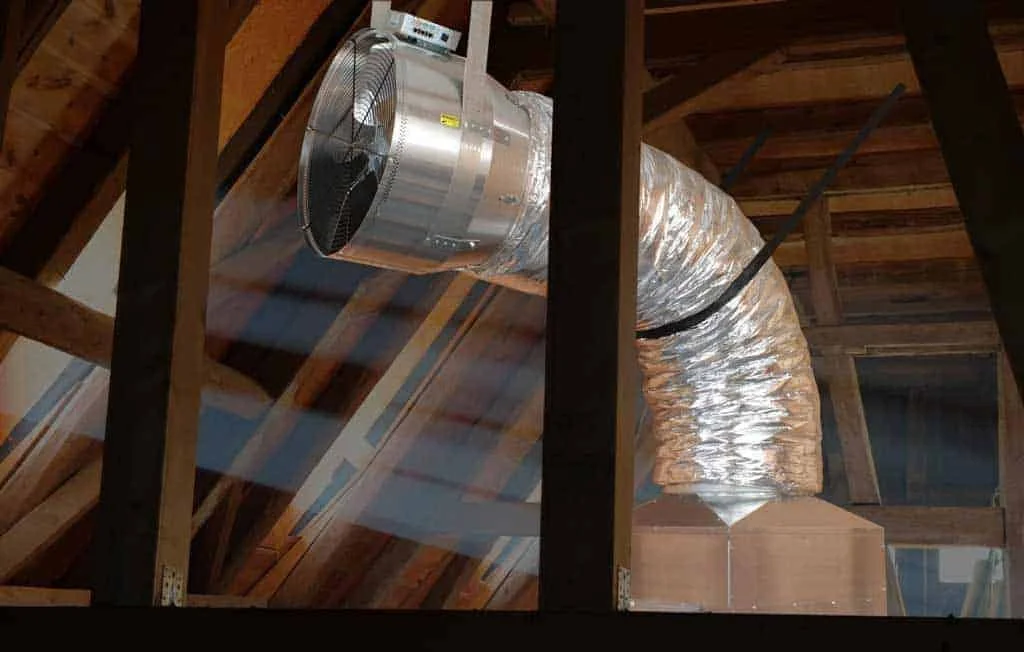
QuietCool whole house fans are built for long-term performance, with many systems lasting 20 to 25 years with minimal maintenance—making them a smart investment for Orange County homeowners.
The damper may require occasional adjustment or cleaning, depending on your home's dust levels. In dustier areas like Placentia or inland areas with more air quality concerns, dampers occasionally accumulate dust that requires cleaning. This is a straightforward task that doesn't require a service call. In cleaner environments, dampers often operate flawlessly for years.
We've had systems run for twelve-plus years in customer homes with minimal intervention beyond basic visual inspection. Contrast this with AC systems requiring refrigerant recharges, compressor repairs, and regular filter changes. Whole house fans are genuinely low-maintenance cooling solutions.
The expected lifespan of a Quiet Cool system is twenty to twenty-five years assuming basic maintenance. This is meaningfully longer than many people anticipate when making the purchase decision. You're investing in equipment that will likely outlast the mortgage on many homes. This longevity justifies the upfront investment when you consider amortized cost.
Common Misconceptions About Quiet Cool Whole House Fans
After twelve years of explaining Quiet Cool systems to Orange County homeowners, certain misconceptions come up repeatedly. Addressing these directly helps you understand what's realistic and what's marketing hype.
The first misconception is that whole house fans provide AC-equivalent cooling. They don't. Whole house fans move air and leverage outside temperature to cool your home. AC creates cold air. These are fundamentally different approaches with different capabilities. A Quiet Cool system makes your home more comfortable and reduces AC usage, but it can't replace AC during hot daytime hours when outside temperatures exceed your comfort target.
The second misconception is that whole house fans work equally in any climate. They don't. Quiet Cool thrives in climates like Orange County's where nighttime temperatures drop substantially. In climates without significant nighttime cooling, whole house fans are far less effective. We have customers who've moved from Orange County to hotter inland regions and found their systems far less useful because nighttime temperatures don't cool sufficiently. This isn't a Quiet Cool problem, it's a climate mismatch.
Many homeowners believe whole house fans eliminate window opening requirements. They don't. A whole house fan requires open windows to pull in outside air. If you want to run your system with closed windows, that defeats the purpose. Some homeowners prefer systems with sealed ductwork bringing in outside air, but these are different products with different benefits. Standard Quiet Cool operation requires windows or doors open during system use.
Another misconception is that larger CFM capacity is always better. It's not. An oversized system costs more, uses more energy, and often operates inefficiently. A system sized correctly for your home's actual cooling needs performs better and costs less to operate. This is another area where professional installation and consultation genuinely matters.
Some people think whole house fans eliminate attic heat. They don't. During daytime, attic heat is a separate issue from home cooling. Running a whole house fan during the day would just pull hot attic air into your living space, making things worse. Whole house fans are specifically designed for nighttime use when attic and outside temperatures are favorable.
Finally, some homeowners think whole house fans are unsafe or create security risks. In reality, a modern Quiet Cool system with proper ductwork and damper control is secure. Windows are open, but so they are every evening when you might have them open anyway. The system itself creates no security vulnerability. Using security bars on windows if that's a concern is a separate decision from whole house fan operation.
Case Study: How a Quiet Cool Stealth Pro Transformed a 2,600 Square Foot Anaheim Hills Home
We want to share a specific installation story that illustrates everything we've discussed about Quiet Cool performance in Orange County homes. This case study is based on a real project from 2023 in Anaheim Hills.
The family came to us with a frustrating situation. Their 2,600 square foot home, built in 1998, had original single-stage air conditioning and significant cooling costs during summer months. Their June through August electric bills regularly hit $280 to $320 monthly despite aggressive AC usage. Additionally, the family included a nine-year-old daughter with environmental allergies that made them sensitive to air quality. They'd been told that opening windows might worsen her symptoms, but the home felt stale with windows always closed and AC running constantly.
During our consultation, we learned that their attic had adequate soffit venting but no gable vents, creating somewhat limited air exhaust capacity. We also discovered that their nighttime outside temperatures dropped reliably into the low 60s during summer months, which is ideal for whole house fan operation. Their home layout had a central hallway with a ceiling access that would work perfectly for a Quiet Cool installation. All the environmental factors aligned well for a Stealth Pro system.
We recommended a Quiet Cool Stealth Pro with upgraded attic venting. The system would pull in cool nighttime air through windows on the north and west sides of the home while exhausting hot air through upgraded soffit and newly installed gable vents. Variable speed capability would allow them to dial back fan speed on cooler nights when maximum CFM wasn't needed.
The installation took five hours, including running the dedicated electrical circuit, installing ductwork and damper, adding the gable vents, and extensive testing. The total cost came to $4,800, which factored into their financial planning immediately.
Results came quickly. In the first summer after installation, their July cooling bill dropped to $94. That was remarkable but required behavior change. This family committed to opening windows after 9 PM every evening during the cooling season. They ran the Quiet Cool Stealth Pro at full speed on warmer nights and reduced speed on cooler evenings. By 6 AM, they closed the system and sealed windows for the daytime. This pattern became routine within a few weeks.
The energy savings exceeded expectations. That single July bill compared to previous July bills running $300 to $320 meant monthly savings of $200 to $220. Over a six-month cooling season, the difference totaled $1,200 to $1,320 annually. The system paid for itself in less than four years.
But the family also discovered an unexpected benefit related to the daughter's allergies. We were skeptical when they initially mentioned allergies as a concern, expecting air conditioning to be superior for allergy sufferers. In reality, their experience showed the reverse. Running AC constantly in a sealed home recirculates the same indoor air, trapping allergens. Opening windows in the evening and using the Quiet Cool system to completely turn over the home's air actually improved her symptoms by introducing fresh outside air that had cooled overnight and settled from the airborne pollen that's most active during hot daytime hours.
The family has now run this system through four complete summers. Their cooling bills have stabilized at approximately $1,200 to $1,400 annually, compared to the previous $1,800 to $1,900. That's consistent 25 to 30 percent energy reduction compared to their pre-installation baseline. They've moved from dreading summer electric bills to seeing cooling as genuinely manageable. They run their AC selectively when nighttime temperatures don't cool sufficiently, which happens maybe ten to fifteen days per summer. The rest of the time, the Quiet Cool system handles cooling with minimal AC support.
This isn't a case of miraculous results or unusual circumstances. It's what we see repeatedly in Orange County homes when Quiet Cool is properly installed and the homeowner commits to using the system as designed. The combination of genuine energy savings, improved air quality, and reliable comfort makes the investment rational.

Create a cooler, more comfortable home for your family with a QuietCool whole house fan. Call J Martin for expert installation in Orange County.
Making the Decision and Moving Forward With Installation
If you've read this far, you're probably seriously considering a Quiet Cool installation for your Orange County home. Here's what we recommend as your next steps.
First, assess whether your home fits the profile. Do you have adequate attic venting capacity or willingness to upgrade it? Can you realistically open windows during nighttime hours? Do your nighttime summer temperatures cool significantly compared to daytime highs? If you answered yes to these questions, Quiet Cool is likely worth pursuing.
Second, get a professional assessment from a certified installer. We offer free consultations to Orange County homeowners because we want you to make an informed decision with complete information about your specific home's situation. We'll calculate your home's actual CFM requirements, assess your attic venting, discuss the installation process, and provide a transparent quote. No pressure, just information.
Third, understand the financial realities. Calculate your current cooling costs and think seriously about whether you're willing to adjust your usage patterns. A Quiet Cool system requires some behavioral change to deliver maximum savings. If you're fundamentally unwilling to open windows at night, the return on investment stretches longer. If you're ready to work with the system as designed, the financial case is compelling.
Finally, if you decide to move forward, choose a certified Quiet Cool installer. Installation quality matters profoundly in determining whether your system meets its performance potential. The difference between professional installation and a DIY approach, or an inexperienced contractor, often means the difference between genuine energy savings and disappointing results.
We've successfully installed Quiet Cool systems in Yorba Linda, Anaheim Hills, Brea, Placentia, Villa Park, Fullerton, Tustin, and throughout Orange County. We hold a 4.97 out of 5 star rating from more than 100 Google reviews and maintain our Quiet Cool certification through ongoing training and quality commitment. Our installers combine twenty-seven years of combined experience in whole house ventilation and cooling systems.
If you'd like to discuss whether a Quiet Cool whole house fan is right for your Orange County home, we're happy to talk through your specific situation. You can reach us at (714) 462-4686 or visit us online at jmartiniaq.com. We also encourage you to explore our other resources about whole house fans in general, our air conditioning services, or contact us directly at our contact page.
Spring and early summer are the ideal times for whole house fan installation because you'll be able to operate the system for a full season of cooling benefit. We're currently booking installations through April, so if you're interested in getting your home set up before peak summer heat arrives, reach out soon.
Why Quiet Cool Systems Matter for Orange County Homeowners
After twelve years of installing whole house fans across Orange County, our perspective has crystallized around one fundamental reality. Quiet Cool whole house fans represent genuinely intelligent cooling technology specifically suited to our region's climate and the way modern homeowners want to live.
These systems aren't perfect solutions and they're not right for every home. But for the majority of Orange County homeowners willing to use them as designed, Quiet Cool systems deliver three specific benefits that traditional cooling approaches don't provide simultaneously. First, they reduce energy costs significantly without sacrificing comfort. Second, they improve indoor air quality through fresh air circulation. Third, they operate with such low noise that you'll forget they're running.
The engineering that makes this possible isn't accidental. Quiet Cool's investment in quieter blade design, motor efficiency, and smart controls reflects genuine commitment to improving how people experience home cooling. Combined with professional installation from certified contractors who understand Orange County's specific climate, the results speak for themselves.
If you're tired of summer energy bills and interested in exploring a smarter cooling approach, we invite you to reach out. We'll assess your home's specific situation, discuss whether Quiet Cool is the right fit, and answer any questions you have about installation, operation, or financial expectations. You can call us at (714) 462-4686 today.