
The 1970s and 80s Tract Home HVAC Problem Every Fullerton Homeowner Should Know
Updated on May 18, 2026
A couple in Sunny Hills called us last summer after their July electric bill hit $487. Their home is about 2,100 square feet. Four bedrooms, two stories, built in 1978. The AC ran almost continuously during the day, and even then the upstairs bedrooms never dropped below 80 degrees when it was hot outside. They'd had two different HVAC companies come out over the previous year. Both said the system was "working fine" and suggested they just needed a new thermostat. When our technician climbed into the attic, he found the real story. The flex duct feeding the two upstairs bedrooms had completely separated from the trunk line. For what was likely years, their system had been pumping cooled air directly into the attic instead of into those rooms. The ductwork insulation throughout the attic had degraded to the point where it was barely functional. And the system itself, a 4-ton single-speed unit original to the house, was working its heart out trying to cool a home that was bleeding conditioned air from a dozen different points.
The fix wasn't a new thermostat. It was a comprehensive duct repair, new insulation wrapping on the accessible runs, and a conversation about the system's remaining lifespan. Their next electric bill dropped by over $140.
This story isn't unusual. We hear versions of it constantly at J Martin Indoor Air Quality, and the homes involved are almost always the same vintage: 1960s through 1980s tract construction. Fullerton has more of these homes per square mile than nearly any other city in Orange County, and the HVAC problems baked into them are specific, predictable, and fixable once you understand what you're dealing with.
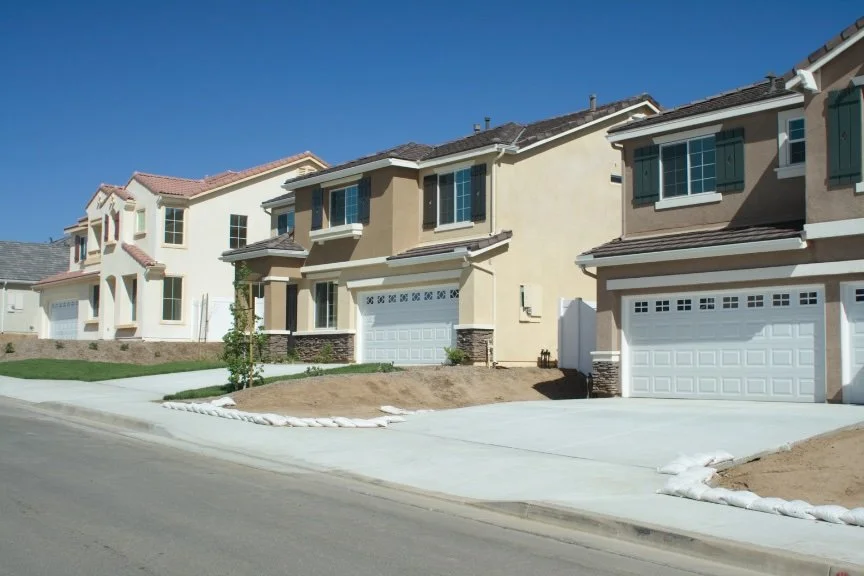
If your Fullerton home was built in the 1970s or 80s, the HVAC problems inside it are predictable, specific, and fixable. Knowing what you are dealing with is the first step to solving it.
Why Fullerton Has More of This Problem Than Almost Anywhere
Fullerton's population exploded from around 56,000 in 1960 to nearly 102,000 by 1980. At the peak of the building boom in the mid-1950s, developers were putting up 27 new homes every single weekday. Orange groves and oil fields disappeared almost overnight as entire neighborhoods rose from bare dirt in a matter of months. The scale was staggering: in 1955 alone, the city approved 55 new residential tracts totaling 3,910 lots.
That building frenzy continued through the 1960s, 70s, and into the 80s, spreading north and east into what became Sunny Hills, the neighborhoods along Bastanchury Road, the areas around Laguna Lake, and the developments flanking State College Boulevard near Cal State Fullerton. These homes were bigger than the post-war builds, typically 1,400 to 2,500 square feet, and they were the first generation in Fullerton to be built with central air conditioning as a standard feature rather than a luxury add-on.
Today, the vast majority of Fullerton's 50,000-plus housing units predate 1990. Amerige Heights, built on the former Hughes Aircraft campus between 2001 and 2004, is one of the only neighborhoods with truly modern construction. The Eichler-built Fullerton Grove homes near Euclid and Valencia date to the 1950s. Everything in between represents decades of building practices, materials, and HVAC design standards that were dramatically different from what we know and require today.
Fullerton's climate makes all of this worse. Average summer highs reach the mid-80s, with August typically the hottest month. But those averages hide the reality. Heat waves in northern Orange County routinely push Fullerton into the upper 90s and triple digits. In September 2024, Fullerton was under a heat advisory as temperatures climbed 12 to 14 degrees above normal, with forecasts approaching 100 degrees. During those stretches, every weakness in a 1970s-era HVAC system gets exposed.
Problem One: Ductwork That's Been Baking for Decades
This is the single biggest HVAC problem in Fullerton tract homes, and it's the one almost nobody thinks about until a technician climbs into their attic and shows them what's happening.
In most Fullerton homes built between 1965 and 1990, the ductwork runs through the attic. That was standard practice at the time and remains the most common configuration in single-story and many two-story homes across the city. The problem is that Fullerton attics regularly exceed 150 degrees during summer. Some we've measured have hit 160 or even 170 degrees on the worst days. Your ductwork has been sitting in that extreme heat for 35 to 55 years, and the damage is cumulative and relentless.
The flex duct used in most tract homes from this era has a limited lifespan. The inner liner deteriorates. The insulation wrap, typically only R-4 or R-6 back then (compared to the R-8 minimum required by today's code), compresses and breaks down over decades. The vapor barrier on the outside cracks and peels away. Connections at trunk lines and branch takeoffs loosen as materials expand and contract through thousands of heating and cooling cycles. Gravity causes unsupported runs to sag, creating low points that restrict airflow. And in some homes, we find sections that have been crushed by stored items, punctured during other home improvement projects, or chewed through by rodents.
The result is a duct system that leaks conditioned air into the attic, allows scorching hot attic air to infiltrate the supply stream, and delivers air to your rooms that's significantly warmer than what left your air handler. The Department of Energy estimates that duct losses account for up to 30% of a home's cooling energy in some cases. In a Fullerton tract home with original 1970s ductwork sitting in a 160-degree attic, that number can be even higher.
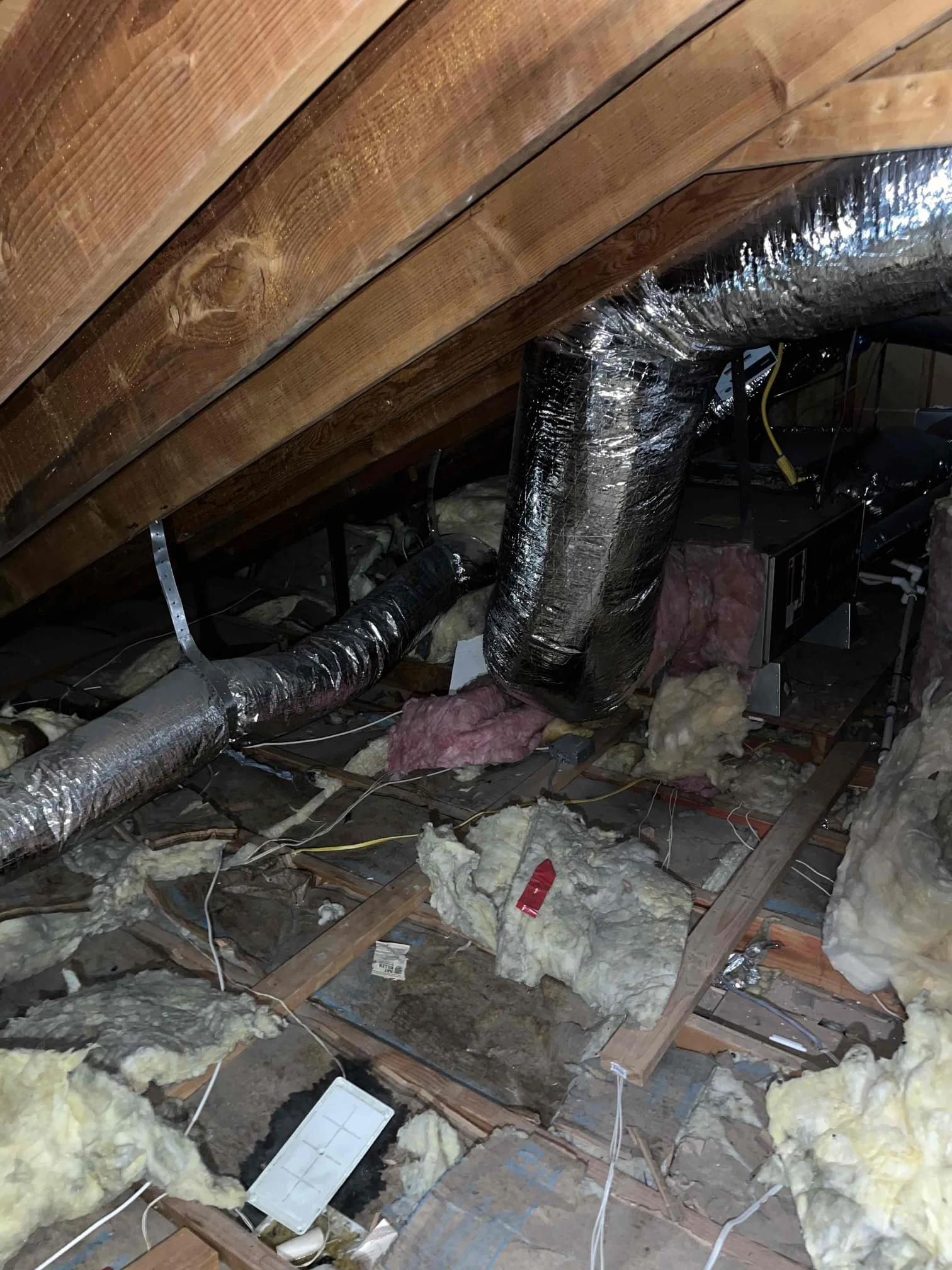
This is what 40 years of sitting in a 160-degree attic does to ductwork and insulation. If your Fullerton home was built in the 1970s or 80s, there is a good chance your attic looks like this. Call J Martin at (714) 462-4686.
You feel this as rooms that never seem to get comfortable no matter how long the AC runs, wild temperature differences between rooms on the same floor, energy bills that seem way too high for your home's size, and a system that runs almost continuously on hot days without ever satisfying the thermostat.
Professional duct sealing, where a technician locates and seals leaks at joints and connections, typically costs $300 to $1,000 depending on the number of leaks and accessibility. Full duct replacement, which is sometimes the better investment for systems that are beyond repair, ranges from $2,000 to $6,000 for a standard Fullerton home. It's not cheap, but when your existing ductwork is dumping 25% to 30% of your cooled air into the attic, the payback in lower energy bills and improved comfort is substantial.
For a deeper look at what happens inside aging ductwork and how to evaluate whether cleaning, sealing, or replacement makes the most sense for your situation, our Complete Guide to Air Duct Cleaning covers the entire topic.
Problem Two: The Original System Was Probably the Wrong Size
HVAC sizing in the 1970s and 1980s was more art than science. Load calculations, when they were done at all, relied on simplified rules of thumb rather than the detailed Manual J calculations that modern HVAC design requires. A common shortcut was to size the system based purely on square footage without properly accounting for window area, orientation, insulation levels, ceiling height, number of occupants, or the specific thermal characteristics of the home.
In Fullerton, this created two opposite problems depending on the neighborhood and the builder.
In many of the more modest tract homes in western and central Fullerton, systems were undersized. A 2.5-ton unit was installed in a home that genuinely needed 3 or 3.5 tons based on actual cooling load. These homes struggle every summer. The AC runs constantly but can't pull the temperature down to the setpoint, the compressor never cycles off, energy consumption stays at maximum, and mechanical wear accelerates. If your home has always had that "the AC runs all day but some rooms are still warm" problem and multiple technicians have told you the system is "working fine," undersizing from the original installation is a likely culprit.
In the larger hillside homes in Sunny Hills and the estates along Bastanchury Road, the opposite problem is surprisingly common. Oversized systems. A builder or contractor, wanting to make absolutely sure the homeowner never complained about cooling capacity, would install a 5-ton system where 3.5 or 4 tons was the correct size. An oversized system sounds like it would be better, but it isn't. It cools the air so quickly that it reaches the thermostat setpoint before it's had time to adequately dehumidify the air or distribute cooling evenly throughout the house. This is called short-cycling. The house feels clammy and inconsistent. Some rooms get blasted with cold air while others barely register a change. The frequent on-off cycling puts extra stress on the compressor, which is the most expensive single component to replace, typically running $1,500 to $3,000 for parts and labor.
A proper Manual J load calculation costs $150 to $500 when done as a standalone service, or it's often included in the evaluation when you're getting quotes for a system replacement. If your system was installed 30 or 40 years ago without one, there's a meaningful chance it was never the right size for your home.
Problem Three: R-22 Refrigerant and the Slow Financial Drain
If your Fullerton home still has an air conditioning system from the 1980s or early 1990s, or if the system was replaced before roughly 2010, there's a strong probability it uses R-22 refrigerant, commonly known as Freon. R-22 was the industry standard for residential cooling for decades. The problem is that it was banned from production in the United States in 2020 because of its ozone-depleting properties, and the remaining supply has been shrinking every year since.
What this means in practical terms is simple: if your system develops a refrigerant leak and needs a recharge, you're buying a product with a fixed and dwindling supply. R-22 recharges currently cost between $150 and $600 depending on how much refrigerant is needed, and that price has been climbing steadily year over year. Five years ago, the same service might have cost $75 to $200.
The newer standard, R-410A, replaced R-22 in systems manufactured after 2010. But R-410A itself is now being phased out of new equipment. Starting January 2025, manufacturers can no longer build new systems that use R-410A. Next-generation refrigerants like R-454B (marketed as Opteon XL41) and R-32 are taking its place, both with significantly lower global warming potential. Existing R-410A systems will continue to be serviced for years to come, but the long-term price trajectory follows the same pattern as R-22: as production shifts away, costs for recharges will eventually rise.
If your Fullerton home has an R-22 system that's still limping along, you're facing a decision that gets more expensive with each passing year. Every repair that involves refrigerant costs more than it did the year before. And at some point, usually when the system fails on a triple-digit day in August, you're forced into an emergency replacement at peak-season pricing instead of a planned replacement on your own timeline with time to compare options and take advantage of rebates. If you're trying to figure out exactly when that tipping point hits for your system, our repair-or-replace decision framework walks through the $5,000 rule and the seven factors that determine which call actually saves you money, including system age, refrigerant type, and repair history. And once you've decided replacement is the right move, our 2025-2026 HVAC Replacement Cost Guide for Orange County breaks down exact pricing, rebate opportunities (some up to $8,000 for qualifying systems), and the financial crossover point where replacement beats continued repair.
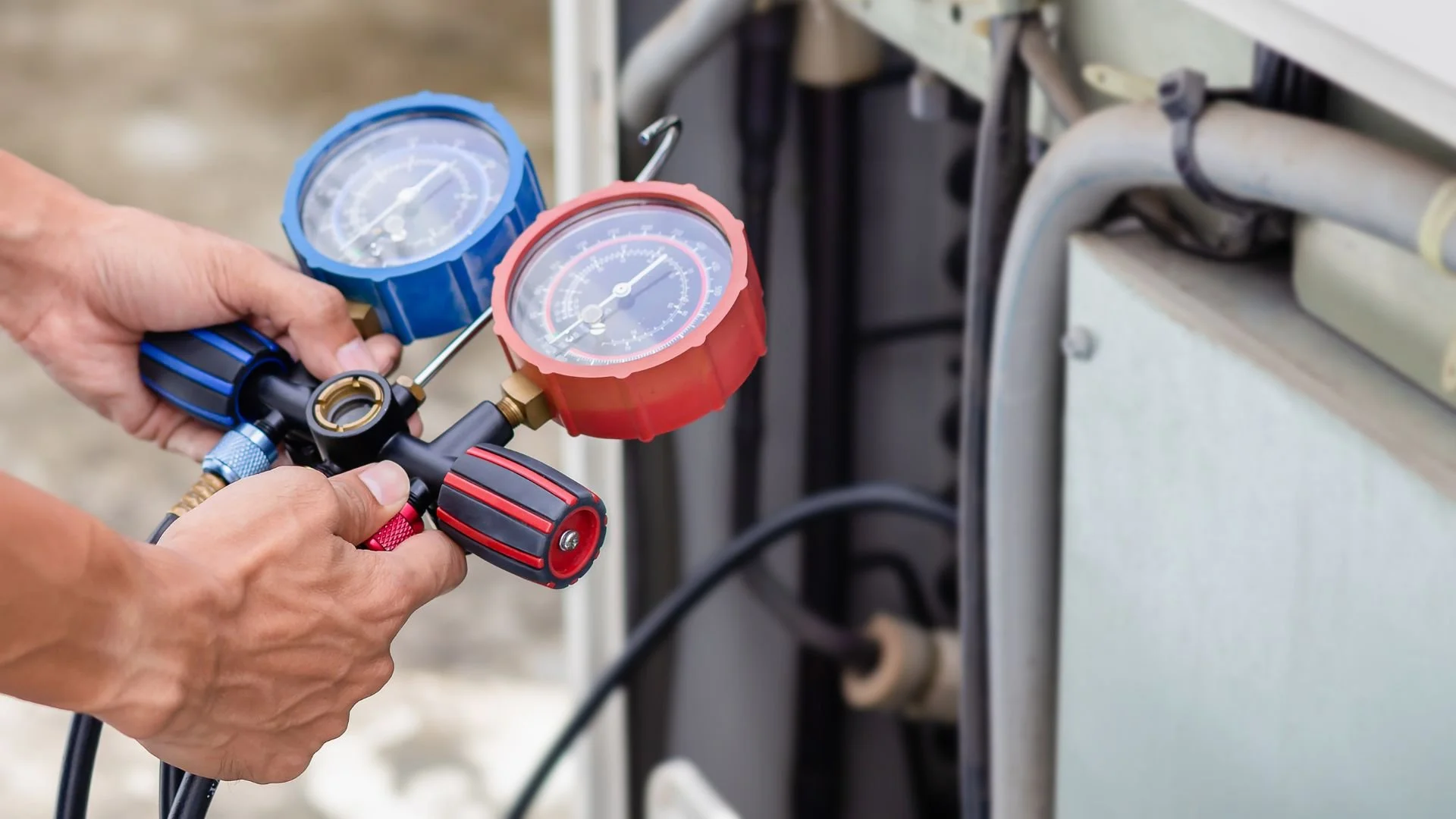
A refrigerant pressure check takes minutes and can tell you everything about what your system is hiding. If yours has not been checked recently, call J Martin at (714) 462-4686 before the summer heat finds the problem for you.
Problem Four: Insulation That's Half of What Modern Code Requires
Building codes in the 1970s required significantly less insulation than what's mandated today. A home built in Fullerton in 1975 might have R-19 attic insulation. Today's California Title 24 energy code requires R-38 or higher for attic spaces in our climate zone. That's roughly double the insulating value.
In practical terms, this means heat from the attic radiates more easily into your living spaces during summer, and conditioned air escapes more readily through the ceiling. Your HVAC system has to work harder and run longer to maintain the same temperature. On a 95-degree day, the difference between R-19 and R-38 attic insulation can translate to 20% to 30% more runtime for your AC. Over a full Fullerton cooling season, which can stretch from May through October, that adds up to hundreds of dollars in extra electricity.
Insulation also degrades over time. Fiberglass batts compress, settle, and lose their effectiveness as they age. If your insulation has been sitting in extreme attic heat for four or five decades, it's almost certainly performing below its original R-19 rating, let alone below the R-38 modern standard. Some homes we inspect have insulation so compressed and deteriorated that it's providing R-10 or less of actual insulating value.
The good news is that adding insulation is one of the most cost-effective energy upgrades available for Fullerton tract homes. Blown-in cellulose or fiberglass can be added on top of existing insulation without removing it. The cost typically runs $1,500 to $3,000 for a standard home, and most homeowners see enough reduction in energy bills to recoup that investment within two to four years. It also reduces the thermal load on your HVAC system, which means less wear on your equipment and a longer lifespan for your AC and furnace.
Problem Five: Single-Speed Equipment in a Variable World
The vast majority of HVAC systems installed in Fullerton tract homes through the 1990s were single-speed. The compressor was either running at 100% capacity or completely off. The blower motor was either at full blast or sitting idle. No middle ground, no modulation, no subtlety.
Modern HVAC technology has moved far beyond this. Variable-speed and two-stage systems can operate at 40%, 60%, or 80% capacity, matching their output to the actual cooling demand at any given moment. This is dramatically more efficient and comfortable. A single-speed system is like driving a car with the gas pedal either floored or fully released. A variable-speed system is like normal driving, with smooth acceleration that uses far less fuel and creates a far more comfortable ride.
Variable-speed systems also run for longer periods at lower capacity, which has several important benefits. They dehumidify the air more effectively because the air spends more time passing over the cold evaporator coil. They distribute cooling more evenly because air is constantly circulating rather than blasting in short bursts. They operate much more quietly because the fan isn't running at maximum speed. And they maintain a much tighter temperature band throughout the house, eliminating the hot-cold-hot swings that Fullerton homeowners in older homes are so accustomed to.
The cost difference between replacing an aging single-speed system with a comparable single-speed unit versus upgrading to a variable-speed system is typically $1,500 to $3,500 at the time of installation. Over the life of the system (15 to 20 years), the energy savings from variable-speed operation often more than offset that upfront difference, especially in a climate like Fullerton's where the AC runs for five to six months of the year.
And while we're on the topic of how air moves through your home: if you've been closing vents in rooms you don't use to try to save money or redirect cooling, you're actually making things worse. Closing supply vents increases duct pressure, which causes more leakage, strains your equipment, and can lead to expensive repairs. We wrote an entire post explaining the truth about closing vents in unused rooms and what to do instead.
Problem Six: One Thermostat Trying to Control an Entire House
Tract homes from the 1970s and 80s were designed with a single thermostat controlling one HVAC system that serves the entire house. One temperature reading, one control point, and the implicit assumption that every room would be roughly the same temperature. That assumption has never been true, and it's especially wrong in two-story homes or homes with varied sun exposures and window configurations.
A south-facing living room with large windows in a Sunny Hills home absorbs dramatically more solar heat than a north-facing bedroom on the same floor. In a single-zone system, the thermostat, usually mounted in a central hallway, reads a comfortable 76 degrees while that south-facing room is sitting at 82 and the north-facing bedroom has dropped to 72. You end up overcooling half the house just to make the other half bearable, wasting energy and still not achieving real comfort.
In two-story homes, the problem compounds because of basic physics: heat rises. The upstairs of a 1970s Fullerton two-story is almost always warmer than the downstairs when the AC is running, sometimes by 5 to 8 degrees. Homeowners set the thermostat low enough to keep the upstairs tolerable, which turns the downstairs into a refrigerator. Energy is wasted. Nobody is truly comfortable. And the system runs far more than it should.
Modern zoned systems solve this with motorized dampers in the ductwork and multiple thermostats that independently control different areas. The cost for a zoning retrofit in an existing home ranges from $2,000 to $5,000 depending on the complexity of the duct system and the number of zones needed. Ductless mini-split systems are another option, particularly effective for rooms that were added after the original construction, converted garages, enclosed patios, or bonus rooms that the existing duct system was never designed to reach. A single-zone mini-split installation typically runs $3,000 to $5,000 and provides independent heating and cooling without any ductwork at all.
Strange Smells When You Fire Up the System? Don't Ignore Them.
One more thing worth mentioning for homeowners in older tract homes: when you turn on your heating or cooling system for the first time after a seasonal change, pay attention to what you smell. A brief dusty odor during the first few minutes is normal and expected, especially in a system that's been sitting idle for months. Dust accumulates on the heat exchanger, burners, and heating elements, and it burns off when the system fires up.
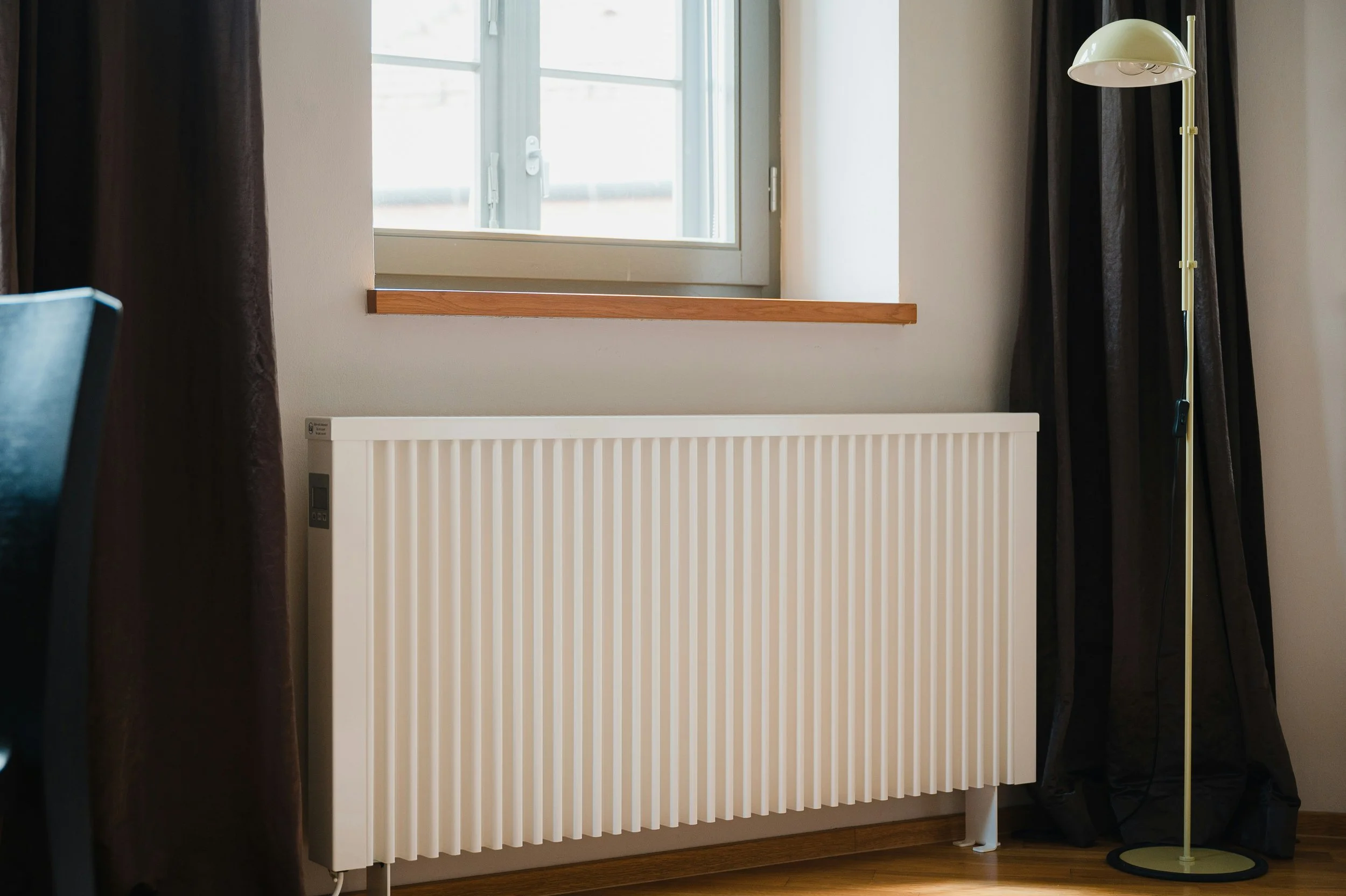
Most Fullerton homeowners inherited the heating system that came with the house and never thought twice about it. That is usually exactly when it starts costing the most.
But persistent smells deserve attention. Anything chemical, metallic, or musty that doesn't clear within 15 to 30 minutes could indicate a real problem. Burning or electrical smells can signal overheating wires, failing capacitors, or deteriorating insulation on electrical components. Musty or moldy odors suggest contamination in the ductwork or on the evaporator coil, which is especially common in older homes where duct connections have loosened over the years and allowed moisture to enter. A rotten egg smell near a gas furnace means you should get everyone out of the house immediately and call your gas company from outside, as this indicates a potential gas leak.
We wrote a detailed guide on what different HVAC smells mean and when to worry that covers heating season specifically, but the same principles apply when you fire up the AC in spring.
How to Tell If Your Home Has These Problems: A DIY Walkthrough
You don't need a professional to get a preliminary sense of where your home stands. Before you call anyone, spend 30 minutes doing some basic checks that will tell you a lot about the state of your system.
Start with a temperature test. On a warm day when your AC has been running for at least 20 minutes, use an inexpensive digital thermometer (the instant-read kind you'd use for cooking works fine) to check the temperature at every supply register in your home. Write down each reading and compare them. In a healthy system, registers on the same floor should be within 2 to 3 degrees of each other. If you're seeing differences of 5 degrees or more, particularly with certain rooms consistently warmer than others, you likely have ductwork problems, sizing issues, or both. In a two-story home, also compare the average upstairs register temperature to the average downstairs. A gap of more than 3 to 4 degrees points toward the zoning problem described earlier.
Next, check your supply air temperature directly at the register closest to the air handler (usually the one with the strongest airflow) and compare it to the temperature at the return air grille. In a properly functioning system, the supply air should be 15 to 20 degrees cooler than the return air. If the difference is less than 15 degrees, your system isn't cooling the air adequately, which could indicate low refrigerant, a dirty evaporator coil, or ductwork that's gaining heat between the air handler and the registers.
If you can safely access your attic (use proper lighting, step only on joists or a sturdy walkway, and don't go up there on a hot afternoon), look at the condition of your ductwork. You're looking for visible disconnections, sagging sections that create low points, crushed or kinked runs, torn insulation wrapping, and any sections that look like they've been damaged or disturbed. You're also looking at your insulation. If you can see the ceiling joists above the insulation, or if the insulation is clearly compressed and matted down, you're well below modern insulation standards. Insulation that's doing its job should be fluffy and should completely cover the joists.
Check your air filter. Pull it out and hold it up to light. If you can't see any light through it, it's overdue for replacement. While you're at it, note the MERV rating printed on the frame. Most 1970s and 80s tract homes were designed for basic fiberglass filters (MERV 1 to 4). If you've been using MERV 13 or higher filters without verifying your system can handle the increased restriction, you may actually be starving your equipment of airflow, which causes its own set of problems including frozen coils and premature compressor failure.
Finally, go outside and look at your condenser unit, the large box with a fan on top. Clear away any vegetation, debris, or stored items within at least two feet on all sides. Look at the aluminum fins on the exterior. If they're caked with dirt, pet hair, cottonwood fuzz, or cobwebs, airflow is restricted and your system's efficiency is suffering. You can gently rinse them with a garden hose (spray from the inside out, not the outside in) to clear surface debris.
These checks won't tell you everything, but they'll give you a solid baseline understanding of your system's condition and help you have a much more productive conversation when you do bring in a professional.
When to Call a Professional Immediately
Most of the problems described in this post are gradual. They develop over years and get worse slowly. But there are situations where waiting is not the right move and you need a qualified technician as soon as possible.
If you hear a hissing or bubbling sound coming from your AC unit or near the refrigerant lines, that likely indicates a refrigerant leak. Refrigerant leaks don't fix themselves, the leak will only get worse, and running a system that's low on refrigerant can destroy the compressor (a $1,500 to $3,000 repair).
If you see ice forming on the refrigerant lines or on the indoor evaporator coil, shut the system off and call for service. Ice formation usually means either restricted airflow (often a clogged filter or blocked return) or low refrigerant, and continuing to run the system in that condition can cause serious and expensive damage.
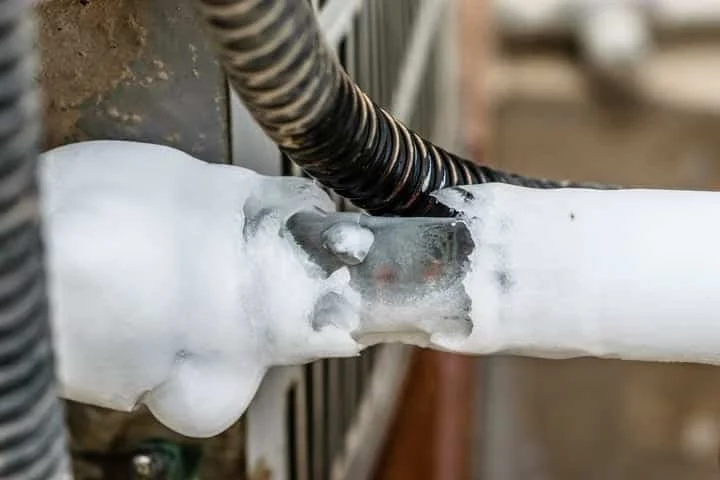
Ice on your AC lines is never normal. It means either restricted airflow or low refrigerant, both of which are especially common in aging Fullerton tract homes with deteriorated ductwork and decades of deferred maintenance.
If your circuit breaker trips repeatedly when the AC turns on, that's an electrical problem that needs professional diagnosis. It could be a failing compressor, a short in the wiring, or a capacitor that's going bad. Do not simply keep resetting the breaker and running the system, as this creates a fire risk.
If you smell something burning, specifically an acrid electrical smell, shut the system off immediately and call a professional. This could indicate overheating wiring, a failing motor, or a component that's about to fail.
And if your system is making grinding, screeching, or banging noises that are new, something mechanical has likely failed or is about to. Motors, bearings, fan blades, and compressor internals don't announce their failure gently. If you hear it, address it before a $200 repair becomes a $2,000 one.
What You Can Actually Do About All of This
If you're reading this and recognizing your own home in these descriptions, here's the encouraging part: you don't have to fix everything at once. These problems developed over decades, and addressing them can happen strategically, starting with the highest-impact improvements and working outward.
The first step is understanding exactly what you're dealing with. A professional HVAC evaluation that includes a thorough duct inspection, a Manual J load calculation, and a full system assessment gives you a clear picture of where your home stands and which investments will deliver the biggest return. A good evaluation costs $100 to $300, and it's money well spent because it prevents you from throwing $5,000 at a new system when $800 in duct sealing would have solved 80% of the problem.
If your ductwork is the primary issue, sealing and insulating it is almost always the highest-return first step. In some cases, a thorough professional duct cleaning followed by targeted sealing can restore significant performance without full replacement. If the system itself is approaching or past 15 years and uses R-22, the math increasingly favors planned replacement over continued repairs. A new high-efficiency system paired with properly sealed ductwork can cut cooling costs by 30% to 50% compared to what you're spending now.
Adding blown-in attic insulation is often the best bang for your buck, period. It's relatively inexpensive, doesn't require replacing anything, and pays for itself faster than almost any other home energy improvement.
For two-story homes with persistent upstairs/downstairs temperature problems, a zoning retrofit or ductless mini-split system can transform your comfort without replacing the entire HVAC system.
And for Fullerton homeowners looking to slash cooling costs during the months when it makes sense, a whole house fan is one of the smartest investments available. Fullerton's summer evenings regularly cool into the 60s and low 70s. A whole house fan pulls that cool air through your home in minutes, flushing out accumulated heat and allowing you to shut off the AC entirely. Many of our customers cut cooling costs by 50% to 90% during the months they use one.
If indoor air quality matters to you, and given Santa Ana wind events and Fullerton's location relative to wildfire-prone areas in the Chino Hills and Brea, it should, a whole-home air purification system that integrates with your existing HVAC can make a meaningful difference. We covered the full range of options in our post on improving your indoor air quality.
Why a Local Company Matters for Homes Like These
There's a reason we're writing about Fullerton tract homes specifically and not just "old homes in general." Every city has its own building history, its own common construction practices, and its own set of recurring HVAC challenges.
A technician who's worked inside hundreds of Fullerton homes from this era recognizes patterns that someone seeing your house for the first time would miss. They know that Sunny Hills homes built in the 1970s commonly have undersized return air ducts. They know the homes along Bastanchury frequently have ductwork runs that are too long, creating pressure imbalances. They know that the Eichler homes in Fullerton Grove near Euclid have flat roofs and completely different thermal dynamics than the ranch homes a mile away. They know that the post-war builds west of Harbor Boulevard have compact layouts where ductwork modifications require different approaches than the sprawling footprints in Rolling Hills.
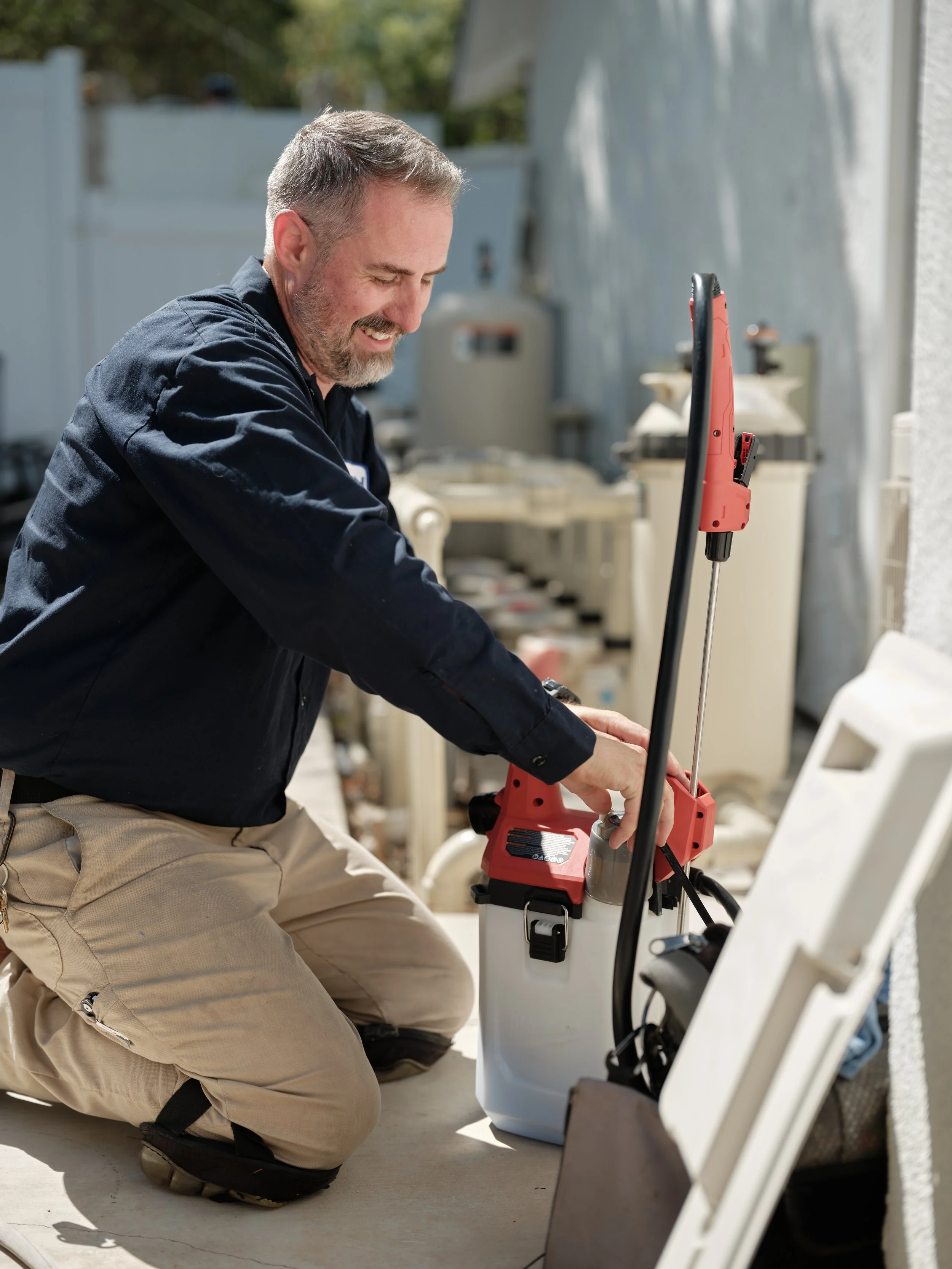
We have serviced more Fullerton tract home AC systems than we can count. At this point, we know where the problems hide before we even open the unit. That experience matters when every diagnosis directly affects what you spend.
At J Martin, every technician is licensed, certified, and background-checked. Nobody on our team works on commission, so there's never an incentive to push a replacement when a repair makes more sense. We start with repairs 95% of the time. We've served over 5,000 Orange County families and maintain a 4.97-star average rating because we approach every home the way we'd want someone to approach ours: honestly, thoroughly, and without pressure. You can read more about how we hire and train our technicians and what that means for the person who shows up at your door. It's also a big part of what makes homeowners keep choosing us over larger, less personal operations.
The Bottom Line
If your Fullerton home was built in the 1970s or 80s, you're living with HVAC compromises that were invisible 20 years ago but are costing you real money and comfort today. Deteriorated ductwork leaking conditioned air into a 160-degree attic. Insulation that's half of what code requires. Systems that were sized by guesswork rather than science. Refrigerant that costs more to recharge every year. Single-speed equipment that cycles on and off instead of running smoothly. A single thermostat trying to manage a house with wildly different demands from room to room.
None of this means your house is broken. It means it was built to the standards of its era, and those standards have evolved considerably. The good news is that every one of these problems has a cost-effective solution, and most of them pay for themselves through lower energy bills, fewer emergency repairs, and noticeably better comfort within a few years.
If you want to find out where your Fullerton home stands and which improvements would make the biggest difference for your specific situation, give us a call at (714) 462-4686. J Martin Indoor Air Quality has been installing new HVAC systems in Fullerton and Orange County families for over 15 years. We'll give you an honest assessment, clear options, and zero pressure. That's how we've always operated, and it's how we always will.
J Martin Indoor Air Quality proudly serves Fullerton, Yorba Linda, Anaheim, Anaheim Hills, Brea, Villa Park, Placentia, Orange, and communities throughout Orange County.
J Martin Indoor Air Quality | (714) 462-4686 | Services