
Moving to Yorba Linda This Spring? Your Complete Home HVAC Inspection Checklist
Posted on March 19, 2026
A family relocating from the Bay Area closed on a four-bedroom home in East Lake Village last spring. Beautiful property, built in 1986, about 2,400 square feet with a big backyard and lake access. The home inspection came back clean. Everything looked great on paper. They moved in on a Thursday in late May. By the following Wednesday, the first real heat of the season hit and the upstairs bedrooms were sitting at 83 degrees while the thermostat downstairs read 76. The AC ran for 14 hours straight. Their first full electric bill was over $400.
They called us at J Martin Indoor Air Quality expecting to hear that the system was broken. It wasn't. The air conditioner turned on, it blew cold air, and the thermostat responded to inputs. By the narrow definition used in a standard home inspection, the system "worked." But when our technician climbed into the attic and ran a proper diagnostic, the real picture emerged. The ductwork feeding the upstairs had separated at two joints, leaking cooled air into the attic. The insulation wrapping on most of the accessible duct runs had deteriorated to the point of being nearly useless. The system itself was a 20-year-old single-speed unit running on R-22 refrigerant, which has been banned from production since 2020 and now costs $150 to $600 for a single recharge. And the condenser coil outside was so caked with debris that it was operating well below its rated efficiency.
None of this showed up on the home inspection report. The total cost to address everything, including duct repair, a system assessment, and a maintenance plan, ran into the thousands. Had they known before closing, they could have negotiated a credit, requested repairs, or at least budgeted for it.
This story plays out in Yorba Linda constantly, and it's not because home inspectors are doing a bad job. It's because HVAC systems require specialized knowledge that a general home inspection isn't designed to provide. If you're buying a home in Yorba Linda this spring, this post is going to walk you through exactly what to look for, what to ask, what to check yourself, and when to bring in a specialist so that you don't end up in that same situation.

A general home inspection tells you the system turns on. A J Martin HVAC inspection tells you whether it actually works, how long it will last, and what it will cost you to operate. There is a big difference between those two things.
Why Yorba Linda Homes Deserve Extra HVAC Scrutiny
Yorba Linda is one of the most desirable markets in Orange County. Median home prices currently hover around $1.3 million to $1.4 million. Homes sell quickly, often within 30 to 45 days, and competitive bidding is common. At that price point, you're making one of the largest financial commitments of your life, and the HVAC system inside that home represents one of its most expensive mechanical components to repair or replace.
Here's what makes Yorba Linda's housing stock particularly relevant for HVAC concerns. The majority of Yorba Linda's residential neighborhoods were developed between the late 1960s and the early 1990s. East Lake Village, one of the city's most popular communities, dates back to 1979. Hidden Hills Estates was largely built in the 1980s and 1990s. Bryant Ranch homes span the 1960s through the 1990s. Many of the single-family homes along the Eastside and in the neighborhoods near the Nixon Library are from the same era.
That means most Yorba Linda homes you'll be looking at this spring are 30 to 55 years old. The HVAC systems, ductwork, and insulation in these homes were installed to the building codes and standards of their time, which were dramatically different from today's requirements. Some of those original systems have been replaced over the years, some have been partially updated, and some are still running with equipment and ductwork that's been baking in attic heat for four decades.
Add Yorba Linda's specific climate into the equation and the stakes get higher. Average summer highs reach the upper 80s, but heat waves routinely push temperatures into the upper 90s and triple digits. During the September 2024 heat wave, northern Orange County cities including areas near Yorba Linda saw temperatures climb 12 to 14 degrees above seasonal averages. Santa Ana winds bring dry, hot air and fine dust that clogs outdoor condenser coils and degrades air quality. If an HVAC system has hidden problems, a Yorba Linda summer will find them.
What a Standard Home Inspection Actually Checks (And What It Misses)
When you're in escrow on a home, the general home inspection is supposed to evaluate the major systems: foundation, roof, plumbing, electrical, and HVAC. But here's what most buyers don't realize: the HVAC portion of a standard home inspection is extremely basic. The inspector confirms that the system turns on and produces heating or cooling. That's essentially it.
A general home inspector is not required to test refrigerant levels or pressures. They don't perform airflow measurements at individual registers. They don't evaluate the condition of the ductwork in the attic. They don't run a load calculation to determine if the system is properly sized for the home. They don't check the temperature differential across the evaporator coil to verify the system is actually cooling to specification. They don't test the capacitors, which are one of the most common failure points and cost $150 to $300 to replace. And they typically don't identify the type of refrigerant the system uses, which has massive implications for future service costs.
In a Yorba Linda home built in the 1980s, a general inspection might give the HVAC system a passing grade while missing deteriorated ductwork leaking 25% of cooled air into a 160-degree attic, a system running on banned R-22 refrigerant, insulation rated at R-19 (half of the modern R-38 requirement), an oversized or undersized system that was never properly calculated for the home, and a condenser unit with 15 years of compacted debris reducing its efficiency by 20% or more. Any one of these issues can cost you hundreds per year in wasted energy. Several of them together can cost thousands, and a full system replacement if it's needed runs $8,000 to $15,000 or more for a typical Yorba Linda home.
Buying a home in Yorba Linda this spring? Don't wait until the first heat wave to find out what the inspection missed. Call J Martin at (714) 462-4686 for a dedicated pre-purchase HVAC evaluation.
What You Can Check Yourself During Showings and Open Houses
You don't need to be an HVAC expert to gather useful information during home tours. These are observations any buyer can make that will tell you a lot about the state of the system and help you decide whether a professional HVAC inspection is warranted before you finalize your offer.
Start outside at the condenser unit, the large box with a fan on top that sits next to the house, usually on a concrete pad. Look at its overall condition. Rust, heavy corrosion, dents, or a unit that's visibly listing to one side are all signs of age and neglect. Check the aluminum fins on the outside of the unit. If they're heavily matted with dirt, pet hair, or cottonwood debris, the system's efficiency is compromised. Look for the data plate on the unit, which is usually a metal sticker on the side or back panel. It will list the manufacturer, model number, and often the manufacturing date. If the system was built before 2010, it almost certainly uses R-410A or older R-22 refrigerant. If it was built before 2006, R-22 is virtually guaranteed.
Inside the house, ask the seller's agent or check the disclosure documents for the age of the HVAC system and any recent service records. Sellers in California are required to disclose known defects, but HVAC specifics are often vague or omitted beyond confirming the system is operational. Any maintenance records, receipts for repairs, or documentation of regular servicing is a positive sign. A complete absence of records for a system that's 10 or more years old is a yellow flag.
While you're walking through the home, pay attention to temperature differences between rooms. If certain areas feel noticeably warmer or cooler than others during your visit, that's a sign of ductwork problems, sizing issues, or both. In a two-story home, go upstairs and see how the temperature compares to the first floor. Some difference is normal, since heat rises, but a dramatic gap suggests the system isn't distributing air effectively.
Look at the supply registers and return air grilles. Are they clean, or are they caked with dust and debris? Heavy buildup on registers can indicate that the ductwork hasn't been cleaned in years or that the system has filtration problems. Check whatever air filter is currently installed. If it's visibly dark and clogged, the system is working harder than it should, which accelerates wear on every component.
If you can see the thermostat, note what type it is. An old mercury-bulb dial thermostat or a basic non-programmable digital model from the 1990s doesn't mean the system is bad, but it suggests the HVAC setup hasn't been modernized. If the home has a smart thermostat or a modern programmable unit, that's at least an indication that someone has invested in the system's control and efficiency.
None of these observations are diagnostic. They're not going to tell you the system's remaining lifespan or whether the ductwork needs replacement. But they will give you a strong directional sense of whether you're looking at a well-maintained system or one that's been neglected, and they'll help you formulate the right questions for the next step.
The Questions You Should Be Asking Before You Write an Offer
The visual observations above will tell you a lot, but some of the most important HVAC information isn't visible at all. It lives in records, disclosures, and the institutional knowledge of the seller and their agent. These are the questions you or your buyer's agent should be asking, ideally before you submit an offer, and absolutely before you waive any inspection contingencies.
Ask the seller how old the HVAC system is and whether it's the original equipment or a replacement. If it was replaced, ask when, by whom, and whether permits were pulled. Unpermitted HVAC work is more common than most buyers realize, and it can create problems with insurance, future resale, and code compliance. A system installed by a licensed contractor with a pulled permit is a very different asset than one installed by a handyman or the seller's cousin.
Ask whether the system uses R-22 or R-410A refrigerant. If the seller doesn't know, the data plate on the outdoor unit will tell you. This single piece of information has a direct impact on your future operating costs. An R-22 system is a ticking clock financially. An R-410A system in good condition has significantly more usable life ahead of it, though it's worth noting that R-410A itself is being phased out of new equipment manufacturing as of January 2025, with next-generation refrigerants like R-454B and R-32 taking its place. Existing R-410A systems will be serviceable for years, but the long-term pricing trajectory will follow the same pattern R-22 did.
Ask for any maintenance records, service receipts, or documentation of repairs. A homeowner who has had the system professionally serviced annually or biannually is telling you, through their actions, that they cared about the equipment. An absence of records for a system that's 15 or 20 years old suggests deferred maintenance, which means accelerated wear on every component.
Ask if the ductwork has ever been cleaned, sealed, or replaced. In a Yorba Linda home built in the 1980s, original ductwork that's never been serviced has been deteriorating in extreme attic heat for 40 years. That's not a minor detail. Our Complete Guide to Air Duct Cleaning explains how to evaluate duct condition and when cleaning versus replacement is the right call.
Ask about the home's insulation, specifically what's in the attic and when it was last updated. Homes built in the 1970s and 80s were typically insulated to R-19, which is roughly half the R-38 that California's current Title 24 code requires. If the insulation hasn't been upgraded, you're inheriting a home that costs significantly more to cool than it should.
Ask whether the home has ever had comfort issues, specifically rooms that are hard to cool, a second floor that's always hot, or high energy bills during summer. Sellers in California are legally required to disclose known defects, but HVAC comfort issues often fall into a gray area where the seller has lived with the problem so long they consider it normal. Asking the question directly gives them the opportunity to disclose what they know.
These questions do two things. They give you information you need to make an informed decision, and they create a documented record that strengthens your negotiating position if the HVAC inspection reveals problems the seller didn't disclose.
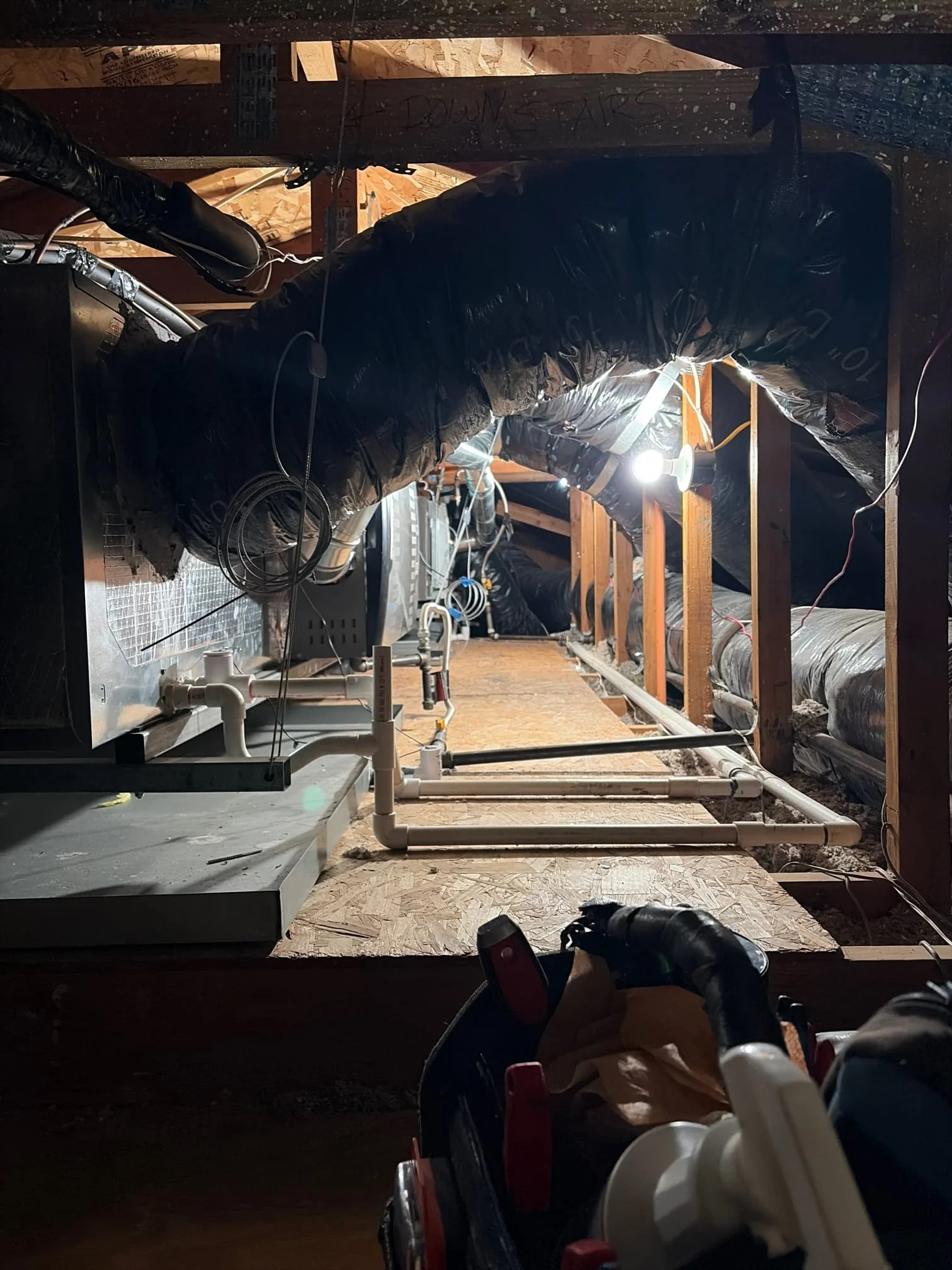
Buyers are always surprised when we show them what is actually happening in their attic. The HVAC system passed the home inspection. The ductwork tells a very different story.
When to Order a Professional HVAC Inspection (And What It Should Include)
If you're buying a Yorba Linda home and the HVAC system is more than 10 years old, or if any of your observations during the showing raised concerns, a dedicated HVAC inspection by a licensed contractor is one of the smartest investments you can make during the escrow process. It typically costs $150 to $500 depending on the size of the home and the complexity of the system, and it can save you from inheriting problems that would cost many times that to fix.
Schedule the HVAC inspection during your inspection contingency period, ideally after the general home inspection so you can use any initial findings to guide the HVAC specialist's evaluation. A thorough pre-purchase HVAC inspection should include verification of the system's age, manufacturer, model, and refrigerant type. It should include testing refrigerant pressures (not just confirming the system blows cold air), checking the temperature differential across the evaporator coil (the supply air should be 15 to 20 degrees cooler than the return air), testing capacitors and electrical components for proper function, inspecting the condition of the condenser coil and evaporator coil, evaluating the blower motor and fan operation, checking the condensate drain line for clogs or damage, and providing an honest assessment of the system's expected remaining lifespan.
In Yorba Linda homes specifically, a good inspection should also include a visual evaluation of the ductwork in the attic (looking for disconnections, sagging sections, crushed runs, and insulation condition), a check for the refrigerant type (R-22 versus R-410A versus newer alternatives), and an assessment of whether the system appears to be properly sized for the home's square footage and layout.
The inspector should provide a written report detailing their findings, the system's current condition, any recommended repairs, and an estimated timeline for when major components may need replacement. This report becomes a powerful tool in your negotiations with the seller.
If you want to understand what deteriorated ductwork actually looks like and why it matters so much in our climate, our Complete Guide to Air Duct Cleaning covers the topic in depth.
The Red Flags That Should Change Your Offer
Not every finding in an HVAC inspection is a dealbreaker. A dirty filter, a condenser that needs cleaning, or a thermostat that could use an upgrade are minor issues. But certain findings should absolutely factor into your negotiations, either as a request for seller-funded repairs, a price reduction, or at minimum a clear-eyed understanding of the costs you'll be inheriting.
An R-22 system is the biggest financial red flag you can find. If the home's AC runs on R-22, you're buying into a system that depends on a refrigerant that's been out of production since 2020. Every future service call involving refrigerant will cost more than the last, and at some point in the near future (if not already), the system will need to be replaced entirely. A full system replacement in Yorba Linda typically costs $8,000 to $15,000 depending on the size, efficiency rating, and complexity of the installation. We break down all the numbers, including available rebates that can run as high as $8,000 for qualifying high-efficiency systems, in our 2025-2026 HVAC Replacement Cost Guide for Orange County.
Disconnected or severely deteriorated ductwork is the second major red flag. If the inspection reveals sections of duct that have separated, collapsed, or lost their insulation, you're looking at a system that's been wasting 20% to 30% of its output into the attic. Duct sealing runs $300 to $1,000 for moderate repairs. Full duct replacement for a Yorba Linda home ranges from $2,000 to $6,000. Either way, this is a cost that should be part of the negotiation.
A system that's 15 years old or older is approaching the end of its expected lifespan, even if it's currently running. Average HVAC system life is 15 to 20 years with proper maintenance, and significantly less without it. If the system is 18 years old and has no maintenance records, you should assume replacement is coming within a few years and factor that cost into your offer.
An improperly sized system, whether too small or too large for the home, is a subtler problem but equally important. An undersized system will struggle to keep up on hot days and run constantly, driving up energy costs and wearing out faster. An oversized system will short-cycle, creating uneven temperatures, poor humidity control, and premature compressor wear. Correcting a sizing mismatch means replacing the equipment, so this is a significant finding.
A cracked heat exchanger in the furnace is a safety issue, not just a comfort or efficiency concern. A cracked heat exchanger can leak carbon monoxide into your living spaces. If this is found during inspection, the furnace needs to be replaced before occupancy, full stop.
Your First 30 Days After Moving In
Even if the HVAC system passed inspection with flying colors, there are important steps every new Yorba Linda homeowner should take in the first month to establish a baseline and protect their investment.
Change the air filter immediately. You have no idea how long the current filter has been in place, and starting with a fresh one ensures you're not compromising the system from day one. For most Yorba Linda homes, a MERV 8 to MERV 13 filter is the right range. MERV 8 provides solid basic filtration for a system that may not handle high restriction well. MERV 11 to 13 captures finer particles including dust mite debris, mold spores, and some pollen, which matters during Santa Ana wind events and wildfire season. Higher MERV ratings (14 and above) are typically reserved for systems specifically designed to handle the increased airflow restriction, as using them in a standard system can starve the equipment of air and cause problems.
Run the system in both heating and cooling mode for at least 30 minutes each and walk through every room noting the temperature at each register. Document any rooms that are significantly warmer or cooler than the rest of the house. This gives you a baseline that you can reference later if comfort issues develop.
If the home has a system older than 10 years, schedule a professional tune-up within the first month. This establishes a maintenance baseline, verifies that everything is operating within spec, and creates documentation that protects your warranty and supports any future insurance claims. A tune-up typically costs $75 to $200 and includes cleaning, lubrication, electrical testing, and a refrigerant pressure check.
When you first fire up the system after moving in, pay attention to what you smell. A brief dusty odor during the first few minutes is normal, particularly if the system has been sitting idle. But persistent burning smells, musty odors, or anything chemical that doesn't clear within 15 to 30 minutes warrants a service call. We wrote a detailed guide on what different HVAC smells mean and when to worry that's worth reading before your first seasonal startup.
Locate and clear the condensate drain line. In most Yorba Linda homes, the indoor air handler is in the attic or a closet, and the condensate drain runs down to an exterior wall or to a plumbing connection. Pour a cup of white vinegar or diluted bleach down the drain line to prevent algae buildup that can cause clogs. A clogged condensate drain is one of the most common causes of water damage in homes with attic-mounted air handlers, and it's entirely preventable with basic maintenance.
If the home doesn't already have one, install a float switch on the condensate drain pan. This is a $20 to $50 device that shuts off the system if the drain pan fills with water, preventing overflow that can damage ceilings and walls. Many Yorba Linda homes built in the 1980s don't have this safety feature, and it's one of the cheapest and most impactful additions you can make.
Finally, take photos of the data plates on your outdoor condenser and indoor air handler. Record the manufacturer, model number, serial number, and any other identifying information. This data is essential for future service calls, warranty verification, and refrigerant identification.
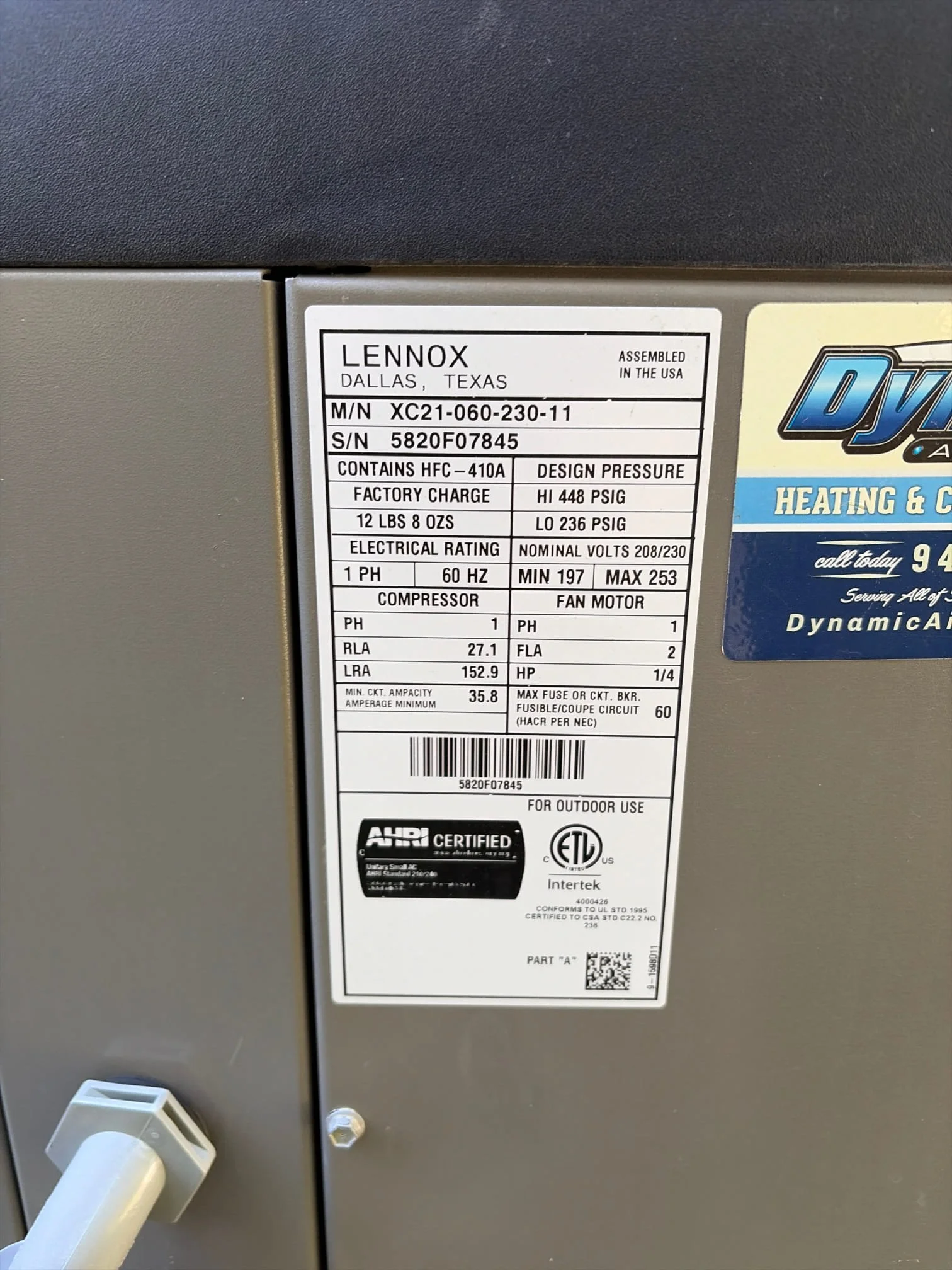
Most buyers have never looked at a data plate in their life. We show them exactly what it means and what it will cost them to operate that system for the next five to ten years.
Yorba Linda-Specific HVAC Considerations Most Buyers Miss
Beyond the standard inspection items, there are several HVAC factors unique to Yorba Linda's climate, geography, and housing stock that most out-of-area buyers and even some local buyers overlook.
Yorba Linda sits further inland than most Orange County cities, which means it gets hotter in summer and doesn't benefit from the coastal moderation that keeps places like Huntington Beach and Newport Beach 5 to 10 degrees cooler. Average summer highs hit the upper 80s, but heat waves push deep into the 90s and beyond. That means your HVAC system works harder and runs longer than it would in a coastal Orange County home, and equipment lifespan, energy efficiency, and duct condition matter even more.
The city's proximity to wildfire-prone areas, including the Chino Hills to the north and the Santa Ana Canyon to the east, means air quality can deteriorate rapidly during fire season. If you or anyone in your household has respiratory concerns, a whole-home air purification system integrated with the HVAC is worth considering. We covered the full range of options in our post on improving your indoor air quality with J Martin solutions.
Many Yorba Linda neighborhoods, particularly East Lake Village and areas near the equestrian trails, have properties with horse-keeping facilities and significant outdoor exposure. Homes near equestrian areas tend to accumulate more airborne particulate matter, which clogs filters faster and puts more strain on the filtration system. Plan on checking your filter monthly rather than quarterly if you're near trails or equestrian zones.
Attic temperatures in Yorba Linda regularly exceed 150 degrees in summer. In the hillside homes of Hidden Hills and the east-facing slopes along Carbon Canyon, south and west-facing rooflines can push attic temperatures even higher. Every degree of attic heat directly impacts the ductwork running through that space and the insulation's ability to keep conditioned air cool. If the home you're buying has original ductwork from the 1980s sitting in that environment for 40 years, degradation is virtually guaranteed regardless of what the general inspection report says.
Yorba Linda's evening temperatures during summer regularly drop into the 60s and low 70s. This is a huge advantage that many homeowners don't take advantage of. A whole house fan, which costs $1,500 to $3,000 installed, can pull that cool evening air through your home in minutes, flushing out accumulated heat and allowing you to shut off the AC entirely for the night. Many of our Yorba Linda customers cut their summer cooling costs by 50% to 90% during the months they use one. If the home you're buying doesn't have a whole house fan, it's one of the best investments you can make in your first year.
And if you're moving into a two-story home and already anticipating the classic "upstairs is always hotter than downstairs" problem, read our post about the truth about closing vents in unused rooms before you try the common (and counterproductive) approach of closing downstairs vents to force more air upstairs. It doesn't work the way most people think, and it can actually damage your system.
Why Your HVAC Company Should Be a Local Decision
When you move to a new city, you're building a roster of service providers from scratch: a plumber, an electrician, a landscaper, and an HVAC company. For HVAC in particular, choosing a company that knows Yorba Linda specifically, not just Orange County broadly, makes a meaningful difference.
Yorba Linda's housing stock has its own patterns. The 1979-era homes in East Lake Village have different ductwork configurations than the 1980s builds in Hidden Hills. The Bryant Ranch homes from the 1960s through the 1980s have aging systems and unique layouts that a technician who's worked in hundreds of them will recognize immediately. A company that's been servicing these specific neighborhoods for years knows where the common problem points are before they even open the attic hatch.
At J Martin Indoor Air Quality, every technician who enters your home is licensed, certified, and background-checked. We don't work on commission, which means there's no financial incentive to push a replacement when a repair will do the job. We start with repairs 95% of the time. We've served over 5,000 Orange County families and maintain a 4.97-star average rating because we treat every home the way we'd want ours treated: honestly, thoroughly, and without pressure. You can read more about how we screen and train our HVAC technicians and why it matters for the person showing up at your door.
That approach is also a big part of why Yorba Linda homeowners keep choosing us over larger, less personal operations. When you're new to the area and don't have word-of-mouth recommendations yet, knowing that a company has deep local roots and a verified track record matters.
Buying a home in Yorba Linda this spring? Our technicians are licensed, certified, and never on commission. Call J Martin at (714) 462-4686 to schedule your pre-purchase HVAC inspection before your contingency period closes.
The Bottom Line for Yorba Linda Home Buyers
Buying a home in Yorba Linda is a significant investment. At a median price above $1.3 million, you're entitled to know exactly what you're getting, and HVAC is one of the areas where standard due diligence falls short. A general home inspection will tell you whether the system turns on. A dedicated HVAC inspection will tell you whether it's actually working efficiently, how long it's likely to last, what it will cost to operate, and what repairs or replacements are on the horizon.
For a home with a system older than 10 years, the $150 to $500 cost of a professional HVAC inspection is one of the best investments you can make during escrow. It can save you from inheriting thousands of dollars in hidden problems, give you leverage in negotiations, or simply provide peace of mind that the system is in good shape.
For a home with a newer system, even a basic walkthrough using the observations in this guide will help you verify that things are in order and establish a maintenance baseline from day one.
Whether you're relocating from out of state, moving from elsewhere in Orange County, or upgrading within Yorba Linda, getting the HVAC right from the start sets the foundation for comfort, efficiency, and financial predictability in your new home.
If you're buying a home in Yorba Linda this spring and want an honest, no-pressure HVAC evaluation before or after you close, give us a call at (714) 462-4686. J Martin Indoor Air Quality has been serving Yorba Linda and Orange County families for over 15 years. We'll tell you exactly what we find, what it means, and what your options are. That's all we've ever done, and it's all we'll ever do.
J Martin Indoor Air Quality proudly serves Yorba Linda, Fullerton, Anaheim, Anaheim Hills, Brea, Villa Park, Placentia, Orange, and communities throughout Orange County. Call (714) 462-4686 or visit jmartiniaq.com to schedule service.