
Furnace Won't Turn On in Yorba Linda: What to Check First (2026)
Posted on June 25, 2026
When your furnace won't turn on in Yorba Linda, the most common causes are a tripped circuit breaker, dead thermostat batteries, a dirty flame sensor, or a failed hot surface igniter, and most of these repairs cost between $75 and $500 with same-day service available. The good news is that roughly half of furnace no-start calls we respond to in Yorba Linda turn out to be something the homeowner can resolve in under five minutes: a tripped breaker, a thermostat set to the wrong mode, or batteries that died overnight.
The timing of your problem matters more than most people realize. Because Yorba Linda homes go six to eight months without running their furnace (typically April through November), the first cold night of the season is when most failures reveal themselves. A flame sensor that was slightly dirty in March has six more months of dust accumulation by December. An igniter that was weakening last winter has been sitting idle all summer, and thermal shock from that first firing after months of rest is often what finally kills it. If your furnace stopped working on the first cold night of the season, you are not alone, and the fix is usually straightforward.
When Jack arrived at a Travis Ranch home last December after the homeowner said the furnace "clicked but never lit," the diagnosis took about ten minutes. The flame sensor had a thick layer of carbon buildup from years without professional cleaning. The furnace was igniting, but the sensor could not detect the flame and was shutting off the gas valve within three seconds as a safety precaution. Jack cleaned the sensor with fine-grit sandpaper, tested the ignition cycle three times, and had the house warming up within 30 minutes. The repair cost was $125. That kind of fix is far more common than the catastrophic failure most homeowners imagine when their furnace refuses to start.
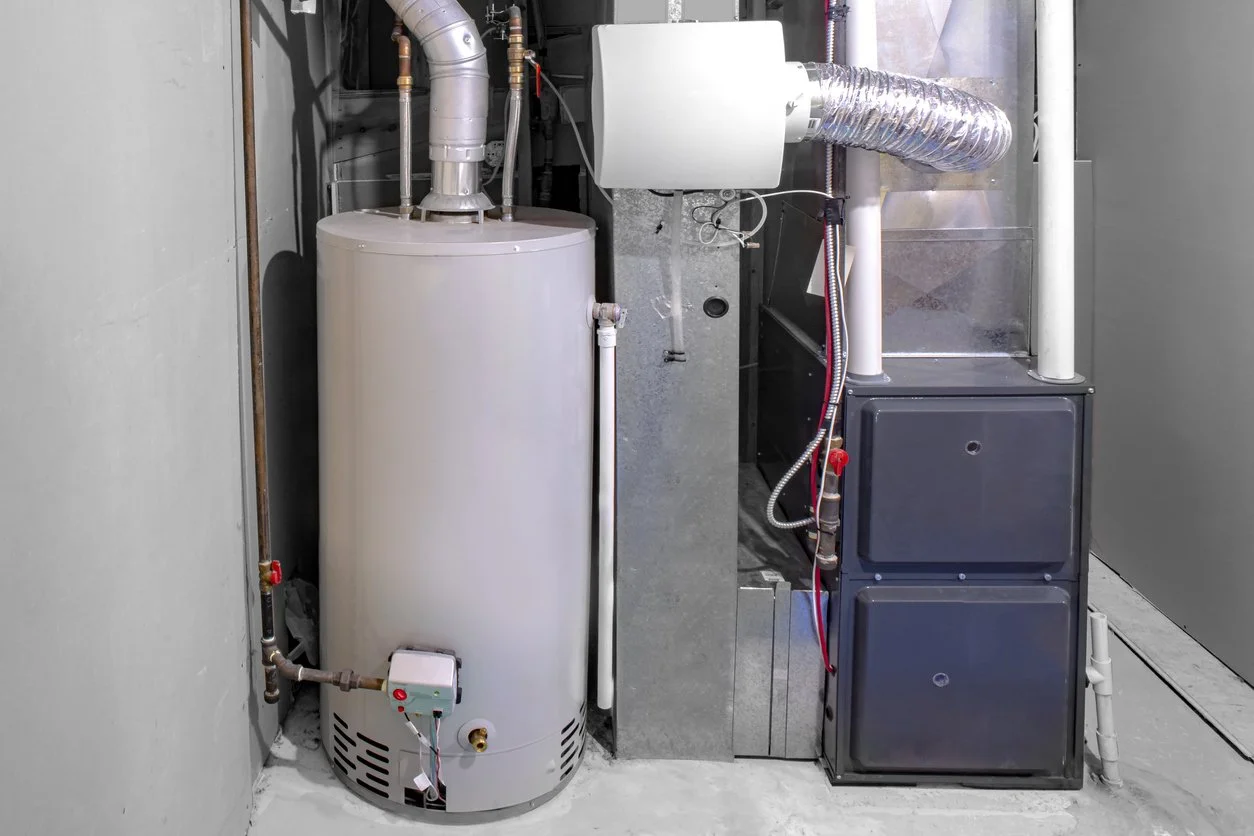
After six months of sitting idle, most Yorba Linda furnaces fail on the first cold night. J Martin's honest diagnostics tell you whether it's a $125 flame sensor or something bigger, before any work begins.
Quick Answer
A furnace that won't turn on in Yorba Linda is most commonly caused by a tripped breaker, dead thermostat batteries, a dirty flame sensor ($75 to $250 to clean or replace), or a failed igniter ($90 to $400 to replace). The average furnace repair costs $150 to $500. Before calling a technician, check your thermostat settings, replace the batteries, check the circuit breaker, and verify the gas valve is open. These checks resolve roughly half of all furnace no-start calls.
Why Yorba Linda Furnaces Fail on the First Cold Night
Yorba Linda's climate is one of the mildest in inland Orange County. Average December highs reach 64 degrees and lows hover around 49 to 50 degrees. January is similar, with highs near 67 degrees and lows around 50 degrees. That is cold enough to need a furnace on winter evenings and early mornings, but warm enough that most Yorba Linda homeowners go more than half the year without turning the heat on at all.
That long idle period is the root of most furnace problems in this area. Dust settles on flame sensors and igniters during months of disuse. Spiders build webs inside burner assemblies and draft inducer housings. Capacitors and control boards sit dormant without the regular thermal cycling that keeps electrical connections clean. When you flip the thermostat to "Heat" for the first time in November or December, every one of those accumulated issues reveals itself at once.
The housing stock compounds the issue. Yorba Linda's neighborhoods span several decades of construction. Travis Ranch dates back to 1979, with homes ranging from 1,500 to 2,700 square feet. The older sections of Yorba Linda near Main Street and Rose Drive include homes from the 1960s and 1970s. Newer developments along the eastern ridgeline were built in the 2000s and 2010s. Homes from the 1970s and 1980s often have original furnaces that are well past their 15-to-20-year expected lifespan, or replacement furnaces installed in the early 2000s that are now 20+ years old. A furnace that ran adequately last winter may not survive this year's first cold snap if components have been gradually degrading during the off-season.
Yorba Linda homeowners typically go six to eight months without running their furnace, and the first cold night of the season is when most failures reveal themselves. Dust, carbon buildup, and idle electrical connections accumulated during summer are the most common triggers.
The 6 Most Common Reasons Your Furnace Won't Turn On
After servicing thousands of furnaces across Yorba Linda and Orange County since 2014, we have identified six causes that account for the vast majority of "furnace won't turn on" calls. Understanding which one is affecting your system helps you decide whether to troubleshoot it yourself or call for professional help.
1. Dirty or Failed Flame Sensor
The flame sensor is a small metal rod positioned directly in the burner flame path. Its job is to verify that gas is actually burning after the gas valve opens. If the sensor cannot detect a flame (usually because carbon buildup is insulating the rod), it shuts off the gas valve within 3 to 5 seconds as a safety measure. The symptom is unmistakable: the furnace tries to ignite, the burners light briefly, then everything shuts off within a few seconds. This cycle may repeat two or three times before the furnace locks out entirely. A dirty flame sensor is the single most common furnace repair we perform in Yorba Linda. Cleaning costs $75 to $150, and replacement (if the sensor is cracked or corroded beyond cleaning) costs $100 to $250, including the service visit.
2. Failed Hot Surface Igniter
Modern gas furnaces use a hot surface igniter (a small ceramic element that glows orange-hot to ignite the gas) instead of a standing pilot light. Igniters are fragile and have a finite lifespan: silicon nitride igniters last 5 to 7 years, while older silicon carbide models last 3 to 5 years. When an igniter fails, the furnace goes through its startup sequence (draft inducer motor runs, gas valve clicks) but the gas never ignites because the igniter cannot reach the temperature needed to light it. You may hear the draft inducer running and the gas valve clicking without any flame activity. Igniter replacement costs $90 to $400, depending on the furnace brand and whether a universal or OEM part is used. Most replacements take under an hour.
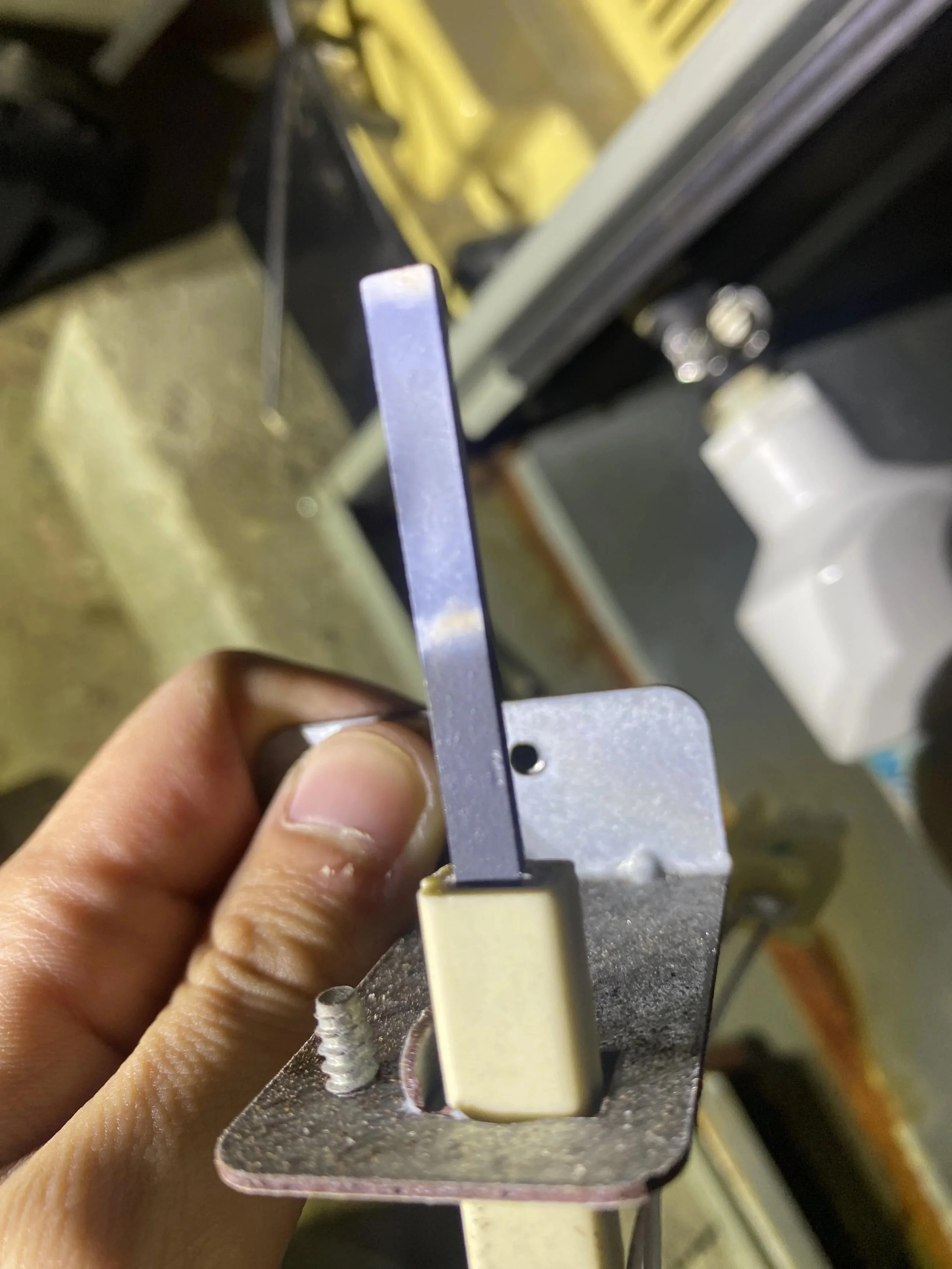
Hot surface igniters last 3 to 7 years, then they quietly fail right before you need heat. J Martin shows Yorba Linda homeowners the actual part, explains what went wrong, and gives you upfront pricing before any work begins.
3. Tripped Circuit Breaker or Blown Fuse
Even gas furnaces require electricity to run the control board, draft inducer motor, blower motor, and ignition system. A tripped breaker cuts power to the entire system. The furnace will not respond to the thermostat at all: no sounds, no fan, no clicks, nothing. Check your electrical panel for a breaker labeled "Furnace" or "Air Handler" that is in the tripped (middle) position. If the breaker trips again after being reset, there is an electrical issue that requires professional diagnosis. Do not keep resetting a breaker that trips repeatedly.
4. Thermostat Problems
A thermostat with dead batteries, a thermostat set to "Cool" or "Off" instead of "Heat," or a thermostat set to a temperature below the current room temperature will all prevent the furnace from turning on. This sounds obvious, but it accounts for a surprisingly large share of emergency heating calls, especially in Yorba Linda homes where the thermostat has been in cooling mode since April. Some smart thermostats also have scheduling features that may have turned off the heat cycle without the homeowner realizing it. Battery-operated thermostats should have their batteries replaced at least once a year, ideally at the start of heating season.
5. Closed or Stuck Gas Valve
Your furnace has a manual gas shutoff valve on the gas supply pipe, usually within a few feet of the furnace itself. If this valve was closed during summer maintenance, a remodel, or by someone who did not realize what it controlled, the furnace will go through its ignition sequence but never produce a flame because no gas is reaching the burners. The valve handle should be parallel to the gas pipe when open. If it is perpendicular (at a 90-degree angle), it is closed. Additionally, SoCalGas occasionally performs line work that can affect gas pressure to individual homes, though this is rare.
6. Failed Draft Inducer Motor
The draft inducer motor is a small fan that runs before the burners light to clear residual gases from the heat exchanger and establish proper venting airflow. If it fails, the furnace's control board will not allow the ignition sequence to proceed, because operating the burners without proper draft is a carbon monoxide safety hazard. When the draft inducer fails, you may hear a humming sound followed by nothing, or complete silence when the furnace should be starting up. Draft inducer motor replacement costs $400 to $1,100, making it one of the more expensive common furnace repairs.
What to Check Before You Call a Furnace Technician
Run through these six checks before scheduling a service call. They take less than ten minutes and resolve the problem in roughly half of all cases, saving you a service visit entirely. We cover additional troubleshooting in our 7 things to check before calling for furnace repair guide, but these are the most critical.
Check 1: Thermostat mode and batteries. Confirm the thermostat is set to "Heat" (not "Cool" or "Off"), the fan is set to "Auto," and the set temperature is at least 3 degrees above the current room temperature. If your thermostat uses batteries, replace them now. A blank or flickering thermostat screen is almost always a dead battery.
Check 2: Circuit breaker. Open your electrical panel and look for the breaker labeled "Furnace" or "Air Handler." If it is in the middle position (not fully on or off), it has tripped. Flip it fully off, wait 10 seconds, then flip it back on. If it trips again immediately, stop and call a technician.
Check 3: Gas valve. Locate the manual gas shutoff valve on the gas pipe near your furnace. Confirm the handle is parallel to the pipe (open position). If it is perpendicular (closed), turn it to the open position and wait 5 minutes before attempting to restart the furnace.
Check 4: Furnace power switch. Many furnaces have a dedicated wall switch that looks like a light switch, usually mounted on or near the furnace or on a nearby wall. This switch is easily flipped accidentally, especially in garages where it is near other switches. Make sure it is in the "On" position.
Check 5: Air filter. A severely clogged air filter can cause the furnace to overheat and trigger the high-limit safety switch, which shuts the furnace down to prevent heat exchanger damage. Pull out the filter and check it. If it is visibly clogged, replace it and reset the furnace by turning it off for 5 minutes, then back on.
Check 6: Furnace error codes. Most modern furnaces have a small LED light visible through a window on the lower access panel. This light blinks in patterns that correspond to diagnostic codes. A steady green light typically means the furnace is ready and waiting for a call for heat. A blinking pattern (for example, 3 blinks followed by a pause) indicates a specific fault. Check your furnace's manual or the diagnostic chart usually printed on the inside of the access panel door. Noting this code before calling a technician speeds up the diagnosis significantly.
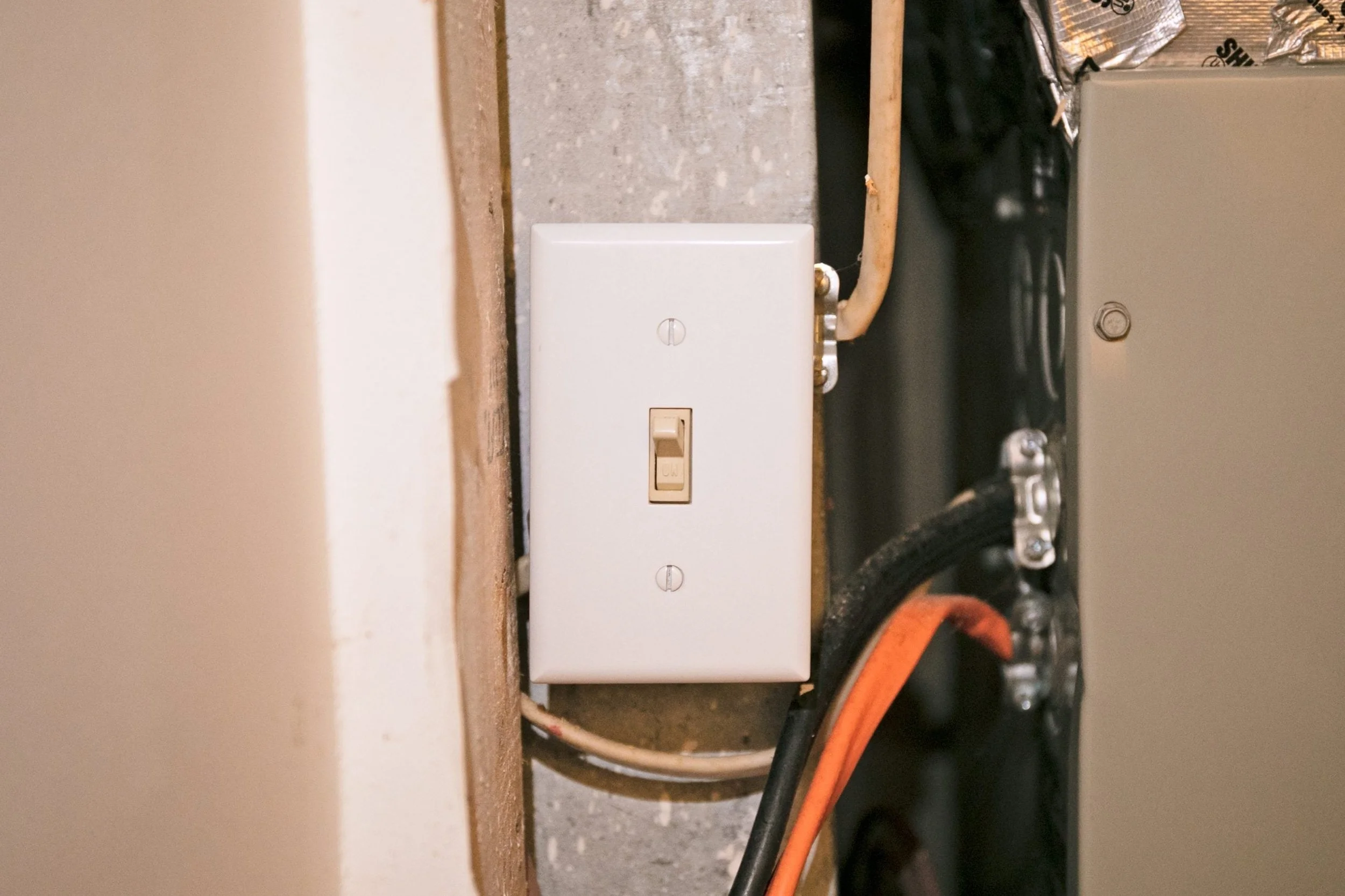
Furnace completely silent? Before you call, make sure this switch is flipped on. If it is and you still have no heat, J Martin offers same-day service in Yorba Linda. Call (714) 462-4686.
How Much Does Furnace Repair Cost in Yorba Linda in 2026?
The table below shows what Yorba Linda homeowners can expect to pay for the most common furnace repairs in 2026. These ranges reflect current pricing across Orange County from reputable contractors. If you are getting a quote significantly above or below these ranges, ask questions.
Estimated 2026 Furnace Repair Costs in Yorba Linda and Orange County
| Repair Type | Typical Cost Range | Common Trigger |
|---|---|---|
| Flame sensor cleaning | $75 to $150 | Carbon buildup from seasonal disuse |
| Flame sensor replacement | $100 to $250 | Cracked or corroded sensor rod |
| Hot surface igniter replacement | $90 to $400 | End of lifespan (3 to 7 years) |
| Gas valve replacement | $200 to $800 | Valve stuck closed, solenoid failure |
| Control board replacement | $300 to $650 | Electrical surge, component failure |
| Draft inducer motor replacement | $400 to $1,100 | Bearing wear, motor burnout |
| Blower motor replacement | $400 to $1,800 | Bearing failure, overheating |
| Heat exchanger replacement | $1,500 to $3,500 | Cracking from thermal stress (usually warrants full system replacement) |
The average furnace repair bill in Orange County falls between $150 and $500 in 2026. The flame sensor and igniter repairs at the low end of the table are the most frequent. Draft inducer motors, blower motors, and heat exchangers are the outliers that push into higher territory. A heat exchanger replacement at $1,500 to $3,500 almost always triggers the replace-versus-repair conversation, because the labor and cost are high enough that putting that money toward a new furnace with a fresh warranty often makes more financial sense.
The average furnace repair in Yorba Linda costs between $150 and $500 in 2026. Flame sensor and igniter repairs ($75 to $400) are the most common fixes. Heat exchanger replacement ($1,500 to $3,500) is the threshold where furnace replacement usually makes more sense.
When to Repair vs. Replace Your Yorba Linda Furnace
The decision to repair or replace depends on the furnace's age, the specific failure, and the cost of the repair relative to the cost of a new system. In Yorba Linda, where furnaces run less than homes in colder climates, a well-maintained furnace can last 20 to 25 years. But "can last" and "should keep running" are different questions.
Consider replacement instead of repair when three or more of these conditions are true: the furnace is 15 or more years old, the repair costs more than $1,000, the heat exchanger has cracked, you have had two or more repairs in the past two years, or the furnace has an AFUE (Annual Fuel Utilization Efficiency) rating below 80%, meaning at least 20 cents of every dollar you spend on gas goes up the flue as waste heat. Modern high-efficiency furnaces achieve 95% to 98% AFUE, which can cut gas heating costs by 15% to 20% compared to an older 80% AFUE unit.
A furnace replacement in Southern California costs $2,800 to $7,300 installed, depending on the system size, efficiency rating, and ductwork modifications needed. For Yorba Linda homes specifically, the moderate heating demand means the payback period on a high-efficiency upgrade is typically 6 to 10 years. If your furnace is 12 years old and needs a $300 igniter, repair it. If your furnace is 20 years old and needs a $2,000 draft inducer motor, we will have an honest conversation about whether that money is better invested in a new system. Our detailed guide to common furnace problems and fixes walks through additional scenarios.
Carbon Monoxide Safety and Your Yorba Linda Furnace
A furnace that struggles to start or runs erratically can be more than an inconvenience. It can be a carbon monoxide (CO) hazard. When a furnace's heat exchanger develops cracks (common in units over 15 years old), combustion gases including carbon monoxide can leak into the air circulated through your home instead of being safely vented outside.
CO is colorless and odorless. Symptoms of low-level exposure include headaches, dizziness, nausea, and fatigue, which are easily mistaken for flu symptoms. Higher-level exposure can be life-threatening. If your furnace is producing a yellow or flickering burner flame instead of a steady blue flame, if you notice a persistent burning or chemical smell, or if your CO detector alarms, shut off the furnace immediately, open windows, leave the home, and call your gas company or 911.
Every Yorba Linda home with a gas furnace should have CO detectors on every floor, with one within 15 feet of each sleeping area. We cover this topic extensively in our carbon monoxide safety guide for Orange County homeowners. During every furnace repair and tune-up, our technicians perform a combustion analysis that includes CO testing at the heat exchanger and at the supply registers to verify safe operation before leaving your home.
What Happens When You Call J Martin for Furnace Repair in Yorba Linda
When you call (714) 462-4686, Kathryn or Alexis answers at our Anaheim office on East La Palma Avenue, less than 15 minutes from most Yorba Linda neighborhoods. They will ask what your furnace is doing (or not doing), confirm your address, and dispatch a technician. For Yorba Linda heating calls during the winter months, we prioritize same-day service because we know a house without heat on a 45-degree evening is not just uncomfortable, it is a problem that needs solving today.
Our technicians (Jesus, Jack, Angel, Irvin, Kevin, Tony, Christian, Rex, Carlos, Santiago, and Joel, all full-time J Martin crew) arrive with diagnostic tools and the most common repair parts: igniters, flame sensors, capacitors, control boards, and gas valve components. Diagnosis typically takes 15 to 30 minutes and includes electrical testing, gas pressure measurement, ignition cycle observation, and a combustion safety analysis. You get a clear explanation, upfront pricing before any work begins, and no pressure to approve a repair that does not make financial sense for your situation.
Most furnace repairs are completed during the first visit. For parts that need to be ordered (specific control boards, uncommon inducer motors, or OEM components for older brands), we typically have them within 24 to 48 hours. In the meantime, we will make sure your system is safe and advise you on temporary heating options if needed.
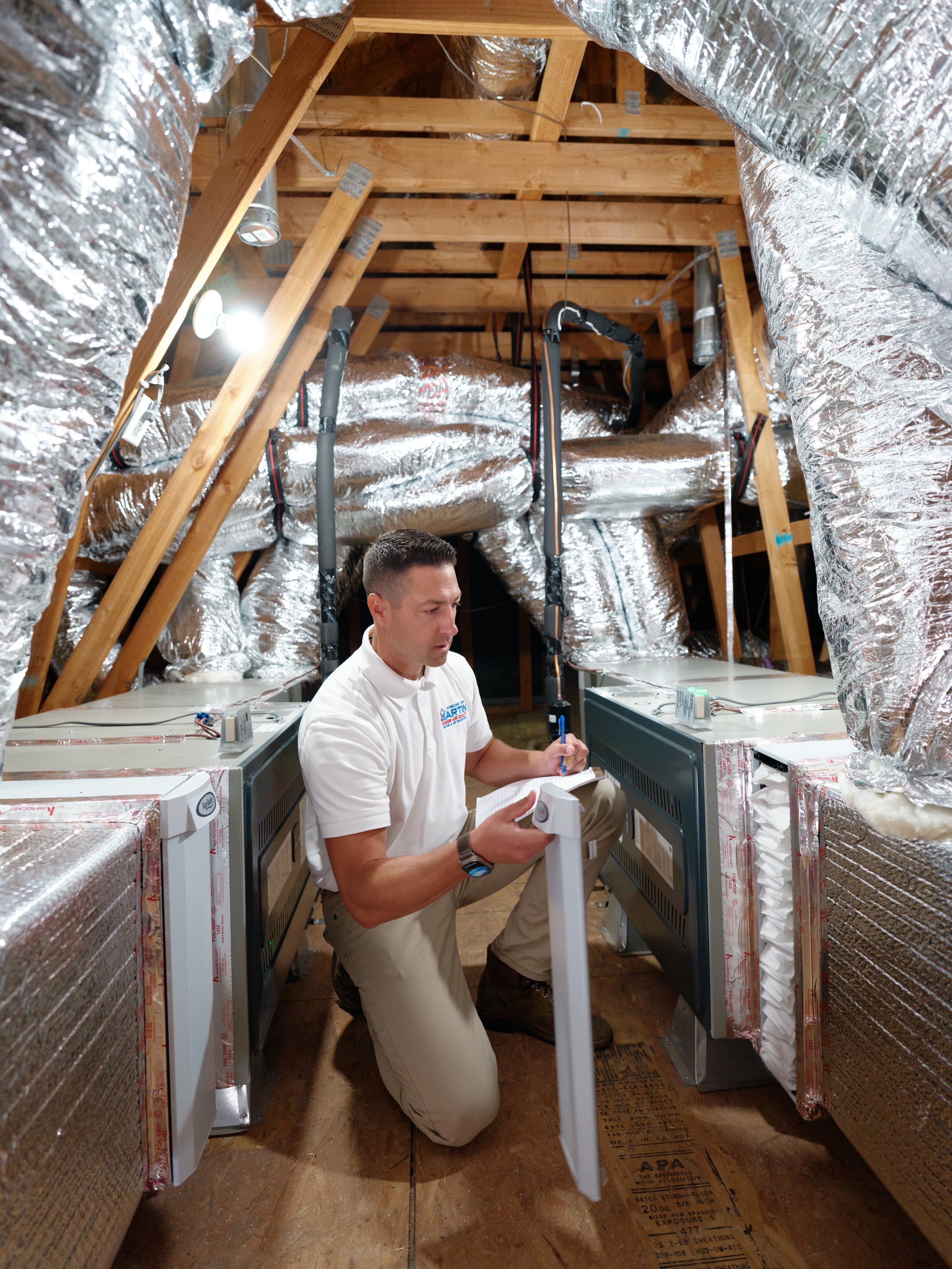
Every J Martin diagnostic includes a full inspection: electrical testing, gas pressure, ignition cycle, and combustion safety. You get a clear explanation and upfront pricing before any work begins, no matter where your furnace lives.
Preparing Your Yorba Linda Furnace Before Winter
The best time to discover a furnace problem is before you need the furnace. We recommend running a short heating test in October, well before the first genuinely cold night. Set your thermostat to "Heat," raise the temperature 5 degrees above the current room temperature, and let the system run for 15 to 20 minutes. Listen for normal startup sounds (draft inducer, ignition click, blower engaging) and confirm warm air is coming from the vents. If you notice anything unusual during this test (strange smells, short cycling, failure to ignite), you have time to schedule a non-emergency repair before the cold weather hits and every HVAC company in Orange County is booked out.
If your furnace smells odd during that first seasonal test, do not panic. A brief burning dust smell on the first run of the season is normal and typically dissipates within 20 to 30 minutes. A persistent smell, a rotten egg smell (which indicates a potential gas leak), or a metallic burning smell is not normal and warrants professional inspection. Our guide to why your heater smells weird when you first turn it on covers overs exactly what each smell means and when to worry.
Annual professional maintenance catches the majority of winter failures before they happen.
During a fall tune-up, we clean the flame sensor, test the igniter, inspect the heat exchanger, check gas pressure, verify thermostat calibration, and test all safety controls. For Yorba Linda homeowners, our True Maintenance Plan includes annual tune-ups, priority scheduling during peak heating season, and discounted repair rates through our HVAC maintenance program.
Furnace Won't Turn On After a Power Outage in Yorba Linda
Power outages in Yorba Linda, whether from Santa Ana wind events, grid load shedding, or SCE maintenance, can affect your furnace even after power is restored. Some furnaces require a manual reset after a power interruption. Others may have a lockout code triggered by the power loss that needs to be cleared.
After power is restored, try turning the furnace off at the thermostat, waiting 30 seconds, then turning it back on. If that does not work, try the furnace's dedicated power switch (flip it off, wait 60 seconds, flip it on). If the furnace still will not start, check the breaker panel, as a power surge during the outage may have tripped the furnace breaker. If the breaker is fine and the furnace still does not respond, the control board may have been damaged by a voltage spike. Control board replacement costs $300 to $650 and is not uncommon after significant power events. A whole-house surge protector ($200 to $500 installed) prevents this type of damage and is worth considering for any Yorba Linda home with sensitive HVAC electronics.
If you are dealing with a furnace that will not turn on after a rainy-season storm, our rainy season heater troubleshooting guide covers additional causes specific to wet-weather furnace failures, including condensation in the flue vent and water intrusion at the draft inducer.
Frequently Asked Questions
How much does furnace repair cost in Yorba Linda?
Most furnace repairs in Yorba Linda cost between $150 and $500 in 2026. A flame sensor cleaning runs $75 to $150, an igniter replacement costs $90 to $400, and a gas valve replacement costs $200 to $800. Draft inducer motor replacement is more expensive at $400 to $1,100. J Martin provides upfront pricing before any work begins and does not charge extra for same-day service during business hours.
Why does my furnace click but not ignite?
A furnace that clicks but never produces a flame almost always has a failed hot surface igniter or a gas supply issue. The clicking sound is typically the gas valve opening, but if the igniter cannot reach sufficient temperature (around 1,800 degrees Fahrenheit), the gas will not light. If the furnace ignites briefly and then shuts off within a few seconds, the issue is more likely a dirty flame sensor rather than the igniter.
Can I fix my furnace not turning on myself?
About half of furnace no-start issues can be resolved by the homeowner. Check the thermostat (is it set to Heat? do the batteries work?), the circuit breaker, the gas valve (is it open?), and the air filter. If your furnace has a flame sensor issue, some handy homeowners clean it themselves with fine-grit sandpaper, though this does require removing the sensor. For igniter failures, gas valve issues, and any electrical problem beyond a tripped breaker, you should call a licensed HVAC technician.
How long does a furnace last in Yorba Linda's climate?
In Yorba Linda's mild climate, where furnaces run far fewer hours per year than in colder regions, a well-maintained gas furnace typically lasts 20 to 25 years. However, key components like igniters (3 to 7 years), flame sensors (5 to 10 years), and blower motors (10 to 15 years) may need replacement during that lifespan. Annual maintenance is the single biggest factor in reaching the upper end of that range.
Is a burning smell from my furnace dangerous?
A brief burning dust smell when you first turn on the furnace for the season is normal and should dissipate within 20 to 30 minutes. A persistent burning smell, a metallic or electrical burning smell, or a rotten egg smell (which may indicate a gas leak) is not normal and requires immediate attention. Turn off the furnace and call a technician if any unusual smell persists beyond 30 minutes after the first seasonal startup.
Should I replace my furnace if the heat exchanger is cracked?
In most cases, yes. Heat exchanger replacement costs $1,500 to $3,500 in parts and labor, which is typically 40% to 60% of the cost of a new furnace. A cracked heat exchanger also presents a carbon monoxide safety risk. If your furnace is over 12 years old and the heat exchanger has failed, the financially responsible choice is usually a full furnace replacement with a new unit that carries a fresh warranty and higher efficiency rating.
How fast can J Martin respond to a furnace emergency in Yorba Linda?
J Martin's Anaheim office at 4212 East La Palma Avenue is approximately 15 minutes from most Yorba Linda neighborhoods. During business hours in the winter heating season, typical response time for emergency furnace calls in Yorba Linda is under 90 minutes. Same-day service is available Monday through Saturday. Call (714) 462-4686 to reach our office directly.
Get Your Yorba Linda Furnace Running Again Today
If you have worked through the troubleshooting checks in this guide and your furnace still won't turn on in Yorba Linda, the next step is professional diagnosis. Furnace problems rarely improve on their own, and a system that repeatedly tries and fails to ignite can damage components like the control board and gas valve, turning a $150 repair into a $600 one. Getting same-day service now often prevents cascading damage.
J Martin Indoor Air Quality has served Orange County families since 2014, with a 4.97-star rating across thousands of reviews and a full-time crew of licensed technicians who handle furnace repair and heating service across all of Yorba Linda and Orange County. Licensed, bonded, and insured under California Contractor License CL#998956. When you call, you reach Kathryn or Alexis at our Anaheim office, not a national call center.
Call us at (714) 462-4686 for same-day furnace repair, or schedule a free diagnostic consultation online.