
AC Keeps Tripping the Breaker? Here's Why (And What It Costs to Fix)
Posted on May 7, 2026
You set the thermostat, hear the system kick on, and within seconds the air conditioner shuts off and the house goes quiet. You walk to the electrical panel, find the breaker in the tripped position, flip it back, and try again. Same result. The AC fires up, runs for a few seconds or a few minutes, and the breaker trips again. If this cycle sounds familiar, you're dealing with one of the most common and most important AC problems to take seriously.
A tripping breaker is not a nuisance. It's a safety mechanism doing exactly what it was designed to do: cutting power to prevent overheating, electrical fires, and equipment damage. Every time the breaker trips, it's telling you that something in the circuit is drawing more electrical current than the wiring and components can safely handle. Repeatedly resetting the breaker without identifying and fixing the underlying cause doesn't just risk damaging your air conditioning system. It risks damaging your home's electrical wiring, and in worst-case scenarios, it creates a genuine fire hazard.
The causes range from something as simple as a dirty air filter (which you can fix yourself in five minutes) to something as serious as a grounded compressor (which may mean replacing the entire outdoor unit). This guide walks through each cause in order from most common and least expensive to least common and most costly, explains what each repair involves and what it typically costs, and gives you a clear framework for determining which steps you can safely handle yourself and which require a licensed professional.
How Your AC Circuit Breaker Works (and Why It Trips)
Before getting into specific causes, it helps to understand the basic electrical setup of a residential air conditioning system.
Your AC system runs on a dedicated circuit in your home's electrical panel. Most central air conditioners in Orange County homes operate on a 20 to 60 amp double-pole breaker, depending on the unit's size and cooling capacity. The breaker is sized to match the maximum safe current draw of the system. Under normal conditions, the AC draws less than the breaker's rated amperage, and everything runs without issue.
The breaker trips when the current flowing through the circuit exceeds what the breaker is rated to handle. This can happen in three ways. An overload occurs when the system draws more current than normal because a component is working harder than it should. A short circuit occurs when electrical current bypasses its intended path due to damaged wiring or a failed component, creating a sudden surge of current. A ground fault occurs when electricity leaks from the intended circuit to a grounded surface, like the metal casing of a component. All three scenarios cause the breaker to trip as a protective measure.
The timing of when the breaker trips provides a useful diagnostic clue. If the breaker trips immediately the moment the AC turns on (within seconds), the cause is likely a short circuit or a grounded compressor. If the breaker trips after the system has been running for several minutes or longer, the cause is more likely an overload from something forcing the system to work harder than it should.
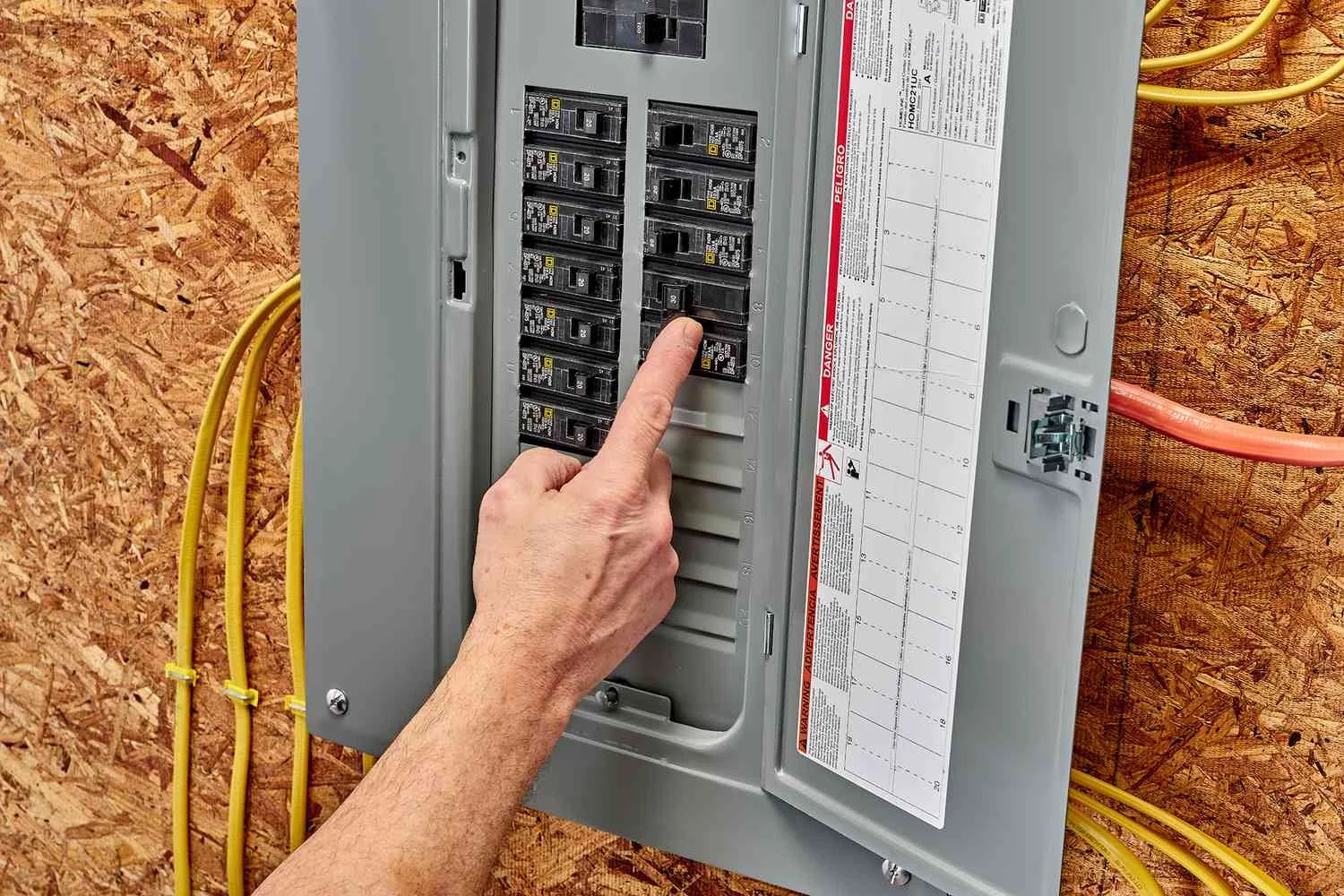
If your AC keeps tripping the breaker, resetting the panel won’t fix the root cause. Proper diagnosis is key to avoiding costly damage.
Cause 1: A Dirty Air Filter Restricting Airflow
This is the simplest, cheapest, and most common cause of an AC breaker tripping, which is why it's worth checking first before calling anyone.
When the air filter becomes clogged with dust, pet hair, and debris, it restricts the volume of air flowing through the system. The blower motor has to work significantly harder to pull air through that restricted filter, and working harder means drawing more electrical current. If the additional current draw pushes the circuit above the breaker's rated capacity, the breaker trips.
In Orange County, air filters clog faster than many homeowners realize. Santa Ana wind events deposit fine dust and particulates throughout your home. Pet ownership (common in family neighborhoods across Yorba Linda, Brea, and Fullerton) adds dander and hair to the filter load. And the extended cooling season, which can run from April through October, means the filter is working for six or more continuous months rather than the three to four months typical of shorter-season climates.
The fix is straightforward: turn off the system, locate the filter (typically behind a return air grille on a wall or ceiling, or in a slot on the air handler), and replace it if it's visibly dirty. A replacement filter costs $5 to $20. During cooling season, check the filter monthly and replace it every 30 to 60 days. After installing a clean filter, wait 30 minutes before turning the AC back on to allow the system's internal components to cool down, then try running it again. If the breaker holds, the filter was your problem.
Cause 2: A Dirty Condenser Unit (Outdoor Unit)
The outdoor condenser unit is where your AC system releases the heat it absorbed from inside your home. The condenser coil, which wraps around the interior of the outdoor unit, needs adequate airflow to dissipate that heat effectively. When the coil becomes coated with dirt, grass clippings, leaves, cottonwood fluff, or other debris, it can't release heat properly. The system runs longer and harder to compensate, the compressor draws more current, and the breaker trips.
This is especially common at the start of the cooling season. If your outdoor unit has been sitting idle since last fall, months of accumulated debris may be restricting airflow. In Orange County, additional factors include dust from Santa Ana winds settling on the coil, landscaping that's grown too close to the unit over the winter, and pollen from nearby vegetation coating the fins.
You can do a basic visual inspection and exterior cleaning yourself. Turn off the system at the thermostat and at the outdoor disconnect (a small box on the wall near the outdoor unit). Clear away any leaves, branches, or vegetation within two feet of the unit on all sides. Use a garden hose (never a pressure washer, which can bend the delicate coil fins) to gently rinse the condenser coil from the inside out if you can access the top, or from the outside at a gentle angle. Let the unit dry completely before restoring power.
If the coil is heavily soiled or the fins are visibly matted with debris, a professional cleaning is the better approach. Technicians have specialized coil cleaner solutions and fin combs that clean more thoroughly without risking damage. Professional condenser cleaning typically costs $100 to $300 as part of a maintenance visit.
Cause 3: A Failing Capacitor
The capacitor is a small cylindrical component inside the outdoor unit that stores and releases electrical energy to help start the compressor and condenser fan motor and keep them running. Think of it as a battery that provides an electrical boost at startup (when the system needs more power than the home's electrical supply can deliver on its own) and then a steady supply of energy during operation.
Capacitors degrade over time, and heat is the primary factor that shortens their lifespan. In Orange County, where outdoor units bake in direct sunlight for months and ambient temperatures regularly push into the 90s and above, capacitors often fail earlier than their 10 to 15 year average lifespan. A weak or failing capacitor can't deliver the energy the motors need to start and run efficiently, causing the motors to strain and draw excess current from the circuit, which trips the breaker.
Signs of a failing capacitor include the outdoor unit humming but not starting, the fan spinning slowly or not at all, the system cycling on and off repeatedly (short cycling), and of course, the breaker tripping. You might also notice that the AC worked fine on mild days but trips the breaker on the hottest days, because the compressor has to work hardest under peak cooling loads, and that's when a weak capacitor fails to deliver.
Capacitor replacement is one of the most affordable and common AC repairs. The part itself costs $10 to $50, but with professional labor and a diagnostic fee, total replacement cost typically runs $300 to $600. This is a repair that should be handled by a licensed technician. Capacitors store a dangerous electrical charge even after the system is powered off, and improper handling creates a serious shock hazard. Do not attempt to test or replace a capacitor yourself. For a detailed breakdown of what component repairs typically cost, see our full guide to AC repair costs in Orange County.
Cause 4: A Worn or Pitted Contactor
The contactor is an electromagnetic switch inside the outdoor unit that acts as the gateway between your thermostat's signal and the high-voltage power that runs the compressor and condenser fan. When the thermostat calls for cooling, it sends a low-voltage signal to the contactor, which closes its contacts and allows 240-volt power to flow to the compressor and fan motor. When the thermostat stops calling for cooling, the contactor opens and cuts power.
Over time, the contactor's metal contacts develop pitting and carbon buildup from the repeated arcing that occurs every time they open and close. Eventually, the contacts degrade to the point where they can't make a clean electrical connection. This creates resistance, which generates heat and can cause intermittent power delivery to the compressor. The result is a compressor that struggles to start, draws excess current, and trips the breaker.
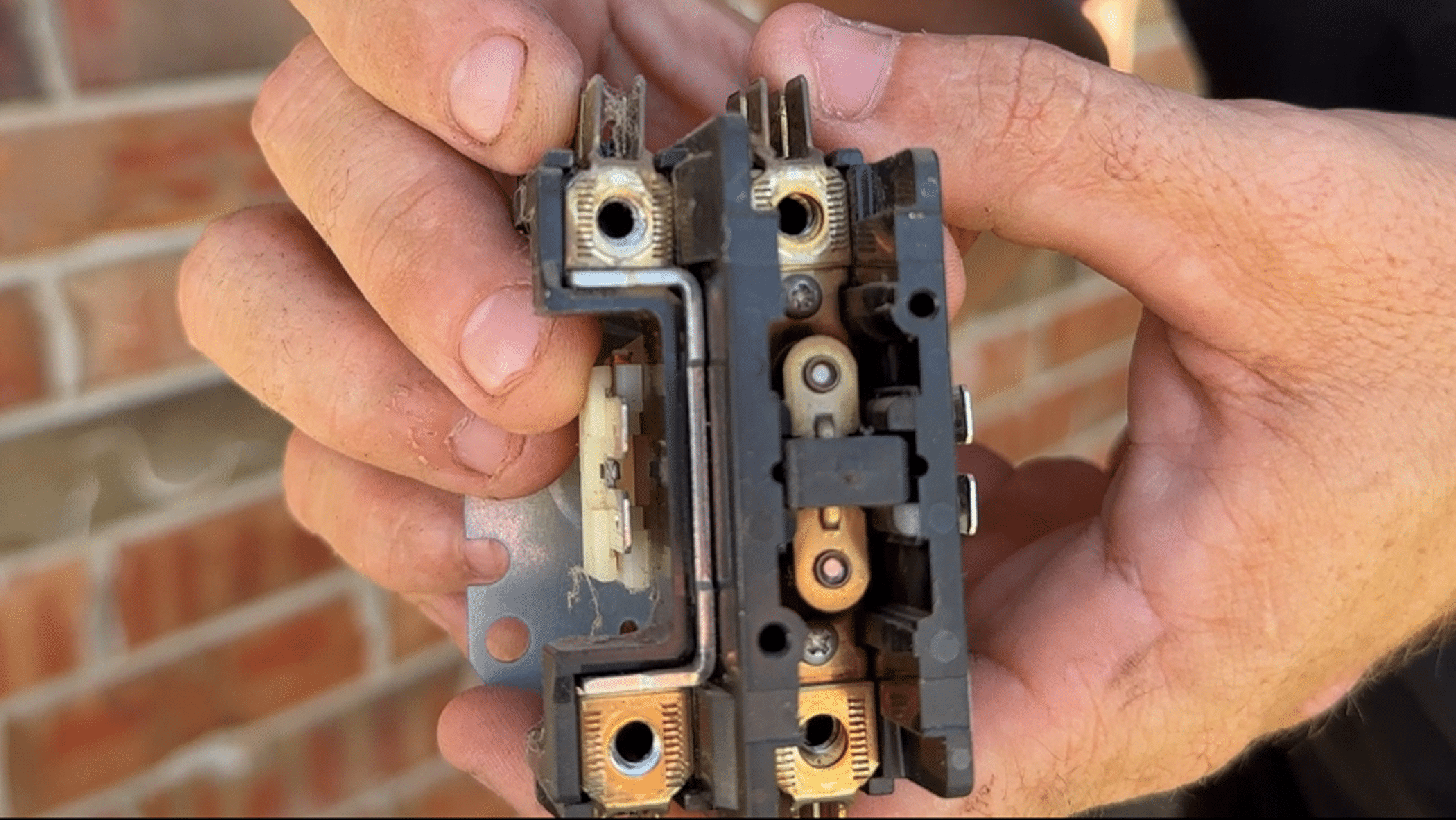
Contactors wear out over time from electrical arcing. A failing contactor can cause your AC to struggle, draw excess current, and trip the breaker.
A worn contactor can also weld itself shut (the contacts literally fuse together from repeated arcing), which keeps the compressor running continuously even when the thermostat isn't calling for cooling. This constant operation can eventually overload the circuit.
Contactor replacement is a routine HVAC repair. The part itself costs $15 to $70, and total replacement with labor typically runs $150 to $450. Like the capacitor, this is a component that a technician can diagnose and replace during a single service visit. If you've been told you need both a capacitor and a contactor, it's common for them to fail around the same time since they endure the same operating conditions and are both subject to electrical wear.
Cause 5: A Failing or Burned-Out Condenser Fan Motor
The condenser fan motor sits inside the outdoor unit and drives the fan that pulls air across the condenser coil to release heat. When this motor begins to fail, whether from worn bearings, degraded winding insulation, or simply age, it draws more current than it should. A motor that's on the verge of burning out can pull enough extra amperage to trip the breaker, especially during startup when current draw is already at its highest.
Common signs include the outdoor fan spinning slowly, wobbling, making grinding or scraping sounds, or not spinning at all even though you can hear the compressor trying to run. If the fan isn't spinning, the condenser can't release heat, the compressor overheats rapidly, and the breaker trips to protect the system. In some cases, the restricted airflow also causes the evaporator coil to freeze, compounding the problem with ice buildup that further strains the blower motor and compressor.
This is a professional repair. Condenser fan motor replacement typically costs $600 to $1,500 including parts and labor, depending on the motor type and brand. Some higher-end systems with variable-speed or ECM motors can run higher. A technician will also check the fan capacitor (which may be the actual failed component rather than the motor itself), inspect the fan blade for damage, and verify proper operation after the repair.
Cause 6: Electrical Wiring Problems
Loose, corroded, or damaged wiring within the AC system or at the electrical panel can cause breaker trips. Over time, electrical connections can loosen from the vibration of the system's normal operation. Wire insulation can degrade from heat exposure, especially in the outdoor unit where temperatures are extreme. Rodents occasionally chew through wiring in attics or crawl spaces where refrigerant lines and electrical cables run.
Loose connections create resistance, and resistance generates heat. As the wiring heats up under the electrical load of the AC system, the breaker detects the abnormal condition and trips. In some cases, damaged insulation allows wires to contact each other or contact the metal housing of a component, creating a short circuit that trips the breaker instantly.
Wiring problems are inherently dangerous and should only be diagnosed and repaired by a licensed technician or electrician. The cost varies significantly depending on the location and extent of the damage. Simple tightening of loose connections at the outdoor disconnect or contactor might be included as part of a standard service call ($75 to $200 for the diagnostic visit). Replacing a damaged section of wiring or repairing connections inside the outdoor unit typically runs $150 to $500. If the issue is in the home's main electrical panel or in the wiring running between the panel and the AC unit, an electrician may be needed, and costs can reach $300 to $1,000 or more depending on the scope of work.
If you live in an older Orange County home (built in the 1960s through 1980s, which describes a large portion of housing stock in Anaheim, Fullerton, and parts of Brea), aging electrical wiring and undersized panels are more common. Homes that were built with a 100-amp electrical panel and have since had AC systems, EV chargers, pool equipment, or other high-demand loads added may be pushing the limits of their electrical infrastructure.
Cause 7: A Bad Circuit Breaker
Sometimes the problem isn't the AC system at all. The breaker itself can be the culprit. Circuit breakers have a finite lifespan, and after years of repeated tripping cycles (from power surges, storms, or prior AC issues), the internal trip mechanism can weaken and become overly sensitive, tripping at current levels that are actually within normal range.
Signs that the breaker itself may be the problem include the breaker feeling hot to the touch when you check it, the breaker tripping even when the AC is not running, visible discoloration or a burned smell near the breaker, or the breaker refusing to hold in the "on" position at all.
A faulty breaker is an electrician repair, not an HVAC repair. Breaker replacement is a relatively quick and affordable fix, typically costing $150 to $350 including the new breaker and labor. However, proper diagnosis is important because what appears to be a bad breaker may actually be a symptom of a wiring issue or an undersized breaker that was never the right fit for the AC system's electrical demand in the first place.
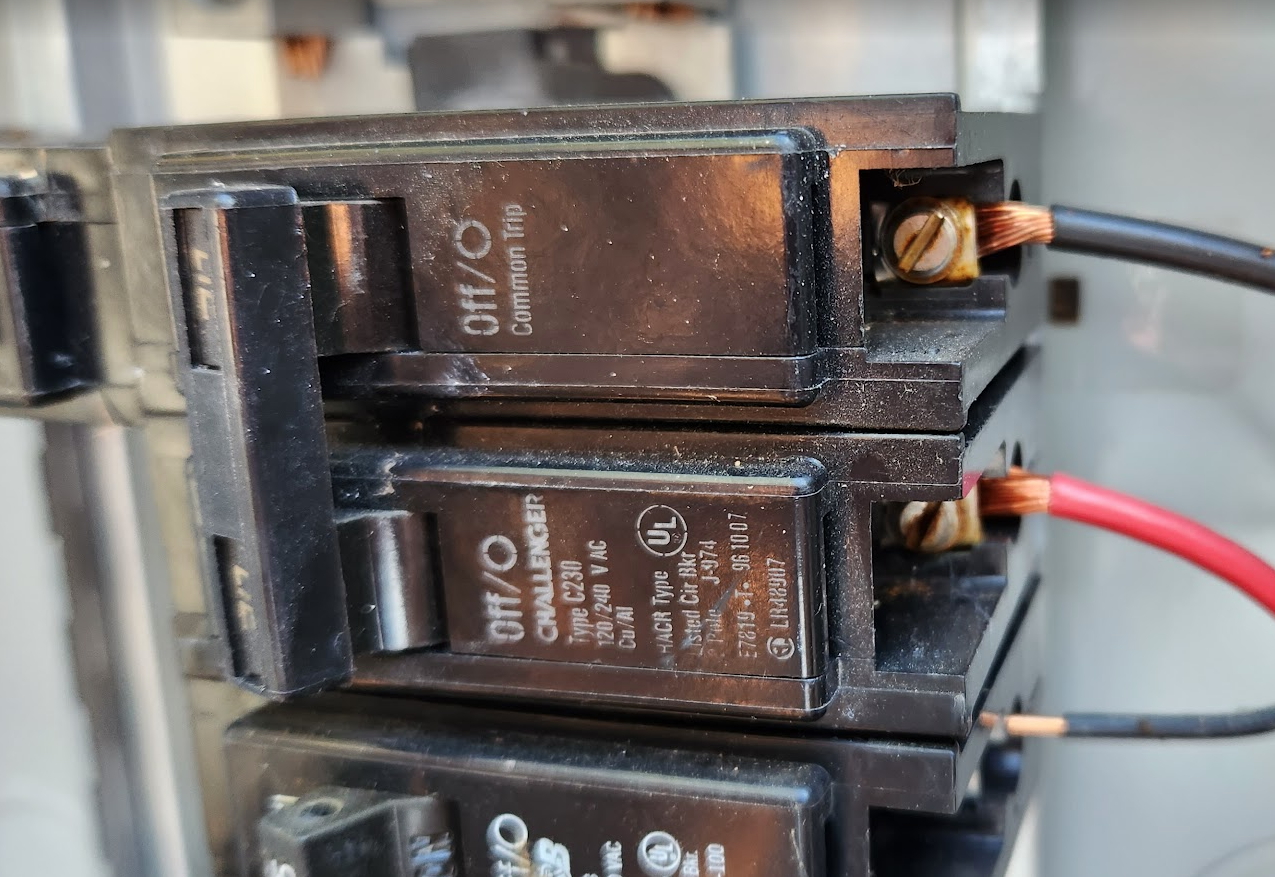
Seeing exposed or loose wires in your breaker panel? That’s a potential fire hazard. J Martin offers fast electrical inspections in Yorba Linda. Call (714) 462-4686.
Cause 8: A Compressor Drawing Excessive Current (Hard Starting)
The compressor is the heart of your AC system and also its largest single consumer of electricity. When the compressor starts up, it draws a brief surge of current (called locked rotor amps or LRA) that can be four to six times its normal running amperage. A healthy compressor handles this startup surge without issue because the breaker is sized to accommodate it.
As a compressor ages, the internal components wear, and starting becomes progressively harder. The startup current draw increases beyond what's normal, and eventually it exceeds what the breaker can tolerate. This condition is called "hard starting," and it typically gets worse over time. The compressor may start fine on cool days when the load is light but trip the breaker on hot days when it has to work hardest.
One common and relatively affordable solution is a hard start kit, which is a type of capacitor and relay device that provides an extra electrical boost during startup to help the compressor get going without drawing excessive current from the circuit. A hard start kit installed by a technician typically costs $150 to $400 and can extend the functional life of an aging compressor by several years.
However, a hard start kit is a band-aid, not a cure. If the compressor's internal condition continues to deteriorate, it will eventually need replacement. You may also notice your energy bills climbing as the struggling compressor consumes more electricity than a healthy one would. Compressor replacement for a residential central AC system in Orange County typically runs $1,500 to $3,500 including parts, labor, and the required refrigerant recharge. For systems older than 10 to 12 years, the cost of compressor replacement often approaches or exceeds the point where replacing the entire outdoor condensing unit makes more financial sense, especially when you factor in the improved energy efficiency of newer equipment.
Cause 9: A Grounded or Shorted Compressor (The Worst-Case Scenario)
A "grounded compressor" means that the electrical winding inside the compressor has broken and made contact with the compressor's metal casing, creating a direct short to ground. When this happens, the moment the system tries to send power to the compressor, a massive surge of current flows directly to ground, and the breaker trips instantly. In severe cases, the short can ignite the compressor oil and cause a burnout that contaminates the entire refrigerant system with acidic byproducts.
This is the most serious and most expensive AC problem associated with breaker tripping. A grounded compressor cannot be repaired. It must be replaced, and when a burnout occurs, the refrigerant lines and often the indoor coil must be flushed or replaced as well to remove the contaminated oil and acid. Total cost for a compressor replacement with a system flush can run $2,000 to $3,500 or more.
For systems that are more than 10 years old and out of the manufacturer's warranty, a grounded compressor is often the tipping point where full system replacement makes more sense than repair. A new complete AC system (condenser and evaporator coil, or a full system including air handler) in Orange County typically costs $10,000 to $22,000 depending on the equipment size, brand, and SEER rating.
If a technician diagnoses a grounded compressor, ask them to walk you through the repair-versus-replace math for your specific system. At J Martin, this is a conversation we have regularly with homeowners, and we always present both options with transparent pricing so you can make the decision that makes the most sense for your situation and budget.
What to Do When Your AC Breaker Trips (Safe Troubleshooting Steps)
Here's a practical sequence you can follow before calling a technician. These steps are safe for any homeowner and don't require opening any electrical panels, removing any covers from the outdoor unit, or handling any components.
Start by turning the thermostat to "Off." Do not immediately flip the breaker back on. Give the system at least 30 minutes to allow pressures in the refrigerant system to equalize and any overheated components to cool down. Resetting the breaker immediately and forcing the system to restart under abnormal conditions is one of the fastest ways to cause additional damage.
While you're waiting, check the air filter. If it's dirty, replace it. This step alone resolves the problem in a meaningful percentage of cases.
Next, go outside and look at the outdoor unit. Is it surrounded by overgrown vegetation? Covered in leaves or debris? Is the fan visible through the top grille, and does it appear clean and unobstructed? Clear away any debris around the unit and ensure at least two feet of clearance on all sides.
After 30 minutes, flip the breaker back on at the electrical panel. Then turn the thermostat back to "Cool" and observe. Listen for the outdoor unit to start. Watch for the fan to spin up to full speed. If the system starts and runs normally, monitor it for the next 24 hours to make sure the breaker holds.
If the breaker trips again immediately (within seconds of the system starting), do not reset it again. An immediate trip on startup strongly suggests an electrical short, a grounded compressor, or a failed component that creates a direct current surge. Continuing to reset the breaker in this situation risks damage to your home's electrical system and potentially creates a fire hazard. Call a licensed HVAC technician for diagnosis.
If the breaker trips again after several minutes of operation, it's likely an overload issue (dirty condenser, failing capacitor, hard-starting compressor, or similar). You should still call a technician, but the situation is less urgent from a safety standpoint than an immediate trip.
Cost Summary: What Each Repair Typically Runs
Understanding the potential cost range helps you plan and have informed conversations with your technician. Here's what each of the common repairs costs in 2026 for residential systems in the Orange County area.
A dirty air filter replacement is a DIY fix at $5 to $20. Professional condenser cleaning runs $100 to $300 as part of a service call. Capacitor replacement costs $300 to $600 including parts and labor. Contactor replacement (the electrical switch that sends power to the compressor) runs $150 to $450. Condenser fan motor replacement costs $600 to $1,500. Wiring repair ranges from $150 to $500 for AC-side issues and $300 to $1,000+ for panel or home wiring issues requiring an electrician. Circuit breaker replacement costs $150 to $350 with an electrician. A hard start kit installation runs $150 to $400. Compressor replacement costs $1,500 to $3,500. And a compressor replacement with full system flush after a burnout can reach $2,000 to $3,500+. A diagnostic service call, where a technician evaluates the problem and identifies the cause, typically costs $75 to $200, and many companies apply that fee toward the repair if you proceed with the work.
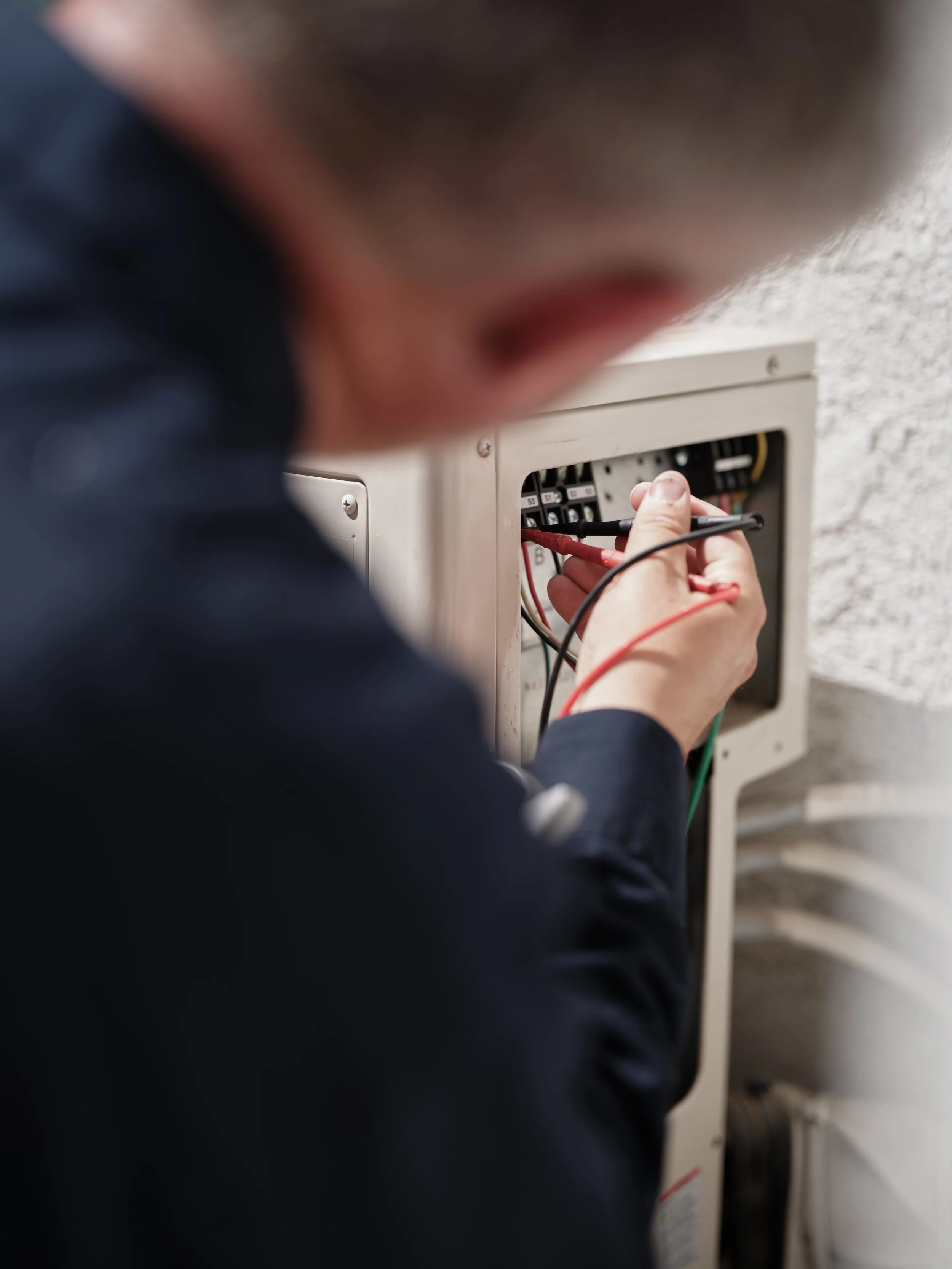
When your AC keeps tripping the breaker, the issue is often electrical. J Martin’s thorough diagnostics help Orange County homeowners find the exact cause, no guesswork.
Why This Problem Spikes in Orange County Every Spring
AC breaker trips surge every year in March and April across Orange County, and the pattern is predictable. Systems that sat idle for the winter months are suddenly called back into action as temperatures climb. During those months of disuse, capacitors can weaken, contactors can corrode, and dust and debris accumulate on the condenser coil and inside the cabinet. When the system fires up for the first time, these latent issues reveal themselves.
The extended idle period also affects the compressor. Refrigerant can migrate within the system when it's not operating, and the first startup of the season puts extra mechanical stress on the compressor as it establishes normal operating pressures. If the compressor was already on the edge of hard starting or had developing winding issues, that first seasonal startup is often when the breaker trips for the first time.
This is why we strongly recommend scheduling a professional spring tune-up before you need the AC. A technician will clean the condenser, test the capacitor and contactor, check electrical connections, measure the compressor's amperage draw, verify refrigerant levels, and identify any components that are showing signs of wear before they fail. It's far less expensive and disruptive to replace a $30 capacitor during a planned maintenance visit than to pay for an emergency repair call on the first 95-degree Saturday of the year.
When to Call a Professional
You can safely check and replace your air filter, clear debris from around the outdoor unit, and perform one controlled breaker reset after a 30-minute wait. Everything beyond that should be handled by a licensed HVAC technician or electrician.
Call for professional service if the breaker trips immediately upon startup, if the breaker trips a second time after you've replaced the filter and cleared the condenser, if you notice any burning smell from the outdoor unit or the electrical panel, if the breaker itself looks scorched or feels hot, if you hear buzzing, clicking, or humming from the outdoor unit without the fan running, or if your AC is running but not cooling even when the breaker holds. Each of these scenarios points to a cause that requires diagnostic equipment, electrical expertise, and professional repair.
J Martin Is Here for Orange County Homeowners
At J Martin Indoor Air Quality, AC breaker trips are one of the most common calls we receive during early cooling season. With 15 years of experience serving Yorba Linda, Anaheim, Brea, Fullerton, Villa Park, and surrounding Orange County communities, our technicians diagnose these issues quickly and explain exactly what's happening in plain language before recommending any repair.
We're a family-owned company with a 4.97-star average rating across more than 5,000 customers, and our technicians never work on commission. That means you get an honest diagnosis and a fair price, not an upsell. If the fix is a $15 capacitor, we'll tell you it's a $15 capacitor. If the compressor is grounded and replacement doesn't make financial sense on a 15-year-old system, we'll walk you through your options so you can make the decision that works best for your budget and your home.
If your AC keeps tripping the breaker, or if you want to schedule a spring tune-up to prevent exactly this kind of problem, call us at (714) 462-4686. We offer same-day service for cooling emergencies and transparent pricing on every repair.