
Old HVAC System? Why Your Energy Bills Are So High in Orange County
Updated on May 18, 2026
If your home was built in the 1980s or 1990s, your high energy bills may have a clear explanation.
Orange County experienced massive residential growth between 1970 and 1990. Yorba Linda's population went from 11,856 in 1970 to over 52,000 by 1990. East Lake Village, Hidden Hills Estates, and other developments went up during this building boom. Those homes came with HVAC systems that met the standards of their time.
The problem: those standards were dramatically lower than what exists today. And after decades of use, those systems have degraded further. For many homeowners, the real fix isn't another repair. It's a new HVAC system. Orange County families with 1980s and 1990s equipment are often paying hundreds more per month than they need to, simply because the technology they're running was built to a different era's standards.
Here's what research shows about energy loss in older homes and what you can do about it.
The SEER Rating Problem: How 1980s AC Systems Compare to Today
Every air conditioning system has a SEER rating (Seasonal Energy Efficiency Ratio). Higher SEER means less electricity used for the same amount of cooling.
Here's how SEER standards have changed over time, according to the U.S. Department of Energy:
1979: DOE established first SEER standards requiring minimum 6.0 SEER, but enforcement was delayed.
1987: First federal SEER standards actually enforced after Congressional action.
1992: Minimum raised to 10 SEER nationally.
2006: Minimum raised to 13 SEER nationally.
2015: Regional minimums introduced. Southwest (including California): 14 SEER minimum.
2023-present: New SEER2 standards. California minimum: 15 SEER2.
According to industry sources, homes built before 1992 without federal standards often had systems rated 6-8 SEER. One source noted a house built in 1988 came with a 6.9 SEER system, though higher efficiency options (up to 14-15 SEER) were available at that time for those willing to pay more.
The energy difference is substantial. According to SEER efficiency calculations:
A 14 SEER system uses 50% less electricity than a 7 SEER system for the same cooling output
A 16 SEER system uses about 56% less electricity than a 7 SEER system
A 20 SEER system uses 65% less electricity than a 7 SEER system
That's not marketing. That's physics. SEER is calculated by dividing cooling output (BTUs) by electricity input (watt-hours). Double the SEER, half the electricity.
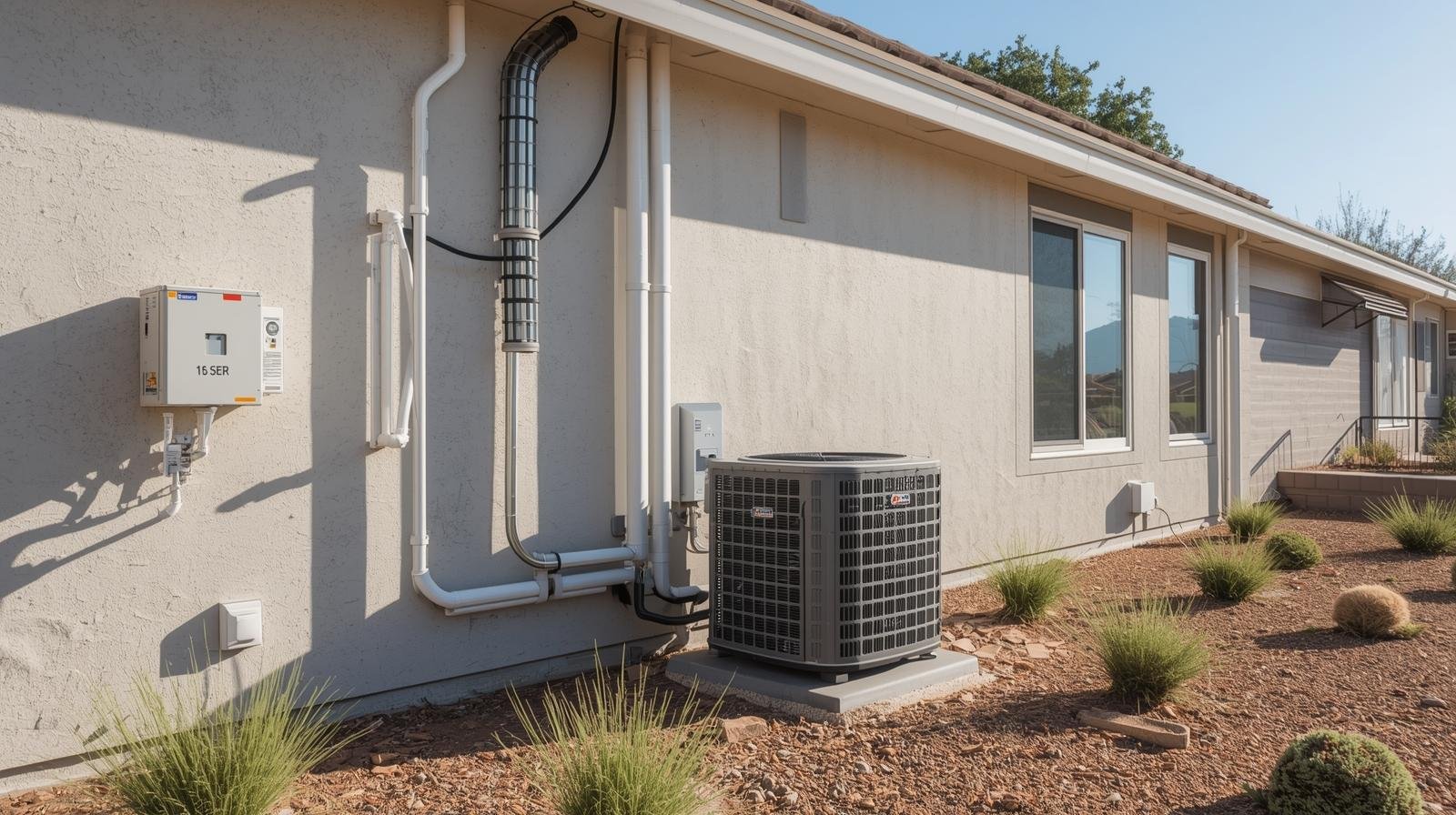
Upgrading from an old 8 SEER system to modern 16 SEER equipment delivers measurable savings. J Martin helps Orange County homeowners understand exactly what they're getting before they invest.
What This Means for Your SCE Bill
Southern California Edison's average residential rate is approximately 35.3 cents per kWh as of January 2026. Time-of-use rates range from 24 cents (off-peak) to 74 cents (on-peak) per kWh.
Let's calculate actual costs for a typical 3-ton AC system running 1,500 hours during Orange County's cooling season:
Old 8 SEER system (typical 1980s installation):
36,000 BTU ÷ 8 SEER = 4,500 watts average draw
4,500 watts × 1,500 hours = 6,750 kWh per cooling season
6,750 kWh × $0.35/kWh = $2,363 per cooling season
New 16 SEER system:
36,000 BTU ÷ 16 SEER = 2,250 watts average draw
2,250 watts × 1,500 hours = 3,375 kWh per cooling season
3,375 kWh × $0.35/kWh = $1,181 per cooling season
Difference: $1,182 per cooling season
That's approximately $197 per month during peak cooling months, just from the efficiency difference between an old and new system.
And this calculation assumes your old system is still operating at its original efficiency rating. It almost certainly isn't.
Why Your Old System Is Even Worse Than Its Original Rating
HVAC systems degrade over time. According to research from the National Renewable Energy Laboratory (NREL), air conditioning systems lose approximately 1% of their efficiency per year without professional maintenance.
Using the degradation formula from this research for a 16-year-old system that started at 10 SEER:
Current SEER = Original SEER × (0.99)^years Current SEER = 10 × (0.99)^16 = 8.5 SEER
Older systems have likely degraded even further, though the exact amount depends on maintenance history.
Factors that accelerate degradation include:
Refrigerant leaks (even small ones)
Dirty coils reducing heat transfer
Worn compressor components
Degraded insulation on refrigerant lines
Fan motors drawing more power due to bearing wear
If your system wasn't professionally maintained every year, the degradation is likely worse than these calculations suggest. Not sure if your system needs repair or replacement? Here's how to find trustworthy HVAC diagnostics in Orange County.
The Hidden Energy Drain: Your Ductwork
The HVAC equipment is only part of the problem. The ductwork in older Orange County homes creates massive energy losses that most homeowners never see.
According to the U.S. Department of Energy and Energy Star:
The typical home loses 20-30% of conditioned air through duct leaks, holes, and poor connections
Basic DOE research found that 30-40% of air traveling through ducts in older homes leaks out
Poorly insulated ducts in unconditioned spaces (like attics) can lose an additional 10-30% of energy through thermal transfer
Common issues in older homes with ductwork in unconditioned spaces include:
Ductwork running through hot attic space
Original duct connections that have loosened over decades
Duct tape (not mastic) at joints, which typically fails after several years
Insufficient duct insulation (current ENERGY STAR standards require minimum R-8 for ducts in unconditioned spaces like attics)
If your ducts are losing 20-30% of conditioned air through leaks (the typical range according to DOE) and additional energy through poor insulation, a significant portion of your cooling costs goes to conditioning air that never reaches your living spaces.
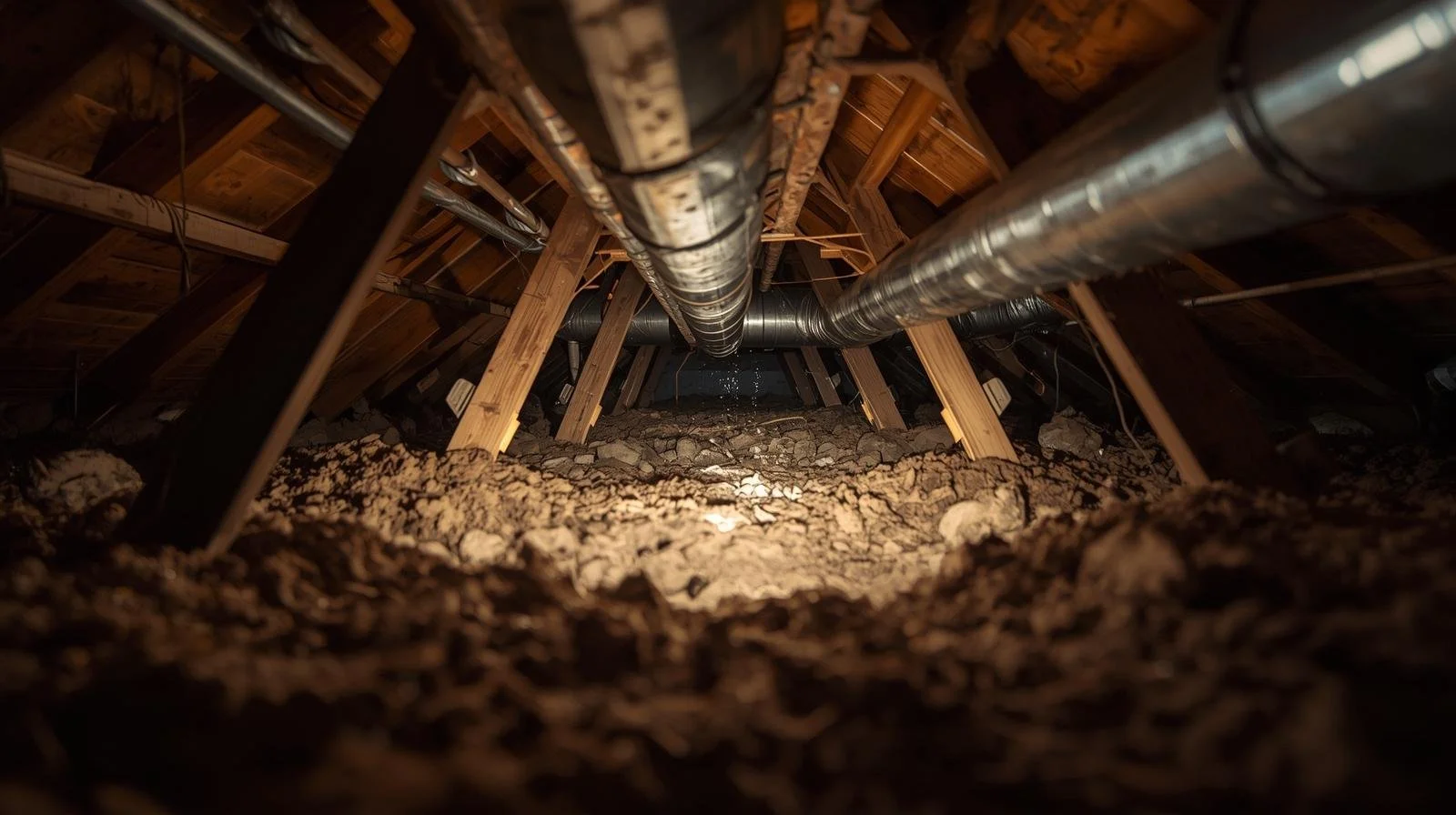
This is what's hiding in most Orange County attics built before 2000. Ductwork losing 20-30% of your cooled air. J Martin can test your actual duct leakage. Call (714) 462-4686.
The Attic Factor: Why Orange County Homes Lose So Much Energy
Your attic plays a significant role in your energy bills. According to the Insulation Institute and Department of Energy:
Approximately 90% of U.S. homes are under-insulated
Homes built before 1980 often lack adequate insulation because building codes for insulation minimums were limited or nonexistent before that time
Attics are responsible for up to 25% of heat that escapes during winter and heat that infiltrates during cooling season
The Department of Energy and International Energy Conservation Code provide R-value recommendations by climate zone. Older homes often have significantly less insulation than current recommendations.
When ducts run through a hot attic and are poorly insulated or leaking, the energy loss compounds.
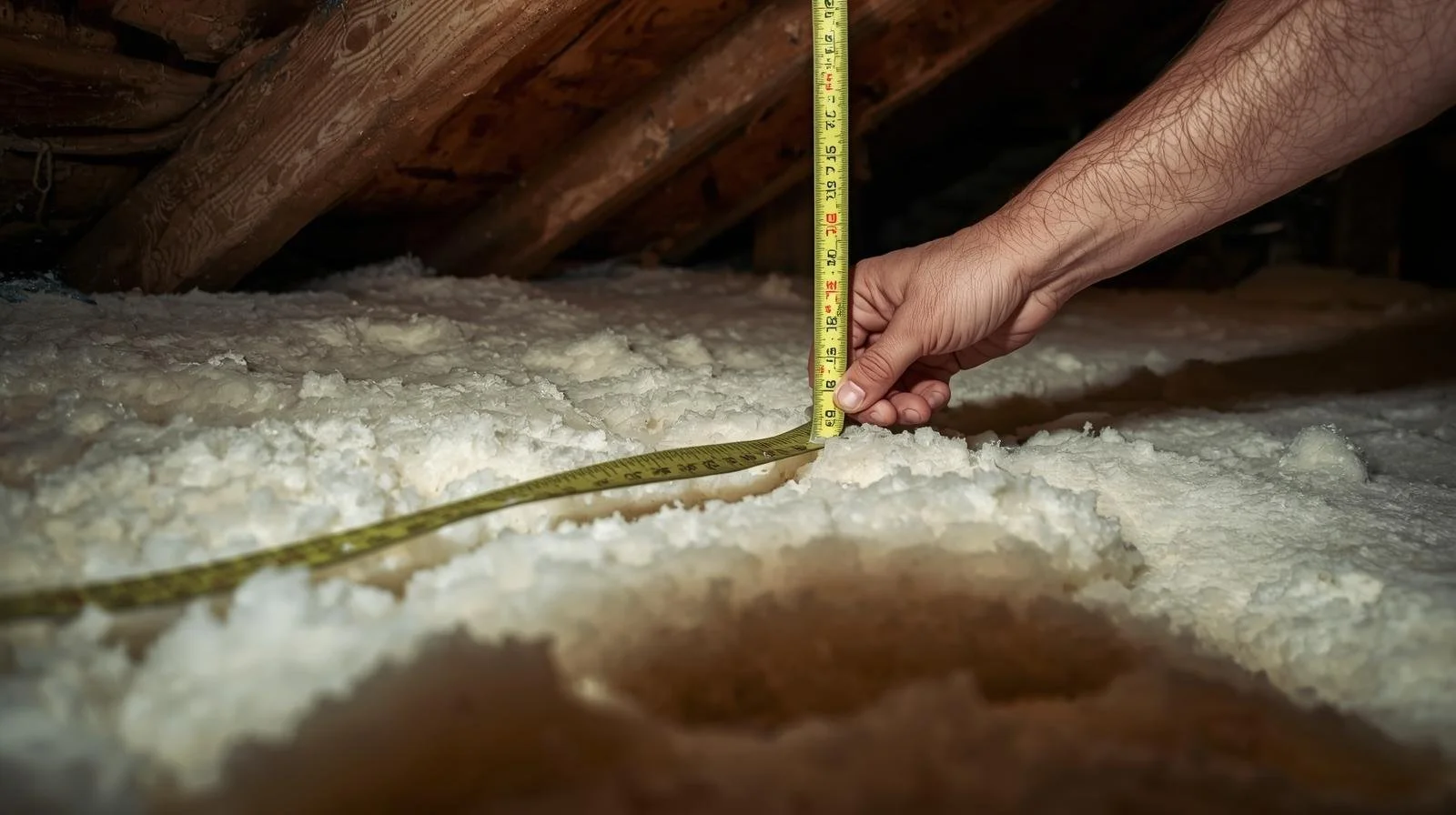
Before recommending expensive HVAC upgrades, we check the basics. Most older Orange County homes have inadequate attic insulation, which means you're paying to heat and cool your attic space instead of your living areas.
How Energy Losses Add Up in Older Homes
The combined effect of inefficient equipment, duct leakage, and poor insulation creates significant energy waste. According to verified research:
Inefficient HVAC equipment: Upgrading from a 10 SEER system to a higher efficiency system can save 20-40% on cooling costs, according to American Standard and other industry sources.
Duct leakage: The U.S. Department of Energy states that sealing and insulating ducts can reduce heating and cooling costs. According to one HVAC industry source, reducing duct leakage from 30% to about 4% is achievable with proper sealing.
Overall potential: EPA estimates homeowners can save an average of 15% on heating and cooling costs (or an average of 11% on total energy costs) by air sealing their homes and adding insulation in attics.
The actual savings for any specific home depend on the current condition of the equipment, ductwork, and insulation. Testing is required to know the actual numbers for your home.
Why Just Replacing the AC Unit Isn't Enough
Many homeowners replace their AC unit and expect dramatic savings. The savings often disappoint them.
Here's why: If you install a new 16 SEER system but leave the leaky, poorly insulated ductwork in place, you're still losing 20-30% of your conditioned air before it reaches the rooms you're trying to cool.
According to the U.S. Department of Energy, high efficiency furnaces, heat pumps, and air conditioners do not work well with high duct leakage and poor duct insulation.
A new 16 SEER system connected to ductwork with 25% leakage effectively performs like a 12 SEER system.
The smart approach addresses the entire system:
Seal ductwork (can reduce leakage from 25%+ to under 5%)
Insulate ducts properly (R-8 for attic applications)
Then install appropriately sized modern equipment
Add attic insulation if below current standards
This whole-system approach typically costs more upfront but delivers the full efficiency benefits of modern equipment.
Of course, before deciding whether to invest in modern equipment at all, you need to know whether your current system is genuinely at end-of-life or just due for a repair. Our repair-or-replace decision framework walks through the $5,000 rule and the seven factors that determine which call actually saves you money, including system age, refrigerant type, and repair history.
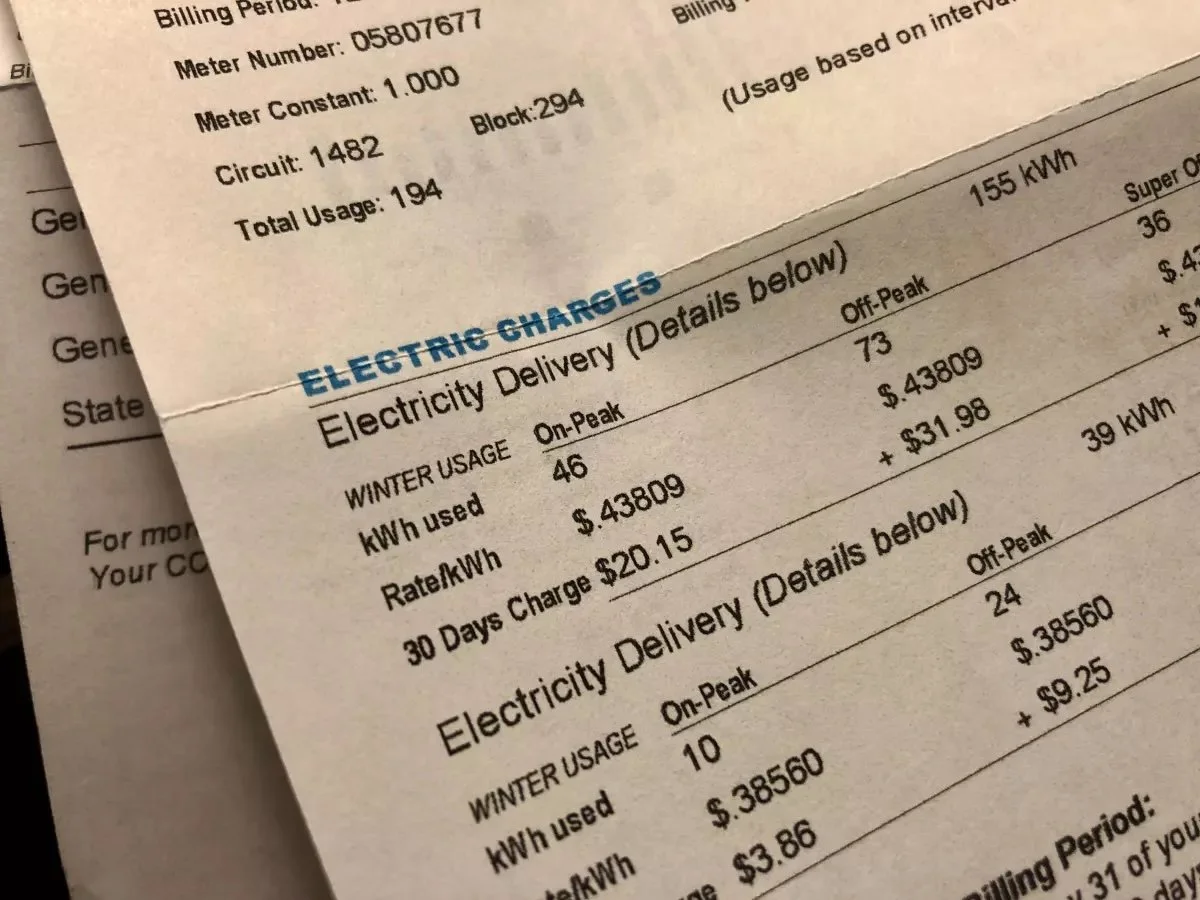
High electricity bills don't lie. When Orange County homeowners bring us bills like this, we start by testing duct leakage and system efficiency, which are the two biggest causes of energy waste in older homes.
What's Actually Worth Doing: A Prioritized Approach
Not everyone can afford to replace everything at once. If upgrades aren't in your budget right now, there are several no-cost ways to improve your HVAC efficiency while you save up for bigger improvements.
Here's how different improvements rank in terms of cost-effectiveness, based on Department of Energy and Energy Star research:
Highest return on investment:
Duct sealing - According to EPA and DOE, sealing ducts is one of the most cost-effective energy improvements. Professional duct sealing can reduce leakage from 20-30% to under 5%.
Air sealing throughout the house - EPA estimates homeowners can save an average of 15% on heating and cooling costs by air sealing homes and adding insulation.
Attic insulation - If your attic insulation is below current recommendations for your climate zone, adding more provides significant returns. The Insulation Institute notes that 90% of U.S. homes are under-insulated.
Moderate return on investment:
Duct insulation - ENERGY STAR requires minimum R-8 for ducts in unconditioned spaces. Upgrading under-insulated ducts reduces thermal losses.
HVAC system replacement - Moving from an older low-SEER system to a modern high-efficiency system provides substantial savings. American Standard states that replacing a 10+ year old system could save 20-40% on cooling costs.
Lower priority (still beneficial):
Smart thermostat - Can provide modest savings through better temperature management.
Window upgrades - Important but according to energy research, windows are typically a smaller portion of total energy loss compared to air leakage and insulation issues.
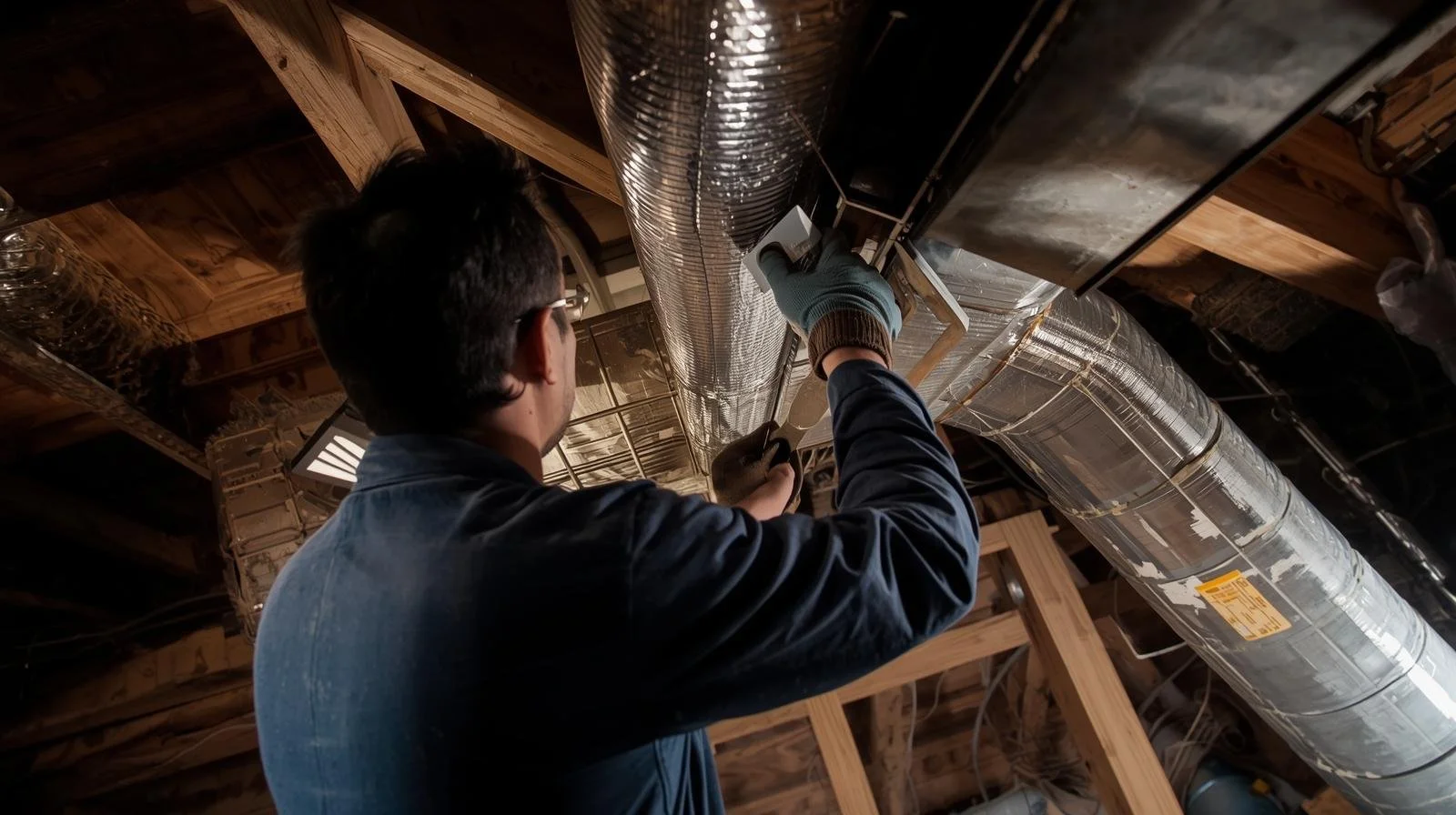
Most Orange County homeowners don't realize their ducts are losing 30% of their cooled air until we test them. Professional sealing with mastic can bring that down to under 5%, which means more of what you're paying for actually reaches your rooms.
2026 Rebates and Tax Credits for Orange County Homeowners
If you're considering upgrades, several incentive programs can offset costs:
Federal tax credits (through December 31, 2025 for heat pump installations):
30% credit up to $2,000 for qualifying heat pump systems
Credit applies to equipment and installation costs
California TECH Clean California:
$1,000-1,500 for qualifying heat pump installations
Market rate customers eligible
HEEHRA rebates (income-qualified):
$4,000-8,000 for heat pump systems
Note: These rebates are nearly fully reserved in Southern California as of late 2025
$300-800 for qualifying high-efficiency equipment
Check current availability at sce.com
These programs change frequently. Verify current availability before making decisions.
How to Know What Your Home Actually Needs
Before spending money on upgrades, get facts about your specific home:
DIY assessment:
Measure your attic insulation depth (less than 10 inches suggests inadequate R-value)
Look for visible gaps or disconnections in attic ductwork
Check if duct tape (not foil tape or mastic) was used at connections
Note which rooms are consistently harder to heat or cool
Professional assessment:
Duct leakage test (duct blaster test) measures actual air loss percentage
Blower door test measures overall home air leakage
HVAC efficiency evaluation determines actual operating efficiency vs. rated efficiency
A professional energy audit provides specific data about where your home is losing energy. The audit can identify the highest-impact improvements for your specific situation.
The Bottom Line for Older Orange County Homes
If your home was built in the 1970s or 1980s in Yorba Linda, Placentia, Anaheim Hills, or other Orange County communities developed during that era, your HVAC system and ductwork were likely built to standards that are lower than today's requirements.
The energy waste from outdated equipment and leaky ductwork is real and measurable. According to DOE and EPA research, the typical home loses 20-30% of conditioned air through duct leaks alone, and upgrading from older equipment to modern high-efficiency systems can reduce cooling costs by 20-40%.
The good news: these problems are fixable. The solutions range from duct sealing to comprehensive system replacement, depending on your budget and priorities.
The key is understanding what's actually causing your high energy bills before spending money on solutions. Testing duct leakage and evaluating system efficiency provides the data needed to make informed decisions.
For specific questions about your Orange County home's HVAC system and what improvements make sense for your situation, call J Martin Indoor Air Quality at (714) 462-4686.
J Martin Indoor Air Quality | (714) 462-4686 | Services
Frequently Asked Questions
How do I find out my current AC system's SEER rating?
Look for the yellow EnergyGuide label on your outdoor condenser unit or indoor air handler. If the label is missing or unreadable, record the model and serial numbers and contact the manufacturer. For very old systems (pre-1987), assume 6-8 SEER. Systems from 1987-2005 were typically 10 SEER minimum.
Is it worth replacing a working AC system just for efficiency?
Depends on your current system's age and efficiency, your energy costs, and how long you plan to stay in the home. The DOE estimates replacing a 10+ year old system could save 20-40% on energy costs. At Orange County electricity rates (approximately 35 cents/kWh), the savings can justify replacement faster than in areas with cheaper electricity.
Should I seal my ducts myself or hire a professional?
Minor visible leaks can be sealed with mastic sealant (not duct tape) as a DIY project. However, for comprehensive duct sealing, professionals use diagnostic equipment to measure actual leakage and can reduce leakage from 20-30% to under 5%. Get quotes from licensed HVAC contractors for pricing in your area.
What SEER rating should I choose for a new system in Orange County?
California's minimum is now 15 SEER2. For Orange County's climate with extended cooling seasons, higher SEER ratings (18-20+) can provide meaningful additional savings. However, the incremental savings between 16 SEER and 20 SEER are smaller than the jump from 8 SEER to 16 SEER. Focus on getting at least 16 SEER and ensuring proper duct sealing before paying premium prices for ultra-high efficiency.
My home was built in the 1990s. Does this apply to me?
Partially. Homes built after 1992 had minimum 10 SEER requirements, so your original equipment was more efficient than 1980s systems. However, duct leakage issues affect homes of all ages, and a 30-year-old system has likely degraded significantly. The diagnostic approach is the same: test actual duct leakage and system efficiency before deciding on upgrades.