
How to Maximize HVAC Efficiency Without Spending Money
Updated on May 24, 2026
Want to lower your energy bills and improve your home's comfort without spending a dime? It's absolutely possible. The best HVAC efficiency tips don't require expensive equipment or professional installation. They just require a little knowledge and consistency.
At J Martin Indoor Air Quality, we've served over 5,000 Orange County families, and one question comes up constantly: how can I save money on heating and cooling? The good news is that many free energy saving tips can make a real difference in your monthly utility bills. Some simple changes to how you use your existing system can cut energy waste significantly.
These strategies work particularly well in Orange County's climate. Our hot summers and mild winters create specific opportunities to reduce energy use without sacrificing comfort. Let's explore practical ways to get more efficiency from your HVAC system starting today.
Optimize Your Thermostat Settings
Your thermostat is the control center for your entire HVAC system, and how you set it makes a huge difference in energy consumption. Small adjustments can add up to significant savings over time.
In summer, set your thermostat to 78 degrees when you're home. Every degree below 78 increases your energy use by about 3-5%. When you leave for work or errands, bump it up to 82-85 degrees. Your system won't work as hard, and your home will still cool down quickly when you return.
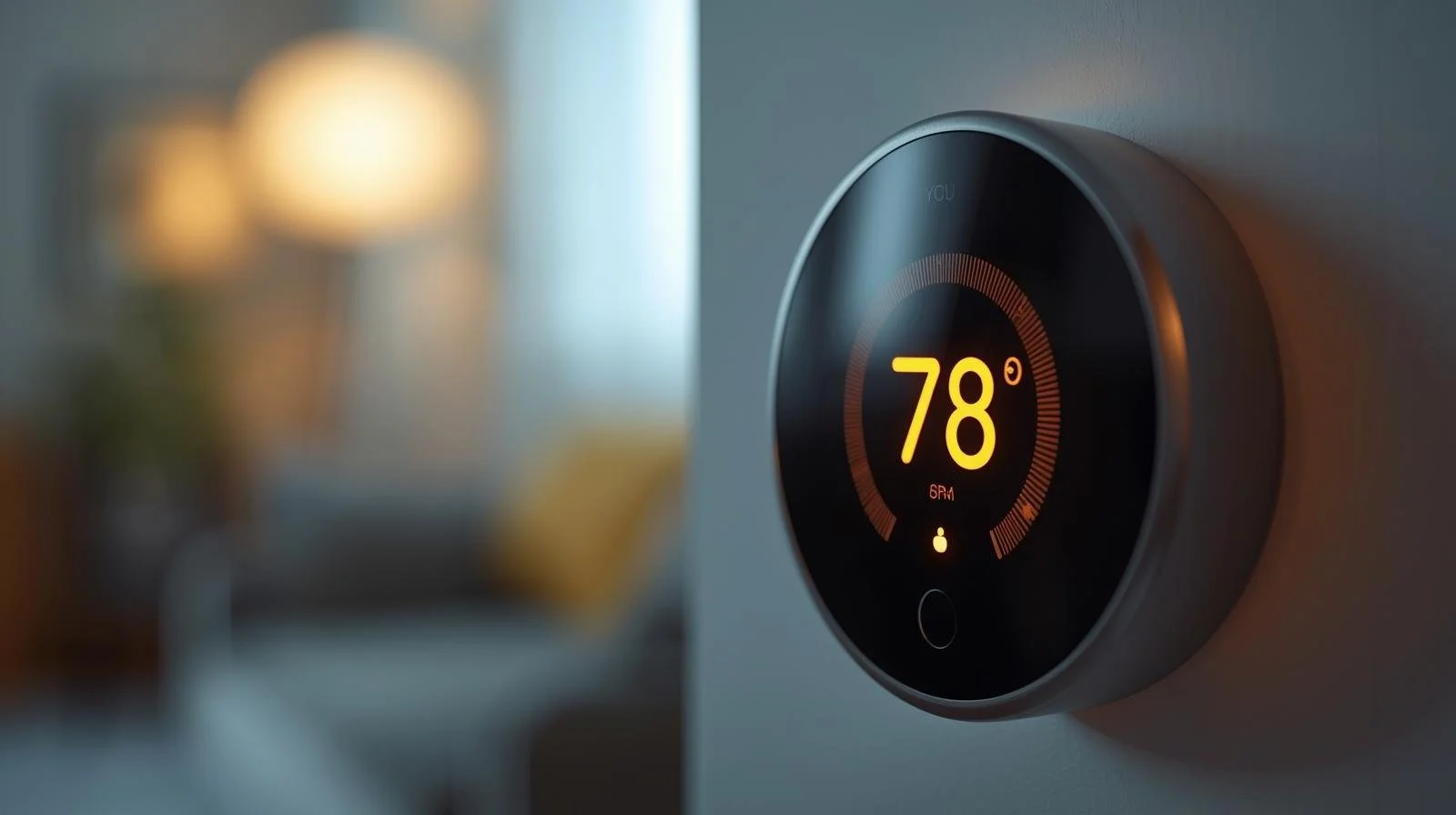
Setting your thermostat to 78°F in summer is the single fastest way to cut energy costs that are free and immediate. Every degree below 78 increases bills by 3-5%. Start saving today with J Martin's efficiency tips: (714) 462-4686.
During Orange County's mild winters, aim for 68 degrees when you're awake and active. Lower it to 65 or even 62 at night when you're under blankets. Your body actually sleeps better in cooler temperatures, and you'll save energy while you rest.
The key is consistency. Wild temperature swings force your system to work harder. It's a myth that cranking your AC down to 65 will cool your home faster. Your system works at the same speed regardless of the setting. You'll just end up overshooting your target temperature and wasting energy.
Maximize Natural Airflow Throughout Your Home
Free airflow improvements can dramatically boost your system's efficiency. When air circulates naturally, your HVAC doesn't have to work as hard to maintain comfortable temperatures.
Open interior doors whenever possible. Closed doors trap hot or cold air in individual rooms and create pressure imbalances that strain your system. Your air conditioning works best when it can move freely through your entire home.
Use ceiling fans strategically. In summer, run them counterclockwise to create a cooling breeze. This wind chill effect lets you raise your thermostat by 4 degrees without feeling warmer. In winter, reverse the direction to push warm air down from the ceiling. Just remember that fans cool people, not rooms, so turn them off when you leave.
Cross-ventilation can work wonders during mild weather. Open windows on opposite sides of your home to create a natural breeze. This is particularly effective in Yorba Linda and other inland areas during spring and fall evenings when outdoor temperatures drop.
Check that furniture and drapes aren't blocking your vents. A couch pushed against a return vent or curtains covering a supply register forces your system to work harder. Keep at least six inches of clearance around all vents for optimal airflow.
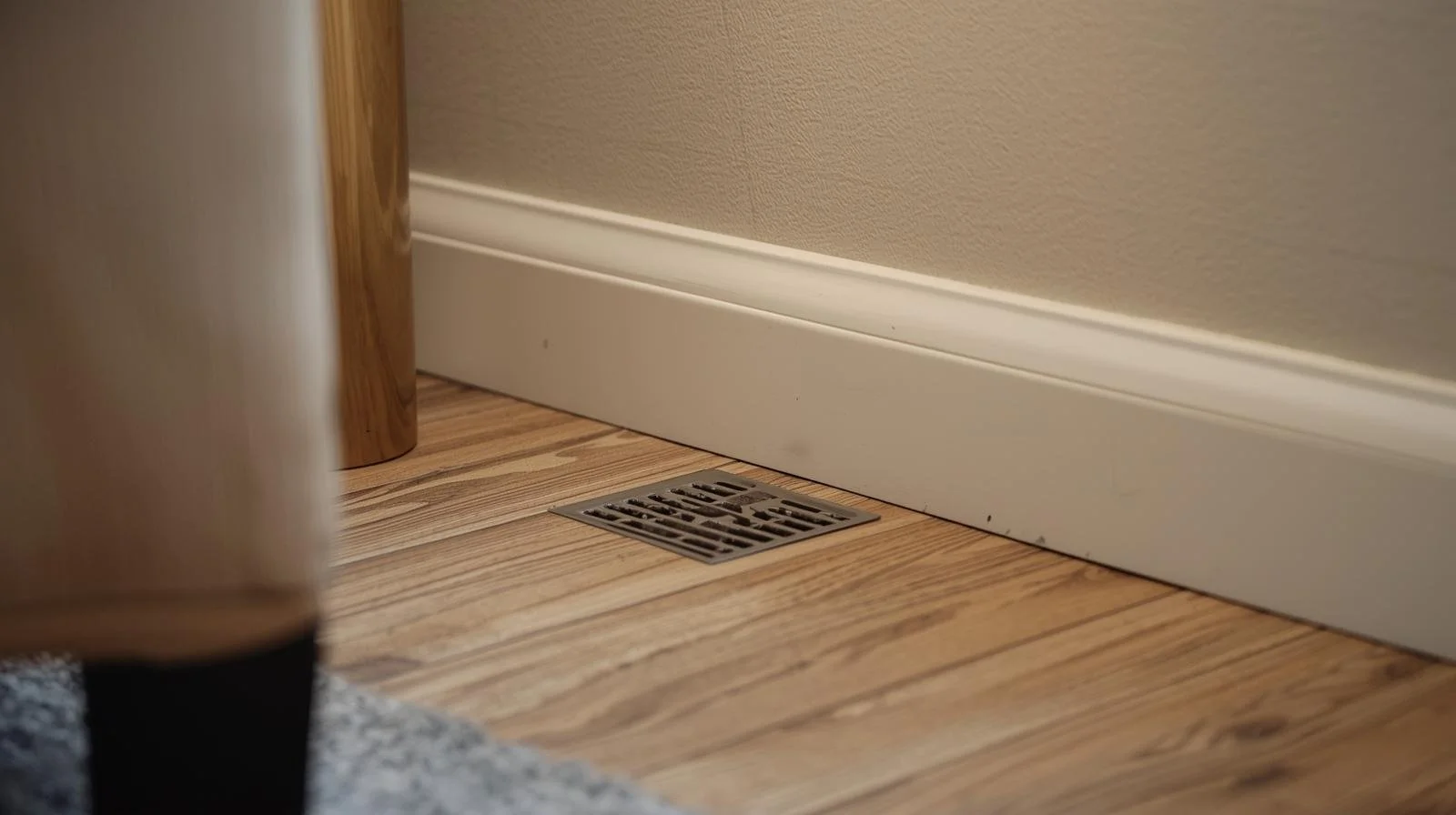
Keep at least six inches of clearance around every vent in your home. This simple, free adjustment ensures proper airflow and prevents your system from straining. J Martin's efficiency experts help Orange County homeowners identify easy wins that reduce energy costs without spending money.
Harness the Power of Shade
Shade is one of the most powerful free energy saving tips available, especially during Orange County's intense summer heat. Blocking solar heat gain reduces how hard your air conditioning has to work.
Close blinds, curtains, and shades on south and west-facing windows during the hottest part of the day. Direct sunlight can raise indoor temperatures by 10-20 degrees. Even light-colored curtains provide some barrier against heat gain.
If you have trees in your yard, they're already helping. A mature tree on the south or west side of your home can reduce air conditioning costs by up to 25%. If you're considering planting trees, that's an investment that pays dividends for years, but existing trees provide free benefits right now.
Awnings, covered patios, and roof overhangs also provide valuable shade. Use them to your advantage by opening windows in shaded areas during cooler morning and evening hours. This brings in fresh air without the heat.
In winter, do the opposite. Open south-facing window coverings during the day to let in warming sunlight. Close them at night to trap heat inside. This passive solar heating reduces how often your furnace needs to run.
Clean and Maintain What You Can
Regular maintenance keeps your system running efficiently, and there's plenty you can do yourself without spending money. These tasks take just minutes but can significantly impact performance.
Check your air filter monthly. A dirty filter is the number one cause of reduced efficiency and system strain. If it looks gray or clogged, it needs changing. While new filters cost money, checking and changing them on schedule rather than waiting too long is part of free preventive care.
Keep your outdoor AC unit clean. Turn off power to the unit, then gently remove leaves, grass clippings, and debris from around it. Spray the fins with a garden hose from the inside out to clear dust and dirt. Never use a pressure washer, as this can damage the delicate fins.
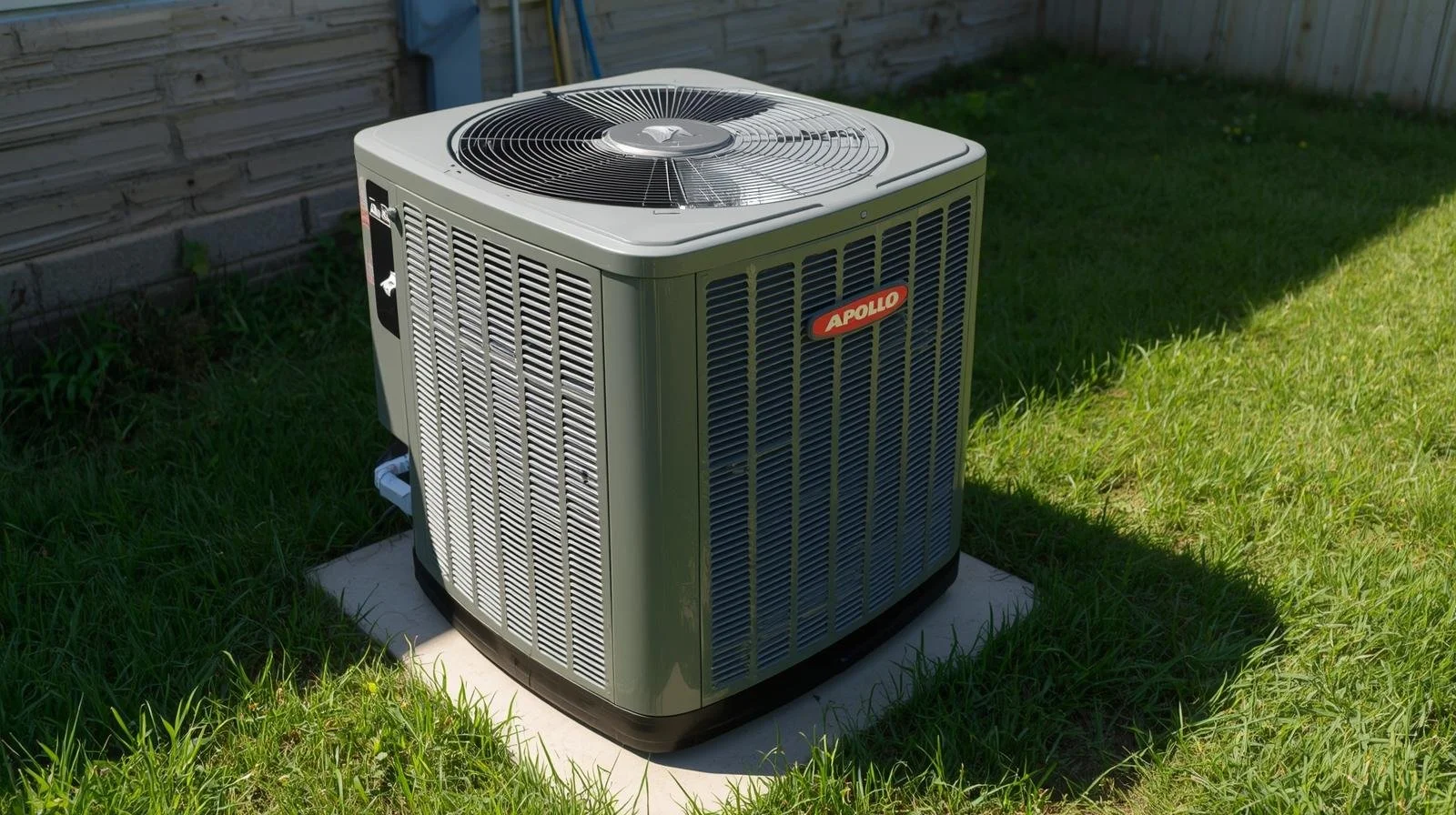
Your outdoor AC unit needs at least two feet of clearance on all sides for efficient heat exchange. Free maintenance like removing debris and trimming plants improves performance without spending a dime. J Martin shows Orange County homeowners simple tasks that protect their investment and lower energy bills.
Clean your indoor vents and registers. Remove vent covers and vacuum inside the ducts as far as you can reach. Wipe down the vent covers before replacing them. Dust buildup restricts airflow and circulates allergens through your home.
Inspect your outdoor unit's surroundings. Trim back plants and shrubs to maintain at least two feet of clearance on all sides. Adequate airflow around the unit is essential for efficient heat exchange.
For more comprehensive maintenance services, professional tune-ups catch small issues before they become expensive problems. But the simple tasks above keep your system running better between professional visits. Spring is the highest-value time of year for this, since technicians can diagnose problems on a mild 75-degree day that would be much harder to catch under summer load. Our complete Orange County spring HVAC maintenance guide walks through what a professional tune-up actually includes and why timing it before May matters. The simple tasks above keep your system running better between those professional visits."
Seal Air Leaks Without Spending Money
Air leaks force your HVAC system to work overtime replacing conditioned air that escapes. Finding and reducing these leaks costs nothing but a little detective work.
Feel around windows and doors for drafts on a windy day. You can often identify gaps just by holding your hand near potential leak points. If you feel air movement, that's conditioned air escaping and outdoor air getting in.
Check your attic access door or hatch. This is one of the biggest sources of air leakage in many homes. Make sure it closes tightly and consider adding weatherstripping if gaps are visible.
Look for gaps where pipes, wires, or cables enter your home. These penetrations often have spaces around them that leak air. Even small gaps add up when there are multiple entry points.
Window and door weatherstripping naturally degrades over time. Inspect it closely and replace it if you see cracks or gaps. While new weatherstripping does cost money, identifying which areas need attention is free and helps you prioritize.
During Orange County's mild seasons, these leaks matter less. But when you're running your AC hard in July or your heat on a cold January evening, every leak wastes energy and money.
Adjust Your Habits and Routines
Sometimes the best HVAC efficiency tips involve changing when and how you do everyday activities. These behavioral adjustments cost nothing but can reduce your energy consumption significantly.
Run heat-generating appliances during cooler hours. Dishwashers, ovens, dryers, and even computers add heat to your home. In summer, use them in the morning or evening when it's cooler outside. This reduces the load on your air conditioning.
Take advantage of Orange County's mild evenings. Once outdoor temperatures drop below indoor temps, open windows and turn off your AC. This free cooling can keep you comfortable for hours without running your system.
Cook outdoors when possible. Grilling moves heat production outside your home. Even a small reduction in indoor heat gain means your AC runs less often.
Use exhaust fans wisely. Bathroom and kitchen fans remove humidity and odors, but they also pull conditioned air out of your home. Run them when needed, but don't leave them on longer than necessary.
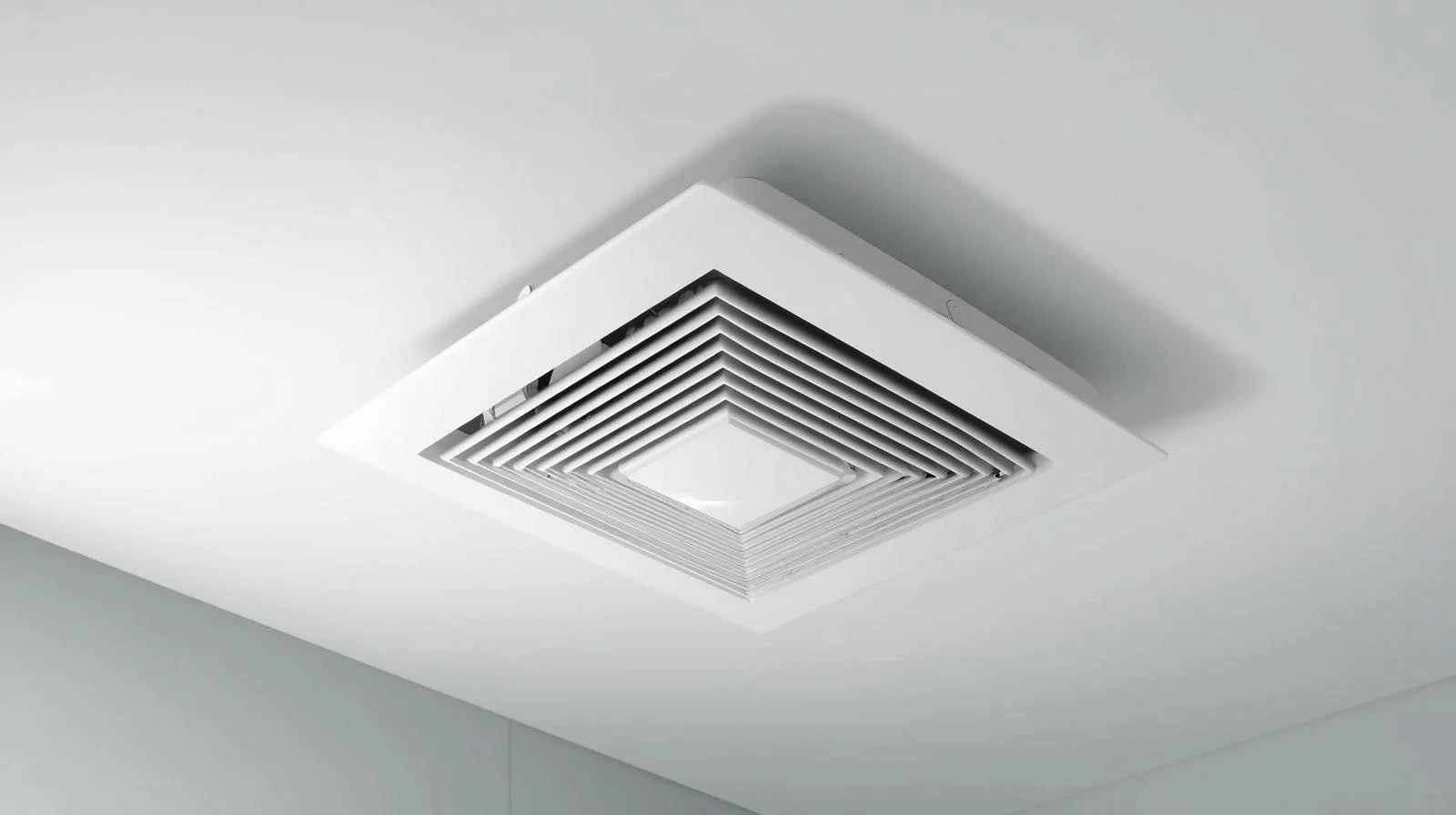
We see it all the time in Orange County homes, exhaust fans left running for hours after someone showers. Homeowners don't realize these fans are pulling out air they just paid to cool or heat. Run them when needed, turn them off when done. This zero-cost habit change can save 5-10% on energy bills.
Consider your daily schedule. If everyone leaves home by 8 AM and returns at 6 PM, program your thermostat accordingly. Your system can work less during those empty hours without affecting comfort.
Understand Your System's Limits
Part of maximizing efficiency is knowing what your HVAC system can and cannot do. Unrealistic expectations lead to wasted energy and frustration.
Your AC can realistically cool your home about 20 degrees below outdoor temperature. On a 100-degree day in Yorba Linda, expecting your home to reach 68 degrees forces your system to run constantly without achieving your goal. Setting a more realistic 78-80 degrees uses less energy and actually reaches your target temperature.
Recognize that humidity affects comfort as much as temperature. On humid days, you might feel warm at 75 degrees but comfortable at 78 degrees on a dry day. Understanding this relationship helps you set appropriate temperatures without over-cooling.
Know the difference between maintenance you can handle and issues that need a professional. Changing filters, cleaning vents, and adjusting settings are all DIY-friendly. But refrigerant leaks, electrical problems, and mechanical failures require trained technicians with proper tools and certifications.
If your system struggles to maintain comfortable temperatures despite your best efforts, it might be time for professional cooling system evaluation or heating system service. Sometimes inefficiency signals underlying problems that simple adjustments can't fix.
Leverage Orange County's Climate
Living in Orange County gives you specific advantages when it comes to reducing HVAC energy use. Our climate creates opportunities that residents in extreme climates don't have.
We enjoy many months of the year when you don't need heating or cooling at all. Spring and fall often bring perfect temperatures where open windows provide all the comfort you need. Take advantage of these free periods by turning your system off completely.
Even in summer, temperatures typically drop significantly at night. Opening windows in the evening and closing them in the morning can cool your home naturally. This works particularly well in inland areas like Yorba Linda where the temperature swing between day and night is more pronounced.
Our mild winters mean heating needs are modest compared to most of the country. Many Orange County homes can get by with minimal heating, using layers and blankets rather than cranking up the furnace.
Consider whole house fans as a future investment. While installation costs money upfront, QuietCool systems provide natural cooling that can reduce AC use by 50-90% during suitable weather. Many of our customers run their AC far less after installing these fans.
Improve Indoor Air Quality for Better Efficiency
Clean indoor air and efficient HVAC operation go hand in hand. When your system doesn't have to fight through dust and debris, it runs more smoothly.
Reduce indoor dust sources. Regular vacuuming, dusting, and controlling indoor humidity all decrease how much particulate matter circulates through your system. Less dust means cleaner filters, better airflow, and improved efficiency.
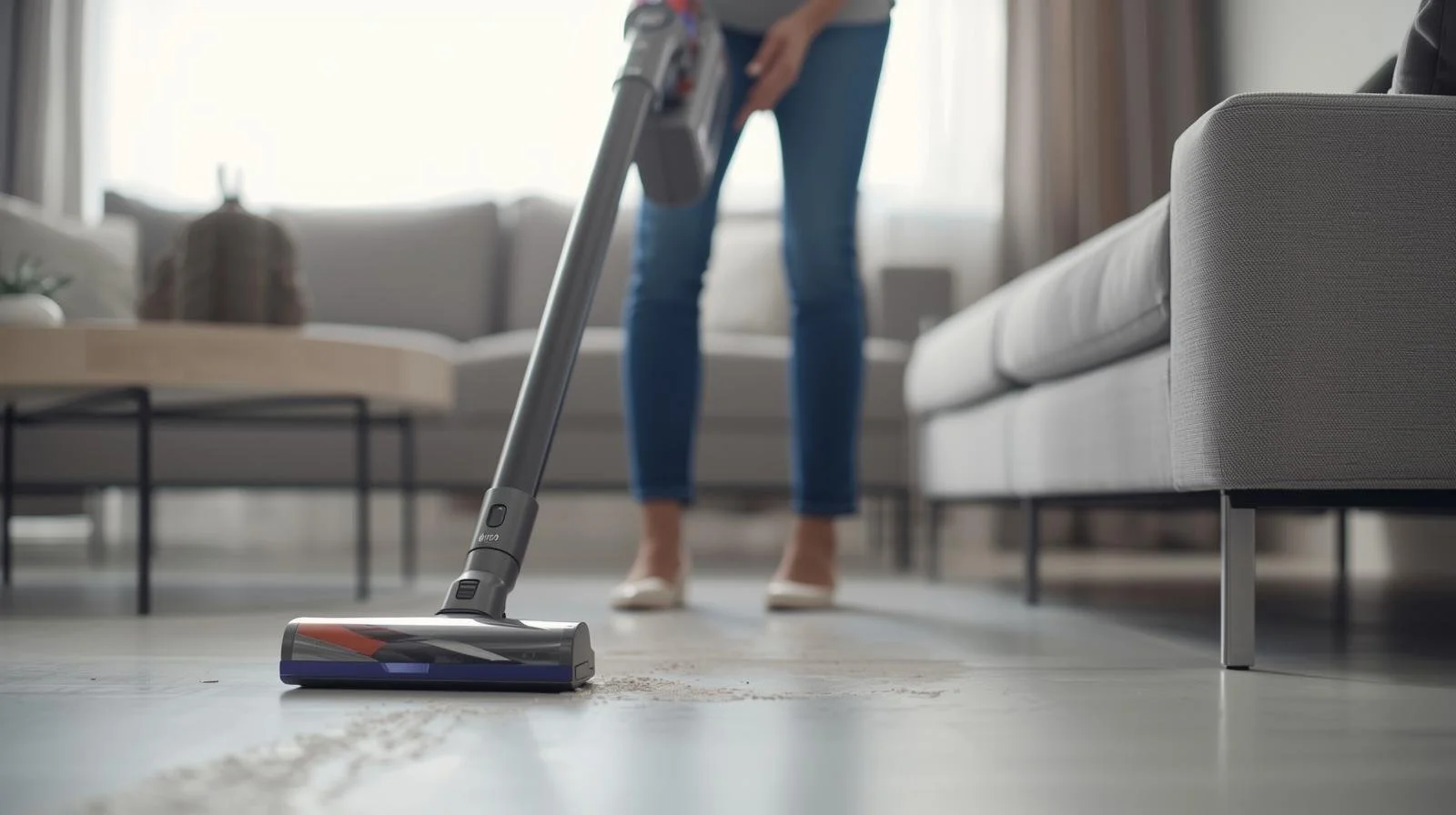
Less dust in your home means cleaner air filters, better airflow, and improved HVAC efficiency. Regular vacuuming and dusting reduce the particulate matter your system has to fight through. J Martin shows Orange County homeowners how simple cleaning habits support both air quality and energy savings.
Control cooking fumes and smoke. These contaminants not only affect air quality but also clog filters faster. Use range hoods when cooking and avoid indoor smoking.
Manage humidity levels naturally. In dry weather, placing bowls of water near heat sources adds moisture without running a humidifier. In humid weather, shorter, cooler showers reduce moisture buildup that makes your AC work harder.
For comprehensive air quality improvements, professional duct cleaning and air purification systems provide benefits beyond what free methods can achieve. But maintaining what you have through regular cleaning supports both air quality and efficiency.
When to Call a Professional
While this blog focuses on free energy saving tips, it's important to recognize when professional help is necessary. Some efficiency problems require expertise, tools, and safety equipment that homeowners don't have.
Call a professional if your system runs constantly but doesn't reach the set temperature. This often indicates refrigerant leaks, compressor problems, or ductwork issues that no amount of filter changing will fix.
Strange noises, unusual odors, or visible damage all warrant professional attention. These symptoms can signal serious problems that worsen over time if ignored.
If your energy bills spike suddenly without explanation, a technician can diagnose issues you might not notice. Sometimes hidden problems like duct leaks or failing components drain energy without obvious symptoms.
Annual professional maintenance catches small issues before they become major problems. While it costs money upfront, it prevents expensive breakdowns and keeps your system running at peak efficiency year-round.
At J Martin Indoor Air Quality, we're committed to honest service. We'll never recommend expensive repairs when simple adjustments will do. Sometimes what seems like a major problem has a simple solution, and we're happy to share that information even if it means less revenue for us. That's just how we do business.
Small Changes, Big Impact
Maximizing HVAC efficiency without spending money comes down to consistency and awareness. None of these tips requires special skills or expensive tools. They just require paying attention to how you use your system and making smart choices about temperature settings, airflow, and daily habits.
Start with the easiest changes. Adjust your thermostat, clean your vents, and use shade strategically. Once these become habits, add other strategies like optimizing fan usage and managing when you run heat-generating appliances. If you want a simple framework for staying on top of all of these tasks throughout the year, our HVAC maintenance calendar for Orange County homeowners breaks down what to focus on each season so nothing falls through the cracks.
Remember that even small improvements add up over time. Raising your summer thermostat by just two degrees and keeping your outdoor unit clean might save you 10-15% on cooling costs. Over an entire Orange County summer, that's real money back in your pocket.
These free strategies work best when combined with proper system maintenance and timely repairs. When you do need professional help, trust a company that values integrity and treats customers like family. That's what we've built our reputation on across Yorba Linda, Anaheim, Fullerton, and throughout Orange County. Give us a call if you need help.
Your comfort matters, but so does your budget. With these HVAC efficiency tips, you can have both without spending money on expensive upgrades or equipment. Start implementing these changes today and enjoy the benefits all year long.
J Martin Indoor Air Quality | (714) 462-4686 | Services