
Air Conditioner Leaking Water: Causes, Fixes, and When to Call a Pro (2026)
Posted on July 2, 2026
When your air conditioner is leaking water inside your home, the most common causes are a clogged condensate drain line ($75 to $250 to clear), a frozen evaporator coil that is thawing and overwhelming the drain pan, or a cracked drain pan ($250 to $1,200 to replace depending on the type). In roughly 70% of the AC water leak calls we handle across Orange County, the fix takes under an hour and costs less than $300. The remaining 30% involve a frozen coil or a refrigerant leak, which are more involved but still typically resolved in a single visit.
The first thing you should do if your AC is leaking water is turn the system off at the thermostat. Continuing to run an air conditioning system that is actively leaking can cause water damage to drywall, flooring, and ceiling materials, and can create conditions for mold growth within 24 to 48 hours in Orange County's warm climate. Turning the system off stops the leak and gives you time to assess and call for service without making the situation worse.
When Angel responded to a water leak call at a Tustin home last August, the homeowner had noticed a growing wet spot on the ceiling below their second-floor air handler. By the time Angel arrived, water had soaked through a 4-by-6-foot section of drywall. The cause was a clogged condensate drain line: algae and dust had formed a blockage in the PVC drain pipe where it entered the wall. Angel cleared the line with a wet/dry vacuum and a specialized brush, flushed it with a cleaning solution, and installed an inline safety float switch that would shut the system off automatically if the line ever clogged again. The repair took 45 minutes and cost $185. The ceiling repair the homeowner needed afterward cost considerably more, which is why we always tell homeowners to address water leaks immediately rather than waiting to see if they resolve on their own.
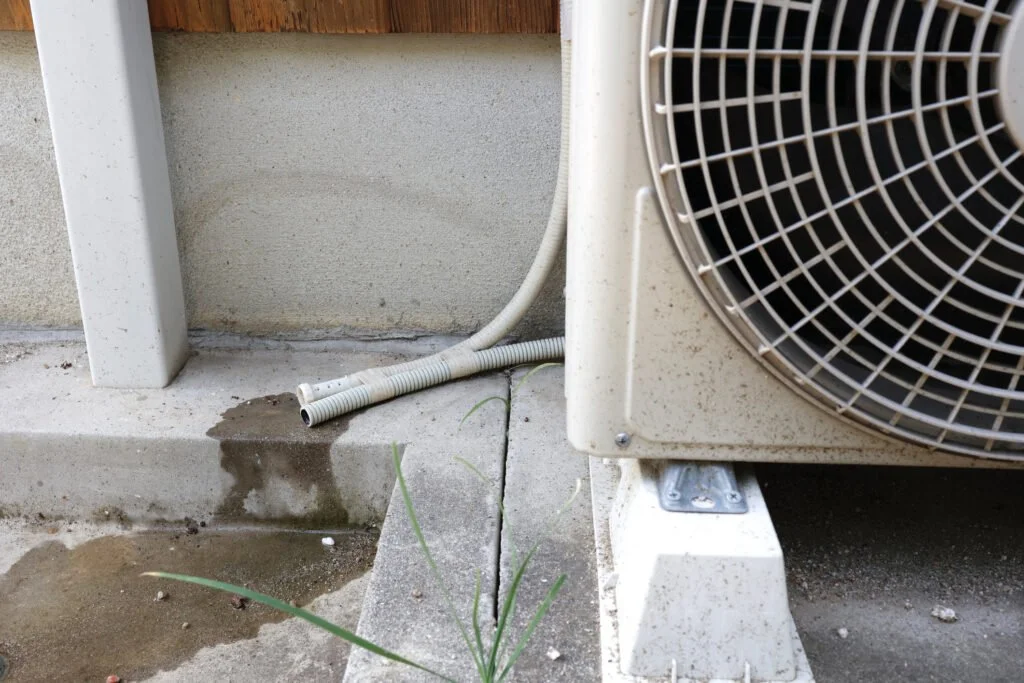
Water outside your AC unit is not always normal. J Martin's technicians diagnose the real cause of every leak, whether it is a clogged drain line, a frozen coil, or something more serious, so you know exactly what you are dealing with before any work begins.
Quick Answer
An air conditioner leaking water is most commonly caused by a clogged condensate drain line ($75 to $250 to clear), a frozen evaporator coil (underlying cause determines cost), or a cracked drain pan ($250 to $1,200 to replace). Turn your AC off immediately to prevent water damage. Check your air filter first. If it is clogged, replace it, let the system sit for 2 to 4 hours to thaw any ice, then restart. If the leak continues, call an HVAC technician for drain line service.
Why Your Air Conditioner Produces Water
All air conditioners produce water as a normal byproduct of the cooling process. The evaporator coil inside your air handler cools the indoor air by absorbing heat, and as warm, humid air passes over the cold coil surface, moisture in the air condenses on the coil, the same way water droplets form on a cold glass on a summer day. That condensation drips into a drain pan beneath the coil and flows through a condensate drain line, typically a 3/4-inch PVC pipe, to a floor drain, an exterior wall, or a dedicated condensate pump.
In Orange County, where summer humidity levels range from 40% to 70% depending on proximity to the coast, a residential AC system can produce 5 to 20 gallons of condensate per day during peak cooling season. That is a significant amount of water flowing through a small pipe every day for five to six months straight. When any part of this drainage system fails, clogs, or cracks, the water has nowhere to go except onto your floor, into your ceiling, or down your walls.
The 6 Most Common Causes of an Air Conditioner Leaking Water
After handling thousands of AC water leak calls across Orange County since 2014, we have identified six causes that account for nearly every residential case. Knowing which one you are dealing with helps you decide whether to attempt a DIY fix or call for professional help.
1. Clogged Condensate Drain Line
This is the number one cause of AC water leaks, responsible for the majority of service calls we respond to. Over time, algae, mold, dust, and debris accumulate inside the condensate drain line and form a blockage. When the line is blocked, water backs up in the drain pan and eventually overflows. You may notice a musty smell near the air handler before you see visible water, because the standing water in the pan begins growing mold. Clearing a clogged drain line costs $75 to $250 for a professional service call, or up to $400 if the line requires extensive disassembly or the blockage is deep within the wall.
2. Frozen Evaporator Coil
When an evaporator coil freezes, a layer of ice builds up on the coil surface instead of normal condensation. When the system cycles off or the ice begins to thaw, the volume of meltwater far exceeds what the drain pan and drain line can handle, causing an overflow. The two primary causes of a frozen evaporator coil are restricted airflow (almost always from a dirty air filter or blocked return vents) and low refrigerant charge (from a refrigerant leak). Our detailed guide on frozen AC coils in Orange County covers diagnosis and repair costs in full. If the underlying cause is a dirty filter, the fix is essentially free. If it is a refrigerant leak, repair costs $200 to $1,500 depending on the leak location and severity.
3. Cracked or Rusted Drain Pan
The drain pan sits directly beneath the evaporator coil and collects all the condensation before routing it to the drain line. In older systems (10 or more years), metal drain pans can corrode and develop rust holes that allow water to drip through. Even plastic drain pans can crack from age, UV exposure in attic installations, or physical impact. Replacing a secondary (auxiliary) drain pan costs $250 to $600. Replacing a primary drain pan, which is integrated with the evaporator coil assembly, costs $600 to $1,200 because the coil must be partially or fully removed to access it.
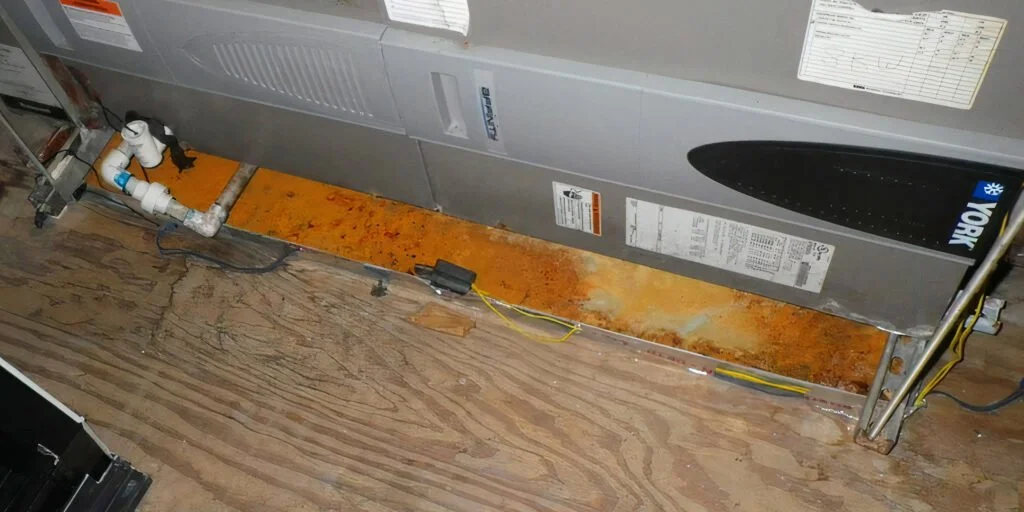
We see this more than you would think in Orange County attics: a drain pan that has been rusting through for years while the homeowner had no idea. By the time water shows up on the ceiling, the damage is already done. This is why we check the pan every visit.
4. Dirty Air Filter
A severely clogged air filter restricts airflow across the evaporator coil, causing the coil temperature to drop below freezing. The result is ice buildup, followed by a meltwater overflow when the ice thaws. This is one of the most preventable causes of AC water leaks and one of the most common. We recommend checking your filter monthly during cooling season and replacing it every 30 to 90 days depending on the filter type, household size, and whether you have pets. Our guide on how often to replace HVAC filters covers the specifics.
5. Disconnected or Damaged Drain Line
The PVC condensate drain line can become disconnected at a joint, cracked from impact, or damaged by pest activity (rodents chewing through the pipe in attics is more common in Orange County than most homeowners realize). When the drain line is disconnected, water pours freely from the open end rather than draining to its intended destination. This is an easy diagnosis: follow the drain line from the air handler and look for visible gaps, cracks, or disconnections.
6. Failed Condensate Pump
Some AC installations, particularly those where the air handler is in a basement or below-grade location, use a condensate pump to actively pump water to a drain or exterior exit. If the pump motor fails, the float switch sticks, or the pump's discharge tube becomes clogged, water backs up and overflows. Condensate pump replacement costs $200 to $500 installed. The pump itself runs $50 to $150, with the remainder covering labor and the installation of any required tubing.
What to Do Right Now If Your AC Is Leaking Water
If you have discovered water leaking from your AC, take these steps immediately to minimize damage and speed up the repair process.
Step 1: Turn off the AC at the thermostat. Switch the system to "Off" (not just the fan). This stops the cooling cycle, which stops condensation production and halts ice formation if the coil is frozen. Leave the fan set to "On" (not "Auto") for 15 minutes to help circulate air across the coil and begin a controlled thaw if ice is present.
Step 2: Contain the water. Place towels, buckets, or a wet/dry vacuum at the leak source. If water is dripping through a ceiling, poke a small hole at the lowest point of the water stain to control where the water drains rather than allowing it to spread across the entire ceiling surface. This may feel counterintuitive, but it prevents much larger drywall damage.
Step 3: Check and replace the air filter. Pull out the air filter. If it is visibly dirty, gray, or clogged, replace it immediately. A clogged filter is the most common root cause of frozen coils, and replacing it may be the only fix needed. After replacing the filter, leave the system off for 2 to 4 hours to allow any ice on the coil to melt completely before restarting.
Step 4: Inspect the drain line exit. Find where the condensate drain line exits your home (usually a PVC pipe near the outdoor condenser unit or at a wall on the side of your home). If water is not dripping from this pipe while the system is running, the drain line is likely clogged. If you can access the drain line cleanout port (a T-shaped PVC fitting near the air handler), you can try pouring a cup of distilled white vinegar into the line to dissolve minor algae buildup.
Step 5: Call for service if the leak does not stop. If the air filter was clean, if replacing the filter did not resolve the issue after a full thaw cycle, or if you cannot access or clear the drain line, call (714) 462-4686 for same-day diagnosis. Water leak calls are prioritized because of the damage risk.
How Much Does It Cost to Fix an Air Conditioner Leaking Water in 2026?
The cost depends entirely on the underlying cause. The table below shows current 2026 repair costs for the most common AC water leak scenarios in Orange County.
2026 AC Water Leak Repair Costs in Orange County
| Cause of Leak | Typical Repair Cost | Repair Time |
|---|---|---|
| Clogged condensate drain line | $75 to $250 | 30 to 60 minutes |
| Clogged drain line (complex, in-wall) | $250 to $400 | 1 to 2 hours |
| Dirty air filter (DIY replacement) | $5 to $30 (filter cost only) | 5 minutes |
| Secondary drain pan replacement | $250 to $600 | 1 to 2 hours |
| Primary drain pan replacement | $600 to $1,200 | 2 to 4 hours |
| Condensate pump replacement | $200 to $500 | 1 to 2 hours |
| Refrigerant leak repair (causing frozen coil) | $200 to $1,500 | 1 to 4 hours |
| Evaporator coil replacement | $1,000 to $4,500 | 3 to 6 hours |
Costs reflect typical Orange County labor and parts rates as of 2026. Final pricing depends on system type, access, and part availability.
The majority of AC water leaks fall into the $75 to $300 range. Drain line clearing is the single most common repair, and it is also the least expensive. The high-cost outliers (evaporator coil replacement at $1,000 to $4,500 and refrigerant leak repair at $200 to $1,500) occur when the water leak is actually a symptom of a frozen coil, which itself is a symptom of a deeper issue. When our technicians diagnose a water leak, they always identify the root cause, not just the immediate symptom, because clearing a drain line does not fix a frozen coil, and thawing a frozen coil does not fix a refrigerant leak.
Most AC water leak repairs in Orange County cost $75 to $300 in 2026. A clogged condensate drain line, the most common cause, typically costs $75 to $250 to clear and takes under an hour. The expensive repairs ($1,000 or more) occur when the leak is caused by a frozen evaporator coil or a failing drain pan integrated with the coil assembly.
When a Water Leak Means a Bigger Problem
Not all AC water leaks are simple drain line clogs. Two scenarios indicate a more serious underlying issue that requires prompt professional attention.
Frozen evaporator coil with refrigerant leak. If you see ice on the refrigerant lines (the copper pipes running from the indoor unit to the outdoor condenser), if the air from your vents is warm despite the system running, or if your AC is running but not cooling the house, the water leak may be caused by a frozen coil that is thawing. A dirty filter can cause a freeze, but if the filter is clean and the coil keeps freezing, the likely cause is a refrigerant leak. Refrigerant leak repair costs $200 to $1,500, and the repair must be performed by an EPA Section 608 certified technician, which all J Martin technicians are.
Recurring leaks after drain line clearing. If your drain line has been cleared two or more times in the same cooling season, there is likely an underlying issue: the drain line may be improperly pitched (not angled downward consistently), it may have a sag or belly where water and debris collect, or there may be a structural issue with the drain routing. In older Orange County homes, particularly 1970s and 1980s tract homes where the air handler was retrofitted into an attic that was not originally designed for HVAC equipment, drain line routing can be problematic. In these cases, a drain line reroute ($300 to $600) is a permanent fix that eliminates the recurring clog.
If your AC drain line has been cleared twice or more in the same cooling season, the problem is likely structural: improper pitch, a sag in the line, or problematic routing. A drain line reroute ($300 to $600) permanently eliminates recurring clogs in these situations.
Water damage from AC leaks is more common than most homeowners expect. Mold can begin developing within 24 to 48 hours in Orange County's warm climate, particularly in enclosed spaces like attic air handler closets and ceiling cavities where airflow is limited. If you see discoloration on a ceiling or wall near your air handler, or if you notice a musty smell that was not there before, those are signs that a leak may have been ongoing for days rather than hours. In cases where we suspect mold growth has started, we recommend a professional inspection before completing the HVAC repair so the remediation team can access the area while the system is open.
Preventing AC Water Leaks in Your Orange County Home
Most AC water leaks are preventable with basic maintenance. During every tune-up we perform, our technicians flush the condensate drain line, inspect the drain pan for corrosion or cracks, check the drain line pitch, and verify that any condensate pump or float switch is functioning correctly. These steps catch the majority of potential water leak causes before they cause damage.
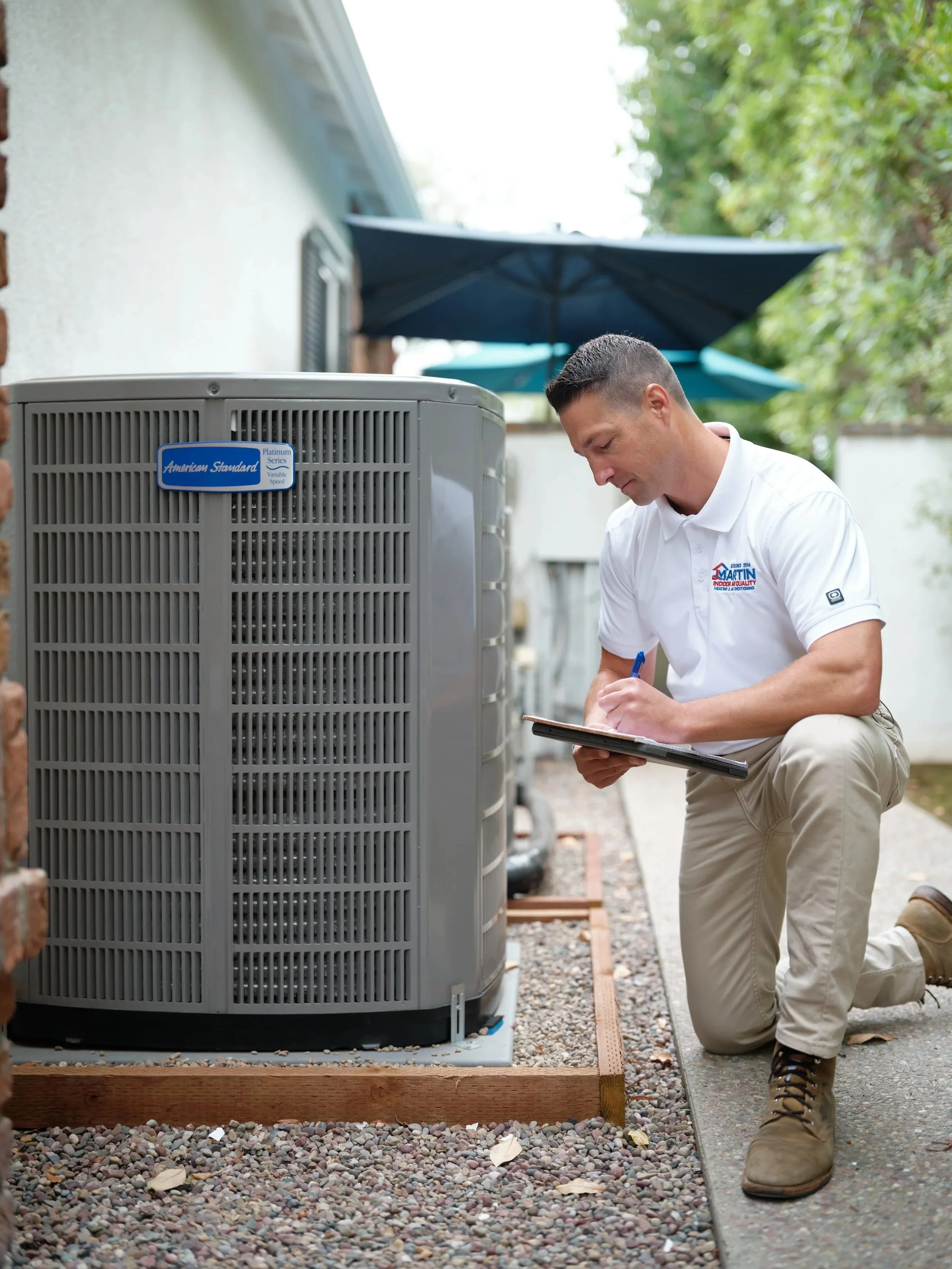
We get calls like this every summer in Orange County: 'My AC is leaking water inside, what do I do?' The answer is always the same. Turn it off, check the filter, and call us. We will figure out the rest.
Between professional visits, three simple habits prevent most water leaks. First, replace your air filter every 30 to 90 days during cooling season (monthly if you have pets or allergies). A clean filter prevents the coil freezing that causes most serious water leak events. Second, pour a cup of distilled white vinegar into the drain line cleanout port once every 60 to 90 days during the summer to prevent algae buildup. Third, visually inspect the area around your air handler and drain pan monthly during the cooling season, looking for any moisture, discoloration, or musty odor that could indicate a slow leak. Our True Maintenance Plan includes these drain line and pan inspections as part of the annual tune-up, along with priority scheduling if you do experience a leak between visits. We also recommend having your system inspected in the spring, before the heavy cooling season begins, so any developing drain line issues or pan corrosion can be caught before they cause water damage during a July heat wave when your system is running at maximum capacity.
What to Expect When You Call J Martin for an AC Water Leak
When you call (714) 462-4686, Kathryn or Alexis will ask where the water is appearing, whether the system is still running, and whether you have noticed any ice on the lines or reduced cooling. Water leak calls are prioritized for same-day service because we know the damage risk increases with every hour the leak continues.
Our technicians (Jesus, Jack, Angel, Irvin, Kevin, Tony, Christian, Rex, Carlos, Santiago, and Joel) arrive with drain line clearing equipment, a wet/dry vacuum, replacement drain pans and condensate pumps, and refrigerant diagnostic tools. Diagnosis typically takes 15 to 30 minutes. You receive a clear explanation of the cause, upfront pricing before any work begins, and a recommendation for preventing recurrence. Most water leak repairs are completed during the initial visit. If the leak has been ongoing for more than 24 hours, we also inspect for visible mold growth near the air handler and recommend remediation if warranted.
Frequently Asked Questions
Why is my air conditioner leaking water inside my house?
The most common cause is a clogged condensate drain line, which costs $75 to $250 to clear. Other causes include a frozen evaporator coil (usually from a dirty air filter or low refrigerant), a cracked drain pan, a disconnected drain line, or a failed condensate pump. Roughly 70% of indoor AC water leaks are caused by a simple drain line clog that takes under an hour to fix.
Is an AC leaking water an emergency?
It is not a safety emergency like a gas leak, but it should be treated as urgent. Water from an AC leak can cause drywall damage, flooring damage, and mold growth within 24 to 48 hours in Orange County's warm climate. Turn off the AC immediately, contain the water, and call for same-day service to minimize damage and repair costs.
Can I fix a clogged AC drain line myself?
In some cases, yes. If you can access the drain line cleanout port (a T-shaped PVC fitting near the air handler), try pouring a cup of distilled white vinegar into the line and letting it sit for 30 minutes. You can also try using a wet/dry vacuum on the exterior end of the drain line to suction out the blockage. If these methods do not clear the line, or if you cannot locate the cleanout port, call a technician.
How much does it cost to fix an AC leaking water?
Most AC water leak repairs cost $75 to $300 in Orange County in 2026. A clogged drain line costs $75 to $250 to clear. A condensate pump replacement costs $200 to $500. A secondary drain pan replacement costs $250 to $600. The most expensive scenario is an evaporator coil replacement at $1,000 to $4,500, but this is uncommon as a primary water leak cause.
Why does my AC leak water only when it is really hot outside?
On extremely hot days, your AC runs longer cycles to maintain the set temperature. Longer run times produce more condensation because more humid air passes over the evaporator coil per hour. If your drain line is partially clogged (draining slowly but not completely blocked), the increased condensation volume on hot days can overwhelm the restricted drain, causing an overflow that does not occur on milder days. A professional drain line clearing resolves this.
Can a dirty air filter cause my AC to leak water?
Yes. A severely clogged air filter restricts airflow across the evaporator coil, causing the coil surface temperature to drop below freezing. Ice forms on the coil, and when the system cycles off, that ice melts and produces far more water than the drain pan can handle. Replacing the filter and allowing the system to thaw for 2 to 4 hours before restarting usually resolves the leak. If the coil keeps freezing with a clean filter, the issue is likely low refrigerant from a leak.
How do I prevent my AC from leaking water?
Three maintenance habits prevent most AC water leaks: replace your air filter every 30 to 90 days during cooling season, pour a cup of distilled white vinegar into the condensate drain line cleanout every 60 to 90 days to prevent algae buildup, and visually inspect the area around your air handler monthly for any signs of moisture. Annual professional maintenance that includes drain line flushing and pan inspection catches problems before they cause water damage.
When J Martin pulls up to your home, the hard part is already over. Licensed, insured, and background-checked technicians who diagnose the real problem and give you honest pricing before any work begins. That is how we have maintained a 4.97-star rating across 5,000 Orange County families.
Stop the Leak Before It Becomes Water Damage
An air conditioner leaking water is one of the most common AC problems in Orange County, and it is also one of the most time-sensitive. The leak itself is usually an inexpensive fix (most under $300), but the water damage it causes when left unaddressed can cost thousands. If your AC is leaking water and you have already tried the DIY steps in this guide, the next step is a professional diagnosis that identifies the root cause, not just the symptom.
J Martin Indoor Air Quality has served Orange County families since 2014, with a 4.97-star rating across thousands of reviews and a full-time crew who handle air conditioning repair and service across all 26 cities in our service area. Licensed, bonded, and insured under California Contractor License CL#998956.
Call us at (714) 462-4686 for same-day AC leak diagnosis, or schedule service online.