
Indoor Air Quality and Allergies: A Complete Orange County Homeowner's Guide
Posted on June 9, 2026
As J Martin Indoor Air Quality, helping Orange County families breathe easier is literally what we do, and we understand the connection between your home's ventilation and your family's allergy symptoms better than most HVAC contractors in the region. Spring 2026 in Orange County is about to hit us with peak oak pollen around mid-April, and if you're not thinking strategically about your indoor air quality right now, you're setting yourself up for weeks of congestion, itchy eyes, and sleepless nights. The truth is that most homeowners don't realize their HVAC system is either their greatest ally or their worst enemy when it comes to seasonal allergies. We've spent fifty-plus combined years installing air filtration solutions, whole house ventilation systems, and humidity control equipment across Yorba Linda, Anaheim Hills, Brea, Placentia, and surrounding communities, and we've learned that the right approach to indoor air quality can genuinely transform your family's spring and summer. This guide walks you through exactly how your home's air moves, what's actually floating in it, and the specific solutions that work in our Orange County climate.
Common Indoor Allergens in Orange County
The allergen profile in Orange County is distinct from other parts of California, shaped by our unique coastal proximity, our elevation changes, and our specific plant communities. Oak pollen dominates our spring season starting in late March and peaking hard in mid-April, and if you've got oak trees on your property or in your neighborhood, you're already breathing thousands of tiny pollen particles daily whether your windows are open or not. Sycamore pollen arrives alongside oak and extends the allergy season into late April, while our coastal Santa Ana winds in fall and winter stir up dust, soil particles, and construction debris that travels inland and sets off just as many allergies as spring pollen does. Inside your home, dust mites thrive in bedding and upholstered furniture, thriving especially in humidity above 50 percent, and their droppings are a major trigger for year-round allergies. Mold spores grow in bathrooms, basements, and anywhere moisture accumulates, and they're often invisible until your respiratory system tells you something's wrong.
Pet dander, if you have dogs or cats, circulates constantly through your home and gets trapped in carpets, furniture, and ductwork where standard HVAC filters miss it entirely. Volatile organic compounds (VOCs) off-gas from paint, new furniture, cleaning products, and building materials, and while not technically allergens, they irritate airways and make allergy symptoms feel worse. Lint from dryers and laundry, cooking fumes, and even outdoor pollutants that drift in through cracks and gaps add to your home's overall particulate load. Understanding that these allergens aren't just floating freely in your air but are constantly settling on surfaces and being re-circulated by your HVAC system is the first step toward actually controlling them.

Clean air isn’t a luxury. It’s essential for your family’s health. J Martin helps Orange County homeowners reduce allergens and improve indoor air quality with proven solutions.
Types of Airborne Particles Your Standard Filter Misses
Your HVAC system's filters are almost certainly not capturing the full spectrum of allergens in your home, and here's why. Most homeowners have basic one-inch fiberglass filters, which capture maybe 20 percent of particles in the three to ten micron range, meaning 80 percent of the dust, pollen, and pet dander passes right through. Particles like pollen, dust mite feces, and skin cells range from two to fifty microns, and your filter rating (measured by MERV, or Minimum Efficiency Reporting Value) determines whether you're catching them or recirculating them into your living spaces. Even worse, these standard filters can restrict airflow so much that your HVAC system has to work harder, using more energy and sometimes pulling unfiltered air through gaps around the filter frame.
Why Orange County's Climate Makes Allergies Worse
Our climate is actually a perfect storm for allergy sufferers, and understanding why helps you understand why you need a sophisticated approach to air quality. Winter and early spring bring consistent moisture from coastal patterns, which means indoor humidity climbs above the fifty percent threshold where dust mites and mold explode in population. April through June brings our oak and sycamore pollen explosion, and unlike inland communities, we don't get the same dramatic temperature swings that help control pollen levels. Then our fall and winter Santa Ana wind season sends hot, dry air with massive dust and particulate loads directly into neighborhoods in Santa Ana, Anaheim Hills, Tustin, and Brea, and homeowners often open windows to cool their homes, pulling that contaminated air directly inside. The result is that Orange County families don't really get a true "low allergen" season like homeowners in some other climates do.
How Your HVAC System Affects Indoor Air Quality
Your HVAC system is a massive pump that moves air through your home ten to fifteen times per day, which means it's either cleaning your air or recirculating your allergens repeatedly. Every time your furnace or air conditioning unit runs, it pulls air from your living spaces through a return vent, passes it through a filter, runs it across a heated or cooled coil, and pushes it back into your rooms through supply ducts. This constant circulation should mean your allergen load decreases over time, but that only happens if your filter is actually capturing particles and if your ductwork is sealed and clean. Most homes have leaky ductwork that bypasses the filter entirely, pulling unconditioned, unfiltered air from attics, crawl spaces, or wall cavities, and homeowners don't realize they're literally pulling dust and outdoor air directly into their living rooms. Standard filters get clogged after two or three months, and instead of pulling more air through, they restrict airflow, which causes your system to work harder and sometimes pull air around the filter frame to maintain volume.
The Problem with Recirculating the Same Air
Many families think closing their windows during allergy season solves the problem, but closing your windows while your HVAC just circulates the same indoor air means you're concentrating allergens rather than diluting them. Sealed homes were designed to save energy, but they also mean your indoor air stays trapped at whatever allergen level exists inside unless you're actively removing or filtering contaminants. If your air conditioning is running but not actually filtering particles, you're just making the air feel cooler while leaving all the pollen, dust mites, and mold spores in suspension. This is why so many families report their allergies actually feel worse inside their air conditioned homes than they do outdoors on a day with lower pollen counts.
When Your Ductwork Is Part of the Problem
Your HVAC ducts are essentially the circulatory system of your home's air quality, and they're also a perfect breeding ground for mold and dust accumulation if they're not sealed and insulated properly. We regularly inspect ductwork in older Orange County homes and find gaps at joints, holes in the duct insulation from age and rodent activity, and mold growth on the interior surfaces where moisture has accumulated. When your system runs, these problem areas either leak unconditioned, unfiltered air into your spaces, or they circulate dust and spores that have been sitting in your ducts since last season. Sealing and cleaning your ductwork is one of the most overlooked but high-impact moves you can make for allergy control.
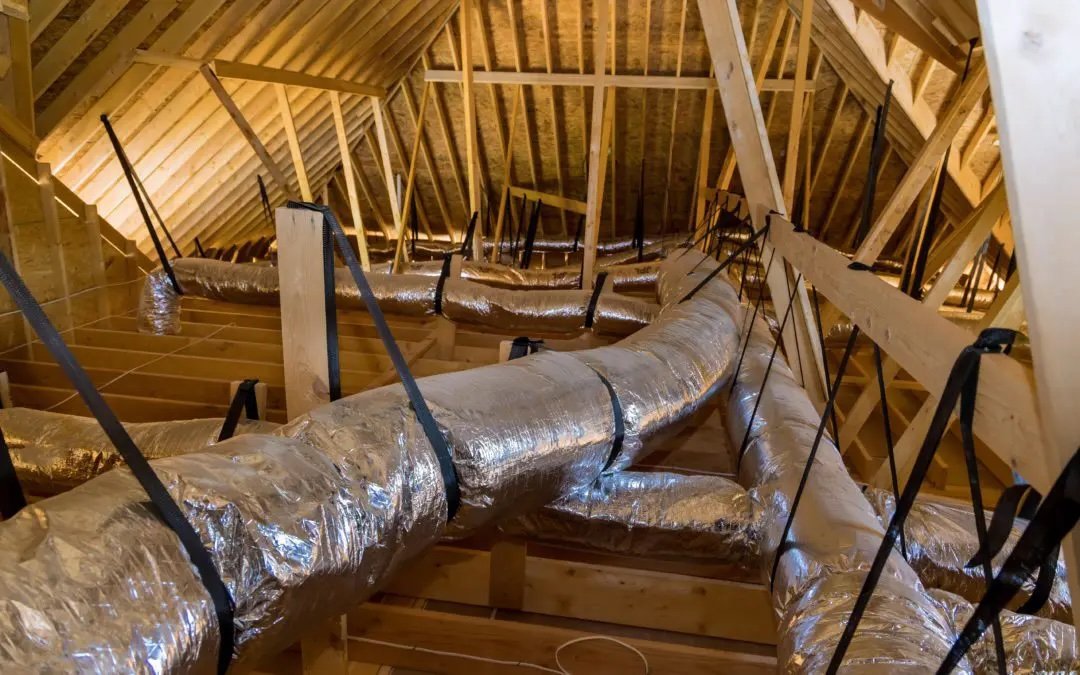
Your ductwork plays a major role in your indoor air quality. J Martin helps Orange County homeowners seal and optimize ducts for cleaner, healthier air.
Advanced Air Filtration Solutions for Allergy Sufferers
Moving beyond your standard fiberglass filter opens up a completely different world of air quality possibilities, and understanding your options helps you make decisions that actually match your family's needs. A MERV 11 or MERV 13 pleated filter, installed in a proper filter rack with no air bypass, captures between 85 and 98 percent of particles in the three to ten micron range, which includes most of the particles that trigger allergies. These filters are thicker, last longer than fiberglass, and provide genuinely effective filtration without the excessive airflow restriction that some homeowners worry about. We install Lennox and Daikin systems with MERV 13 filtration across Orange County, and families consistently report noticeable symptom reduction within the first two weeks of installation.
MERV Ratings and What They Actually Mean for Allergies
MERV stands for Minimum Efficiency Reporting Value, and the scale runs from one to sixteen, with each increase representing a higher percentage of particles captured. A MERV 8 filter, still standard in many homes, captures about 70 percent of particles five to ten microns in size, meaning your allergies continue all season. MERV 11 jumps to 85 percent capture efficiency, MERV 13 hits 98 percent, and MERV 16 (often called HEPA-equivalent) captures virtually everything except the smallest particles. For Orange County allergy sufferers dealing with oak pollen, sycamore pollen, dust mites, and pet dander, we recommend MERV 13 as the sweet spot between filtration and airflow. MERV 16 works well if your HVAC system is robust enough to handle the restriction, but we don't recommend jumping straight to MERV 16 unless we've inspected your system's capacity first.
UV Air Purification and When It Helps
Ultraviolet light purification works by installing a UV lamp directly in your ductwork or in the air handler unit, where it kills mold spores, bacteria, and viruses as air passes through. If you've got mold allergies or a family member with a compromised immune system, UV purification can genuinely reduce respiratory infections and mold-related symptoms. The key is that UV only works on particles that pass through the UV chamber, so it's never a replacement for good filtration, and it works best in combination with MERV 13 filtering and ductwork sealing. We often recommend UV purification for families in Santa Ana and Anaheim Hills where moisture and mold tend to be more persistent, and the combination of UV plus upgraded filtration addresses both pollen and mold-related allergies.
Whole House Fans and Fresh Air Without the Pollen
A whole house fan (like the Quiet Cool systems we install throughout Orange County) pulls outside air through your home and exhausts stale indoor air through your attic, which seems counterintuitive when you're trying to avoid pollen. The magic is in timing and filtration: we install high-quality intake filters on whole house fans that capture a significant portion of incoming pollen and dust before it enters your living spaces, and you run the fan during early morning or evening hours when pollen counts are lowest. This strategy is especially powerful because it replaces your stale, allergen-concentrated indoor air with fresh outdoor air (filtered), which fundamentally changes your home's allergen profile rather than just recirculating the same contaminated air. Many families report that running a filtered whole house fan for two to three hours early in the morning makes their spring allergy symptoms noticeably better throughout the day.
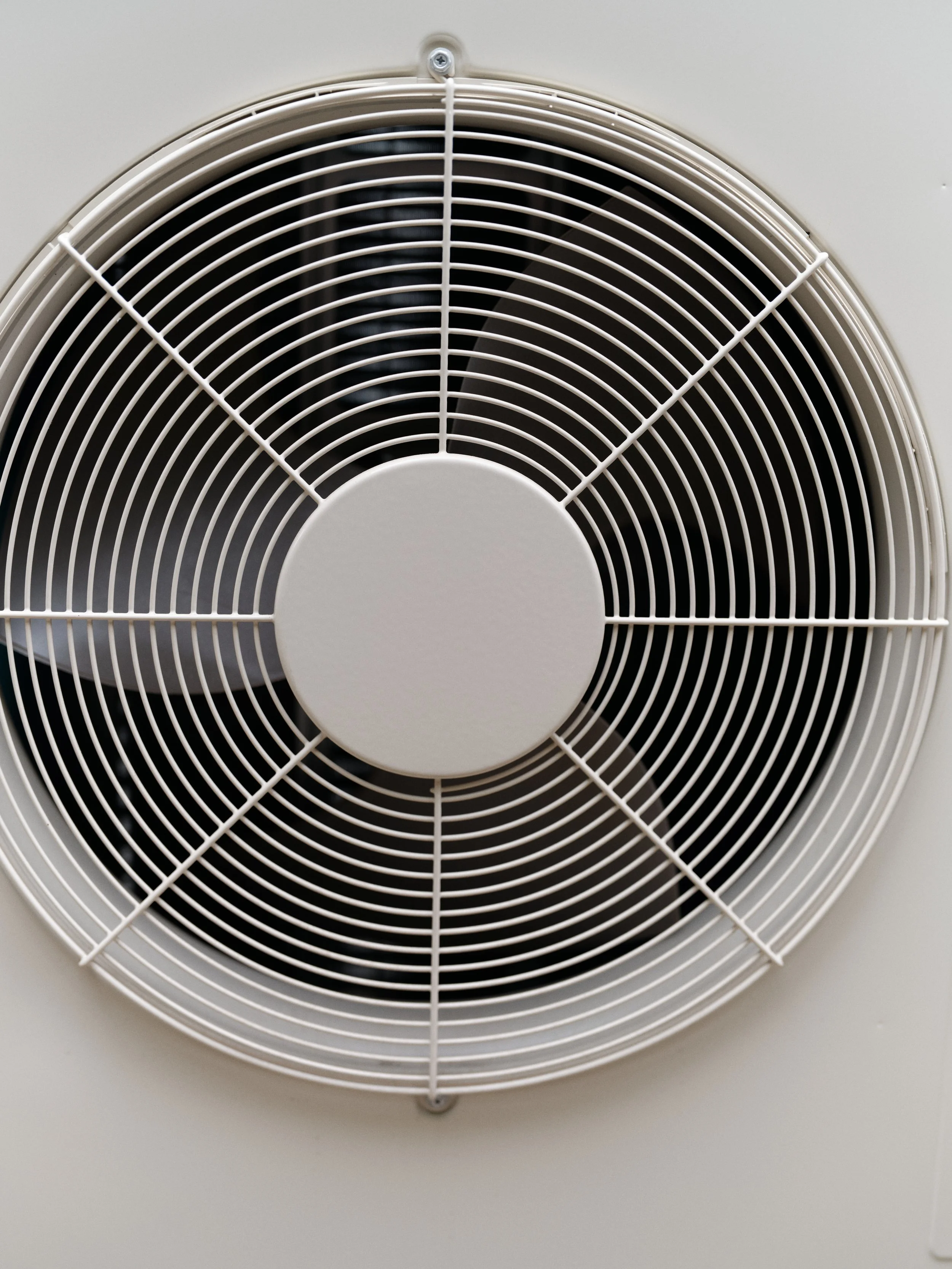
Whole house fans are one of the most effective ways to improve indoor air quality. J Martin helps Orange County homeowners bring in fresh, filtered air safely.
Whole House Ventilation and Fresh Air Strategy
The modern sealed-home approach to energy efficiency created a problem that's directly affecting your allergies: your home's indoor air gets progressively more polluted because there's no mechanism to remove contaminants and bring in fresh air. A whole house fan solves this problem by intentionally pulling fresh air through your home, which sounds like it would worsen allergies but actually improves them dramatically when done correctly. The key is installing filters on the intake (the windows or vents where outside air enters), running the fan during low-pollen hours like early morning or late evening, and coordinating with your air conditioning so you're not conflicting with cooling cycles.
How Whole House Fans Reduce Your Allergen Load
When you run a Quiet Cool whole house fan for an hour in the early morning, you're moving thousands of cubic feet of air through your home, replacing the stale indoor air that's accumulated allergens all night. Your standard HVAC system might run through your home's air supply five to ten times per day, but a whole house fan can do it once in a single concentrated hour. This massive air exchange, when the outdoor pollen count is lowest, fundamentally resets your indoor allergen levels. Then your upgraded MERV 13 HVAC filter takes over during the day, capturing the smaller amount of pollen that drifts in through normal air leakage and activity. The result is that your home's allergen concentration stays significantly lower than it would with HVAC alone.
Seasonal Ventilation Timing in Orange County
Oak pollen peaks in mid-April through early May, so from March through May, we recommend running a whole house fan during early morning hours (sunrise to 8 AM) when pollen counts are lowest. From June through August, our morning pollen counts tend to be lower overall, so ventilation becomes less critical but still helpful. During our Santa Ana wind season (October through February), running the fan becomes counterproductive because you're pulling high-particulate outdoor air directly into your home, and we instead recommend keeping it sealed and relying on clean filtration. Late summer and early fall, before Santa Ana winds arrive, is the ideal window for deep ventilation and ductwork cleaning, preparing your home for the closed-season months ahead.
Humidity Control as an Allergy Solution
Dust mites and mold thrive in humidity above 50 percent, and most Orange County homes sit between 45 and 65 percent humidity depending on the season and whether your AC is running. During winter and early spring when coastal moisture is high, many homes climb above 60 percent, creating ideal conditions for mold growth and dust mite proliferation. Your air conditioning system already removes moisture as a side effect of cooling, but many homeowners don't understand that this is actually one of the most important allergy-fighting features of their AC system. When you don't run your AC (or you run it minimally during cooler months), humidity climbs and allergies get worse.
Why 40 to 50 Percent Humidity Is Your Target
The EPA recommends maintaining indoor humidity between 30 and 50 percent, and the sweet spot for allergy control is 40 to 50 percent. At these levels, dust mites can't reproduce effectively, mold spores don't germinate, and your air feels comfortable without the dryness that causes respiratory irritation. During Orange County's spring and winter months when humidity climbs, running your AC (even at a slightly higher temperature) to maintain humidity control is often more important than the actual temperature setting. We recommend families think of their air conditioner as a humidity management tool first and a cooling tool second, because humidity control often has the bigger impact on allergy symptoms.
Monitoring and Adjusting Humidity Throughout the Season
A simple humidity meter (available at any hardware store) in your bedroom and living room shows you what's actually happening with your moisture levels, and once you know, you can adjust your AC thermostat to maintain control. During spring, running your AC during morning hours to pull humidity down, then opening windows during early evening after pollen counts drop, keeps your humidity in the ideal range. If you have a whole house fan, running it for an hour in the cool evening pulls fresh air and moisture out simultaneously, and then you close up tight, seal with AC, and maintain your controlled environment. Many families find that simply understanding humidity and adjusting their routine seasonally makes a dramatic difference in allergy symptoms.
Air Quality Testing and Monitoring
You can't improve what you don't measure, and most families have no idea what's actually circulating in their home's air. Professional air quality testing reveals your indoor PM2.5 levels (particles 2.5 microns or smaller), your mold spore count, your allergen concentrations, and often identifies specific problem areas like leaky ductwork or mold growth. We often recommend a baseline test before any system changes, then a follow-up test four weeks after installing new filters, sealing ductwork, or adding a whole house fan, so families can see the actual improvement rather than just relying on symptom reduction.
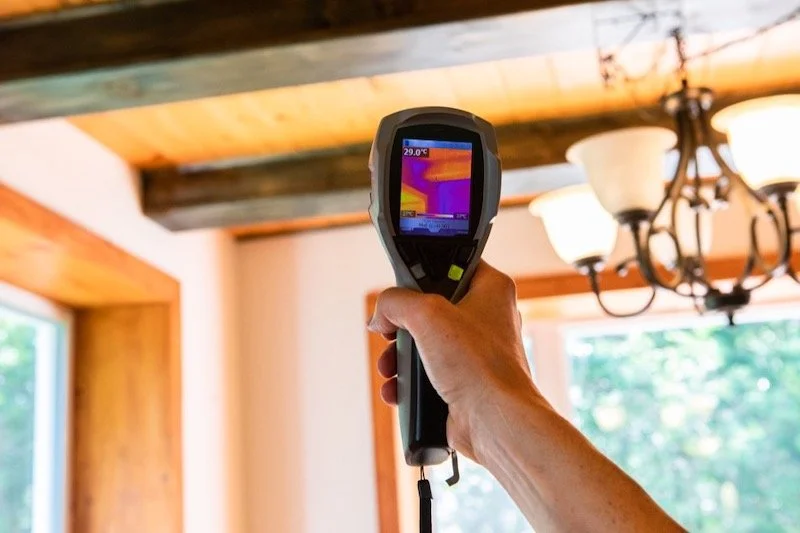
Accurate indoor air quality starts with proper diagnostics. J Martin uses advanced tools like thermal imaging to identify hidden airflow and insulation issues.
Simple DIY Air Quality Monitoring
If professional testing is outside your budget, a simple PM2.5 air quality monitor (available online for $30 to $100) measures real-time particulate levels in your home. You'll notice that early morning before anyone's moving around typically shows lower readings, mid-morning usually shows higher readings as pollen drifts in and dust is stirred up, and afternoon/evening trends depend on whether you've been running your AC and whole house fan strategically. Tracking these patterns teaches you when your home's air is cleanest and helps you time your ventilation, air conditioning, and filter changes optimally. Many families have told us that simply seeing these numbers change in response to their HVAC changes made them convinced that the investment was worthwhile.
Room-by-Room Indoor Air Quality Strategies
Not every room in your home needs the same air quality approach, and understanding where your family spends the most time at night helps you prioritize your improvements strategically. Bedrooms are critical because you're spending seven to nine hours there breathing in concentrated allergens while you're asleep and your immune system is trying to repair itself, and this is where even small improvements in air quality pay the biggest dividends for allergy symptom reduction. Living rooms and kitchens matter during daytime hours, but bedrooms are absolutely worth prioritizing for any family with allergies.
The Bedroom Priority Strategy
In bedrooms, we recommend starting with the smallest possible changes: a HEPA-filter portable air cleaner positioned to pull air across your bed, new allergen-proof pillow and mattress covers, and washing bedding in hot water weekly to kill dust mites. These changes are inexpensive and often provide noticeable relief within days. If bedroom symptoms persist despite these measures, the next step is ensuring that bedroom air is being pulled through your main HVAC system's filters and not trapped in an isolated bedroom with stale air. Balancing your return air vents (the vents where air gets pulled back to your system) ensures that your bedroom air is being circulated through your upgraded filters. Some families also find that keeping bedroom doors closed and windows sealed during peak pollen hours, while running a portable HEPA unit with a window filter attachment, creates a true "clean zone" for sleeping.
Living Areas and Maintaining General Air Quality
Your living room and kitchen are where dust gets stirred up constantly through movement, cooking, and normal activity, and these spaces are where your upgraded HVAC filters do their most important work. Keeping your MERV 13 filter changed every three months (more frequently if you have pets), sealing any visible gaps around baseboards and door frames, and running your AC during the warmest part of the day maintains consistent air quality even while you're active and generating particles. If you have a whole house fan, using it before the day's peak activity (early morning, before anyone starts moving around) sets a clean baseline that your HVAC system then maintains throughout the day.
Duct Cleaning and Maintenance for Allergy Control
Your HVAC ductwork collects years of dust, pollen, dead skin cells, and insect debris, and every time your system runs, some of this material gets stirred up and blown into your living spaces. Professional duct cleaning can remove this accumulated material and significantly improve your air quality, and while it's not a first priority if you're dealing with seasonal allergies, it's often the missing piece that finally gives families the relief they've been looking for. We recommend duct cleaning as part of a comprehensive allergy solution, typically scheduled during late summer or early fall when you're preparing for lower-pollen months.
What Professional Duct Cleaning Actually Removes
A reputable HVAC contractor (and we're biased, but we know our own work) uses specialized equipment to access your ducts, loosen accumulated material, and vacuum it out completely, which is different from some "air duct cleaning" services that just spray chemicals and claim everything is fine. You should see visual evidence that material was actually removed, and the contractor should inspect your ducts to identify any mold growth, moisture problems, or gaps that need sealing. After cleaning, sealing ductwork gaps and ensuring all connections are secure means that future dust accumulation happens much more slowly, and your filters do a better job because all your air is actually passing through them.
Signs Your Ducts Need Attention
If you notice a visible puff of dust from your supply vents when your system kicks on, that's a sign your ducts are heavily loaded with debris and cleaning would help. If your allergies are worse in certain rooms or at certain times of day, it might be because those return air vents are pulling dusty air from an attic or crawl space through a gap in your ductwork. Visible mold growth around vents or vents that feel noticeably colder or warmer than other vents in your home suggest sealing and potential cleaning work. We recommend at least one inspection of your ductwork if you haven't had professional HVAC service in several years, and cleaning if the inspection reveals significant accumulation.
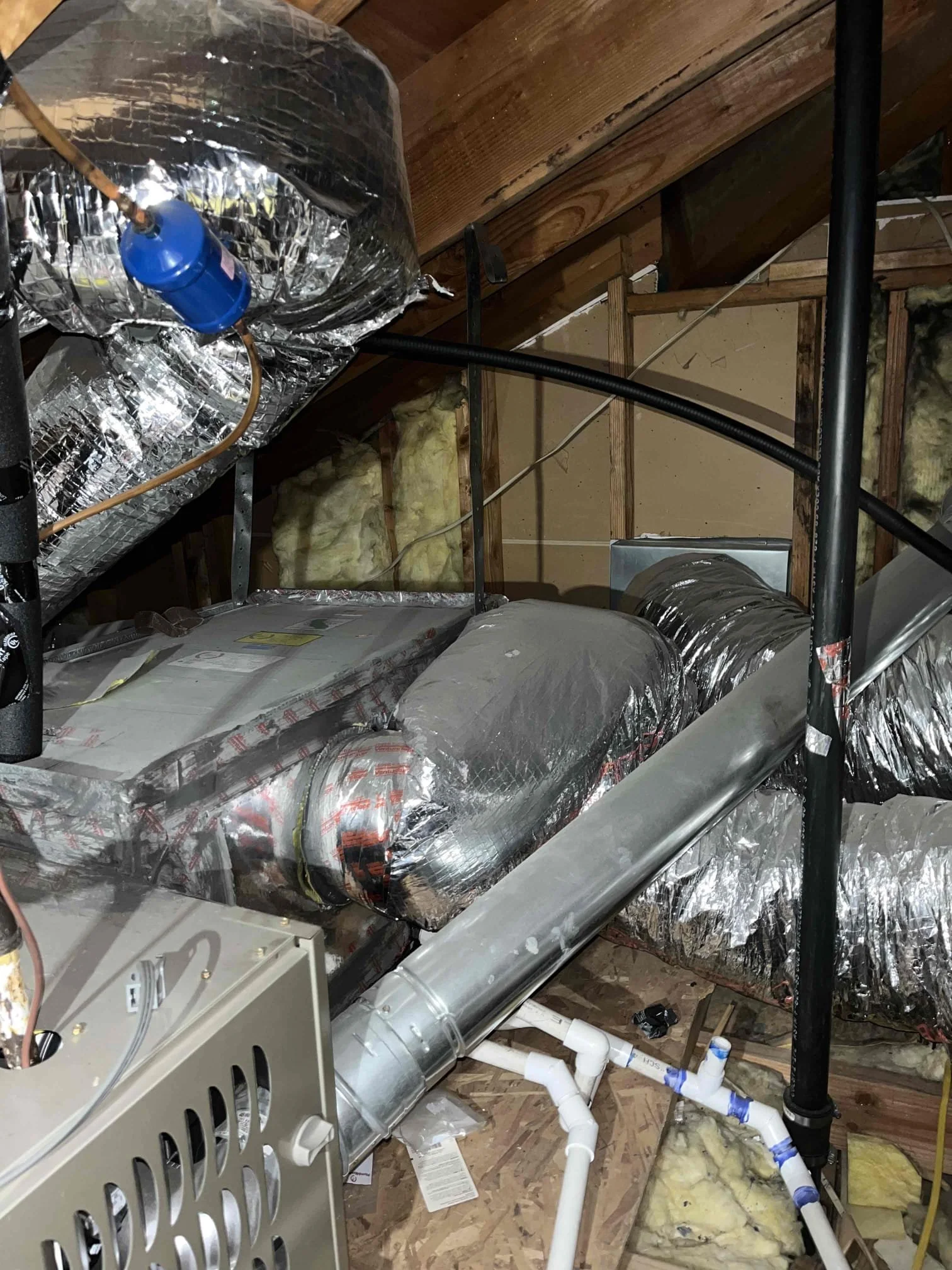
Your attic HVAC system could be circulating dust, allergens, and unfiltered air right now. Schedule an inspection with J Martin call (714) 462-4686.
Seasonal Indoor Air Quality Calendar for Orange County
Understanding the allergen and weather patterns throughout the year helps you time your HVAC maintenance, whole house fan usage, and AC settings to stay ahead of allergy season rather than reacting to symptoms. March through May is peak oak and sycamore pollen season, and these months are when upgraded filtration, whole house fan usage during early morning hours, and vigilant filter changes become critical. June through August brings lower pollen counts but higher humidity, and your focus shifts to humidity control and ductwork maintenance. September and early October is the ideal window for deep cleaning, ductwork inspection and sealing, and any major HVAC upgrades before you close your home for Santa Ana season. October through February is Santa Ana wind season when the doors and windows stay closed, your upgraded filters and sealed ductwork do all the heavy lifting, and focus shifts to humidity maintenance and indoor pollution control.
Spring Preparation (February and March)
By late February, you should have already replaced your furnace filter with a fresh MERV 13 filter if you did winter heating, and you should have ducts inspected for any mold or dust accumulation. Schedule whole house fan service to ensure it runs smoothly when April's pollen explosion arrives. Test your humidity levels to establish a baseline, and make sure your air conditioning is set to maintain 40 to 50 percent humidity as it runs more frequently. If you've been relying on heating all winter, gradually transition to AC during mild days to prepare your system for heavy spring use.
Summer Maintenance (June Through August)
Once pollen season fades in late May, you can reduce whole house fan usage because outdoor pollen is lower, but maintain your MERV 13 filtration to catch dust from increased activity and outdoor debris. Focus on duct cleaning and sealing during late summer if you haven't done it recently, and inspect your whole house fan intake filters to ensure they're still in good condition. Monitor humidity as coastal moisture persists, and don't assume lower temperatures mean lower humidity, because overcast mornings in summer can still create ideal mold growth conditions.
Fall Transition and Winter Prep (September and October)
This is your ideal window for the comprehensive air quality work that sets up your winter success: duct cleaning, sealing any gaps, upgrading filters if you haven't already, and preparing your whole house fan for retirement until spring. Complete any HVAC repairs or upgrades now, before Santa Ana winds arrive and keep your doors and windows sealed tight. Stock up on fresh MERV 13 filters so you don't scramble to find them once winter heating season begins. If you have a portable HEPA unit in a bedroom, replace the filter as well.
Winter and Santa Ana Season (October Through February)
Keep your home sealed tight during Santa Ana winds, run your AC to maintain humidity control even on mild days, and rely on your upgraded HVAC filtration as your primary air quality defense. Change filters every three months during winter heating season because heating can stir up accumulated dust in your ductwork. Early morning hours are still the best time for any limited ventilation if you choose to use a whole house fan, but most families simply keep everything closed and let their filtration do the work.
When to Call a Professional HVAC Contractor
Most homeowners can change their HVAC filter, monitor humidity, and run their whole house fan with basic instructions, but certain situations require professional assessment and expertise. If your allergies don't improve within four weeks of installing a MERV 13 filter and changing your whole house ventilation routine, something else is wrong, and an inspection will identify whether it's ductwork leaks, mold growth, or a system capacity issue. If you notice mold growth around vents or in crawl spaces, that requires professional attention because mold remediation is not a DIY project and trying to mask it with filtration alone won't solve the problem.
Finding the Right Contractor for Allergy Solutions
You want a contractor who actually understands the connection between HVAC design and air quality, not just someone who sells filter upgrades and calls it a day. Ask whether the contractor has experience with whole house fan installation and coordination, whether they're familiar with ductwork sealing and mold remediation, and whether they've worked specifically with allergy-focused families in your area. At J Martin Indoor Air Quality, we've specialized in exactly this intersection for years, and we're familiar with the specific allergen challenges in Yorba Linda, Anaheim Hills, Brea, and across Orange County. We're Quiet Cool certified for whole house fan installation, we carry Daikin and Mitsubishi HVAC systems that are designed for efficient filtration, and we've worked with dozens of families like yours who started with uncontrolled allergies and ended with genuinely comfortable homes.
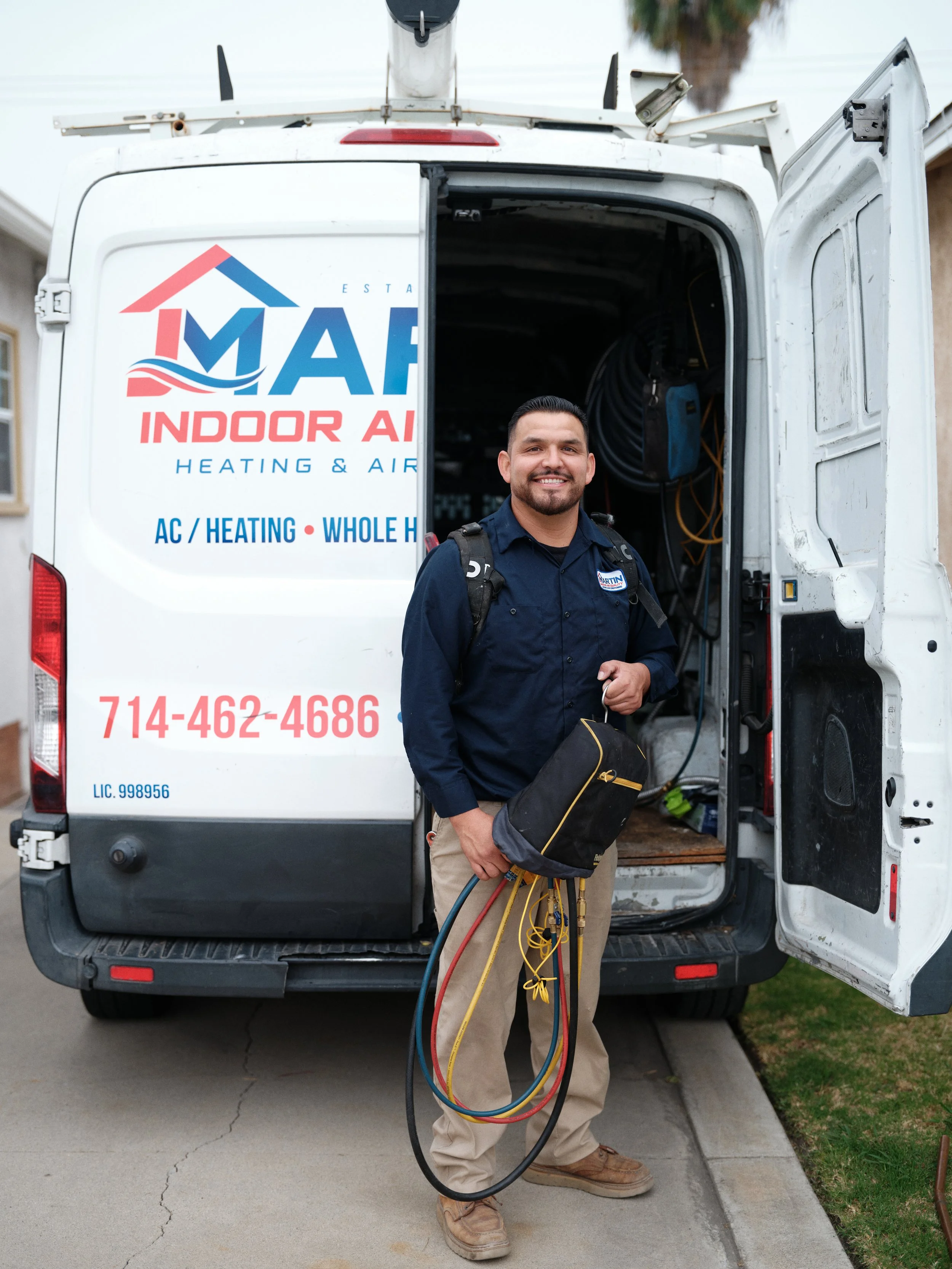
Better indoor air starts with the right expertise. J Martin helps Orange County homeowners diagnose and improve air quality with honest, professional service.
Case Study: The Torres Family's Indoor Air Quality Transformation
The Torres family has lived in Yorba Linda for twelve years, and for the last four springs, both their kids have struggled with severe seasonal allergies that started in late March and didn't fully resolve until June. Their eight-year-old had nighttime congestion that disrupted sleep, and their eleven-year-old's allergies triggered enough inflammation that she developed ear infections requiring antibiotics twice in one season. Their allergist recommended environmental controls first before considering medication escalation, so in late February 2025, they called us for an initial assessment.
Their home had original fiberglass filters installed in a standard HVAC system, and when we inspected their ductwork, we found two significant gaps where flex duct had been installed improperly, and general dust accumulation suggesting that nobody had done professional ductwork cleaning in the home's history. Their whole house fan had never been professionally serviced, and the intake was pulling unfiltered air directly from their attic. The home's humidity was sitting at 58 percent (well above the 40-50 percent ideal), and they didn't have any mechanism to monitor or adjust it. Their bedroom situation was particularly concerning: both kids' bedrooms had return air vents blocked by furniture, meaning stale air was accumulating in their sleep spaces and being pulled through their system unfiltered.
We recommended a three-phase approach. Phase one, immediate: replace the MERV 8 filter with a MERV 13 pleated filter, have us install proper intake filters on their whole house fan, and provide them with humidity monitors for their bedrooms and living room. Phase two, within three weeks: professional ductwork cleaning and sealing of those two gaps, plus installation of UV purification in their air handler since we identified minor mold concerns in their crawl space. Phase three, following month: installation of a new Quiet Cool whole house fan with proper ducting and sealed intake filters, because their existing fan couldn't be retrofitted safely.
They implemented phase one in early March, before oak pollen season arrived. Within two weeks, both kids reported that getting up in the morning felt different: less congestion and less of the groggy allergy feeling that had become their normal. The humidity monitors showed them that early mornings were hitting 65 percent humidity and afternoons were dropping to 48 percent, which explained why their daytime allergies were tolerable but mornings were brutal. They started running their AC at night (set to 72 degrees) to maintain humidity control while they slept, and within a week, morning humidity was down to 52 percent. Their daughter's nighttime congestion improved noticeably.
Phase two happened during the third week of March, and our ductwork cleaning removed a surprising amount of dust and debris that had been sitting in their ducts since the home was built. The UV purification installation took an afternoon, and the ductwork sealing eliminated those bypass problems that had been pulling unconditioned air directly into their system. By early April, when oak pollen peaked, both kids reported that their symptoms were less severe than any previous spring, and they were managing with basic antihistamines instead of needing prescription-strength medications.
Phase three happened in late April once we ordered the Quiet Cool fan, and the installation took a full day because we needed to coordinate intake ducting and sealing to ensure the new fan was pulling filtered fresh air rather than pulling from the attic. The new fan could handle higher resistance filters, so we specified a high-quality intake filter that removed an even higher percentage of incoming pollen. Starting in May, they began running the fan for an hour early in the morning (5 to 6 AM), when their local pollen count was lowest based on allergy forecast data, and this hour of deep ventilation with filtered fresh air made a notable difference in their overall spring experience.
By June, when oak pollen season finally faded, they reported that this year had been genuinely the easiest spring either kid had experienced in years. The combination of MERV 13 filtration, humidity control, ductwork sealing, UV purification, and strategic whole house ventilation had addressed their allergen problem from multiple angles. Their allergist was pleased with their results and recommended they maintain this protocol through next year. Most importantly, both kids slept through the night consistently, they didn't miss school for allergy-related reasons, and their quality of life during spring months felt completely different.
One year later (March 2026), they've maintained their MERV 13 filter replacement schedule, they're running humidity monitors and adjusting their AC accordingly, and they're already running their whole house fan during early morning hours before oak pollen season peaks. They've become the kind of family we love to work with because they've moved from thinking about allergies as something they have to tolerate to thinking about their indoor air as something they can actively control. Their message to other families: don't wait for miserable springs. Start these changes before pollen season arrives, and you'll be shocked at how different your family can feel.
Orange County-Specific Air Quality Final Assessment
Your Orange County home's indoor air quality isn't determined by random chance or by whatever your builder installed fifteen years ago. It's determined by the decisions you make every spring and winter about filtration, ventilation, humidity control, and system maintenance, and small changes compound into genuinely noticeable symptom relief for families with allergies. Oak pollen season arrives like clockwork every April, and your choice is either to close your windows and let your HVAC system control your environment, or to fight against it with suboptimal filtration and no coordinated strategy. We've worked with families across Yorba Linda, Anaheim Hills, Brea, Placentia, Villa Park, Fullerton, Tustin, Santa Ana, and Irvine, and we've learned that the families who get the best results are the ones who start in late February or early March, before their allergies become acute.
This isn't complicated. It's a three-step foundation: upgrade to MERV 13 filtration (or MERV 11 as a minimum if you're budget-constrained), monitor and control humidity to keep it between 40 and 50 percent, and seal your ductwork so that all your air actually passes through your filters. If you have whole house fan potential in your climate zone, adding strategic early morning ventilation with filtered fresh air amplifies your results. If you've got mold concerns or particularly severe pollen allergies, adding UV purification addresses those specific problems. None of this is experimental, and none of it requires special expertise to maintain once it's installed. The Torres family story isn't unique. We see it every spring: families who take action early experience dramatically better results than families who wait until their allergies are unbearable and then scramble for solutions.
Spring 2026 peak oak pollen season is coming to Orange County in just three weeks. If you're planning to make changes to your home's air quality, now is the moment to start, not April first when you're already congested and frustrated. Call us at (714) 462-4686, and we'll do a no-obligation assessment of your current system, your home's moisture situation, and your ductwork integrity. We'll tell you honestly what will make a difference for your family's specific situation, what's worth investing in, and what you can postpone or skip. We're HVAC contractors, not salespeople, and our incentive is to solve your allergy problem correctly the first time so your family can breathe easier all spring and summer long. Visit jmartiniaq.com to learn more about our Quiet Cool whole house fan installations, our Daikin and Mitsubishi HVAC systems, and the air quality solutions that families across Orange County trust.